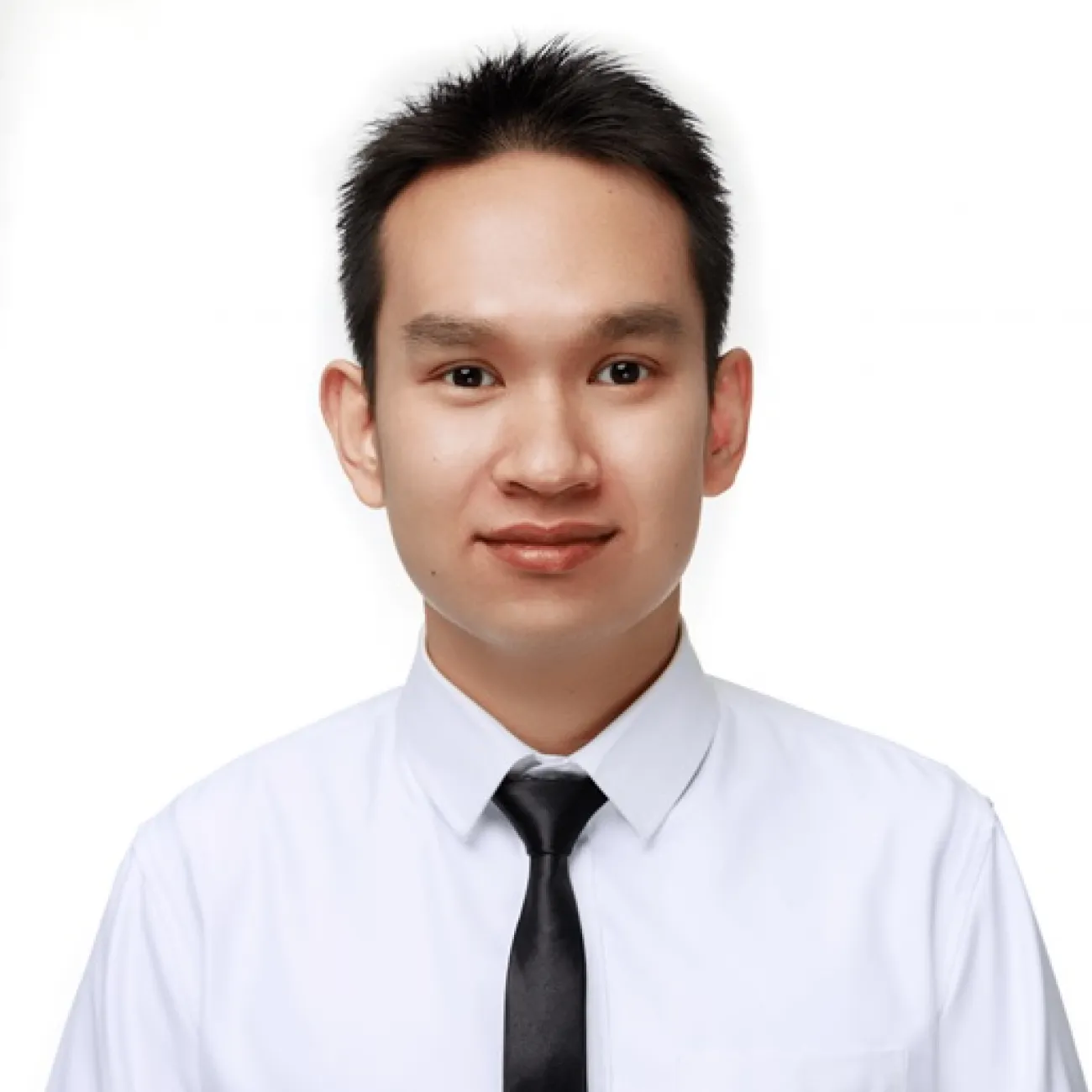
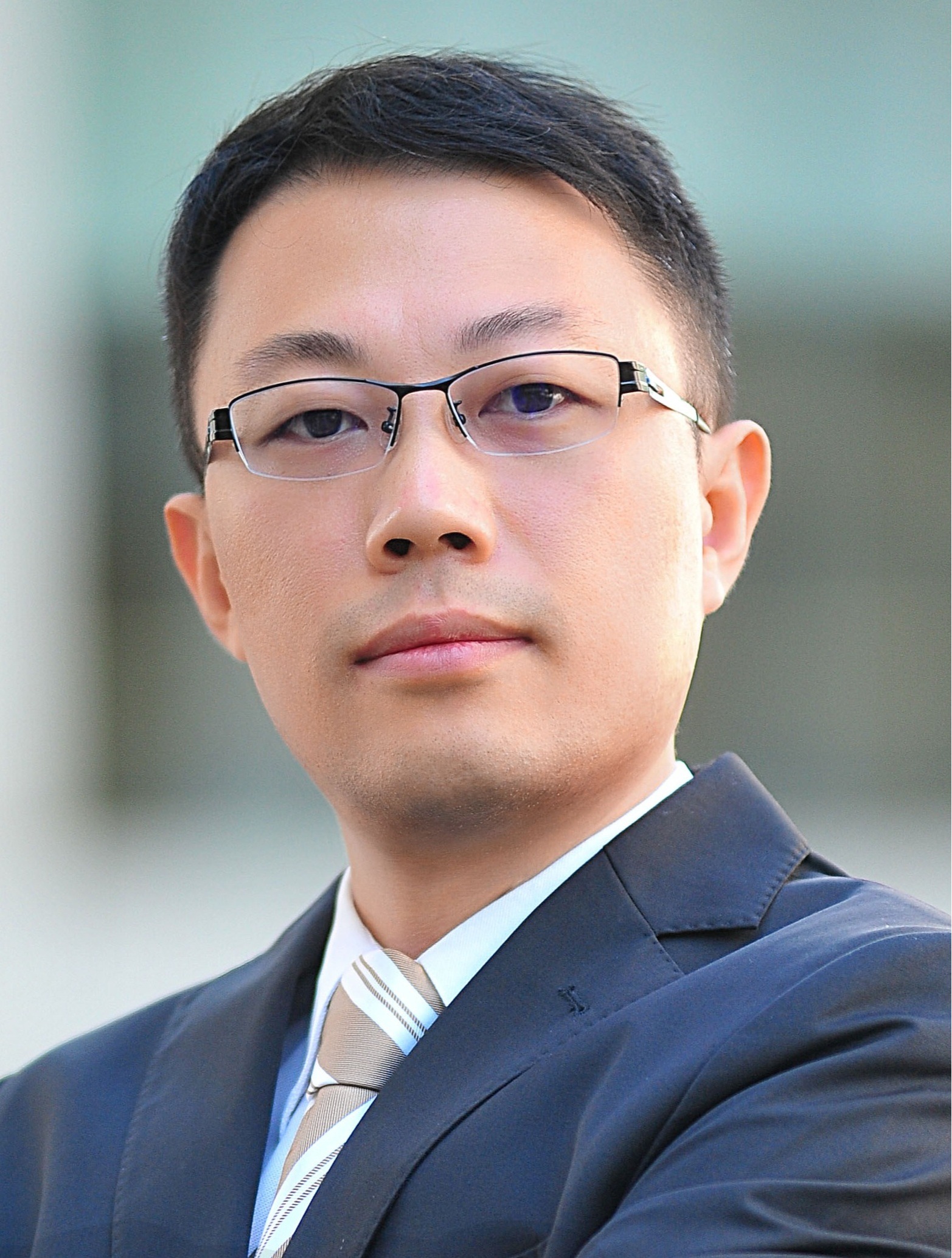
Dr. Tan Viet Tuyen Nguyen is a New Frontiers Fellow (Lecturer) in AI at the University of Southampton, specializing in Human-Centered Artificial Intelligence and Social Human-Robot Interaction. His research focuses on multimodal learning for robots to adapt their behavior to human social needs, with applications in healthcare, education, and service environments. Prior to this role, he was a Research Associate at King’s College London and a Research Assistant on the EU-funded CARESSES project, developing culturally-aware assistive robots for elderly support. Education: PhD in Information Science (Robotics) from Japan Advanced Institute of Science and Technology. He has organized conferences such as the IEEE RO-MAN 2022 special session on nonverbal communication and served as a reviewer for top-tier robotics and AI conferences. Research Interests include: Human-Robot Collaboration, Multimodal Perception, Generative AI for Social Interaction, and Context-Aware Robot Behavior Generation. His work has been recognized with awards including the Best Paper Award at ROMAN 2022 and the Prospective Research Award at ICServ 2023. Teaching Responsibilities include courses on Biologically Inspired Robotics, High-Level Programming, and MSc/Undergraduate project supervision. He currently oversees two PhD students and collaborates on projects like 'Exploring the impact of AI-driven writing of engagement in climate change' and 'Bridging Generations and Cultures through Generative AI.' Labs/Teams: Member of the Agents, Interaction and Complexity Centre and the Centre for Robotics Research at Southampton.
James Carroll is a Professor in the Department of Electronic & Electrical Engineering (EEE) at the University of Strathclyde, where he also serves as Director and Principal Investigator of the Wind and Marine Energy Systems and Structures CDT (2019–2027) and the Strathclyde lead for the EnerHy Wind and Hydrogen CDT (2024–2032). He is Co-Lead of the Wind Energy and Control (WEC) Group, one of the largest university-based wind energy research groups in the UK, comprising 8 academics and over 35 researchers. His research interests are centered on wind energy systems, with a focus on: Novel wind turbine concept development Wind turbine reliability and maintenance modeling Cost of energy and O&M cost modeling Drive train selection impact on reliability Condition monitoring and failure prediction of wind turbine components Data-driven machine learning and physical modeling for remaining useful life prediction SCADA and vibration data analytics The recent articles highlight a consistent trend in offshore and onshore wind energy innovation, with strong emphasis on predictive maintenance, cost reduction, digital twins, and novel turbine design. His work bridges engineering, data science, and sustainability, contributing significantly to renewable energy advancement. Scientific recognition includes: 2nd Place, Future Energy Competition (2019) James Carroll has been actively involved in major research projects, including EPSRC-funded CDTs and industry collaborations, focusing on hydrogen integration, digital twins for powertrains, and offshore wind maintenance optimization. He has also contributed to professional activities such as keynote speaking at the Wind Energy Science Conference 2019 and participation in EPSRC scoping workshops. He supervises research students and leads a dynamic team within the WEC Group, driving innovation in wind and marine energy systems. His research group, the Wind Energy and Control (WEC) Group, is a leading UK academic team in wind energy, fostering interdisciplinary collaboration and training the next generation of energy engineers through doctoral training programs.
Markus Grillitsch is Professor in the Department of Human Geography at Lund University and Director of CIRCLE (Centre for Innovation, Research and Competence in the Learning Economy). His work spans EU member states, transition economies, and developing countries with focus on spatial transformation processes. His research interests include: Economic Geography and Innovation Studies Regional Development and Knowledge Institutions Place-Based Leadership and Institutional Entrepreneurship Network Analysis and Policy Implementation Recent publications demonstrate strong focus on energy justice transitions, innovation policy limitations, and multi-scale inequality analysis. His work connects theoretical frameworks with empirical studies of regional diversification and agency-structure dynamics. Key recurring themes include sustainable development pathways, capabilities approaches, and institutional transformation processes across diverse geographical contexts. Current research projects include: Multi-level learning journeys for green and just regional transformations (Vinnova-funded) Economic resilience through Swedish hidden champions study Circular value chains and policy dynamics research Klimatneutrala städer 2030 urban climate initiative Grillitsch's work actively contributes to UN Sustainable Development Goals through research on economic growth, reduced inequalities, sustainable cities, and climate action. His fingerprint analysis shows strongest connections to Innovation (100%), Knowledge (93%), and Regional Development (66%) research domains.
Elizabeth Davis is an Extension Associate Professor at Utah State University (USU) and serves as the Kane County Director. She works in the Home and Community Department, focusing on youth development, STEM education, and family engagement activities. Education: MS in Family Consumer and Human Development (Adolescent Focus), Utah State University (2010) Research Interests: Social-emotional learning for youth Integrating STEM into family and community settings Improving college and career readiness Enhancing relationships through educational programs Publications: Her work includes peer-reviewed articles on behavioral medicine, STEM curriculum development, and technical reports on relationship-building initiatives. Key themes span youth development, educational outreach, and health interventions. Scientific Awards: 2nd Place Marketing Public Relations (2021) Excellence in 4-H STEM Programming (2021) Extension Innovator Award (2021) 1st Place Innovative Program (2021) Marketing/Public Relations Award (2020) Achievement of Service Award (2020) Innovative Program Award (TEAM) (2020) Grants & Teams: She contributes to Utah State University Extension projects, including the Hidden Gems adventure guides and 4-H STEM programming. Her work emphasizes community-based learning and health outcomes.
Prof. Dr. Mike Martin is a leading researcher at the University of Zurich's Center for Gerontology . His work spans cognitive aging, social development in old age, and life-span developmental psychology, with a focus on ecological validity in aging research. Professor, University of Zurich Director, Zurich Longitudinal Study on Cognitive Ageing Co-editor, Journals of Gerontology series Key research areas include: Healthy aging and quality of life Cognitive-emotional interactions in aging Dyadic adaptation in dementia caregiving Mobile sensing of aging-related behaviors Participatory research methodologies Language use as a biomarker of aging His recent publications analyze: GPS mobility and cognitive function Machine learning in reminiscence detection Prospective memory trajectories Emotion regulation in couples Digital interventions for cognitive health Neuroimaging correlates of aging
Bruno Takahashi is the Brandt Endowed Professor of Environmental Communication at Michigan State University, holding a joint appointment in the School of Journalism and AgBioResearch. He serves as Research Director of the Knight Center for Environmental Journalism and maintains affiliations with the Health and Risk Communication Center, the Environmental Science and Policy Program, and the Center for Latin American and Caribbean Studies at MSU. Born and raised in Lima, Peru, Dr. Takahashi earned his bachelor's degree in communication from Universidad de Lima, followed by M.S. and Ph.D. degrees in Environmental Science from SUNY ESF. Bachelor's in Communication, Universidad de Lima, Peru M.S. in Environmental Science, SUNY ESF Ph.D. in Environmental Science (specializing in environmental communication and participatory processes), SUNY ESF Dr. Takahashi's research program focuses on news coverage of environmental issues, environmental journalism practices in Latin America and U.S. Latino media, and identity in science communication. His work emphasizes counter-hegemonic environmental discourses in Latin American contexts, examining complex networks of actors, media, and communication processes embedded in post-colonial and social and environmental justice dynamics. He has conducted extensive field research in Peru, Bolivia, and Puerto Rico, with particular attention to environmental communication during disasters and in Indigenous communities. His recent scholarly output reveals a strong trend toward examining climate change communication through diverse cultural lenses, with significant attention to Latin American perspectives, immigrant experiences in the United States, and identity factors in science communication. His publications frequently address decolonial approaches to environmental communication and the need for more inclusive international scholarship that centers Global South perspectives. Scientific awards and recognitions include: 2024 AEJMC First Place in Latin American Communication Research 2021 Fellow of the Institute for Diverse Leadership, AEJMC 2019 Knudson Latin America Book Prize Multiple top paper awards from ICA and AEJMC conferences Dr. Takahashi actively mentors a diverse research team of Ph.D. students, post-doctoral associates, and MA students, with former students now holding positions at universities including University of Nevada, University of Minnesota, and Emory University. His research is supported by significant grants including a $2.8 million NSF grant for the SciComm Identities Project, funding from the Climate and Land Use Alliance, and multiple State Department and Embassy grants for environmental journalism training in Latin America. He has developed and led education abroad programs to Peru (2018, 2024) and the Netherlands/Belgium (2022), providing experiential learning opportunities for students in environmental communication. As Research Director of the Knight Center for Environmental Journalism, Dr. Takahashi leads initiatives supporting environmental journalists globally. His current projects include examining environmental discourses in the Peruvian Amazon related to oil spills affecting Indigenous communities, studying decolonial environmental journalism practices in Bolivia and Peru, and co-leading Working Group 5 on Public Engagement and Governance for The Lancet Countdown Latin America, which has generated significant media coverage in outlets like CNN and El País.
Dr Andrew Hoolachan is a Lecturer in Urban and Regional Planning at the University of Glasgow's School of Social and Political Sciences. He holds a PhD from the University of Cambridge, an MSc from UCL, and an MA from the University of St Andrews. His research focuses on urban governance, sustainability, and political ecology, particularly exploring localism, devolution, and scalar politics in UK cities. He has conducted fieldwork in East London examining the Localism Act's impact on sustainable urban development and the Olympic Legacy. His methodological expertise includes visual and digital methods, policy analysis, and urban political ecology frameworks. Theoretical interests span scale constructions, cultural geographies, and phenomenology. He is affiliated with the Socio-Environmental Action and Place & Built Environment research groups. Recent outputs include studies on urban flood resilience, housing retrofitting, and walking-based pedagogy. His work bridges academic research with policy practice, contributing to reports for institutions like the Royal Town Planning Institute and the UK Collaborative Centre for Housing Evidence. He teaches modules on spatial planning strategies and urban economics, emphasizing experiential learning approaches.
Reza Ghabcheloo is a Professor at Tampere University, affiliated with the Faculty of Engineering and Natural Sciences and the Department of Automation Technology and Mechanical Engineering. He leads the Robotics major and the international Automation Engineering program. His research focuses on autonomous mobile machines, robotics, control systems, and safety engineering, with specific interests in construction robotics, sensor fusion, and hydraulic systems. He co-leads the Autonomous Mobile Machines Group and is associated with the Robotics and Intelligent Machines Lab and the Innovative Hydraulics and Automation Lab. His research emphasizes developing autonomous systems for off-road machinery, safe control strategies, and energy-efficient automation. He has published extensively on topics such as reinforcement learning for crane control, radar-based perception, and safety architectures for autonomous systems. His work bridges robotics, control theory, and industrial automation, addressing challenges in heavy-duty machinery and real-world robotic applications. Research Group: Autonomous Mobile Machines Group Labs: Robotics and Intelligent Machines Lab, Innovative Hydraulics and Automation Lab Key Projects: Safety of automated off-road machinery, machine learning for autonomous loading, and trajectory optimization
Marcelo Mattar is an Assistant Professor of Psychology and Neural Science at New York University, leading the Mattar Lab. His research focuses on the neural computations underlying memory, decision-making, and reinforcement learning. He holds a Ph.D. in Psychology from the University of Pennsylvania and has held academic positions at NYU, UC San Diego, and postdoctoral roles at Princeton University and the University of Cambridge. His work bridges computational neuroscience and artificial intelligence, aiming to model how the brain uses internal models for planning and decision-making. Education: Ph.D. in Psychology (Computational and Cognitive Neuroscience), University of Pennsylvania, 2016 M.A. in Statistics, University of Pennsylvania, 2016 B.A. in Electronics Engineering, Instituto Tecnologico de Aeronautica, Brazil, 2010 Research Interests: The lab develops mathematical models of learning and decision-making, leveraging reinforcement learning, Bayesian statistics, and neural networks. Experiments involve human behavioral studies and neuroimaging, with collaborations in animal electrophysiology and computational psychiatry. Key Contributions: His work explores how episodic memory and hippocampal replay support flexible decision-making. Recent studies highlight parallels between human cognition and AI systems, such as language models' metacognitive abilities and brain-inspired algorithms. Awards: Newton International Fellowship, Royal Society (2018–2019) Lab Team: The lab includes postdocs, PhD students, and undergraduates from diverse fields like cognitive science, neuroscience, and computer science. Current members are listed on the lab's website. Lab Location: Meyer Hall, 6 Washington Place, New York, NY 10003.
Anindita Banerjee is an Associate Professor in the Department of Comparative Literature at Cornell University's College of Arts and Sciences, with cross-appointments in the Environment & Sustainability Program, History of Art and Visual Studies, Literatures in English, and Romance Studies. She serves as SAP Core Faculty for the South Asia Program and has been instrumental in establishing Cornell's Environmental and Sustainability Program, where she built and chaired the environmental humanities concentration for four years. Her research explores the relationship between imagining and making futures across diverse contexts, focusing on the evolving interfaces between science, technology, and culture; natural and built environments; media and information systems; and the migration of people, things, ideas, and images. Spanning Eastern Europe, Central Asia, the Indian subcontinent, and Latin and African Americas, her work examines networks of exchange, innovation, production, and consumption that emerge outside conventional coordinates of the modern world. Her scholarship has been featured in BBC Culture, Radio Free Europe, Medium, and Meduza. She has authored multiple books including the award-winning We Modern People: Science Fiction and the Making of Russian Modernity (2013), which won the Science Fiction and Technoculture Studies book prize, and is currently working on Reactionary Worldbuilding (MIT Press, 2026) and Border Environments (Cornell, 2026). Her research demonstrates consistent engagement with science fiction as a critical lens for examining global environmental, technological, and social transformations. Science Fiction and Technoculture Studies book prize Ivy+ Mellon Leadership Fellow (2024-25) Academic Venture Fund grant from Cornell Atkinson Center for Sustainability Social Sciences and Humanities Research Fellowship Banerjee serves as a faculty fellow of the Cornell Atkinson Center for Sustainability and is a participating member of cross-college programs in Biology and Society, Media Studies, and Visual Studies. She co-led a workshop series and engaged-learning course on border spaces and environmental justice supported by a grant from the Mario Einaudi Center for International Studies. As an Ivy+ Mellon Leadership Fellow, she serves as Special Assistant to the Dean of the Cornell School of Continuing Education, focusing on academic leadership and governance with an emphasis on diversity and inclusion.
Matthew Lee Smith is a Professor at the Texas A&M School of Public Health , part of Texas A&M University . He is a core faculty member of the Center for Community Health and Aging (CCHA) and the Center for Health Equity and Evaluation Research (CHEER) , and serves as the Director of the Texas Research, Analytics, Innovations, and Research Lab (TRAIL) . Education: Post-Doctoral Fellowship, Health Science Center, Texas A&M University (2010) PhD in Health Education, Texas A&M University (2008) MPH, Indiana University Bloomington (2004) BS in Public Health Education, Indiana University Bloomington (2002) Research Interests: Dr. Smith’s research focuses on aging , chronic disease management , and evidence-based public health interventions . He is particularly interested in health behavior change , health risk assessment , and survey research methodology . His translational work bridges research and practice across healthcare, aging services, and public health systems. He has a strong focus on social determinants of health , including social isolation , caregiving , diabetes self-management , and fall prevention among older adults. His work often targets underserved populations, particularly Black/African American men and rural communities . Scientific Awards: Immunization Neighborhood Champion Award (2024) Responsible Research in Management Award (2023) J. Mayhew Derryberry Award (2022) Consumer Education Program Award (Silver) (2022) Bluebonnet Award (2021) Innovators in Aging Award (2019) Redefining American Healthcare Award (2019) Community ConnecTivity Award (2019) Phillip G. Weiler Award for Leadership in Aging and Public Health (2018) Leadership & Mentorship: Dr. Smith holds leadership roles in several national and state-level initiatives. He is the Co-Director of the Advancing Gerontology through Exceptional Scholarship (AGES) Program and serves on the Steering Committees of the Texas Falls Prevention Coalition , Texas Alzheimer’s Research and Care Consortium , and Texas Social Isolation and Loneliness Coalition . He is also the Director of the Research Scholars & Mentorship Program (RSMP) at the American Academy of Health Behavior. Labs & Centers: He leads the Texas Research, Analytics, Innovations, and Research Lab (TRAIL) , which focuses on developing and evaluating community-based interventions. He is also affiliated with: Center for Community Health and Aging (CCHA) Center for Health Equity and Evaluation Research (CHEER)
Dr. Courtney Quinn is an Assistant Professor of Sustainability Science at Furman University. She joined the faculty in 2024 and has been teaching since 2013, focusing on fostering intellectually challenging yet joyful classroom environments. Her research explores leadership in sustainability, food systems, place attachment, and critical thinking development. She co-founded the Sustainability Leadership Initiative (SLI) in 2021, a program uniting business and conservation leaders for cross-sectoral dialogue and experiential learning. Education: Ph.D. in Leadership Studies, University of Nebraska-Lincoln M.S. in Human Dimensions of Natural Resources, University of Nebraska-Lincoln B.A. in Environmental Policy, Drake University Dr. Quinn’s work bridges theory and practice, emphasizing sustainability futures, coupled human-natural systems, and resilience modeling. Her recent articles address topics like local food networks, pandemic-driven sustainability thinking, and climate policy implementation. The SLI program highlights her commitment to translating academic insights into actionable leadership strategies for real-world environmental challenges. Her research spans agriculture, environmental governance, and education, with a focus on fostering ethical decision-making and community engagement. She advises students on projects related to food systems, climate resilience, and farmer-land relationships.
Kathryn Lanouette is an Assistant Professor of Learning Sciences and Science Education at William & Mary’s School of Education. She holds faculty affiliate appointments in the Arts & Sciences (ENSP, IIC). Her research explores place-based pedagogies, emerging technologies, and their roles in fostering joyful, ethical science and data science learning for K-8 students. She collaborates with schools, museums, and youth-serving organizations to design curricula and outdoor learning experiences. Education: Ph.D. in Learning Sciences and Human Development, University of California, Berkeley (2017) M.A. in Museum and Childhood Education, Bank Street Graduate School of Education B.A. in Politics, Oberlin College Research Interests: Lanouette focuses on intersections between emotion, place, and data literacy, emphasizing participatory approaches to environmental and socio-ecological education. Her work bridges theory and practice, advocating for equitable, interdisciplinary STEM+ curricula that connect students to local ecosystems and global challenges. Recent Trends in Publications: Her articles emphasize participatory methodologies (e.g., digital mapping, data storytelling), socio-political dimensions of learning, and ethical frameworks for data science education. Recent work highlights collaborations between educators and community organizations to co-create knowledge about climate change and socio-ecological systems. Awards: Outstanding Short Paper Award (2025), International Society of the Learning Sciences NSF-funded ‘Writing Data Stories’ postdoctoral research (2017–2020) Teaching & Mentorship: Lanouette teaches courses on education research, science pedagogy, and applied conservation sciences. She mentors students through interdisciplinary projects, such as the NSF-funded ‘Writing Data Stories’ initiative and NOAA’s Teacher at Sea program. Labs/Teams: Collaborations include partnerships with UC Berkeley’s Science Education Lab, museums, and K-12 schools to develop place-responsive curricula and community-driven data projects.
May Yuan is the Ashbel Smith Professor of Geospatial Information Sciences at the University of Texas at Dallas (UT-Dallas), affiliated with the School of Economic, Political and Policy Sciences. She directs the Geospatial Analytics and Innovative Applications (GAIA) Lab. Her research focuses on space-time representation, GIS analytics, and environmental/social problem-solving (e.g., disaster risk, pollution, crime mapping). She holds a Ph.D. in Geography from SUNY Buffalo (1994) and B.S. from National Taiwan University (1987). Previously, she was Brandt Professor and Director of the Center for Spatial Analysis at the University of Oklahoma (1994–2014). Education: Ph.D. in Geography, State University of New York at Buffalo, 1994 M.A. in Geography, State University of New York at Buffalo, 1992 B.S. in Geography, National Taiwan University, 1987 Research Interests: Her work integrates space-time GIS databases with cognitive science, environmental modeling, and social dynamics. Key areas include: - Spatiotemporal query and analytics for geographic processes - GIS-based disaster risk assessment (wildfires, tornadoes) - Urban air quality modeling - Neurogeography and Alzheimer’s disease prediction using environmental complexity metrics - Deep mapping and spatial narratives. Grants & Partnerships: Supported by NSF, NASA, DoD, DHS, NOAA, EPA, and state agencies. Her GAIA Lab explores 'place' concepts in space-time analytics. Awards & Roles: Fellow, AAAS and AAG Editor-in-Chief, International Journal of Geographical Information Science (2017–present) Former President, Cartography and Geographic Information Society (2020–2021) and UCGIS (2011–2012) Member, NOAA Environmental Information Services Working Group (2016–2022) Labs/Teams: Leads the GAIA Lab, collaborating on geospatial AI, environmental health, and urban analytics.
Lu Yi is a Professor at the Department of Economics, Tsinghua University School of Economics and Management , holding a CITIC Chair Professor since 2022. He is also Director of multiple research centers , including the Tsinghua University China Economic and Social Data Research Center and the Center for International Economics. A doctoral supervisor , he has guided students across institutions and academic programs. Lu Yi's education includes a BA from Fudan University's School of Life Sciences (1999) , an MA from Fudan University's School of Management (2003) , and a PhD from the University of Hong Kong's Faculty of Business and Economics (2007) . His research focuses on Chinese economy, public finance, and global economic governance , with particular emphasis on trade liberalization, institutional quality, and environmental policy. Key research areas : Trade policy impacts, productivity gains from trade, environmental regulation effects, and labor market responses to technological change Leadership roles : Editorial board member of American Economic Journal: Economic Policy , Co-Editor of China & World Economy , former Deputy Editor-in-Chief of Economic Journal Policy advisory : Expert for National Healthcare Security Administration's DIP payment system, National Council Member for Social and Economic Council His scientific awards span national and provincial levels , including the First Sun Shangqing Young Scholar Award , Pushan World Economics Outstanding Paper Youth Award , and multiple provincial social science achievement awards in Shandong, Liaoning, Zhejiang, Fujian, and Sichuan. His publications in top journals like the Journal of Public Economics , Review of Economics and Statistics , and Nature Climate Change demonstrate his influence in applied economics and policy research.