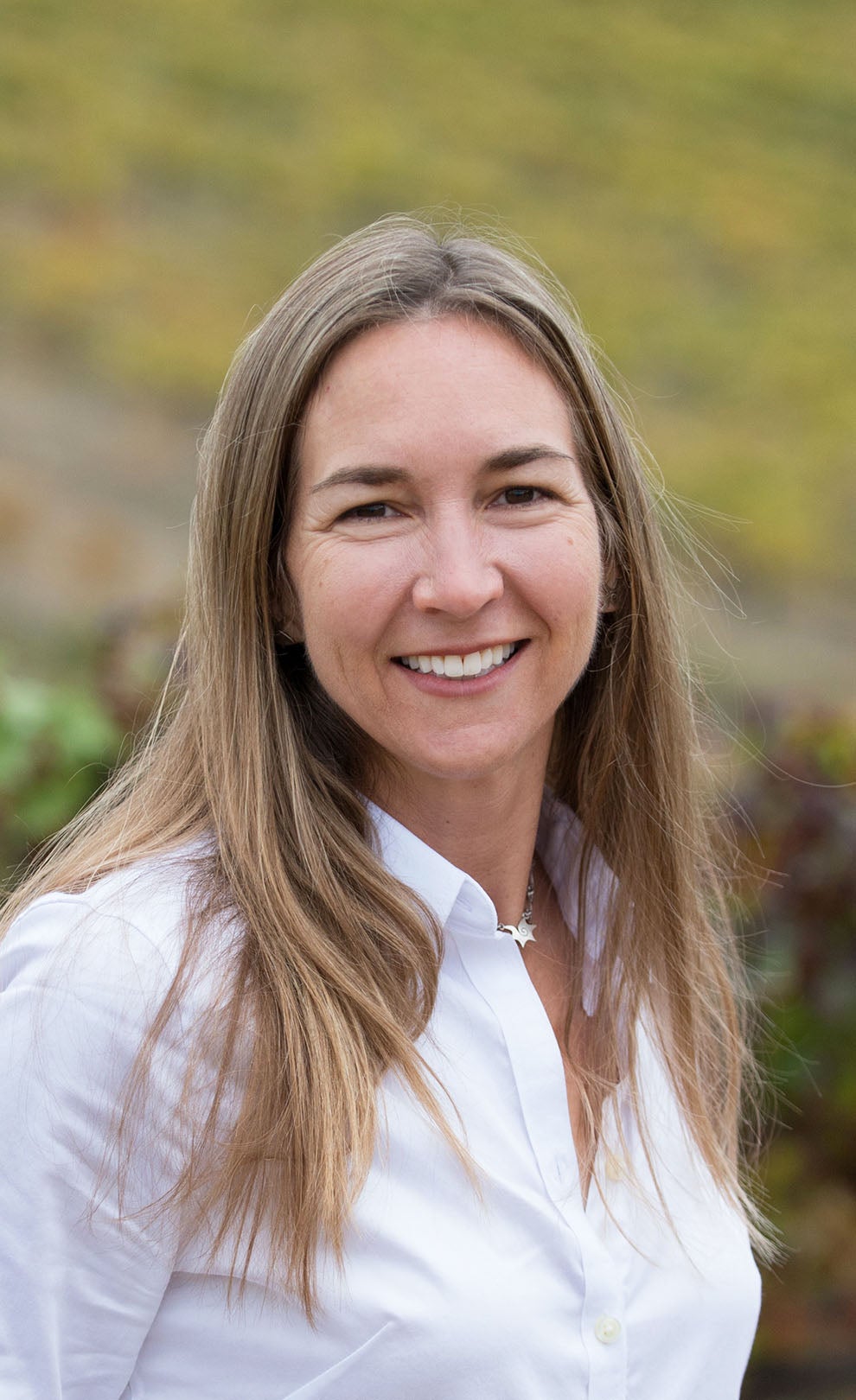
Hans Bihs is a Professor in the Department of Civil and Environmental Engineering, Faculty of Engineering. His research focuses on computational fluid dynamics (CFD), wave hydrodynamics, and wave-structure interaction using the open-source framework REEF3D. Key Research Areas: CFD simulations, wave modeling, floating body dynamics, ocean wave energy, aquaculture hydrodynamics, sediment transport, and high-performance computing. Projects: ERC Consolidator Grant PARTRES (2023-2028), EEA Grants Portugal SurfWave (2023), NFR KPN IPIRIS (2021-2025), EEA Baltic SolidShore (2021-2024), NTNU's MAPLE (2022-2025), and DigiCoast (2021-2024). Email: hans.bihs@ntnu.no His recent publications (2025-2020) analyze fluid-structure interaction, ship-induced waves, floating offshore wind turbines, submerged vegetation, and coastal structures using advanced CFD techniques. Topics include wave hydrodynamics, turbulence, and numerical modeling for marine and aquaculture systems.
Babak Moaveni is a Professor in the Department of Civil and Environmental Engineering at Tufts University, serving as the Associate Chair since September 2024. He also holds a joint appointment as a Professor in Electrical and Computer Engineering. His research focuses on structural health monitoring, Bayesian inference, earthquake engineering, and offshore wind energy systems. Moaveni earned his Ph.D. in Structural Engineering from the University of California San Diego (2007), following an M.S. (2001) and B.S. (1999) from Sharif University of Technology in Tehran, Iran. His research interests span probabilistic system identification, signal processing, uncertainty quantification, and verification/validation of computational models. Notable grants include leadership in the PIRE project on offshore wind energy digital twins and the Coastal Virginia Offshore Wind Pilot Project. He has supervised multiple Ph.D. and M.S. students, with current advisees including Mehdi Akhlaghi and Nasim Partovi-Mehr. Moaveni has received the Best Presentation Award at the 2022 EDGE Symposium and serves on editorial boards for journals like Structural Health Monitoring and Frontiers in Built Environment . His lab, the Structural Health Monitoring Lab, specializes in infrastructure management and offshore wind energy systems. Key professional activities include membership in the American Society of Civil Engineers (ASCE) and roles on Tufts' Tenure and Promotion Committee. His teaching includes courses on structural health monitoring, numerical methods, and structural reliability.
Dr. Haoran Zuo is a Research Fellow and ARC DECRA Fellow at Curtin University's School of Civil and Mechanical Engineering within the Faculty of Science and Engineering. He holds a PhD (2019) and has held postdoctoral and research roles at Curtin and The Hong Kong Polytechnic University. His research focuses on structural dynamics, vibration control of offshore wind turbines, and seismic response analysis. He has secured prestigious fellowships including ARC DECRA (2024) and Marie Curie (2025). Education: PhD in Civil Engineering, Curtin University (2019) Research Interests: Structural dynamics and vibration mitigation Offshore wind energy systems Seismic response analysis Energy-harvesting control technologies Key Research Trends (2022-2025): Focused on advanced vibration control solutions for offshore wind turbines, including novel damper technologies (e.g., TTMD, KDamper), metamaterial applications, and fatigue analysis under multi-hazard conditions. His work combines experimental validation, numerical modeling, and innovative control system design. Awards: ARC DECRA Fellowship (2024-2028) Marie Skłodowska-Curie Fellowship (2025) Highly Cited Paper in Engineering (2024) Best Paper Awards (2024) Grants & Advising: Sole CI on ARC DECRA grant for hybrid wind-wave energy systems. Advises on projects involving floating platforms and structural resilience. Active in collaborative research with industry and international institutions. Labs/Teams: Part of the Curtin Research Centre for Infrastructural Monitoring & Protection, focusing on structural health monitoring and resilient infrastructure design.
Immo Trinks is Associate Professor (Privatdozent) at the University of Vienna and Head of the Vienna Institute for Archaeological Science . He coordinates a comprehensive teaching programme in archaeological prospection, archaeometry and scientific documentation, and leads large-scale geophysical projects across Europe. Education & qualifications: Dipl.-Geophys. (Diploma in Geophysics) PhD (awarded) Habilitation (Privatdozent, Austrian post-doctoral lecturing qualification) Research interests revolve around non-destructive mapping of buried archaeological landscapes . He specialises in ground-penetrating radar , magnetometry and multi-sensor robotic platforms , developing workflows that fuse high-resolution geophysical data with 3D archaeological interpretation. Coastal wetlands, Roman towns, Viking harbours and prehistoric pile dwellings serve as key study areas. Recent publications demonstrate a clear trend toward automated, large-coverage surveys and multi-method data fusion . Papers in 2022-2025 report motorised GPR arrays on snow-covered fields, semi-autonomous driverless systems, and integrated interpretation frameworks that combine magnetics, GPR and remote sensing to reveal Roman military compounds, Etruscan cities, Swedish war camps and Neolithic monumental landscapes. Scientific awards & honours: No specific awards are listed in the supplied text; however, his continuous funding and invited keynote contributions (e.g., ArchaeoProspection conference series) indicate international recognition. Teaching & student supervision: Regular courses: Introduction to Archaeological Prospection, Archaeometry, Magnetic Prospection, GPR Practical, Underwater Prospection, Human Evolution & Archaeological Science, LaTeX for Archaeologists Excursions: 2-day field schools at Alpine pile-dwelling sites and around Vienna Thesis seminars: continuous Master Thesis Topic Search & Exposé and final thesis colloquia every semester Labs & facilities: Trinks heads the Vienna Institute for Archaeological Science (VIAS), operating several motorized multi-channel GPR systems, high-resolution magnetometer arrays, electromagnetic induction sensors, underwater sonar and multi-spectral cameras. The institute maintains dedicated GIS/visualisation labs and field vehicles for pan-European surveys within the international ArchPro and Stonehenge Hidden Landscapes initiatives.
Professor Sarah Stallebrass is a leading academic in geotechnical engineering at City, University of London. Her work focuses on physical and numerical modeling of soil behavior, particularly in stiff clays and during tunneling processes. She has held positions at institutions including King's College London and serves on professional committees like the Joint Board of Moderators. PhD in Civil Engineering (1990, City, University of London) MA (Hons) in Engineering (1987, University of Cambridge) Her research expertise includes: Constitutive modeling of overconsolidated clays Disaggregation of soil cuttings in slurry Finite element analysis of construction-induced ground movements Centrifuge testing for complex geotechnical problems Deep foundation behavior in challenging soils Recent publications highlight advancements in: Shaft break-out modeling in clay Hollow heated pile performance in sand Impression pile capacity in overconsolidated clay Recycled material applications in plant platforms Scientific recognition includes: Fellow of the Institute of Civil Engineers (2010–present) She contributes to laboratory techniques development and serves as external examiner for civil engineering programs at Imperial College London and University of Glasgow.
Yunyun Wu is an Assistant Professor in the Department of Biomaterials & Applied Oral Sciences and the School of Biomedical Engineering at Dalhousie University. Her research focuses on developing cost-effective, sustainable, and scalable biomaterials and structures for healthcare applications, including eco/bioresorbable electronics, biosensors, and energy storage solutions. Her work emphasizes wearable and implantable devices for health monitoring and disease treatment. Research interests include electroactive biomaterials, biosensors, electronic textiles, and stretchable electronics. Key projects involve skin-interfaced microfluidic biosensors and sewing-based fabrication of bioresorbable electronics. Recent publications highlight innovations in wearable sensors, implantable devices, and textile-based electronics. These contributions address challenges in medical monitoring, energy storage, and biocompatible materials. The Wu Lab actively explores sustainable materials and scalable manufacturing techniques to advance wearable and bioresorbable technologies. No scientific awards are explicitly listed in the provided texts, but her extensive publication record reflects her impactful contributions to biomedical engineering. Advising and grants details are not provided in the current data. The lab’s activities are centered on interdisciplinary approaches to biomedical device development, as detailed on their website (www.yyunwulab.com).
Prof. Dr.-Ing. Tim Pucker is a full professor at HafenCity University Hamburg, affiliated with the College of Civil Engineering and the Department of Geotechnical Engineering. His research focuses on numerical modeling of geotechnical systems, particularly in offshore foundations, lunar soil interaction, and pile installation mechanics. Developed modular hypoplastic models for granular soils (2025) Investigated jack-up platform footprints' impact on offshore foundations (2024) Explored lunar soft lander soil interaction (2024) Advanced numerical methods for groundwater flow analysis (2025) His 15 most recent publications (2025-2015) demonstrate expertise in computational geotechnics, foundation dynamics, and structural optimization. Key themes include offshore wind turbine foundations, hypoplastic material modeling, and extraterrestrial geotechnics. Notable subfields: soil-structure interaction, large deformation analysis, and discrete element method applications. Teaching responsibilities include Geotechnics I/II, Water Engineering, and Numerical Methods for both bachelor's and master's programs. Office hours: Thursdays 14:00-15:00 during lecture periods, by appointment otherwise.
James Doherty is an Associate Professor in the Department of Civil, Environmental and Mining Engineering at The University of Western Australia (UWA), affiliated with the UWA Oceans Institute. His work focuses on geotechnical engineering and cloud computing technologies, emphasizing automation of data interpretation and optimization of engineering design workflows. He leads research in numerical methods, soil-structure interaction, and offshore wind infrastructure, with over 80 peer-reviewed publications. Doherty founded the open-access geocalcs.com platform, serving 1,000+ users globally with engineering design tools derived from his research. He has developed cloud-based platforms for companies like Fugro, achieving significant computational efficiency gains. His expertise aligns with UN Sustainable Development Goals related to infrastructure and sustainable energy.
Nancy Glenn is Professor in the Department of Geosciences at Boise State University and directs the Boise Center Aerospace Laboratory (BCAL). Her research specializes in remote sensing applications for environmental monitoring, particularly in dryland ecosystems and geological engineering contexts. Her research advances remote sensing methodologies including lidar, hyperspectral imaging, and UAV-based platforms for characterizing vegetation dynamics, snow properties, and land surface changes. Current projects focus on: quantifying rangeland fractional cover in sagebrush ecosystems, improving snow property retrievals through topographic modeling, and developing machine learning approaches for spoil pile characterization in mining environments. Professor Glenn maintains active research programs across diverse environments including peatlands, dryland shrub-steppe ecosystems, mountainous terrain, and post-mining landscapes. Her work integrates field measurements with advanced remote sensing techniques to address environmental challenges.
Prof. Dr.-Ing. Tino Walther is currently serving as Professor of Construction Management and Project Control at the Technical University of Mittelhessen (THM) since October 2023. Previously, he held roles at STRABAG AG and Bauhaus University Weimar where he completed his doctoral studies (2017-2021). His career spans academic research, industry leadership, and technical project management in civil and bridge construction. Education includes an M.Sc. in Management Studies (Construction/Real Estate/Infrastructure) from Bauhaus University Weimar (2009-2014), dual training as a civil and road construction worker with integrated studies (2007-2009), and civil engineering studies at the University of Kassel (2008-2009). Research focuses on digital transformation in construction , including BIM applications, automated data acquisition, 5D process management, and optimizing construction performance through algorithmic frameworks. His work emphasizes bridging gaps between theoretical models and practical implementation in infrastructure projects. Recent publications (2019-2024) highlight advancements in automated construction monitoring, VR-based training systems, and path-planning algorithms for heavy machinery. His methodologies integrate convex hull algorithms, point-cloud comparisons, and image recognition to improve site control and project outcomes. No scientific awards were explicitly listed in the text. His professional activities include leading construction processes departments and advising on linear infrastructure projects. He maintains active engagement with industry through collaborations like the IABSE Congress and ECPPM conferences.
Dr. Fu Yong is an Assistant Professor and doctoral supervisor at the Department of Marine Science and Engineering , Southern University of Science and Technology (SUSTech), Shenzhen, China. He earned his PhD in Geotechnical Engineering from the National University of Singapore (NUS) in 2018, preceded by a Master's (Tongji University, 2013) and Bachelor's (Shanghai University, 2010) in Civil Engineering . Current Role: Assistant Professor, SUSTech (2020–present) Prior Roles: Research Fellow (NUS, 2018–2020), Research Engineer (NUS, 2017–2018) Dr. Fu specializes in marine geotechnical engineering , with key focuses on offshore wind power foundation design, deep-sea anchoring technologies, and underground space development. His technical expertise includes large deformation finite element modeling (CEL/RITSS methods), stochastic analysis , and machine learning (GWO-MLP optimization). His work bridges laboratory experiments (centrifuge and field tests) with computational simulations to address challenges in marine infrastructure. Marine foundation design for offshore wind turbines and marine ranches Deepwater dynamic penetration anchoring systems Horizontal deep soil mixing equipment for underground space Finite element simulation of large deformations and thermal effects His publication trends reveal a consistent focus on offshore anchoring mechanics, shale fracture modeling, and machine learning integration for geotechnical predictions. Recent works (2024–2025) emphasize torsional effects in suction anchors, sand-GFRP interface behavior, and advanced constitutive models for cemented soils. Key journals: Geotechnique , Ocean Engineering , Physics of Fluids , Computers and Geotechnics Dr. Fu has received multiple scientific awards , including the 2024 SUSTech Undergraduate Teaching Award, 2022 SUSTech Outstanding College Mentor Award, and NUS Research Scholarship (2013–2017). Selected Honors: 2024 First Prize, SUSTech Undergraduate Teaching Award 2022 SUSTech Outstanding College Mentor 2020 Shenzhen Overseas High-level C Talent He actively contributes as a reviewer for 18+ international journals and serves on editorial boards for journals like Sustainable Structures . His work on machine learning-driven anchor penetration prediction (2024) and hybrid phase-field shale fracture modeling (2024) exemplifies interdisciplinary innovation.
Murad Abu-Farsakh, Ph.D., P.E., is an Adjunct Professor in the Department of Civil and Environmental Engineering at Louisiana State University (LSU), affiliated with the Louisiana Transportation Research Center (LTRC). His career spans over 25 years in geotechnical and transportation engineering research, with a focus on deep foundations, soil-structure interaction, and geosynthetic applications. He holds a Ph.D. in Geotechnical Engineering from LSU (1997), an M.S. in Structural Engineering from Jordan University of Science and Technology (1988), and a B.S. in Civil Engineering from the University of Jordan (1985). Research interests include: pile setup mechanics, finite element modeling of geotechnical systems, geosynthetic-reinforced pavements and embankments, and LRFD calibration for deep foundations. He has pioneered methods for estimating pile capacity using CPT data and machine learning, while also advancing instrumentation techniques for infrastructure monitoring. His work integrates field testing, numerical modeling, and statistical analysis to address challenges in transportation infrastructure. Notable contributions include development of CPT-based design methods, geosynthetic reinforcement strategies for weak soils, and frameworks for incorporating site variability into geotechnical engineering practice. Key Projects: Geosynthetic-reinforced soil-bridge systems, pile performance under barge impacts, and pavement stabilization using cementitious materials Labs/Teams: Louisiana Transportation Research Center (LTRC) Grants/Contracts: Statewide calibration projects for CPT design methods (2024-2025)
Ioannis Karmpadakis is an Assistant Professor in Coastal Engineering at the Department of Civil and Environmental Engineering, Faculty of Engineering at Imperial College London. He leads the Hydrodynamics Laboratory and specializes in ocean and coastal engineering, focusing on wave dynamics, coastal structure design, and marine renewable energy. His research integrates experimental simulations, field data analysis, and numerical modeling to address challenges in coastal protection and offshore infrastructure reliability. Education: PhD in Coastal Engineering (Imperial College London) MSc in Naval Architecture and Marine Engineering (National Technical University of Athens) Diploma (MEng) in Civil and Environmental Engineering (National Technical University of Athens) Research interests include wave statistics, extreme wave loads, sediment transport, and optimization of marine renewable devices. He has developed statistical models critical for industry-standard design practices and collaborates on joint industry projects to improve environmental loading assessments for marine structures. Current projects explore wind effects on wave overtopping and experimental analysis of extreme wave kinematics. Awards: None explicitly listed in provided texts. Advising/Grants: Supervises undergraduate and postgraduate projects on hydrodynamic complexity and coastal design. Leads funded research initiatives including a fully funded PhD on wind effects in wave overtopping and a postdoctoral role on extreme wave kinematics. Labs/Teams: Director of the Hydrodynamics Laboratory, affiliated with the Earth Observation Network and Grantham Institute.
Dr. Jean-Marie Fuerbringer is a Lecturer and Scientific Assistant at École Polytechnique Fédérale de Lausanne (EPFL), affiliated with the School of Basic Sciences and the Section of Physics. He also collaborates with the SCI STI FM Group at EPFL Valais Wallis and contributes to teaching at UNIL’s College of Sciences. His roles span academic instruction, scientific collaboration, and pedagogical management. PhD in Sensitivity Analysis of Numerical Simulation Models, EPFL (1992) Engineer in Physics, EPFL (1987) Visiting Researcher, NIST, USA (1995–1997) Visiting Professor, Catholic University of Lima, Peru (1997–2001) His research centers on Design of Experiments (DOE) , skills and competence management , and building physics , particularly air exchange and simulation validation. He has contributed significantly to university pedagogy and industrial training systems. His work bridges engineering, education, and applied statistics. His publications from 1990 to 2017 reflect a trajectory from building energy modeling and sensitivity analysis to educational diagnostics and industrial competence systems. Key themes include experimental design, simulation confidence, airflow modeling, and fuzzy logic in skills assessment. The research spans civil, mechanical, and environmental engineering, with strong applications in pedagogy and organizational management. While no formal scientific awards are listed, his long-standing contributions to EPFL’s academic and administrative structures, including leadership roles in mechanical engineering and doctoral education, reflect institutional recognition. Dr. Fuerbringer has taught courses on experimental design, physics education, and modeling. He has collaborated with researchers and students across disciplines, though no formal PhD advisees are listed. His work in project management at the Laboratory of Production Management and Processes (LGPP) involved skills development and pedagogical innovation. He has also contributed to online learning platforms and proactive competence management systems. He is actively involved in research and teaching, with affiliations to the Section of Physics and the SCI STI FM Group, focusing on experimental methodologies and their applications in both academia and industry.
Dr Victoria Pile is a Senior Lecturer in Clinical Psychology at the Institute of Psychiatry, Psychology & Neuroscience at King's College London, holding an Advanced Fellowship from the National Institute for Health Research (NIHR) and affiliated with the NIHR Maudsley Biomedical Research Centre. Her work focuses on developing and testing psychological interventions for young people with depression and anxiety, with particular expertise in mental imagery techniques. Dr Pile's educational background includes: Undergraduate degree from University of Cambridge Doctorate in Clinical Psychology from King's College London PhD from King's College London Her research centers on identifying key cognitive mechanisms in youth depression and anxiety, with a signature contribution being the development of the IMAGINE intervention—a school-based program harnessing emotional mental imagery to reduce depression. She emphasizes co-designing interventions with young people and practitioners to ensure accessibility and relevance. Her work addresses the critical need for effective early interventions that can prevent mental health problems from escalating in young people, with a strong focus on translating research into practical clinical applications. Analysis of her recent publications reveals a consistent trajectory of innovation in youth mental health interventions, particularly around mental imagery as a therapeutic target. Her work spans multiple methodologies including randomized controlled trials, systematic reviews, and qualitative studies, demonstrating both scientific rigor and clinical relevance. A notable pattern is her focus on brief, accessible interventions that can be delivered in school settings or through digital platforms, addressing barriers to traditional mental health care. Dr Pile has received significant recognition for her contributions to the field: NIHR Advanced Fellowship (2021) to reduce depression in young people NIHR Clinical Trials Fellowship (2020-2021) Dr Pile actively supervises PhD students and trainees in the Doctorate in Clinical Psychology program at King's College London, with experience teaching and supervising CBT and third-wave therapies. She co-leads a multi-disciplinary special interest group for adolescent depression, funded by Emerging Minds (UKRI). Her research is supported by multiple grants including the Veteran PETT project (2024-2028), a study on school-based depression interventions (2021-2027), and the Maudsley BRC project (2022-2027), reflecting sustained funding for her innovative work. She participates actively in research teams and collaborations, including presentations at conferences such as the British Association of Cognitive Behavioural Psychotherapists (July 2024), demonstrating her commitment to bridging research and clinical practice in youth mental health.