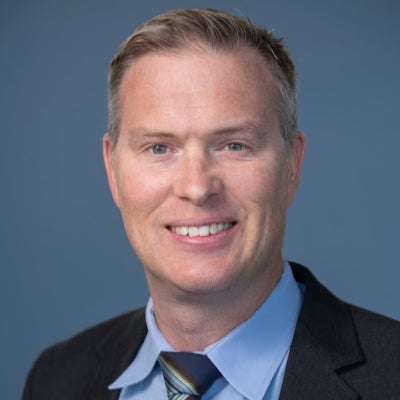
Dr. Michael Brown is a Professor of Geotechnical Engineering at the University of Dundee, leading the Geotechnics Research Group. He holds a BSc (Hons) in Civil & Structural Engineering from the University of Bradford (1995) and a PhD from the University of Sheffield (2004), focusing on rapid load testing of piles. His expertise includes offshore geotechnics, renewable energy foundations, and silent foundation systems. He has held roles in industry and academia, including managing the SUBR:IM project and serving on technical committees like ISSMGE TC212 and TC104. Research interests span screw piles, offshore wind foundations, pipeline installation, and seismic tunneling. He has secured significant grants (EPSRC, etc.) and pioneered innovations like silent piling and drag embedment anchors. Notable awards include the ICE Geotechnics Medal and Telford Gold Medal. His work contributes to UN Sustainable Development Goals related to sustainable energy and infrastructure. Key Projects: Floating Wind Anchors, Cable Burial, Braced Excavations, and Offshore Renewables. Awards: Over 14 honors including editorial and technical leadership roles. Publications: 210+ outputs with focus on centrifuge testing, DEM simulations, and offshore applications.
Yaseen Sharif is a Researcher in the Department of Civil Engineering at the University of Dundee, specializing in geotechnical engineering for offshore renewable energy systems. His work focuses on screw pile foundations, centrifuge modeling, and numerical simulation techniques like the Discrete Element Method (DEM). He contributes to UN Sustainable Development Goal 7 (Affordable and Clean Energy) through innovations in offshore wind energy infrastructure. Key research interests include screw pile installation mechanics, helix interaction dynamics, and soil-structure interaction in marine environments. His recent work explores installation advancement ratios, cyclic load responses, and silent piling technologies to reduce environmental impacts. Recipient of the Institution of Civil Engineers Telford Gold Medal 2024 Finalist for the 2025 Scottish Knowledge Exchange Awards Winner of the 2023 International Marine Contractors Association Sustainability Award His research has produced over 37 publications and two significant datasets, including centrifuge experiments on screw pile performance. Collaborations involve institutions like NGI Norway and industry partners for offshore wind solutions.
Dr. FENG Weiqiang is an Assistant Professor and PhD supervisor at the Department of Ocean Science and Engineering, Southern University of Science and Technology (SUSTech), Shenzhen, China. He received his PhD in Geotechnical Engineering from The Hong Kong Polytechnic University in 2016, after completing a Master's at Zhejiang University and a Bachelor's at Central South University. His research bridges marine geotechnics with advanced computational and sensing technologies. PhD: Geotechnical Engineering, The Hong Kong Polytechnic University (2011–2016) MSc: Geotechnical Engineering, Zhejiang University (2008–2011) BEng: Mining & Geotechnical Engineering, Central South University (2004–2008) Dr. Feng specializes in marine soil consolidation , elasto-viscoplastic constitutive modeling , and fiber optic geotechnical sensors . He pioneered a modified Cam-Clay model incorporating nonlinear loading-unloading and temperature effects , with applications in major projects like Hong Kong International Airport's Third Runway and the Tseung Kwan O reclamation. His fiber Bragg grating effective stress meter , licensed to NanZee Sensing Co., Ltd., represents the first global instrument for direct soil stress measurement. His publications (73 SCI papers, H-index 23) focus on submarine pipeline-soil interaction , robot safety systems , and offshore energy islands . Key trends include multi-physics coupling in geotechnical systems, machine learning integration for damage detection, and advanced sensing techniques for marine environments. 2024: Outstanding College Advisor Award, SUSTech 2023: Dual Outstanding Individual Awards (Student Recruitment & Party Affairs), SUSTech 2020: Shenzhen Municipal Government Category C Overseas High-Level Talent 2016: 'Ringo Yu' Best Doctoral Thesis, Hong Kong Institution of Civil Engineers 2007: National Scholarship, Ministry of Education, China Dr. Feng actively leads 5 research projects (including 1 National NSFC grant and 3 provincial/municipal grants), participates in over 10 national/Hong Kong SAR funded programs, and mentors prospective postdoctoral fellows, PhD, and master's students in geotechnical, mechanical, and environmental disciplines. His team develops intelligent geotechnical systems for offshore applications, including submarine robot safety frameworks and smart energy island infrastructure . Current collaborations span Canadian National Geotechnical Code implementation and Kunlong 500 tracked mining vehicle soil interaction studies.
Dr. Sam Divall is a Senior Lecturer in Geotechnical Engineering at the Department of Engineering, School of Science & Technology, City, University of London. He has been a faculty member since 2015 and currently serves as Director of the Research Group into Transforming Urban Environments (TrUE), Director of the Civil Engineering Laboratory and Giant Shear Box facility, and Chair of the Consortium for Research into Congested Underground Space (CoRCUS). He is also a Chartered Civil Engineer with the Institution of Civil Engineers (ICE) and a Fellow of the Higher Education Academy. Dr. Divall earned his MEng (Hons) and PhD in Civil and Geotechnical Engineering from City, University of London. His postgraduate training includes a Postgraduate Certificate in Academic Practice. His research is centered on geotechnical events in congested urban underground environments, with a focus on tunnelling, shaft construction, piled foundations, and soil nailing in clay. He specializes in both physical (centrifuge) and numerical modelling to study ground movements and improve construction safety. His recent publications analyze long-term tunnelling behaviour, pile stiffness effects, and physical modelling techniques. The work spans journal articles in Tunnelling and Underground Space Technology , Géotechnique , and International Journal of Physical Modelling in Geotechnics , as well as conference proceedings from ICPMG and ECSMGE. His research consistently addresses real-world engineering challenges in urban infrastructure. SMSCE Teaching and Learning Prize (2020) Teaching Award, Civil Engineering Department (2015) ICE QUEST Travel Award (2013) ISSMGE Foundation Award (2013) Winning Presentation, BGA Young Geotechnical Engineers’ Symposium (2012) Dr. Divall actively supervises a large cohort of undergraduate, MSc, and PhD students on projects related to tunnelling, pile behaviour, and soil mechanics. He has led major research projects and collaborations, including an MoU with Ho Chi Minh City University of Transport. He is a member of the ISSMGE TC104 and serves on scientific committees for international conferences such as ICPMG 2026. His work is integral to the Centre of Excellence in Temporary Works and Construction Method Engineering in partnership with the Temporary Works Forum (TWf). He leads and co-leads research within the Civil Engineering Laboratory, utilizing the Giant Shear Box and centrifuge facilities. His team focuses on transforming urban environments through innovative geotechnical solutions, with ongoing projects on shaft break-outs, pile performance, and recycled materials for construction platforms.
Dr. Aaron Bradshaw is a Professor in the Department of Civil and Environmental Engineering at the University of Rhode Island. His research focuses on marine geotechnics, soil-structure interaction, and dynamic properties of soils, with applications to offshore wind energy infrastructure and geotechnical hazards. He holds a Ph.D. in Civil Engineering (URI, 2006), M.S. in Ocean Engineering (URI, 1999), and B.S. in Civil Engineering (Tufts University, 1996). His core research areas include: Offshore foundation systems for renewable energy Soil-anchor interaction mechanics Liquefaction behavior of marine sediments Geotechnical instrumentation and field monitoring Performance of infrastructure during earthquakes Bradshaw's recent publications demonstrate strong focus on offshore wind turbine foundations, anchor behavior in marine sediments, and advanced geotechnical monitoring techniques. His work frequently involves large-scale field testing and computational modeling of soil-structure systems. Awards: Young Professor Paper Award, Deep Foundations Institute (2015) Recent Grants: 2023: PI for DOE Phase IIB offshore site investigation tool 2022: Co-PI for CVOW Structural Monitoring Program 2022: PI for Triton Anchor commercialization 2021: Co-PI for physics-based digital twins project 2020: PI for Triton Anchor System development He leads multiple industry-collaborative projects focused on advancing offshore renewable energy infrastructure.
Overview Cathal Cummins is an Associate Professor in the School of Mathematical & Computer Sciences at Heriot-Watt University, with a focus on interdisciplinary fluid dynamics. His research explores fluid-solid interactions, including aerosol dispersion, wave energy systems, and biological structures like dandelion seed flight. He holds a PhD in Applied Mathematics from the University of Limerick and has held academic positions at UCD and the University of Edinburgh. Education PhD in Applied Mathematics, University of Limerick (2015) MSc in Mathematical Modelling, University of Limerick (2011) BSc in Mathematical Physics, University College Dublin (2009) Research Interests His work combines analytical, numerical, and experimental approaches to study fluid dynamics phenomena. Key areas include: Aerodynamics of biological systems (e.g., dandelion seed dispersal) Wave energy converters and offshore engineering Aerosol dispersion and virus transmission Low Reynolds number flows and vortex dynamics Recognition Cummins has received notable awards including the Conway Medal (2009), BAMC/SIAM Best Student Talk (2013), and recognition in Physics Today and Nature . His research on dandelion flight featured on the cover of Nature (2018). Collaborations & Impact He collaborates with industry partners like Aquamarine Power and leads initiatives such as the MAC-MIGS Industry Sandpit. His work on face coverings and aerosol dispersion during the pandemic has informed public health strategies. Labs & Teams Leads the Mathematical Biology and Fluid Dynamics group at Heriot-Watt, focusing on interdisciplinary projects with applications in energy, ecology, and public health.
Prof. Konrad Nübel is a Professor of Construction Process Management at the Technical University of Munich (TUM), affiliated with the TUM School of Engineering and Design. His research focuses on integrating digital methods and sustainable practices into construction value chains, emphasizing process engineering, management sciences, and technical challenges. He holds leadership roles in the TUM Leonhard Obermeyer Center (digital methods in built environment), TUM Cluster Sustainable Real Estate, and Venture Labs Built Environment. Education: Civil Engineering degrees from University of Karlsruhe (now KIT) and University of Waterloo (Canada), with a 2002 PhD in Geotechnical Engineering from KIT. His career spans academic research (numerical modeling of granular materials) and industry roles with companies like Züblin, Bilfinger Berger, and BAUER Spezialtiefbau, managing global construction projects. Research interests include: - Process-oriented construction project management - AI and automation in construction productivity - Data cooperatives for SME empowerment - Geotechnical risk analysis in tunnelling - Sustainable infrastructure design Key contributions include frameworks for federated digital platforms (Sustainability 2021), TBM performance optimization models (Geotechnique 2024), and digital decarbonization case studies (Buildings 2023). He advocates for workforce training in Industry 4.0 and chairs the VDI Advisory Board for Construction Technology. Received TUM's Honorary Certificate for Excellence in Teaching (2021) Published over 50 peer-reviewed articles since 2000 Guided international collaborations in Botswana, Canada, Japan, and Germany Labs/Teams: Core member of TUM's Leonhard Obermeyer Center and Sustainable Real Estate initiatives, leading interdisciplinary teams in construction innovation.
Prof. Juliusz Orlikowski is a Professor and Vice-Dean for Cooperation and Development at Gdańsk University of Technology's Faculty of Chemistry, leading the Department of Corrosion and Electrochemistry. His academic career includes roles as an assistant, assistant professor, and university professor before becoming a full professor in 2023. He holds a PhD from Gdańsk University of Technology (1998) and habilitation from Warsaw University of Technology (2011). His research focuses on corrosion monitoring, stress corrosion cracking, and cathodic protection systems for marine and petrochemical infrastructure. He has received multiple awards, including the National Education Commission Medal and recognition for innovations in corrosion monitoring from PKN Orlen and international fairs. His work spans 94+ publications, with recent contributions on dynamic impedance spectroscopy and corrosion in extreme environments. He advises on corrosion protection for offshore platforms, refineries, and water infrastructure, combining field testing with advanced electrochemical methods. Education: PhD in Materials Engineering, Gdańsk University of Technology (1998) Habilitation in Technical Sciences, Warsaw University of Technology (2011) Master's degree, Gdańsk University of Technology (1993) Research Interests: Corrosion mechanisms in petrochemical and marine environments Risk-Based Inspection (RBI) methodologies Dynamic impedance spectroscopy for real-time monitoring Cathodic protection system optimization Material degradation under mechanical stress Awards: Highlighted achievements include the 2023 Minister of Education Team Award for implementation activities and the 2022 Gold Medal at INTARG for inventive corrosion solutions. His work bridges academic research with industrial applications, addressing challenges in refinery safety and offshore infrastructure longevity.
Michael Begel is a Distinguished Physicist and Omega Group Leader in the Physics Department at Brookhaven National Laboratory. With over two decades of experience in high-energy physics, he has held progressively senior positions at BNL since 2007, becoming Distinguished Physicist in 2023. His work primarily focuses on experimental particle physics using major collider facilities worldwide. PhD, University of Rochester (2000) MA, University of Rochester (1993) BA, Reed College (1991) Dr. Begel's research spans multiple major experimental programs in high-energy physics. His current work focuses on the U.S. Muon Collider initiative and the U.S. Future Circular Collider Collaboration. Previously, he contributed significantly to the CERN ATLAS Experiment (since 2008) and the FNAL DZero Experiment (1999-2010), with earlier work on the FNAL E706 Experiment (1991-2007). His research interests encompass experimental techniques for particle detection, collider physics, and precision measurements of fundamental particles. Analysis of Dr. Begel's recent publications reveals a strong focus on precision measurements at the Large Hadron Collider, particularly with the ATLAS detector. His work spans Higgs boson physics, top quark properties, heavy flavor production, and searches for physics beyond the Standard Model. The publications demonstrate expertise in advanced data analysis techniques, detector performance, and trigger systems essential for modern high-energy physics experiments. Scientific Awards and Recognition: 2025 Breakthrough Award in Fundamental Physics (awarded to ALICE, ATLAS, CMS and LHCb collaborations) 2024 Brookhaven Science & Technology Award 2024 and 2023 U.S. Patents for computing platforms and data acquisition systems 2019 Fellow of the American Physical Society 2019 and 2013 High Energy and Particle Physics Prizes of the European Physical Society 2009 Sambamurti Memorial Lectureship at Brookhaven National Laboratory 2000 Frederick Lobkowicz PhD Thesis Prize from University of Rochester As Omega Group Leader since 2016, Dr. Begel oversees a research team conducting cutting-edge experiments in particle physics. His leadership encompasses multiple major international collaborations including ATLAS at CERN, where his group contributes to detector operations, data analysis, and future upgrades. The group participates in various grant-funded research initiatives supporting U.S. involvement in international collider projects. The Omega Group under Dr. Begel's leadership is actively involved in the U.S. Muon Collider initiative and Future Circular Collider studies, building on decades of experience with the ATLAS experiment at the LHC and previous work on Tevatron experiments at Fermilab. The group maintains strong connections with international research institutions and plays a key role in advancing detector technology and data analysis techniques for next-generation particle physics experiments.
John Pile Jr is an Adjunct Professor of Game Programming at Champlain College, teaching within the Division of Communication & Creative Media. He currently serves as a Technical Director and Principal Engineering Manager at Schell Games, specializing in digital entertainment, VR/XR, and interactive storytelling. Holding an MS in Computer Games Technology from the University of Abertay, his expertise spans game engines, 2D graphics, and cross-platform development. He authored 2D Graphics Programming for Games and presented at the Game Developers Conference (GDC). Previously, he was a full-time faculty member at Champlain College. His work includes contributions to award-winning games like Flock! (BAFTA Scotland Game of the Year 2009) and Final Flight: Double Impact . John’s technical background includes roles as a Principal Lead Software Engineer at Microsoft, focusing on VR/AR/MR experiences and HoloLens development. He emphasizes inclusive, cross-disciplinary teams and innovative education.
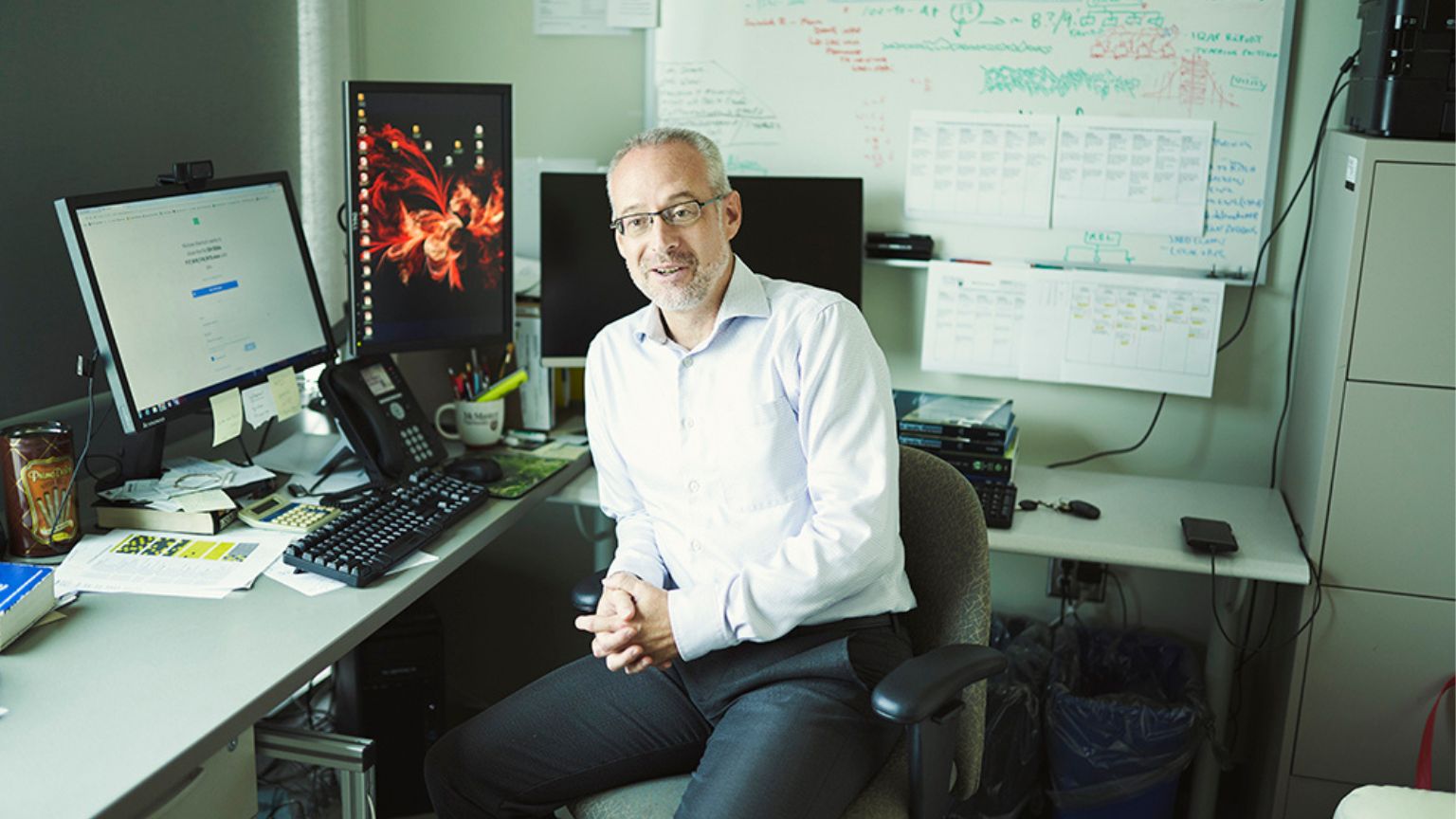
Michael Justason is a Professor and Program Chair of the Civil Engineering Infrastructure Technology Program at McMaster University’s W Booth School of Engineering Practice and Technology. He also chairs Management courses and holds degrees including B.Eng.Mgmt, M.Eng., MBA, and is a Professional Engineer (P.Eng.). His research focuses on earthquake ground motion modeling using fractal geometry, geotechnical engineering, and structural dynamics. He is concurrently pursuing a PhD under Professors Tracy Becker and Dieter Stolle, integrating ideas from earthquake engineering, geotechnical engineering, and fractal geometry to develop novel physical models. Dr. Justason emphasizes innovative teaching methods, such as lightboard videos and the “PowerPoint Karaoke” exercise, to enhance student engagement and reduce public speaking anxiety. He received the 2019 President’s Award for Outstanding Contributions to Teaching and Learning, McMaster’s highest teaching honor. His industry experience spans over 20 years in 40+ countries, informing his practical examples in courses like geotechnical engineering and engineering economics. His scientific awards include the 2022 Canadian Society for Civil Engineering Fellowship. Research contributions span pile-driving technology, smart systems integration in education, and seismic analysis of infrastructure. His articles reflect expertise in geotechnical testing methods, online program development, and student performance analytics. Dr. Justason’s work bridges academia and industry, emphasizing Industry 4.0 in M.Eng. programs and adaptive online learning systems. He collaborates on projects like the Taipei Municipal Incinerator Expansion and Bayou Chico Bridge, showcasing real-world applications of his research.
Dr. Felix Wagner is a researcher at ETH Zurich's Professorship for Solid State Physics, where he conducts experimental research on quantum computing platforms and dark matter detection. His work focuses on superconducting circuits for quantum computation and cryogenic calorimeters for particle detection, with particular expertise in transition edge sensors (TES). Wagner's research bridges quantum technologies and particle physics, with key interests in: Quantum computing error mitigation in superconducting circuits Direct detection of dark matter using cryogenic detectors Machine learning applications for experimental physics Optimization of low-temperature detector systems Development of analysis tools for particle physics experiments He leads the ML4CPD project (Machine Learning for Cryogenic Particle Detectors), developing novel methods to automate data analysis and control systems. His recent publications demonstrate strong focus on machine learning applications in particle physics, particularly for the CRESST and COSINUS dark matter experiments. Wagner collaborates with the Quantum Computing Hub of ETH Zurich and Paul Scherrer Institute, and participates in international collaborations including CRESST and COSINUS. His work involves underground experiments at facilities like LNGS Italy.
Franck BéCLIN is a Lecturer in the Department of Physics at the Faculty of Science and Technology, University of Lille, and a member of the Materials and Transformations Unit (UMET, CNRS UMR 8207). He conducts research within the Physical Metallurgy and Materials Engineering team, focusing on microstructure and plasticity of ceramics and glasses using advanced electron microscopy techniques (TEM, SEM). His research interests include high-entropy alloys, nuclear materials, powder metallurgy, and the thermomechanical behavior of advanced materials. He actively supervises PhD students working on uranium alloys, high-entropy alloy development, and damage mechanisms in extreme environments such as high-temperature chlorinated atmospheres and liquid metal embrittlement. His recent publications (2020–2023) highlight work on high-entropy alloys (Al-Cr-Fe-Mn-Mo system), nuclear fuel characterization (UMo, ZrN coatings), and microstructural evolution under high pressure and temperature. These studies often involve mechanical alloying, hot pressing, and in-situ carbide formation, published in journals like Journal of Nuclear Materials , Philosophical Magazine Letters , and Frontiers in Earth Science . He collaborates extensively with researchers such as Matthieu Touzin, Catherine Cordier, and Ingrid Proriol Serre. No scientific awards are listed in the provided text. Franck BéCLIN advises numerous PhD students, including Bastien GUYOT, Antoine ROUSSELOT, and Jorge SALGADO. He is involved in multiple research projects related to nuclear materials and advanced alloy development, though specific grants are not detailed. He is part of the UMET laboratory, which hosts platforms such as the Lille Electron Microscopy Platform (PMEL) and high-pressure experimental facilities.
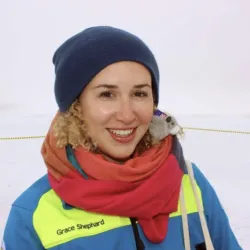
Dr. Grace Shephard is an Honorary Senior Lecturer at the Research School of Earth Sciences (RSES) at the Australian National University (ANU), hosted within the Geophysics-Geodynamics groups. She received her PhD from the University of Sydney's EarthByte Group and has held postdoctoral and research roles at Norwegian Centres of Excellence, including the Centre for Earth Evolution and Dynamics (CEED) and the Centre for Planetary Habitability (PHAB). Currently, she leads the POLARIS project, funded by the Norwegian Research Council, investigating the Arctic's evolution in deep time. Her research focuses on plate tectonics, mantle dynamics, and paleogeography, utilizing digital Earth models to explore geological processes over millions of years. Education: BSc (Adv.) (Honours I) and PhD from the University of Sydney Research Interests: Plate tectonics, paleogeography, mantle structure, GPlates software, science communication, and STEM education initiatives Dr. Shephard is actively involved in science communication, advocating for accessible data visualization through initiatives like the Batlow color scheme and promoting STEM engagement through programs such as Curious Minds and STEMPals. Her work bridges computational geodynamics and observational geology, with contributions to understanding Arctic geology and mantle processes. Notable projects include the Tasmanide Geodynamics and Mineral Systems and collaborations on the SVALGEOL project. She is affiliated with the University of Oslo as a Senior Researcher and contributes to open data and figure-sharing platforms like S-ink.org.
Tony Valayil Varghese serves as Senior Research Scientist and Assistant Research Professor at Boise State University, holding dual appointments in the Micron School of Materials Science and Engineering and the Electrical and Computer Engineering Department. His interdisciplinary work bridges advanced materials science with practical applications in energy harvesting and flexible electronics systems. Dr. Varghese's educational foundation includes: Ph.D. in Material Science and Engineering from Boise State University (2019) M.S. in Nanoscience and Technology from National Institute of Technology, India (2012) B.S. in Mechanical Engineering from Mahatma Gandhi University, India (2010) His research program centers on additive manufacturing of 2D nanomaterials with particular emphasis on flexible thermoelectric devices for energy harvesting. Key investigation areas include MXene-based materials development, advanced printing techniques for flexible electronics, and nanomaterial ink formulation. His work spans multiple disciplines including materials science, electrical engineering, and environmental monitoring, with strong connections to UN Sustainable Development Goals related to clean energy and climate action. Analysis of his publication record (2011-2025) reveals an accelerating research trajectory with increasing focus on practical applications of nanomaterials. Recent work demonstrates sophisticated integration of aerosol jet printing, laser-induced graphene techniques, and plasma deposition methods to create next-generation energy harvesting and sensing devices. His research shows particular innovation in developing stable nanomaterial inks and improving manufacturing processes for real-world implementation. Dr. Varghese actively collaborates with Prof. David Estrada's research group and maintains an extensive publication record with 18 research outputs, an h-index of 7, and 431 citations. His work has gained attention from multiple news outlets, academic blogs, and social media platforms including Bluesky and X, with significant readership on Mendeley. His laboratory specializes in advanced additive manufacturing techniques for nanomaterials, particularly focusing on creating flexible electronic components and energy harvesting devices using colloidal nanocrystals and 2D materials. Current projects appear to emphasize triboelectric nanogenerators, MXene supercapacitors, and flexible electrochemical sensors for environmental monitoring applications.