Prof. Joaquin GARCIA ALFARO is a Professor at Telecom SudParis, affiliated with the SCN department. His research focuses on cybersecurity, network security, quantum computing applications, and resilience engineering in cyber-physical systems. He has contributed to advancements in intrusion detection systems, blockchain integration in cellular networks, and privacy-preserving frameworks for IoT and healthcare. University: Telecom SudParis Key Research Areas: Cybersecurity, Quantum Computing, IoT Security, Resilience Engineering Labs: SAMOVAR laboratory His work emphasizes practical solutions for real-world challenges, including secure data provenance, digital twin implementations, and energy-efficient edge computing. Recent research explores quantum-resistant protocols and collaborative drone systems.
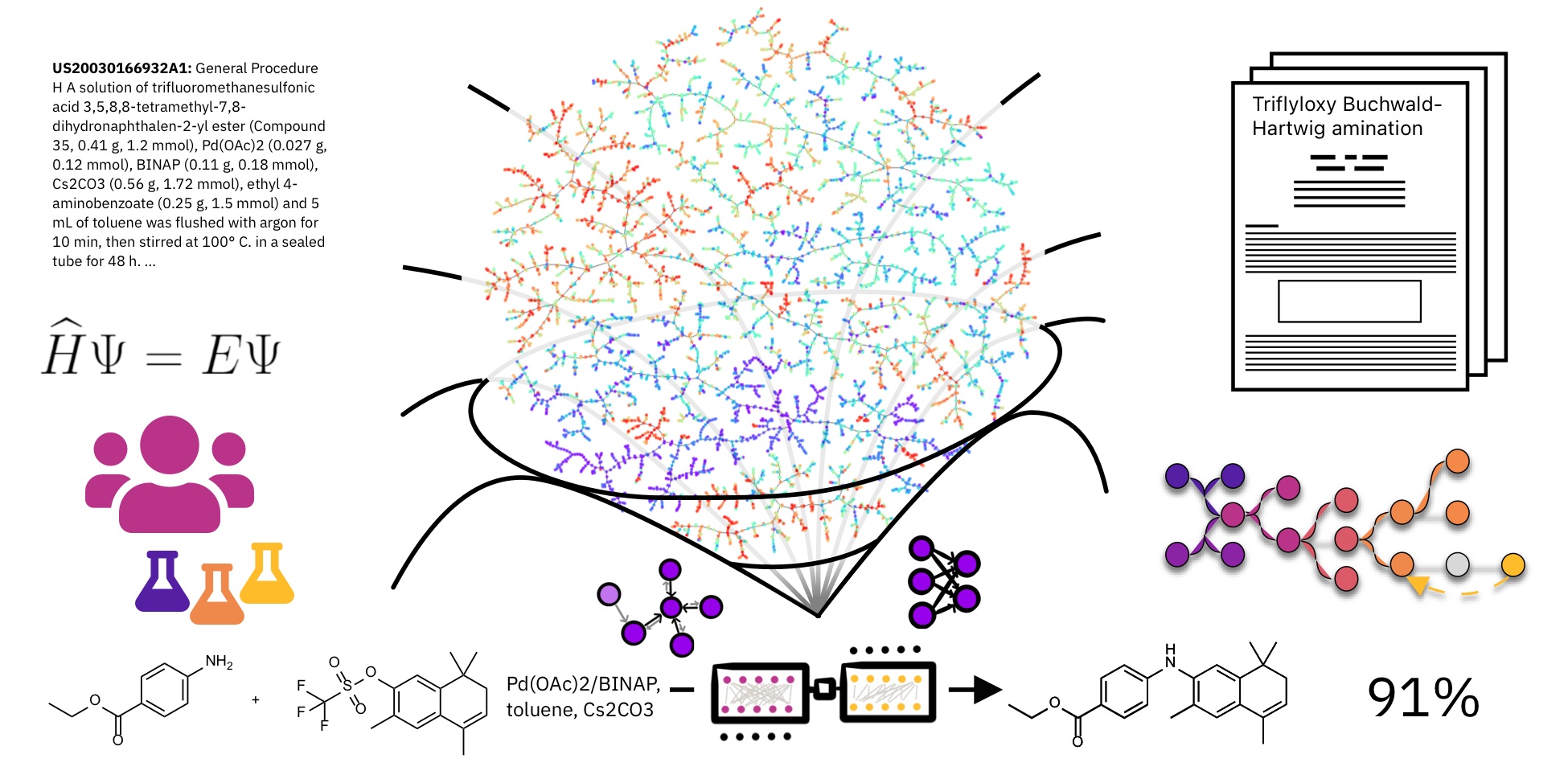
Philippe Schwaller is a Tenure Track Assistant Professor at École Polytechnique Fédérale de Lausanne (EPFL), School of Basic Sciences, within the Institute of Chemical Sciences and Engineering. He leads the Laboratory of Artificial Chemical Intelligence (LIAC), a research group focused on leveraging artificial intelligence to accelerate molecular discovery and sustainable chemistry. He is also a core Principal Investigator of the NCCR Catalysis, a national Swiss research center. His research lies at the intersection of chemistry, materials science, and computer science, with a strong emphasis on developing machine learning models for molecular design and synthesis. LIAC's work is driven by real-world sustainability challenges, aiming to reduce the time and cost of discovering new functional molecules and materials. The recent publications and projects from his lab highlight a strong trend in generative AI for chemistry, including memory-augmented models, hypergraph neural networks, and large language models tailored for scientific discovery. These efforts are complemented by educational initiatives such as the 'AI for Chemistry' course and practical programming resources for chemists. He actively supervises a diverse group of PhD students and contributes to multiple doctoral programs at EPFL, including EDCH and EDPY. His teaching portfolio includes courses on computational chemistry, AI applications in chemistry, and scientific machine learning. Philippe Schwaller is deeply involved in advancing AI-driven scientific discovery through both research and education, positioning his lab at the forefront of artificial chemical intelligence. The lab maintains active open-source contributions on GitHub, fostering collaboration and transparency in scientific AI development.
Dr Michael Boemo is an Assistant Professor at the University of Cambridge, holding dual appointments in the Department of Pathology and Department of Genetics. He leads research at the intersection of computational biology, DNA replication, and cancer genomics, developing machine learning tools to analyze replication stress and genomic instability. Academic Background: BA in Mathematics (Rutgers University), PhD in Physics (University of Oxford) Research Focus: Genomic instability in cancer, DNA replication/repair defects, computational modeling using machine learning and high-performance simulations Teaching: Lectures in Natural Sciences Tripos (mathematical biology, genetics, systems biology), module organizer for cancer biology and biological modeling His research group leverages nanopore sequencing and AI to map replication fork dynamics, revealing how stalled forks generate mutations in cancer cells and pathogens. Recent work examines extrachromosomal DNA replication vulnerabilities and transcription-replication conflicts. Dr Boemo collaborates across computational biology and cancer research domains, with publications spanning journals like Nature Methods, Cell, and PLoS Computational Biology. His lab develops tools such as DNAscent for replication fork analysis and explores therapeutic targeting of replication stress.
Sairaj Dhople is the Oscar A. Schott Professor in the Department of Electrical and Computer Engineering at the University of Minnesota. His research focuses on renewable energy systems, particularly modeling and control of grid-connected inverters, power-system reliability, and distributed energy resources. University: University of Minnesota Department: Electrical and Computer Engineering Academic Rank: Professor His work spans power systems, power electronics, and control theory, with recent publications examining grid-forming inverters, stability analysis, and hybrid computing solutions for optimization problems. Key research themes include: Equivalent-circuit modeling for renewable systems Large-signal stability assessment inverter-based resources Grey-box system identification of power networks Interoperability standards for grid-forming technologies Scientific awards include the Institute for Advanced Study Faculty Fellowship (2018). Current projects funded by the National Science Foundation and U.S. Department of Energy explore analog/hybrid computing and universal interoperability for grid-forming inverters (UNIFI Consortium). His Dhople Research Group investigates power-system architecture and sustainability challenges.
Filippo Menczer is a Professor of Informatics and Computer Science and Director of the Center for Complex Networks and Systems Research at Indiana University School of Informatics and Computing. He maintains courtesy appointments in Cognitive Science and Physics, and is affiliated with the Center for Data and Search Informatics and the Biocomplexity Institute. Additionally, he holds a Fellowship at the ISI Foundation in Torino, Italy. His research spans computational analysis of digital ecosystems with emphasis on: Web Science: structural and behavioral analysis of internet-scale systems Social Media Dynamics: information diffusion, meme competition, and attention economy modeling Complex Networks: traffic pattern analysis, popularity dynamics, and social link prediction Publications from 2009-2012 reveal consistent focus on social network analytics and information diffusion mechanisms. Key trends include modeling attention-limited meme competition, bursty popularity patterns in social media, and social link prediction through metadata analysis. His work integrates network science, computational social science, and data mining to decode online behavior. His scientific recognition includes: Fellow of ISI Foundation (2013) He leads the NaN research group within the Center for Complex Networks and Systems Research, focusing on interdisciplinary approaches to complex information networks and social media analytics.
Alexandros Kontogiannis is a research fellow at the University of Cambridge, Department of Engineering, specializing in fluid dynamics and applied mathematics. His work combines Bayesian inference, machine learning, and physics-informed algorithms to solve inverse problems in magnetic resonance velocimetry (MRV) and fluid-structure interaction. EPSRC National Fellow in Fluid Dynamics Member of Energy, Fluids and Turbomachinery Division Research Focus: Development of digital twin frameworks that integrate MRV data with Navier-Stokes equations to reconstruct flowfields, infer rheological parameters in non-Newtonian fluids, and estimate hidden quantities like pressure and wall shear stress. Key innovations include: Physics-informed compressed sensing for sparse MRV data Simultaneous boundary shape and flowfield estimation Bayesian turbulence model parameter learning Scientific Awards: ASME Fluids Engineering Division Graduate Student Scholar (2021) Technical Chamber of Greece (TEE) Award (2018) Limmat Foundation Academic Excellence (2017) Mentzelopoulos Scholarship for international studies (2017) Greek State Scholarships Foundation Award (2012) Key Contributions: Algorithms for 3D flow reconstruction with adaptive discretization, viscous signed distance field regularization, and multi-objective aerodynamic shape optimization. His methodologies enable 27x reductions in MRI scanning time while maintaining diagnostic accuracy.
Barbara Bigliardi is an Associate Professor at the Department of Engineering and Architecture, University of Parma, with national scientific qualification for full professor in Economic-Management Engineering (SSD ING-IND/35). She serves as President of the Management Engineering Program at University of Parma and Director of Bachelor's/Master's programs at University of San Marino, co-leading double-degree initiatives between the two institutions. Over 100 publications (57 SCOPUS-indexed) with H-index=20 Editorial roles: Cambridge Scholars Publishing (2019), MDPI Sustainability, Sci, European Journal of Innovation Management Key research areas: Open Innovation, Technology Transfer, Food Industry Innovation, Industry 4.0, Supply Chain Sustainability Recent Publications (2024-2025) demonstrate leadership in: Industry 4.0 integration with circular economy AI applications in public administration and healthcare Digitalization of food supply chains Green startup resource orchestration Simulation-based optimization in remanufacturing Sustainable additive manufacturing Scientific Recognition : 2005 Emerald Highly Commended Award 2013 Most Cited Paper in Trends in Food Science & Technology 2019 Highly Cited Paper in Review of Policy Research Research Leadership includes: National Observatory on Start-ups (President since 2021) National Observatory on Reputation (Vice President since 2019) INAIL-funded mobile risk assessment systems (2018-2020) INAF space technology transfer projects (2018-present) Academic Contributions : Supervised over 300 theses Deputy Coordinator of Industrial Engineering Doctoral Program Director of Management Engineering Programs (Parma & San Marino) Founder of academic spin-offs: Sistemi per il marketing di contenuto S.r.l. (2016-present), Univenture SrL (2006-2010)
Adrot Anouck is a Lecturer in Management Research at PSL University, focusing on crisis management, organizational improvisation, and disaster risk reduction. Her work bridges information systems with emergency response, emphasizing cross-border resilience and digital transformation in extreme situations. Key Research Themes: Crisis management, organizational resilience, information systems in disaster contexts, cross-border cooperation, and digital decision-making under uncertainty. Her publications span journals like Expert Systems with Applications and Information Systems Journal , with recent studies on portfolio management under uncertainties and data sharing barriers in disaster risk reduction. She has contributed to book chapters and conference proceedings at venues such as the Academy of Management and EGOS Colloquium, exploring topics like measurement practices during the COVID-19 pandemic and the role of technology in crisis response. Adrot collaborates extensively with researchers across disciplines, including Moriceau, Karanasios, and Friedrich. While no explicit awards or student advising details are provided in the text, her work highlights the interplay between structure, action, and digital tools in enhancing organizational resilience.
Dr. Dandolo Flumini is a Researcher at the Zurich University of Applied Sciences (ZHAW), School of Engineering, specializing in Applied Complex Systems Science. His research focuses on artificial life, morphological computation, blockchain applications, and computational modeling. He serves as team member or project lead in multiple interdisciplinary initiatives including Bio-HhOST (bio-hybrid tissues), Agroforestry Carbon Token System, and blockchain-based voting solutions. His primary research interests include: Complex Systems Science : Emergent behaviors in biological and artificial systems Morphological Computation : Physical systems performing computational tasks Artificial Chemistry : Programmable chemical systems using droplet networks Blockchain Applications : Decentralized finance and voting systems Computational Ethics : Responsible implementation of AI and modeling Flumini's recent publications (2019-2023) demonstrate strong focus on microfluidic systems, droplet agglomeration physics, programmable chemistry, and ethical AI. His work frequently appears in artificial life and computational modeling venues, with increasing emphasis on real-world applications in sustainability and decentralized systems. He maintains active collaborations through the Applied Complex Systems Science research group at ZHAW, contributing to projects involving microfluidic device design, blockchain architectures, and bio-hybrid tissue engineering.
Ehsan Samei is the Reed and Martha Rice Distinguished Professor of Radiology at Duke University. He holds concurrent professorships in Medical Physics, Biomedical Engineering, Physics, and Electrical and Computer Engineering. His leadership roles include Chief Imaging Physicist at Duke University Health System, Director of the Carl E. Ravin Advanced Imaging Laboratories, and Director of the Center for Virtual Imaging Trials (CVIT). Education: University of Michigan (PhD, 1997; MEng, 1995) Key Appointments: Radiology (Clinical Science Departments), Biomedical Engineering (Pratt School of Engineering), Physics (Trinity College of Arts & Sciences) Dr. Samei's research bridges medical imaging physics with clinical applications. His work focuses on photon-counting CT technology, virtual imaging trials, and AI-driven harmonization of CT images. He develops computational models for organ dosimetry, disease quantification, and procedural optimization in radiology. Recent publications emphasize virtual imaging trials for evaluating CT technologies, radiation dose reduction strategies, and AI integration in medical imaging. His studies compare photon-counting CT with conventional systems for lung density, liver lesion detection, and cardiac imaging, while advancing radiomics and dose monitoring frameworks. Scientific Awards Fellow of AAPM (FAAPM) Fellow of SPIE (FSPIE) Fellow of AIMBE (FAIMBE) Fellow of IOMP (FIOMP) Fellow of ACR (FACR) President of AAPM (2023) President of SDAMPP (2010-2011) Dr. Samei has secured major grants from NIH, NCI, and industry partners like GE Healthcare and Siemens. He leads the Center for Virtual Imaging Trials and directs multiple residency training programs in medical physics. His laboratory develops simulation toolkits, 3D-printed phantoms, and dose analytics platforms.
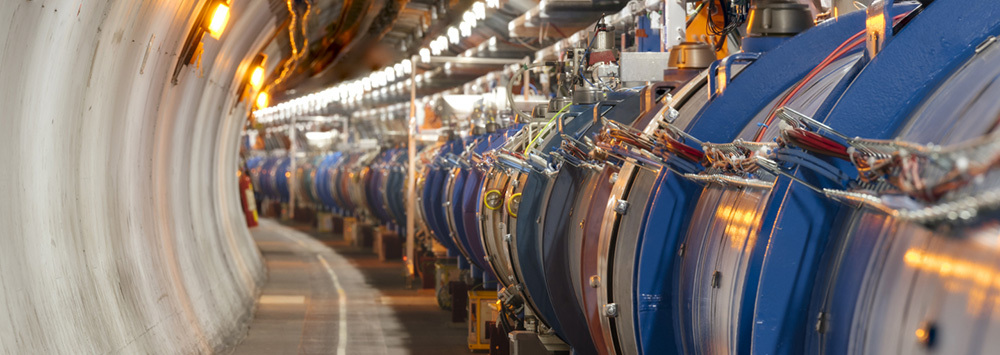
Professor Carsten Welsch is a leading physicist in accelerator science and technology at the University of Liverpool. He founded the QUASAR Group in 2008 and served as Head of the Physics Department from 2016 to 2023. His work bridges cutting-edge research in antimatter physics, beam diagnostics, and innovative accelerator design with strategic leadership in education and international collaboration. PhD in Accelerator Physics, University of Frankfurt Postdoc, Max Planck Institute for Nuclear Physics CERN Fellow (2005) His research focuses on low-energy antimatter physics , plasma wakefield acceleration , and dielectric laser accelerators , with applications in medicine and global challenges. Recent publications highlight advancements in betatron radiation modeling, positronium cooling, and plasma-driven acceleration techniques. He has secured over 25M€ in EU funding for networks like AVA and EuPRAXIA, trained 100+ Marie Curie Fellows, and founded D-Beam Ltd for beam instrumentation. Awards include the Viddy Platinum Award (2022) and Helmholtz-University YIG Award (2006). As Director of the LIV.INNO Center for Doctoral Training, he champions data-intensive science education. His outreach efforts have impacted millions globally, emphasizing discovery science and accelerator technology's societal benefits.
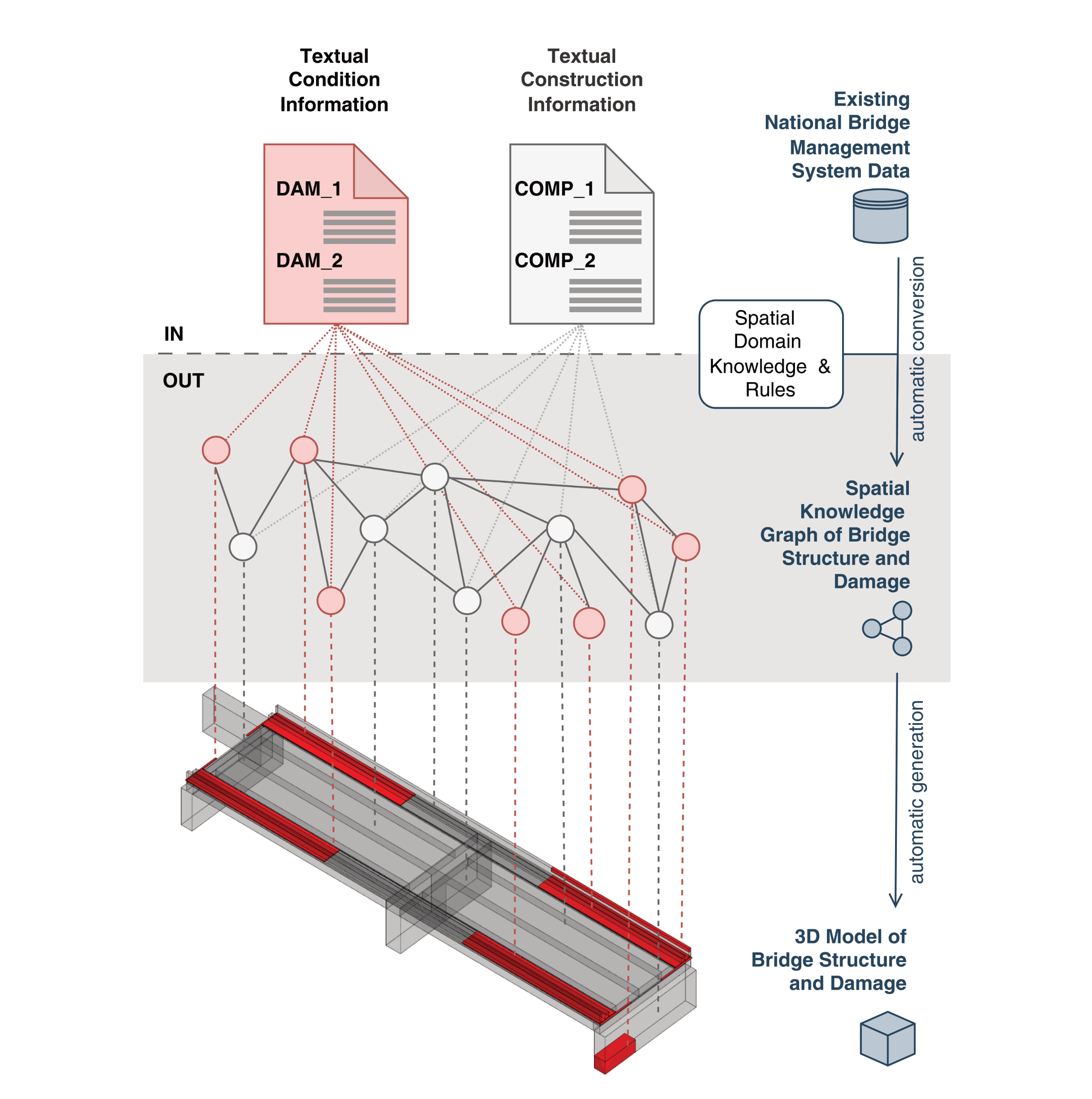
Prof. Dr. Jakob Beetz serves as a University Professor at RWTH Aachen University's Faculty of Architecture, leading the Design Computation (DC) research group. His work addresses critical challenges in sustainable built environments through digital innovation, focusing on integrating knowledge, information, and data across disciplines to reduce the sector's energy and material consumption—which accounts for over one-third of global totals—while advancing climate goals under the European Green Deal. His research spans Building Information Modeling (BIM), digital twins, and artificial intelligence, with emphasis on graph-based data federation, semantic web technologies, and large language models in construction. Key interests include evidence-based planning, parametric design optimization, building physics simulation, and networked knowledge modeling. Recent projects explore federated digital twin ecosystems for infrastructure management, intelligent damage assessment systems, and AI-driven solutions for wood structure preservation, directly contributing to sustainable development targets. Analysis of his 2024-2025 publications reveals a cohesive trajectory toward decentralized data environments and AI integration in Architecture, Engineering, and Construction (AEC). His work bridges theoretical foundations in knowledge representation with practical applications in bridge maintenance, road infrastructure, and timber construction, demonstrating consistent innovation in spatial data querying, federated issue management, and ontology-based process modeling. Prof. Beetz actively supervises PhD candidates, as evidenced by DC.Promotions 2024, and drives international collaboration through events like the Forum Construction Informatics 2025 and CIB W78 conferences. His research group engages with industry standards including Industry Foundation Classes (IFC) and Common Data Environments (CDEs), emphasizing open data principles and interoperability to transform construction workflows.
Professor Jason Evans is a leading climate scientist at the University of New South Wales (UNSW), serving as Chief Investigator at the Climate Change Research Centre. He completed his undergraduate degrees in physics and mathematics at Newcastle University in 1996 and earned his PhD in Environmental Management from the Australian National University in 2001. After six years as a postdoctoral and research fellow at Yale University, he returned to Australia in 2007 to join UNSW's Climate Change Research Centre. Education: Bachelor's degrees in Physics and Mathematics, Newcastle University (1996) PhD in Environmental Management, Australian National University (2001) Research Interests: Professor Evans specializes in regional climate dynamics, focusing on land-atmosphere interactions and the water cycle in the context of climate change. His research integrates advanced modeling tools with extensive observational datasets, particularly emphasizing satellite-based remote sensing and earth observations . His work addresses critical questions about regional climate change impacts, including urban climate dynamics, extreme weather events, drought mechanisms, and renewable energy implications under changing climate conditions. His research spans multiple interconnected domains: from developing novel approaches for moisture source identification using Lagrangian methods , to investigating flash drought prediction using deep learning techniques , and evaluating the performance of high-resolution climate simulations across diverse geographical regions including Australia, Alaska, and Saudi Arabia. Scientific Recognition: Lead Author, IPCC Special Report on Climate Change, Desertification, Land Degradation, Sustainable Land Management, Food Security, and Greenhouse Gas Fluxes in Terrestrial Ecosystems Member, Science Advisory Team for CORDEX (World Climate Research Programme) Editor, Journal of Climate (2016-2022) Fellow, Modelling and Simulation Society of Australia and New Zealand (2020) Biennial Medal, Modelling and Simulation Society of Australia and New Zealand (2021) Fellow, Royal Society of New South Wales (2021) Research Impact and Contributions: Professor Evans has made significant contributions to understanding regional climate change through his extensive publication record of over 50 articles since 2021. His work has advanced knowledge in areas including urban climate dynamics , drought mechanisms and prediction , extreme weather events , and renewable energy impacts under climate change . His research has informed climate policy through his role as a Lead Author for the IPCC and his involvement with international climate research initiatives like CORDEX.
Dr. Magdalena Schreter-Fleischhacker works at the Technical University of Munich within the Professorship of Simulation for Additive Manufacturing . Her research focuses on physics-based computational modeling of coupled liquid-powder-gas dynamics in metal additive manufacturing, including melt pool dynamics and powder-gas interactions . She specializes in multi-phase flow modeling using cut-element and diffuse interface methods with continuous/discontinuous Galerkin schemes . She also develops constitutive models for quasi-brittle materials like 3D printed concrete and rock, incorporating anisotropy , gradient-enhanced damage mechanics , and micropolar continua . Her computational work leverages matrix-free algorithms and parallel computing , with significant contributions to the deal.II finite element library . Research Interests Physics-based computational modeling of coupled liquid-powder-gas dynamics in additive manufacturing Multi-phase flow simulation using sharp/diffuse interface methods Advanced constitutive modeling for quasi-brittle materials (rock, soils, 3D printed concrete) High-performance computing and matrix-free algorithms Notable Contributions Development of consistent diffuse-interface models for melt-vapor dynamics Improvements to continuum surface flux models in additive manufacturing Formulation of gradient-enhanced damage-plasticity models for geological materials Principal contributor to the deal.II library (version 9.6) Supervised Student Projects Johannes Resch (2024): DG-based thermo-hydrodynamic melt pool simulations Julian Brotz (2024): DEM-FEM coupling for fluid-powder interaction Andreas Ritthaler (2024): Matrix-free cutDG formulation for complex flows Tinh Vo (2023): Laser modeling for melt pool simulations Scientific Awards ERC Starting Grant recipient
Lorenz Dörschel is an Adjunct Professor (Lehrbeauftragter) at the Institute of Automatic Control at RWTH Aachen University. He holds the academic title PD Dr.-Ing. habil, signifying post-doctoral research qualifications. His position is part-time, focusing on advanced control theory and applications. His primary research interests include: Control of distributed parameter systems (e.g., fluid dynamics, thermal processes) Model predictive control for industrial and automotive systems Parameter space methods for robust controller design Model reduction techniques for complex nonlinear systems Dörschel's recent publications (2018-2024) demonstrate broad applications across biomedical engineering, renewable energy, automotive systems, and industrial automation. His work consistently integrates mathematical rigor with practical implementations, emphasizing advanced control methodologies like nonlinear MPC, Lyapunov-based design, and Bayesian optimization. A recurring theme is the development of computationally efficient control strategies for distributed parameter systems. No scientific awards, student advising relationships, or research grants are documented in the available information.