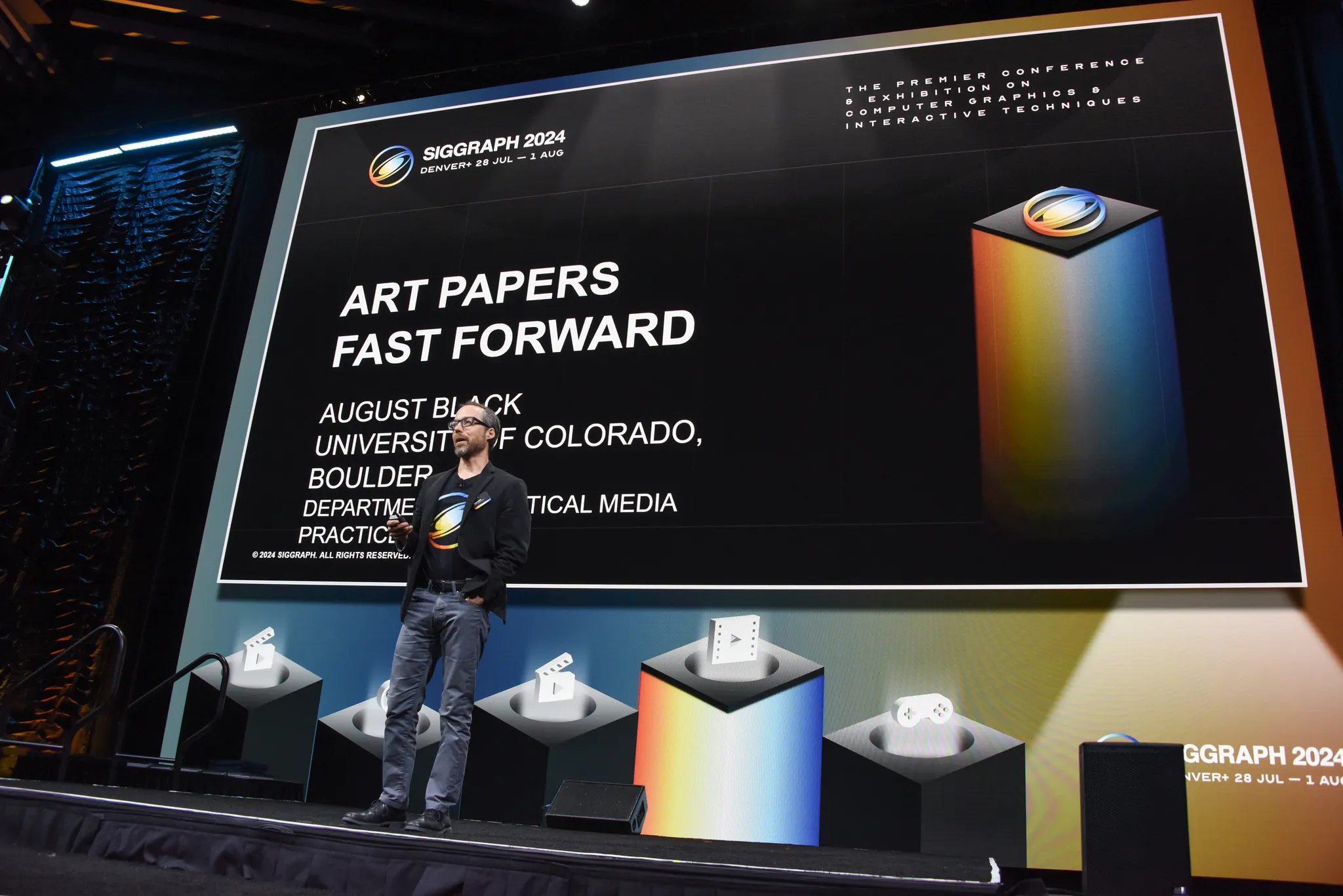
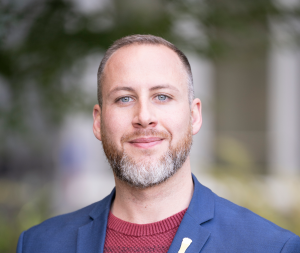
August Black is an Assistant Professor in the Department of Critical Media Practices at the University of Colorado Boulder. As a hybrid practitioner of art, design, and engineering, he creates experimental spatial and acoustic systems by building custom technological artifacts. His work critically engages techno-social systems through live networked audio, user-generated content, and immersive installations. BFA, Syracuse University MS & PhD, UC Santa Barbara (NSF IGERT Fellow) His research explores the intersection of philosophy of technology, software studies, and AI ethics. Current projects investigate global networking for hyper-local communication, while past work includes networked radio systems and generative audio-visual platforms. He has taught at UC Santa Barbara, University of San Francisco, and CU Boulder. Recent projects include Pulse Memorial (2024), a mobile multichannel memorial system, and Audio Compost (2022), a virtual frippertronic loop project. His work often incorporates WebRTC, FM radio integration, and participatory frameworks across digital and physical environments. NSF IGERT Fellow Black has advised PhD candidate Nima Bahrehmand and collaborated with institutions like ORF Kunstradio, Ars Electronica Futurelab, and Cycling '74. His practice includes software development (janode library for Janus WebRTC), hardware engineering, and exhibitions at festivals including Ars Electronica and SIGGRAPH.
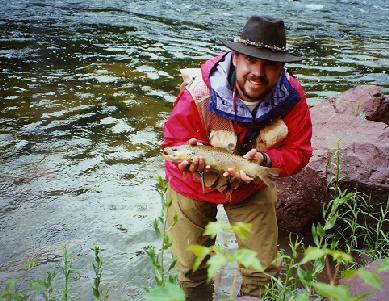
Erik Brunvand is a Professor at the School of Computing , University of Utah, and holds an Adjunct Professor position in the Department of Electrical and Computer Engineering. He was a University Professor from 2014–2016 and is currently on leave at the National Science Foundation (CISE/CNS division) (Fall 2019–2021). His research focuses on computer architecture, VLSI systems, asynchronous circuits, and graphics processing, particularly GPU architectures for ray tracing. Teaching includes courses like Digital VLSI Design , Embedded Systems and Kinetic Art , and interdisciplinary classes like Making Noise: Sound Art and Digital Media . He has organized the ASYNC international symposium series and contributed to projects such as TRaX (ray tracing architecture) and ACK (asynchronous design framework). Grants include NSF awards for GPU architectures, ray tracing applications, and microengine-based control systems. His work spans hardware design, sustainable computing, and arts/technology collaborations, including kinetic art installations and educational initiatives like circuit bending.
Afroditi Psarra is an Associate Professor of Digital Arts and Experimental Media (DXARTS) at the University of Washington, where she runs the DXARTS SoftLab. Her work bridges art, science, and technology with a focus on critical discourse in the creation of artifacts. She has presented her work at internationally renowned media art festivals such as Ars Electronica, Transmediale, CTM, Eyeo, Piksel, and WRO Biennale, as well as venues like Bozar, Onassis Stegi, EMST (Greek Museum of Contemporary Art), and Walker Art Center. Dr. Psarra's research centers on the art and science interaction with a critical discourse in the creation of artifacts. She is particularly interested in the use of the body as an interface of control, and the revitalization of tradition as a methodology of hacking existing norms about technical objects. Her practice builds on and extends the work of Cyber and Techno-Feminism(s) and the idea of female (and feminized) bodies as matrices of information. Her educational background includes a Ph.D. from Complutense University of Madrid, Spain (2014). Her recent publications and projects demonstrate a consistent exploration of wearable technology, e-textiles, physical computing, and sound art. Psarra's work often examines the intersections of technology with gender, embodiment, and cultural critique, particularly through her investigations of voice assistants, RF technologies, and bodily interfaces. She frequently collaborates with other artists and researchers across disciplines to create interactive installations and performances that challenge conventional technological paradigms. Dr. Psarra's scholarly output spans multiple domains including human-computer interaction, media art, performance studies, and critical technology studies. Her work consistently addresses themes of technological embodiment, materiality, and the politics of interface design across her various projects from voice assistant subversion to RF ecology explorations. 2019 Bergstrom Award for Art & Science Mellon Faculty Fellow 2019-20 As an educator, Dr. Psarra teaches courses in mechatronic art, material and cultural bias in algorithmic systems, and special topics in digital arts. She has mentored numerous students through their creative research projects and has been involved in various interdisciplinary initiatives at the University of Washington, including collaborations with the Systems Biology program. Her teaching emphasizes hands-on experimentation, critical making, and the exploration of technology through artistic practice. Dr. Psarra leads the DXARTS SoftLab, which serves as a research space for exploring soft materials, electronics, and interactive systems. The lab supports projects that bridge traditional craft techniques with digital technologies, particularly focusing on e-textiles, wearable computing, and embodied interaction. Under her direction, the SoftLab has become a hub for interdisciplinary research that combines art, engineering, and cultural critique.
Jon Bellona is an Assistant Professor of Music Technology at the University of Oregon's School of Music and Dance. He serves as co-director of Harmonic Laboratory and specializes in digital technologies, data sonification, and environmental sound art. PhD in Music (2018), University of Virginia MA in Music (2015), University of Virginia MMus (2011), University of Oregon Professional Degree in Audio Engineering (2006), Conservatory of Recording Arts & Sciences BA in Music (2003), Hamilton College His research explores intersections of sound art , data-body interactivity , and digital musical instrument design . Recent projects like SACRIFICE ZONES: S.O.S. (2024) and Wildfire (2019) demonstrate environmental commentary through immersive installations. Earlier works focus on gesture-controlled compositions and algorithmic sound processing. Scientific awards include grants from the National Science Foundation, Andrew W. Mellon Foundation, and Oregon Arts Commission. He has received fellowships from the University of Virginia and Ford Family Foundation. Jon's practice combines academic research with artistic innovation , utilizing platforms like Kyma, Max/MSP, and custom electronics. His Accessible Oceans NSF grant (2018) exemplifies cross-disciplinary environmental sonification.
Paolo Palmieri is an Associate Professor at the Department of History and Philosophy of Science in the School of Arts and Sciences, University of Pittsburgh. His research bridges the history and philosophy of modern science , interdisciplinary studies of art and science , and phenomenology , with a focus on the intellectual traditions shaping modernity. He integrates computer models and lab experimentation to explore cognition and practices at the intersection of science and culture. Education : PhD in History and Philosophy of Science (2002), STS University College, University of London Laurea in Philosophy (1998), University of Bologna Laurea in Aeronautical Engineering (1987), Polytechnic of Milan His research spans mathematical creativity , auditory biomechanics , and humanistic ecology , with recent publications on Galileo's experiments and the philosophy of numbers . His 15 most recent articles reflect trends in the history of physics , phenomenology of sound , and interdisciplinary pedagogy . He has taught courses on Galileo's legacy , the unity of science , and magic, medicine, and science , emphasizing student-centered learning and diversity. His work has been presented at conferences like the American Association for Italian Studies (2018) and International Merleau-Ponty Circle (2014). He also serves as Editor for the book series History and Philosophy of Science: Heresy, Crossroads, and Intersections (Peter Lang). Scientific Awards : No awards explicitly mentioned. He advises graduate students in topics such as women in science , human/animal boundaries , and experimental history , and has contributed extensively to multimedia educational materials for historical experiments in science.
Brygg Ullmer is a Professor at Clemson University's School of Computing and Chair of the Human-Centered Computing Division. He leads the Tangible Visualization group, focusing on Tangible User Interfaces (TUIs) Computational Genomics Interactive Computational STEAM Rapid Physical/Electronic Prototyping Computationally-Mediated Art and Design His work bridges physical and digital domains, with applications in K-12 education, high-performance computing, and culturally-rooted design. Research trends from his 15 most recent articles show a focus on Generative AI for cyberphysical systems Shape-changing interfaces Token+Constraint interaction models Genomics data visualization Hybrid tangible-gestural interfaces Multi-display collaboration These span both theoretical and applied work in computer science, biology, and design. Ullmer has held significant roles including Postdoctoral work at Zuse Institute Berlin Associate Professor at Louisiana State University (CCT & Computer Science) Visiting Lecturer at Hong Kong Polytechnic University Contributions to IBM Systems Journal and special editions of Springer's Personal and Ubiquitous Computing He has also co-edited journal special issues and served on conference committees. His scientific contributions include co-invented U.S. patents (6164541, 6263507, 6259441) related to Invisible hyperlinking Audiovisual data browsing Digital video time-shifting These patents reflect early innovations in tangible interface technology that have influenced modern interactive systems.
Zachary C. Dunseth is an Associate Professor of Anthropology and the Kershaw Chair of the Archaeology of Ancient Israel and Neighboring Lands at the University of California San Diego. His research focuses on geoarchaeology and phytolith science in desert environments, particularly the ancient Levant. Dunseth investigates long-term human-environmental interactions in arid regions, using microscopic physical and chemical traces in archaeological sediments to explore mobility, subsistence, and resource economies. Education: B.A. in Archaeology and Classical Humanities (George Washington University, 2009); M.A. and Ph.D. in Archaeology (Tel Aviv University, 2014 and 2019); Postdoctoral Fellowships at Brown University (2019–2021) and Babson College (2021–2022). Research Interests include desert urbanism, Bronze and Iron Age Levant, micro-geoarchaeology, dung analysis, and Open Science initiatives like the International Committee on Open Phytolith Science (ICOPS). He leads fieldwork projects in Israel (Megiddo, Kiriath Jearim, Arad) and collaborates with teams in Jordan, Syria, Cyprus, Sardinia, and the U.S. Southwest. Recent articles highlight studies on dung microremains in Navajo pastoralism, Middle Bronze Age urbanization at Megiddo, and the archaeology of ancient water systems in the Negev. His work bridges field archaeology with advanced analytical methods to reconstruct environmental and social dynamics in arid regions.
John Hildebrand is a Distinguished Professor of Oceanography at Scripps Institution of Oceanography, University of California San Diego, and serves as an adjunct professor in the Department of Electrical and Computer Engineering. His research pioneers marine bioacoustics through innovative passive acoustic monitoring systems to study marine mammals and anthropogenic ocean noise impacts. Education Ph.D. in Applied Physics, Stanford University, 1983 B.S. in Physics and Electrical Engineering, UC San Diego, 1978 Research Focus : Hildebrand's work centers on developing acoustic technologies like the High-frequency Acoustic Recording Package (HARP) for long-term ocean monitoring. His lab deploys instruments globally to study whale communication, migration patterns, and the ecological consequences of rising ocean noise from shipping. Key discoveries include regional blue whale dialects and quantification of decades-long noise increases threatening marine mammals. His methodology combines engineering innovation with ecological fieldwork across the Arctic, Hawaii, California coast, and Gulf of Mexico. Publication Trends : Analysis of his 15 most recent publications reveals three dominant research thrusts: 1) Endangered species conservation (particularly Rice's whale monitoring in the Gulf of Mexico), 2) Climate-noise interactions in ocean soundscapes, and 3) Advanced acoustic tracking methodologies for deep-diving cetaceans. His work increasingly integrates multi-year datasets to assess anthropogenic impacts against natural variability. Awards Fellow of the Acoustical Society of America Professional Service : Hildebrand serves on the Marine Mammal Commission's board of scientific advisors and is an active member of the Society for Marine Mammalogy. His leadership in acoustic methodology development has established standardized protocols for global passive acoustic monitoring networks. Laboratory Infrastructure : He leads the Scripps Whale Acoustics Laboratory (SWAL) and collaborates with the Marine Physical Laboratory. His team maintains a global array of HARPs and develops open-source software like Where's Whaledo for acoustic localization, supporting international marine mammal research and conservation efforts.
Matthias T. Agne is an Assistant Professor of Chemistry and Biochemistry at the University of Oregon (UO), affiliated with the Materials Science Institute and the Oregon Center for Electrochemistry. He holds a B.S./M.S. from Drexel University (2015), a Ph.D. from Northwestern University (2020), and completed an Alexander von Humboldt Postdoctoral Fellowship at the University of Münster (2020–2023). His lab focuses on energy and environmental materials, combining theoretical, computational, and experimental approaches to study thermodynamic principles and transport phenomena in solids. Research interests include thermal/electronic/ionic transport in battery materials, thermoelectrics, and superconductors, with emphasis on atomic vibrational dynamics and interfacial stability. The Agne Lab actively recruits students at all academic levels and collaborates across disciplines, such as the 'Sounds of Solids' project with the School of Music and Dance. Key achievements include pioneering work on lattice softening, thermal conductivity reduction, and developing predictive models for solid-state materials. His team has published influential papers on thermoelectric efficiency, defect engineering, and material stability, with recent work highlighted in Science Advances , Advanced Materials , and Energy & Environmental Science . Awards include the Humboldt Fellowship (2020–2023). The lab is part of interdisciplinary networks at UO, emphasizing sustainable energy solutions and next-generation technologies. Students supervised include Ph.D. candidates Zöe Johnson, Elana Cope, and Alex Dillard, as well as undergraduate researchers Alicia Lancaster and Matthew Confer.
Kevin Karplus is a Professor in the Department of Biomolecular Engineering at the University of California, Santa Cruz, part of the Baskin School of Engineering. He is affiliated with the Center for Biomolecular Science and Engineering and Cowell College. Previously a Computer Engineering professor focusing on VLSI CAD, he is best known for the Karplus-Strong algorithm in digital audio synthesis. His current research is centered on protein structure prediction and genome assembly, with active participation in CASP competitions. Department: Biomolecular Engineering School: Baskin School of Engineering Research Center: Center for Biomolecular Science and Engineering College: Cowell College Institution: University of California, Santa Cruz Kevin Karplus's research interests span bioinformatics, computational biology, and genomics, with a strong emphasis on developing algorithms for protein structure prediction and genome assembly. His early work in computer engineering and digital signal processing led to the creation of the Karplus-Strong algorithm, a foundational method in physical modeling synthesis for plucked-string sounds. He has transitioned into computational biology, where his lab contributes to advancing methods in sequence analysis, structural modeling, and model quality assessment. His interdisciplinary approach integrates machine learning, algorithm design, and biological data analysis. The research articles and project logs reflect a sustained focus on protein structure prediction through participation in multiple CASP (Critical Assessment of Structure Prediction) experiments from CASP2 to CASP9. These works emphasize model quality assessment, template-based and ab initio modeling, and the development of scoring functions. Additional interests include VLSI CAD and digital audio synthesis, demonstrating a unique blend of computer engineering and biological computation. Karplus-Strong algorithm for plucked-string synthesis (seminal contribution in digital audio) Erdős number of 3 Kevin Karplus has advised numerous students in bioinformatics and bioengineering, teaching courses such as BME 55, BME 51A+B, BME 88A, BME 205, BME 220, BME 235 (Banana Slug Genomics), and BME 280B. He has been instrumental in curriculum development and departmental web content, including maintaining the Banana Slug Genomics wiki. His lab has actively participated in international protein structure prediction challenges, contributing to the advancement of computational methods in structural biology. While specific grant details are not listed, his long-term involvement in CASP and algorithm development suggests sustained research funding. His research group has been deeply involved in the CASP competitions (CASP2 through CASP9), maintaining detailed records of model evaluations, scoring functions, and structural analyses. The lab focuses on algorithm development for protein modeling, particularly in model quality assessment (MQA), template-based alignment, and sequence-structure mapping. The team utilizes tools like SAM-T08, Robetta, and custom scripts for model evaluation and refinement.
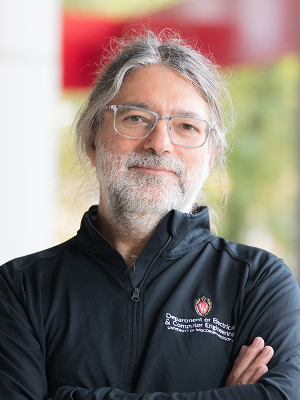
William Sethares is a Professor in the Department of Electrical and Computer Engineering at the University of Wisconsin-Madison College of Engineering. His research combines system identification, adaptive algorithms, and signal processing with unique applications in musical acoustics and perception-based audio systems. Primary Affiliation: Electrical and Computer Engineering Research Interests: Adaptive learning systems, acoustical signal processing, musical scale modeling, rhythmic structure analysis, and computational music composition His recent publications focus on multimodal data analysis, medical imaging applications, and cultural music studies. Scientific contributions include innovative approaches to speech emotion recognition, historical paper analysis, and inharmonic musical instrument modeling. Teaching responsibilities include courses like ECE401: Electroacoustic Engineering and ECE415: System Modeling and Identification. As a musician, he explores algorithmic composition and alternative tuning systems, authoring books like "Tuning Timbre Spectrum Scale" and "Rhythm and Transforms". Additional creative endeavors encompass inventing the Fibonacci Checkers board game, developing interactive Fourier Transform educational materials, and pioneering computational tools for art authentication through watermark analysis in Leonardo da Vinci's manuscripts.
Ryan Harvey is an Instructor in the Department of Mathematics and Computer Science at Loyola University New Orleans. With over two decades of experience as a software engineer, he bridges academic research with practical applications in web, media, and embedded software development across startups, enterprises, and federal government projects. Alma Mater: B.S. in Mathematics and Computer Science from Loyola University New Orleans (2001) Graduate Studies: M.S. in Applied Mathematics and Scientific Computing from University of Maryland at College Park (2007), plus extended graduate studies His research interests span computational harmonic analysis , signal processing , data encodings/embeddings , and distributed software architectures . Recent publications explore consumer profiling for food activities, auditory scene analysis, and physical models for sound synthesis. While no specific advising or grant details are provided, his Google Scholar work demonstrates technical depth in computational systems.
Thomas Duffy is a Professor of Geosciences at Princeton University and currently serves as Chair of the Department of Geosciences. He is also affiliated with the High Meadows Environmental Institute (HMEI) as an Associated Faculty member. His research integrates experimental methods to study geological materials under extreme conditions, aiming to unravel planetary evolution and interior dynamics. His primary research interests include the synthesis of new materials, phase transitions in minerals under high pressure and temperature, and planetary interior modeling. Key tools employed are diamond anvil cells, gas guns, and high-powered lasers, combined with X-ray diffraction and laser interferometry. These techniques enable exploration of material behavior at pressures exceeding those at Earth's core. Recent publications (2024–2023) focus on shock compression studies of MgO, quartz, and iron oxides, alongside dynamic compression experiments. These works analyze phase transitions, material response under extreme conditions, and their implications for planetary science and astrophysics. No scientific awards for Dr. Duffy are listed in the provided texts. He has advised doctoral students including Ian Ocampo and Sirus Han. His research leverages facilities like the National Ignition Facility, though specific grant details are not detailed here. The High-Pressure Mineral Physics Laboratory, led by Dr. Duffy, specializes in experimental mineral physics under ultrahigh pressures, contributing to understanding exoplanet and Earth's interior composition.
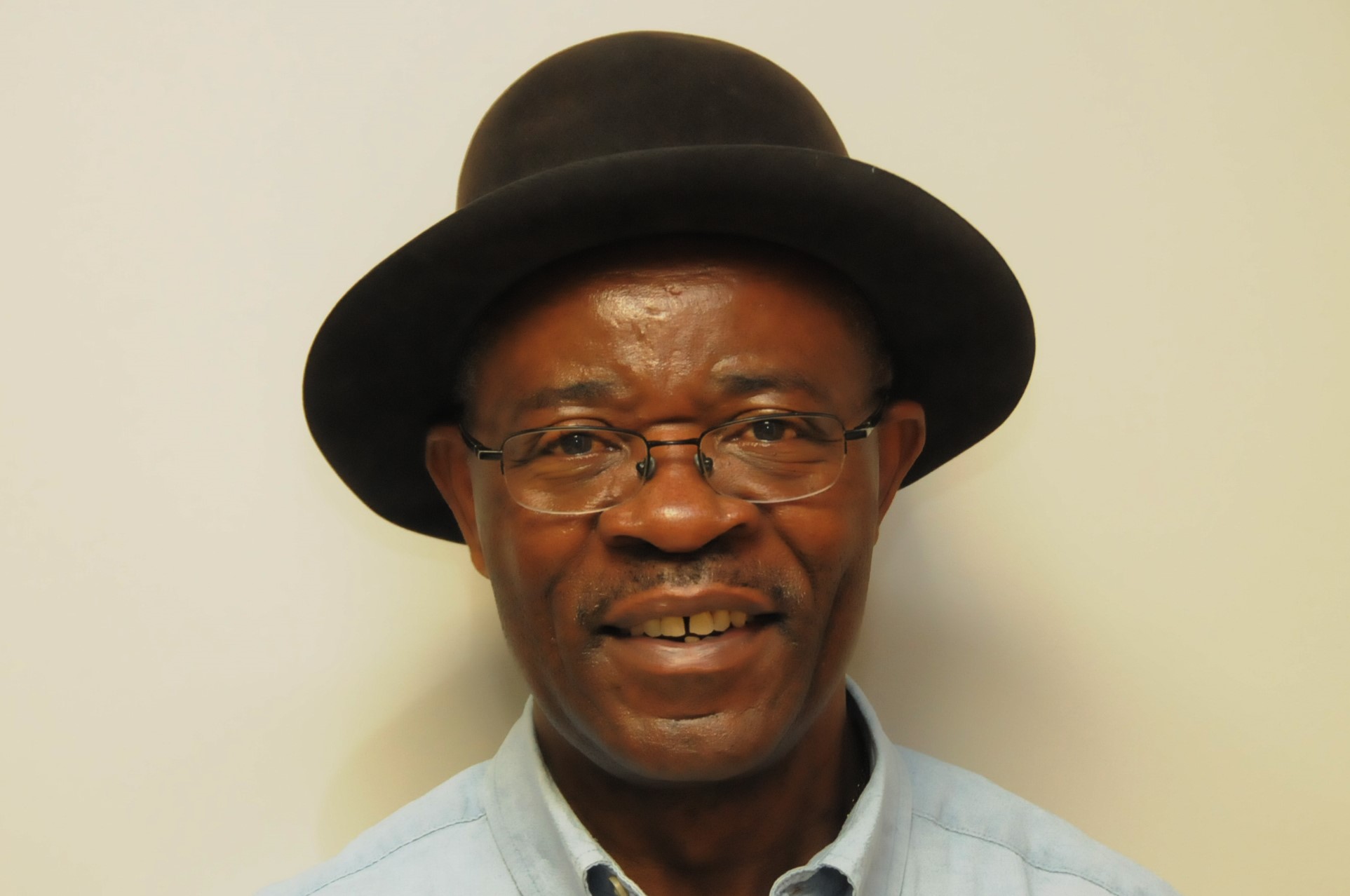
Professor Gabriel D Gwanmesia is a Professor of Physics & Engineering at Delaware State University, part of the Division of Physical and Computational Science. He holds a B.S. in Physics & Mathematics from Delaware State University (1985), an M.S. (1987), and a Ph.D. in Geophysics from Stony Brook University (1991). His research focuses on mineral physics, particularly using high-pressure and high-temperature techniques to study Earth materials. Notably, he pioneered hot-pressing methods for synthesizing polycrystalline minerals, widely adopted globally. Research interests include elasticity of deep-Earth materials, thermoelectric materials, and synchrotron X-ray studies. He has mentored numerous minority students, many of whom pursued advanced degrees in geosciences. Key professional roles include Research Coordinator for the INCREASE consortium and collaborations with Brookhaven National Laboratory and Stony Brook’s Mineral Physics Institute. His honors include the National Role Model Award (2001), Excellence in Scientific Research (2010), and leadership in STEM diversity initiatives. Professor Gwanmesia teaches undergraduate physics and engineering courses and has contributed to developing renewable energy programs at DSU.
Dr. Linda Antas is an Associate Professor and Coordinator of Music Technology at Montana State University's School of Music within the College of Arts & Architecture. She holds a D.M.A. in Computer Music Composition from the University of Washington (2002). Her work bridges computational creativity with traditional music practices, specializing in code/GUI-based sound synthesis, algorithmic composition, and multimedia production. Antas actively contributes to music cognition research and physical computing applications using Raspberry Pi/Arduino platforms. Research & Teaching: Her research spans sonification, digital audio workstations, and composition for mixed media. Courses taught include Acoustic Composition, Sound Design & Synthesis, and Film Scoring. She explores interdisciplinary projects like Visual Music and multimedia installations. Recent Creative Works: Recent compositions include Still Shining (2024), Iridescence (2024), and Anpáwi Aíyokpaza (2023), showcasing her expertise in electronic/acoustic blending and visual-music integration. Her 2022 publication Composition Insights advances pedagogical methods in music creation. Awards & Grants: Notably nominated for the MuVi4 Visual Music Festival (2014) and Musica Nova Competition (2013). Secured grants like the 2023 Cave: The Brain's Big Bang project and Meru composition initiative from MSU Provost Office. Service: Served as SEAMUS Board Vice President (2011–2018), adjudicated national composition competitions, and conducted outreach through Museum of the Rockies events and Expanding Your Horizons workshops. Labs & Collaborations: Leads music technology labs focusing on physical computing and audiovisual systems. Collaborates with artists and scientists to develop innovative interdisciplinary works.