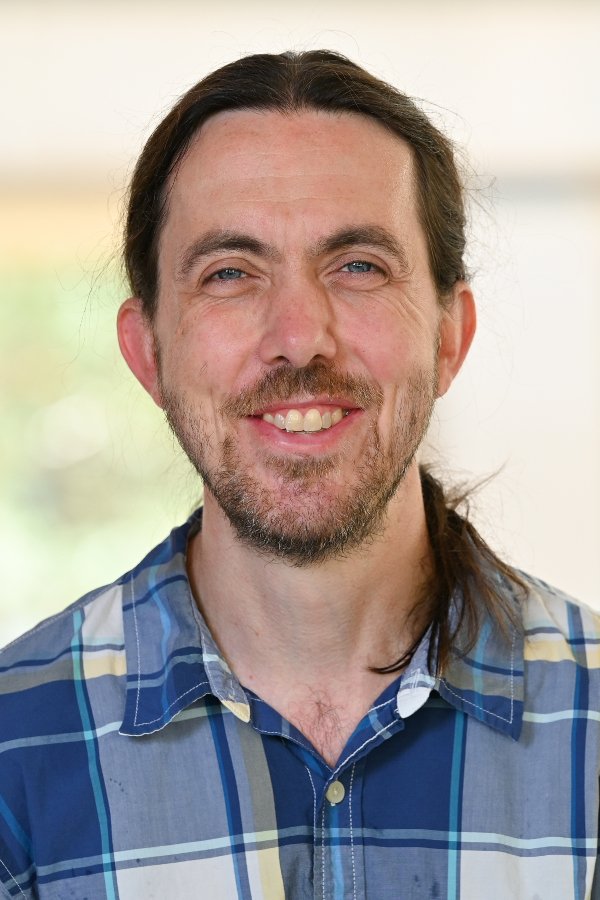
Univ.-Prof. Dr. Katja Heim is a prominent academic in the field of English Didactics, currently serving at the Institute of English Philology (WE6) at Freie Universitaet Berlin . With extensive experience in primary and secondary English education, her work focuses on social inclusion , learner autonomy , and hybrid/digital learning environments . She has held various academic positions including Freie Universitaet Berlin since 2024, after roles at Duisburg-Essen and other institutions. PhD in English Didactics Specializes in project-based teacher education Expert in bilingual learning in primary schools Her research emphasizes democratic classroom practices , multimodal texts , and technology integration in language teaching. Notable contributions include coordinated projects on digital media in teacher training and publications on inclusive education strategies. While her recent articles highlight hybrid learning and learner autonomy frameworks, her career spans over two decades of academic development in English education. Key research trends include: Blended learning implementation Bilingual education models Action research methodology
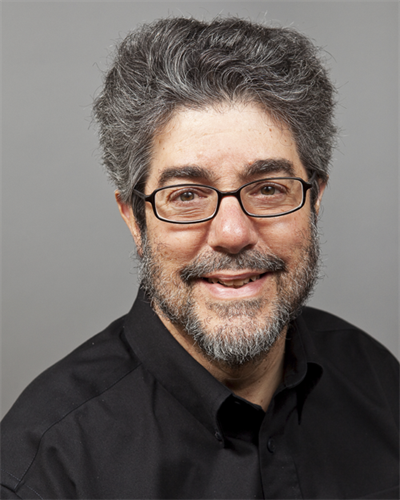
Tyler Lawson is a Professor in the School of Mathematics at the University of Minnesota, holding the distinguished Albert and Dorothy Marden Professorship. His office is located in Vincent Hall 323 at 206 Church Street SE, Minneapolis, MN 55455, and he can be reached at tlawson@umn.edu or (612) 625-6802. Professor Lawson's research focuses on algebraic topology and K-theory, with significant contributions to homotopy theory, quandles, stable homotopy theory, and braided Hopf algebras. His work bridges abstract algebraic structures with topological applications, particularly exploring connections between category theory and homotopy-theoretic constructions. He has made notable advances in understanding filtrations and derived spaces, the generating hypothesis in stable homotopy theory, and the homotopy theory of quandles as they relate to knot invariants. Analysis of his recent publications reveals a strong emphasis on structural theorems in algebraic topology, with particular attention to equivariant phenomena, rational homotopy theory, and connections to arithmetic statistics. His research demonstrates sophisticated interplay between combinatorial structures and topological invariants, often revealing unexpected connections between seemingly disparate mathematical domains. Albert and Dorothy Marden Professor Professor Lawson actively advises graduate students and participates in the topology seminar series at the University of Minnesota, where he has presented on topics ranging from filtrations and derived spaces to the generating hypothesis. His research program includes collaborations with mathematicians across institutions, contributing to advancements in homotopy theory and its applications to other mathematical fields. He maintains an active research group focused on exploring the frontiers of algebraic topology and its connections to related disciplines.
Martin Bech serves as Senior Lecturer at Lund University's Department of Clinical Sciences within the Medical Radiation Physics division and holds a concurrent postdoctoral position at Technical University Munich's Physics department E17 since 2009. He is an active LINXS Fellow contributing to the Integrative Pharmacology and Drug Discovery Working Group 3 and Opportunities in Imaging initiatives. His academic credentials include: PhD from Niels Bohr Institute, University of Copenhagen (2009) Master of Physics from Niels Bohr Institute, University of Copenhagen (2006) Bachelor's degree from Niels Bohr Institute, University of Copenhagen (2004) Bech's research pioneers advanced X-ray methodologies for biomedical applications, specializing in grating interferometer-based phase contrast and dark-field imaging to visualize soft tissues previously undetectable with conventional radiography. His work bridges physics and clinical medicine through Micro-CT development using both synchrotron radiation and laboratory X-ray tubes, enabling high-resolution tissue analysis without contrast agents. This research directly addresses critical diagnostic challenges in cancer detection and vascular disease. His publication trajectory demonstrates rapid methodological evolution from foundational grating interferometry (2008) to compact light source adaptation (2009) and clinical translation via standard X-ray tubes (2009), reflecting a strategic shift toward accessible medical imaging technologies. Recognition includes: Carlsbergs Mindelegat for Brygger I.C. Jacobsen Scholarship (2005) As a LINXS Fellow, Bech actively shapes Scandinavia's neutron and X-ray research infrastructure through thematic working groups and young researcher initiatives, though specific grant details and advisory roles remain undocumented in source materials. His laboratory operations at Lund integrate synchrotron and laboratory-scale imaging systems to advance preclinical diagnostic frameworks.
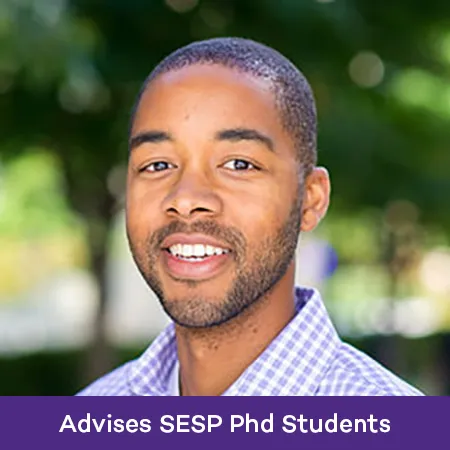
Marcelo Worsley is the Karr Family Associate Professor in Computer Science and Learning Sciences at Northwestern University's School of Education and Social Policy (SESP). His research focuses on promoting STEM education for underserved populations through hands-on, project-based learning. He holds a PhD and MS in Learning Sciences and Computer Science from Stanford University, along with dual bachelor's degrees in Chemical Engineering and Portuguese. His work emphasizes inclusive learning technologies, multimodal learning analytics, and fostering agency in students to address real-world challenges. Research Interests: Worsley’s research spans four core areas: (1) designing meaningful hands-on learning experiences; (2) extracting and analyzing multimodal data; (3) developing naturalistic interfaces for education; and (4) bridging engineering education with conceptual change. His Technological Innovations for Inclusive Learning and Teaching (tiilt) Lab aims to address inequities in education by co-designing tools with teachers and learners. Grants & Projects: Worsley has led initiatives such as Multimodal Learning Analytics (funded by NSF EAGER) and PE++ , integrating computer science with physical education. His projects often involve intergenerational making, refugee youth engagement, and culturally responsive computing. Publications: His work appears in journals like Journal of Learning Analytics and conferences such as ICLS and EDM. Recent themes include AI in education, embodied learning in games like Minecraft, and leveraging sports for computational thinking.
Jung-Ho Yu is Assistant Professor of Chemistry at the University of Waterloo, specializing in nanoscale bioanalytical platforms. His research develops nanotechnology for multiplexed molecular monitoring in biological systems, with applications in cancer imaging and diagnostics. Research focuses on: Design of excretable nanoparticle contrast agents Multiplexed tumor imaging using surface-enhanced Raman spectroscopy Advanced microscopy techniques for deep-tissue visualization Professional associations include the American Chemical Society and World Molecular Imaging Society. Teaches courses in Multi-Component Analysis and Analytical Chemistry.
Andrew Robb is an Assistant Professor in the School of Computing at Clemson University. His research focuses on the societal impact of consumer virtual reality (VR), including user behavior adaptation, avatar embodiment effects, presence in VR, and perception studies. Prior to Clemson, he earned his PhD in the Virtual Experience Research Group at the University of Florida. He is funded by the NSF CHS Small grant #1717937 and collaborates with researchers like Sabarish Babu and Chris Pagano. His work explores topics such as cybersickness mitigation, pedestrian-AV interactions, and VR's therapeutic applications for social anxiety disorders. Education: PhD in Virtual Experience Research, University of Florida Research Interests: Longitudinal effects of VR exposure on user behavior Avatar embodiment and its real-world behavioral implications Measuring and enhancing presence in VR environments Perception of space and motion in virtual vs. real-world contexts Human-VR interaction design for accessibility and safety Social and ethical considerations of emerging VR technologies Key Research Trends: His recent work emphasizes VR's impact on spatial cognition, cybersickness reduction through interaction design, and leveraging VR for mental health interventions. Over 2023-2024, he has published extensively on avatarization effects, near-field interactions, and pedestrian-AV dynamics in immersive environments. Grants & Lab: Hosts the McAdams Hall 120 lab and has NSF-funded research on longitudinal VR exposure effects. Collaborates with automotive engineering teams on VR-based autonomous vehicle interaction studies.
Robert Jacob is a Professor of Computer Science at Tufts University's School of Engineering, where he leads research in human-computer interaction with particular focus on implicit brain-computer interfaces. His work bridges computer science, cognitive science, and interface design to create adaptive systems that respond to users' cognitive states without explicit input. His educational background includes a Ph.D. from Johns Hopkins University. Professional milestones include: ACM CHI Academy membership (2007) ACM Fellow designation (2016) Leadership roles as ACM SIGCHI Vice President and conference chair for CHI, UIST, and TEI Professor Jacob's research centers on implicit interaction techniques, particularly using fNIRS brain sensing to create adaptive interfaces. His work has evolved from foundational studies in reality-based interaction and tangible programming to current neuroadaptive systems that measure cognitive workload in real-time. This research spans domains including music learning, museum education, and general user interface adaptation. His publications reveal consistent focus on brain-computer interfaces since 2012, with increasing sophistication in physiological measurement and machine learning techniques. Recent work integrates multiple physiological signals beyond brain data to create comprehensive user state models. Major recognitions include: CHI 2016 Best Paper Award for music learning research CHI 2014 and 2012 Best Paper Honorable Mentions Keynote addresses at major conferences including Neuroadaptive Technology Conference (2017) Extensive media coverage in New Scientist, IEEE Computer, and Boston Globe Professor Jacob has mentored 17 PhD students who now hold faculty positions at institutions including Worcester Polytechnic Institute, Northwestern University, and Carleton University. His HCI Lab, located in the Joyce Cummings Center, receives funding from NSF and other sources supporting neuroadaptive interface research. Current projects focus on broadening implicit interaction to include multiple physiological measurements while maintaining user privacy and system transparency.
Marco Donato is an Assistant Professor in both the Department of Electrical and Computer Engineering and the Department of Computer Science at Tufts University. He leads the TECS Lab (Testchip, Embedded Computing Systems) focused on hardware design for emerging applications. Prior to joining Tufts, he was a postdoctoral fellow at Harvard University's John A. Paulson School of Engineering and Applied Sciences. Dr. Donato received his academic training from prestigious institutions: Ph.D. in Electrical Sciences and Computer Engineering from Brown University (2016) M.Sc. in Electrical Engineering from Università di Roma La Sapienza, Rome, Italy (2010) B.Sc. in Electrical Engineering from Università di Roma La Sapienza, Rome, Italy (2008) Dr. Donato's research primarily focuses on designing reliable and energy-efficient hardware systems leveraging emerging technologies. His work centers on co-design methodologies for building specialized architectures for machine learning applications that utilize dense, fault-prone embedded non-volatile memories. He investigates noise modeling and reliability aspects of next-generation memory technologies, with particular emphasis on how these can be effectively integrated into system-on-chip (SoC) designs for edge computing and IoT applications. His research bridges the gap between circuit-level design and system-level architecture to create holistic solutions for hardware acceleration of machine learning workloads. Analysis of Dr. Donato's publication record reveals a strong focus on hardware acceleration for machine learning, particularly through innovative memory system designs. His work spans multiple domains including non-volatile memory technologies, energy-efficient circuit design, and flexible SoC architectures. A notable trend is his exploration of how emerging memory technologies can be leveraged to create more efficient implementations of deep neural networks, with particular attention to the trade-offs between reliability, density, and energy consumption. His research often involves full-stack approaches that consider everything from device physics to system architecture. Dr. Donato is actively involved in mentoring and has indicated he is "looking for Ph.D. students." His work has been supported by significant research grants that have enabled the fabrication of multiple test chips, as evidenced by his extensive publication record in top-tier venues including IEEE Journal of Solid-State Circuits, ISSCC, and MICRO. He leads the TECS Lab at Tufts University, which focuses on testchip development, embedded computing systems, and hardware acceleration. The lab appears to maintain connections with researchers at Harvard University and other institutions, reflecting Dr. Donato's collaborative approach to research. The lab's work emphasizes practical, real-world implementations of novel hardware concepts through actual silicon fabrication, which is relatively rare in academic settings.
Alison Raby is Professor of Environmental Fluid Mechanics and Head of the COAST Engineering Research Group at University of Plymouth. Specializing in wave-structure interactions, she leads research on coastal resilience and tsunami impacts. Her STORMLAMP project examined wave loading on rock lighthouses. Research focuses on: Extreme wave impacts on coastal structures Tsunami debris transport and flooding Climate change adaptation for coastal communities Compound flooding modeling Honored as a 2021 Engineering Hero by the Women's Engineering Society, Dr. Raby directs NERC-funded projects including C-FLOOD investigating compound flooding in Sri Lanka. She utilizes Plymouth's COAST laboratory for physical modeling of wave impacts. Key Projects: STORMLAMP: Structural behavior of rock lighthouses C-FLOOD: Compound flooding from cyclones in Sri Lanka SENSUM: Smart sensor networks for natural hazards
Elisabeth L. Hill is a Professor in the Department of Psychology within the Institute for Social and Psychological Sciences at Goldsmiths, University of London. With an extensive publication record spanning over two decades, she has established herself as a leading researcher in developmental psychology, particularly focusing on Developmental Coordination Disorder (DCD), autism spectrum disorders, and the intersection of motor and cognitive development. Her educational background, though not explicitly detailed in the publication records, is evident through her sophisticated research methodology and theoretical contributions to the field. She has supervised numerous doctoral students who have gone on to become established researchers in their own right, including Emma J Sumner, Laura Crane, Hayley C Leonard, and Leighanne A Mayall. Hill's research interests focus on understanding the nature and impact of Developmental Coordination Disorder (DCD), sometimes referred to as dyspraxia, and its relationship with other neurodevelopmental conditions like autism spectrum disorder and ADHD. Her work has been instrumental in establishing DCD as a legitimate field of study and demonstrating how motor difficulties can impact broader cognitive, social, and emotional development. She has extensively investigated the relationship between motor skills and cognitive functions, particularly executive functioning, and has examined how these relationships manifest across the lifespan. Her 15 most recent publications reveal a researcher deeply engaged with both theoretical and clinical aspects of developmental disorders. The articles show a progression from foundational work establishing DCD as a distinct condition to more nuanced investigations of gender differences, age-related presentations, and the specific cognitive-motor interactions that characterize these conditions. Her research demonstrates particular attention to methodological rigor and clinical applicability. Hill has received recognition through numerous invitations to contribute to edited volumes and provide expert commentary on developmental disorders. She has served as editor for significant works including 'Understanding Motor Behaviour in Developmental Coordination Disorder' (2019), which demonstrates her standing as a thought leader in the field. Her research has important implications for educational practice, clinical assessment, and intervention strategies for children and adults with motor coordination difficulties. She has worked to translate research findings into practical applications through collaborations with educators, clinicians, and policymakers, and has been active in developing clinical guidelines for DCD assessment and intervention.
Xiaocun Lu is an Assistant Professor in the Department of Chemistry & Biochemistry at Clarkson University's Coulter School of Engineering & Applied Sciences and Director of the SmartPASS Lab. His research focuses on mechanoresponsive materials, supramolecular self-assembly, and micro/nanocapsule-based smart delivery systems for applications in sensing, self-healing, and controlled release. Education includes: Chemistry and MatSE Postdoctorate - University of Illinois at Urbana-Champaign (2015) PhD in Polymer Science - The University of Akron (2013) BS in Chemistry - Peking University (2005) His research integrates contact-initiated polymerization (CIP) and aggregation-induced emission (AIE) to develop next-generation stimuli-responsive materials. Current projects aim to create autonomous materials for chemical sensing, structural health monitoring, and controlled payload release, with emphasis on designing mesoscale structures like functionalized colloids and metallosupramolecular architectures. Publications demonstrate expertise in mechanochromic materials, encapsulation technologies, and self-assembly. Recent articles explore force-induced chromism, self-reporting coatings, and ion-triggered release systems. Trends highlight innovation in polymer chemistry, material responsiveness, and nanoscale engineering. No awards are listed in the provided information. No specific advising or grant information is explicitly mentioned in the text. Leads the SmartPASS Lab focusing on stimuli-responsive materials. Research involves interdisciplinary collaboration across chemistry and materials engineering.
Yun Peng is an Associate Professor in the Department of East Asian Languages and Literatures at the University of Hawaiʻi at Mānoa, and an affiliated faculty member of the Chinese Flagship program. Their research focuses on modern Chinese literature, Chinese cinema, literary criticism, and film theory, with current emphasis on contemporary Chinese independent documentary. They hold a Ph.D. in Comparative Literature from the University of Minnesota, alongside MA degrees in Philosophy (Fudan University), Women’s Studies (University of Cincinnati), and a BS in Physics (Fudan University). Research areas include gender and sexuality studies within film and literature, with notable publications analyzing postcommunist film contexts and intersections between Deleuzean theory and Freudian psychoanalysis. Their work bridges literary and visual studies through critical frameworks that explore cultural identity and narrative innovation.
Pär Sundström is a Professor in the Department of Historical, Philosophical and Religious Studies at Umeå University, Sweden, where he serves as head of the philosophy subject. He teaches courses for teacher candidates and students in philosophy and cognitive science programs from his office in Humanisthuset, HUM.J.111, Umeå. His research centers on philosophy of mind, exploring consciousness, perception (particularly color and secondary qualities), concepts and their acquisition, and cognitive development. Sundström argues sensory qualities are not constituents of consciousness, investigates cognition-perception interdependence, and critically assesses physicalist explanations of consciousness through works like 'Colour and consciousness' (2007) and 'How physicalists can—And cannot—Explain...' (2018). Analysis of his 2018-2022 publications reveals sustained engagement with transparency of experience, representationalism, and mind-body problem debates. His work consistently challenges established views like the phenomenal concept strategy while examining conceptual empiricism and sensory concept acquisition across diverse philosophical frameworks. Sundström secured research funding for 'How are we able to think about things?' (2020-2022) and 'Thought and experience: An investigation into concept empiricism' (2007-2010). He actively mentors students in philosophy and cognitive science, contributing to Umeå University's academic community through teaching and research leadership.
Christos Nicolaides is an Assistant Professor at the Department of Business and Public Administration within the School of Economics and Management at the University of Cyprus (UCY), holding a secondary appointment as a Digital Fellow at MIT's Initiative on the Digital Economy. Previously, he spent three years as a James McDonnell Foundation-funded Postdoctoral Fellow at MIT Sloan School of Management. His educational background includes a PhD in Engineering from Massachusetts Institute of Technology (2014), SM from MIT (2011), MSc in Applied Mathematics from Imperial College London (2009), and BSc in Physics from University of Thessaloniki (2008). Nicolaides' research applies mathematical, statistical, and computational tools to large-scale empirical questions in social influence mediated by digital technologies. His work spans Data Science , Machine Learning , Social Networks , and Computational Social Science , with significant contributions to understanding human mobility patterns, disease transmission dynamics, and social contagion effects. His research has established novel methodologies for analyzing complex network structures in mobility data and social interactions. Analysis of his 15 most recent publications reveals a consistent focus on applying network science to real-world problems, particularly in pandemic response (12 publications), human mobility analytics (9 publications), and social contagion dynamics (7 publications). His work demonstrates increasing interdisciplinary integration, combining computer science, epidemiology, and organizational behavior since 2020. Marie S. Curie Fellow Two Highly Cited Papers by Web of Science (2017, 2020) Best Paper Award by Risk Analysis Society (2019) Professor of The Week by Poets & Quants (2020) As principal institutional investigator, Nicolaides has secured over €1 million in research funding from the European Commission, industry partners, Cyprus Innovation and Research Foundation, and Cyprus Ministry of Health. His current teaching includes Social Networks and Entrepreneurship, Introduction to Operations Management, and Quantitative Methods in Management. Media coverage of his work spans major outlets including The New York Times, CNN, Nature, and Science, with significant impact on public health policy discussions during the COVID-19 pandemic.
T V Raziman is a Researcher in the Department of Mathematics at Imperial College London within the Faculty of Natural Sciences. He specializes in nanophotonics, focusing on light-matter interactions through theoretical models and simulations. His academic journey includes postdoctoral roles at Eindhoven University of Technology (2017–2021) and École Polytechnique Fédérale de Lausanne (2016–2017), and holds a PhD from EPFL and an Integrated MSc in Physics from IIT Kanpur. Raziman's research spans Optical Physics , Applied Mathematics , and Artificial Intelligence , with a strong emphasis on Nanophotonics . He explores cutting-edge topics like synthetic optical motion, retinomorphic machine vision, and topological optimization of nanostructures. His work bridges theoretical frameworks with practical applications in photonics and materials science. Key contributions include studies on semiconductor network lasers, surface lattice resonance lasers, and neural network-driven laser mode control. He collaborates within the Complex Nanophotonics Group , advancing interdisciplinary projects at the intersection of photonics and machine learning. No scientific awards are explicitly mentioned, but his prolific publication record highlights sustained innovation in photonics research. He has advised no recorded students, focusing primarily on independent and collaborative research efforts.