University of California, Los AngelesUnited States
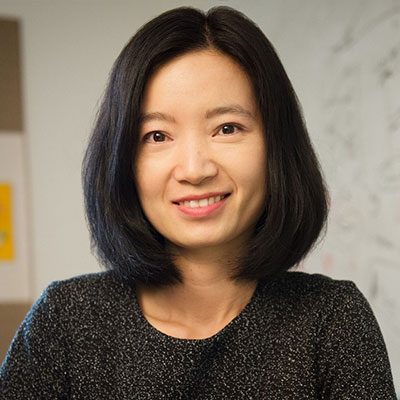
Professor Yizhou Sun is affiliated with the University of California Los Angeles (UCLA) and the Henry Samueli School of Engineering and Applied Science . Her academic work focuses on Machine Learning , Artificial Intelligence , and Graph Neural Networks within the Computer Science department. Her research spans High-Level Synthesis , Causal Inference , and Computational Biology , with recent publications addressing neural network compression, language model safety, and dynamical system modeling. The trends in her recent 2025 and 2024 publications emphasize Deep Learning , Graph Theory , and Language Model Optimization , reflecting interdisciplinary applications in Biomedical Data , Hardware Design , and Physical Simulation .
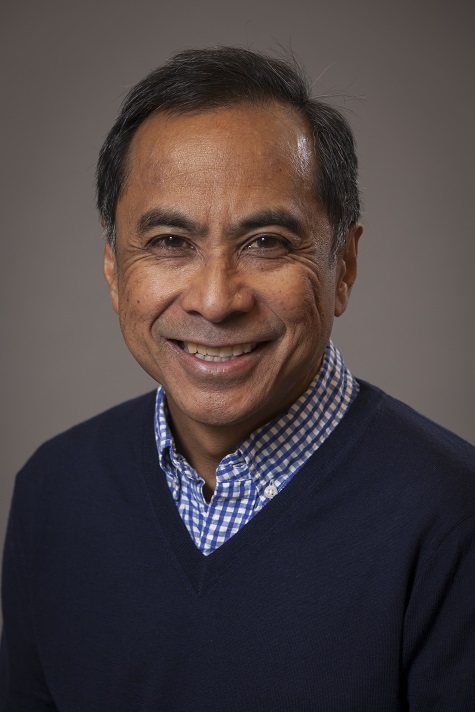
Dr. Edward L. Quitevis is a Professor in the Department of Chemistry and Biochemistry at Texas Tech University, holding joint appointments in Physics. He earned his Ph.D. from Harvard University (1981) and completed postdoctoral research at the University of Toronto (1981-1984). His research focuses on the dynamics of complex fluids, particularly ionic liquids and supercooled liquids, using advanced techniques like optical heterodyne-detected Raman-induced Kerr effect spectroscopy (OHD-RIKES) and fluorescence recovery after photobleaching (FRAP). Key interests include nanostructural organization in ionic liquids, intermolecular dynamics, and the glass transition phenomenon in supercooled systems. Current research themes include understanding the relationship between nanostructure and dynamics in ionic liquids, studying ultraslow translational/rotational diffusion near the glass transition, and exploring applications of ionic liquids in materials science. His group has developed novel insights into the role of cation-anion interactions and nanoscale segregation in these systems. Dr. Quitevis collaborates widely, with publications in top journals like Physical Chemistry Chemical Physics and Journal of Chemical Physics . Students advised include Jagdeep Kaur, Dujuan Meng, Mahesh Thakurathi, and Sophia Sagala. His lab focuses on experimental and theoretical approaches to probe liquid-state dynamics, with recent work on cellulose dissolution, graphene exfoliation in ionic liquids, and lubrication applications.
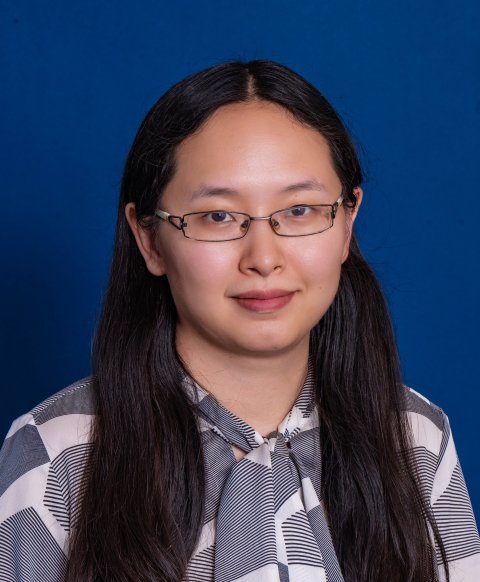
Dr. Lisa Wang is a tenure-track Assistant Professor in the Department of Civil & Environmental Engineering at Old Dominion University (ODU). She holds a Ph.D. and Postdoctoral Fellowship in Structural Engineering from Colorado State University (CSU), with additional research at NIST’s Center for Risk-Based Community Resilience Planning. She is a licensed California Professional Engineer (PE) and has expertise in multidisciplinary community resilience assessment, mitigation strategies, and policy analysis. Her research focuses on integrating physical, socio-economic, and infrastructural systems to enhance disaster resilience in coastal and hazard-prone communities. Education: Ph.D. and Postdoc (CSU, 2022-2024), M.S. in Structural Engineering (University of Colorado Denver & Jilin University, 2015), B.S. in Civil Engineering (Jilin University, 2012). Professional licenses include CA PE #94251 and CO EIT #007558. Research Interests: Community resilience under multi-hazards (tornadoes, floods, climate change), resilience-based design of structural systems, data fusion across disciplines, and equitable decision-making for disaster resilience. Recent grants include $31k for AI-driven coastal resilience strategies and $10k for minimum building portfolio development. Grants & Awards: Principal Investigator (PI): Trustworthy AI in Coastal Resilience (ICAR, $31k), AI-Driven Building Portfolios (ODU PURS, $10k) Awards: O. H. Ammann Fellowship (ASCE), ICAR Travel Grant, AGU NSF Travel Grant, Jack E. Cermak Fellowship Labs & Teams: Wang Research Group and Structural Engineering Research Laboratory at ODU.
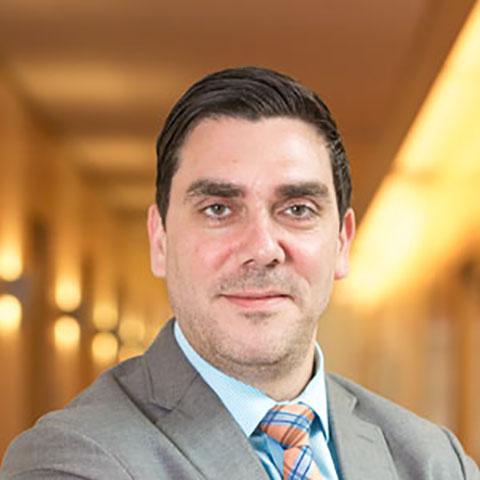
Gabriel A. Silva is a Professor in the Shu Chien-Gene Lay Department of Bioengineering at UC San Diego’s Jacobs School of Engineering, with a joint appointment as Assistant Professor in Ophthalmology. His research bridges neuroscience, theoretical physics, and applied mathematics to explore how the brain encodes and processes information, leveraging quantum logic and algorithms for advanced neural modeling. University: University of California, San Diego School: Jacobs School of Engineering Department: Shu Chien-Gene Lay Department of Bioengineering Academic Rank: Professor Joint Appointment: Assistant Professor in Ophthalmology Research Interests: Silva focuses on neural computation at cellular and network scales, aiming to abstract biological mechanisms into mathematical models that emulate brain-like processing. His work has implications for understanding neurological disorders, developing neural engineering nanotechnologies, and advancing AI systems through emergent complexity. Recent Article Trends: His publications span quantum-enhanced neural modeling, EEG-based disease detection, nonlinear dynamics in brain networks, and interdisciplinary applications of graph theory. Emerging themes include the integration of category theory for network analysis and AI optimization via emergence-promoting schemes. Labs & Teams: Affiliated with UC San Diego’s Institute of Engineering in Medicine, Silva leads research at the intersection of bioengineering, ophthalmology, and neural systems, fostering collaborations with neuroscience and quantum computing domains.
Endre Süli is a Professor of Numerical Analysis at the University of Oxford, affiliated with Worcester College and Linacre College. He has held various academic roles since 1985, including Fellowships and Tutorships in Mathematics. University Education: B.Sc. in Mathematics, University of Belgrade (1974-1978) M.Sc. in Mathematics, University of Belgrade (1978-1980) Ph.D. in Mathematics, University of Belgrade (1985) M.A., University of Oxford (1985) British Council Visiting Student, Reading University and University of Oxford (1983/84) Süli's research focuses on numerical methods for partial differential equations (PDEs), with expertise in finite element methods, adaptive algorithms, error control, and computational modeling of fractures and non-Newtonian fluids. His work bridges mathematical theory and practical applications in fluid dynamics and material science. His recent publications emphasize finite element approximations, nonlinear PDEs, and stochastic models for polymer dynamics. Themes include multiscale methods, tensor-sparsity for high-dimensional problems, and compressible flow simulations. Scientific Awards: Fellow of the Royal Society (2021) London Mathematical Society Naylor Prize and Lectureship (2021) Pro Urbe Prize, City of Subotica (2021) SIAM Fellow (2016) Member, Academia Europaea (2020) Foreign Member, Serbian National Academy of Sciences and Arts (2009) IMA Service Award (2011) Fellow, European Academy of Sciences (EurASc) (2010) Fellow, Institute of Mathematics and its Applications (2007) London Mathematical Society/New Zealand Mathematical Society Forder Lecturer (2015) Professor Hospitus, Charles University, Prague (2012) Distinguished Visiting Chair Professor, Shanghai Jiao Tong University (2013) Invited Speaker, International Congress of Mathematicians, Madrid (2006) Süli has supervised numerous research projects and held visiting appointments globally. His contributions to numerical analysis span foundational work on error estimation, nonlinear stability, and advanced computational frameworks for complex physical systems.
Mark D. Gross is a Professor of Computer Science and Director of the ATLAS Institute at the University of Colorado Boulder. His research focuses on modular robotics, tangible interaction design, digital fabrication, and computational design. He co-founded Modular Robotics and Blank Slate Systems, leveraging his expertise in educational technology and maker culture. Education: PhD in Design Theory & Methods from MIT. Academic history includes roles at Carnegie Mellon University and University of Washington Seattle. His work spans architecture, robotics, and human-computer interaction. Research Interests: Modular robotics and computationally enhanced construction kits Tangible interaction and e-textiles Shape-changing interfaces and swarm robotics Sketch-based interaction and digital fabrication Publications highlight advancements in collaborative AR systems, shape-changing interfaces (e.g., LiftTiles, ShapeBots), and accessible technologies like FluxMarker. His work bridges computational tools and creative design processes. Advising: Guided students such as Ryo Suzuki (PhD '20). Entrepreneurial ventures include companies spun off from research. Labs/Teams: Leads projects at the ATLAS Institute, emphasizing interdisciplinary collaboration in robotics, design, and human-centered computing.
Che-Wei Chang is an Assistant Professor in the Department of Ocean Engineering at the University of Rhode Island (URI) , where he joined in August 2023. Prior to URI, he was an Assistant Professor at the Disaster Prevention Research Institute of Kyoto University in Japan. He earned his Ph.D. in Civil and Environmental Engineering from Cornell University in 2017, along with an M.S. in Civil Engineering from National Taiwan University (2008) and a B.S. in Soil and Water Conservation from National Chung Hsing University (2006). Ph.D., Civil and Environmental Engineering, Cornell University, 2017 M.S., Civil Engineering, National Taiwan University, 2008 B.S., Soil and Water Conservation, National Chung Hsing University, 2006 Dr. Chang specializes in coastal engineering , coastal resilience , and nature-based solutions for mitigating coastal hazards. His research focuses on water waves and nearshore hydrodynamics , particularly how mangroves and other natural features reduce wave impacts from tsunamis, storm surges, and rising sea levels. He integrates numerical modeling , laboratory flume experiments , and field observations to advance understanding of coastal morphodynamics under climate change. His recent work, including 2025 publications on SPH simulations and field studies , emphasizes mangrove resilience against breaking wave forces and critical wave conditions leading to mangrove failure. Earlier studies (2015–2022) explore Boussinesq modeling , wave-vegetation interactions , and coastal forest functional evaluation . These articles highlight his commitment to sustainable shoreline management and science-based coastal design. Dr. Chang received the Coastal Engineering Journal (CEJ) Citation Award 2024 for his impactful review paper and was appointed a Senior Fellow of the Coastal Institute (URI) in 2025 . He actively mentors graduate students like Felipe Espinoza and Ramin Safari , who investigate wave-mangrove dynamics and vegetation impacts on coastal systems . His lab at URI, the Chang Coastal Lab , collaborates on conferences (e.g., ICCE 2024) and NSF-funded projects like NHERI RAPID Facility workshops.
Kurt Maute is a Professor and Palmer Engineering Chair at the University of Colorado Boulder’s College of Engineering and Applied Science (CEAS). He currently serves as Associate Dean for Undergraduate Education. His academic journey includes a PhD in Civil Engineering (University of Stuttgart, 1998) and a Dipl.-Ing. in Aerospace Engineering (University of Stuttgart, 1992). He has held progressively senior roles at CU Boulder, including Associate Dean for Research (2012–2014), Associate Professor (2006–2012), and Assistant Professor (2000–2006). Maute’s research focuses on structural topology optimization, multi-disciplinary optimization, and aeroelastic systems. He has pioneered methods integrating XFEM, level-set techniques, and isogeometric analysis for complex engineering problems. His work spans fluid-structure interaction, hypersonic vehicle design, and additive manufacturing. His notable contributions include advancements in immersed boundary methods, multi-material optimization, and uncertainty quantification. Awards include the NSF Career Award (2004) and Palmer Endowed Chair (2016–present). Maute’s lab (Aerospace Mechanics Research Center, AMREC) addresses challenges in computational mechanics and multi-physics systems. He has advised numerous students and led grants in battery modeling, topology optimization, and aerospace systems. His research bridges theory and application, emphasizing industrial relevance and computational innovation.
Costanza Bonadonna is a Full Professor at the University of Geneva (since 2019), specializing in volcanic hazards and Earth sciences. She holds a PhD supported by the European Commission (1998–2000) and has held academic positions across institutions including the University of South Florida and University of Hawaii. Her research focuses on volcanic ash dispersal modeling, risk assessment, and physical volcanology, with notable contributions to understanding tephra deposits and eruption dynamics. Bonadonna has received prestigious awards such as the 2020 AGU Volcanology presidency and the International Galileo Galilei Award. She leads the CERG-C (Centre for Environmental Risk Studies) and has organized major international workshops on volcanic risk and ash dispersal. Her work integrates numerical modeling, field investigations, and geophysical observations to enhance volcanic hazard forecasting and community resilience strategies. Research Grants: 2019–2023: SNSF Probabilistic volcanic risk framework 2018–2021: H2020 NEWTON-g and EUROVOLC networks 2017–2020: SNSF Gravitational instabilities in volcanic clouds Awards: 2020 President elect of AGU Volcanology Division Galileo Galilei Award (2020) Outstanding Woman in Science (2004, GSA) She has advised numerous international projects and collaborates with global institutions through initiatives like MeMoVolc and NEMOH. Her research bridges geophysical observations with computational models to address multi-hazard scenarios and improve disaster preparedness.
Prof. Ioannis Anastasopoulos is a Full Professor and Head of the Department of Civil, Environmental and Geomatic Engineering at ETH Zurich. He leads the Chair of Geotechnical Engineering, focusing on advanced geotechnical modeling, seismic resilience, and infrastructure systems. His research integrates experimental and numerical methods to address challenges in tunnel engineering, offshore foundations, and seismic protection. Key research areas include seismic response of geotechnical structures, soil-structure interaction, metamaterial-based vibration mitigation, and innovative foundation technologies. He directs the Geotechnical Centrifuge Center and Soil Testing Laboratories at ETH Zurich, advancing physical modeling and material characterization. Recent work emphasizes earthquake engineering applications, including fault rupture interactions with tunnels, pile group dynamics under combined loading, and hybrid modeling of scour effects on bridge foundations. His contributions span geotechnical design methodologies, nuclear facility safety, and additive manufacturing for masonry structures. Prof. Anastasopoulos collaborates internationally on projects like the GEOLAB initiative, advancing Europe's geotechnical physical modeling infrastructure. His teaching includes courses on geotechnical design and theoretical soil mechanics, bridging academic research with practical engineering solutions.
Prof. Dr. Sven Höfling is the Head of Chair and leader of the '2D Materials' Group at the Department of Technical Physics, University of Würzburg. His research focuses on semiconductor nanostructures, photonic systems, and quantum materials, with expertise in low-dimensional systems and light-matter interactions. He leads projects in the Cluster of Excellence ct.qmat and collaborates on EU, DFG, and industry-funded initiatives in quantum technology and nanophotonics. Affiliations: Chair of Technical Physics, University of Würzburg Address: Am Hubland, P1 Building (Room AU26), 97074 Würzburg, Germany Research highlights include topological polariton lasers, quantum dot photonics, and mid-infrared optoelectronics. His work spans experimental physics with strong ties to theoretical models, emphasizing applications in quantum computing and optoelectronic devices. Recent advances include room-temperature polariton lasers and strain-tunable single-photon sources. Key projects include the Würzburg-Wroclaw Nanophotonics Center and collaborations with KAIST-JMU on quantum technology. His lab employs advanced fabrication techniques like circular Bragg gratings and resonant tunneling diodes.
Chris Marone is a Full Professor (Professore Ordinario) at La Sapienza Università di Roma since 2020, with prior roles as Professor of Geophysics at The Pennsylvania State University (2003–2020) and Associate/Assistant Professor at MIT (1997–2000, 1992–1997). His research spans earthquake physics, geomechanics, and rock deformation. Ph.D. in Geophysics from Columbia University (1988) 40+ years of academic experience across multiple institutions His work focuses on frictional mechanics, slow earthquakes, and fault slip behaviors, integrating laboratory experiments and field observations. Recent themes include rate-state friction laws, rock-fluid interactions, and granular mechanics. Key trends in his publications reveal interdisciplinary approaches combining deep learning (2022), high-frequency seismic signatures (2022), and poromechanics (2022) with traditional geophysical methods. His research has dominated fault healing and stress dynamics for decades. ERC Advanced Grant: TECTONIC Louis Néel Medal (European Geosciences Union) Fellow of the American Geophysical Union Paul F. Robertson Award for Breakthrough of the Year Kerr-McGee Career Development Professorship
Kshitij Sabnis is a Lecturer in Aerospace Engineering at the School of Engineering and Materials Science, Queen Mary University of London. He serves as Admissions Lead and Outreach & Recruitment Lead for Aerospace Engineering, and Deputy Director of Industrial Engagement (Graduate Attributes). He is affiliated with the Centre for Intelligent Transport and conducts experimental research in high-speed aerodynamics. Education: PhD in Experimental Aerodynamics, University of Cambridge Master’s in Physics Dr Sabnis's research focuses on experimental aerodynamics across various speed regimes, particularly shock/boundary-layer interactions, vortex dynamics, and supersonic flows. His work involves wind tunnel experiments on simplified models to understand complex fluid mechanics in applications ranging from racecar wings to supersonic aircraft intakes. He employs advanced diagnostics and develops novel experimental setups to enhance physical insight into flow phenomena. His recent publications (2019–2025) reflect a strong emphasis on high-speed flow behavior, including shock-induced separation, vortex interactions, and nacelle aerodynamics. Key themes include flow control, wind tunnel design, and validation of turbulence models. His work bridges fundamental fluid dynamics with practical aerospace engineering challenges. Scientific Awards: FHEA (Fellow of the Higher Education Academy) Dr Sabnis actively supervises PhD students and leads externally funded research projects. He has secured grants from EPSRC and the Royal Society, supporting work on schlieren imaging enhancement and small-scale wind turbines for rural energy. He teaches advanced aerodynamics modules and contributes to curriculum and industrial engagement. He leads a research group focused on experimental high-speed aerodynamics and is involved in developing new diagnostic techniques and test rigs. His team investigates vortex interactions and aerodynamic performance under extreme flow conditions.
Jana Shen is a Professor in the Department of Pharmaceutical Sciences at the University of Maryland School of Pharmacy, where she leads an interdisciplinary research group at the intersection of chemistry, biology, physics, and computer science. Her lab develops and applies advanced simulation and data science tools to understand biomolecular mechanisms and accelerate drug discovery. Education: Postdoc, The Scripps Research Institute (2003–2007) PhD, University of Minnesota at Twin Cities (1999–2003) MS, University of Calgary, Canada (1996–1999) Diplom-Chemie, Bergische Universität Wuppertal, Germany (1991–1995) Her research focuses on molecular simulation , data science , and computational biophysics , with applications in kinases , GPCRs , transmembrane transporters , and pH-responsive materials . She has pioneered the development of continuous constant pH molecular dynamics (CpHMD) methods and their applications in drug design and biomolecular mechanisms. The recent publications highlight a strong trend in computational drug discovery , particularly in covalent inhibitors , opioid receptor mechanisms , antiviral design , and the integration of machine learning with molecular dynamics . These works span high-impact journals such as eLife , JACS , Nature Communications , and ACS journals. Scientific Awards: National Science Foundation CAREER Award American Chemical Society HP Outstanding Junior Faculty Award Junior Faculty Research Award (University of Oklahoma, 2008, 2009) Phi Kappa Phi, University of Minnesota Louise T. Dosdall Graduate Fellowship Nova Graduate Fellowship Dr. Shen has mentored numerous PhD students and postdoctoral fellows, many of whom have gone on to successful careers in academia and industry. Her research is supported by major agencies including the National Institutes of Health , National Science Foundation , and FDA . She leads the Shen Lab, which actively develops open-source tools such as DeepCys , CpHMD , and PKAD-3 , and maintains databases for covalent ligandability and pKa predictions.
Aldo Mozzanica is a Researcher at the Paul Scherrer Institute (PSI) in Switzerland, affiliated with the Laboratory for X-ray Nanoscience and Technologies. He holds a degree in Physics from Insubria University and a Ph.D. from the University of Milan, where his doctoral work focused on scintillating fiber vertex detectors for CERN's Antiproton Decelerator facility. At PSI, he leads detector development projects for synchrotron and free-electron laser applications. His research centers on advancing X-ray detector technology, including: Developing next-generation integrating pixel/strip detectors (JUNGFRAU, GOTTHARD) Improving frame rates, noise performance, and radiation hardness Exploring novel detector concepts for XFEL/synchrotron applications Enabling new experimental capabilities in structural biology and materials science Mozzanica's 135+ publications focus on X-ray detector innovation, with recent work emphasizing: Hybrid pixel detector optimization for 4th-generation light sources On-chip digitization and charge transport modeling High-speed data acquisition systems Applications in crystallography, spectroscopy, and phase-contrast imaging As principal developer of the JUNGFRAU detector, he oversees: ASIC design, testing, and characterization Readout electronics and firmware development Module production and supply chain management Commissioning at SwissFEL endstations