Marina Galand is a Professor in Planetary Science at Imperial College London's Department of Physics within the Faculty of Natural Sciences. Her research focuses on energy deposition mechanisms in planetary atmospheres, auroral emissions, and plasma interactions with solar system bodies such as Earth, Jupiter's moon Ganymede, and comet 67P/Churyumov-Gerasimenko. She is deeply involved with international space missions including Cassini, Rosetta, and upcoming missions like JUICE (Jupiter Icy Moons Explorer) and Comet Interceptor. Her work analyzes plasma environments using data from instruments like the Rosetta Plasma Consortium and the upcoming JUICE RPWI. Key research areas include ionospheric modeling, diamagnetic cavity dynamics, and solar wind interactions with cometary atmospheres. She has pioneered studies of far-ultraviolet auroras on comets, demonstrating these phenomena occur beyond planetary bodies. Galand's contributions bridge observational data with theoretical models, advancing understanding of atmospheric evolution and energy transfer processes. She collaborates on mission designs for future exploration of icy moons and pristine comets, emphasizing instrumentation development for plasma and dust diagnostics.
Jane Wang is a Professor in the Department of Food Science at the University of Arkansas , where she has served since 1999, progressing from Assistant to Full Professor. She also holds the title of Director of the Experiment Station in the Department of Food Science. Her research focuses on starch structure-functionality relationships , rice quality , and biomaterial utilization , with over 120 refereed publications and 5 patents. Education: B.S. in Agricultural Chemistry (1986) from National Taiwan University , M.S. in Food Science (1989) from the University of Minnesota , and Ph.D. in Food Science (1992) from Iowa State University . Postdoctoral research in starch chemistry at Iowa State University (1993-1994). Research Interests: Jane Wang's work explores starch chemistry, rice processing optimization, and value-added applications of agricultural byproducts. She investigates how starch modifications affect food and pharmaceutical properties, with a particular focus on parboiling, germination, and enzymatic treatments. Her research also examines the impact of environmental factors on rice starch development and quality. Scientific Awards: Outstanding Departmental Research Award (2008) Outstanding Volunteer, IFT Carbohydrate Division (2007) Outstanding Mentor, University of Arkansas (2005) Grants & Professional Service: She has secured over $3M in research funding, including USDA-NIFA grants and industry contracts with more than 50 food companies. Jane has served on numerous academic committees (Patent, Promotion & Tenure, Curriculum) and held leadership roles in professional organizations like IFT and AACC. She has also acted as associate editor for Cereal Chemistry and Carbohydrate Polymers , and reviewed for multiple journals and agencies. Labs & Teams: Dr. Wang leads the Carbohydrate Research Program at the University of Arkansas, focusing on starch structure-functionality, rice fortification, and biomaterial development. Her lab collaborates with industry partners and academic institutions to advance food science applications.
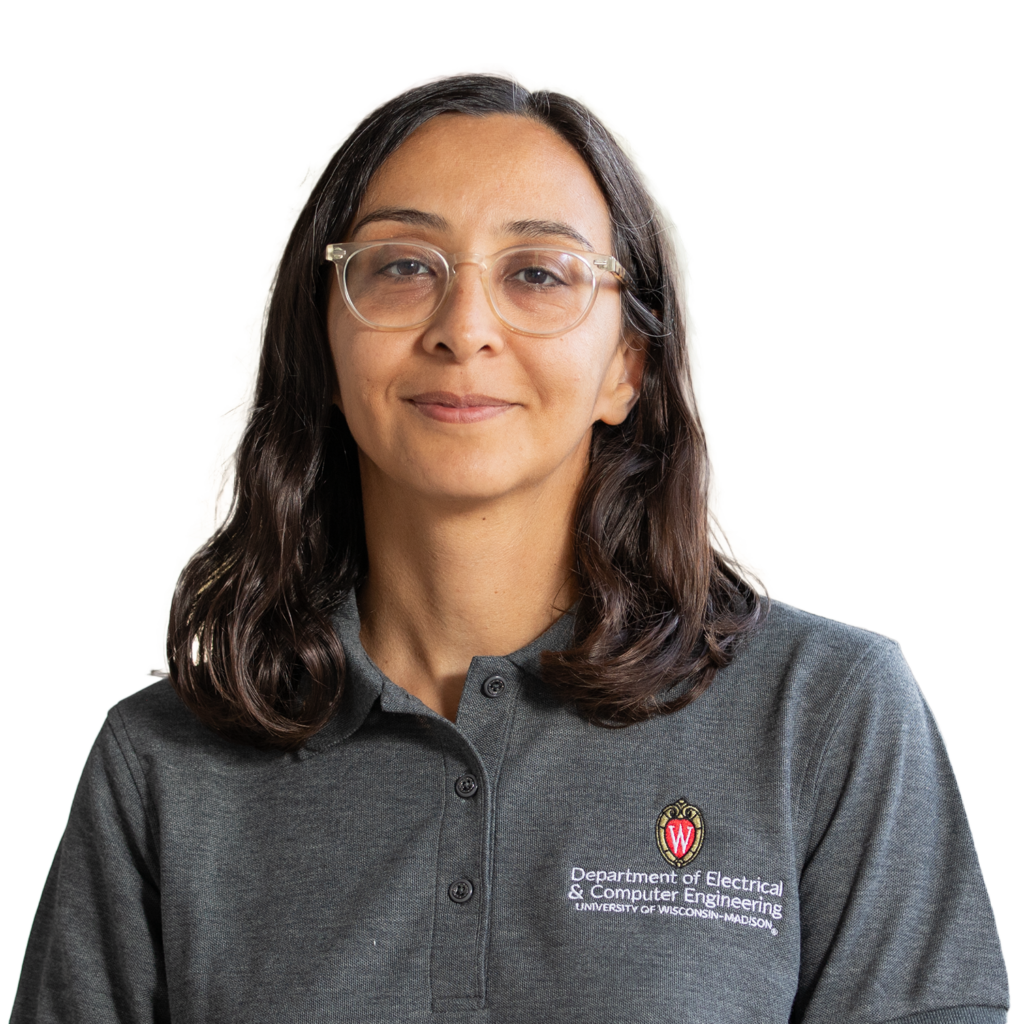
Azadeh Davoodi is a Vilas Distinguished Achievement Professor and Associate Chair of Undergraduate Studies in the Department of Electrical and Computer Engineering at the University of Wisconsin-Madison. Her research focuses on Electronic Design Automation (EDA), integrated circuit debug, and machine learning applications in VLSI design. She holds editorial roles in journals like IEEE TCAD and ACM TRETS, and has chaired major conferences such as ISPD 2015 and served on technical program committees for DAC, ICCAD, and others. Education: PhD in Electrical Engineering, University of Maryland-College Park (2006) Research Interests: Machine learning for VLSI chip design VLSI design automation for machine learning IC-CAD for emerging nanotechnologies Hardware security Recent Research Trends: Her work bridges machine learning and hardware design, with publications on neural network optimization, distributed inference, and explainable AI for circuit design. She emphasizes energy-efficient CNNs, latency reduction in edge computing, and security in split manufacturing. Awards: 2025 DATE Best Paper Candidate 2024 Vilas Distinguished Achievement Professor 2015 ACM Best Paper Award 2011 NSF CAREER Award Service and Grants: Leads NSF-funded projects on explainable ML for CAD and holds grants for distributed neural network synthesis. Her service includes roles as IEEE HKN member and editorial board positions. Labs/Teams: Engages in interdisciplinary research teams at UW-Madison, focusing on EDA innovation and hardware-software co-design.
Dr. Sina Jamali is a Senior Lecturer at Griffith University's School of Environment and Science within the Chemistry and Forensic Science department. He is affiliated with the Queensland Quantum and Advanced Technologies Research Institute (QUATRI) and the Queensland Micro and Nanotechnology Centre. His research focuses on electrochemical sensors, nanomaterials, corrosion protection, and sustainable energy materials. He holds a PhD from the University of Wollongong and previously served as a DECRA Fellow at UNSW. Dr. Jamali's work addresses challenges in biosensing technologies, nanotechnology applications, and material degradation mechanisms. His funded research includes the Australian Research Council's DECRA grant (DE210101137) exploring stochastic electrochemical biosensors. He collaborates on projects related to 3D printable energy materials, antimicrobial coatings, and wearable health sensors. Research Themes: Electrochemical biosensors, material degradation, nanotechnology, sustainable materials, and biomedical applications. Key Projects: Developing green 3D-printable materials for energy devices, porous metal-organic frameworks biosensors, and graphene-based wearable health monitoring systems. Dr. Jamali has supervised multiple doctoral and master’s students in areas like bioengineered wearable sensors, antimicrobial materials, and energy device manufacturing. His publications span journals like Small Science , Angewandte Chemie , and Advanced Materials , with a focus on both fundamental and applied electrochemistry. He actively contributes to Griffith's teaching and supervision, emphasizing practical applications of chemistry and forensics. His work aligns with the Sustainable Development Goals for clean energy and sustainable cities.
Emmanuel Fonseca is an Assistant Professor in the Department of Physics and Astronomy at West Virginia University (WVU), joining in Fall 2021. Previously, he was a postdoctoral researcher at McGill University (2016–2021) and completed his Ph.D. in Astronomy at the University of British Columbia (2016). His research focuses on radio astronomy, particularly pulsars and fast radio bursts (FRBs), leveraging facilities like CHIME, the Green Bank Telescope, and NANOGrav. He specializes in using pulsars as laboratories for testing fundamental physics and detecting gravitational waves via pulsar timing arrays. Education: Ph.D. in Astronomy, University of British Columbia (2016) M.Sc. in Astronomy, University of British Columbia (2012) B.Sc. in Physics and Astronomy, Pennsylvania State University (2010) Research Interests: Emmanuel’s work spans three key areas: Compact Objects: Investigating neutron stars and extreme environments using pulsar binaries and relativistic dynamics. CHIME Pulsar/FRB Science: Developing instrumentation and analyzing data from the Canadian Hydrogen Intensity Mapping Experiment to study FRBs and pulsars. Gravitational Waves: Contributing to NANOGrav’s efforts to detect nanohertz gravitational waves via millisecond pulsar timing arrays. Collaborations: He is a core member of NANOGrav and instrumental in maintaining CHIME’s pulsar and FRB backend systems. His work bridges hardware/software development with observational astronomy. Labs/Teams: Involved with the CHIME/FRB Collaboration and the NANOGrav Collaboration, advancing both observational infrastructure and theoretical astrophysics.
Matt Thompson is a Research Fellow and Sub Dean (CoS) at the ANU College of Science and Medicine. He also serves as Internship Convener and has been actively involved in research supervision and project leadership. His primary academic affiliation is with the Australian National University, where he focuses on nuclear fusion materials and plasma physics. Thompson holds a PhD in Physics and specializes in reactor wall materials for nuclear fusion, grazing incidence small-angle X-ray scattering (GISAXS), and plasma nanostructure fabrication. His research explores helium plasma interactions with materials like tungsten, investigating microstructural changes, bubble formation, and mechanical property degradation under fusion-relevant conditions. His recent publications (2015–2025) emphasize helium bubble dynamics, tungsten recrystallization kinetics, and nanostructure formation via ion irradiation. Key trends include advanced materials characterization using GISAXS and EBSD, plasma-induced surface modifications, and fusion material durability under extreme conditions. Grants/Projects : Leading the 'Effect of helium bubble formation on the recrystallization and mechanical properties of tungsten' (2019–2021) Contributing to 'Understanding helium induced nanostructure formation' (2020–2023) Co-investigator in 'HILT.RP1.010 - Hybrid Hydrogen direct and plasma reduction of iron ore' (2023–2024) Thompson collaborates extensively on fusion material research, particularly in plasma-material interactions and nanostructure evolution. He advises students on topics related to materials science and nuclear engineering.
Ming Yuan is a Professor in the Department of Statistics at Columbia University and serves as Associate Director of the Data Science Institute. His research focuses on high-dimensional statistics, machine learning, and statistical methodology with applications in genomics, finance, and imaging. Yuan holds a Ph.D. in Statistics from the University of Wisconsin-Madison (2004) and a B.S. in Electrical Engineering from the University of Science and Technology of China (1997). Education: 2004 Ph.D., Statistics, University of Wisconsin-Madison 2003 M.S., Computer Science, University of Wisconsin-Madison 2000 M.S., Probability and Statistics, University of Science and Technology of China 1997 B.S., Electrical Engineering, University of Science and Technology of China Research Interests: Dr. Yuan’s work bridges theoretical and applied statistics, emphasizing scalable methods for high-dimensional data. Key areas include tensor decomposition, covariance estimation, and statistical machine learning. His contributions to methods like sparse inverse covariance estimation and matrix/tensor completion have found applications in finance, genomics, and image analysis. Publications: His recent work explores tensor-based methods for high-dimensional analysis and develops optimal algorithms for compressed sensing. Articles often address statistical theory and computational challenges in modern data science, reflecting a balance between foundational and applied research. Awards: 2025 JASA Theory & Method Invited Discussion Paper 2024 William F. Sharpe Award (JFQA) 2018 Medallion Lecturer (Institute of Mathematical Statistics) 2014 Guy Medal in Bronze (Royal Statistical Society) 2007 Leo Breiman Junior Award Professional Activities: Yuan has served as Co-Editor of The Annals of Statistics (2019–2021) and Program Secretary for the Institute of Mathematical Statistics (2018–2021). His work integrates interdisciplinary collaborations, particularly in biomedical imaging and financial econometrics.
Dr. Martin F. Semmelhack is a Professor of Chemistry at Princeton University, leading the Semmelhack Lab. His research focuses on designing small molecules to modulate biological processes, particularly bacterial quorum sensing mechanisms in pathogens like Vibrio cholerae and Pseudomonas aeruginosa. His work aims to develop anti-infective drugs by targeting cell communication pathways. Key research areas include synthetic organic chemistry, chemical biology, and bacterial signaling pathways. Notable contributions include the discovery of autoinducers CAI-1 and AI-2, and the development of quorum sensing agonists/antagonists. Collaborations with microbiologists and neuroscientists expand applications into biofilm inhibition and neurotransmitter release technologies. His honors include the Arthur C. Cope Scholar Award (2014), John Simon Guggenheim Fellowship (1978–1979), and Camille and Henry Dreyfuss Teacher-Scholar Grant (1972–1977). Research combines chemical synthesis with biological testing to bridge molecular design and therapeutic potential. Advising and grant activities include funding from the National Institutes of Health and National Science Foundation, supporting interdisciplinary projects. The Semmelhack Lab is located in the Frick Laboratory, Princeton University.
Dr. Lateef Akanji is a Senior Lecturer in the Department of Petroleum Engineering at the School of Engineering, University of Aberdeen, where he has been contributing since 2014. He previously served as Lecturer and Head of the Petroleum Technology Research Group at the University of Salford, Assistant Professor at King Saud University, and Visiting Lecturer at the University of Leoben. His academic journey includes a PhD from Imperial College London and degrees from the University of Ibadan. University: University of Aberdeen School: School of Engineering Position: Senior Lecturer, Petroleum Engineering Email: l.akanji@abdn.ac.uk Education: PhD, Petroleum Engineering, Imperial College London M.Sc., Petroleum Engineering, University of Ibadan B.Sc. (Honours), Petroleum Engineering, University of Ibadan DIC (Diploma of Imperial College) Research Interests: Dr. Akanji's research centers on multiphase flow in porous and permeable media, with applications in enhanced oil recovery (EOR) in clastic, carbonate, and unconventional shale reservoirs. His work integrates theoretical, experimental, and computational fluid dynamics, utilizing platforms like Python, C++, and Fortran. He is pioneering the application of artificial intelligence in petroleum engineering, particularly in EOR screening and production optimization. His research includes pore-scale modeling, gas-lift systems, and nuclear reactor flow dynamics. Publication Trends: His recent publications (2025–2021) reflect a strong focus on fluid displacement in porous media, shale reservoir characterization, AI applications in energy, and nuclear safety. Notable themes include computational modeling of multiphase flow, biosurfactant EOR, and advanced numerical methods for reservoir simulation. Scientific Awards and Honors: Fellow of the Higher Education Academy (FHEA) Chartered Engineer (CEng) Chartered Petroleum Engineer European Engineer (Eur Ing) Member of the Energy Institute (MEI) Advising and Grants: Dr. Akanji supervises numerous PhD students in areas such as AI-based production optimization, permeability upscaling, and biosurfactant EOR. He leads research funded by PTDF, TETFUND, Sonangol, and Elphinstone, focusing on high-pressure high-temperature flow loops, gas-lift pilot rigs, and neuro-fuzzy screening systems. His collaborative projects involve institutions in the UK, Austria, and Australia. Laboratories and Research Platforms: He contributes to the development of the Complex System Modelling Platform (CSMP++), a C++-based API for simulating multi-physics flow in porous systems, co-developed with ETH Zurich and Montanuniversität Leoben. He also leads a technology innovation platform for EOR, including experimental rigs for biosurfactant screening and gas-lift stability testing.
Mario Berta is a Professor of Physics at RWTH Aachen University’s Institute for Quantum Information, with an honorary Visiting Reader position at Imperial College London’s Department of Computing. His research focuses on mathematical aspects of quantum information science, including quantum communication theory, cryptography, and algorithms. He leads a group funded by the ERC Starting Grant QEntropy, exploring entropy’s role in quantum information. He actively recruits PhD/postdoc researchers and organizes workshops like the Mathematics of Quantum Information conference at RWTH Aachen and Beyond IID 13 in Munich. Education: PhD in Theoretical Physics from ETH Zurich. Prior roles include Senior Research Scientist at Amazon Web Services’ quantum computing division and Postdoctoral Researcher at Caltech’s IQIM. He has pioneered quantum Gibbs sampling algorithms for the Fermi-Hubbard model and contributed to quantum error correction and complexity theory. His work bridges theoretical foundations with practical implementations, emphasizing resource analysis and algorithm optimization. Research interests span quantum algorithms’ computational complexity, entanglement theory, and information-theoretic security. He explores topics like quantum channel coding, hypothesis testing, and distributed quantum protocols under communication constraints. His group’s activities include organizing international workshops and collaborations with institutions like ML4Q and EPSRC. Funding sources include the European Research Council, RWTH’s Exploratory Research Space, and the EPSRC. He advocates for open-access science, as seen in his German-language article Algorithmen für neue Hardware . His work aims to advance quantum technologies through rigorous mathematical frameworks and experimental feasibility analysis.
Lt Col Darrell S. Crowe, PhD, is an Assistant Professor of Aerospace Engineering in the Department of Aeronautics and Astronautics at the Air Force Institute of Technology (AFIT), part of the Graduate School of Engineering and Management at Air University. He is an active military officer and educator contributing to advanced aerospace research and graduate education within the U.S. Air Force. Education: PhD in Aeronautical Engineering, Air Force Institute of Technology, 2014 MS in Aeronautical Engineering, Air Force Institute of Technology, 2008 BS in Aerospace Engineering, Texas A&M University, 2003 Dr. Crowe's research focuses on propulsion aerodynamics, computational fluid dynamics (CFD), supersonic and hypersonic flows, jet interaction effects, and store separation dynamics. His work involves high-fidelity simulations of exhaust nozzles, thermal distortion modeling, and active flow control, often in collaboration with military and aerospace applications. He investigates complex phenomena such as hot streaks in serpentine nozzles, film cooling, and cavity acoustics, contributing to improved aircraft and propulsion system design. His recent publications demonstrate a strong trend in advancing CFD methodologies for defense-related aerospace problems, particularly in propulsion-airframe integration, weapon bay aerodynamics, and supersonic/hypersonic flow control. The articles span both experimental validation and numerical modeling, emphasizing accuracy, turbulence modeling, and multi-physics coupling in extreme environments. Scientific Awards and Honors: AFIT Dean's Distinguished Teaching Professor, 2023 AIAA Associate Fellow, 2020 Air Force Meritorious Service Medal (2018, 2021) Joint Service Commendation Medal, 2017 Southwestern Ohio Council for Higher Education Faculty Excellence Award, 2015 Field Grade Officer of the Quarter, Air University, 2015 Air Force Commendation Medal, 2011 Company Grade Officer of the Quarter (2005, 2009) Air Force Achievement Medal, 2006 Dr. Crowe advises MS thesis students in aerospace engineering and teaches graduate-level courses in his domain. He has been involved in flight testing and simulation projects, often funded through U.S. Air Force research programs. His work supports critical defense capabilities in aircraft performance, propulsion efficiency, and weapon system integration. He is actively involved in professional organizations such as the American Institute of Aeronautics and Astronautics (AIAA) and contributes to major conferences and workshops, including the Propulsion Aerodynamics Workshops. His research is conducted within AFIT’s advanced simulation and modeling environment, leveraging tools like Kestrel and BCFD for high-fidelity analysis.
Sheng Sang is an Assistant Professor in the Department of Engineering Sciences at Bethany Lutheran College. His research lies at the intersection of Mechanical Engineering and Biomedical Engineering, with a strong emphasis on machine learning applications in composite materials and elastic metamaterials. His research interests include: Mechanical & Biomedical Engineering Machine Learning on Composites Elastic Metamaterials and Composites Optimization of Medical Devices Finite Element Modeling and Simulation Dr. Sang's recent publications demonstrate a consistent focus on integrating deep learning techniques with mechanical systems, particularly in predicting composite microstructures, tracking particles in complex systems, and optimizing wave propagation in metamaterials. His work frequently employs 3D CNNs and other neural architectures to solve inverse problems in material science. Scientific awards and recognition include: Dr. Lehtola Fellowship Research Grant ($9,000, PI), 2021–2023 Graco Engineering Lab Development Grant ($60,000), 2020–2022 He has been actively involved in teaching a wide range of engineering courses such as Fluid Mechanics, Solid Mechanics, Thermodynamics, and Computer-Aided Design. His research is supported by external grants, indicating active supervision and project leadership. Dr. Sang has collaborated with researchers across disciplines, including neuroscience and medical imaging, particularly in studies involving deep brain stimulation and fMRI. He is affiliated with research teams working on: Active elastic metamaterials design Machine learning for material characterization Optimization of biomedical devices using swarm intelligence Development of advanced simulation tools for composite systems
Marysa Laguë is an Assistant Professor in the Department of Geography within the Faculty of Arts at the University of British Columbia. She is a climate scientist specializing in understanding how terrestrial processes impact the atmosphere and surface climate across scales from individual plants to entire planets. Her research focuses on how changes in the land surface modify energy and water fluxes between the land and atmosphere, and how these changes subsequently affect atmospheric dynamics and climate both locally and remotely. Dr. Laguë serves as a member of the Graduate and Postdoctoral Studies program at UBC. Dr. Laguë earned her PhD in Atmospheric Sciences and MSc degrees in both Atmospheric Sciences and Applied Mathematics from the University of Washington. Her educational background provides her with strong theoretical and modeling expertise that informs her comprehensive research approach. Her research can be broadly categorized into three interconnected areas: understanding land-atmosphere interactions in the modern climate system, exploring fundamental physical connections between terrestrial and planetary processes using idealized models, and climate model development. She studies how changes in vegetation impact cloud formation, temperatures, water vapor, and atmospheric circulation in ways that can feed back on surface climate. On the idealized side, she investigates how continental configurations fundamentally alter global-scale climate patterns. Her work often involves developing and using numerical models of varying complexity to quantify land's role in the coupled Earth System. She is particularly interested in understanding where the atmosphere cares about changes in the land surface, and what particular properties of the land surface it is that the atmosphere cares about. Dr. Laguë's recent publications demonstrate a consistent focus on land-atmosphere interactions, with particular emphasis on how terrestrial evaporation, surface albedo, and vegetation properties influence climate dynamics. Her research spans from local-scale processes to planetary-scale phenomena, including studies of exoplanet climates. She frequently employs both complex Earth system models like the Community Earth System Model and idealized modeling frameworks to isolate specific mechanisms. A recurring theme across her work is the development and application of the Simple Land Interface Model (SLIM), which allows researchers to test how individual land-surface properties modify energy and water fluxes to the atmosphere. Dr. Laguë is actively involved in mentoring graduate students and is interested in supervising Master's students, Doctoral students, and Postdoctoral Fellows. She supports interdisciplinary research collaborations and is open to supervising students interested in public scholarship through the Public Scholars Initiative. She also encourages experiential learning opportunities like internships for her graduate students and emphasizes the importance of interdisciplinary research approaches. She is the lead scientific developer of the Simple Land Interface Model (SLIM), an idealized land surface model that couples with the Community Earth System Model. This tool allows researchers to isolate the effects of individual land surface properties on the Earth system. Her work has significant implications for understanding climate change impacts, land management strategies, and even the potential habitability of exoplanets. Her research methodology includes using climate models, Earth system models, numerical Earth system models, Python, Jupyter, the Coupled Model Intercomparison Project (CMIP), and Fortran programming for climate model development.
Sandro Rubino is a Fixed-term tenure-track Assistant Professor at the Department of Energy (DENERG) at Politecnico di Torino, where he is also a Member of the Interdepartmental Center PEIC - Power Electronics Innovation Center. His academic appointment falls under the scientific disciplinary sector IIND-08/A - Power Electronic Converters, Electrical Machines and Drives (Area 0009 - Industrial and Information Engineering). Dr. Rubino's research focuses on electric drives and electrical machines, with particular expertise in induction motor drives, synchronous motor drives, and advanced torque control techniques. His work spans from fundamental motor control theory to practical applications in electric vehicles and e-mobility systems. He has developed high-performance torque controllers for various types of electric motors including electrically excited synchronous motors, induction motors, and multi-three-phase motor configurations. His research addresses critical challenges in motor drive systems including fault tolerance, efficiency optimization, and performance derating under abnormal conditions. His publications reveal a strong focus on practical applications of motor control theory, particularly in the context of electric vehicles and sustainable transportation. The trend in his recent work shows increasing sophistication in control algorithms for multi-phase motor systems, with emphasis on fault tolerance and performance optimization under challenging operating conditions. His research bridges theoretical electrical machine modeling with practical implementation challenges in modern power electronic drive systems. Dr. Rubino has received multiple prestigious awards including the IAS-IDC ECCE Prize Paper Award in 2020, 2022, and 2024 from IEEE Transactions on Industry Applications, the IEEE Italy Section Power and Energy Society (PES) Chapter Best PhD Thesis Award in 2020, the IEEE Italy Section Industrial Electronics (IES) Chapter Best PhD Thesis Award in 2021, and the IAS-IDC Transactions Paper Award in 2024. He actively supervises PhD students including Nicola Macri', Alessandro Ionta, and Luisa Tolosano, focusing on advanced topics in multi-phase motor drives and torque control. Dr. Rubino leads or participates in several significant research projects including TEAMING - e-powerTrain prEdictive mAintenance using physics inforMed learnING (2023-2027), SUPERDRIVE - Superconductive Synchronous Machine Drives for High-Power Applications (2023-2025), and SEMDY - Sustainable and Efficient Motor Drive System for E-mobility Applications (2022-2025), where he serves as Scientific Responsible. Within the Power Electronics Innovation Center (PEIC), Dr. Rubino contributes to advancing the state-of-the-art in electric drive systems, with particular emphasis on applications supporting Sustainable Development Goals 7 (Affordable and Clean Energy), 9 (Industry, Innovation, and Infrastructure), and 11 (Sustainable Cities and Communities).
Nicola Ranger is Professor in Practice of Natural Capital, Risk and Finance at the London School of Economics and Political Science (LSE) and holds leadership roles at the Environmental Change Institute (University of Oxford). As Executive Director of Earth Capital Nexus and Director of the Resilient Planet Finance Lab, she specializes in integrating climate and nature risks into financial decision-making, stress testing, and mobilizing sustainable investment for resilience. PhD in Atmospheric Physics, Imperial College London Postdoctoral research in climate economics and policy at LSE Her research spans sustainable finance, systemic resilience, and fiscal policy, with a focus on risk analytics, disaster risk financing, and international financial systems. She has led groundbreaking work including the UK’s first nature-related stress test and co-founded global initiatives like the G20-V20 InsuResilience Global Partnership. Recent publications analyze sustainability-linked finance, climate stress testing frameworks, and adaptation taxonomies. Scientific awards include Senior Research Fellow at INET Oxford, Fellow at CEPR, and advisory roles for the World Bank, Bank of England, and European Commission. She serves on high-level advisory groups such as the UK Climate Financial Risk Forum and the Resilient Planet Data Hub, advancing climate-resilient financial systems and policy frameworks globally.