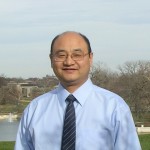
Dan Wik is an Associate Professor in the Department of Physics & Astronomy at the University of Utah . His research focuses on observational X-ray astronomy, particularly galaxy clusters, inverse Compton scattering, X-ray binaries, and the X-ray background. He has extensive experience in data calibration, analysis tool development, and mission collaborations such as NuSTAR, Chandra, and XRISM. Wik holds a PhD in Astronomy from the University of Virginia (2010) and a BS in Astrophysics from Ohio University . His research interests span galaxy cluster mergers, nonthermal emission processes, high-energy astrophysics, and cross-calibration studies between X-ray observatories. Recent articles highlight his work on NuSTAR observations of galaxy clusters, X-ray binary populations in M31 and M33, inverse Compton emission constraints, and stray light background analysis techniques. His studies often integrate multiwavelength data and address cosmological implications of X-ray observations. Wik has received multiple grants from NASA for projects like Time Domain X-ray Studies of AGN and Hard Bandpass Extension of XRISM Cluster Observations . He supervises undergraduate and graduate researchers and teaches courses from general education to advanced graduate levels, including Foundations of Astronomy and High Energy Astrophysics .
Xudong Fan is a Professor at the University of Michigan specializing in advanced analytical and diagnostic technologies. His work bridges engineering, chemistry, and clinical medicine through innovative device development. His research focuses on: Miniaturized gas chromatography systems for portable chemical analysis and planetary science missions Optofluidic immunoassays using biolasers for ultrasensitive, label-free biomarker detection Machine learning integration for chromatographic data analysis and biosensor accuracy enhancement Breath-based diagnostics for cancer, infectious diseases, and respiratory conditions Microfluidic platforms requiring minimal sample volumes (e.g., 1μL fingertip blood) Professor Fan's 2025 publications reveal a strong emphasis on device miniaturization, automation, and multimodal sensing. Key trends include the convergence of micro-GC with photoionization detectors for field-deployable chemical analysis, deep learning solutions for chromatographic co-elution challenges, and biolaser-based platforms enabling antigen-independent cancer cell detection. These efforts target affordable point-of-care diagnostics with applications in tuberculosis monitoring, COVID-19 immunity assessment, and early lung cancer screening through breath analysis. His work demonstrates significant translational impact, particularly in resource-limited settings where cost, portability, and minimal sample requirements are critical. Current projects show strong alignment with NASA planetary science objectives through micro-GC development for extraterrestrial organic analysis.
Reeta Vyas is a tenured Professor of Physics at the University of Arkansas , where she has been affiliated since 1989. She has held consecutive promotions from Assistant (1989–1994), Associate (1994–2002), to full Professor (2002–present). Her research focuses on quantum optics and laser physics, with a particular emphasis on light-matter interactions, beam propagation, and quantum coherence. Research Themes Quantum optics and photon statistics Nonlinear optical phenomena Orbital angular momentum of light Polarization properties of structured beams Her publications from 2017–2024 reveal a sustained focus on advanced optical phenomena including quantum light statistics , vortex beam diffraction , and nonlinear phase analysis . Notable achievements include the Faculty Gold Medal Award (2005) and Senior Membership in the Optical Society of America (2013) . While no student advising information is explicitly documented, her work demonstrates significant contributions to theoretical and experimental quantum optics.
Professor Axel Roers serves at Heidelberg University's Faculty of Medicine within the Institute of Immunology at Heidelberg University Hospital. His research program focuses on mast cell biology and immune regulation, particularly examining how these cells monitor blood flow and protect against pathogens and toxins. Dr. Roers' research interests center on immunological mechanisms in skin tissue, with particular expertise in interleukin-10 regulation, mast cell functions in inflammatory processes, and NF-kappaB-dependent proinflammatory responses. His work bridges fundamental immunological research with clinical applications, especially in understanding autoimmune conditions and skin barrier function. His current research portfolio demonstrates strong activity across multiple funding mechanisms including Research Groups, Transregional Collaborative Research Centers, and Clinical Research Groups. Notably, he serves as speaker for FOR 2599: Tissue type 2 responses: Mechanisms of induction and regulation, indicating leadership in this specialized field. Dr. Roers has secured substantial research infrastructure through completed projects including a cell analysis and high-speed cell sorting system and a 2-photon laser scanning microscope for intravital applications, demonstrating his commitment to advanced methodological approaches in immunological research. His collaborative approach is evident through numerous sub-project management roles in Transregios and Collaborative Research Centers, focusing on molecular dynamics of nucleic acid-driven immune responses, immune cell interactions in barrier-defective skin, and cellular plasticity in myeloid malignancies.
Takashi Tanii is a Professor at Waseda University's School of Fundamental Science and Engineering within the Faculty of Science and Engineering. He holds a Doctor of Engineering degree from Waseda University and maintains an active research program as evidenced by his homepage at http://www.tanii.nano.waseda.ac.jp. His research spans multiple interdisciplinary fields at the intersection of physics, engineering, and biology. Professor Tanii's primary research interests focus on Nanobioscience , with specific expertise in Nano-electronics and Nano-biotechnology . His work demonstrates a strong integration of quantum physics principles with biological applications, particularly in the areas of quantum sensing using diamond nitrogen-vacancy centers and neural network analysis. His research also extends to cell adhesion studies, TiO 2 photocatalysis, and single ion implantation techniques for quantum device fabrication. An analysis of his 15 most recent publications reveals a consistent trend toward quantum technologies and biophysical applications . His work on diamond nitrogen-vacancy centers for quantum sensing, particularly for nuclear spin detection, represents cutting-edge research in quantum information processing. Simultaneously, his investigations into neuronal networks and cell adhesion mechanisms demonstrate a strong commitment to understanding biological systems at the nanoscale. The interdisciplinary nature of his research bridges physics, engineering, and life sciences, with potential applications in quantum computing, neural engineering, and biomedical diagnostics. Professor Tanii is an active member of several professional societies including the Japanese Neural Network Society, Architectural Institute of Japan, Japan Society of Applied Physics, and Japan Surface Science Society, reflecting the breadth of his research interests. His work has resulted in 114 publications with 1,627 citations and an h-index of 23, indicating significant impact in his fields of study. While specific grant information is not detailed in the provided text, his consistent publication record across multiple high-impact journals suggests sustained research funding. His laboratory appears to operate at the intersection of quantum physics and biophysics, with research teams likely comprising physicists, engineers, and biologists working collaboratively. The integration of techniques from quantum sensing, microfabrication, and cellular neuroscience suggests a highly interdisciplinary research environment focused on pushing the boundaries of nanoscale measurement and manipulation technologies.
Géza Giedke is an Ikerbasque Research Professor at the Donostia International Physics Center (DIPC) in Donostia-San Sebastián, Spain. His research focuses on quantum information theory and its implementation in solid-state and quantum optical systems, with particular emphasis on entanglement, quantum channels, and the dynamics of open quantum systems. His educational background includes a Dr. rer. nat. (Doctor of Natural Sciences) from the University of Innsbruck, Austria. Prior to his current position, he has held research positions at the University of Innsbruck (Austria), Max Planck Institute of Quantum Optics in Garching and Technical University of Munich (Germany), and ETH Zurich (Switzerland). Dr. Giedke's research interests span multiple areas of quantum physics and quantum information science. His work explores the theoretical foundations of quantum information processing while also addressing practical implementation challenges in solid-state systems. He has made significant contributions to understanding entanglement in fermionic systems, quantum channels, and the application of quantum information concepts to condensed matter physics. His recent work has increasingly focused on quantum phenomena in graphene-based nanostructures and their potential for quantum information processing applications. His publication record demonstrates a strong trajectory from fundamental quantum information theory to more applied work connecting quantum information concepts with condensed matter physics, particularly in the realm of graphene nanostructures and quantum transport phenomena. Dr. Giedke has secured significant research funding, including the recently granted GRAFIQ project (2023-2027) on 'Harnessing quantum spin states, dynamics, and transport in graphene-based nanostructures' and the TENINT project (2023-2025) on 'Tensor network methods for interacting electrons in quasi-1d graphene nanostructures.' He actively mentors PhD students and postdoctoral researchers, currently supervising several researchers working on various aspects of quantum information in solid-state systems. Dr. Giedke also organizes major scientific events, including the Basque Quantum Science and Technology Workshops and the Nanotechnology meets Quantum Information Summerschool.
Nicolás Quesada is an Associate Professor in the Department of Engineering Physics at Polytechnique Montréal, where he holds the MEI Chair in Quantum Photonics. He serves as Director of COPL (Centre d'optique, photonique et laser) and is a member of INTRIQ (Institut transdisciplinaire d'informatique quantique). His research program focuses on quantum information, quantum computing, and quantum optics, with particular emphasis on photonic implementations of quantum technologies. Dr. Quesada earned his B.Sc. in Physics from Universidad de Antioquia in 2010, followed by M.Sc. and Ph.D. degrees in Physics from the University of Toronto. During his doctoral studies, he was awarded both Vanier and Stoicheff scholarships. Prior to joining Polytechnique Montréal, he worked at Xanadu Quantum Technologies as lead developer of the Strawberry Fields and The Walrus software libraries, where he led theoretical efforts demonstrating photonic quantum advantage. His research interests span quantum photonics, quantum computing, and quantum optics, with specific focus on Gaussian Boson Sampling, squeezed light generation, non-Gaussian light sources, and quantum benchmarking techniques. His group develops theoretical frameworks and computational tools for next-generation quantum light sources needed for fault-tolerant quantum computers, quantum communication networks, and quantum sensors. His work bridges theoretical quantum information science with practical photonic implementations. Analysis of his recent publications reveals a strong focus on advancing Gaussian Boson Sampling as a platform for quantum advantage, developing mathematical frameworks for quantum optics, and engineering practical photonic quantum devices. His work spans from fundamental quantum optics to applied quantum computing, with increasing emphasis on verification and benchmarking of quantum computational advantage. Dr. Quesada has received notable recognition including the Vanier Canada Graduate Scholarship and the Stoicheff Scholarship during his doctoral studies. His research has attracted significant funding, including a $6 million grant for quantum projects at Polytechnique Montréal announced in January 2025 and involvement in a $1.91 million NSERC quantum sensing project led by Professor Denis Seletskiy. He has supervised two Master's students to completion in 2024: Dalbec-Constant, N. who worked on photon counting from transition-edge sensors, and Zhao, J. who researched optimal pumps for spontaneous parametric down-conversion. His research group collaborates extensively with both academic and industry partners in the quantum technology sector. As Director of COPL, he oversees one of Canada's leading photonics research centers, facilitating interdisciplinary research across quantum optics, classical optics, and laser technologies.
Dr. Manish Garg is the Head of the Research Group 'Quantum Microscopy and Dynamics' at the Max Planck Institute for Solid State Research in Stuttgart, Germany. He holds a Group Leader (W2) position since 2024, having previously served as a Research Group Leader from 2020-2023 in the Department of Nanoscale Science. His research integrates attosecond science, scanning tunneling microscopy, and ultrafast Raman spectroscopy to develop a four-dimensional quantum microscope capable of capturing electrons and atoms in action at fundamental space-time limits. PhD (Dr. rer. nat.) in Physics from LMU Munich, Germany (2012-2017) Integrated B.S.-M.S. from Indian Institute of Science Education and Research, Kolkata, India (2007-2012) Dr. Garg's research focuses on developing techniques to observe and control quantum phenomena at the atomic scale. His group has pioneered methods to visualize electron dynamics with attosecond temporal resolution and sub-Ångström spatial resolution, enabling unprecedented insights into molecular processes. Recent breakthroughs include selective excitation of molecular vibrations, real-time tracking of electron oscillations in nanodevices, and imaging coherent phonon wave packets in graphene nanoribbons. His publication record shows a consistent trajectory of high-impact research in leading journals including Nature, Science, and Nature Communications. The work demonstrates expertise across multiple disciplines including attosecond physics, nanoscale imaging, quantum dynamics, and ultrafast spectroscopy, with applications ranging from fundamental quantum mechanics to potential light-wave electronics. Rudolf-Kaiser Preis (2023) Max-Auwärter Award (2022) IMPRS Advanced Photon Science Graduate Fellowship (2012-2016) INSPIRE Fellowship, DST India (2007-2012) Dr. Garg leads a research group comprising postdocs and PhD students working on cutting-edge quantum microscopy techniques. His group has secured significant recognition for developing methods to directly measure electron oscillations in quantum nanodevices and visualize atomic motion in single molecules. Current research focuses on advancing four-dimensional quantum microscopy to capture electronic and atomic dynamics in molecules, two-dimensional materials, and superconductors at fundamental space-time limits. The Quantum Microscopy and Dynamics group operates within specialized facilities at the Max Planck Institute for Solid State Research, utilizing low-temperature scanning tunneling microscopes operating in ultrahigh-vacuum conditions. Their work on picocavities and nonlinear optical spectroscopy at atomic length scales represents the frontier of quantum measurement science.
Jan Stake is a Professor of Terahertz Electronics and head of the Terahertz and Millimeter-Wave Laboratory at Chalmers University of Technology. He holds a MSc (1994) and PhD (1999) in electrical engineering and microwave electronics from Chalmers. His research focuses on terahertz technology for space missions, climate science, and industrial applications. Key projects include developing THz components for the Jupiter Icy Moons Explorer (Juice) and MetOp satellites, and creating sensors for pharmaceutical manufacturing. He has authored 388+ publications, served as Editor-in-Chief of IEEE Transactions on Terahertz Science and Technology , and is an IRMMW-THz board member. Current work emphasizes integrated THz components for space science and wireless communication. Awards include visiting research fellowships at the UK’s National Physical Laboratory (2023). Teaching includes semiconductor physics and microwave engineering, with a weekly journal club for PhD students. Research Interests: Terahertz fundamental science and applications Space instrumentation (e.g., SWI instrument for Juice mission) Climate monitoring via atmospheric THz measurements Graphene-based THz detectors and amplifiers THz radar systems for industrial process monitoring Recent Work Trends: Recent articles (2023–2025) emphasize high-precision quantum-cascade lasers , antenna alignment optimization , industrial THz sensing systems , and space-borne receiver reliability . Key themes include improving THz component integration, enhancing spectral resolution for molecular analysis, and advancing THz applications in manufacturing and environmental science. Awards & Roles: Editor-in-Chief, IEEE Transactions on Terahertz Science and Technology (2016–2018) Chair, IEEE THz Best Paper Award Committee (2019–2021) Elected IRMMW-THz Board Member (2017–2024) Visiting Research Fellow, UK National Physical Laboratory (2023) Grants & Collaborations: Active in EU and industry partnerships for space instrumentation (e.g., Juice mission) and pharmaceutical sensing. Lab develops THz components with companies in aerospace and medical sectors. Labs/Teams: Leads the Terahertz and Millimeter-Wave Laboratory, collaborating with National Physical Laboratory (UK) and ESA on space instrument development.
Anders Persson is Professor and Head of the Division of Diagnostics and Specialist Medicine at Linköping University, where he also serves as Director of the Center for Medical Image Science and Visualization (CMIV). His pioneering research develops advanced cardiovascular imaging techniques using photon-counting CT technology and computational fluid dynamics. Professor Persson's innovations include rapid cardiac imaging protocols capturing blood flow in a single heartbeat, AI algorithms for automated coronary calcium scoring, and patient-specific computational modeling of cardiac hemodynamics. His work with SCAPIS (Swedish CArdiopulmonary bioImage Study) examines population-level cardiopulmonary health patterns and atherosclerosis development. Recent publications focus on optimizing photon-counting CT for cardiac applications, reducing metal artifacts from implants, and developing deep learning solutions for cardiac segmentation. His research aims to enable earlier detection of cardiovascular disease through advanced imaging biomarkers. No scientific awards are documented in this profile. Professor Persson leads initiatives translating medical imaging innovations into clinical practice for improved cardiovascular diagnosis.
Kerrianne Harrington is a Researcher in the Department of Physics at the University of Bath, focusing on developing hollow core optical fibres for advanced applications. Her work contributes to the 'u-Care' interdisciplinary project, aiming to create compact UV-C light sources for medical therapies targeting drug-resistant pathogens and precision cancer surgery. She also leads the 'Robotic microscopy for globally accessible science and healthcare' project, advancing fibre-based imaging and diagnostic tools. Her research expertise spans optical fibre fabrication, splicing, and simulation, with a focus on anti-resonant fibres enabling UV light transmission below 220 nm—unachievable in traditional fibres. Key contributions include Axi-Stack manufacturing techniques and methods to minimize interconnection losses in hollow-core fibres. Collaborations involve projects funded by EPSRC and The Royal Society, addressing quantum communication, low-loss fibre integration, and biomedical applications. Her work aligns with UN SDGs, particularly in advancing health and innovation. Recent publications highlight achievements in supercontinuum generation, UV light guidance, and multi-core fibre designs. Harrington’s research bridges fundamental physics with practical innovations in healthcare, photonics, and quantum technologies.
Ajeet Kumar is a Researcher in the Department of Mechanical Engineering at the University of Bath, affiliated with the Centre for Integrated Materials, Processes & Structures (IMPS) and the Centre for Sustainable Energy Systems (SES). He holds a PhD in Physics from the University of Hyderabad (2016) and an MSc from Mohanlal Sukhadiya University (2007). His research focuses on textured porous piezoelectric materials for sensors and energy harvesting applications, contributing to UN Sustainable Development Goals related to energy and innovation. Key roles include Research Assistant Professor (Yeungnam University, 2018–2023), Postdoctoral Fellow (Yeungnam University, 2018), and prior Research Associateships at Defence Metallurgical Research Laboratory and the University of Hyderabad. His expertise spans piezoelectrics, ferroelectrics, thin/thick films, and energy storage technologies. Research interests emphasize advanced materials for energy harvesting, including pyroelectric, thermomagnetic, and magneto-mechano-electric systems. Recent work explores single-crystal piezoelectricity, laser-based material processing, and low-temperature energy conversion. Publications highlight innovations in piezoelectric single crystals, magneto-mechano-electric generators, and energy-efficient composites. Collaborations focus on sustainable energy solutions and multifunctional materials.
Paul Fenter is an Argonne Distinguished Fellow, Senior Physicist, and Group Leader for Interfacial Processes in the Chemical Sciences and Engineering Division at Argonne National Laboratory, with an Adjunct Professor appointment in Earth and Environmental Sciences. His research leverages synchrotron X-ray techniques at the Advanced Photon Source to probe solid-liquid interfaces across energy, environmental, and geological systems. Fenter earned his Ph.D. in Physics from the University of Pennsylvania (1990) and B.S. in Physics from Rensselaer Polytechnic Institute (1984). His foundational work bridges experimental physics with practical applications in mineral-water interactions and electrochemical processes. His research portfolio demonstrates sustained innovation in interfacial science, with recent publications (2024-2020) focusing on coherent X-ray imaging of interfaces, ion adsorption dynamics at mineral surfaces, and hydration layer structures. These studies integrate synchrotron techniques with computational modeling to address challenges in energy storage, geochemical cycling, and environmental remediation. Key themes include the atomic-scale characterization of electrochemical interfaces and real-time observation of interfacial transformations under operational conditions. Notable recognitions include: Bertram E. Warren Diffraction Physics Award (American Crystallographic Association, 2012) Argonne National Laboratory Board of Governors’ Distinguished Performance Award (2018) Fellow of the American Physical Society (2007) Fenter directed the DOE-funded Center for Electrochemical Energy Science (2014-2020), securing major research grants for energy storage innovation. His leadership in interfacial research has established critical methodologies for in situ characterization of buried interfaces, impacting fields from battery technology to subsurface contaminant transport. As Group Leader, he oversees a multidisciplinary team developing next-generation X-ray techniques for complex fluid-solid systems.
Dr Matthew E. Potter is a Senior Research Fellow in the Chemistry department at the University of Southampton. He holds a MChem and PhD from the University of Southampton (2014). His research focuses on carbon utilization, synchrotron-based characterization, and nanoparticle design. He has collaborated with institutions like ISIS, ORNL, and Honeywell LLC, earning accolades such as the Honeywell Inventers Award (2014) and BZA Founders Award (2014). Research interests include heterogeneous catalysis, green chemistry, and CO2 capture. His work integrates computational modeling with experimental techniques to optimize catalytic materials and reactor designs. Notable projects involve photocatalytic fibres for sustainable applications and neutron scattering for reaction pathway analysis. He has contributed to over 20 publications, emphasizing interdisciplinary approaches to energy and environmental challenges. Matthew’s career spans post-doctoral roles at Georgia Tech (2015–2016) and Southampton (2016–present). He leads collaborations within the Southampton Clean Carbon Strategy Group and contributes to the UK Catalysis Hub. His research bridges academia and industry, addressing global challenges in clean energy and carbon management.
Dr. Maria Soler serves as a Senior Researcher at the Catalan Institute of Nanoscience and Nanotechnology (ICN2), conducting pioneering work in the Nanobiosensors and Bioanalytical Applications group (NanoB2A) under the Networking Research Center of Bioengineering, Biomaterials and Nanomedicine (CIBER-BBN). Her expertise spans nanophotonic biosensor development for real-time, label-free detection in complex biomedical environments. Her academic credentials include: PhD in Biochemistry, Molecular Biology and Biomedicine from Autonomous University of Barcelona (2015, with distinguished honors) Postdoctoral research at Ecole Polytechnique Federale de Lausanne (EPFL, Switzerland) for 3 years Dr. Soler's research integrates optical biosensor development , nanoplasmonics , and surface chemistry with molecular biology to create diagnostic platforms for immunology and personalized medicine. The NanoB2A group focuses on nanoplasmonic biosensors, silicon nanophotonic systems, lab-on-a-chip integration, and surface biofunctionalization, targeting clinical diagnostics and environmental applications through interdisciplinary innovation. Her publication trends reveal consistent advancement in label-free photonic biosensors for precision diagnostics, particularly in point-of-care testing for infectious diseases (including multiple SARS-CoV-2 applications) and cancer immunotherapy monitoring. This work bridges nanotechnology fundamentals with urgent healthcare needs, demonstrating exceptional translational potential in pandemic response and personalized treatment strategies. Dr. Soler's contributions have been recognized through distinguished PhD honors and features in Laser Focus World, though specific awards remain unlisted in available materials. Her research has secured significant ERDF funding for laboratory enhancements within the Biodeposition and Biodetection Unit (U4 NANBIOSIS). As leader of the NanoB2A laboratory at ICN2, she oversees cutting-edge equipment for nanobiosensor development and application, recently upgraded through European Regional Development Fund investments to advance diagnostic capabilities for complex biomedical challenges.