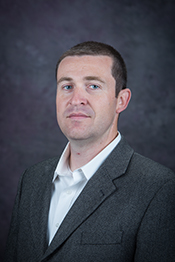
Rick Groenendijk is a researcher in the field of computer vision and mathematical morphology at the University of Amsterdam's Computer Vision Lab. His work focuses on integrating morphological operators into deep learning frameworks, particularly in neural network architectures. He holds a PhD in Computer Vision & Mathematical Morphology from the University of Amsterdam, supervised by Dr. Leo Dorst and Prof. Theo Gevers, which he successfully defended in October 2023. His research interests include advancing hybrid neural network architectures, such as HaarNet and MorphPool, which combine linear and morphological operations for tasks like semantic segmentation and depth estimation. Recent contributions address challenges in RGB-D data processing and adversarial training. He has also explored applications in photogrammetry and social robotics learning. Publications span top venues including IEEE TPAMI, arXiv, and the British Machine Vision Conference. His code repository for the Geometric Back-Propagation paper is publicly available on GitHub under the MIT license. Rick has collaborated with institutions on multi-loss optimization techniques and climate action analysis through machine learning. While no formal awards are listed, his work demonstrates impactful contributions to computer vision and deep learning methodologies.
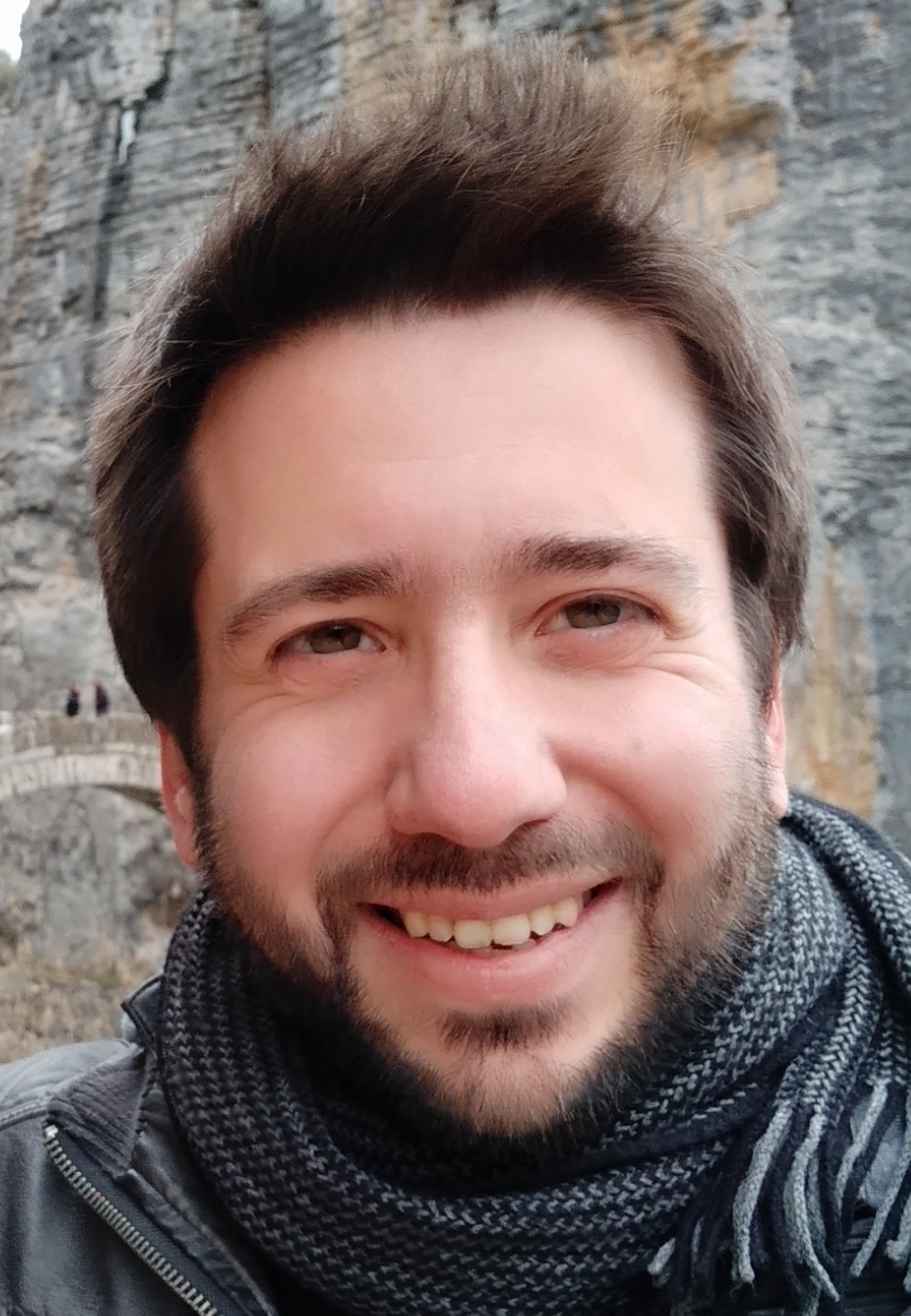
François Clapuyt is a FNRS postdoctoral researcher specialized in geomorphic response quantification and sediment transfer dynamics in landslide-prone mountainous environments. His work combines advanced technologies like UAV-SfM photogrammetry and cosmogenic radionuclide dating to study spatio-temporal sediment patterns. Affiliation: Belgian National Fund for Scientific Research (FNRS) Research Focus: Clapuyt's work examines the interplay between stochastic mass movement processes and long-term denudation rates, with particular emphasis on sediment connectivity mechanisms in Alpine and Andean catchments. He develops methodologies using precision geospatial tools to track landscape evolution across multiple timescales. Recent Publications: His research output spans interdisciplinary topics including UAV-based topographic monitoring, cosmogenic nuclide applications, and sediment dynamics modeling across diverse mountainous regions. Key Themes: Sediment flux quantification 3D geomorphic reconstructions Catchment-scale denudation analysis Temporal scaling of erosion processes Landslide sediment cascades PPK-enhanced UAV mapping
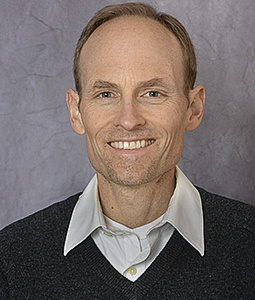
Dr. Walter J. McNeil is an Associate Professor and Steve Hsu Keystone Research Scholar in the Nuclear Engineering Department at Kansas State University. He holds a Ph.D. (2010) and B.S. (2004) in Nuclear and Mechanical Engineering from K-State. Prior to academia, he served at the Space and Naval Warfare Systems Command (2010–2015), leading R&D on radiation detection systems. At K-State, he established four laboratories, secured $8.17M in research funding, and advised 11 graduate students. His work focuses on semiconductor neutron sensors, gamma-ray spectrometers, and radiological detection systems. Education: Ph.D., Nuclear Engineering, Kansas State University, 2010 B.S., Mechanical Engineering with Nuclear Option, Kansas State University, 2004 Research Interests: Radiation detection systems design, semiconductor neutron sensors, CdZnTe gamma-ray spectrometers, and cryogenic sensor technology. He emphasizes applications in nonproliferation, radiological source detection, and military systems. His innovations include doubling He-3 neutron sensor sensitivity and developing lightweight HPGe spectrometers. Articles Trends: Recent publications (2019–2020) focus on neutron detector simulation (charge transport, pixelated designs), strain measurement via micro-nuclear-mechanical systems, and radiation transport modeling for inspection systems. Earlier work includes foundational research on microstructured detectors and Frisch collar CdZnTe technology. Scientific Awards: R&D 100 Awards (2005, 2009, 2014) DAWIA Level I Certification Extraordinary Leadership Award (2004) Advising & Grants: Advised 11 graduate students and 20 undergraduates, securing $5.5M as PI. Key grants include the $26M NNSA Consortium for Nonproliferation Enabling Capabilities (CNEC). Projects include radiological mapping via drones and 3D photogrammetry, neutron interrogation systems for explosives detection, and additive-manufactured electronics. Labs & Teams: Heads the Radiological System Integration Laboratory (RSIL), Kansas State University Material Interrogation Facility (KSUMI), and a mobile field laboratory. Collaborates with Honeywell, Radiation Detection Technologies, and national labs on sensor development and nonproliferation tools.
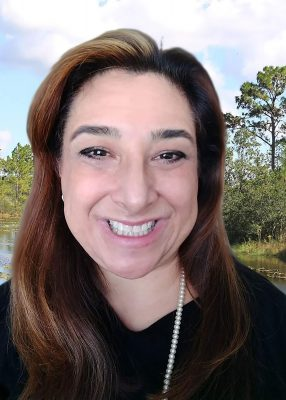
Giorgos Sfikas is an Assistant Professor at the University of West Attica and a researcher at the National Centre for Scientific Research 'Demokritos'. He holds a PhD in Image Processing and Computer Vision (University of Strasbourg, 2012), MSc in Computer Science (University of Ioannina, 2007), BSc in Computer Science (2004), and a BA in History & Archaeology (2014). His research focuses on Computer Vision, Machine Learning, Document Image Processing, and applications in Cultural Heritage. He has authored over 50 peer-reviewed publications, including best paper awards in biomedical imaging and bioengineering. Notable contributions include work on quaternionic neural networks, GANs for document processing, and the Bessarion dataset for medieval Greek inscriptions. Teaching includes courses on Computer Graphics, Machine Learning, and Photogrammetry. He leads projects in multispectral imaging, historical document analysis, and AI-driven archaeology.
Dr Nestor Gregorio is a Lecturer and Team Leader for Stakeholder Engagement & Access to Lands at the University of the Sunshine Coast's Forest Research Institute. He holds a BSc in Forestry, MPhil, and PhD in Natural Systems Management. With 12+ years as a university lecturer, he teaches courses in forest ecology, nursery management, and photogrammetry. His research focuses on forest landscape restoration (FLR), seedling quality improvement, and policy development for community-based reforestation programs. Nestor leads ACIAR-funded projects in the Philippines, emphasizing FLR models and policy interventions to enhance seedling production. He has supervised PhD candidates on topics like carbon measurement and agroforestry. His work includes developing best management practices for nurseries and addressing systemic barriers in forestry seedling supply chains. Current projects involve assessing community engagement in restoration and policy reforms for sustainable reforestation. Education: BSc Forestry, MPhil & PhD in Natural Systems Management. Grants: ACIAR-funded projects (e.g., ASEM/2006/091). Labs/Teams: Forest Research Institute, leading Project Tarsier. Future work includes advancing FLR frameworks and equity-focused restoration strategies, particularly in marginalized communities.
Pim Bongaerts is the McCosker Chair of Aquatic Biology and Assistant Curator in the Department of Invertebrate Zoology and Geology at the California Academy of Sciences. His research focuses on the ecology and evolution of tropical reef-building corals, combining molecular genomics with field ecology to study coral adaptation and diversification across reef slopes. He leads the 'reefscape genomics' initiative, leveraging advanced technologies like closed-circuit rebreathers and photogrammetry to study mesophotic coral ecosystems. Education: B.Sc. from Utrecht University, M.Sc. from University of Amsterdam, followed by research at The University of Queensland, Australia. Previously held a DECRA Research Fellowship (Australian Research Council). Key projects include the XL Catlin Seaview Survey, documenting global coral reefs, and establishing 35 genotyping plots in Curaçao. Collaborates closely with the Academy's Scientific Diving Program and Center for Comparative Genomics. Research emphasizes mesophotic reefs' ecological uniqueness, cryptic coral diversity, and genomic approaches to biodiversity assessment under climate change.
Niclas Börlin is an Associate Professor in the Department of Computing Science at Umeå University, Sweden, with his office located at MIT-huset, MIT.A.431 in Umeå. He leads the research group focused on Non-linear estimation and contact-free measurements, driving innovation in photogrammetric computation methodologies. His research spans Photogrammetry , Remote Sensing , Computer Vision , and Medical Imaging , with core expertise in bundle adjustment algorithms and radiostereometric analysis (RSA) . He pioneered the Damped Bundle Adjustment Toolbox (DBAT) for MATLAB, enabling robust verification of photogrammetric software through modular design principles. His work bridges theoretical optimization and practical applications in environmental monitoring, medical diagnostics, and industrial measurement systems. Analysis of his 2012-2020 publications reveals a dominant trend in modular bundle adjustment techniques , with significant contributions to covariance computation, underwater photogrammetry accuracy, and forestry applications. His research consistently emphasizes independent verification frameworks for photogrammetric software, addressing challenges in large-scale reconstruction, laser scanning bias, and architectural modeling. Börlin has secured funding for critical projects including the DBAT toolbox development (2018), RSA medical applications (2018), and non-linear least squares algorithms (2008-2009), demonstrating sustained impact across academic and clinical domains. His collaborative work with researchers like Murtiyoso and Grussenmeyer has established new standards for quality control in photogrammetric workflows. He directs a specialized research team developing contact-free measurement solutions, with the DBAT toolbox serving as their flagship contribution to open photogrammetric science. Their work directly impacts fields requiring high-precision 3D reconstruction, from orthopedic implant analysis to periglacial environmental monitoring.
Scott White is a Professor in the Department of Earth Ocean and Environment at the University of South Carolina's College of Arts and Sciences, specializing in marine geology and geophysics. His research focuses on revealing patterns and processes in underwater environments from deep seafloors to wetlands. Research interests span coastal processes, geophysics, seismology, volcanology, oceanography, tectonics, and marine geology, with particular emphasis on submarine volcanic processes, coastal geomorphology, and groundwater interactions. Recent publications demonstrate strong focus on machine learning applications in seafloor mapping and advanced geomorphological analysis techniques. Award recognition is currently not detailed in available records. Laboratory resources include marine geology equipment and computational modeling capabilities within the School of Earth, Ocean and Environment.
Maria C. R. Harrington, Ph.D. , is an Associate Professor of Digital Media in the Games and Interactive Media Program at the University of Central Florida (UCF), Nicholson School of Communication and Media. She also directs The Harrington Lab , an interdisciplinary research group that designs, develops, and evaluates immersive AR/VR/XR applications for informal learning and health. Education Ph.D. in Information Science, University of Pittsburgh (2008) M.S. in Information Science, University of Pittsburgh (1990) B.S. in Economics and Art, Carnegie Mellon University (1988) Research Focus Harrington’s scholarship lies at the intersection of virtual reality , human-centered design , and ecological data visualization . Using game engines, GIS datasets, and botanically accurate 3-D models, she creates “virtual nature” experiences—digital twins of forests, arboretums, and museum dioramas—that foster awe, curiosity, and measurable learning gains. Her work explores how information fidelity , navigational freedom , and aesthetic beauty influence emotional and cognitive outcomes in informal settings such as museums, botanical gardens, and K-12 classrooms. Publications & Creative Impact Across 2020-2023 alone, Harrington has advanced the field through Frontiers in Virtual Reality , Multimodal Technologies and Interaction , SIGGRAPH, and I/ITSEC venues. Recent titles such as “Virtual Nature Makes Knowledge Beautiful” and “Learning and Emotional Outcomes in an Immersive Omnidirectional Pilot Study” highlight her dual commitment to rigorous empirical evaluation and public engagement. Scientific Awards & Honors 2024 UCF College of Sciences Teaching & Research Incentive Awards ($10 k each) 2022 UCF College of Sciences Excellence in Research Award 2022 UCF Nicholson School Outstanding Creative Activity Award 2021 AECT Outstanding Digital Learning Artifact Award 2018 Carnegie Museum Artist in Residence Award 2006 Pitt Outstanding Graduate Student Award Advising & Collaborative Grants Harrington mentors a steady stream of undergraduate and graduate research assistants—many co-authoring papers and software releases. Notable mentees include Zachary Bledsoe, Chris Jones, Thomas Pring, and James Miller. Multi-year support has come from Epic Games , UCF Office of Research , and Carnegie Museum of Natural History , enabling flagship projects such as The Virtual UCF Arboretum (100-hectare VR simulation) and AR Perpetual Garden (mobile AR diorama suite). Labs, Teams & Partnerships The Harrington Lab is a hub for cross-disciplinary collaboration with UCF’s Department of Biology, Landscape & Natural Resources, Carnegie Museum of Natural History, Powdermill Nature Reserve, Salzburg University of Applied Sciences, and NASA’s Human Research Program. Current and future efforts target restorative VR for isolated/confined environments, AI-enhanced storytelling in XR, and scalable digital twins of global ecosystems for STEM outreach and climate-change education.
Don Engel is an Assistant Professor in Computer Science and Electrical Engineering at the University of Maryland, Baltimore County. He also serves as Director of the Center for Space Sciences and Technology and Associate Vice President for Research Development. His research integrates AI/ML and VR/visualization to advance scientific computing, particularly for natural science applications. Research spans immersive visualization for earth science data, human-robot interaction in VR environments, and smart device network analysis. Recent work focuses on XR platforms for climate modeling, ice sheet visualization, and collaborative VR systems. Publications show strong emphasis on immersive technologies (VR/AR/XR) for scientific visualization and human-computer interaction. The 2023-2025 articles cluster around three themes: 1) Extended reality for earth/space sciences, 2) Collaborative VR systems, and 3) Network analysis of IoT devices. Awards: Senior Member, ACM (2023) Senior Member, IEEE (2023) Advises 7 PhD students and has graduated 4 master's students. Manages significant research funding including NASA-sponsored projects exceeding $12M annually through the Center for Space Sciences and Technology.
Fanghui Deng is a Researcher in the Department of Civil and Environmental Engineering at the University of Houston. She specializes in using satellite and ground-based geodetic data to analyze Earth's surface and subsurface changes, focusing on coastal regions, oil and gas fields, volcanoes, and earthquakes. Education: Ph.D. in Geology (University of South Florida, 2020), M.E. in Photogrammetry and Remote Sensing (Wuhan University, 2015), B.E. in Remote Sensing Science and Technology (Wuhan University, 2012) Research Interests Deng’s work integrates geodetic techniques like InSAR and LiDAR to assess natural and anthropogenic hazards. Key areas include: Volcanic and tectonic deformation Fluid injection and extraction impacts Seafloor monitoring via offshore platforms DEM generation for hazard modeling Post-seismic deformation analysis Glacial dynamics in polar regions Scientific Awards Deng has received: NASA Earth and Space Science Fellowship (NESSF), 2017-2020 Richard A. Davis Endowed Fellowship, University of South Florida, 2020 Advising and Collaborations While no direct students are listed, Deng collaborates on projects involving volcano hazard assessment, earthquake dynamics, and glacial monitoring. Her work often involves field studies and student training opportunities.
Nima Ekhtari is a Research Professor in the Department of Civil and Environmental Engineering at the University of Houston's Cullen College of Engineering. His office is located in UH NCALM at 5000 Gulf Freeway, Bldg. 4, Rm 216, Houston, TX 77204-5059. Current Research Focus Hydrodynamic flood modeling with deep learning LiDAR terrain uncertainty analysis Earthquake rupture dynamics Environmental remote sensing His work leverages advanced geospatial technologies for disaster management applications, integrating multispectral LiDAR data and satellite imagery for environmental monitoring. Recent publications demonstrate expertise in near-real-time flood forecasting and terrain analysis through deep learning surrogates. Contact: nekhtari@uh.edu
Jamie Pringle is a Senior Lecturer and Programme Director in Ecology & Conservation at Keele University's School of Life Sciences. With a background in geology and applied sedimentology, he has developed expertise in forensic geophysics, military geoscience, and environmental geophysical techniques. Geological Society of London - William Smith Fund (2012) Committee member - Near-Surface Geophysics and Forensic Geoscience Specialist Sub-Groups Collaborations - National Crime Agency, UK Police Forces, Environment Agency, Staffs University His research focuses on geophysical methods for forensic applications, including clandestine grave detection, military complex identification, and environmental contamination analysis. He also develops educational e-gaming tools for geoscience training. Recent publications demonstrate applications of GPR, ERT, and UAVs in forensic contexts across tropical to temperate environments. His work supports law enforcement in grave location, human rights investigations, and infrastructure safety assessments. 2024: Three articles in Geology Today on land/water forensic geoscience 2024: Forensic Science International paper on clandestine complex detection 2024: Colombian tropical grave monitoring study 2023: HS2 route geophysical assessments 2022: XR virtual forensic learning environments 2022: pXRF forensic contamination analysis As a committee member with the Geological Society and educator in forensic geoscience, he bridges academic research with practical policing applications while maintaining active teaching commitments across multiple academic levels.
Joseph Dvorak is an Associate Professor in the Department of Biosystems and Agricultural Engineering at the University of Kentucky's Martin-Gatton College of Agriculture, Food and Environment. His research focuses on enabling human producers to manage large agricultural areas efficiently using advanced machinery systems. Key areas include sensors, autonomous vehicles, hybrid powertrains, and vehicle routing optimization. Research interests concentrate on machinery processes for precision agriculture, particularly investigating variability's effect on power usage and developing solutions through hybrid drivetrains and autonomous control systems. This work aims to increase production while minimizing inputs, contributing to the Water-Energy-Food Nexus. Education includes a Ph.D. from Kansas State University (2012), M.S. and B.S. from Oklahoma State University. Articles demonstrate consistent focus on agricultural technology innovations, particularly in autonomous systems (77% of recent publications), energy efficiency (23%), and remote sensing applications (33%).
Gaetano Di Mino is an Associate Professor at the Faculty of Engineering , University of Palermo, Italy. Born in 1966, he holds a Ph.D. in Civil Engineering from Sapienza University of Rome (1996) and a Master’s degree in Civil Engineering from University of Palermo (1992). His research focuses on: Mechanical behavior of bituminous mixtures (fatigue, thermal cracking, rutting) Pavement Management Systems (PMS) using genetic algorithms and LCCA Ground-borne vibrations from railways modeled via FEM Circular economy in asphalt recycling with recycled plastic/RAP BIM and UAV technologies for infrastructure monitoring Recent publications address cross-sectoral use of recycled aggregates, 4D/5D BIM analysis, and material circularity indices for European motorways. He has authored ~60 papers and supervised 120+ theses. Scientific awards include: Best paper at 4th International SIIV Congress (2007) Best paper at 2nd International SIIV Congress (2004) Current projects: Scientific Supervisor for AllBack2Pave and SUP&R ITN (FP7 EU program). He serves on doctoral committees at University of Palermo, Rome 3, and Granada.