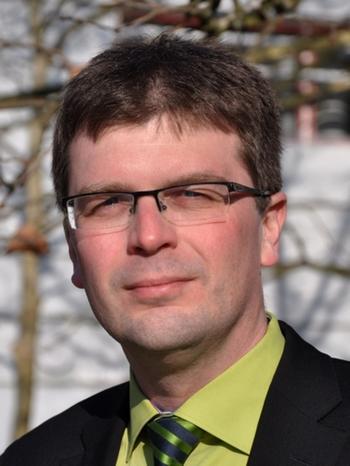
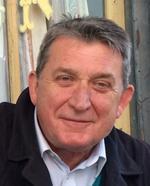
Prof. Dr. Mathias Christmann is a faculty member at the Institute of Chemistry and Biochemistry, Freie Universität Berlin , leading the research group in Organic Chemistry . His work focuses on strategic and methodological challenges in synthetic chemistry, particularly in total synthesis, organocatalysis, and renewable resource transformations. Position: Professor Contact: mathias.christmann@fu-berlin.de Location: Takustr. 3, Room 24.16, 14195 Berlin Research Interests include: Natural product-inspired small molecule synthesis for biological pathway modulation Minimizing C-C bond formations through selective functionalization of terpene building blocks Organocatalytic and metal-catalyzed reactions in multistep sequences Flow chemistry applications for scalable and sustainable synthesis Biological evaluation of TRPC channel agonists/antagonists for cancer therapy Publication Trends highlight expertise in total synthesis of complex terpenoids, organocatalysis for stereocontrolled reactions, flow chemistry for late-stage transformations, and TRPC4/5 channel modulation in renal cancer studies. His group pioneers asymmetric desymmetrization , photo-oxidation protocols , and electrosynthesis methods with minimal reagent waste. Advisees include PhD candidates Jan-Hendrik Dickoff , Mayar Elbendary , Nadine Kreidt , Tobias Olbrisch , Kamar Shakeri , and Zhen Wang , focusing on terpene-based drug discovery and catalytic reaction design.
LIN Meng is an Associate Professor at the Department of Mechanical and Energy Engineering , Southern University of Science and Technology (SUSTech) . He holds a Ph.D. in Mechanical Engineering from Swiss Federal Institute of Technology in Lausanne (EPFL) (2018) and has held postdoctoral positions at Caltech's Joint Center for Artificial Photosynthesis (2018-2019). Research Interests include solar thermal/thermochemical/(photo)electrochemical energy conversion devices , CO2 capture and utilization , and multi-scale modeling and simulation . His work focuses on optimizing energy systems through advanced computational models and cross-disciplinary integration of physics. Recent Publications highlight his contributions to solar fuel processing, CO2 conversion technologies, and hybrid electrochemical systems, with articles in Nature Communications , Joule , and Energy & Environmental Science . His research emphasizes scalable solutions for sustainable energy and carbon management. Scientific Awards ASME Graduate Student Award (2018) Outstanding Reviewer of Solar Energy (2018, 2015) Swiss National Science Foundation Postdoc Fellowship (2017) Shanghai Outstanding Master Thesis (2016) Shanghai Jiao Tong University Outstanding Graduate (2013)
Prof. Dr. Armido Studer is a Full Professor of Organic Chemistry at the Institute of Organic Chemistry, Faculty of Mathematics and Natural Sciences, University of Münster (WWU Münster), Germany. He has been serving as a Full Professor (W3) since November 2009, following his appointment as a Full Professor (C4) in 2004. Studer also serves as the Spokesman of the International Research Training Group IRTG 2678 'Functional π-Systems: Activation, Interaction and Application (pi-Sys)' since 2021 and previously led the Collaborative Research Center SFB 858 'Synergetic Effects in Chemistry - From Additivity towards Cooperativity' from 2010 to 2021. Studer received his education at ETH Zürich, where he completed his diploma thesis and doctoral studies under Prof. Dr. D. Seebach. He conducted postdoctoral research at the University of Pittsburgh with Prof. Dr. D. P. Curran before returning to ETH Zürich for his habilitation. His academic career includes positions as Associate Professor at Philipps-Universität Marburg (2000-2004) and subsequent professorships at WWU Münster. Professor Studer's research focuses on radical chemistry, particularly in the development of new synthetic methods using radical intermediates. His work spans free radical chemistry, electron catalysis, and the application of nitroxides in organic synthesis. Recent research directions include 'Radical Chemistry with the Hydrogen Atom Through Water Activation (H-dot)' and 'The Electron as a Catalyst: e-cat', both funded by ERC Advanced Grants. His group has made significant contributions to C-H functionalization, skeletal editing of heterocycles, and cooperative catalysis involving photoredox and N-heterocyclic carbene systems. The research has applications in pharmaceutical chemistry, materials science, and sustainable chemical synthesis. Studer's publication record shows a strong focus on heterocyclic chemistry, radical reactions, and catalytic methodologies. His recent work demonstrates expertise in meta-selective functionalization of heteroarenes, skeletal editing techniques, and the development of novel radical cascade reactions. The group has published extensively in high-impact journals including Nature, Science, JACS, and Angewandte Chemie. Adolf-von-Baeyer-Denkmünze (2025) Arthur C. Cope Late Career Scholars Award of the American Chemical Society (2024) ERC Advanced Grants (2024, 2016) Multiple Highly Cited Researcher designations (2017-2022) Elected member of multiple academies (European Academy of Sciences, Academia Europaea, German National Academy of Sciences Leopoldina) Pedler Award of the Royal Society of Chemistry (2019) Professor Studer has mentored over 100 PhD students and postdoctoral researchers who have gone on to successful careers in academia and industry worldwide. His research is supported by significant grants including multiple ERC Advanced Grants and funding from the German Research Council (DFG) for collaborative research centers. The Studer Group maintains numerous international collaborations, particularly with institutions in Japan, China, and the United States, reflecting his global impact in organic chemistry. The Studer Group operates state-of-the-art laboratories at the University of Münster, equipped for advanced organic synthesis, photochemistry, and materials characterization. The group is known for its collaborative culture and has been featured in numerous group photos documenting its evolution since the early 2000s, first at Philipps-Universität Marburg and then at WWU Münster.
Jun Liu is an Assistant Professor in the Department of Mechanical and Aerospace Engineering at the School of Engineering and Applied Sciences, University at Buffalo. His research focuses on advanced energy materials, nano/micro-mechanics, and self-powered systems, with applications in triboelectric energy harvesting and scanning probe microscopy. Education: PhD, Materials Engineering, University of Alberta (2018) MS, Materials Science, Shanghai University (2015) BE, Materials Science and Engineering, Nanchang University (2012) Research Interests: Development of tribovoltaic and triboelectric systems for self-powered electronics Mechanical energy harvesting via dynamic heterojunctions and Schottky contacts 3D-printed hydrogel structures for energy absorption and flexible electronics Nanoscale characterization using atomic force microscopy Design of nanocomposite sensors and catalytic materials Publication Trends: His work emphasizes triboelectricity, nanoscale energy conversion, and sustainable materials. Recent articles explore bionic tactile sensing, tunable hydrogels, and quantum dynamics in sliding interfaces. Awards: SONY Faculty Innovation Award (2021) Nature Springer MINE Young Scientist Award (2020) International Contest of Applications in Nano/Micro Technology Prize (2013) Laboratory: Advanced Energy Materials and Nanomechanics Lab at University at Buffalo.
Dr. Robert O’Connor is an Assistant Professor at the School of Physical Sciences, Dublin City University (DCU) , specializing in interface chemistry and thin film characterization. His work bridges semiconductor physics and energy harvesting technologies , with a focus on materials like high-κ dielectrics and III-V substrates. BSc in Applied Physics (2001), DCU PhD in Semiconductor Physics (2005), DCU His research employs X-ray photoelectron spectroscopy (XPS) and atomic layer deposition (ALD) to study material interfaces in devices such as MOSFETs and photoelectrochemical systems . He leads a 4-year SFI-funded project on solar water splitting for hydrogen fuel and collaborates with Trinity College Dublin (SPOKE project) and IMEC, Belgium on area-selective deposition techniques. His lab utilizes a state-of-the-art integrated ALD-XPS tool . His scientific awards include the Marie Curie Intra-European Fellowship , Irish Research Council EMBARK Fellowship , and SFI TIDA Award . Publications span high-κ dielectrics , self-assembled monolayers , and block copolymer lithography , with recent work on graphene oxide heterostructures and recyclability in additive manufacturing . He supervises 5 postgraduate students and teaches modules like Final Year Project (PS451) and Solid State Physics I (PS204) . Collaborations include institutions such as IMEC and Trinity College Dublin , with tools like the integrated ALD-XPS system at DCU.
Professor Guoxiu Wang is a Distinguished Professor and Industry Laureate Fellow at the University of Technology Sydney (UTS), leading the Centre for Clean Energy Technology. His expertise spans battery technologies, materials chemistry, and electrochemistry, with a focus on lithium-ion, sodium-ion, and other advanced energy storage systems. He holds prestigious fellowships, including from the Royal Society of Chemistry and the European Academy of Sciences. His research has been recognized through numerous awards, including being listed as a Highly Cited Researcher since 2018. Research Interests: Professor Wang’s work addresses challenges in energy storage through innovative materials design, including electrode materials for sodium-ion and lithium-sulfur batteries, MXenes, and electrolyte development. His team explores strategies to enhance battery performance, such as heterostructure engineering and defect-rich catalysts. Publications & Impact: With over 750 refereed papers, including in Nature Energy , Advanced Materials , and Angewandte Chemie , his work has garnered >78,000 citations (H-index 153/165). Recent trends focus on sodium-ion battery materials, MXene-based capacitors, and sustainable energy solutions like osmotic energy harvesting. Awards & Leadership: Awards include Fellowships from the Royal Society of Chemistry (2017), International Society of Electrochemistry (2018), and European Academy of Sciences (2020). He serves as an Associate Editor for Energy Storage Materials and Electrochemical Energy Reviews , and leads international collaborations, including a Royal Society Wolfson Visiting Fellowship at the University of Manchester (2024–2026). Grants & Supervision: Secured significant external grants, with active supervision of PhD/Masters students in battery technologies. His labs prioritize sustainable energy solutions and advanced material synthesis. Labs & Teams: Directs the Centre for Clean Energy Technology, fostering interdisciplinary research to advance clean energy technologies, from novel battery designs to electrochemical catalysts for CO2 and nitrate conversion.
John Capobianco, PhD, is a Professor in the Department of Chemistry and Biochemistry at Concordia University and holds the Honorary Concordia University Research Chair in Nanoscience. His research focuses on lanthanide-doped nanoparticles, upconversion luminescence, and biomedical applications. PhD, University of Geneva Key research areas include: Nanomaterials synthesis and spectroscopy Upconversion for biomedical imaging Drug delivery systems Photodynamic therapy for cancer treatment Optical thermometry and sensing Recent publications highlight advancements in: X-ray detection via photochromic nanoparticles Lipid-coated nanoparticles for lung permeation Cooperative energy transfer in Yb3+/Eu3+ complexes Biocompatible nanomaterials for secure information storage Pr3+-doped radiosensitizers for glioblastoma therapy Scientific recognitions: Honorary Concordia University Research Chair in Nanoscience Teaching includes undergraduate and graduate courses in inorganic chemistry and spectroscopy. His work bridges fundamental material science with applied biomedical engineering, emphasizing optical properties and therapeutic applications of lanthanide-based nanomaterials.
Professor Emiliano Cortés is a faculty member at the Ludwig Maximilian University of Munich (LMU), where he leads research in Plasmonic and Photonic Chemistry at the Nano-Institute Munich. His work bridges the fields of nanotechnology, physical chemistry, and materials science, focusing on light-matter interactions for energy conversion applications. Dr. Cortés' research focuses on plasmonics , photocatalysis , and electrocatalysis at the nanoscale. His group investigates how the dynamics of photons, plasmon-polaritons, carriers, phonons, and molecular states influence chemical reactivity. A key aspect of his work involves developing techniques to study plasmonic systems at the single particle level and designing rational synthesis approaches for plasmonic colloidal photo and electrocatalysts. His research has significant implications for sustainable energy technologies, environmental remediation, and advanced sensing applications. Analysis of Professor Cortés' recent publications reveals a strong focus on energy conversion processes, with particular emphasis on CO2 reduction, ammonia synthesis, and hydrogen production. His work integrates plasmonic effects with catalytic processes to enhance reaction efficiencies, often through innovative interface engineering and nanostructure design. The research spans fundamental studies of charge carrier dynamics to practical applications in energy storage and environmental technologies. Professor Cortés actively mentors doctoral candidates and postdoctoral researchers, currently advertising open positions for projects on Single particle photo and electrocatalysis and Synthesis of hybrid colloids . His research group, the Hybrid Plasmonics Lab (www.hybridplasmonics.org), receives funding from various sources to support their work on plasmon-mediated chemistry for sustainable applications. The Cortés research group operates within the Nano-Institute Munich, utilizing state-of-the-art facilities for nanomaterial synthesis, characterization, and testing. Their work combines experimental approaches with theoretical modeling to understand and harness light-matter interactions at the nanoscale for practical applications in energy conversion and environmental technologies.
Associate Professor Judy Hart is a materials scientist at the School of Materials Science & Engineering, UNSW Sydney , specializing in the development of semiconducting materials for renewable energy applications. Her work integrates computational (DFT) and experimental approaches to understand composition-property relationships in systems like solid solutions , heterostructures , and doped materials for photocatalysis and solar cells . She leads projects funded by ARC Discovery and Linkage grants , including work on photo-electro-catalysis systems and stabilizing ceramic materials . Education: PhD in Materials Engineering (Monash University, 2007), BEng (Materials) (Monash, 2002) Professional Experience: Senior Lecturer (UNSW, 2017–), Lecturer (UNSW, 2013–2017), University of Bristol (2007–2012) Research Interests Her research focuses on designing materials for renewable energy , particularly photoelectrochemical water splitting and organic oxidation reactions . Key areas include Density Functional Theory (DFT) , defect engineering , band gap tuning , and nanostructured materials . She investigates ferroelectric polarization effects , metal oxide heterostructures , and stability of battery components , with applications in hydrogen production , CO2 conversion , and advanced battery materials . Scientific Awards Ramsay Memorial Fellowship (University of Bristol, 2007–2009) Teaching Contributions She is co-author of the 1st Australian & New Zealand edition of "Materials Science and Engineering: An Introduction" , and teaches courses on computational materials science , corrosion-resistant surfaces , mechanical behavior of metals , and materials design .
Yu Xia is a Post Doc at the Department of Chemistry, Stockholm University, Sweden. He is affiliated with the Tom Willhammar Research Group, focusing on advanced electron microscopy and diffraction techniques for structural characterization of materials. PhD (2019–2023) from a joint program between the University of Birmingham (UK) and the Southern University of Science and Technology (China). Research emphasizes fabrication of metallic nanoparticles with non-equilibrium structures and shapes using gas-phase condensation and thermal shock methods. Specializes in scanning transmission electron microscopy (STEM), in-situ heating experiments, and electron energy loss spectroscopy (EELS) for nanoparticle analysis. Current work prioritizes 4DSTEM imaging for electron beam-sensitive materials and Python-based post-processing of electron microscopy datasets. Yu Xia's research spans Materials Science , Nanotechnology , and Electrocatalysis , with applications in photocatalytic hydrogen evolution , graphene composites , and advanced electron microscopy techniques . His work often integrates computational image processing with structural characterization to optimize material properties. Publications highlight innovations in heterostructure engineering , metallic alloy catalysts , and electron beam-sensitive material imaging . No scientific awards are explicitly mentioned in the provided text. Yu Xia's technical expertise includes Python scripting for image analysis, in-situ electron microscopy , and multifunctional graphene-based materials .
Nick Gys is a Research Fellow in the Department of Materials and Chemistry at Vrije Universiteit Brussel (VUB), Brussels, Belgium, specializing in surface modification of materials and sustainable engineering applications. His work bridges experimental and computational approaches to address challenges in materials science and environmental remediation. Dr. Gys's research centers on the surface chemistry of metal oxides, particularly titanium dioxide functionalized with organophosphonic acids. He investigates how molecular parameters like chain length and pH influence binding modes, photooxidation stability, and metal recovery efficiency. His methodology integrates spectroscopic techniques (XPS, IR, EPR) with density functional theory (DFT) simulations to elucidate structure-property relationships at molecular interfaces. Key application areas include selective palladium recovery from industrial waste streams and designing photo-stable functional coatings. His 2022-2023 publications reveal a cohesive research trajectory focused on organophosphonate-grafted surfaces, with increasing emphasis on computational validation of experimental findings. The work demonstrates how molecular engineering of surface modifiers directly impacts performance in environmental applications, particularly in metal adsorption and photochemical degradation processes. No scientific awards were documented in the source material. Collaborative Framework: Works within VUB's Materials and Chemistry research ecosystem alongside Prof. Meynen, Prof. Adriaensens, and Prof. Hauffman Project Scope: Leads interdisciplinary efforts in sustainable materials engineering, including TiO 2 functionalization for metal recovery and photooxidation studies Dr. Gys operates within VUB's Sustainable Materials Engineering initiative, contributing to laboratory-based experimental work and computational modeling teams focused on advancing surface modification technologies for circular economy applications.
Etienne Boutin is a Postdoctoral Researcher at the Laboratory of Renewable Energy Science and Engineering (LRESE) at École Polytechnique Fédérale de Lausanne (EPFL), affiliated with the School of Engineering and Institute of Mechanical Engineering . His work focuses on electrochemical and photo-electrochemical systems for CO 2 and CO reduction, particularly toward methanol production. Email: etienne.boutin@epfl.ch Office: MED 0 2923 (Bâtiment MED), Station 9, 1015 Lausanne His research spans Renewable Energy , Electrochemistry , and Catalysis , with a focus on molecular catalysts, reaction mechanisms, and modeling for low-temperature CO 2 reduction systems. Recent work explores confined molecular catalysts, surface charge boundary conditions, and hybrid solar-driven devices. The LRESE lab at EPFL supports his research into sustainable chemical processes, including the design of photocathodes, porous carbon electrodes, and strategies for carbon utilization. His publications from 2019–2025 highlight advancements in methanol synthesis, formaldehyde quantification, and catalyst stability.
Claudio Minero is a Full Professor in the Department of Chemistry at the University of Turin, Italy. His research focuses on Analytical, Environmental, and Cultural Heritage Chemistry, with a strong emphasis on photocatalytic materials and environmental pollutant degradation. He leads the GSD 03/CHEM-01 research group, specializing in advanced oxidation processes and sustainable water decontamination technologies. His work integrates experimental and theoretical approaches to address challenges in environmental chemistry, including the phototransformation of pharmaceuticals, pesticides, and emerging contaminants. He has authored over 150 peer-reviewed articles and holds an ORCID identifier (orcid.org/0000-0001-9484-130X). His teaching spans undergraduate and graduate programs in Chemistry, Environmental Chemistry, and Materials Science. Key research themes include the development of novel photocatalytic systems (e.g., g-C₃N₄, TiO₂-based composites), the environmental fate of pollutants in sunlit waters, and the optimization of Fenton-like processes for wastewater treatment. His lab collaborates extensively with industry and academic partners on projects funded by national and international grants.
Frederic Meunier is a CNRS researcher based at IRCELYON (Institute of Chemistry of Lyon), part of the University of Lyon. He holds a European PhD in Physical Chemistry from the Universities of Strasbourg (France) and Limerick (Ireland), and a Habilitation to Direct Research from the University of Caen (France). His research focuses on heterogeneous catalysis, with expertise in operando FT-IR spectroscopy and reaction mechanisms, particularly in syngas chemistry and CO₂ conversion. He leads the ATARI team (Integrated thermodynamic, analytical, and reactional approaches) and has published over 100 papers (H-factor 35) and holds two worldwide patents. Key research interests include catalytic materials for environmental applications, such as CO₂ capture/methanation, water treatment, and sustainable chemistry. He has supervised 16 PhD theses and is an editorial board member of Catalysis Today and Applied Catalysis B: Environmental . In 2009, he received the Catalytic Division Award from the French Chemical Society. His work also explores microwave-assisted catalysis, nanomaterial synthesis, and advanced oxidation processes for pollutant remediation. Collaborative projects include studies on biochar-based materials, microwave-enhanced reactions, and catalyst stability under industrial conditions.
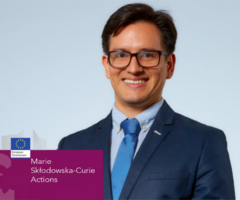
Pablo Jiménez-Calvo is a Marie Skłodowska-Curie Post-doctoral Fellow and Research Fellow in the Department of Chemistry and Pharmacy, leading the 'Carbon-Inorganic Interface Materials' project since 2023. His research focuses on energy materials for solar fuel production, particularly photoelectrocatalysis, artificial photosynthesis, and carbon nitride-based systems. He has held postdocs at the Max Planck Institute, University of Paris Saclay, and previously earned his Dr.-Ing. from the University of Strasbourg (2019). Research interests include carbon nitride heterojunctions, metal nanoparticle integration, and sustainable hydrogen production. His 2025 work highlights advancements in photocatalytic stability and organic synthesis, while 2023/2024 studies emphasize strategic hydrogen value chains and device engineering for carbon neutrality. Awards include the 2024 Materials Today Catalysis Rising Stars Award and Marie Curie Fellowship (2023). His articles span 15+ peer-reviewed publications since 2020, focusing on photocatalytic efficiency, nanomaterial design, and energy systems innovation. Collaborations include the Bachmann Group and institutions like the Solid-State Physics Laboratory (University of Paris Saclay).