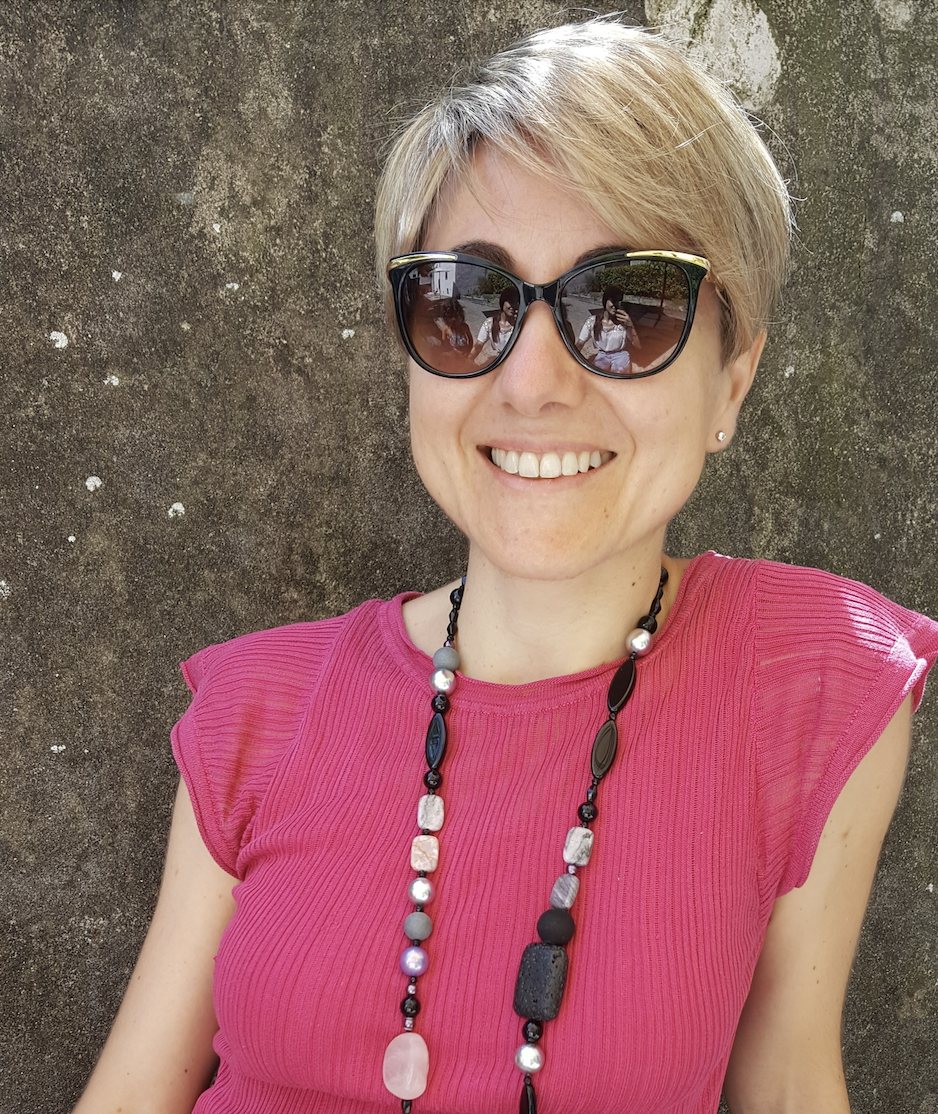
Dr. Elisa Pellegrino is a senior Post-Doc in Phonetics at the Department of Computational Linguistics , affiliated with Zeppelin University and the Digital Society Initiative of the University of Zurich . Her research focuses on voice individualization, vocal accommodation, and the role of speaker-specific information in speech temporal variability. Role: Senior Post-Doc in Phonetics University: Zeppelin University School: Faculty of Arts and Social Sciences Department: Department of Computational Linguistics Email: elisa.pellegrino@uzh.ch Research Interests: Prosody and speech rhythm in native and second language acquisition Vocal accommodation in cross-dialectal interactions Speaker individuality and forensic phonetics Age-related speech temporal variability Speech disorders and Parkinson’s disease Applications of speech technology in linguistics and education
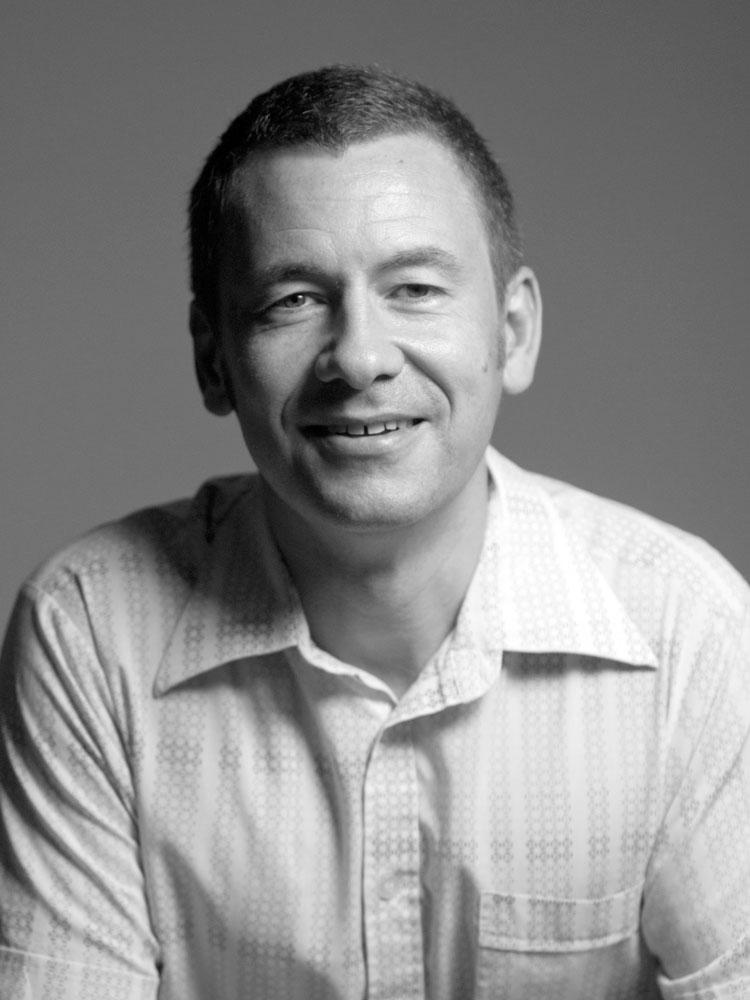
Simon Clematide is an Academic Associate at the Department of Computational Linguistics within the Faculty of Arts and Social Sciences at the University of Zurich, where he has been actively engaged in research and teaching since the early 2000s. His work spans computational linguistics, natural language processing, and text mining with a particular focus on historical document processing, multilingual applications, and practical implementations of machine learning techniques. Dr. Clematide's research interests encompass Natural Language Processing , Computational Linguistics , Text Mining , Machine Learning , Sentiment Analysis , Named Entity Recognition , and Historical Document Processing . His interdisciplinary approach bridges computer science with humanities applications, particularly in analyzing historical newspapers and multilingual corpora. His work demonstrates strong expertise in developing practical NLP systems that address real-world challenges in document analysis and language processing. Over the past five years, his publication record reveals a consistent focus on historical text processing, multilingual NLP applications, and shared task competitions. His research shows particular strength in named entity recognition for historical documents (CLEF HIPE shared tasks), grapheme-to-phoneme conversion (SIGMORPHON shared tasks), and OCR post-processing for historical newspapers. The interdisciplinary nature of his work is evident in collaborations spanning computer science, linguistics, history, and geography. Dr. Clematide has been instrumental in organizing and participating in numerous shared tasks including CLEF-HIPE (2020-2022), SIGMORPHON (2017-2021), and CoNLL-SIGMORPHON (2017-2020), where his team achieved multiple first and second places. His teaching portfolio includes courses on Text Mining, Machine Learning for NLP, Deep Learning in Language Technology, and Sentiment Analysis, demonstrating his commitment to educating the next generation of computational linguists. He has led or participated in diverse research projects including NFP 77, impresso, Citizen Linguistics Projects (tonaccent.ch, dindialaekt.ch), SPARCLING, KTI project with Eurospider, and biomedical text mining initiatives (MANTRA, SASEBio). His interdisciplinary work extends to collaborations with material scientists and social scientists on concept extraction and text zoning applications. Dr. Clematide has contributed to the development of several computational tools and resources, including finite-state morphology systems for Rumansh Grishun, Standard German, and Swiss German, as well as the CLab web-based virtual laboratory for computational linguistics. His work on crowdsourcing OCR ground truth for heritage corpora demonstrates practical solutions to real-world digitization challenges.
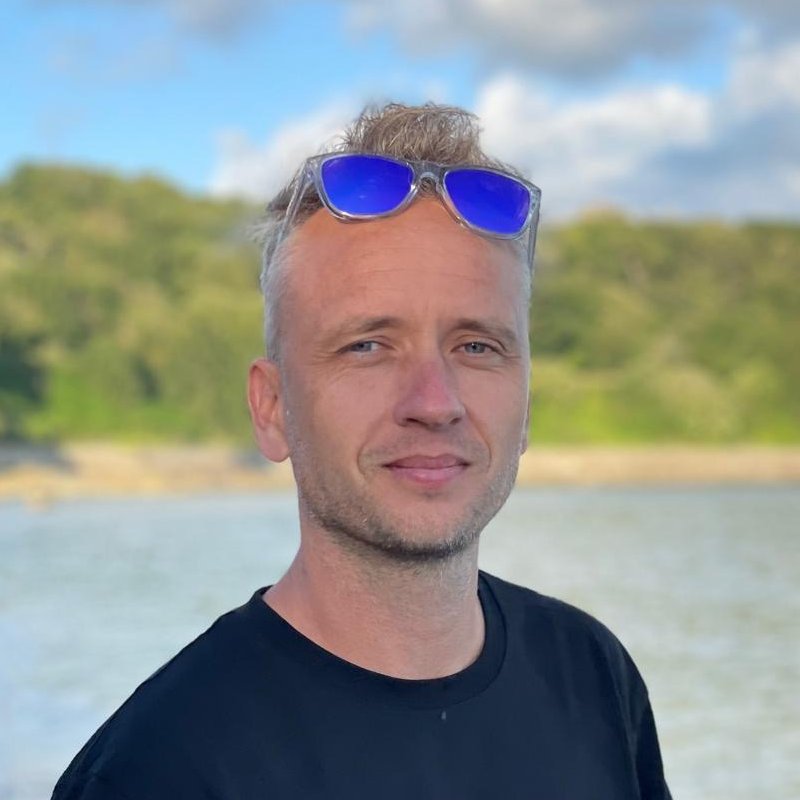
Simon W. Townsend is a Professor in the Department of Evolutionary Anthropology at the University of Zurich. His research focuses on understanding the evolutionary origins of human language through comparative studies of animal communication systems. He leads the Comparative Communication and Cognition Group, examining vocalization patterns in primates, birds, and non-primate mammals. Research Themes include comparative psychology, language evolution syntax/phonology/semantics, and animal cognition. Key interests involve identifying compositional structures in animal vocalizations and tracing selective pressures shaping communication complexity. Recent work highlights compositional semantics in bonobos, generative call combinations in birds, and cooperative hunting signals in chimpanzees. His studies bridge evolutionary biology with cognitive science, providing insights into the roots of human linguistic uniqueness. Laboratory affiliations include the University of Zurich's Evolutionary Anthropology Department research groups focusing on cross-species communication analysis. Current projects explore developmental aspects of vocal learning and evolutionary pathways linking animal signals to human language.
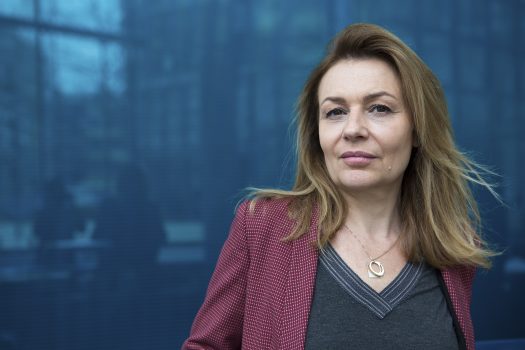
Anne-Lise Giraud is a Professor and Group Leader at the Faculty of Medicine, University of Geneva, where she directs a research laboratory focused on the neural mechanisms underlying language and vocal communication. Her work bridges experimental neurophysiology, computational neuroscience, and clinical applications for language disorders. Her research interests encompass: Neural bases of speech and language processing Audio-visual integration in communication Brain-Computer Interfaces for speech communication Neural mechanisms of language disorders (dyslexia, autism, aphasia) Computational modeling of speech processing Comparative studies of vocal communication across species Dr. Giraud's recent publications demonstrate a sophisticated integration of multiple neuroimaging techniques (EEG, fMRI, MEG) with computational approaches to understand both typical and atypical speech processing. A notable trend in her work is the emphasis on neural oscillations as fundamental mechanisms for speech perception, with applications ranging from understanding autism spectrum disorders to developing brain-computer interfaces for communication-impaired individuals. Her research increasingly explores cross-species communication mechanisms, as evidenced by her recent work on dog-human vocal interactions. Her laboratory at Campus Biotech includes multiple graduate students, postdocs, and research assistants working collaboratively on various aspects of language neuroscience.
Swiss Federal Institute of Technology in LausanneSwitzerland
Emmanuel Dupoux is a Professor at École des Hautes Études en Sciences Sociales (EHESS), affiliated with the School of Advanced Studies in Social Sciences and the Laboratory of Cognitive Science and Psycholinguistics (LSCP). His work bridges cognitive science, computational linguistics, and machine learning to study infant language acquisition and social cognition. Co-creator and director of EHESS Cognitive Science Master program Former LSCP laboratory director (1998-2009) Current research focuses on textless speech modeling and ecological audio analysis Research areas include: Modeling early language acquisition mechanisms using Bayesian models and HMM Investigating phonological 'deafness' and critical age plasticity Studying social cognition development through infant-toddler experiments His technical contributions span speech processing toolkits like Shennong, emergent communication frameworks (STOP dataset), and innovative approaches to self-supervised speech modeling. Recent publications demonstrate breakthroughs in: Topography-inspired CNN designs for better memory efficiency Prosody-aware generative spoken language models (pGSLM) Textless emotion conversion systems He actively explores how machine learning can reverse-engineer infant language learning processes from ecological audio data, with applications in neurodegenerative disease diagnostics. Key collaborations include: INRIA's Cognitive Machine Learning (CoML) team Facebook AI Research (FAIR) partnerships VoxPopuli multilingual speech corpus development
Prof. Noah Bubenhofer is a Professor of German Linguistics at the University of Zurich's Department of German Studies since 2019. Previously, he held positions at Zurich University of Applied Sciences (2018–2019) and led the 'Visual Linguistics' project at the University of Zurich's Institute of Computational Linguistics. His research focuses on AI in language, corpus linguistics, and visual linguistics, with particular attention to discourse analysis and digital humanities methodologies. He earned his academic credentials through roles at TU Dresden, the Institute for German Language (IDS), and the Heidelberg Center for American Studies. His teaching includes modules on corpus linguistics, language and AI, and German linguistics. Bubenhofer directs the Digital Society Initiative and chairs the Machines-Cultures Lab, exploring the interplay between technology and writing practices. His publications address topics like LLM applications, data-driven text analysis, and the future of academic writing in the AI era. Key projects include the LiRI Corpus Platform and Swissdox database, advancing FAIR-compliant infrastructure for linguistic research. He actively engages in public discourse via blogs and podcasts, discussing AI ethics, machine translation, and the cultural impacts of digital transformation.
Camila Scaff is a Postdoctoral Researcher affiliated with the Human Ecology Group. Her work focuses on language acquisition in diverse cultural contexts, particularly among non-industrialized populations such as the Tsimane forager-horticulturalists in Bolivia. She employs long-form audio recordings and cutting-edge methodologies like the ACLEW pipeline and LENA system to analyze language input and developmental patterns. Her research interests span cross-cultural linguistics , infant-directed speech , and the methodological challenges in ecological data collection. She advocates for inclusive research practices to address underrepresentation in language studies. Key contributions include diarization tools for ecological recordings, studies on socioeconomic factors influencing lexical development, and critiques of WEIRD (Western, Educated, Industrialized, Rich, Democratic) biases in academic research. Scaff collaborates internationally with anthropologists and speech technologists to bridge interdisciplinary gaps.
Pascal Zesiger is a Full Professor at the University of Geneva 's Faculty of Psychology and Educational Sciences. His research focuses on early language development , phonological processing , written language acquisition , and developmental language disorders . He directs the university's "baby" lab, which investigates word comprehension in infants (16 months) and phonological representation specification (12-18 months). Research interests include: • Phonology & phonological working memory • Lexical-grammatical orthography acquisition (with Prof. M.-A. Schelstraete) • Bilingualism & cognitive development • Electrophysiological correlates of reading Recent publications examine graphotactic regularities , lexical training interventions , and phonological-orthographic links . He supervises thesis students like Estelle Ardanouy and Claire Ballot, with collaborators spanning multiple institutions. Contact: Pascal.Zesiger@unige.ch
Raphael Berthelé is a Full Professor in the Department of Multilingualism and Foreign Language Teaching at the University of Fribourg's Faculty of Letters and Human Sciences. His work focuses on the complex dynamics of multilingual communication and language acquisition across different contexts and age groups. With an extensive publication record spanning over two decades, Professor Berthelé has established himself as a leading researcher in multilingual studies. His primary research interests encompass intercomprehension, receptive skills, interlinguistic influences, cognitive linguistics, variational linguistics, and folk linguistics. These interests manifest in studies examining how speakers navigate between multiple languages, how linguistic knowledge transfers across languages, and how social perceptions shape language use and policy. His work often bridges theoretical linguistics with practical applications in language education. Analysis of Professor Berthelé's recent publications reveals a strong focus on contemporary challenges in multilingual education, including the impact of digital tools on language learning, cognitive aspects of multilingual processing, and the intersection of language acquisition with neurocognitive mechanisms. His research increasingly incorporates interdisciplinary approaches, combining linguistic analysis with cognitive science, neuroscience, and educational psychology to address complex questions about multilingual competence. Professor Berthelé leads significant research initiatives, including the ongoing project 'Digital tools in L2 and L3 vocabulary acquisition. A cross-linguistic investigation' (2024-2028), which examines how digital resources impact language learning across different linguistic backgrounds. His work has secured substantial funding from the Swiss National Science Foundation and other sources, reflecting its importance to the field. His research methodology spans qualitative and quantitative approaches, with recent projects incorporating advanced techniques such as eye-tracking, keylogging, and brain imaging to investigate language processing. Professor Berthelé has also organized major academic events, including the EuroSLA 31 conference in 2022, demonstrating his leadership in the international second language acquisition community.
University of Applied Sciences and Arts LucerneSwitzerland
Christian Rohrdantz is a Lecturer at the Lucerne School of Computer Science and Information Technology (HSLU), where he teaches Data Science in the 'Economics and Data Science in Mobility' program. He holds a Dr. rer. nat. and Master/Bachelor degrees in Information Engineering from Universität Konstanz. His professional roles include co-founding Vidatics GmbH (specializing in Data Science services) and serving as a project leader in Transferforschung at Universität Konstanz. Rohrdantz's research focuses on visual analytics, sentiment analysis, and natural language processing, with notable contributions to data visualization techniques for complex datasets. Education: Dr. rer. nat., Fachbereich Informatik und Informationswissenschaft, Universität Konstanz Master of Science in Information Engineering, Universität Konstanz Bachelor of Science in Information Engineering, Universität Konstanz Research Interests: His work emphasizes innovative visual methods for analyzing textual and temporal data, including sentiment analysis, event detection, and linguistic pattern recognition. He has developed algorithms for visualizing dynamic datasets like calendar-based event correlations and spatiotemporal sentiment trends. Rohrdantz's interdisciplinary approach bridges computer science with social sciences, focusing on applications in political discourse analysis, medical informatics, and user feedback systems. Scientific Achievements: He received the Airbus Group Research Prize for his doctoral work and holds patents related to visual analytics systems. Over 30 publications demonstrate expertise in topics like topic modeling with pixel-based bubbles, deliberative communication measurement, and real-time text stream analysis. Recent work explores automated disease identification from clinical text and phonotactic pattern visualization in linguistics. Notable Projects: Leading 'Gesellschaftliches Verständnis von Massnahmen gegen den Klimawandel in Rotkreuz' project Co-developed MooVis tool for movie rating prediction Contributed to VAST Challenge educational frameworks Labs/Teams: Affiliated with Universität Konstanz's Lehrstuhl für Datenanalyse und Visualisierung and collaborates with Hewlett-Packard Research Labs on advanced visualization technologies.
Jennifer Rains is a Chargée d’enseignement (Teaching Assistant) and Doctorante (Doctoral Candidate) at the Institute of English studies , part of the Faculté des lettres et sciences humaines at the Université de Neuchâtel. Her research focuses on English and French clippings , corpus-based approaches to word formation, and constructional change in syntax. Education: She holds an M.A. in Spanish Literature from Pennsylvania State University and an M.A. in English Linguistics from the Université de Neuchâtel. Her doctoral work, supervised by Martin Hilpert, investigates the phonological and semantic dimensions of clippings in English. Research interests span historical linguistics , corpus linguistics , and language variation . Her recent studies employ experimental and statistical methods to analyze clipping phenomena and syntactic alternations. Publications include analyses of clipping meaning differentiation, multivariate approaches to word formation, and constructional shifts in determiner usage. No scientific awards are noted here. No advising or grant information is provided in the text, though her current PhD project suggests active involvement in linguistic research. She is affiliated with the Institute’s English linguistics research initiatives.
Martin Tomasik is a Professor at the Institute of Educational Science , University of Zurich, focusing on Research Methods in Developmental and Educational Sciences . He leads the development of digital tools for measuring learning processes and advancing mathematical models for intensive longitudinal data analysis, in collaboration with the Institute for Educational Evaluation in Zurich. Research spans quantitative methodology , mathematical modeling , and longitudinal data in education and development. His work involves statistical software development and analysis of large-scale assessments and formative feedback systems . Key research themes include: Competence trajectory modeling and psychometric software. Cross-domain longitudinal studies on social change , developmental barriers , and adaptive disengagement . Applications of virtual reality and machine learning in cognitive and educational assessments. Scientific Awards : German Study Prize/Recognition Award (Körber Foundation) for his doctoral work on developmental barriers and disengagement. Project Leadership includes the Zurich Learning Progress Survey (LEAPS) , examining learning trajectories from kindergarten to compulsory schooling, and collaborations with institutions like PH Zurich , Witten-Herdecke University , and Max Planck Institute for Human Development .
Dr. Alexis Hervais-Adelman is a Group Leader at the Dynamics of Brain and Language Lab, Faculty of Medicine, University of Geneva. His research centers on the neural mechanisms of language, including speech perception, multilingualism, and the evolutionary origins of human language. Research Interests: His work spans neuroscience, cognitive science, linguistics, and neuroimaging . He investigates how the brain processes speech in challenging environments, the role of the motor system in perception, and how multilingual experience shapes brain structure and function. A key focus is prenatal language development and its implications for language evolution. Publication Trends: His recent publications (2023–2025) emphasize in utero language exposure, auditory cortex anatomy in multilinguals, and co-activation in simultaneous interpreters, reflecting a strong interdisciplinary approach combining evolutionary theory, developmental neuroscience, and cognitive linguistics. Scientific Awards: No awards are mentioned in the provided text. Advising and Grants: He leads a research lab with postdocs (Christopher Ritter, Sophie Slaats), doctoral students (Martina Dordijevic), and staff (Enrico Varano). His research is supported by major grants, including from the Swiss National Science Foundation (SNSF) and the Wellcome Trust, notably as part of the NCCR Evolving Language program. Labs and Teams: He directs the Dynamics of Brain and Language Lab at Campus Biotech, Geneva, and is an integral member of the NCCR Evolving Language consortium, fostering collaborative research on the origins and evolution of human language.
Marie-Hélène Côté is a Full Professor in the Section of Language and Information Sciences within the Faculty of Arts at the University of Lausanne (UNIL), a position she has held since August 2016. She has previously held academic appointments at the University of Wisconsin-Madison (2000–2001), the University of Ottawa (2001–2013), and Laval University (2013–2016). Her research expertise lies in the phonological structure of language, particularly focusing on French. She employs a multidisciplinary approach that integrates formal linguistic theory, experimental phonetics, and corpus-based analysis. Her work emphasizes linguistic variation across geographical, generational, and stylistic dimensions, with a special focus on Quebec and Canadian French. Marie-Hélène Côté has co-directed the international "Phonology of Contemporary French" (PFC) project since 2010, which has produced extensive spoken corpora and advanced methodologies for analyzing French phonology. Her recent publications reflect a sustained engagement with variation, corpus phonology, loanword adaptation, and prosodic phenomena in French. Professor of the Year award from the Faculty of Arts at the University of Ottawa (2013) She has supervised numerous research initiatives and led major collaborative projects such as the PFC. While specific grant details are not provided, her leadership in large-scale, international research efforts indicates significant funding acquisition and project management experience. She has contributed extensively to academic service through editorial roles and scholarly collaboration. Marie-Hélène Côté leads and contributes to research teams associated with the Phonology of Contemporary French project. This international initiative involves scholars from multiple institutions and focuses on building and analyzing spoken French corpora, advancing methods in dialectometry, and exploring phonological variation and change.
Aris Xanthos is a Professor (MER 1) in the Section of Language and Information Sciences at the University of Lausanne (UNIL) since 2012. Specializing in computational linguistics and mathematical methods for language sciences, he collaborates with institutions such as the Universities of Zurich, Vienna, and Antwerp. His research focuses on developing innovative computational tools for linguistic analysis, including projects like Textable, an interactive text analysis software. Additionally, he founded and directs a startup specializing in automatic language processing technologies. Xanthos earned his PhD in 2007 with a thesis on morphological learning, conducted in part at the University of Chicago under John Goldsmith. His teaching includes textual computing for arts students at UNIL. Research themes span lexical diversity metrics, computational morphology, and interdisciplinary applications of NLP in fields like child language acquisition and game studies. His work bridges formal linguistics with digital humanities, emphasizing methodological rigor and computational innovation. Publications highlight contributions to emoji ambiguity analysis, poem generation algorithms, and historical corpus development. His startup demonstrates practical applications of academic research, reflecting a commitment to both theoretical and applied linguistic inquiry.