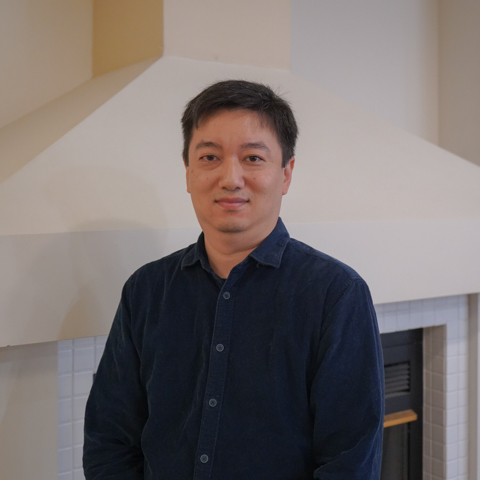
Walid Hubbi is Associate Professor in Electrical and Computer Engineering at NJIT. He holds a PhD from Queen's University Belfast and degrees from the University of London and Aleppo University. His research focuses on power system analysis and control, particularly optimization techniques for reactive power compensation, load flow methodologies, and stability enhancement. Key contributions include fuzzy logic controllers for static VAR compensators, neural network applications for load modeling, and optimal placement strategies for grid control devices. His publications consistently address practical challenges in transmission efficiency, voltage stability, and measurement accuracy using computational intelligence and optimization frameworks.
Patrizia Savi is a Tenured Associate Professor at the Polytechnic University of Turin within the Department of Electronics and Telecommunications. She actively participates in the Power Electronics Innovation Center (PEIC) and serves as a Senior Member of IEEE and the International Union of Radio Science . Teaching: She has been the Titolare del corso for 'Campi Elettromagnetici' (Electromagnetic Fields) since 2019-2021 at the Polytechnic University of Turin. Key Collaborations: Works with researchers across Italy and international institutions on projects involving GNSS-R for environmental monitoring. Research Interests: Her work focuses on GNSS Reflectometry for soil moisture retrieval, carbon-based composites (graphene, biochar, nanotubes) for microwave applications, and graphene tunable devices including biosensors. She also explores electromagnetic shielding using sustainable materials. Recent Publication Trends: Recent work emphasizes machine learning integration with GNSS-R data, biochar composite shielding in construction materials, and graphene-based biosensors for glucose and HRP detection. Key applications span climate action , environmental monitoring , and medical diagnostics . Scientific Awards: IEEE Fellow (2016-) IEEE Senior Member (2016-) International Union of Radio Science Senior Member (2024-) Advising: Supervises PhD students Simone Gaetano Ballaera and Fabio Peinetti , focusing on graphene sensors and tunable devices.
Suren Gigoyan is an Adjunct Assistant Professor at the University of Waterloo, affiliated with its adjunct faculty. His research focuses on millimeter-wave and terahertz technologies, with a strong emphasis on antenna design, phase shifter development, and sensing applications. His work includes innovations in phased-array antennas, tunable components, and whispering-gallery-mode (WGM) resonators for biomedical and industrial uses. Key areas of exploration include: Phased array architectures for 5G/6G and satellite communication systems MEMS-based tunable phase shifters and variable attenuators Dielectric resonators and WGM sensors for glucose monitoring and oil quality analysis Low-profile, compact antenna designs for millimeter-wave integration His publications span over three decades, with recent contributions (2021–2025) addressing emerging challenges in W-Band systems, non-reciprocal devices, and passive beamforming. Notable trends include the integration of ferromagnetic materials and silicon-on-glass (SOG) technology for high-performance, cost-effective solutions. While no academic awards or grants are explicitly listed, his work reflects sustained innovation in RF and microwave engineering. Advising and team collaborations are not detailed in the available texts.
Professor Eddie Ball is a Professor of Radio Frequency Engineering at the University of Sheffield's School of Electrical and Electronic Engineering, and a UKRI Future Leaders Fellow (2021-2028). He leads the Electromagnetics, Wireless Hardware & RF Devices research theme and directs the EPSRC Millimetre Wave Measurement Laboratory. His expertise spans RF circuit/system design, SDR, and millimeter-wave technologies, with a focus on IoT applications and hardware manufacturing. Qualifications: Ph.D., University of Sheffield (2024) M.Eng (1st class), University of York (1996) Chartered Engineer Research Interests: Novel RF circuit/system design Millimeter-wave transceivers and antennas RF-MMIC and SiGe design IoT radio systems and blockchain integration Low-cost, high-performance wireless protocols Teaching: Creator and instructor for EEE6239: Radio Transceiver System & Circuit Design 2nd-year course leader for VHF Synthesiser for Wireless Communications Labs/Teams: EPSRC Millimetre Wave Measurement Laboratory Future Millimetre Wave RF Transceiver Architectures Project
Fatemeh Babaeian is a Research Fellow in the Department of Electrical and Computer Systems Engineering at Monash University. She holds a PhD from Monash University (2016–2020), focusing on advanced electromagnetic systems. Her expertise spans applied electromagnetics, high-power microwave systems, RF sensing, antenna design, and signal processing, with notable contributions to chipless RFID technologies and cascaded oscillator modeling. Research interests include high-power RF systems, antenna-oscillator interaction modeling, and innovative RFID applications for sensor networks and secure communications. Her work addresses challenges in microwave engineering, terahertz systems, and inverse scattering problems, leveraging hybrid optimization algorithms and metamaterial principles. Fatemeh has published over 29 peer-reviewed articles, including seminal works on switched oscillator performance evaluation and phase shifter designs. She received the Postgraduate Publications Award (2020) for her impactful contributions. Current research emphasizes antenna-circuit co-design methodologies and high-data-capacity RFID systems for emerging IoT and industrial applications. Collaborations span global institutions, with active projects in high-power microwave systems, THz antenna arrays, and orientation-insensitive RFID tag innovations. She actively supervises PhD students and contributes to interdisciplinary research bridging electromagnetic theory and practical engineering solutions.
Michael Withford is a Professor at Macquarie University's School of Mathematical and Physical Sciences, Director of the Optofab Node of the Australian National Fabrication Facility, and CEO of Modular Photonics. His research focuses on laser-based advanced manufacturing, microphotonics, and smart sensing, with applications in integrated optics for high-capacity networks and exoplanet detection via nulling interferometry. He leads initiatives like the GLINT photonic nulling interferometer and has developed award-winning fiber-optic devices for data transmission and infrastructure monitoring. Roles: Professor, Director (Optofab Node), CEO (Modular Photonics) Key Projects: GLINT nulling interferometer, sewer corrosion sensors, mid-IR photonic devices Research interests span femtosecond laser fabrication, integrated waveguides, and astrophotonics. Over 500 publications and active in multi-disciplinary collaborations, including CSIRO and international telescope projects. Current work addresses next-gen optical networks, exoplanet imaging, and robust sensor systems for harsh environments. Grants and industry partnerships support his work in translating research into commercial products, such as Modular Photonics' microchip devices enhancing fiber networks. Collaborations span astrophysics, materials science, and environmental engineering.
Dr. Negin Shariati Moghadam is an Associate Professor in the School of Electrical and Data Engineering at the University of Technology Sydney (UTS), Australia. She leads the RF and Communications Technologies (RFCT) Lab, a state-of-the-art facility with over $3.5M in equipment and 30+ team members. Her research focuses on RF energy harvesting, IoT, metamaterials, and precision agriculture. She has attracted over $6M in grants, including ARC and industry partnerships with NTT, Zetifi, and Food Agility CRC. Dr. Shariati also directs the WiEIT initiative to promote gender equity in STEM. Key achievements include developing Farm-wide WiFi for rural connectivity and winning the 2023 Food Agility Research & Innovation Award. Education: PhD in Electrical-Electronic and Communication Technologies from RMIT University (2016). Industry experience as an electrical engineer (2008-2012). Research Interests: RF energy harvesting, low-power IoT, metamaterials for beamforming, agricultural sensing systems, and wireless communication protocols. Her work integrates machine learning with RF sensing for applications like soil moisture monitoring and secure data transmission. Grants & Collaborations: Co-Director of an ARC Training Centre for Automated Vehicles in Rural Regions (2024-2028) and leader of the $1.7M Sustainable Sensing project with NTT. Industry partnerships include Zetifi for AgTech innovations and Hokkaido University for collaborative research. Awards: Recognized for pioneering RF energy harvesting (Standout IoT Award 2021), ECR excellence (2019), and multiple IEEE accolades. Media engagement includes features in the NSW Smart Sensing Network and Food Agility CRC reports. Lab & Impact: RFCT Lab's innovations include metamaterial lenses for wireless power transfer and compact sensors for smart agriculture. Outputs span 87+ publications and 9 PhD students under supervision.
Dr. James Kelly is a Senior Lecturer in Microwave Antennas at Queen Mary University of London (QMUL), part of the School of Electronic Engineering and Computer Science. He is a member of the WMC Lab and has held academic positions at the University of Surrey and Anglia Ruskin University. His research focuses on reconfigurable antennas, particularly leveraging gallium-based liquid metals for dynamic antenna performance. Dr. Kelly has authored nearly 120 peer-reviewed publications, holds 3 patents for antenna technology, and maintains an h-index of 21 with over 1,400 citations. His teaching includes courses on Digital Systems Design and Wireless Networks as part of the BUPT joint program. Key research areas include liquid metal-enabled antennas, phased arrays, beam steering systems, and millimeter-wave communication technologies. He has secured grants such as the EPSRC-funded Programmable Microwave Hardware Based on Liquid Wires (2021–2025) and Huawei-sponsored STAR-RISs project (2021–2022). Dr. Kelly’s work emphasizes practical applications in 5G/6G networks, antenna reconfiguration, and high-frequency systems. His contributions include advancements in beamforming, metamaterial integration, and RF component optimization using novel liquid metal techniques. He collaborates with industry partners like Huawei and the University of Surrey, driving innovations in next-generation wireless communication infrastructure.
Raafat Mansour is a Professor and University Research Chair at the University of Waterloo, serving as Director of the Centre for Integrated RF Engineering. His research focuses on advanced RF and microwave engineering, including phase shifters, reconfigurable circuits, MEMS devices, and low-temperature superconductors. He leads efforts in developing tunable filters, millimeter-wave systems, and phase change material applications. His expertise spans RF component design, cryogenic electronics, and integration of novel materials like BST varactors and GeTe switches. Mansour’s work addresses challenges in 5G and future communication systems, emphasizing miniaturization and system efficiency. He has pioneered reconfigurable intelligent surfaces (RIS) and monolithic integration techniques for next-generation RF front-ends. Key contributions include magnetless cryogenic circulators, liquid crystal-based phase shifters, and high-performance SAW filters. His articles highlight innovations in bandwidth reconfiguration, tunable capacitors, and superconducting circuits for quantum applications. Mansour’s research also explores MEMS actuators, thermal management in RF switches, and scalable phase-change switch matrices. As an educator, he has contributed to MTT-S scholarship programs and promotes interdisciplinary education in RF engineering. His laboratory work emphasizes practical applications of theoretical advancements, with a focus on real-world deployment of reconfigurable systems.
Myungkoo Kang is an Assistant Professor in the Department of Ceramic Engineering at Alfred University. His research focuses on advanced materials science, particularly chalcogenide glasses and phase change materials, with applications in photonics, optical devices, and nanocomposite systems. He leads investigations into material reliability, thermal processing, and optoelectronic functionality. Key research areas include: Optical phase change materials (O-PCMs) for reconfigurable photonic systems Development of gradient refractive index (GRIN) materials for infrared optics Nanocomposite fabrication via photothermal and solution-based methods Failure mechanism analysis in chalcogenide materials He has pioneered work on electrically reconfigurable metasurfaces, low-loss optical systems, and novel material characterization platforms. His studies often involve collaborations across disciplines, addressing challenges in material stability, scalability, and functional integration.
Dr. Syeda Fizzah Jilani is a Lecturer in the Department of Physics at Aberystwyth University, UK, and a course coordinator for the MSc Radio Spectrum Engineering program. She holds a PhD in Antennas and Electromagnetics from Queen Mary University of London (2018) and previously worked on US DOE-funded research at the University of Maine. Her research focuses on advanced antenna systems, 5G/6G wireless technologies, millimeter-wave applications, and AI-driven environmental and medical imaging solutions. She has authored/co-authored over 50 papers, a book titled Antennas and Propagation for 5G and Beyond , and secured grants from L3Harris and QinetiQ. Key achievements include the 2024 Aberystwyth University Visibility Award and inclusion in the global '100 Brilliant and Inspiring Women in 6G' list. She leads projects on spectrum monitoring, reconfigurable antennas, and smart city applications, while actively supervising PhD students and contributing to IEEE and IET committees. Education: PhD in Electronic Engineering, Queen Mary University of London (2015–2018) Research Interests: Electromagnetics and Antenna Design Millimeter-Wave and Terahertz Systems Flexible Wearable Antennas Deep Learning in Remote Sensing and Medical Imaging 6G/5G Wireless Communication Networks Sustainable Transportation Solutions Recent Research Trends: Her work spans cutting-edge antenna technologies for 6G, AI-driven environmental monitoring (e.g., landslide detection, air quality analysis), and medical imaging advancements (e.g., breast lesion classification). Recent publications highlight innovations in reconfigurable phased arrays, liquid metal phase shifters, and explainable neural networks for healthcare. Awards and Grants: Principal Investigator: 3-year Serapis Project with QinetiQ/DSTL (£X) PI: L3Harris Technologies Grant (£Y) Featured in '100 Brilliant and Inspiring Women in 6G' (2024) Aberystwyth University Visibility Award (2024) Advising & Grants: Supervises PhD scholars and leads industry-academia collaborations. Projects include spectrum monitoring systems with the UK Spectrum Centre and smart city MIMO antenna arrays. Active in professional service as an IEEE AP-S Young Professional Ambassador and IET Antennas Technical Committee member. Labs/Teams: Works within the Department of Physics' Antennas and Propagation group, focusing on 6G infrastructure and wearable electronics research.
Hung Luyen is an Assistant Professor in the Department of Electrical Engineering at the University of North Texas, affiliated with the College of Engineering. His research focuses on advanced antenna systems, microwave engineering, and biomedical applications of electromagnetic technology. He holds a position in Discovery Park B232 and can be contacted at Hung.Luyen@unt.edu . Research Interests His work emphasizes innovative antenna designs, including reconfigurable phased arrays, 3D-printed components, and microwave ablation technologies for medical treatments. Key areas include: Phased array and reflectarray antenna systems Dielectric resonator antennas and material science applications Microwave ablation for minimally invasive cancer treatment RF system optimization (e.g., Doherty amplifiers) Biomedical engineering integration with antenna technologies Recent Research Trends Recent publications highlight advancements in antenna miniaturization, reconfigurability, and AI-driven design methodologies. His work bridges traditional antenna engineering with emerging fields like additive manufacturing and biomedical electronics. Awards & Grants No scientific awards were explicitly mentioned in the provided information. Funding sources and grant details are not listed here. Labs & Teams Research activities are centered in the University of North Texas labs affiliated with the Electrical Engineering department, though specific lab names or collaborative teams were not detailed in the text.
Safieddin Safavi-Naeini was a Professor in the Department of Electrical and Computer Engineering and Director of the Centre for Intelligent Antenna and Radio Systems (CIARS) at his university. He specialized in advanced antenna systems, microwave engineering, radar technologies, and biomedical sensor design. His work emphasized high-frequency systems, phased array antennas, and mm-wave applications. Research Focus: His research spanned antenna design (e.g., defected ground structures, SIW-integrated arrays), mm-wave radar systems (including FMCW and SAR imaging), non-invasive biomedical sensors (e.g., glucose monitoring via microwave sensors), and satellite communication systems. He contributed to RFIC design, power amplifier technologies, and novel metamaterial-based components. Technological Contributions: Key innovations included tunable phase shifters, low-cost phased arrays for 5G/SATCOM, and compact high-gain antenna arrays. His work in graphene-based nonlinear optics and THz sources expanded into emerging applications like terahertz integrated circuits. Awards & Recognition: While no specific awards are listed, his prolific publication record and leadership in CIARS highlight his impactful contributions to the field. Advising & Labs: As director of CIARS, he oversaw research in intelligent antenna systems and radar imaging. His team developed cutting-edge systems like the 3D-printed scanning lens antenna and mm-wave FMCW target simulators.
Professor Rodica Ramer is a distinguished academic in the School of Electrical Engineering and Telecommunications at the University of New South Wales. She holds the position of Professor of Microelectronics and is responsible for the RF, microwave and millimetre-wave engineering program, microwave antennas, and electromagnetics. Her extensive academic career spans decades with significant contributions to microwave engineering and related fields. Professor Ramer's research interests encompass a broad spectrum of advanced technologies including Microwave, millimetre-wave, and terahertz technologies; RF MEMS switches and integrated switch matrices; RF MEMS phase shifters and tunable filters; CMOS integrated RF MEMS; reconfigurable devices and integrated blocks; and microwave antennas. Her work bridges theoretical exploration with practical applications, particularly in the development of novel microwave components and systems. Analysis of Professor Ramer's recent publications reveals a strong focus on cutting-edge microwave component design, with particular emphasis on 3D printing applications for antenna systems, waveguide technology innovations, and RF MEMS integration. Her research consistently addresses challenges in miniaturization, performance enhancement, and cost reduction for microwave systems across various frequency bands from microwave to terahertz ranges. AAEE Member ASEE Member IEAust Member European Microwave Association Member IEEE MTT-S Senior Member IEEE AP-S Senior Member IEEE CommSoc Senior Member IEEE WIE Senior Member Electromagnetics Academy Fellow Professor Ramer has been instrumental in advancing microwave engineering education and research at UNSW. Her work spans theoretical development, practical implementation, and mentoring of junior researchers. She has contributed significantly to the microwave community through her leadership roles in professional organizations and her extensive publication record that demonstrates continuous innovation in the field.
Dr. King Yuk (Eric) Chan is a Lecturer at the School of Electrical Engineering and Telecommunications, University of New South Wales (UNSW), Sydney, Australia. He received his B.S., M.S., and Ph.D. degrees in Electrical Engineering from UNSW in 2005, 2007, and 2011 respectively. Prior to joining UNSW as faculty, he worked as a research assistant at the Centre for Integrated RF Engineering (CIRFE) at the University of Waterloo (2008-2009) and as a post-doctoral fellow at the ICT Centre, CSIRO (2011-2013). His educational background includes: Doctor of Philosophy in Electrical Engineering, UNSW, Sydney (2011) Master of Engineering Science, Electrical Engineering, UNSW, Sydney (2007) Bachelor of Electrical Engineering (First Class Honor), UNSW, Sydney (2005) Dr. Chan's research spans microwave engineering, RF MEMS technology, antenna design, and 3D printing applications for microwave devices. His work focuses on the design, characterization, and fabrication of front-end devices with operating frequencies ranging from RF to terahertz, with significant contributions to reconfigurable microwave circuits and innovative fabrication techniques. His recent publications demonstrate a strong trend toward integrating 3D printing technology with traditional microwave engineering, particularly for waveguide components and antenna systems. His research shows increasing focus on practical applications in wireless communications, with emphasis on beam steering, polarization control, and size reduction of microwave components. Dr. Chan has received numerous awards and recognitions for his work: IEEE International Microwave Symposium (IMS) 2008, Best Student Paper Award IEEE Mediterranean Microwave Symposium (MMS) 2009, Best Student Paper Award Australian Postgraduate Research Scholarship 2006 – 2010 Workshop on Applications of Radio Science 2010, Best Student Award UNSW Post-doctoral Writing Fellowship 2010 BIT's 2nd Annual World Congress of Nanoscience and Nanotechnology 2012, Keynote Speaker As a Chief Investigator, Dr. Chan has secured significant research funding, including an ARC Discovery Project (DP200103127) titled "New Era of High-Performance Microwave Devices" ($431,000 over 3 years) and an NHMRC Project Grant (APP1156997) on radiofrequency electromagnetic energy effects ($423,000 over 3 years). He serves as a reviewer for top-tier journals including IEEE Transactions on Microwave Theory and Techniques and IEEE Transactions on Antennas and Propagation, and has been a member of the reviewer board for MDPI Sensors since 2020. Dr. Chan is actively involved in the IEEE Microwave Theory and Techniques Society (MTT-S) and IEEE Antennas and Propagation Society (AP-S), contributing to the advancement of microwave engineering through research, publication, and professional service.