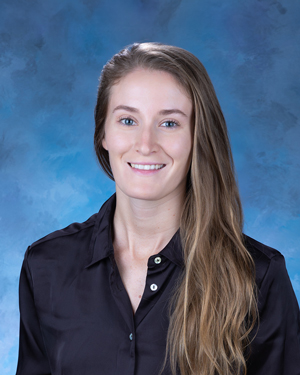
Sohee Park is a Lecturer at the College of Health and Life Sciences , Aston University , affiliated with the Pharmaceutical & Clinical Pharmacy Research Group . Her research focuses on pharmacological interventions for metabolic and psychiatric disorders. Research Interests: Cardiovascular safety of antidiabetic drugs, cohort studies on Type 2 Diabetes Mellitus, safety outcomes of corticosteroids for atopic dermatitis, and prenatal antipsychotic exposure effects. Key Collaborations: Active collaborations in Korea and Taiwan, particularly in real-world database analyses. Article Trends: Recent publications emphasize drug safety, leveraging observational studies and meta-analyses to evaluate long-term outcomes of antidiabetic and psychiatric medications.
Dana Holger is an Assistant Professor at the Barry and Judy Silverman College of Pharmacy, Nova Southeastern University, Fort Lauderdale/Davie, since 2022. She holds a Pharm.D. and MPH, and is a licensed Consultant Pharmacist in Florida. Education : Pharm.D. (Nova Southeastern University), Master in Public Health (Wayne State University) Research Focus : Multidrug-resistant bacterial infections, phage-antibiotic synergy, health outcomes, biofilm modeling, and antimicrobial stewardship. Her key research areas include: Pharmacokinetic/pharmacodynamic modeling of antimicrobials Quantification of outer membrane vesicle production Evaluation of novel therapeutic strategies against drug-resistant pathogens Use of electronic health records and REDCap for clinical data Recent publications (2024-2022) span Antimicrobial Agents and Chemotherapy , PLoS One , and Infectious Disease Therapy , focusing on phage-antibiotic combinations, drug-resistant tuberculosis, and clinical outcomes in multidrug-resistant infections. She serves as Program Director for the Infectious Diseases Health Outcomes Research Fellowship at her college.
Jincheng Shen is an Assistant Professor in the Department of Population Health Sciences at the University of Utah, with adjunct roles in the Departments of Family & Preventive Medicine and Internal Medicine. He completed his PhD in Biostatistics at the University of Michigan, Ann Arbor, postdoctoral training at Harvard T.H. Chan School of Public Health, and holds a BS and MS in Computer Science from Tsinghua University. His methodological research focuses on causal inference , machine learning , high-dimensional data analysis , and statistical genetics . Applications span cancer studies, cardiovascular health, opioid use disorder, and chronic disease management. He actively collaborates with clinicians, biologists, and epidemiologists, particularly in analyzing longitudinal data from trials like SPRINT and AASK. Recent publications (2024–2025) highlight his work in optimizing dynamic treatment regimes for diabetes, cardiovascular disease, and cancer, using machine learning and epigenetic biomarkers . He also contributes to school-based interventions for skin cancer prevention and community pharmacy protocols for opioid misuse. Collaborations include large-scale studies on DNA methylation , aging , and environmental exposures , with applications in COPD, cardiovascular outcomes, and cancer risk prediction. His interdisciplinary approach bridges statistical methodology with real-world clinical and public health challenges.
Professor Danijela Gnjidic is affiliated with the Sydney Pharmacy School at the University of Sydney , serving as Interim Deputy Associate Dean of Research in the Faculty of Medicine and Health . She leads the Clinical Practice Guideline for Deprescribing Opioid Analgesics and is a member of the Charles Perkins Centre . Education : PhD (University of Sydney, 2010), MPH (concurrent with PhD), BSc (Hons) International Collaborations : Ghent University (Belgium), Karolinska Institute (Sweden), University of Kentucky and Yale University (USA) Research Focus : Her work spans Geriatric Pharmacology , Deprescribing , Pharmacoepidemiology , and Quality Use of Medicines , with specific emphasis on: Dementia and Medication Management Frailty Assessment in Older Adults Opioid Safety and Chronic Pain Drug Burden Index and Polypharmacy Clinical Guidelines for Deprescribing Healthcare Implementation Strategies Recent Publications analyze trends in opioid deprescribing , frailty measurement , adverse drug reactions , and technology-driven medication management , reflecting interdisciplinary approaches combining geriatrics , epidemiology , and health informatics . Awards include the Thompson Fellowship (2023) , NHMRC Dementia Leadership Fellowship (2017-21) , and multiple accolades for mentorship and leadership in Geriatric Pharmacology . Teaching & Supervision : Coordinates Honours Unit of Study in Pharmacotherapeutics , Public Health , and Evidence-Based Medicine . Supervises projects on dementia care and medication optimization . Associations : Past President of ASCEPT , Deputy Chair of HDR Examinations Subcommittee , and editorial roles for British Journal of Clinical Pharmacology and PLOS One .
Emidio Capriotti is an Associate Professor at the Department of Pharmacy and Biotechnology, University of Bologna. He leads the Second Cycle Degree in Bioinformatics and holds a PhD in Physical Sciences. His research focuses on predicting protein stability changes due to genetic variations using machine learning, with applications in personalized medicine. He develops tools like DDGun and PhD-SNPg for variant interpretation. Teaching includes courses on Bioinformatics, Biophysics, and Lab Techniques for Bioinformatics. His work bridges computational methods and biological problems, particularly in cancer genomics and protein structural analysis. Education: PhD in Physical Sciences from the University of Bologna. Research interests include structural bioinformatics, protein folding, and the interplay between genomic variations and disease. He collaborates with initiatives like CAGI challenges and ELIXIR-IT to advance genomic data infrastructure. Publications emphasize protein stability prediction, federated learning in clinical settings, and benchmarking computational methods. His lab contributes to open-source tools and standards for reproducible machine learning in biology.
Steven Walker is an Associate Professor in the Department of Experiential Development and Graduate Education at Monash University's Faculty of Pharmacy and Pharmaceutical Sciences. His roles include Intern Programs Manager, overseeing units such as PHR5061 and PHR5162, and academic lead for undergraduate units like PHR2042 and PHR3042. His expertise spans clinical pharmacy, education research, and interprofessional collaboration, with a focus on therapeutic reasoning, competency-based education, and work-integrated learning. Education Background: Walker holds a Doctorate by Research (Pharmacy and Pharmaceutical Sciences Education) from Monash (2019) and a Bachelor of Pharmacy (Honours) from the same institution (2010). Research Interests: His work bridges education and practice, addressing therapeutic reasoning models, interprofessional education, and pharmacy practice innovations like antibiotic allergy management and febrile neutropenia treatment. He has contributed to national initiatives such as the Australian Pharmacy Council's Workplace-Based Assessment training and the Society of Hospital Pharmacists Australia's Education Pharmacist framework. Notable Achievements: Recognized with multiple teaching awards, including the Monash Student Association Faculty Teaching Excellence Award (2019, 2020), and the 2022 Citation for Outstanding Contribution to Student Learning. His research has informed curriculum design and assessment methods in digital health and interprofessional collaboration. Collaborations: Active in national and international networks, including collaborations with the Australian Pharmacy Council and SHPA. His projects include framing postgraduate digital health curricula and advancing workplace-based training programs.
Dr. Ricardo Grau-Crespo is an Associate Professor of Materials Theory and Lead of the Chemical Sciences Research Division at the University of Reading. He is affiliated with the School of Chemistry, Food, and Pharmacy within the Department of Chemistry, focusing on computational materials science for clean energy applications. His research explores molecular-level simulations to investigate materials for energy storage and environmental technologies. Key projects include studies on spinel ferrites, thermal conductivity in pyrochlores, and nanofluids for thermal energy systems. He leads the GCMT Group (https://gcmt-group.github.io/) and is active in advancing computational methods for materials discovery, including machine learning applications. His work bridges theory and experiment, with notable contributions to photocatalysis, thermoelectrics, and interfacial phenomena in nanomaterials. Research Themes: Environment, Energy Materials, and Computational Materials Science. Collaborations include experimental partners for validation of computational models. Active in high-throughput screening and AI-driven material design, emphasizing sustainability and energy efficiency.
Richard Boyce is an Associate Professor in the Department of Biomedical Informatics at the University of Pittsburgh's School of Computing and Information. His work focuses on clinical decision support systems (CDSS), pharmacovigilance, and distributed knowledge bases. He leads research in drug interaction analysis, particularly involving natural products like cannabis, and develops machine learning tools for healthcare applications. His address is 530 DBMI Building, Pittsburgh, PA 15260, with contact email rdb20@pitt.edu. Boyce’s research integrates clinical and pharmacological data to improve patient safety through advanced analytics. Recent projects include predicting Alzheimer’s disease using EHR data, falls prediction in nursing homes, and optimizing CDSS modules for resource-limited settings. His team also develops open-source knowledge graphs for life sciences, enhancing data interoperability. Education: Details not explicitly listed in the provided text. Labs/Teams: Affiliated with the Department of Biomedical Informatics and School of Computing and Information at Pitt. Publications highlight his contributions to pharmacovigilance signal detection, machine learning in healthcare, and ontology engineering. Notable works include studies on cannabis-drug interactions and CDSS design for clinical practice.
Dr. Thomas Lemcke serves as a Working Group Leader at the Institute of Pharmacy, Department of Chemistry, within the Faculty of Mathematics, Informatics and Natural Sciences at the University of Hamburg. His research focuses on molecular modeling and medicinal chemistry with particular emphasis on understanding protein-ligand interactions for drug development. His educational background includes pharmacist specialization in pharmaceutical analysis, and he serves as a Student Advisory Officer for pharmacy students. Dr. Lemcke's research interests center on structure-based drug design, particularly investigating molecular mechanisms of protein-ligand interactions to identify structure-activity relationships and resistance mechanisms. His laboratory specializes in molecular modeling approaches including homology modeling, molecular docking, 3D-QSAR analysis, and virtual screening for drug discovery applications. Current research projects focus on kinase inhibitors for cancer and neurodegenerative diseases, as well as antimalarial drug development targeting plasmodial enzymes. Analysis of his publication history reveals consistent research in computational drug design spanning over a decade, with particular expertise in homology modeling of enzyme targets and structure-based inhibitor design. His work demonstrates strong collaborative relationships with research groups across Europe. Dr. Lemcke actively supervises student research projects in molecular modeling and medicinal chemistry, with numerous students completing elective internships under his guidance on topics related to kinase inhibition and antimalarial drug design. As an educator, he teaches multiple courses including Pharmaceutical/Medicinal Chemistry: Fundamentals of Quantitative Analysis, Pharmacopoeial Analysis, Introduction to Medicinal Chemistry, and Biochemistry. His teaching integrates theoretical concepts with practical computational approaches in drug design.
Kelly S Nelson is an Assistant Professor in the Department of Physical Therapy at Creighton University’s School of Pharmacy and Health Professions. She specializes in pediatric physical therapy, wound management, and clinical education with over 22 years of clinical experience in hospitals, outpatient clinics, and schools. As a credentialed clinical instructor and residency mentor, her focus is on fostering student and resident development to enhance pediatric care quality. Her academic background includes certifications in Aquatic Physical Therapy (APTA, 2020) and Wound Management (since 2014). She teaches integumentary physical therapy and leads Creighton Pediatric Therapy as the Lead Physical Therapist. Her research emphasizes clinical reasoning, competency-based education, and interprofessional collaboration. Notable contributions include developing self-directed learning models for physical therapy students and co-authoring studies on clinical partnerships and electronic health record usage. She actively participates in interprofessional seminars and clinical instructor training programs. Her presentations span topics such as pediatric case studies, technology in therapy, and EHR integration. She combines clinical expertise with a commitment to advancing pediatrics through education and innovative practice.
Ylva Böttiger is a Professor at Linköping University, affiliated with the Department of Biomedical and Clinical Sciences and the Division of Clinical Chemistry and Pharmacology. Her research focuses on clinical pharmacy, medication safety, and medical education, with a particular emphasis on optimizing drug use and managing adverse effects. She leads studies on deprescribing, clinical decision support systems, and the impact of medications on oral health. Her academic contributions include work on rational drug use, pain management in endometriosis, and developing a European list of key medicines for medical education through consensus methods. She has collaborated on projects involving interdisciplinary teams across multiple European institutions. No scientific awards are explicitly mentioned in the provided texts. Her advising and grant activities remain unspecified. Her work is closely tied to clinical practice, aiming to bridge pharmacological research with practical healthcare applications.
Dr. Lisa Bishop is a Professor at the School of Pharmacy, Memorial University of Newfoundland, where she has been a faculty member since July 2006. Her work integrates academic research with community engagement and educational innovation in pharmacy practice. Bachelor of Science in Pharmacy, Memorial University of Newfoundland, 1995 Hospital Pharmacy Residency, St. Joseph’s Hospital, Hamilton, Ontario, 1998 Doctor of Pharmacy, University of Colorado, 2007 Dr. Bishop's research is centered on improving public health through substance use education, cannabis policy development, and opioid stewardship. Her work employs community-based research methodologies to ensure real-world impact, particularly in the context of youth drug education and safe pharmaceutical practices in Newfoundland and Labrador. Her teaching portfolio includes pharmacy skills, chronic and neuropathic pain management, informatics, leadership, and health promotion. She is recognized for her excellence in pharmaceutical education, having received multiple teaching awards. Dr. Bishop leads the Drug Education Centred on Youth Decision Empowerment (DECYDE) initiative, which aims to address gaps in school-based drug education curricula. Her work has been featured in media outlets such as CBC News, The Telegram, and Memorial University's Gazette. Alumni Achievement Award, Memorial University School of Pharmacy, 2019 Leadership in Pharmacy Practice Award, Canadian Society of Hospital Pharmacists, NL Branch, September 2015 Isabel E. Stauffer Meritorious Service Award, Canadian Society of Hospital Pharmacists, February 2014 Fellow of the Canadian Society of Hospital Pharmacists (FCSHP), October 2013 School of Pharmacy Excellence in Pharmaceutical Teaching Award, MUN, 2011-2012 Preceptor of the Year Award, School of Pharmacy, University of Colorado, USA, 2009-2010 Bristol Myers Squibb Teaching Excellence Award, School of Pharmacy, MUN, 2007-2008 Alfred G. Dawe Distinguished Service Award, CSHP NL Branch, 2006 Dr. Bishop has been actively involved in curriculum development and educational research, particularly in the scholarship of teaching and learning. She has supervised undergraduate research through the Summer Research Program and contributed to Pharmacy Research Day. Her leadership extends to professional service, including recognition from the Canadian Society of Hospital Pharmacists at both provincial and national levels. She is a key member of the research team at the School of Pharmacy, contributing to initiatives such as the Centre for Health Evaluation and Research at Memorial (CHERP), where her work supports health outcomes and policy development.
Dorie Apollonio is a Professor in the Department of Clinical Pharmacy at the University of California, San Francisco (UCSF) School of Pharmacy. Her research focuses on industries contributing to non-communicable diseases, particularly tobacco, pharmaceuticals, cannabis, alcohol, and food sectors. Key areas include tobacco cessation for vulnerable populations, cannabis co-use, policy analysis for tobacco/cannabis regulations, and opioid-to-cannabis substitution research. Her work spans law, medicine, public health, and policy disciplines. PhD, University of California, San Francisco MPP, Harvard University BA, Macalester College Her research integrates health policy , substance use , tobacco control , and cannabis policy , with recent emphasis on vulnerable populations and mental health disorders . Articles reveal trends in tobacco regulation , cannabis legalization , and opioid industry practices analyzed through epidemiology , toxicology , and public health policy . She has earned multiple teaching awards and leads grants from NIH/NIDA, FDA, and California state agencies. Her collaborative network includes researchers at UCSF, UC Davis, and international institutions. Current projects examine pharmacist-led interventions , policy implementation , and substance use disparities .
Laurenţiu Staicu is a Professor at the Department of Theoretical Philosophy, Faculty of Philosophy, University of Bucharest, where he has held progressive academic positions since 1997, currently serving as University Professor (2017-present). He also functions as a philosophical counselor at Bellanima Medical Center (2012-present) and maintains active involvement in multiple philosophical institutions. His academic formation includes: Postdoctoral Research Program at University of Bucharest (2010-2012) PhD in Philosophy from University of Bucharest (1997-2002) with thesis on metaphysics of natural genres Undergraduate studies in Philosophy at University of Bucharest (1990-1995) Staicu's scholarly work demonstrates remarkable breadth across philosophical disciplines with particular emphasis on metaphysics/ontology, philosophy of science, and applied ethics. His research consistently bridges traditional philosophical inquiry with scientific practice, especially in biology and evolutionary theory. He has developed significant expertise in knowledge management, ethics of science, and philosophical counseling, with notable contributions to understanding Darwinism, rationality, and evolution from philosophical perspectives. His teaching portfolio includes Philosophy of Biology, Metaphysics, Ethics of Science, and Models of Evolution for undergraduate and graduate students. Analysis of his recent publications reveals a clear trajectory toward increasingly interdisciplinary work connecting philosophical foundations with contemporary ethical challenges. His scholarship shows growing engagement with bioethics, particularly regarding informed consent in Romanian psychiatry, the philosophical implications of biomedical technologies, and the ethical dimensions of cultural evolution. There's also notable attention to how classical philosophical frameworks like Aristotle's categories remain relevant to modern problems, alongside examination of digital culture phenomena like trolling through philosophical lenses. Staicu has coordinated multiple significant research projects: "Teorii ale complexității" (1998-2000), World Bank-funded interdisciplinary project "Fundamente teoretice și metodologice în dinamica sistemelor naturale complexe" (2006-2008), CNCSIS-funded research "Consimțământul informat în psihiatria din România" (2012-2016), CNCSIS-funded collaboration with University of Medicine and Pharmacy of Bucharest As an institutional builder, Staicu serves as: Founding member and president of the Romanian Association for Practical Philosophy Founding member of Romanian Society for Analytic Philosophy and Romanian Society of Philosophy Founding member and former director of Center for Logic, Philosophy and History of Science Editorial board member for Logos & Episteme, Philosophy Study, and Analele Universității din Craiova Evaluator for European Science Foundation and ARACIS His international engagement includes Erasmus teaching appointments at Autonomous University of Barcelona (2007) and University of Oxford (2017), plus research visits to institutions like University of Tulsa.
Dr. Steven R. Simon is a Professor in Residence and Associate Dean for Veterans Affairs at the David Geffen School of Medicine, UCLA , with a focus on health services research and medical education . His work emphasizes healthcare quality and safety improvements through educational programs and healthcare information technology , particularly in medication reconciliation and electronic health records (EHRs) . Previously, he served as Chief of Staff at VA Greater Los Angeles Healthcare System and held academic roles at Harvard University. Dr. Simon’s research spans Internal Medicine , Geriatrics , Public Health , and Medical Informatics . His recent publications highlight patient engagement in deprescribing , EHR modernization , and COVID-19 response in long-term care . Key trends include machine learning applications for cardiovascular risk prediction, secure messaging in care transitions, and health systems innovation . Dr. Simon has led investigator-initiated grants from the VA Health Services Research and Development Service and the Agency for Healthcare Research and Quality. He has over 140 publications in high-impact journals such as the New England Journal of Medicine and Health Affairs , and has served on the Editorial Board of the Journal of General Internal Medicine . His work addresses medication safety , clinical decision support , and health policy in veterans’ care.