Benjamin Ricaud is an Associate Professor and Group Leader in Machine Learning at UiT The Arctic University of Norway's Department of Physics and Technology. His core affiliations include membership in the Machine Learning Group, Visual Intelligence center, and co-directorship of the Digital Technology Innovation Lab focused on Arctic-region tech startups. He also co-chairs the annual Northern Light Deep Learning conference. Ricaud's research spans: Fundamental ML : Graph signal processing, explainable AI, and generative models Applications : Microfossil classification, medical diagnostics (retinal aging), drug analysis, and climate data interpretation Emerging domains : Self-supervised learning and biological data analysis using Raman spectroscopy His recent publications (2020-2025) cluster in three domains: Graph ML methodologies (35%) Biomedical/biological applications (40%) Geoscience/climate informatics (25%) with consistent focus on interpretability and real-world data challenges. Teaching includes Image Processing (FYS-2010), Pattern Recognition (FYS-3012), and Machine Learning (FYS-2021). He leads outreach initiatives developing AI exhibits for Tromsø Science Centre.
Jianjun (Jan) Shi is the Carolyn J. Stewart Chair and Professor at the H. Milton Stewart School of Industrial and Systems Engineering (ISyE) and holds a joint appointment with the George W. Woodruff School of Mechanical Engineering at Georgia Institute of Technology. He previously served as the G. Lawton and Louise G. Johnson Chair Professor of Engineering at the University of Michigan. His research focuses on system informatics and control for manufacturing and service systems, with notable contributions to quality improvement, cyber-physical systems, and data-driven methodologies. B.S. & M.S. in Electrical Engineering, Beijing Institute of Technology (1984–1987) Ph.D. in Mechanical Engineering, University of Michigan (1992) Dr. Shi’s research interests include process modeling, control systems, and quality engineering. He pioneered methodologies for in-process quality improvement and developed advanced frameworks for high-dimensional data analysis in manufacturing. His work integrates statistical methods, machine learning, and system informatics to enhance operational efficiency and product quality. He has published over 150 peer-reviewed papers and secured $19 million+ in research grants from NSF, DOE, and industry partners. His lab, the System Informatics and Control Group, collaborates with automotive, aerospace, and pharmaceutical sectors. Shi leads initiatives such as the Quality Science Center at the Chinese Academy of Sciences and serves on editorial boards of journals like IIE Transactions and ASME Transactions . Recipient of the IIE Albert G. Holzman Distinguished Educator Award (2011) Fellow of INFORMS, ASME, and IIE Academician of the International Academy for Quality Shi advises 26 Ph.D. graduates, many of whom hold faculty positions or leadership roles in industry. His research group’s innovations have been implemented in global manufacturing systems, yielding significant economic impacts. Current work includes 4D printing, cyber-physical system resilience, and federated learning for industrial data.
Thierry Badard is an Associate Professor at the Department of Geomatics Sciences , Université Laval, where he also serves as Director of the Center for Research in Geospatial Data and Intelligence (CRDIG) . With over 28 years of experience in geospatial science, he leads research initiatives at the intersection of GeoAI , LiDAR processing , and smart city technologies . Director, CRDIG (2016-2022) Steering Committee Member, Big Data Research Centre (CRDM) Researcher, Institute for Intelligence and Data (IID) Research Expertise spans geospatial big data, GeoNLP, and IoT applications for digital twins. His work addresses flood risk modeling , 3D urban analytics , and environmental monitoring through AI-driven solutions. Recent publications focus on contrastive learning for LiDAR segmentation and geospatial ontologies for early warning systems. Grant Leadership includes collaborative projects on smart insurance analytics (2018-2025), Arctic bioaerosol research (2019-2025), and Quebec-Morocco digital twin partnerships (2022-2023). He has advised 15+ graduate students in geomatics and related fields.
Helen Suh is a Professor at Tufts University, jointly appointed in the departments of Civil and Environmental Engineering and Community Health . As an internationally-recognized expert in air pollution health effects, she combines environmental epidemiology , exposure science , and data analytics to investigate how pollutants impact human health. Sc.D. , Harvard University (1993) M.S. , Harvard University (1990) S.B. , Massachusetts Institute of Technology (1985) Her research focuses on three areas: air pollutant impacts on cognitive performance and child development , multi-pollutant health effects , and GIS-based spatio-temporal modeling for epidemiological studies. Recent publications highlight her work on PM2.5 measurement error correction , hormonal disruptions in pregnancy , and machine learning applications in environmental health analysis. Current trends include: Advanced statistical methods for exposure assessment Multi-omics approaches to cardiometabolic health International comparative studies (e.g., Tehran, Puerto Rico) Long-term mortality analysis in Medicare populations Pollution-immune system interactions in vulnerable groups Policy-relevant modeling for air quality standards Helen Suh has served as an Associate Editor for the Journal of Exposure Science and Environmental Epidemiology and advised major U.S. and international health organizations. Her work spans over 150 publications and integrates multidisciplinary team leadership in environmental health science. Her laboratory develops large-scale data analytics tools and spatio-temporal exposure models to support population-level health research. Current projects include air pollution and aging cohorts , urban environmental noise measurement , and epigenetic responses to pollutants .
Dr. Beth McGinty is a Professor of Population Health Sciences and Division Chief of Health Policy and Economics at Weill Cornell Medical College . She serves as the Co-Founding Director of the Cornell Health Policy Center (2025–present), a cross-campus initiative for health policy research and training. Previously, she was a Professor at the Johns Hopkins Bloomberg School of Public Health (2022–2023) before joining WCM. PhD , The Johns Hopkins University Bloomberg School of Public Health (2013) MS , Columbia University (2006) BA , West Chester University (2004) Her research focuses on how health policies affect vulnerable populations, including those with mental illness , substance use disorders , and chronic pain , integrating public policy , health economics , and implementation science . Recent work examines telehealth expansion , opioid policy , and substance use stigma . Key grant activities include: National Institute of Mental Health (NIMH) funding (2024–2029) for studying healthcare integration for dual eligibles Commonwealth Fund grants (2024–2029) on healthcare equity and prenatal drug use law implementation Subawards from Janssen Research & Development (2024–2027) and Novartis Foundation (2023–2026)
Professor Christopher Price serves as Deputy Director of the NIHR Applied Research Collaboration (ARC) North East and North Cumbria (NENC) and holds the position of Professor of Stroke and Applied Health Research at Newcastle University's Faculty of Medical Sciences. He also functions as the NIHR's National Specialty Lead for Stroke and maintains a clinical role as a Stroke Medicine Consultant with the Northumbria Healthcare NHS Foundation Trust. Professor Price completed his medical training with an MB ChB (hons) from Birmingham in 1992, earned his MD from Newcastle University in 2003, and became a Fellow of the Royal College of Physicians (FRCP) in 2006 while simultaneously completing his MClinEd at Newcastle. As a clinical researcher, Professor Price specializes in developing and implementing interventions that improve emergency stroke treatment access. His work focuses on three main pillars: clinical trials of non-pharmaceutical technologies in stroke care, translational studies of diagnostics, and evaluation of service provision models. He has pioneered ambulance-based clinical trials evaluating novel point-of-care diagnostics and enhanced clinical assessment processes for suspected stroke patients. His research extends to stroke recovery, where he investigates innovative approaches like wristband accelerometry to encourage upper limb activity and collect recovery biomarker data. The Stroke Association has recognized his contributions with the HRH Princess Margaret Senior Reader Fellowship. Professor Price's recent publications reveal a strategic shift toward system-level interventions addressing the entire stroke care pathway. His work increasingly examines mobile stroke units, health equity in stroke care, and implementation challenges of new treatment pathways across the NHS. There's a clear progression from individual diagnostic tools toward comprehensive service redesign that considers geographic accessibility, cost-effectiveness, and patient-centered outcomes. The Stroke Association HRH Princess Margaret Senior Reader Fellowship Stroke Association HRH Princess Margaret Research Development Fellow Professor Price has mentored several doctoral researchers including Graham McClelland (focusing on stroke mimic probability scores), Eugene Tsang (researching post-stroke dementia), and Sarah Moore (investigating physical activity interventions after stroke). He has secured substantial research funding totaling millions of pounds from major organizations including the Medical Research Council, Innovate UK, NIHR, and The Stroke Association. His most significant grants include the £3 million RATULS trial on robot-assisted upper limb rehabilitation after stroke and the £1.96 million NIHR Programme Grant for 'Promoting Effective And Rapid Stroke Care,' which evaluated enhanced paramedic assessment processes for stroke patients. Professor Price leads the Stroke Research Group within Newcastle University's Population Health Sciences Institute. His team maintains strong collaborations with national and international academic institutions, industry partners, the North East Ambulance Service, and multiple NHS Trusts. The group has gained particular recognition for its innovative ambulance-based clinical trials, including the landmark PASTA trial published in JAMA Neurology, which demonstrated how enhanced paramedic assessment improves thrombolysis delivery during emergency stroke care.
Prof. Dr. Oya Beyan is a Professor at the University of Cologne's Institute for Biomedical Informatics and a Core Scientist at the Center for Data and Simulation Science. Her research focuses on enabling FAIR (Findable, Accessible, Interoperable, Reusable) data management, distributed analytics on sensitive medical data, and data-driven innovations in healthcare. She leads projects like the PADME platform for federated machine learning and privacy-preserving analytics. Key areas include biomedical informatics, semantic web technologies, clinical decision support systems, and ethical challenges in data science. Research Interests: FAIR Data Principles & Infrastructure Privacy-Preserving Distributed Learning Explainable AI in Healthcare Semantic Interoperability Medical Data Integration Ethical & Social Implications of Data Use Notable Contributions: Development of the Personal Health Train framework for decentralized medical data analysis Leadership in EU-funded initiatives like NFDI4Health and Medical Informatics Collaborations Pioneering work on federated learning applications in oncology and rare disease research Lab & Affiliations: Prof. Beyan's work is anchored in the Institute for Biomedical Informatics and the Center for Data and Simulation Science, fostering interdisciplinary collaboration between computational science and medical research.
Professor Thierry Langer is a Full Professor of Pharmaceutical Chemistry at the University of Vienna’s Faculty of Life Sciences (Department of Pharmaceutical Sciences). He leads research in computational drug design, with a focus on pharmacophore modeling, 3D-QSAR analysis, and AI-driven molecular design. His work bridges theoretical and experimental chemistry, addressing targets like viral proteases (e.g., SARS-CoV-2), GABA receptors, and dopamine transporters. Research interests include: Pharmacophore-guided drug discovery for anti-viral and CNS therapies Development of next-generation computational tools (e.g., PharmacoMatch, QPhAR) Protein-ligand interaction modeling using neural networks and graph-based algorithms Recent studies focus on: Inhibitors for herpesvirus nuclear egress complexes, AI-optimized antivirals, and dopamine transporter inhibitors for cognitive enhancement. His lab collaborates on projects like the NeuroDeRisk initiative to de-risk neurotoxic compounds. Publications emphasize drug repurposing, metabolic pathway analysis, and scalable synthesis methods for promising drug candidates.
Dr. Anna De Simoni is a Clinical Associate Professor in Primary Care Research at Queen Mary University of London. She specializes in improving self-management and adherence to medications for patients with long-term conditions, particularly asthma and stroke. She co-leads the Centre for Primary Care and leads the AD-HOC NIHR Programme Grant, focusing on digital social interventions and online peer support systems. Her research integrates network science, big data analytics, and computational social science to enhance primary care outcomes. Education: MBBS (Medicine), PhD in Neurophysiology (University of Milan), followed by postdoctoral fellowships at UCL and the University of Cambridge. She holds NIHR Academic Clinical Fellowship and Lectureship awards, and is a Fellow of the Higher Education Academy (FHEA) and a Member of the Royal College of General Practitioners (MRCGP). Research Interests: Digital health interventions, medication adherence strategies, primary care after stroke/TIA, domestic violence in healthcare settings, and patient engagement in online communities. She employs mixed-methods approaches including systematic reviews, qualitative studies, and computational analyses. Key Awards: EU Marie Curie Individual Fellowship (2010-2012), NIHR Academic Clinical Lectureship (2013-2016). Current roles include co-leadership of the Asthma UK Centre for Applied Research (AUKCAR) and supervision of postgraduate students in MSc/PhD programs. Grants and Projects: AD-HOC NIHR Programme Grant, PAM Programme on Adherence to Medication, TEAM-care project on asthma management. Collaborations include industry partners and charities to develop scalable digital solutions for chronic disease management. Labs/Teams: Clinical Effectiveness Group at Queen Mary, Asthma UK Centre for Applied Research (AUKCAR).
Lijing Wang is an Assistant Professor of Data Science at the New Jersey Institute of Technology (NJIT). She specializes in interdisciplinary research at the intersection of artificial intelligence, epidemiology, and public health. Her work emphasizes data-driven approaches to forecasting infectious disease dynamics, integrating machine learning with theoretical epidemiological models. Education: Ph.D. in Computer Science, University of Virginia (2021) M.S. in Computer Science, Chinese Academy of Sciences (2013) B.S. in Software Engineering, Dalian University of Technology (2010) Research focuses on epidemic forecasting using ensemble modeling, graph neural networks, and causal inference. Key topics include: COVID-19 and influenza prediction using mobility data AI-driven disease surveillance systems Policy impact analysis of pharmaceutical/nonpharmaceutical interventions Cross-national epidemic modeling Publications consistently address forecasting challenges through innovative methodological combinations - e.g., Bayesian ensemble techniques, causal graph approaches, and multi-scale human mobility analysis. Recent work emphasizes real-time prediction accuracy improvements for public health decision-making. No scientific awards explicitly noted in text. Active in collaborative research involving public health agencies and international institutions.
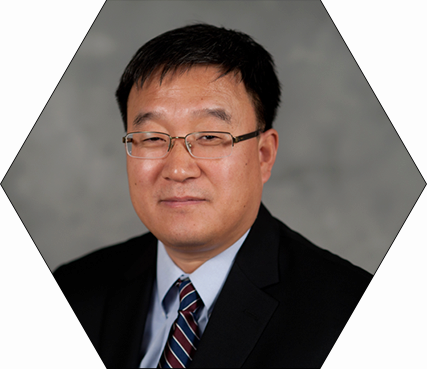
Gaye Stephens serves as Assistant Professor in the School of Computer Science and Statistics at Trinity College Dublin, where she is a core member of the Centre for Health Informatics alongside Dr. Lucy Hederman and Prof. Mary Sharp. She actively contributes to institutional governance as a board member of the Irish Platform for Patient Organisations, Science and Industry (IPPOSI) and serves on the school's research ethics committee. Her research centers on patient-centered health informatics with focus areas including Electronic Health Record design , citizen engagement methodologies (such as Citizen Juries and Think-ins), and scalable information models for healthcare integration. She pioneers approaches that position patients as central stakeholders in health data governance, addressing critical challenges in digital health literacy, informed consent frameworks, and interoperability between legacy and emerging health technologies. Analysis of her recent publications reveals consistent focus on knowledge engineering for healthcare , with particular emphasis on temporal data modeling in knowledge graphs (2024-2025), nurse knowledge elicitation through serious games (2023-2024), and novel methodologies like the WICKED framework for capturing clinical wisdom (2022-2023). Her work consistently bridges technical informatics with human-centered design principles. Stephens actively contributes to national health informatics infrastructure through memberships in: Royal Academy of Medicine of Ireland Council of Clinical Information Officers National Standards Authority of Ireland Health Informatics Group Health Informatics Society of Ireland (including Nursing and Midwifery group) e-Health Ireland ECOSYSTEM working group She supervises across undergraduate, MSc (Health Informatics and Global Health), and PhD programs while leading client-based final year projects. Her teaching portfolio includes Introduction to Health Informatics, Information Modeling, Connected Health, and Electronic Health Record Architectures, with research advising spanning health data governance and patient engagement projects. Stephens co-leads the Knowledge and Data Engineering Group's Health Informatics research stream, focusing on semantic interoperability, adaptive hypermedia systems, and novel engagement models for health data governance. Her current projects emphasize citizen-centered EHR architectures and interdisciplinary approaches to healthcare data integration.
Professor David E. Gloriam is a leading expert in G protein-coupled receptors (GPCRs) at the University of Copenhagen , Department of Drug Design and Pharmacology. Recognized as a top 1% Clarivate Highly Cited Researcher, he leads GPCRdb, a major database with >50,000 annual users, and develops computational tools like GPCRgraphs for drug discovery. His innovation roles include Senior Scientific Expert at Kvantify A/S and applications in pharmaceutical industry tools with patent citations. Education: Ph.D. in Medicine (Uppsala University, 2006), M.Sc. in Pharmaceutical Sciences (Uppsala University, 2003) Leadership: Head of GPCRdb (2014–), EU COST Actions member (2014–17), and institutional leadership roles in Pharmaceutical Data Science unit and Research Leadership Forum Research Interests: His work spans computational modeling of GPCR dynamics, virtual screening methods for inaccessible receptors, pharmacogenomics (PGxDB platform), and biased signaling for safer drugs. He integrates structural biology, data science, and bioinformatics to advance pharmaceutical discovery. Awards: Clarivate Highly Cited Researcher (2022) IUPHAR Analytical Pharmacology Award (2023) Lars Arge Prize for Big Data (2021) UCPH Forward Talent Program (2019) ERC Starting Grant (2014) Teaching & Supervision: Teaches Molecular Pharmacology and AI in Drug Discovery , and supervises 3 current PhD students. He has mentored 13 PhDs and 14 Postdocs, with former members attaining tenured academic or industry roles.
Jennifer E Miller is an Associate Professor of Medicine (General Internal Medicine) and Biomedical Informatics & Data Science at Yale School of Medicine. She serves as Co-Director of the Program for Biomedical Ethics and holds leadership positions including Director of the Good Pharma Scorecard (an index that ranks pharmaceutical companies on bioethical performance) and Founder of Bioethics International. Her academic appointments reflect her interdisciplinary expertise spanning clinical medicine, ethics, and data science. Dr. Miller's research program focuses on critical ethical dimensions of biomedical innovation, with particular emphasis on ethics, equity and governance in drug, vaccine, and medical device research, development, and accessibility. She specializes in developing metrics to enhance accountability and social responsibility in the pharmaceutical industry. Her work examines clinical trial diversity, international research ethics, healthcare data sharing, and the implementation of ethical frameworks in medical product development. Through the Good Pharma Scorecard initiative, she has created a systematic approach to evaluating pharmaceutical company performance across multiple ethical dimensions including clinical trial transparency, diversity in research participation, and access to medicines. Analysis of Dr. Miller's recent publications (2021-2025) reveals a strong thematic focus on diversity and equity in clinical research, with particular attention to demographic representation in trials, ethical considerations in international trial site selection, and equitable access to newly approved drugs and vaccines. Her work bridges bioethics, health policy, and data science, creating measurable frameworks for assessing ethical performance in the pharmaceutical industry. The interdisciplinary nature of her research connects clinical medicine, public health, and corporate accountability, with direct implications for regulatory policy and industry practice. Appointment to World Economic Forum Center for the Fourth Industrial Revolution, Precision Medicine Council (2019) Appointment to World Economic Forum Biotechnology Council (2018) Appointment to World Economic Forum Futures Council (2017) Appointment to World Economic Forum Human Enhancement Working Group (2017) Fellow at Foundation Brocher for Ethical Issues in Global Population Health (2014) As Director of the Good Pharma Scorecard and Founder of Bioethics International, Dr. Miller leads initiatives that connect academic research with practical applications in industry ethics. Her work involves collaboration with pharmaceutical companies, regulatory agencies, and patient advocacy groups to develop and implement ethical standards in biomedical innovation. Through editorial roles at journals including Nature Medicine, The BMJ, and JAMA, she influences discourse on research ethics and scientific integrity. Dr. Miller is actively involved in advising and mentorship through her academic appointments at Yale, where she contributes to training the next generation of researchers in biomedical ethics and data science.
Associate Professor Aditi Dey holds a conjoint appointment at the Sydney Medical School within the University of Sydney , and serves as Manager of Surveillance at the National Centre for Immunisation Research and Surveillance (NCIRS) . Her work focuses on immunization program evaluation, vaccine coverage analysis, and surveillance of vaccine-preventable diseases and adverse events. She has extensive experience in public health research, spanning roles in Thailand and India prior to her current positions in Australia. Dr Dey completed an MBBS, followed by postgraduate qualifications including a DTM&H (Tropical Medicine & Hygiene), Grad Dip Applied Science (Health Information Management), MPH, and a PhD from the University of Sydney. Her research integrates epidemiological analysis with public health policy implementation, particularly addressing health disparities in vaccination access and outcomes among Indigenous populations and other underserved groups. Her research interests prominently feature vaccine safety , epidemiological trends of infectious diseases, and the impact of vaccination policies such as Australia’s “No Jab, No Pay” initiative. She also investigates the effectiveness of vaccination programs for diseases like rotavirus, HPV, and varicella-zoster virus, often analyzing large-scale national health datasets. Notable contributions include evaluations of Australia’s HPV vaccination program, analysis of rotavirus vaccine efficacy, and assessments of adverse events following immunization. Her work emphasizes improving immunization coverage through better data systems and healthcare provider education, particularly for at-risk populations. Dr Dey actively contributes to public health efforts through teaching and course coordination at the University of Sydney, and collaborates with institutions like the Sydney Infectious Diseases Institute . Her expertise bridges clinical practice, research, and policy, driving evidence-based improvements in Australia’s immunization landscape.
Randall P. Ellis is a Professor of Economics at Boston University, specializing in Health Economics, Industrial Organization, and Econometrics. His research focuses on healthcare payment systems, insurance design, predictive modeling, and international health economics. He holds a PhD from MIT and has contributed extensively to understanding managed care systems, risk adjustment frameworks, and healthcare policy evaluation. Education: PhD in Economics from Massachusetts Institute of Technology. Research Interests: Ellis’s work spans health care payment reforms, risk selection mechanisms, and the application of machine learning to health economics. He examines issues such as Medicaid managed care, obesity treatment economics, and the impact of anti-corruption programs on healthcare systems. His research emphasizes improving equity and efficiency in healthcare markets, particularly through innovative payment systems and risk adjustment models. Key Contributions: Ellis has developed frameworks for disease surveillance and risk adjustment (e.g., Diagnostic Items Classification System), evaluated payment system performance, and analyzed factors influencing healthcare utilization and costs. His work bridges theoretical economic models with practical policy applications, informing both academic and policy audiences. Grants & Collaborations: While specific grants are not detailed here, his research frequently involves collaborations with institutions like Harvard and MIT through the Health Economics Seminar. His work often addresses global health challenges, including pandemic financing and healthcare corruption in developing regions. Labs/Teams: Ellis is affiliated with Boston University’s economics department and collaborates with interdisciplinary teams on projects related to health policy and econometric modeling.









/prod01/channel_3/media/tcd/scss/headshots/Gaye-Stephens-BW.jpg)