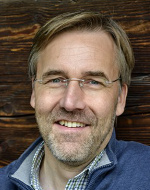
Dr. Carsten Orwat is a senior researcher at the Institute for Technology Assessment and Systems Analysis (ITAS) , part of the Karlsruhe Institute of Technology (KIT) , Germany. Since 2000, he has led interdisciplinary projects on technology assessment, focusing on digital technologies and societal change . Current research: Systemic risks of AI, algorithmic discrimination, digital governance Key projects: "Systemic Risks of Artificial Intelligence", "Governance of and through Algorithms", "Assessing Big Data" Published over 30 works across AI ethics, pervasive computing, and digital rights Research Interests : Orwat's work bridges technical and societal dimensions of emerging technologies, emphasizing: Ethical implications of algorithmic systems Policy frameworks for AI governance Human dignity in digital environments Big data's societal impacts Recent Publications (2024) : His latest contributions analyze systemic risks in AI, normative challenges in regulation, and algorithmic discrimination through a human dignity lens. Collaborations include researchers from law, computer science, and policy domains. Contact Details : Office: Karlstraße 11, 76133 Karlsruhe, Germany Email: orwat@kit.edu Phone: +49 721 608-26116
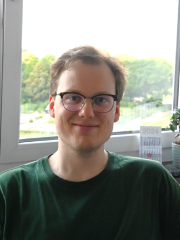
Anton Semjonov is a Research Associate in the Distributed Operating Systems (DOS) group at the Department of Informatics, University of Hamburg, working under Prof. Dr. Janick Edinger. He also leads the interdisciplinary Creative Lab "base.camp" at the faculty level, fostering student innovation and real-world problem solving. His academic journey includes a Master’s in Informatics with a focus on Information Security from Universität Hamburg (2023) and a Bachelor’s in General Engineering Science with a focus on Computer Science from TU Hamburg (2020). Master of Science, Informatics (Information Security), Universität Hamburg, 2023 Bilingual Bachelor of Engineering, General Engineering Science (Computer Science), TU Hamburg, 2020 His research focuses on computation offloading and edge computing, particularly through browser-based middleware like Wasimoff, which leverages WebAssembly to enable zero-setup, volunteer-driven distributed computing. He also investigates coordination in distributed systems and information security, with publications at Middleware and IEEE PerCom. His work extends into computer science education, where he analyzes how creative labs bridge gaps in traditional curricula. The most recent articles highlight a strong trend in decentralized, secure, and scalable computing frameworks that utilize idle edge devices through web browsers. These works emphasize real-world deployment, performance evaluation, and the integration of privacy-preserving and context-aware mechanisms in heterogeneous environments. There is a clear interdisciplinary thread combining systems research with educational innovation. No scientific awards have been mentioned in the provided materials. Anton Semjonov is actively involved in research advising through his leadership in the DOS group and the base.camp lab. He contributes to research projects such as DDLitLab's LegalGPT initiative. While no formal grants are listed, his ongoing contract and project involvement suggest active funding support. He collaborates with Prof. Edinger and other researchers on distributed systems and AI applications. He is a key member of the Distributed Operating Systems research group and leads the Creative Lab "base.camp," which serves as an interdisciplinary platform for students to develop innovative solutions to real-world problems. These environments support open-ended, exploratory learning and promote collaboration across academic and societal domains.
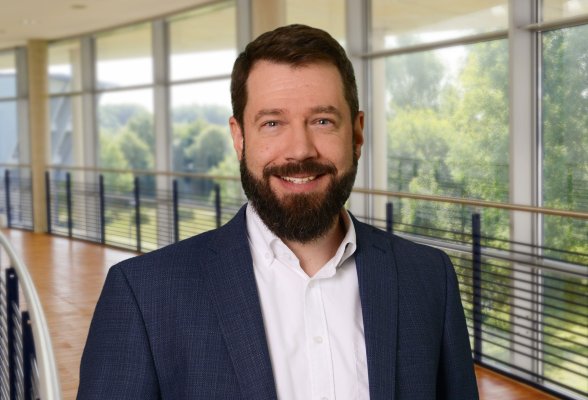
Prof. Dr. Sven Gehring serves as a Professor at the Ubiquitous Media Technology Lab (UMTL), where he leads research in next-generation media systems integration. His core research domains focus on: Ubiquitous Computing Media Technology Human-Computer Interaction Pervasive Computing The UMTL investigates seamless embedding of digital media into everyday physical environments through context-aware adaptive systems. Current work emphasizes real-world deployment of sensor-rich interactive spaces with applications in smart environments and cross-device user experiences. Prof. Gehring collaborates within a multidisciplinary team including senior researchers like Prof. Dr. Antonio Krüger and technical specialists across engineering and design domains as listed in UMTL personnel.
Huber Flores is a Professor in the Department of Computer Science at Aalto University's School of Science, specializing in pervasive computing, mobile sensing, and sustainable technology applications. His research bridges the gap between theoretical computer science and real-world environmental challenges through innovative applications of drone networks, thermal imaging, and AI systems. His research interests focus on Pervasive Computing , Mobile Sensing , Drone Networks , Environmental Monitoring , AI Applications , and Sustainable Computing . Flores develops systems that leverage everyday interactions and low-cost sensing to address environmental sustainability challenges, particularly in plastic pollution monitoring, urban air quality assessment, and resource optimization. His work on thermal dissipation sensing modalities represents a novel approach to human-environment interaction understanding. Analysis of his recent publications shows a strong trend toward integrating large language models with multi-sensor data for context reasoning, while maintaining focus on practical environmental applications. His research consistently addresses scalability challenges in city-scale autonomous drone deployments and sustainable computing through e-waste repurposing. Flores has received no explicitly mentioned scientific awards in the available literature, though his high publication volume in top-tier venues demonstrates significant recognition within the pervasive computing community. His collaborative work spans multiple international institutions, with frequent co-authorship patterns indicating strong connections with Petteri Nurmi, Sasu Tarkoma, Pan Hui, and Mohan Liyanage. His research has secured funding supporting work on drone networks, environmental monitoring systems, and AI robustness frameworks, though specific grant details aren't provided in the source material. Flores leads research on the SPATIAL architecture for AI trustworthiness, LIZARD for plastic litter monitoring, and SEAGULL for underwater plastics analysis, demonstrating his focus on applying computing to pressing environmental challenges through innovative sensing approaches.
Dr. Heiko Müller is a researcher at the University of Oldenburg, affiliated with the Department of Computing Science. He coordinates the DFG-funded priority program 'Scalable Interaction Paradigms for Pervasive Computing Environments' and previously served as a Postdoctoral Researcher at the University of Lapland and Senior Researcher at OFFIS. His research focuses on Ambient Display Technologies, Robotics, and Digital Inclusion, with over 70 publications in top venues like CHI and TEI. He holds a PhD in Engineering (2018) and a Diplom in Computer Science from the University of Oldenburg. His work spans EU-funded projects like 'DecoChrom' (Finland) and 'GAL' (Germany), emphasizing age-friendly technologies and cooperative systems. He actively contributes to conferences as a reviewer and organizer, notably the CHI networking event. Key projects include exploring wearable ambient displays, smart home interfaces, and tactile feedback systems. His interdisciplinary approach integrates HCI principles with robotics and material science.
Niklas Klein is a Professor at the Department of Information and Communication at Flensburg University of Applied Sciences. He also serves as Vice President for Studies and Teaching on the Executive Board. His academic background includes a PhD from the University of Kassel (2011) and earlier degrees from the University of Paderborn. His research focuses on context-aware systems, ubiquitous computing, and smart grid technologies. He has contributed to projects like the Future Internet Smart Grid Application (2013), activity recognition using inertial sensors (2011), and XML/XQuery transformation frameworks (2005–2011). His work emphasizes time synchronization in sensor networks and user-centric service creation. Notable publications include studies on context prediction stability, energy management in smart grids, and DAG-based context reasoning architectures. He has advised over 20 Master's and Bachelor's students in areas like distributed systems and communication technologies. Klein has secured funding for projects such as the KLIMASCHUTZ-PLANER (2013–2014) and IT2Green Pinta (2012–2014). He organizes workshops like AwareCast and serves on technical program committees for CAPS 2012 and Context 2011. Additional service includes managing the alumni network for Kassel University's Communication Technologies chair and supporting international student recruitment.
Dr. Christian Winkler is a researcher in Human-Computer Interaction (HCI) at the University of Ulm's Department of Human-Computer Interaction. He focuses on wearable technologies, mobile VR systems, and innovative projection-based interfaces. His work emphasizes secure mobile interactions, context-aware pervasive systems, and nomadic computing solutions. Education: B.Sc. Media Informatics & Design (2007), Bielefeld University M.Sc. Applied Computer Science - Systems Engineering (2010), University of Duisburg-Essen PhD in Computer Science (2016), University of Ulm Research Interests: Wearable interfaces, mobile interaction design, secure authentication systems, and augmented reality applications. Projects include PocketThumb (wearable eyewear control), FaceTouch (VR HMD touch interaction), and Glass Unlock (privacy-preserving smartphone unlocking). Key Publications: Recent works focus on spatial interaction in moving vehicles (CHI 2025), cursorless pointing techniques (2018), and wearable dual-sided touch interfaces (IMWUT 2017). His 2014 AMP-D project received an Honorable Mention at CHI. Awards: Best Note Award at ITS 2013 (Penbook project) CHI 2014 Honorable Mention for Ambient Mobile Pervasive Display Teaching & Advising: Supervised over 15 student theses on topics like projector phones, hospital workflows, and augmented reality. Taught courses in Pervasive Computing and Mobile HCI at University of Ulm. Labs & Teams: Core contributor to the HCI Group, exploring future interaction paradigms through projects like Hover Pad (self-actuated displays) and UbiBeam (home projector systems). Active in program committees for CHI and Mobile HCI conferences.
Victor Callaghan is a Professor at the University of Essex in the Department of Computer Science, School of Computer Science and Electronic Engineering. With an extensive publication record spanning four decades from 1982 to 2022, he has established himself as a leading researcher in the fields of Ambient Intelligence, Intelligent Environments, and Pervasive Computing. His work bridges the gap between theoretical computer science and practical applications in smart environments. Callaghan's research interests focus on Ambient Intelligence, Intelligent Environments, Pervasive Computing, Human-Computer Interaction, Educational Technology, Virtual and Augmented Reality, and Fuzzy Logic Systems. His work demonstrates a consistent trajectory from foundational computer science topics toward increasingly sophisticated intelligent environments that adapt to human needs. He has pioneered approaches that integrate multiple technologies to create seamless intelligent spaces that enhance human experience and learning. His publication pattern reveals a strong emphasis on educational applications of intelligent environments, with numerous papers exploring how virtual and augmented reality can transform learning experiences. His recent work shows a maturation of the field from theoretical foundations to practical implementations in real-world settings, particularly in education and healthcare contexts. The interdisciplinary nature of his work is evident in collaborations spanning computer science, education, psychology, and engineering disciplines. Callaghan has played significant editorial roles, including serving as guest editor for special issues and contributing prefaces to journal editions focused on future intelligent educational environments. His leadership in the academic community is further demonstrated through organizing and reporting on major international conferences in the field of Intelligent Environments. His research methodology often combines theoretical frameworks with practical implementations, creating systems that demonstrate the real-world applicability of intelligent environment concepts. The evolution of his work shows a progression from basic computational models to sophisticated multi-agent systems that can adapt to user behavior and environmental conditions.
Sidney S. Fels is a Professor at the University of British Columbia, affiliated with the Human Communication Technologies Lab in Vancouver. His research spans Human-Computer Interaction (HCI), Virtual Reality, Biomechanical Engineering, Speech Synthesis, and Medical Imaging. He focuses on innovative interfaces, surgical simulation, and AI-driven educational tools. Recent work includes advancements in touch interaction systems (e.g., HaloTouch), chatbot-assisted learning, and biomechanical modeling for medical applications. His research interests emphasize bridging computational models with real-world applications, particularly in healthcare and education. Notable contributions include contributions to CHI conferences, SIGGRAPH, and INTERSPEECH, showcasing work on AI ethics in learning environments, vocal tract modeling, and pervasive computing systems. Fels collaborates extensively with researchers in engineering, medicine, and computer science, reflecting his interdisciplinary approach to solving complex human-centric challenges. Labs/Teams: Human Communication Technologies Lab at UBC.
Schloss Dagstuhl - Leibniz Center for InformaticsGermany
Thomas Tie Luo is a tenured Associate Professor in the Department of Electrical and Computer Engineering and a courtesy joint appointee in the Department of Computer Science at the University of Kentucky, within the Stanley and Karen Pigman College of Engineering. Previously, he served as an Associate Professor at Missouri University of Science and Technology. He holds a Ph.D. in Electrical and Computer Engineering from the National University of Singapore. Ph.D., Electrical and Computer Engineering, National University of Singapore His research focuses on Trustworthy Artificial Intelligence, particularly in healthcare, medicine, and the Internet of Things (IoT). Key areas include explainable AI (XAI), adversarial and robust machine learning, security and privacy in federated learning, and time series analysis. He develops both theoretical models and real-world systems, such as federated satellite learning frameworks and anomaly detection platforms for edge computing. His work bridges deep learning with practical applications in medical imaging, dementia detection, and secure IoT environments. The recent publications (2023–2025) demonstrate a strong trend in advancing federated learning for satellite and edge networks, enhancing model interpretability in healthcare, and improving adversarial robustness in deep learning. These works appear in top-tier venues like AAAI, PAKDD, IEEE JSAC, and PerCom, often receiving recognition through best paper awards. His research integrates computer vision, signal processing, and secure distributed learning, reflecting a multidisciplinary approach to trustworthy AI. His scientific achievements have been recognized with multiple awards, including: Best Paper Award at PAKDD'25 workshop Best Paper Runner-Up at PAKDD'24 Best Paper Runner-Up at PerCom'24 Best Student Paper Award at AAIM'18 Best Paper Award at ICTC'12 Best Paper Finalist at INFOCOM'15 Dr. Luo advises PhD students in computer science, electrical engineering, and computer engineering. He has successfully mentored several doctoral graduates now in academic and industry roles, including Assistant Professors and Research Scientists at institutions like Washington State University and ByteDance. He has served as a grant panelist for the NSF, U.S. Department of Energy, and Euregio Science Fund, and as an external evaluator for faculty promotion at the University of Washington. His editorial roles include Area Editor for Pervasive and Mobile Computing and Ad Hoc Networks , and Associate Editor for several journals. He leads research efforts involving real testbeds and system implementations, such as federated learning frameworks for LEO satellite networks and lightweight object detection systems like YOGA. His lab emphasizes not only algorithmic innovation but also practical validation through deployed systems in edge computing, IoT, and mobile crowdsensing.
Nicole Huber is a researcher at the Chair for Computer Aided Medical Procedures & Augmented Reality at Technische Universität München (TUM), affiliated with the Institute for Informatics I16. Her work focuses on augmented reality systems, sensor networks, and human-computer interaction. Broad research areas: Augmented Reality, Mixed Reality, Sensor Networks, Human-Computer Interaction Key projects: Gestyboard, SensorVis, OST Rift, Parasitic Tracking Research trends from her publications reveal expertise in temporal calibration , multisensor tracking , mobile AR , input device design , and ubiquitous tracking environments . She has contributed to 3D visualization, gesture recognition, and RFID-based location computing. Scientific award: Best short paper award at 11th Symposium on Virtual and Augmented Reality (SVR), Porto Alegre, Brazil, May 2009 Teaching includes courses like "Medical Augmented Reality" and "Computer Aided Medical Procedures" at TUM. She has advised numerous publications and projects in AR systems.
Victoria Degeler is an Assistant Professor at the Informatics Institute of the University of Amsterdam . Her research focuses on reasoning and decision-making systems for smart environments, activity recognition, digital twins, and sustainable computing applications in energy/water management. Member of the Intelligent Data Engineering Lab Part of the Complex-Cyber Infrastructures group Active in the Data Science Centre She bridges academia and industry, with prior roles at Airbus, Cupenya, and academic positions at National University of Ireland Galway, Delft University of Technology, and University of Groningen. Her work includes peer-reviewed publications, patents, and coordination of Horizon Europe/NWO research projects. Recent research trends include distributed digital twins (e.g., the DDTclean project), graph neural networks for activity recognition , and quality-aware complex event processing in IoT systems. She contributes to sustainable computing practices across the computing continuum. Best Demonstration Award Best Student Paper Award EIT Manufacturing grant EIT Climate grant AMS Institute grant NWO-funded DDTclean project As a PhD supervisor , she leads projects on event-based communication algorithms for distributed digital twins and mentors startups in the Rockstart AI Accelerator . She serves as a program committee member for conferences like ECML-PKDD and CIKM , and reviews projects under the Horizon Europe framework.
Alhassan Abdelhalim is a Research Associate in the Distributed Operating Systems (DOS) Research Group at the Department of Informatics, University of Hamburg. He joined in December 2024 and is actively contributing to research in foundation models, machine learning optimization, and Edge AI. His work is aligned with real-world applications such as drone-based data collection in industrial environments through the InteGreatDrones project. Education: Bachelor of Mathematics and Computer Science, University of Aswan, Egypt Master of Intelligent Adaptive Systems, University of Hamburg, Germany His research interests center on Foundation Models , Machine Learning Optimization , Edge AI , and Pervasive AI , with a strong emphasis on explainability and application in humanities and industrial automation. During his Master’s, he worked in the Machine Learning Research Group focusing on Transformers and model interpretability. The recent publications (2020–2025) demonstrate a trajectory from nature-inspired optimization in data mining to advanced NLP tasks using LLMs. His work now focuses on detecting conceptual abstraction and automating violence categorization in ancient texts, showing interdisciplinary reach into digital humanities and computational linguistics. Scientific Contributions: Co-developed methods for detecting hypernymy in LLMs using attention analysis Proposed LLM-based pipeline for scalable violence analysis in historical literature Contributed to drone swarm middleware for industrial data capture He has no listed advisees or teaching roles. His research is supported by institutional affiliations and aligns with UN Sustainable Development Goal 16 (Peace, Justice, and Strong Institutions). He collaborates with researchers such as Michaela Regneri and Sören Laue. Laboratories & Teams: He is a member of the Distributed Operating Systems (DOS) Research Group led by Prof. Dr. Janick Edinger and contributes to interdisciplinary projects involving machine learning and autonomous systems.
Vitor Fortes Rey is a Researcher at the German Research Center for Artificial Intelligence (DFKI) in Kaiserslautern, Germany, specializing in embedded intelligence systems. He operates within the Embedded Intelligence department, focusing on human activity recognition through multimodal sensor fusion and machine learning techniques for pervasive computing applications. His research expertise spans Human Activity Recognition , Wearable Computing , and Deep Learning , with emphasis on lightweight models for resource-constrained environments. Current work addresses data scarcity through synthetic data generation and few-shot learning approaches, particularly targeting healthcare applications like nurse education systems and real-world activity monitoring. Recent publications demonstrate a clear trajectory toward practical deployment of activity recognition systems, with increasing focus on cross-domain adaptation, multimodal feature integration, and vision-based evaluation frameworks. His work bridges theoretical machine learning advances with tangible healthcare and behavioral computing solutions. Rey actively contributes to the VidGenSense project developing synthetic sensor data generation methods to transition human activity recognition from laboratory settings to longitudinal real-world implementation. While no formal advisees are documented, his collaborative work with institutions like IEEE indicates active participation in the pervasive computing research community. He maintains direct involvement in the Embedded Intelligence research unit at DFKI, where his team develops next-generation sensor interpretation systems with applications spanning healthcare, behavior computing, and ubiquitous intelligence environments.
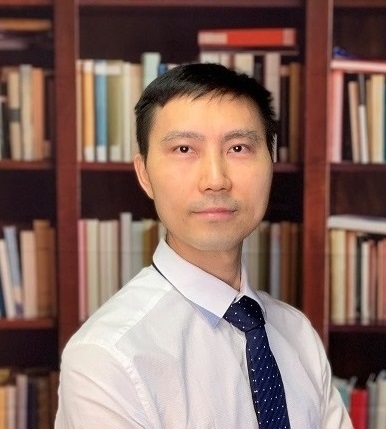
Chao Qian, M.Sc., is a researcher and PhD student at the Department of Embedded Systems, University of Duisburg-Essen, since April 2020. He holds a bachelor's degree in Electrical Engineering from the University of Electronic Science and Technology of China (2015) and a master's degree in Embedded Systems from the University of Duisburg-Essen (2020). His research focuses on enabling artificial intelligence (AI) in reconfigurable hardware like FPGAs for energy-efficient and high-performance embedded systems. He investigates methods to deploy pre-trained neural networks on FPGAs, targeting traditionally resource-constrained embedded systems. Recent publications highlight his work on Configuration-aware FPGA power management Quantized transformers for time-series forecasting Soft sensor design for fluid flow estimation LSTM acceleration on embedded FPGAs In projects like "KI-Sprung: LUTNet" and "Elastic AI", he contributes to adaptive machine learning in pervasive computing. Contact: Email: chao.qian@uni-due.de Phone: +49 203 379 2390 Address: Bismarckstr. 90 (BC), Room BC 104, Duisburg