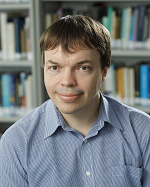
Oliver Lindemann is an Associate Professor at the Erasmus School of Social and Behavioural Sciences, Erasmus University Rotterdam, where he is affiliated with the Brain & Cognition research group. His work bridges cognitive psychology, neuroscience, and experimental methods, focusing on how numerical and symbolic information is embodied in motor and perceptual systems. His research interests include number processing , embodied cognition , spatial-numerical associations , mental number line , grasping , and priming . These topics are central to understanding how humans mentally represent numbers and how these representations interact with motor actions and spatial cognition. The trend in his recent articles reveals a strong focus on empirical validation of cognitive phenomena, particularly through replication studies and open data initiatives. His work combines experimental paradigms with psychophysiological and behavioral measures to explore the grounding of numerical cognition in sensorimotor systems. Collaborative projects, such as the SMARVUS dataset, highlight his engagement with large-scale, multi-center research in psychology. While no formal scientific awards are listed in the provided text, his publications in high-impact journals and participation in major replication efforts suggest recognition within the cognitive science community. He has contributed to research involving student mental health, mathematics anxiety, and open science practices, indicating a broad impact beyond core cognitive research. Oliver Lindemann has co-authored studies with leading researchers in numerical cognition, including Martin Fischer and Hans-Christoph Nuerk, and is involved in collaborative networks across Europe and beyond. His work often involves interdisciplinary teams and contributes to the advancement of methodological rigor in psychological science. He is part of the Brain & Cognition research group, which investigates the neural and cognitive mechanisms underlying human behavior, using behavioral experiments, neuroimaging, and computational modeling. This environment supports his research on the intersection of numerical cognition and motor processes.