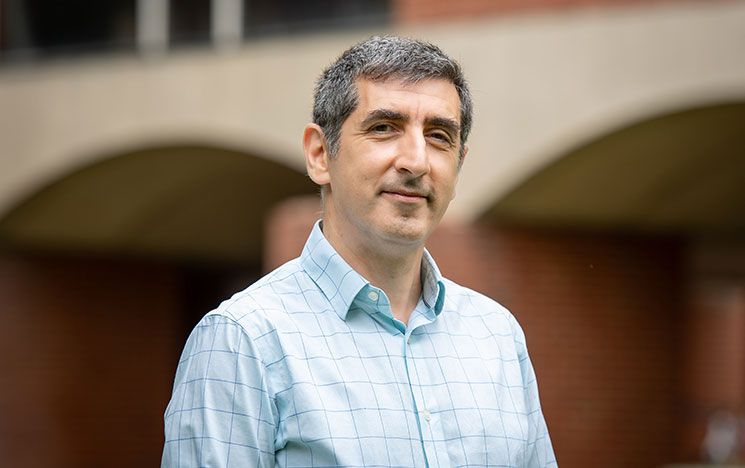
Andrea Dúll is a Professor at the Faculty of Education and Psychology of Eötvös Loránd University (ELTE), serving as Vice Dean and Director of the Institute of People–Environment Transaction . She leads the Environmental Psychology Lab and actively participates in academic governance through roles on the Faculty Council, Awards Committee, and Quality Management Committee. Her academic background includes a Doctor of Science (DSc) degree. Research focuses on environmental psychology, place identity, urban environmental behavior, and the psychological aspects of human-environment interaction. Key areas include pro-environmental behavior, climate change psychology, workplace design, and sustainable education. Notable methodologies include mental mapping, longitudinal studies, and questionnaire development for assessing eco-anxiety and ecological grief. Publications span over 30 years, addressing topics like urban safety perception, pandemic-related digital behavior changes, and the transformation of office spaces. She has conducted large-scale surveys on youth environmentalism and contributed to theoretical frameworks linking nature connectedness to ecological actions. Current activities include directing the Institute, maintaining an active presence on professional platforms , and advising on spatial policy through committees. Her work emphasizes interdisciplinary approaches bridging environmental studies, psychology, and urban planning.
Dr. Ryan P. McMahan is an Associate Professor of Computer Science and Learning Sciences at the University of Central Florida (UCF), leading the eXtended Reality & Training (XRT) Lab. He holds a Ph.D. from Virginia Tech (2011) and has expertise in leveraging XR/VR technologies for training and education. His work emphasizes enhancing learning outcomes through immersive systems, with over $3.4M in secured funding. He is an NSF CAREER Award recipient and authored the textbook 3D User Interfaces: Theory and Practice (2nd Ed.). Education Ph.D. Computer Science, Virginia Tech (2011) M.S. Computer Science, Virginia Tech (2007) B.S. Computer Science, Virginia Tech (2004) Research Interests focus on XR/VR applications in education, human-computer interaction, and training systems. Key areas include interaction fidelity, personalized learning, and embodied cognition in virtual environments. Awards include the NSF CAREER Award and teaching accolades such as UCF’s 2023 Excellence in Graduate Teaching Award. His research has generated 5,000+ citations with a h-index of 26. Professional Engagement includes roles as IEEE TVCG Associate Editor and organizer of ICAT-EGVE 2020. He mentors students in UCF’s Mixed Reality Engineering Graduate Certificate program and advises initiatives like Girls Who Code.
Dr. Mercedes Sheen is an Associate Professor at the Department of Psychology within the School of Social Sciences at Heriot-Watt University. Since joining in 2019, she has served as Academic Head of Psychology in Dubai. She holds a PhD from the University of Canterbury, New Zealand, where her research on false memories led to the coining of 'disputed memories' arising from twin memory conflicts. Her current research focuses on social cognition, particularly facial attractiveness perception influenced by cultural and religious factors like the hijab. Her academic contributions span cognitive psychology, social perception, and educational technology. Notable studies include exploring mental health stigma among Arab and South Asian communities, implicit associations in Arabic numerals, and the effectiveness of online discussion boards in health psychology education. She has been recognized with the 2023 Academic Community Award and Student Voice Award for her impactful teaching and community engagement. Research collaborations include multi-cultural studies on gendered perceptions and typographic influences. Her work intersects with UN Sustainable Development Goals related to quality education and reduced inequalities through culturally responsive mental health and education practices.
Professor Michael Luck is the Deputy Vice-Chancellor and Provost at the University of Sussex, appointed in September 2023. Previously, he served as Founding Director of King's College London’s Institute for Artificial Intelligence and Director of the UKRI Centre for Doctoral Training in Safe and Trusted AI. He has held academic roles including Executive Dean of Natural and Mathematical Sciences at King’s, Head of Informatics at King’s, and Professorships at the University of Southampton and University of Warwick. His expertise spans over 30 years in Artificial Intelligence, with over 300 publications and 12 books. Research interests include multi-agent systems, AI ethics, social dilemmas, and normative systems. He advises AI companies, contributes to government committees (e.g., DCMS, EPSRC), and holds fellowships with the European Association for AI, British Computer Society, and King’s College London. His leadership roles include membership in Sussex’s Executive Team, Council, and Senate. Education and Career: Professor Luck’s academic career includes leadership roles across multiple UK institutions. His research has impacted areas such as adaptive service composition, context-aware systems, and argumentation frameworks. He has pioneered initiatives like the UKRI CDT in AI safety and collaborated on normative systems and AI fairness. Research Contributions: Key areas include multi-agent cooperation, AI explainability, and ethical AI frameworks. His work bridges technical and societal challenges, addressing fairness, transparency, and social dynamics in AI systems. Recent publications focus on resolving social dilemmas, imitation learning datasets, and visual analytics for text classification. Awards and Recognition: His fellowships and advisory roles reflect his influence in AI. He has contributed to policy-making and academic leadership, maintaining a balance between research innovation and institutional governance.
Professor Vincent Wade is a prominent academic and co-founder of the ADAPT SFI Research Centre, holding the Professorial Chair of Computer Science (established 1990) and a Personal Chair in Artificial Intelligence at Trinity College Dublin's School of Computer Science and Statistics. He co-directs the DREAL Centre for Research Training and leads ADAPT, a globally recognized centre for digital media technology and AI research. His work spans intelligent systems, personalisation, machine learning, and ethical AI applications in healthcare and education. Research interests include AI-driven personalisation, multimodal interaction, knowledge graphs, and ethical considerations in digital technologies. He has published over 350 peer-reviewed papers, earned the prestigious Provost Innovation Award (2018), and holds patents in personalisation technologies. He co-founded EmpowerTheUser, a TCD spin-out focused on simulation-based learning analytics. Major Achievements: 2018 Provost Innovation Award (Trinity College Dublin) 2010 European Language Label Award Fellow of Trinity College Dublin Over 350 scientific publications Key Contributions: Developed the ADELE corpus for social conversation analysis Pioneered cross-site personalisation frameworks Advanced adaptive e-learning systems through platforms like Slicepedia and AMASE His research bridges technical innovation with societal impact, addressing challenges in healthcare, education, and digital ethics.
Dr. Maya Aghaei is a Lecturer and Researcher in Computer Vision & Data Science at NHL Stenden University of Applied Sciences, part of the Academy Technology & Innovation. She holds a M.Sc. in Artificial Intelligence and a Ph.D. in Computer Vision from the University of Barcelona. Her academic role includes supervising Minor and Master students while focusing on applying cutting-edge AI techniques to real-world challenges. Prior to her current position, she served as a Postdoctoral Researcher at the Italian Institute of Technology, developing AI solutions for industrial applications. Her research spans Computer Vision, Machine Learning, and General AI with a focus on surveillance systems, autonomous drones, hyper-spectral imaging for environmental analysis, and social signal processing through egocentric data. Notable projects include crime scene classification via trajectory analysis, obstacle detection for BVLOS drones, and psychological trait prediction based on clothing analysis. Dr. Aghaei's work emphasizes real-world applicability, bridging theoretical advancements with practical implementations in industries like agriculture, waste management, and public safety. Her interdisciplinary approach combines technical innovation with societal relevance, addressing challenges from plastic recycling to social distancing compliance through computer vision systems.
Professor Nan Jiang is a Professor and Head of the Department of Computing and Informatics at Bournemouth University (BU), where he has been a faculty member since 2010. He leads research and teaching in Human-Computer Interaction (HCI), digital health, and usability engineering. He co-founded the Bournemouth University Human-Computer Interaction (BUCHI) research group in 2012, contributing significantly to the university’s research excellence in REF 2021. MSc in Advanced Methods, Queen Mary, University of London (2002) PhD in Web Usability, Queen Mary, University of London (2009) His research focuses on data-driven usability evaluation, with recent emphasis on digital health applications, explainable AI (XAI), and accessible technologies. He investigates how user interactions can be optimized for health services on mobile devices, particularly for chronic conditions like multiple sclerosis and mental health. His work bridges technical innovation with user-centered design principles. The 15 most recent publications reflect a strong trend in human-AI interaction, digital health interventions, and accessibility. Key themes include trust calibration in AI systems, co-design of health technologies, and the development of assistive tools using smartphone sensors. His research spans both technical AI modeling and deep user experience evaluation. Active reviewer for top HCI conferences and journals Reviewer for UKRI research councils and SBRI External Examiner at Kingston University and University of East London Member of W3C China Former public expert for W3C HTML Working Group Professor Jiang has secured significant research funding from the European Commission (H2020), ERDF, HEIF, and Innovate UK. He has supervised six PhD students to completion and continues to mentor graduate researchers. He has led major projects such as the FACETS digital toolkit for MS patients and Authentibility Pass for accessible authentication. He also contributes to public engagement through workshops and media appearances on digital addiction and CAPTCHA design. He co-founded and co-chaired the HCI Research Group at BU from 2015 to 2023 and has led initiatives in gamified learning, e-recruitment modeling, and intelligent interfaces. His team, often collaborating with Dr. Huseyin Dogan and Dr. Shamal Faily, focuses on real-world applications of HCI in healthcare, security, and social computing.
Robert M. G. Reinhart is an Associate Professor at Boston University in the Department of Psychological & Brain Sciences and Biomedical Engineering. His primary appointment is in Psychological & Brain Sciences, with affiliations in multiple centers including the Center for Systems Neuroscience and the Cognitive Neuroimaging Center. Dr. Reinhart directs the Cognitive & Clinical Neuroscience Laboratory, focusing on understanding neural mechanisms of cognition in health and disease through electrophysiology, neuromodulation, and computational modeling. His research addresses aging, Alzheimer’s disease, obsessive-compulsive disorder (OCD), and schizophrenia, with a focus on developing nonpharmacological therapies. He received his PhD from Vanderbilt University and joined BU in 2016 without postdoctoral training. Education: PhD in Psychology from Vanderbilt University (2016). Research Interests: Dr. Reinhart investigates causal neural mechanisms of perception and cognition using electrophysiology, tES/TMS, and computational modeling. Key areas include aging-related cognitive decline, neuropsychiatric disorders, and developing precision neuromodulation protocols. His work bridges fundamental neuroscience with clinical applications, emphasizing translational research. Publications: His recent work includes breakthroughs in memory enhancement through neural synchronization (Science, 2022), personalized neuromodulation for OCD (Nature Medicine, 2021), and studies on Alzheimer’s disease (PLOS Biology, 2024). These contributions highlight his focus on translating basic science into clinical tools. Awards: 2022 Science & PINS Prize, 2023 IOCDF Innovator Award, 2024 Early Career Award Grants: Federal/private funding supporting clinical trials in Alzheimer’s and schizophrenia Labs: Cognitive & Clinical Neuroscience Lab (directed by Reinhart), collaborating with BU’s interdisciplinary centers
Vittoria Fallanca is a Leverhulme Early Career Fellow at the University of Warwick, Faculty of Arts, joining in April 2024. Her research bridges literature, philosophy, and visual art, focusing on Renaissance European thought, particularly the concept of 'anterotic' traditions—oppositional forms of love. She previously held a Career Development Fellowship at New College, Oxford, after completing her DPhil in Modern Languages. BA in Philosophy, University of Cambridge MSt in Modern Languages, University of Oxford DPhil in Modern Languages, University of Oxford Her research centers on interdisciplinary approaches to early modern texts, with a strong emphasis on polysemy, verbal and visual play, and comparative methodologies. She explores how concepts like authorial design, emotional asymmetry, and philosophical opposition manifest in literary forms, particularly in the works of Montaigne and Renaissance French writings. Her recent publications trend toward the philosophical dimensions of selfhood, intention, and relational conflict in 16th-century literature. These works collectively examine how ambiguity, resistance, and non-conformity shape literary and philosophical expression in the early modern period. Leverhulme Early Career Fellow She is currently preparing a monograph on Montaigne’s Essais and editing volumes on elemental objects and precarity in early modernity. Though no formal advisees are listed, her editorial and research projects suggest active mentorship and collaboration. She teaches a final-year undergraduate module on Love and Its Opposites in Renaissance France starting in Autumn 2025. Her work is associated with interdisciplinary research groups in Renaissance studies and comparative literature, though specific labs or teams are not named. She maintains a personal academic website for broader public engagement.
Suchi Rajendran is an Assistant Professor with a joint appointment in the Department of Industrial and Systems Engineering and the Department of Marketing at the University of Missouri, Trulaske College of Business. She is also the Director of Undergraduate Studies in ISE and actively leads research in prescriptive analytics, operations research, and data-driven decision-making across healthcare, transportation, and business systems. Education: PhD in Industrial Engineering, Pennsylvania State University Her research focuses on applying advanced analytics to solve complex real-world problems. Key areas include optimizing healthcare delivery systems, supply chain and logistics (notably blood supply chains and port operations), marketing data analytics, and emerging transportation systems such as air taxis and electric vehicle infrastructure. She leverages predictive and prescriptive artificial intelligence to forecast demand and recommend optimal operational strategies. Her recent work, highlighted in university news up to 2025, demonstrates a strong trend toward interdisciplinary, AI-powered solutions in logistics, sustainability, and public service. She frequently collaborates with industry partners like Case New Holland and Schneider Electric, and has secured funding from agencies such as the Alaska Department of Transportation and the National Science Foundation. Scientific Awards and Recognitions: Richard Wallace Faculty Incentive Grant Bob Bloss Faculty Enhancement Grant Winemiller Excellence Award in Data Analytics NSF CHOT Scholar (Penn State) Service Enterprise Engineering Fellow DAAD-WISE Fellowship (Germany) Lean Six Sigma Black Belt Dr. Rajendran is actively involved in mentoring students, having advised honors-winning graduate and undergraduate researchers. She leads an NSF-funded Research Experiences for Undergraduates (REU) program that brings 10 students annually to Mizzou to work on AI-enabled operations engineering. Her grants support hands-on, interdisciplinary research that prepares the next generation of engineers and data scientists. She is affiliated with cutting-edge research initiatives involving simulation modeling, digital communication platforms, and AI integration in industrial systems. Her lab and team focus on developing practical, scalable solutions for logistics, healthcare, and sustainable transportation, often through collaborative, real-world projects with public and private stakeholders.
Hiroshi Shimodaira is a Senior Lecturer in the School of Informatics at The University of Edinburgh, where he has been a faculty member since September 2004. He is affiliated with the Centre for Speech Technology Research (CSTR) and the Institute for Language, Cognition and Computation, contributing to interdisciplinary research in speech and language technologies. His research focuses on lifelike conversational agents with personalities, speech recognition (particularly acoustic models), character recognition, machine learning, and medical-image processing. He is particularly known for his work on anthropomorphic spoken dialogue agents and the development of the Galatea toolkit, an open-source software framework for lifelike conversational agents. His interests also extend to support vector machines and optimization techniques in pattern recognition. The recent publications and projects indicate a strong emphasis on machine learning applied to speech and character recognition, with a trend toward developing intelligent, interactive systems that emulate human conversational behavior. His work bridges theoretical machine learning with practical human-centered applications. Acoustics Society of Japan IEEE Signal Processing Society Japanese Society for Artificial Intelligence (JSAI) IPSJ (Information Processing Society of Japan) Dr. Shimodaira has advised PhD students and led several research initiatives, including the Galatea Project for anthropomorphic dialogue agents and work on handwriting-based communication for the visually impaired. He was previously a co-director of the Intelligent Information Processing Laboratory at JAIST, indicating a sustained record of research leadership. While no specific grants are listed, his project pages suggest involvement in funded research efforts. He leads and contributes to research groups such as CSTR and HCRC, and his lab work focuses on spoken dialogue systems, lifelike agents, and machine learning applications in speech and vision. The Galatea project represents a major software and research output from his team.
Prof. Dr. Christian Römmelt is a Professor of Art and its Didactics at Weingarten University of Education , where he has served since 2024. He also served as a Vertretung Professur (interim professor) at the same institution in 2024 and was an Akademischer Oberrat (Academic Councilor) at LMU Munich until 2024. His career spans roles as a primary school art teacher, researcher, and academic leader, emphasizing the integration of empirical research with art education practice . Current Role: Professor of Art and its Didactics, Weingarten University of Education Previous Roles: Akademischer Oberrat at LMU Munich (2021–2024), lecturer at Universities of Bamberg and Munich (2007–2021) Education: PhD in Art Education (2016, LMU Munich), Magister Artium (2008) Römmelt's research focuses on empirical studies in art education , particularly how aesthetic learning impacts personality and competence development. His work bridges global art education with local practice, emphasizing transculturality and inclusion . He has explored topics like visually representing sustainability , queering art education , and systematic skill development in primary classrooms. His publications include a monograph on empirical animation studies (2017) and co-edited volumes on Global South art education (2025). Recent articles examine: Transnational art curricula (Ghana/Deutschland collaboration) Animated comics for visual storytelling Postcolonial perspectives on African art Gender and identity through visual media Empirical methods in art didactics Römmelt is actively involved in academic societies, including: BDK e.V. (Art Education Association) Deutscher Hochschulverband (German Academic Association) Exploring Visual Cultures (EVC) expert panel He has presented at conferences in Germany, Ghana, and South Africa, addressing themes like crisis and wellbeing in art education and drag-influenced pedagogy . His work emphasizes empirical rigor and practical relevance , aiming to connect art education with broader didactic frameworks.
Hwajung Hong is an Associate Professor in the School of Interactive Computing at Georgia Institute of Technology's College of Computing. With a prolific publication record spanning from 2009 to 2025, Dr. Hong has established herself as a leading researcher at the intersection of Human-Computer Interaction, accessibility, and mental health applications. Her work frequently appears in top-tier venues including CHI, CSCW, and DIS, with growing emphasis on AI/LLM applications in recent years. Dr. Hong's research focuses on designing technology for vulnerable populations, particularly individuals with autism spectrum disorder, mental health challenges, and neurodiverse communities. Her early work centered on social computing applications for autism support, evolving toward more comprehensive systems addressing mental wellness, stress management, and relationship dynamics. Recent publications demonstrate a strategic pivot toward leveraging large language models for healthcare interventions, communication support, and bias mitigation. Analysis of her 15 most recent publications reveals a strong trajectory toward AI-mediated interventions across multiple domains - from mental health support for Korean investigative officers to communication tools for minimally verbal autistic children. Her work consistently emphasizes user-centered design, cultural sensitivity, and practical implementation in real-world contexts rather than purely theoretical approaches. Dr. Hong has mentored numerous graduate students who have become productive researchers in their own right, with Kwangyoung Lee, Dasom Choi, and Hyunseung Lim appearing as frequent collaborators on recent publications. Her research program demonstrates remarkable continuity in addressing human-centered challenges while adapting methodologies to incorporate emerging technologies.
Rodrigo Zamith is an Associate Professor and Chair of the Journalism Department at the University of Massachusetts Amherst. He is also a Faculty Associate of UMass' Computational Social Science Institute and a Faculty Affiliate of its Department of Communication. His work bridges journalism and technology, focusing on the evolving media landscape and digital research methods for social scientists. Dr. Zamith received his academic training from: Ph.D. in Mass Communication from the University of Minnesota M.S. in Mass Communication from Florida International University B.A. in Journalism from the University of Minnesota Rodrigo Zamith's research interests focus on the intersection of journalism and technology, examining how digital platforms and algorithms reshape news production and consumption. His work explores news innovation, emerging media technologies, data-driven news work, algorithms in journalism, and computational social science. He investigates how journalistic practices are reconfigured in digital environments and develops innovative digital research methods for studying media phenomena. His scholarship draws on theoretical frameworks from sociology, psychology, science & technology studies, and economics, employing both quantitative and qualitative methodologies. His recent publications demonstrate a clear trajectory examining the role of algorithms, data, and digital platforms in journalism. His work spans computational analyses of news recommendation systems, examinations of open-source infrastructure in newsrooms, studies of visual climate change communication on social media, and investigations into how journalists navigate audience metrics. His research reveals both the challenges and opportunities presented by technological change in journalism, with particular attention to issues of transparency, trust, and democratic implications. Dr. Zamith has received significant recognition for his scholarly contributions: Nafziger-White-Salwen Dissertation Award (best dissertation in mass communication) Finalist for the Gene Burd Dissertation Award Finalist for Digital Journalism's Article of the Year award Lilly Teaching Fellow FlexLearning Fellow Recipient of UMass' College Outstanding Teaching Award Finalist for the University's Distinguished Teaching Award As an educator, Dr. Zamith teaches both conceptually-oriented and skills-oriented courses including Data-Driven Storytelling, Introduction to Journalism, International Journalism, Content Analysis, and Introduction to Visual Storytelling. His teaching excellence has been recognized through multiple awards. While specific grant information isn't detailed in the provided text, his research output suggests active engagement with funding opportunities in computational social science and digital journalism. Dr. Zamith is affiliated with UMass' Computational Social Science Institute, where he contributes to interdisciplinary research on digital methods. His work with GitHub repositories suggests engagement with open-source communities, and his research on newsroom technology indicates connections with media organizations exploring digital innovation.
Dr. Diya Gupta is a Senior Lecturer in Public History at City St George's, University of London , where she explores intersections between visual culture, life-writing, and literature during wartime. Educated at Jadavpur University, University of Cambridge, and King’s College London, she previously held the Past & Present Postdoctoral Fellow: Race, Ethnicity and Equality in History at the Royal Historical Society and Institute of Historical Research (2020–2022), followed by a Postdoctoral Visiting Research Fellowship at the School of Advanced Study (2019–2020). Her first monograph, India in the Second World War: An Emotional History (2023), examines undivided India's emotional responses to WWII through letters, memoirs, and colonial photographs, shortlisted for the Royal Historical Society's 2024 Gladstone Prize. Her current project investigates wartime violence targeting colonized civilians, focusing on the 1943 Bengal Famine as a lens for understanding modern food inequalities. Dr. Gupta's recent publications span literary and visual analyses of WWII-era food deprivation, colonial photography, and marginalized narratives in academic and public history. She contributes to BBC Radio 4 programs, BBC dramas, and WWII computer games, and co-convenes the Teaching Empire and War workshop series. Her scientific awards include a HEA Fellowship and Fellowship of the Royal Historical Society (FRHistS). She supervises AHRC-funded PhD research with the Imperial War Museums and has secured grants from HEIF and Clore Leadership.