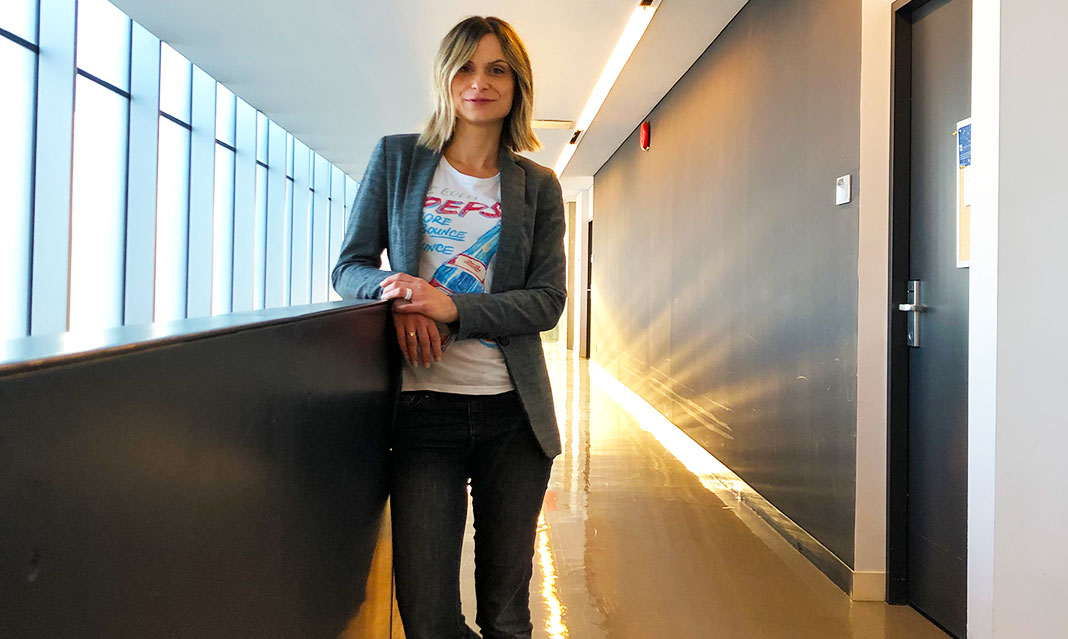
Stephen Glasgowمشاهده پروفایل
استادیار
Dr. Stephen Glasgow is an Assistant Professor in Biological Sciences at Brock University's Faculty of Mathematics and Science, where he leads a research laboratory focused on synaptic plasticity and memory consolidation. He holds a PhD in Psychology from Concordia University (2011), an MA from the same institution (2006), and a BA from the University of Calgary (2003). His professional experience includes postdoctoral work at the Montreal Neurological Institute (McGill University) and research scientist roles in neurotherapeutics. Research interests center on molecular mechanisms of memory, including guidance cue functions in synaptic plasticity, neuromodulation of neural circuits, spatial memory formation, and REM sleep's role in memory consolidation. His laboratory employs techniques spanning optogenetics, in vivo electrophysiology, live-cell imaging, and behavioral analysis to investigate hippocampal function and neural circuit dynamics. The Glasgow Lab maintains active research on three interconnected themes: 1) Roles of guidance cues (netrin-1/DCC) in adult synaptic plasticity, 2) Neuromodulation of excitatory synapses, and 3) Spatial memory consolidation mechanisms. Recent publications demonstrate acetylcholine-netrin synergy in entorhinal persistent firing and DCC-dependent hippocampal memory processes. Canadian Institute for Health Research Fellowship (2014-2016) FRQS Postdoctoral Award (2014-2015, 2012-2014) CPA Outstanding Doctoral Thesis Award (2011) NSERC Postgraduate Scholarship (2008-2010) FQRNT Doctoral Award (2008) CPA Outstanding Master’s Thesis Award (2007) NSERC-USRA (2003) Dr. Glasgow currently advises MSc students Emily Kacur and Harshit Thakare, with recent alumni including Zoe Gagnon (MSc). The lab supports undergraduate researchers through honors projects and NSERC USRA opportunities. Grant support includes funding from CIHR, FRQS, and NSERC. The Glasgow Laboratory is located in the Mackenzie Chown Complex at Brock University, equipped for electrophysiology, cellular imaging, and behavioral analysis. Collaborative networks extend to McGill University, Montreal Neurological Institute, and international partners.