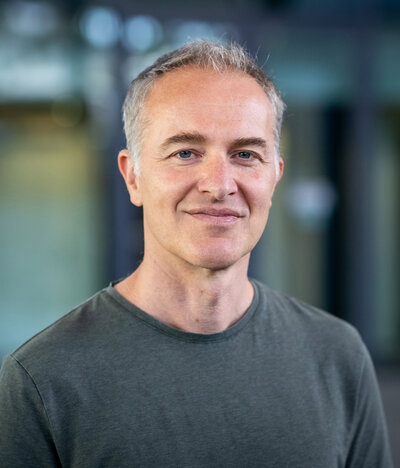
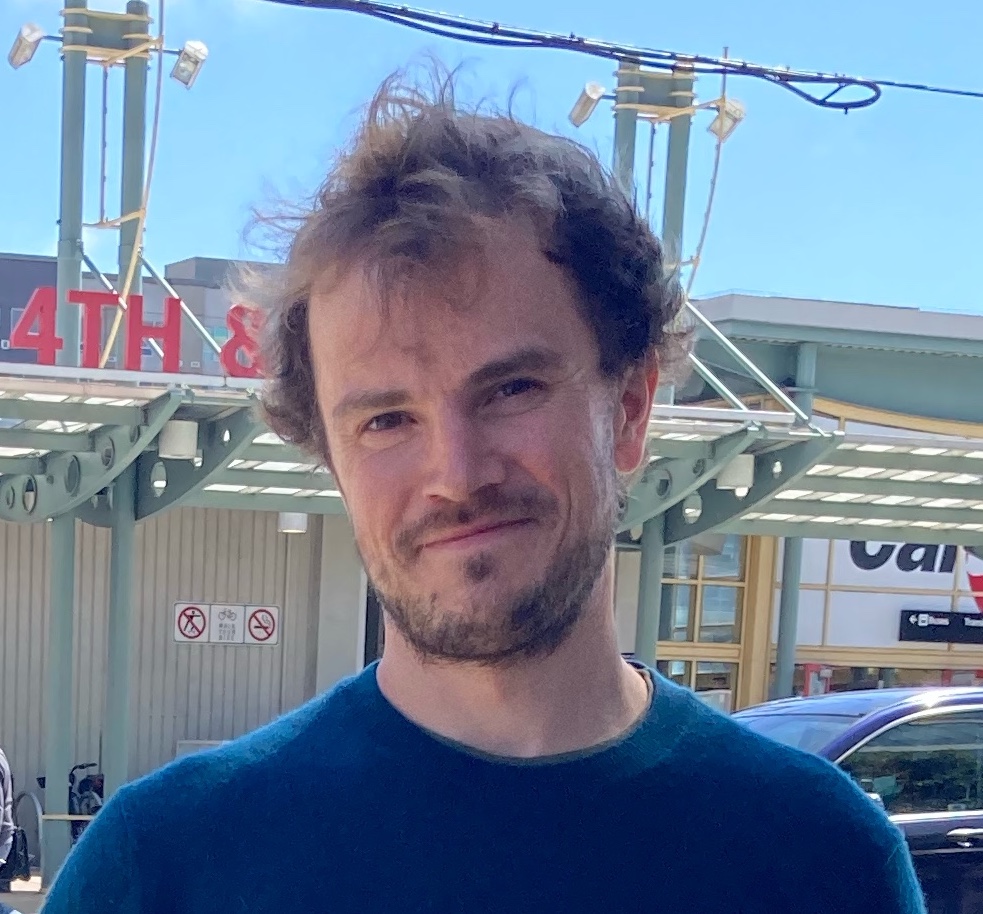
Lourens Waldorp is an Associate Professor at the University of Amsterdam within the Faculty of Social and Behavioural Sciences , specifically the Department of Psychological Methods . His research focuses on network theory, causal inference, and statistical modeling in psychology and neuroscience. University of Amsterdam IAS Fellow (2024) His research interests include: Network psychometrics Causal inference in psychological models High-dimensional statistical methods Dynamical systems in psychopathology Graph theory applications Signal processing for biophysical data The trends in his recent publications center on causal modeling, network analysis of psychopathology, and statistical techniques for time-series data. He has developed methods for perturbation graphs, moderated network models, and dynamic intervention frameworks. Notable scientific awards : IAS Fellowship for 6 months (2024) He advises PhD students like Kyra Evers and collaborates with researchers across disciplines, including J. Haslbeck , D. Borsboom , and O. Ryan . His work intersects with network theory and clinical psychology .
Prof. Tobias Müller is a Professor at the Bernoulli Institute for Mathematics, Computer Science and Artificial Intelligence at the University of Groningen. His academic journey includes previous positions at Utrecht University, CWI (Centrum Wiskunde & Informatica), Tel Aviv University, and Eindhoven University of Technology, with a doctorate from the University of Oxford under Colin McDiarmid. His research focuses on combinatorics, probability theory, random graphs, percolation, discrete and stochastic geometry, and combinatorial game theory. He has contributed extensively to understanding complex networks, hyperbolic models, and geometric random structures. Research Interests: Random Graphs and Percolation Theory Discrete and Stochastic Geometry Hyperbolic Network Models Probabilistic Combinatorics Geometric Probability Graph Algorithms and Connectivity Notable Contributions: Analysis of Voronoi and Poisson-Voronoi percolation in hyperbolic planes. Studies on Mallows random permutations and their cycle structures. Research on component games and logical limit laws in graph theory. Investigations into the geometry and properties of random geometric graphs. Grants & Collaborations: Active in organizing workshops and conferences on random graphs and geometric networks, including the BIRS Workshop on Random Geometric Graphs and the STAR Workshops series. Labs/Teams: Member of the Bernoulli Institute’s research groups, focusing on stochastic studies, combinatorics, and algorithmic methods.
Tom Verhoeff is an Assistant Professor at the Faculty of Mathematics and Computing Science of Eindhoven University of Technology (TU/e) , working within the Software Engineering & Technology group. His research focuses on Model-Driven Engineering (MDE) , Domain-Specific Languages (DSLs) , and the intersection of mathematics, computing, and the arts . He teaches courses in data analytics, programming, algorithms, theoretical computer science , and logic . Verhoeff earned both his MSc and PhD in Technical Science (Mathematics and Computer Science) from TU/e. He is actively involved in promoting mathematics and informatics through initiatives like the annual Bridges conference , and serves as board member and treasurer of the Dutch Mathematics Olympiad , as well as chair of the Koos Verhoeff MathArt foundation . He has also held roles as guest lecturer in Lithuania and Finals Director for the ACM International Collegiate Programming Contest . Research Interests: Verhoeff’s work spans Model-Driven Engineering , domain-specific language development , and 3D geometric modeling . His scholarship often explores symmetry, recursion, and mathematical visualization , particularly through computational art and algorithmic puzzles . Recent publications highlight 3D rotation methods , knot theory , and mathematical art using lattice paths and geometric transformations . Scientific Awards: ACM ICPC European Founders Award (2004) IOI Distinguished Service Award (2007) Second Place in the 2022 Wolfram Computational Art Contest Notable Collaborations and Affiliations: He is affiliated with the Esprit Working Group on Asynchronous Circuit Design (ACiD-WG) , WIRE (TUE Mathematics Alumni) , ACM (Senior Member) , CSTA , IEEE Computer Society , and Royal Dutch Mathematical Society (KWG) .
Dirk Thierens is an Associate Professor in the Department of Computer Science at Utrecht University's Faculty of Science, specializing in Intelligent Systems within AI & Data Science. His academic career spans over 25 years, with continuous publications from 1996 through 2025, demonstrating sustained research activity and leadership in his field. He maintains an active research program with numerous collaborations, most notably with Peter A.N. Bosman, indicating a long-standing productive research partnership. Thierens' research focuses on evolutionary computation, particularly model-based evolutionary algorithms, genetic algorithms, and optimization techniques. His work has evolved from foundational genetic algorithm research in the late 1990s and early 2000s to more specialized model-based approaches in recent years, including significant contributions to Gene-pool Optimal Mixing Evolutionary Algorithms (GOMEA). His expertise spans single-objective and multi-objective optimization, permutation problems, mixed-integer problems, and real-valued optimization. In recent years, his research has expanded into applications in machine learning, particularly semi-supervised learning and neural network optimization. His publication record shows a consistent output of high-quality research, with numerous papers in top conferences like GECCO and journals in evolutionary computation. His most recent work (2023-2025) demonstrates continued innovation in synthetic data generation, neural network combination techniques, and parameterless evolutionary algorithms. The breadth of his work spans theoretical algorithm development, benchmarking methodologies, and practical applications in healthcare and other domains. While no specific scientific awards are mentioned in the available information, his extensive publication record, tutorial contributions at major conferences, and sustained research productivity over multiple decades indicate recognition within the evolutionary computation community. His tutorial work at GECCO conferences suggests he is considered an authority on model-based evolutionary algorithms. Thierens maintains an active research laboratory focused on evolutionary algorithms and their applications, with recent work exploring the intersection of evolutionary computation and deep learning. His research continues to advance both theoretical understanding and practical applications of optimization techniques in complex problem domains.
Gaurav Rattan is an Assistant Professor in the Department of Applied Mathematics at the University of Twente's Faculty of Electrical Engineering, Mathematics and Computer Science (EEMCS), where he joined in May 2024. His research focuses on the mathematical foundations of machine learning on graphs and discrete structures, with particular emphasis on theoretical aspects of graph neural networks. University of Twente, Department of Applied Mathematics (May 2024-present) TU Darmstadt, Postdoctoral Researcher in Pascal Schweitzer's group RWTH Aachen, DFG Eigene Stelle Researcher in Martin Grohe's group Dr. Rattan completed his PhD at IMSc Chennai under V. Arvind and earned his B. Tech. from IIT Bombay, establishing a strong foundation in theoretical computer science and mathematics. His research spans graph theory, algorithms, and machine learning on graphs, with specific expertise in graph isomorphism, graph homomorphisms, and the theoretical underpinnings of graph neural networks. He applies mathematical techniques from logic and algebra to develop theory-driven approaches for graph learning systems, with practical applications in optimization, bioinformatics, and databases. Dr. Rattan's publication record reveals a consistent focus on the intersection of theoretical computer science and machine learning. His recent work explores Weisfeiler-Leman algorithms, symmetry breaking techniques, and parameterized complexity of graph problems, demonstrating how classical graph algorithms connect with modern graph learning methodologies. His research provides crucial theoretical foundations for understanding the capabilities and limitations of graph neural networks. Active in the academic community, Dr. Rattan regularly presents at conferences including the Netherlands Mathematical Congress, SIGAlgo, LOGAMS, and specialized workshops on graph learning. Recent presentations include "From Graph Homomorphisms Densities to Graph Learning" at the Graph Learning Workshop at NITMB Chicago and "Color Refinement: One Algorithm, Many Facets" at SIGAlgo 2024.
Rudi Pendavingh is an Assistant Professor at the Department of Mathematics and Computer Science at Eindhoven University of Technology. Affiliated since 1999, he specializes in matroid theory , combinatorics , and topological graph theory within the Combinatorial Optimization group. Research Interests include: Matroid theory with focus on excluded minors and representability over partial fields Topological graph theory, particularly Colin de Verdière invariants for surface-embedded graphs Discrete optimization modeling and algorithmic complexity Geometric combinatorics in polyhedral complexes like Dressians Recent Publications highlight his work on: Stable tournament formats using finite projective planes (2025) Bounding topological graph parameters via combinatorial methods (2024) Computational enumeration of matroid minors (2024) Asymptotic analysis of Dressian dimensions (2024) Contact : Email: r.a.pendavingh@tue.nl Phone: +31 40 247 4235 Office: MetaForum 4.105, TU/e Campus
Dr. Nick Koning is an Assistant Professor at the Erasmus School of Economics within the Department of Econometrics at Erasmus University Rotterdam. His research focuses on statistical methodologies with a strong emphasis on permutation tests and group invariance principles. He maintains an ORCID profile: 0000-0002-3784-4480 . His research interests span statistical hypothesis testing , computational efficiency , and applications in econometrics . Key areas include optimizing permutation-based tests, addressing challenges in group invariance testing, and advancing real-time evaluation frameworks. He explores confidence interval estimation, multiple testing validity, and the integration of statistical rigor with practical computational constraints. Recent publications (2021–2025) reflect his contributions to statistical inference, particularly in reducing computational costs for permutation tests and developing anytime-valid testing strategies. His work bridges theoretical statistics with applied econometric challenges, such as risk-averse stochastic programming and high-dimensional data analysis. No scientific awards or specific grants are mentioned in the provided information. While he advises students in econometrics and statistics, no formal advisee names are listed. Collaborations involve international networks, though specific countries/affiliations remain unspecified.
Prof. Dr. Jörg Henseler is Full Professor and Chair of Product–Market Relations at the Department of Design, Production and Management, Faculty of Engineering Technology, University of Twente, Netherlands. He also holds visiting positions at NOVA Information Management School, Universidade Nova de Lisboa, Portugal, and as Distinguished Invited Professor at the University of Seville, Spain. University: University of Twente School: Faculty of Engineering Technology Department: Department of Design, Production and Management Chair: Product–Market Relations Visiting Professor: NOVA Information Management School, Portugal Distinguished Invited Professor: University of Seville, Spain His research focuses on composite-based structural equation modeling (SEM) , particularly partial least squares (PLS) path modeling , emergent variables , and methodological innovations in empirical research. He bridges design and behavioral sciences through advanced statistical modeling, with applications in marketing, management, and information systems. His recent publications emphasize methodological rigor in PLS-SEM, including consistent PLS (PLSc) , confirmatory composite analysis (CCA) , HTMT for discriminant validity , and second-order modeling . These works highlight trends toward improved model assessment, validity testing, and theoretical integration in composite-based approaches. Highly Cited Researcher by Clarivate/Web of Science Ranked among the top 100 most influential researchers in the Stanford/Elsevier Top 2% Scientists List 2024 Repeated 'Teacher of the Year' award recipient Prof. Henseler contributes extensively to the scientific community as a reviewer, editorial board member, and guest editor. He chairs the scientific advisory board for the ADANCO software and organizes the PLS School , offering seminars on PLS path modeling. He has authored over 130 journal articles and the authoritative book Composite-Based Structural Equation Modeling . His work supports researchers in applying robust, theory-driven methods in empirical studies. He leads methodological innovation in composite-based modeling, with strong ties to software development and global academic outreach. His research group and collaborations focus on advancing SEM techniques for complex, real-world applications in business and engineering contexts.
Silvia Mella is an Assistant Professor in the Digital Security (DiS) group at Radboud University, Netherlands, and a member of the Cryptographic Engineering & Side-Channel Analysis (CESCA) Lab. Her research focuses on cryptographic hardware for embedded devices, including secure implementations of cryptographic algorithms and analysis of side-channel and fault attacks. She holds a PhD from the University of Milan (2018) and previously worked at STMicroelectronics (2015–2022), developing hardware accelerators for public-key cryptography. She has supervised numerous PhD and Master’s students, co-authored over 30 publications, and contributed to cryptographic standards like ASCON and Xoodoo. Her work emphasizes bridging theoretical cryptography with practical hardware security solutions. Education: Bachelor and M.Sc. in Mathematics, University of Milan, Italy PhD in Cryptography (2018), University of Milan, Italy Research Interests: Design/analysis of symmetric cryptographic schemes Hardware implementation security Side-channel and fault attack countermeasures Post-quantum cryptography Lightweight cryptographic primitives Recent Research Trends: Recent work focuses on novel code-based cryptographic constructions (ChiLow/ChiChi), low-latency pseudorandom functions (Koala), and SCA-resistant implementations of algorithms like Xoodoo and Xoodyak. Her research bridges theoretical cryptographic analysis with practical hardware vulnerabilities, often leveraging machine learning techniques for attack detection. Advising & Collaboration: Co-supervised 10+ PhD/Master students on topics like cryptographic permutations and post-quantum schemes Active in industry-academia collaborations through STMicroelectronics and PROACT projects Involved in open-source cryptographic library development Labs & Teams: Leading research in the CESCA Lab at Radboud University, focusing on cryptographic engineering and embedded system security. Collaborates with the Politecnico di Milano and STMicroelectronics on hardware security projects.
James Townsend, also known as Jamie, is a machine learning researcher at the Amsterdam Machine Learning Lab (AMLab) within the Informatics Institute at the University of Amsterdam. He completed his PhD in 2020 at the UCL AI Centre in London under the supervision of Professor David Barber. His educational background includes a PhD in lossless compression with latent variable models from University College London, with prior research contributions to the Autograd library and early development of JAX during a Google Brain internship in 2018. Townsend's research centers on deep generative models and lossless compression, extending to unsupervised learning, approximate inference, Monte Carlo methods, optimization, and machine learning software systems. His work bridges theoretical information theory with practical implementation, particularly in neural compression techniques. He has significantly contributed to open-source tools including Autograd and JAX, demonstrating expertise in automatic differentiation systems. His publication record spans high-impact venues like NeurIPS, ICLR, and ICML, with recent work focusing on innovative compression paradigms for complex data structures including graphs and multisets. Key contributions include shuffle coding, reversible programming for compression verification, and multiset compression techniques that challenge conventional approaches. Scientific recognition includes: Best Paper Award at Deep Generative Models and Downstream Applications Workshop (2021) Townsend actively participates in the research community through invited talks at Stanford's Information Theory Forum and the Languages for Inference workshop. His collaborations span academic institutions and industry partners like Google Brain, with current work centered on advancing lossless compression through deep learning at the AMLab. He maintains an active open-source presence via GitHub (@j-towns) and technical discourse on Twitter (@_j_towns), while publishing through Google Scholar under his formal name James Townsend.
Rui Pires da Silva Castro is an Associate Professor in the Department of Mathematics and Computer Science at Eindhoven University of Technology (TU/e), with research spanning signal processing, learning theory, and statistics. He is affiliated with EAISI (Eindhoven Artificial Intelligence Systems Institute) and focuses on non-parametric and high-dimensional statistics, statistical signal/image processing, network inference, and pattern recognition.
Dr. Alison Hsiang-Hsuan Liu is an Assistant Professor at the Faculty of Science, Utrecht University, specializing in the Algorithms and Complexity group within the Department of Information and Computing Sciences. Her research focuses on combinatorial optimization problems, particularly designing online and approximation algorithms for network design, resource allocation, scheduling, and graph coloring. She actively supervises graduate students and collaborates on algorithmic research in special graph classes. Email: h.h.liu@uu.nl Liu's research emphasizes potential functions and accounting methods for algorithm analysis, with a strong interest in non-determinism as a theoretical framework. Her work spans both fundamental algorithm design and applied problems in smart grids and energy-aware scheduling systems. Recent publications highlight advancements in scheduling with untrusted predictions, amortized recourse for online graph problems, and combinatorial optimization in smart grid models. These works have appeared at prestigious venues like SOFSEM, MFCS, WAOA, and journals including Theory of Computing Systems and Algorithmica. She supervises graduate students including: Bob Krekelberg Rick van de Bovenkamp Xiao-Ou Zhang Jonathan Toole-Charignon Liu has delivered invited speeches at institutions such as NYCU School of Law, University of Liverpool, and Academia Sinica, covering topics like AI-assisted decision making, online algorithms with predictions, and optimization under uncertainty.
Dr. Charlie Carroll is an Assistant Professor at the University of Groningen's Faculty of Economics and Business, specifically within the Innovation management & Strategy — Management department. He holds dual citizenship of the USA and the Netherlands. His research focuses on strategic management, innovation & technology management, and interdisciplinary social sciences. Notable contributions include studies on strategic groups, clustering methodologies, and business strategy frameworks. Carroll earned his Ph.D. in Business Policy & Strategy from the University of Illinois at Urbana-Champaign (UIUC) in 1995, with earlier academic distinctions including a Psychology Honors Award from SUNY Potsdam in 1983. He has held academic roles since 1983, including post-doctoral research at the University of Groningen from 1994 and his current position since 1996. His teaching responsibilities include courses like Strategic Management B&M, Innovation Management in Multinationals, and Bachelor’s Thesis supervision. He has also coordinated specialized programs such as the Strategisch Management PDCO (Executive Master of Finance & Control). Carroll's awards include the Investors in Business Education Doctoral Fellowship (1991) and recognition for teaching excellence. His research emphasizes methodological rigor in analyzing strategic group clustering and industry dynamics, with publications in journals like the Journal of Strategy and Management and Journal of Management Studies . He is involved in research teams focusing on business strategy and innovation, contributing to interdisciplinary projects at the intersection of management and social sciences.
Jesse Hemerik is an Assistant Professor at the Department of Econometrics within the Erasmus School of Economics at Erasmus University Rotterdam. His research focuses on statistical methodology, particularly in permutation tests, multiple testing procedures, and robust inference in generalized linear models. He has contributed to advancements in controlling false discovery rates, familywise error rates, and efficient statistical testing in high-dimensional data contexts. Hemerik's work emphasizes methodological rigor and practical applications in biostatistics, neuroimaging, and clinical research. He has developed R packages like flipscores to implement his proposed statistical methods. His collaborations span international researchers in statistics and computational biology, addressing challenges in data analysis and experimental design. His research interests include permutation-based inference, robust statistical testing, and algorithm development for handling complex datasets. He has published extensively on topics such as closed testing procedures, nonparametric methods, and the integration of statistical theory with applied problems. His contributions have been featured in journals like the Journal of the Royal Statistical Society and International Statistical Review. Hemerik’s recent work explores improving false discovery proportion estimation through permutation methods and refining methodologies for multiple equivalence testing. He actively engages in methodological debates regarding significance thresholds and the proper use of terminology in statistical testing frameworks. His research bridges theoretical advancements with practical tools, ensuring broader accessibility to cutting-edge statistical techniques.
Ivo V. Stoepker is a University Researcher at the Department of Statistics within the Mathematics and Computer Science school at Eindhoven University of Technology (TU/e). His work focuses on anomaly detection, blockchain analytics, and statistical methods in disease surveillance. Email: i.v.stoepker@tue.nl Research Interests: Statistics and probability theory Anomaly detection in high-dimensional data Bitcoin transaction analysis and blockchain modeling Monte Carlo methods and permutation-based testing Epidemiological surveillance systems Recent Publications: 2025 work on sparse anomaly detection frameworks, 2024 contributions to Bitcoin transaction efficiency and multi-stream anomaly detection, and interdisciplinary research in AI-supported disease outbreak detection.