Dr. HAJNAL Géza is an Associate Professor at the Budapest University of Technology and Economics (BME), Faculty of Civil Engineering, where he serves in the Department of Hydraulic and Water Resources Engineering. His office is located in Room K. ép / mf. 12/7, and he can be contacted via email at hajnal.geza@emk.bme.hu or phone at +36 1 463 2362. His teaching portfolio includes active courses such as Hydraulic Engineering, Water Management (BMEEOVVAT43) and Hydrometric Field Course (BMEEOVVAI44). Previously, he taught Hidrogeology (BMEEOGMMET3) and Hydrogeology of Subsurface Water (BMEEOGMDT81). HAJNAL's research specializes in hydrogeology , with emphases on karst aquifer dynamics, groundwater flow modeling, climate impacts on hydrology, and hydraulic engineering. His work integrates field measurements (e.g., drip-water monitoring in Buda Castle Cave) with advanced numerical modeling to address complex hydrological challenges in Hungarian watersheds. Analysis of his 15 most recent publications (2013–2025) reveals dominant themes: 73% focus on karst/fractured aquifers , 20% on hydrological modeling techniques , and 7% on socio-environmental conflicts. Recurrent technical subfields include seepage flow validation, transmissivity determination, and rainfall-runoff sensitivity. No scientific awards, grants, student advisees, or lab affiliations are documented in the provided materials.
David N. Ku is the Lawrence P. Huang Endowed Chair for Engineering Entrepreneurship and Regents' Professor at Georgia Institute of Technology. He holds appointments in the School of Mechanical Engineering (Woodruff School) within the College of Engineering. His research focuses on biofluid mechanics, medical device innovation, and translational technology, with emphasis on thrombosis mechanisms and vascular diseases. Education: M.D. from Emory University (1984); Ph.D. and M.S. from Georgia Tech (1983, 1982); B.A. from Harvard University (1978). Research interests include unsteady fluid dynamics in vascular systems, nanoparticle medical devices for thrombosis prevention, and porous thrombus applications for hemostasis. His work bridges bioengineering with entrepreneurship, teaching product development at the Business School and collaborating with Emory University, Paris Tech-Mines, and ETH Zurich. Key awards include the American Institute for Medical and Biological Engineering Fellowship, DLA Piper Inventor of the Year, and NSF Presidential Young Investigator Award. His research is funded by NIH, NSF, and industry partners. Labs/Teams: Leads a lab using microfluidics and computational mechanics for vascular disease solutions. Collaborates on technologies to address post-partum hemorrhage and traumatic bleeding.
Caitriona M. O'Driscoll is Professor and Chair of Pharmaceutics at University College Cork's School of Pharmacy, Ireland. With over four decades of academic experience, she previously served as Head of the School of Pharmacy at UCC from 2003-2009 and 2010-2013. Her established drug delivery research team spans from pre-formulation through to production and manufacture of prototype delivery systems suitable for clinical trial, with strong industry links underpinning many research projects. Her research interests focus on translational drug delivery with emphasis on 'problem' drugs including poorly water soluble compounds and biopharmaceuticals like peptide/protein drugs, plasma DNA and siRNA. She develops nano-sized delivery constructs that are robust enough to survive processing, stable on storage, and achieve cell/site specific delivery in vivo. Greater than 40% of new chemical entities are poorly water soluble Biopharmaceuticals now approach 50% of all new drugs in development Major barrier is design of efficient delivery systems Special focus on oral drug delivery despite challenges Analysis of her recent publications reveals a strong emphasis on targeted nanodelivery systems for cancer therapy, particularly prostate and colorectal cancer, as well as neurodegenerative diseases like Huntington's. Her work demonstrates expertise in cyclodextrin-based nanoparticles, siRNA delivery, and disease-specific formulations that account for conditions like Crohn's disease that affect drug delivery. Scientific awards include: 'Person of the Year award' by Parenteral Drug Association (Ireland Chapter) in 2013 'Award for Professional Excellence' by Helix Health in 2007/2008 'Award for Pharmacist of the Year' by Helix Health in 2007/2008 With €10.5M in career research income and 25 PhDs graduated, Professor O'Driscoll's work has attracted funding from diverse sources including Science Foundation Ireland, Enterprise Ireland, and industry partners. Her research group maintains strong links with Pharmaceutical Chemistry and Process & Chemical Engineering at UCC, creating a unique strength for drug development research from design through to clinical trial. She has served as external examiner for multiple universities and as PhD thesis examiner at institutions worldwide. Her research team operates within UCC's drug delivery group, which has established expertise spanning from pre-formulation through to production and manufacture of prototype delivery systems. The group maintains strong industry connections and offers various PhD positions, focusing particularly on translational research with product-driven applications.
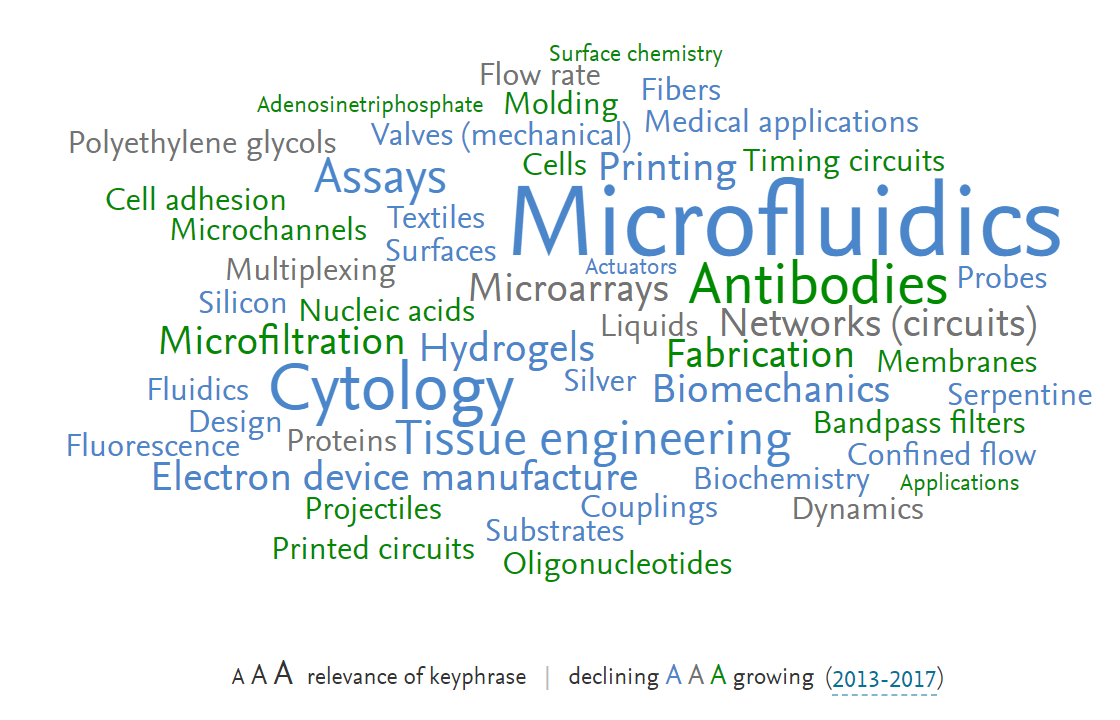
David Juncker is a Professor and Department Chair of the Department of Biomedical Engineering at McGill University. He serves as a Principal Investigator at the McGill University & Genome Quebec Innovation Centre and holds associate memberships in the Department of Neurology and Neurosurgery, Department of Electrical and Computer Engineering, Division of Experimental Medicine, Department of Surgery, and Goodman Cancer Research Centre. His research focuses on micro- and nano-bioengineering technologies for bioanalysis, precision medicine, and organs-on-chips. Key areas include microfluidics, lab-on-a-chip devices, biomedical sensors, medical diagnostics, biomaterials, tissue engineering, and cancer biomarker discovery. His lab develops scalable antibody microarrays, self-powered diagnostic platforms, microfluidic probes for brain tissue perfusion, and nanogradients for neuronal navigation, with applications in cancer diagnostics, global health, and neuroscience. Recent publications (2023-2025) reveal strong emphasis on extracellular vesicle analysis, single-cell proteomics, 3D-printed microfluidic/organ-on-a-chip systems, and capillary-driven circuits. Key trends include low-cost point-of-care diagnostics, advanced circulating tumor cell isolation methods, and biomimetic synthetic vesicles for drug delivery, demonstrating translational potential in early disease detection. Dr. Juncker leads a highly interdisciplinary team comprising undergraduate and graduate students, post-doctoral fellows, and staff from diverse scientific, engineering, and cultural backgrounds. His lab actively recruits Canadian/permanent resident graduate students for projects on single extracellular vesicle and protein detection in cancer and infectious diseases, leveraging microfluidics and wearables for biomarker discovery. The Juncker Lab operates from the McGill University & Genome Quebec Innovation Centre (740 Dr. Penfield Avenue, Room 6206). It maintains a collaborative, multicultural environment focused on developing transformative micro- and nano-bioengineering technologies with significant potential impact on human health diagnostics and treatment.
Teng-Fong Wong is a Research Professor in the Department of Geosciences at Stony Brook University, where he has been a faculty member since 1982. His research focuses on the intersection of rock mechanics, earthquake processes, and environmental applications, making significant contributions to understanding deformation mechanisms in geological materials. Education: Sc.B., Brown University, 1973 M.S., Harvard University, 1976 Ph.D., Massachusetts Institute of Technology, 1981 Research Interests: Professor Wong's research centers on rock mechanics with emphasis on earthquake mechanics, energy resources, and environmental applications. He investigates both phenomenological and micromechanical aspects of rock deformation and fluid flow using an integrated approach combining high-pressure deformation experiments, quantitative microstructure characterization, and theoretical analysis. His work spans brittle-ductile transitions in porous rocks, permeability evolution, strength properties of fault zone materials from SAFOD and TCDP drilling projects, and submarine groundwater discharge systems. Publication Trends: Wong's recent publications (2006-2008) demonstrate a consistent focus on strain localization mechanisms in porous rocks, particularly examining compaction bands and deformation bands in sandstones. His work integrates advanced imaging techniques (X-ray radiography, CT scanning) with mechanical testing to understand the micromechanics of rock failure. A significant thread connects his research on fault zone properties from major drilling projects (SAFOD, TCDP) with fundamental rock deformation processes. Scientific Recognition: U.S. Patent 6,874,371 for Ultrasonic Seepage Meter (2005) U.S. Patent 7,107,859 for Ultrasonic Seepage Meter (2006) Co-author of "Experimental Rock Deformation - The Brittle Field" (2nd Edition, Springer-Verlag, 2005) Professional Activities: Professor Wong maintains an active international research profile with numerous visiting appointments including at Australian National University, MIT, ETH Zurich, and institutions in China and France. His work involves extensive collaboration with USGS and international research teams on major fault zone drilling projects. He has developed specialized equipment like the ultrasonic seepage meter for measuring submarine groundwater discharge. Research Infrastructure: Wong's laboratory utilizes advanced capabilities including high-pressure deformation equipment, 3D visualization through laser scanning confocal microscopy and synchrotron microCT, and integrates these with analytic modeling and numerical simulation techniques (finite element and discrete element methods) to investigate micromechanics of dilatant and compactant failure in geological materials.
Dr. FARKAS Dávid is an Assistant Professor in the Department of Hydraulic and Water Resources Engineering, Faculty of Civil Engineering, Budapest University of Technology and Economics (BME). His office is located in Building K, basement level, room 12/7, and he holds weekly consultation hours on Mondays from 1–3 pm. Educational contributions include teaching core courses in hydrogeology and groundwater engineering: Groundwater (BMEEOVVMV63) Hydrogeology (BMEEOGMMG62) Infrastructural Design Project (BMEEODHAI41) Research activities concentrate on quantitative hydrogeology, with a special emphasis on karstic groundwater systems, seepage hydraulics, and the safety of flood-protection levees. He couples field investigations in iconic Hungarian cave systems (Buda Castle Cave, Molnár János Cave) with laboratory sandbox experiments and numerical modelling to advance understanding of flow and transport processes in fractured carbonates. Over the past decade his work has evolved from fundamental hydrogeological mapping toward the design and deployment of automated monitoring networks that integrate classical hydrological instruments with modern sensor technologies. This progression is evident in his most recent publications (2024-2025) that document the establishment of high-resolution cave monitoring systems capable of capturing rapid responses to precipitation events. Scientific awards currently listed: none. Advising and grants: no specific student names, grant numbers, or funded project titles are provided in the supplied text. Laboratories and teams: while no dedicated laboratory name is stated, his affiliation with the Department of Hydraulic and Water Resources Engineering implies access to the faculty’s hydraulics and hydro-environmental laboratories, including sandbox and seepage modelling facilities.
Professor Moritz Rossner serves as Head of the Department of Molecular and Behavioral Neurobiology at the Department of Psychiatry and Psychotherapy, Faculty of Medicine, Ludwig-Maximilians-Universität München (LMU). His research integrates molecular and behavioral approaches to understand the neurobiological underpinnings of psychiatric disorders, particularly schizophrenia and bipolar disorder. Rossner's research interests focus on molecular neurobiology and behavioral analysis using mouse models. His laboratory employs advanced techniques including mouse genetics , behavioral phenotyping , biosensors , next-generation sequencing , and transcriptomics to investigate psychiatric risk genes and pathways. His work bridges cellular and molecular mechanisms with behavioral outcomes, particularly in schizophrenia and bipolar disorder research. Analysis of Rossner's 15 most recent publications (2025) reveals a strong focus on precision psychiatry , neuroimaging biomarkers , and genetic mechanisms underlying psychiatric disorders. His research increasingly incorporates multimodal approaches combining neuroimaging, genomics, and clinical phenotyping to develop biologically informed diagnostic and treatment frameworks. Key themes include blood-brain barrier dysfunction in schizophrenia, inflammatory contributions to symptom severity, and pathway-specific polygenic scores for treatment prediction. Rossner leads the Molecular & Behavioural Neurobiology working group at LMU's Department of Psychiatry and Psychotherapy, which includes specialized units like the Mouse Behavioral Unit. His research program appears well-funded through multiple collaborative projects focused on understanding the molecular basis of psychiatric disorders and developing novel therapeutic approaches.
Jouni Hirvonen is a Professor in the Division of Pharmaceutical Chemistry and Technology at the University of Helsinki's Faculty of Pharmacy. He serves as Supervisor for doctoral programmes in both the Doctoral Programme in Drug Research and the Doctoral Programme in Materials Research and Nanosciences. With an extensive publication record spanning over three decades, Hirvonen has contributed 384 research outputs and participated in 3 major research projects. His research interests focus on pharmaceutical technology, particularly in drug delivery systems, nanoparticles, and drug dissolution and absorption. His work bridges pharmaceutical chemistry with cutting-edge nanotechnology applications, developing innovative delivery systems for therapeutic agents. His research spans from fundamental pharmaceutical sciences to translational applications in regenerative medicine, immunotherapy, and cardiovascular pharmacology. The analysis of his recent publications reveals a strong focus on advanced drug delivery platforms, particularly utilizing nanoparticles, lipid-based systems, and biomaterials for targeted delivery. His work increasingly integrates microfluidic technology for precise nanoparticle preparation, with applications spanning cancer immunotherapy, cardiovascular repair, tendon regeneration, and inflammatory disease treatment. The trend shows a growing emphasis on combination therapies, RNA delivery, and cell-mediated drug delivery approaches. Hirvonen has received several prestigious awards throughout his career: CRS/Eurand Grand Prize Award on Innovations in Oral Drug Delivery Technologies (2007) Suomen Valkoisen Ruusun Ritarikunnan I luokan ritarimerkki (2013) The Young Scientist in the University of Kuopio (1993) University of Helsinki Quality Teaching Unit, Faculty of Pharmacy (2005) Visiting Professor award (2015) With 25 instances of supervising doctoral theses and numerous academic activities including conference organization, committee memberships, and editorial work, Hirvonen has made significant contributions to academic mentorship and institutional development. His research has been supported by projects including Generation Green, 3i REGENERATION, and IVIVRe. His work appears to involve collaboration with multiple research teams focusing on drug delivery applications across various therapeutic areas.
Stefano Grivet-Talocia is a Full Professor at the Department of Electronics and Telecommunications at the Polytechnic University of Turin, where he also serves as Director of the Doctoral School and President of the Doctoral School Council. He is a member of the Interdepartmental Center SmartData@PoliTO - Big Data and Data Science Laboratory, the University Committee for Research, Technology Transfer and Services to the Territory, and the Commission for the Promotion of Library, Archive and Museum Heritage. His academic career spans over two decades at Politecnico di Torino, where he has established himself as a leading researcher in electromagnetic modeling and signal integrity. Grivet-Talocia earned his Laurea degree (summa cum laude) in Electronic Engineering in 1994 and his Ph.D. in Electronic and Communication Engineering in 1998, both from the Polytechnic University of Turin. Between 1994 and 1996, he conducted research at NASA/Goddard Space Flight Center in Greenbelt, Maryland. His educational background laid the foundation for his expertise in electromagnetic modeling, wavelet analysis, and signal processing. His research focuses on behavioral modeling, electromagnetic compatibility, macromodeling, model order reduction, numerical modeling, passivity, power integrity, signal integrity, transmission lines, and wavelets . Grivet-Talocia is particularly renowned for his work on passive macromodeling of interconnect structures, development of the TOPLine technique for transmission line simulation, and pioneering contributions to passivity enforcement algorithms. He has co-authored the first book entirely dedicated to Macromodeling (2016) and developed innovative approaches to waveform relaxation and wavelet-based signal processing. His recent publications (2024-2025) demonstrate continued leadership in model order reduction, with significant contributions to data-driven modeling of linear and nonlinear systems, power integrity analysis, and electromagnetic compatibility. His work spans both theoretical advances in numerical methods and practical applications in circuit design, with strong industry relevance particularly for semiconductor and electronic design automation companies. IEEE Fellow (2018-present) Three Intel SRS Grants (2022-2024) Three IBM SUR Grant Awards (2007-2009) Best Associate Editor Award - IEEE Transactions on Components, Packaging and Manufacturing Technology (2020) Multiple Best Conference Paper Awards (2006-2020) URSI Young Scientist Awards (1999) Ranked among the "top 2% worldwide researchers" (Stanford) since 2019 Grivet-Talocia actively supervises doctoral students including Michele Cusano, Sara Paknezhad Panahi, Antonio Carlucci, and Kun Zhao. He has secured numerous research grants from competitive national calls (PRIN) and commercial contracts with industry partners including Intel, IBM, Nokia, Hitachi, Infineon, and Cadence. His technology transfer activities include co-founding the spin-off IdemWorks (2007-2016), which was acquired by CST in 2016. He also developed the autoCircuits web service for automated circuit problem generation, widely used in electrical engineering education. He leads the EMC Group (Electromagnetic Compatibility) at DET and has been instrumental in establishing the Compact Dynamical Modeling research area. His work has practical applications in high-speed electronics design, with algorithms embedded in commercial tools like IBM PowerSPICE. Grivet-Talocia maintains strong industry connections through his research projects and serves as Associate Editor for IEEE Transactions on Components, Packaging and Manufacturing Technology.
Dr. Xuzhen He is a Senior Lecturer at the School of Civil and Environmental Engineering, University of Technology Sydney (UTS). He holds a BSc from Tsinghua University and a PhD from the University of Cambridge, where he received the John Winbolt Prize (2015). His research focuses on geotechnics, geomechanics, and numerical methods, with an emphasis on AI integration. Notable contributions include studies on soil erosion, particle segregation, and tunnel engineering. He leads projects funded by ARC, including DECRA (2021) and a Discovery grant (2023). His work bridges experimental and computational approaches, addressing challenges in geotechnical infrastructure and environmental stability. Education: Bachelor of Science, Tsinghua University, China PhD in Civil Engineering, University of Cambridge, UK Research Interests: AI-driven geotechnical analysis (slope stability, tunnelling) Multiscale geomechanical modelling (hypoplasticity, multiphase systems) Numerical methods (DEM, SPH, material point method) Awards: ARC DECRA (2021) John Winbolt Prize (2015) Grants: "Modernise geotechnical investigation and analysis with machine learning" (ARC DP230100678) "Multiscale modelling of fluid–particle transport in porous media" (ARC DE220100763) Labs/Teams: Member of UTS Transport Research Centre (TRC) Associate member of Centre for Advanced Modelling and Geospatial lnformation Systems (CAMGIS)
Véronique Michaud is an Associate Professor at the École Polytechnique Fédérale de Lausanne (EPFL), affiliated with the Laboratory for Processing of Advanced Composites (LPAC) within the School of Engineering (STI). Her research focuses on polymer composite processing, adaptive composites (e.g., shape memory alloys, self-healing mechanisms), and material science. She also contributes to teaching in Materials Science and Engineering, including courses like 'Materials: From Chemistry to Properties' and 'Composite Materials Processing.' Her academic roles include Associate Professorships in SMX, EDMX, and EDAM teaching units, and she serves as a PhD program committee member for the Doctoral Program in Advanced Manufacturing. She has advised numerous PhD students, including Michele Bonacina, Pierre-Alexandre Boschert, and Jean-Baptiste Desbrest, among others. Research highlights include sustainable composite material development, defect mitigation in composites, and advanced manufacturing techniques. Her work often addresses challenges in aerospace and renewable energy applications, emphasizing sustainability and material innovation.
David Latulippe is a Professor in the Department of Chemical Engineering at McMaster University. He joined McMaster in 2012 after postdoctoral work at Cornell University and a PhD at Penn State University, focusing on membrane filtration for DNA purification. His industrial experience includes roles at ZENON Environmental (now GE Water) in hollow-fiber membrane design for water treatment. Research interests include Membrane science and technology Bioprocessing of therapeutic viruses Microscale systems for biological applications Environmental engineering solutions for water treatment Current projects involve collaborations with industry partners like Ceapro and Aevitas, and the development of a biomanufacturing automation lab with Sartorius. Recent publications highlight advancements in Nanofiltration and microfiltration for viral vectors Conductive membranes for electrochemical applications Microfluidic systems for DNA analysis Environmental monitoring of biocides and microplastics Scientific recognition includes the Young Membrane Scientist Award (2014). Teaching activities focus on Fluid Mechanics (CHEMENG 2O04) and Industrial Separation Processes (CHEMENG 4M03).
Dr. Nicholas Brake is an Associate Professor at Lamar University's Department of Civil and Environmental Engineering, focusing on reclaimed materials, wireless power transfer applications in concrete, and fatigue fracture modeling for pavements. His research spans recycled concrete aggregate, coal ash utilization, and electromagnetic cementitious composites. Education: Ph.D., M.S., B.S. in Civil Engineering from Michigan State University Awards: Anita Riddle Fellowship (2018), Lamar Merit Award (2018), Presidential Faculty Fellowship (2015), and multiple scholarships during his studies. His research emphasizes three key areas: 1) Material reclamation using recycled concrete aggregate, coal combustion residuals, and EAF slag. 2) Electromagnetic transport properties for wireless vehicle charging applications. 3) Fatigue damage modeling in concrete pavements. Through 3D printing integration and design-build-test pedagogy, he enhances student learning outcomes. Recent publications focus on international engineering education (2020), magnetic concrete composites (2019), and advanced testing methodologies for civil infrastructure (2018). His teaching innovation includes developing nine Lamar University courses with active learning strategies that improved student design confidence (p Scientific Awards: Anita Riddle Excellence in Teaching Fellowship (2018) Presidential Faculty Fellowship for Teaching Innovation (2015) Outstanding Teaching Assistant Award at Michigan State (2011) Dr. Brake mentors undergraduate and graduate researchers, including doctoral candidates Mahdi Feizbahr and Hossein Hariri Asli (2023-2024). His lab (LUMS) houses advanced testing systems like Instron 5965/8803, MTS Insight 100SL, and thermal analyzers for material characterization.
Dr. John G. Hayes is a Senior Lecturer at University College Cork (UCC) in the Department of Electrical & Electronic Engineering . He holds a Ph.D. from UCC (1998), an M.S.E.E. from the University of Minnesota (1989), an M.B.A. from California Lutheran University (1993), and a B.E. from UCC (1986). His academic career began at UCC in 2000, and he directs the Power Electronics Research Laboratory (PERL) , focusing on industrial collaborations with companies like Analog Devices and General Motors. Research Interests : Power electronics, magnetic components, electric vehicles, renewable energy systems, smart grids, and energy storage. Notable Work : Joint author of Electric Powertrain: Energy Systems, Power Electronics and Drives for Electric, Hybrid and Fuel Cell Vehicles (Wiley, 2018) and its Chinese edition (2021). Scientific Awards : 2011 IEEE William M. Portnoy Award for Best Paper/Presentation at IEEE ECCE. Advising : Supervised 10+ Ph.D. students across powertrain modeling, magnetic materials, and converter control. Current advisee: Conor Healy (Doctoral Degree). Labs : Leads PERL, which develops high-power converters for automotive and renewable energy applications, partnering with industry leaders like SMA Magnetics and United Technologies.
A/Prof HO Han Kiat is an Associate Professor in the Department of Pharmacy and Pharmaceutical Sciences at the National University of Singapore. His research focuses on chronic liver disease progression (from fatty liver to cancer) and drug-induced liver injury mechanisms. He explores nanomaterial applications in disease modification and drug delivery, using techniques like high-throughput sequencing and preclinical collaborations with clinicians. His work bridges cancer biology and toxicology, emphasizing clinical relevance through patient sample correlations. He teaches courses such as PR4207 Applied Pharmacokinetics & Toxicokinetics and FSC4203 Forensic Toxicology & Poisons. His lab’s vision involves developing molecular interventions for liver disorders through in vitro/vivo models. Notable interests include nanomaterial toxicity, hepatoprotective strategies, and cytokine profiles in cognitive impairment post-chemotherapy. Recent articles highlight studies on BDNF biomarkers, gold nanoparticle vascular targeting, and therapeutic hypothermia for hepatotoxicity. His research integrates genetic polymorphism analysis (e.g., CYP7A1) with drug metabolism studies, emphasizing personalized medicine approaches. HO’s work also addresses educational innovations in pharmacy curricula and assessment design, reflecting his dual focus on clinical research and pedagogy.