- Balkan Studies
- Ottoman History
- Historiography
- +۷ مورد دیگر
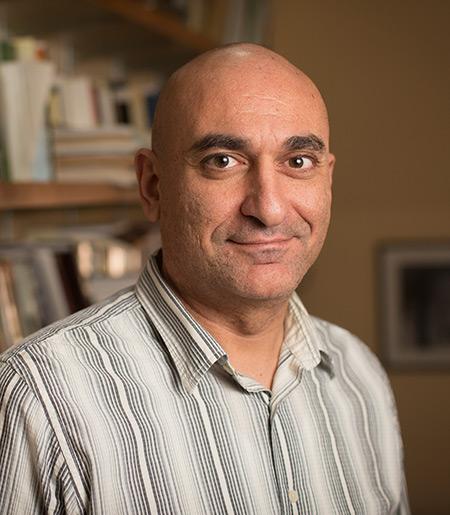
Dimitrios Stamatopoulos is a Professor in Balkan and Late Ottoman History at the University of Macedonia, Thessaloniki, specializing in the complex interplay between religious institutions, political power, and national identity formation in the Balkans during the Ottoman period and its aftermath. His academic journey began with a B.A. in History from Aristotle University of Thessaloniki in 1991, followed by an M.A. in Modern History and a PhD in Balkan and Late Ottoman History from the same institution. Stamatopoulos's research interests span a wide range of interconnected fields including Balkan nationalisms, Turkish Nationalism, the relationship between religion and politics, the emergence of civil society during the transition from the Ottoman Empire to nation-states, power network construction in empires and nation-states, and the issue of ethnogenesis/origins/continuity in Balkan historiographies. His scholarly work demonstrates a consistent focus on how historical narratives shape contemporary understandings of national identity and political legitimacy in the Balkan region. His extensive publication record includes 33 books, 20 scientific journal articles, and 39 other scholarly works. His most recent publications, including the 2024 book on the Greek Revolution of 1821 and the Patriarchate of Constantinople, reveal his continued engagement with how religious institutions navigated revolutionary periods and contributed to national identity formation. His influential 2022 work 'Byzantium after the Nation' represents a systematic comparative analysis of how different Balkan national historiographies have interpreted Byzantine legacy. Stamatopoulos has held prestigious academic positions including membership at the Institutes for Advanced Studies at Princeton (2010-11) and at the University of Freiburg (2017-18), and has served as a visiting professor at the École des hautes études en sciences sociales in Paris, Princeton University, and the Institute of European History at the University of Mainz. His scholarly contributions have established him as a significant voice in Balkan historical studies with over 4,600 followers on academic networking platforms.