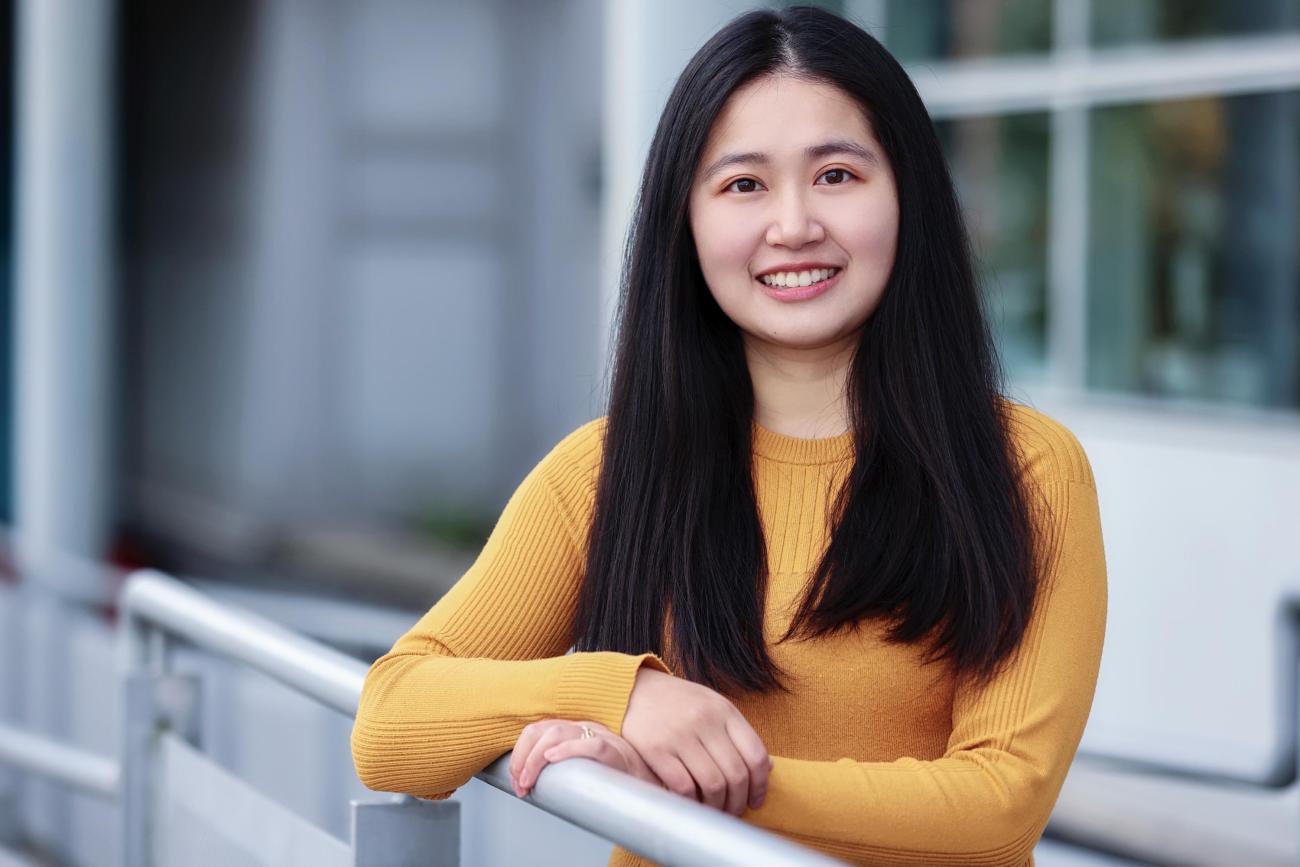
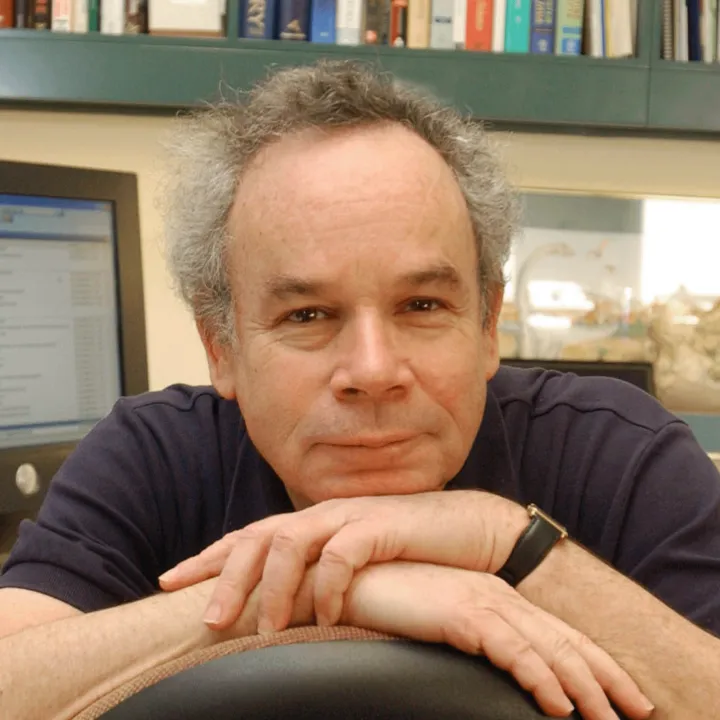
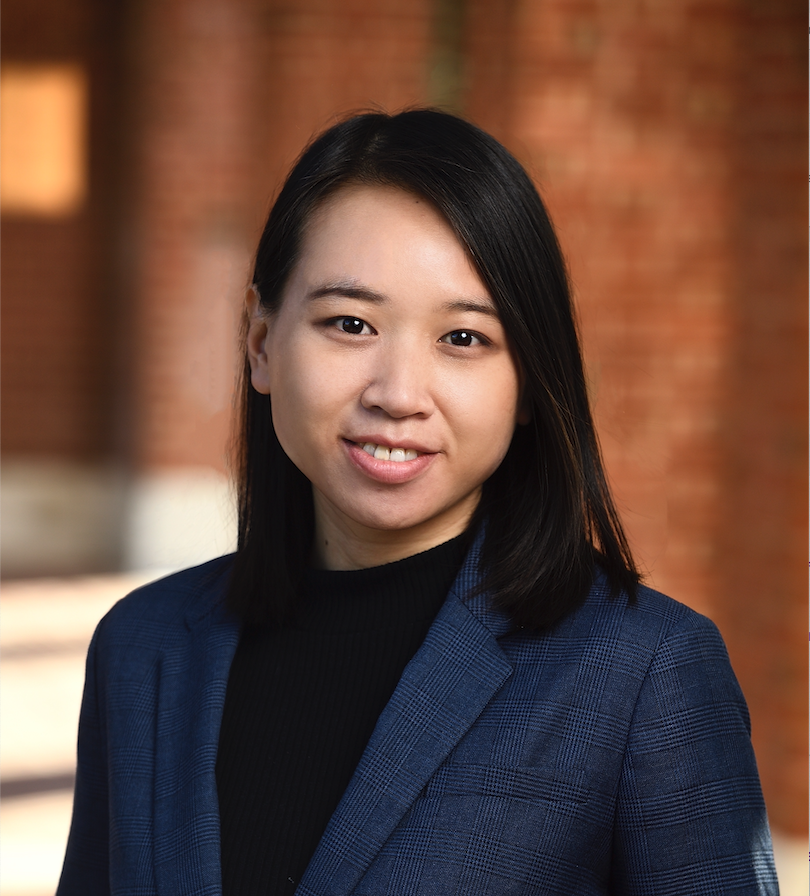
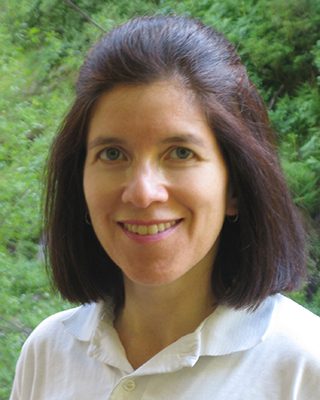
Dr. Dongyun Nie is an Assistant Professor at Dublin City University's School of Computing. She holds a PhD in Computer Science with a specialization in Customer Relationship Management. Her core research explores customer lifetime value, forecasting, data mining, and record linkage. Her recent publications demonstrate interdisciplinary work spanning health informatics, sports analytics, and environmental data engineering. Research predominantly focuses on machine learning applications for real-world data challenges including eye-tracking systems, lifelog analytics, and public health data infrastructure. Teaching responsibilities include modules on Machine Learning (CA4109), Enterprise Systems Configuration (CA2049), and Web Design (CA106), integrating research expertise into computing education.
Emiliya Lazarova is a Professor of Economics and Head of the School of Economics at the University of East Anglia (UEA). She chairs the Royal Economics Society’s Conference of Heads of Departments of Economics. Her research focuses on coalition formation, matching theory, and applied economics, with recent projects analyzing technological innovation via patent data, biodiversity market measurements, and international environmental agreements. She has held academic roles at the University of Birmingham and Queen’s University Belfast, teaching quantitative courses like Applied Econometrics and topics in applied microeconomics. Her research interests include coalition dynamics, social housing allocation, and the political economy of environmental policies. Current projects with Dr. Yuan Gao include developing an ex-ante novelty index for inventions and studying biodiversity valuation mechanisms. Lazarova has secured grants from the Royal Economic Society and British Academy, focusing on property rights and economic development in emerging economies. Her work bridges theoretical models and empirical applications, addressing issues like firm behavior under political pressure, patent innovation cycles, and disability discrimination impacts. Collaborations span institutions globally, reflecting her interdisciplinary approach to economic challenges. Advisory roles include supervising PhD students on topics such as status-seeking in matching markets and conflict resolution via coalition theory. Her teaching expertise complements her research, emphasizing quantitative methods and policy analysis.
Abraham Silberschatz is the Sidney J. Weinberg Professor of Computer Science at Yale University. He previously served as Vice President of the Information Sciences Research Center at Bell Laboratories and held a chaired professorship at the University of Texas at Austin. His research focuses on database systems, operating systems, and network management. Silberschatz has advised over a dozen PhD students, many now in academia and industry. Education: Ph.D., Computer Science, Stony Brook University (SUNY) Research Interests: His work spans database systems, operating systems, storage systems, and network management. Notable contributions include foundational textbooks like Operating System Concepts and Database System Concepts , which have become industry standards. He has also developed innovative systems like DataPlay and contributed to projects such as NetInventory. Publications: His 15+ years of research include influential papers on database architecture, network routing, and distributed systems. Recent work explores leveraging non-volatile memory technologies in systems design. Awards: ACM Karl V. Karlstrom Outstanding Educator Award (1998) IEEE Taylor L. Booth Education Award (2002) VLDB Test of Time Award (2019) Multiple Bell Laboratories President's Awards for innovation Grants & Patents: Recipient of over two dozen grants and over four dozen patents, including foundational IP in multimedia storage and distributed systems. His team's HadoopDB project merged MapReduce and DBMS technologies. Labs/Teams: Collaborates with Prof. Robert Soulé on projects in database systems and networking, focusing on next-gen memory technologies. Active in mentoring graduate students and postdocs in their research group.
Weiwei Lin is an Associate Professor in the Department of Civil Engineering at Aalto University, specializing in structural engineering with a focus on bridge systems, composite materials, and structural health monitoring. His research explores fatigue behavior of steel structures, seismic performance of composite systems, and innovative repair techniques. He holds a PhD from Waseda University (2012), MSc from Southeast University (2009), and BEng from Southwest Jiaotong University (2006). Key research areas include: steel-concrete composites, bridge redundancy evaluation, replaceable energy dissipaters, and AI-driven infrastructure diagnostics. Lin leads projects like CCU Structure (EU Horizon Europe) and RCF Mobility initiatives, focusing on sustainable construction and material recyclability. He has published 120+ peer-reviewed articles and secured 6 major grants. Lin has received prestigious awards including the IABMAS Young Award (2014) and Outstanding Reviewing Award (2017). His lab collaborates globally, hosting researchers from institutions like Israel Institute of Technology and Tsinghua University. Current work emphasizes crowdsourcing-based bridge monitoring and physics-guided AI frameworks for infrastructure diagnostics.
Michael Stonebraker is a renowned computer scientist and Adjunct Professor of Computer Science at MIT's CSAIL. He is a pioneer in database technology, having developed foundational systems like INGRES and POSTGRES at UC Berkeley. His work spans database management, distributed systems, and data integration. He has founded multiple startups to commercialize his research and holds numerous awards, including the ACM Turing Award (2014) and IEEE John von Neumann Medal (2005). He earned his Ph.D. from the University of Michigan and undergraduate degrees from Princeton and Michigan. His research focuses on advancing database systems, operating systems, and big data analytics. Recent work includes contributions to video data management, cloud computing optimization, and data discovery systems. Education: Ph.D., Computer, Information and Control Engineering, University of Michigan (1971) M.S.E., Electrical Engineering, University of Michigan (1966) B.S.E., Electrical Engineering, Princeton University (1965) Research Interests: Database Technology, Distributed Systems, Data Integration, and Big Data Analytics. His work bridges theory and practice, emphasizing scalable architectures and real-world applications. Awards & Recognition: ACM Turing Award (2014) ACM SIGMOD Systems Award (2015) MIT Tech Review TR7 (2016) C&C Prize (2020) Grants & Labs: His research is supported by grants from NSF, DARPA, and industry collaborations. He leads MIT's efforts in database systems and is affiliated with CSAIL labs focused on data management and high-performance computing.
ChanMin Kim is a Professor in the Learning and Performance Systems department at Penn State College of Education. With over 80 publications and 2553 citations, their work focuses on integrating artificial intelligence , robotics , and educational technology into science and computer science education. Research interests: Science writing, AI-human partnerships, robotics in education, equity-focused technology design Key methodologies: Natural Language Processing, learning analytics, scaffolding strategies Recent work explores large language models in education, debugging processes in pre-service teacher training, and automated assessment systems for science explanations. While the provided data doesn't show specific scientific awards or student advisees, their publications in venues like British Journal of Educational Technology and Journal of Science Education and Technology demonstrate significant contributions to learning sciences. Kim collaborates extensively with researchers in AI, educational technology, and equity-focused domains.
Karan Singh serves as an Assistant Professor of Operations Research at Carnegie Mellon University's Tepper School of Business, where he develops theoretically rigorous algorithms for machine learning systems with emphasis on reinforcement learning and control theory. His work synthesizes techniques from online learning, optimization, and statistics to address complex interactive learning challenges. His academic journey includes: PhD in Computer Science from Princeton University under Elad Hazan Postdoctoral research at Microsoft Research (Redmond) Bachelor's degree in Computer Science from Indian Institute of Technology (IIT) Kanpur Singh's research program centers on three interconnected pillars: Algorithmic Reductions : Creating efficient methods to solve complex learning problems (e.g., reinforcement learning) using solvers for simpler tasks, yielding breakthroughs in online boosting and RL with concave rewards Nonstochastic Control : Establishing an algorithmic foundation for control theory through provably efficient instance-optimal algorithms that extend online learning to stateful systems Privacy-Preserving Online Learning : Investigating fundamental limits of regret minimization under differential privacy constraints while maintaining performance His approach consistently bridges theoretical computer science and practical control applications. Analysis of his 15 most recent publications reveals a clear evolution toward integrating algorithmic reductions with nonstochastic control frameworks. Recent work (2023-2025) demonstrates increasing focus on sample efficiency in agnostic boosting, privacy-aware optimization without smoothness assumptions, and competitive ratio analysis in online control. A unifying thread is the development of regret-optimal algorithms for linear dynamical systems under adversarial disturbances. His contributions have earned significant recognition: Best Paper Award at OptRL workshop (NeurIPS 2019) Spotlight Prize from New York Academy of Sciences' ML Symposium (2018) Multiple oral presentations at NeurIPS/ICML (acceptance rate Though specific student advisees aren't listed, Singh's extensive publication record with junior co-authors indicates active mentorship. His research has secured substantial support including a US patent (11,138,513 B2) for dynamic learning systems and collaborations through CMU's Machine Learning and Optimization group. Current projects involve interdisciplinary work on differentiable control libraries (Deluca) and medical applications like mechanical ventilation control. Singh leads research within CMU's Machine Learning and Optimization ecosystem, collaborating across computer science and engineering departments. His team develops foundational tools like the Deluca differentiable control library while pursuing real-world applications in healthcare systems, demonstrating strong cross-disciplinary integration.
Jacob Mackenzie is an Associate Professor at the University of Southampton's Faculty of Engineering and Physical Sciences , affiliated with the Optoelectronics Research Centre (ORC) and Zepler Institute. His work spans advanced laser physics and photonics, focusing on efficient solid-state systems via planar waveguide geometries and cryogenic cooling for power scaling. Research interests: Waveguide amplifiers, cryogenically cooled lasers, ultra-fast compact lasers Key applications: Materials processing, space-borne LIDAR, silicon photonics Research Themes include innovative gain media engineering, thermal management, and spectroscopic optimization. His group explores non-standard laser transitions to expand accessible wavelengths and power regimes in continuous-wave (CW) and pulsed configurations. Publications highlight advancements in resonant waveguide gratings, thermal performance metrics, high-repetition rate systems, and optical coating durability. These align with his leadership in high-power laser design and novel manufacturing techniques. Scientific Awards Royal Academy of Engineering Postdoctoral Fellow (2004) Senior Member of the Optical Society (OSA) PhD Supervision includes Isaac Brock, Georgia Mourkioti, and Sahar Alidousti. He also mentors postgraduate students through technical workshops and co-teaches Photonics II (ELEC3217) for undergraduates. External Roles encompass invited speaking (2020), journal reviewing (2021-2022), and chairing conferences like the 10TH EPS-QEOD EUROPHOTON CONFERENCE (2022).
Professor Chongmin Song is a faculty member at the University of New South Wales (UNSW), affiliated with the School of Civil and Environmental Engineering. His academic rank is Professor, and he specializes in computational mechanics with a focus on innovative numerical methods. He holds a BE and ME from Tsinghua University and a DEng from the University of Tokyo. His research explores computational mechanics, fracture analysis, wave propagation, and soil-structure interactions. Key methodologies include the Scaled Boundary Finite Element Method (SBFEM), image-based modeling, and dynamic simulations of infrastructure systems. He leads significant ARC-funded projects like 'A scaled boundary framework for nonlinear dynamic analysis of structures' (DP250100955) and 'Developing sustainable graded porous cementitious structures' (LP240100123), totaling over $1M in recent grants. Recent publications emphasize adaptive modeling techniques, multiphysics simulations, and high-performance computing applications. Trends include topology optimization for structural dynamics, phase-field fracture modeling for brittle materials, and GPU-accelerated elastodynamics. His work integrates computational efficiency with real-world engineering challenges, particularly in geomechanics and material failure analysis. Professor Song collaborates extensively on projects involving computational fracture mechanics and maintains laboratories focused on numerical simulation advancements. Future work targets scalable algorithms for 3D crack propagation and multiphysics coupling in infrastructure systems.
Dr Andrew Coles is a Reader in Artificial Intelligence at the Department of Informatics, King's College London, within the Faculty of Natural, Mathematical & Engineering Sciences. His research focuses on temporal and numeric planning, explainable planning, and human-robot collaboration. He leads and co-investigates multiple research projects funded by EPSRC, the Royal Academy of Engineering, and the European Commission. His research interests include Artificial Intelligence, Temporal and Numeric Planning, Planning with Rich Domain Models, Explainable Planning, Human-Robot Interaction, Autonomous Systems, Heuristic Search, and Decision-Making. He has published extensively in top-tier AI and robotics conferences such as ICAPS, IROS, HRI, AAAI, and IJCAI. His recent publications demonstrate a strong trend toward explainable AI in human-robot collaboration, with a focus on multimodal sensing (e.g., eye tracking), user needs for explanation, and adaptive planning. His work integrates planning algorithms with human-centered evaluation and real-world applications in robotics. Scientific Awards: International award for PhD thesis on assistive robots (2020) Advising and Grants: Dr Coles has supervised multiple students, including Lara Wachowiak, Guillem Canal, and Petra Tisnikar. He has led or co-investigated several major research projects, including: COHERENT (EPSRC): Collaborative Hierarchical Robotic Explanations Plan and Goal Reasoning for Explainable Autonomous Robots (Royal Academy of Engineering) ADE (European Commission): Autonomous Decision Making in Very Long Traverses ERGO (European Commission): European Robotic Goal-Oriented autonomous controller Labs and Teams: He is affiliated with the Reasoning and Planning research group and the Trusted Autonomous Systems Hub at King's College London, focusing on developing trustable autonomous systems through robust planning and human-centered AI.
Anqi Liu is an Assistant Professor in the Department of Computer Science at the Whiting School of Engineering, Johns Hopkins University. She maintains significant affiliations with the Johns Hopkins Mathematical Institute for Data Science (MINDS) and the Johns Hopkins Institute for Assured Autonomy (IAA), while also collaborating extensively with the Center for Language and Speech Processing (CLSP) and the Laboratory for Computational Sensing and Robotics (LCSR). Her research focuses on developing principled machine learning algorithms for building reliable, trustworthy, and human-compatible AI systems in real-world applications. Key research areas include: Distributionally robust learning under covariate shift Uncertainty quantification for AI safety and fairness Safe exploration in control systems Fair machine learning under distribution shift Active learning under label shift Dr. Liu's work addresses critical challenges in high-stakes AI applications where reliability, safety, and societal impact are paramount. Her methods ensure AI systems remain robust to changing data environments, provide accurate uncertainty estimates, and incorporate human preferences in interactions. Analysis of her recent publications reveals a strong trajectory in trustworthy AI research with significant contributions to distribution shift handling, uncertainty quantification techniques, and safe decision-making frameworks. Her work bridges theoretical foundations with practical applications across healthcare, robotics, and social media analysis. Amazon Research Award Dr. Liu actively mentors eight PhD students and teaches specialized courses on Machine Learning for Trustworthy AI and standard Machine Learning at Johns Hopkins University, preparing the next generation of researchers to address critical challenges in AI safety and reliability.
Bonnie Berger is the Simons Professor of Mathematics at the Massachusetts Institute of Technology and head of the Computation and Biology group at MIT's Computer Science and AI Lab. She holds additional appointments as an Associate Member of the Broad Institute, Faculty member of Harvard/MIT Health Science & Technology, and Affiliated Faculty of Harvard Medical School. Her career has been dedicated to pioneering computational approaches in molecular biology, where she has been instrumental in defining the field. Professor Berger's research focuses on designing algorithms to extract biological insights from large-scale data sets. Her work spans Compressive Genomics, Network Inference, Structural Bioinformatics, Genomic Privacy, and Medical Genomics. She actively collaborates with experimental biologists to maximize the power of computation for biological discovery, developing methods that address the challenges of modern high-throughput biological data. Her recent publications demonstrate a strong trend toward integrating machine learning with structural biology and genomic privacy. The articles show increasing sophistication in using deep learning for protein structure prediction, developing privacy-preserving techniques for genomic data sharing, and creating efficient algorithms for massive biological data sets. Her work bridges theoretical computer science with practical biological applications. Professor Berger's scientific recognition includes: Election to the National Academy of Sciences (2021) ISCB Accomplishments by a Senior Scientist Award SIAM Sonya Kovalevsky Lecture Prize Fellowships in ACM, ISCB, AMS, and other prestigious societies Multiple RECOMB Test of Time Awards NIH Margaret Pittman Director's Award She has mentored numerous students who have gone on to make significant contributions in computational biology, including Ellen Zhong, Yun William Yu, and Hyunghoon Cho. Her lab receives substantial research funding supporting projects in genomic privacy, structural bioinformatics, and compressive algorithms for biological data. Professor Berger serves on the Executive Editorial Board of the Journal of Computational Biology and multiple other editorial boards. The Computation and Biology group at MIT CSAIL, which she leads, is at the forefront of developing computational methods for biological discovery. The group combines expertise in algorithms, machine learning, and biology to tackle fundamental challenges in genomics and structural biology. They are currently organizing the Machine Learning in Structural Biology workshop at NeurIPS 2025, highlighting their leadership in this rapidly evolving interdisciplinary field.
Cecilia R. Aragon is a Professor in the Department of Human Centered Design & Engineering at the University of Washington, where she also serves as an Adjunct Professor in Computer Science & Engineering, Electrical and Computer Engineering, and the Information School. She is additionally a Senior Data Science Fellow at the eScience Institute. Aragon directs the Human-Centered Data Science Lab and has made significant contributions at the intersection of human-computer interaction and data science. Her research interests focus on human-centered data science, human-centered artificial intelligence, human-centered machine learning, human-computer interaction (HCI), computer-supported cooperative work (CSCW), visual analytics, aviation and astronautics sociotechnical systems, and emotion in informal text communication. Aragon's work bridges technical and social aspects of data science, particularly examining how humans interact with and gain insight from large datasets through both quantitative and qualitative methods. Aragon's recent publications demonstrate a strong focus on understanding online communities, sentiment analysis, distributed mentoring systems, and the ethical implications of AI. Her work spans multiple disciplines including social computing, data visualization, and astrophysics data analysis, showing her interdisciplinary approach to human-centered data science. Presidential Early Career Award for Scientists and Engineers (PECASE) 2008 Fulbright Fellowship 2017-18 HCDE Faculty Innovator in Research Award, University of Washington, 2015 Distinguished Alumni Award, Computer Science, University of California, Berkeley, 2013 Top 25 Women of the Year, Hispanic Business Magazine, 2009 Aragon has secured over $28 million in research funding from organizations including the National Science Foundation, National Institute of Standards and Technology, Department of Energy, Gordon and Betty Moore Foundation, Alfred P. Sloan Foundation, Washington Research Foundation, and industry partners like Microsoft and Intel. Her educational background includes a Ph.D. in Computer Science from UC Berkeley (2004), an M.S. in Computer Science from UC Berkeley, and a B.S. with Honors in Mathematics from Caltech. She leads the Human-Centered Data Science Lab and is affiliated with the eScience Institute, the Nearby Supernova Factory, and various research groups focused on data-intensive scientific collaborations. Her work on collaborative visual analytics systems like Sunfall has had significant impact in both academic and applied settings.
Dorte Hammershøi is a Professor in the Department of Electronic Systems at The Technical Faculty of IT and Design, Aalborg University, Denmark. Her research focuses on acoustics, sound engineering, and hearing science with significant contributions to human hearing, ear canal acoustics, and audio technology applications. Her research interests include: Temporary Threshold Shift and frequency resolution in human hearing Ear canal acoustics and sound pressure level measurement Distortion Product Otoacoustic Emission (DPOAE) analysis Impulse response and acoustic impedance studies Hearing aid technology and rehabilitation methodologies Virtual reality audio interfaces and accessibility applications Professor Hammershøi's recent publications demonstrate a strong clinical-engineering interdisciplinary approach, bridging theoretical acoustics with practical hearing rehabilitation applications. Her work on hearing aid fitting methodologies, occupational noise exposure effects, and virtual reality audio interfaces shows consistent innovation in translating engineering principles to clinical practice. The research shows particular attention to individualized hearing solutions and accessibility technologies. Her scientific contributions have been recognized with: Dansk Lydpris 2020 (awarded November 17, 2021) Ambassadør for Aalborg (awarded September 15, 2004) Professor Hammershøi has supervised 5 PhD students and led numerous research projects including the ongoing "Audio Only VR for Blind Gamers" project (2024-2028) funded by the Independent Research Foundation of Denmark, and the completed "BEAR: Better Hearing Rehabilitation" project (2016-2022). Her research has attracted significant media attention with 110 press/media appearances discussing hearing damage prevention, tinnitus, and public health implications of noise exposure. She maintains active professional engagement through committee memberships (46 documented activities), international collaborations, and contributions to clinical practice guidelines. Her work continues to influence both academic research and practical applications in hearing science and audio engineering.
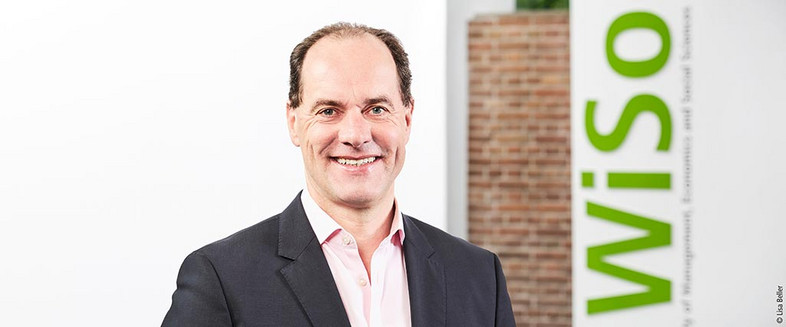
Werner Reinartz is a Professor of Marketing at the University of Cologne since 2007, where he holds the Chair for Retailing and Customer Management . He serves as Vice-Rector for Transfer (2023–ongoing) and Director of the Center for Research in Retailing (IFH e.V.) . His career includes a part-time Associate Professor role at INSEAD (2007–2010) and tenured/untenured positions there from 1999–2007. He earned a Ph.D. in Marketing from the University of Houston (1999) and an MBA from Henley Management College (1997). His research focuses on Retailing , Customer Management , Digital Transformation , and Marketing Strategy . He investigates how platformization , geospatial data , and authenticity in TV advertising influence consumer behavior and business outcomes. His work also addresses CRM efficacy , B2B hybrid offerings , and value creation in dynamic markets . Key trends in his recent publications include: Digital transformation in retail and branding Behavioral economics in marketing decisions Quantitative analysis of TV advertising effectiveness Geospatial data applications in international markets Platform business models for enduring customer relationships CRM and customer profitability in noncontractual settings Scientific honors include: Academic Fellow, Marketing Science Institute (MSI) (2023) EMAC Distinguished Marketing Scholar Award (2023) Shelby D. Hunt/Harold H. Maynard Award (2022) Jan Steenkamp Award for Long-Term Impact (2021) Outstanding Area Editor, Journal of Marketing (2016) Donald R. Lehmann Award (2001) and John A. Howard Dissertation Competition Winner (1999) He contributes to editorial boards and collaborative research initiatives like the Research Initiative 'Digital Transformation and Value Creation' and the Cluster of Excellence ECONtribute: Markets & Public Policy , which examines market challenges through interdisciplinary lenses.