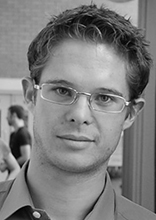
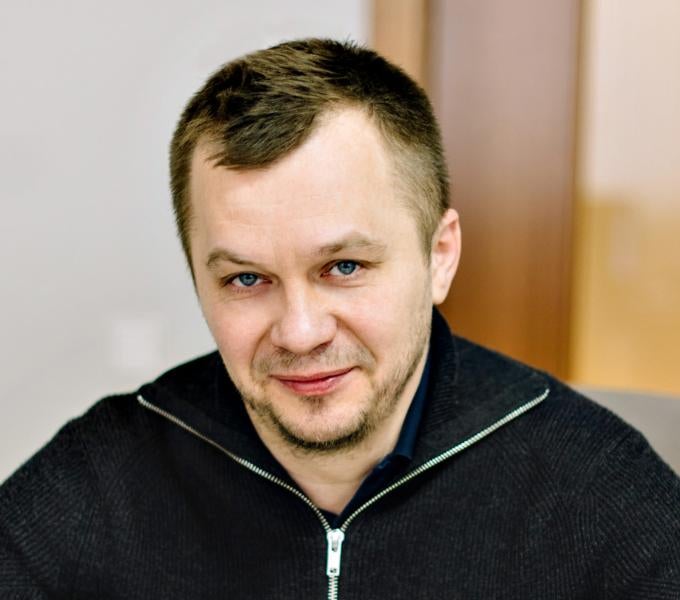
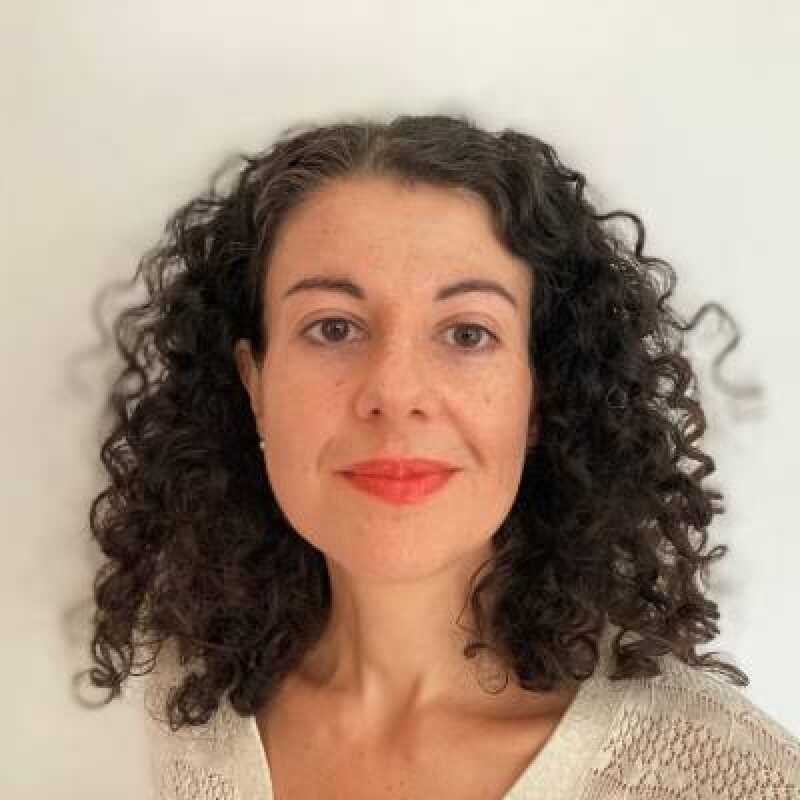
Matina Terzidou is a Senior Lecturer in the Faculty of Business and Law at Middlesex University, where she belongs to the Department of Marketing, Enterprise & Tourism. Her research focuses on religious tourism, with particular emphasis on tourist experiences, motivations, and the intersection of tourism with wellbeing and sustainability. She investigates how visual media influences destination image formation and examines socio-economic impacts of tourism in cultural contexts. As a module leader for Research Project and MSc Dissertations, she coordinates postgraduate research and teaches Hospitality and Events Practicum. She has previously taught Heritage Tourism, International Tourism Industry, and Tourism & Society. She serves on scientific committees for international tourism conferences and reviews for academic journals.
Dr. Ralph Evins is an Associate Professor and Director of the Graduate Program in the Department of Civil Engineering at the University of Victoria. He holds affiliations with the Urban Energy Systems laboratory at Empa and ETH Zurich in Switzerland. His expertise spans building energy simulation, energy system optimization, and machine intelligence applications in sustainable design. Evins holds an MEng from Imperial College London and an EngD from the University of Bristol. His research focuses on computational problem-solving in energy systems, including surrogate modeling, optimization algorithms, and machine learning. He develops tools like the Holistic Urban Energy Simulation (HUES) platform and BESOS software framework to bridge building, district, and city-scale energy analysis. His work emphasizes holistic systems thinking, integrating energy hubs, thermal modeling, and digital twin technologies. Recent articles explore surrogate model refinement, inverse modeling for building characterization, and decarbonization strategies. He collaborates with industry to translate academic innovations into practical solutions. Evins advises students in energy systems and leads projects on net-zero building design, retrofit prioritization, and smart grid integration. His research addresses challenges in climate adaptation, energy efficiency, and sustainable urban development through interdisciplinary approaches.
L. Paige Fields is a Professor of Finance at the University of Kansas School of Business, where she joined in 2017 as Dean and Henry D. Price Professor of Business. Her academic career spans institutions including Trinity University (Dean, 2012-2015), Texas A&M University (1994-2012), University of Arizona (1991-1994), and University of Kentucky. Education : Ph.D. in Business Administration (Finance) from University of South Carolina, M.S. and B.S. in Finance from Louisiana State University. Her research focuses on corporate governance, banking, insurance, and capital structure. She has published extensively in top journals like the Journal of Finance and Journal of Money, Credit, and Banking , with recent work on earnings management, bank loan dynamics, and governance mechanisms. Fields has served as Associate Editor at the Journal of Financial Research and received over 20 teaching and academic awards, including national recognition from the Academy of Finance (2010). She has held leadership roles such as Department Chair at Trinity University and multiple teaching innovation grants at Texas A&M’s Mays Business School.
Catherine Guastavino is a Professor at McGill University's School of Information Studies (within the Faculty of Arts) and an Associate Member at the Schulich School of Music. She also contributes to the Centre for Interdisciplinary Research in Music Media and Technology (CIRMMT). Her roles include leading research projects and supervising graduate students in music technology and related fields. She holds a PhD in Psychoacoustics from Université Pierre et Marie Curie (Paris VI), an MSc from IRCAM (France), and a BSc in Mathematics from McGill University. Her research focuses on auditory perception, soundscape analysis, human-computer interaction, and urban acoustics. Notable projects include the 'Sounds in the City' partnership addressing urban noise policy and the development of immersive soundscape simulation tools. She leads or co-leads grants from SSHRC, NSERC, and MITACS, emphasizing interdisciplinary approaches to sound in urban environments. Guastavino's work bridges academic research with practical applications, such as designing sound installations for public spaces and improving acoustic environments in transportation and performance venues. She collaborates with city planners, musicians, and engineers, reflecting her commitment to making cities sound better through evidence-based strategies. Key Projects: SSHRC Partnership Grant for urban soundscape management (2018-2023) NSERC Discovery Grant on auditory localization (2019-2024) MITACS projects on Montreal festival soundscapes and noise policy Labs & Partnerships: Multimodal Interaction Laboratory (MIL) Collaborations with Ville de Montréal and Quartier des Spectacles Education: PhD: Psychoacoustics (Paris VI) MSc: Computer Science & Music Technology (IRCAM) BSc: Mathematics (McGill) Her teaching includes courses like Music Information Retrieval, integrating computational methods with artistic and scientific applications.
Patrick Sturt is a Reader in Psychology at the University of Edinburgh's School of Philosophy, Psychology and Language Sciences. His research focuses on syntactic processing in language comprehension, computational models of incremental parsing, anaphor resolution, and eye movements in reading. With over 100 publications and more than 3,300 citations, he is a recognized expert in psycholinguistics and language processing. Dr. Sturt's research interests span multiple areas of language processing. He investigates how humans comprehend sentences in real-time, with particular focus on syntactic structures, agreement phenomena, and anaphoric reference. His work often employs eye-tracking methodologies to examine the moment-by-moment processing of linguistic information. He has made significant contributions to understanding how readers handle syntactic ambiguities, garden-path sentences, and the role of prediction in language comprehension. His recent publications demonstrate a strong focus on cross-linguistic studies, particularly examining language processing in Mandarin Chinese and Korean. Many of his studies investigate how syntactic and semantic information interact during comprehension, and how linguistic structures like honorifics, classifiers, and non-canonical word orders are processed. His work bridges theoretical linguistics with experimental psycholinguistics, providing empirical evidence for models of sentence processing. Dr. Sturt actively supervises PhD students including Carine Abraham, Wenjia Cai, Chiuchou Hao, Ruomeng Zhu, and Christy Gu. He teaches Psychology of Language 1 and 2 at the MSc level, as well as Data Analysis for Psychology in R for first-year undergraduates. His teaching reflects his research expertise, providing students with both theoretical knowledge and practical analytical skills. Based in Room G29 of the Psychology Building at 7 George Square, Edinburgh, Dr. Sturt maintains regular office hours on Tuesdays from 3-4pm, providing accessibility to students and colleagues. His email address is patrick.sturt@ed.ac.uk.
Elham Kazemi is a Professor of Mathematics Education at the University of Washington’s College of Education, holding the Geda and Phil Condit Endowed Chair. She specializes in elementary teacher education, instructional leadership, and equity-focused mathematics pedagogy. Her research emphasizes professional learning communities, student-centered classroom practices, and disrupting inequities in education. Education: PhD in Mathematics Education, UCLA (1999) MA in Educational Psychology, UCLA (1997) BS in Psychology (Elementary Teaching Certificate), Duke University (1992) Research Interests: Kazemi’s work focuses on equitable mathematics instruction, teacher learning, and leadership development. She designs school-wide professional development models (e.g., Math Labs) and studies classroom discourse, student disciplinary identities, and organizational learning. Key projects include the Labs Project (funded by JSMF) and RMLL (NSF-funded leader learning). Publications & Grants: Over 40 peer-reviewed articles, including work in American Educational Research Journal and Journal of Teacher Education . Co-authored influential books like Choral Counting and Counting Collections and Intentional Talk . Recipient of $5.4M+ in grants from NSF, McDonnell Foundation, and others for projects on teacher leadership and equitable instruction. Awards: 2022 AERA Open Article of the Year 2019 Outstanding Faculty Award for Educational Equity 2015 Geda & Phil Condit Professorship Advising & Leadership: Kazemi co-leads initiatives like the Leading Towards Racially Just Mathematics Instruction partnership. She has supervised numerous graduate students and collaborates with schools to implement equity-driven practices. Labs & Teams: Her work includes the Labs Project (designing Learning Labs for mathematics/literacy discussions) and the Mathematics Education Project (MEP), fostering statewide collaboration among educators.
Tymofiy Mylovanov is an Associate Professor of Microeconomics at the University of Pittsburgh. His research focuses on political economy, macroeconomic policy design, blockchain applications in governance, and post-conflict reconstruction strategies with a particular emphasis on Ukraine and Eastern Europe. His work bridges theoretical economics with practical policy analysis, addressing issues such as public procurement reforms, sanctions impact on businesses, and the design of fiscal frameworks for war-torn economies. Mylovanov has extensively studied the economic consequences of geopolitical conflicts, including the Russia-Ukraine war, and advocates for institutional reforms to ensure democratic stability and economic resilience. Key research themes include: Optimal mechanisms for foreign aid allocation Blockchain's role in public sector transparency Anti-corruption frameworks in post-authoritarian states Economic policy responses to hybrid warfare Mylovanov's recent publications analyze Ukraine's macroeconomic challenges, the effectiveness of international sanctions, and innovative governance models leveraging technology. His work frequently appears in high-impact policy journals and is cited in global policy discussions about Eastern European development.
Ahmed Ferhadi is a Clinical Professor of Middle Eastern & Islamic Studies at New York University (NYU), specializing in linguistics with a focus on Second Language Acquisition, Sociolinguistics, and Language Testing. He holds a PhD in Linguistics from the University of Michigan (1990), an MA in Teaching Arabic as a Foreign Language (TAFL) from the same institution, and an M.S. in Applied Linguistics from the University of Edinburgh. His teaching career spans institutions like Princeton University, Columbia University, and Kurdish universities such as Salahuddin and Suleimaniyya Universities. He pioneered video-based language performance evaluation methods during his tenure at Middlebury College in 1991, which became a standard practice. Ferhadi has also served in high-level advisory roles, including President of the Association of American Teachers of Arabic (AATA) since 2017 and Distinguished Global Scholar of Kurdish Studies at American University (2010). Research interests include Kurdish language standardization, advanced Arabic pedagogy, and the sociopolitical dimensions of language. His projects include a Kurdish standardization initiative and curriculum development for advanced Arabic learners. Ferhadi has received numerous accolades, including the Golden Teaching Award (NYU 2000) and Top Language Award (U.S. Department of State 2006). His publications span linguistic theory, pedagogical techniques, and cultural studies, with recent works addressing Arabic dialect dynamics and Kurdish language policy. Ferhadi’s work bridges academic rigor with practical applications, emphasizing technology’s role in modern language education.
Terese Løvås serves as Vice Dean of Research and Innovation at the Faculty of Engineering, Norwegian University of Science and Technology (NTNU), where she leads strategic development of research and innovation activities. She concurrently holds the position of Professor of Combustion and Thermodynamics within the Department of Energy and Process Engineering. Her leadership responsibilities include oversight of Centers of Excellence, Horizon Europe projects, and PhD researcher training. Her research focuses on combustion engineering and alternative fuel technologies , particularly investigating ammonia and hydrogen combustion for zero-emission engines, biomass gasification processes, and reactive multiphase flow modeling. She heads the Engine Lab at NTNU and teaches Thermodynamics, Heat, and Combustion courses. Her work bridges theoretical modeling with experimental validation in sustainable energy systems. Løvås actively contributes to major research initiatives including LowEmission (SFI center), ACTIVATE (ammonia-powered agricultural vehicles), AMAZE (ammonia zero-emission), and CAHEMA (marine ammonia/hydrogen engines). Her publications reveal strong trends in ammonia combustion chemistry , emissions reduction , and advanced computational modeling for sustainable fuel systems, with increasing focus on nitrogen oxide formation mechanisms and dual-fuel strategies. Member of the Board of Directors, Combustion Institute (2022–present) Joint Editor, Proceedings of the Combustion Institute (2019–present) Alumni Fellow in Engineering, Churchill College, Cambridge University As Vice Dean, she manages NTNU's Research and Innovation Committee and represents the faculty in NTNU's Research and Innovation Committee. She supervises multiple PhD candidates and leads international collaborations through projects funded by the Norwegian Research Council, Nordic Energy Research, and EU programs. Her laboratory work focuses on optical engine diagnostics and advanced combustion testing. Løvås maintains active industry engagement through her leadership in the ComKin Research Group and membership in the Institute of Physics and Scandinavian-Nordic Section of the Combustion Institute. Her current work emphasizes practical implementation of ammonia-fueled engine technologies for marine and agricultural applications.
Susan Ashbrook Harvey is the Willard Prescott and Annie McClelland Smith Professor of History and Religion at Brown University. Her research focuses on late antique and Byzantine Christianity, particularly Syriac studies, with expertise in asceticism, hagiography, women's roles, hymnography, and liturgical practices. She holds affiliations with the American Academy of Religion, Society of Biblical Literature, and the North American Patristic Society. Her research interests include the intersection of religion and the senses, women in ancient Christianity, and liturgical lament. Notable publications include Scenting Salvation (2006) and Knowing Bodies, Passionate Souls (2017). She has received prestigious awards such as the Guggenheim Fellowship and honorary doctorates from Lund University, the University of Bern, and Grinnell College. Harvey teaches courses like 'Sacred Stories' and 'Women and Gender in Ancient Religions.' Her work bridges historical scholarship with contemporary theological discourse, emphasizing marginalized voices in early Christian traditions.
Dr Stella Bolaki is Reader in American Literature and Medical Humanities at the School of English, University of Kent, and Co-Director of the Centre for Health and Medical Humanities. She has been a faculty member since 2011, after holding positions at the University of Glasgow and the University of Edinburgh, where she also held a postdoctoral fellowship at the Institute for Advanced Studies in the Humanities (IASH). Her educational background includes a BA from Athens and an MSc and PhD from the University of Edinburgh. BA, Athens MSc, University of Edinburgh PhD, University of Edinburgh Stella’s research spans interdisciplinary fields including contemporary American literature, medical humanities, disability studies, and Black feminist theory. Her work critically examines narratives of illness, chronic conditions, self-care, and the intersection of art and health. She has pioneered research on artists’ books as tools for wellbeing, testimony, and community engagement, particularly in contexts of trauma and social injustice. Her recent publications and projects reveal a consistent focus on expanding narrative forms in medical humanities—moving beyond traditional literary modes to include photography, performance, film, and digital storytelling. Themes of inequality, mental health, climate anxiety, and embodiment recur across her work, especially in her ongoing monograph on self-care. Fellow of the Higher Education Academy Wellcome Trust funding recipient British Academy funding recipient Research England grant awardee Kent’s AHRC Impact Acceleration Account funding Stella supervises doctoral research across a wide range of interdisciplinary topics and has co-supervised a CHASE-funded project on health zines. She contributes to teaching in American literature and medical humanities at the Kent and Medway Medical School. Her professional service includes editorial roles for Contemporary Cultural Studies in Illness, Health and Medicine and the Journal of Literary & Cultural Disability Studies , and leadership in the Eastern Arc Medical and Health Humanities Network and the Kent Medical Humanities Network. She leads public-facing research through creative workshops, exhibitions, and events such as ‘Artists’ Books and the Medical Humanities’ and ‘Mending the Psyche: Art as Reparation’, often in collaboration with NHS partners and community organizations.
Joakim Odqvist is a Professor and Head of Department at the Structures unit within the Royal Institute of Technology (KTH). He specializes in materials science, with a focus on phase separation in alloys, nanostructure evolution, and the mechanical behavior of advanced materials. His research integrates experimental techniques like small-angle neutron scattering and atom probe tomography with computational modeling to study materials such as stainless steels, cemented carbides, and cast irons. Odqvist teaches courses in ceramic materials, material design, and materials structures, mentoring students at both undergraduate and graduate levels. His work addresses challenges in corrosion resistance, fatigue, and additive manufacturing, contributing to the development of high-performance materials for industrial applications. Research Interests: Phase separation mechanisms, spinodal decomposition in Fe-Cr alloys, nanostructure evolution in duplex stainless steels, diffusion kinetics, and the application of statistical models to hydrogen diffusion. His studies often bridge fundamental material science with practical engineering solutions, emphasizing predictive simulations and material design. Recent Articles: His publications focus on controlling nanostructures in super duplex steels, functional gradient carbides, and statistical models for hydrogen diffusion. Key themes include optimizing heat treatments to mitigate embrittlement, understanding precipitation kinetics in additively manufactured materials, and leveraging phase field modeling to predict material behavior. These studies highlight his role in advancing materials for harsh environments, such as aerospace and energy sectors.
Jung Han is the William A. Norton Professor of Electrical & Computer Engineering at Yale University, affiliated with the School of Engineering & Applied Science. He holds a Ph.D. from Purdue University and leads the Optoelectronics Materials and Devices Group, focusing on interdisciplinary research in III-nitride semiconductors, optoelectronics, and power electronics. His work bridges fundamental materials science with practical applications in solid-state lighting, energy harvesting, and next-generation electronics. Research interests include wide-bandgap semiconductor materials (e.g., GaN), nanoscale device fabrication, and epitaxial growth techniques. He pioneered nanoporous GaN distributed Bragg reflectors (DBRs) for high-efficiency LEDs and lasers, as well as selective-area growth methods for power electronics. His lab explores green energy technologies, flexible electronics, and hybrid organic-inorganic semiconductors. Publications emphasize advancements in GaN-based vertical-cavity surface-emitting lasers (VCSELs), SWIR detectors, and micro-LED displays. Recent work addresses challenges in defect control, scalability of III-nitride devices, and integration with emerging materials. His group collaborates across engineering, applied physics, and chemistry to advance sustainable energy and high-performance optoelectronics. Notable contributions include wafer-level integrated white-LEDs with quantum dots, damage-free in-situ GaN etching via TBCl, and stacking-fault-free GaN growth on foreign substrates. His research has been recognized in high-impact journals like Advanced Materials and Applied Physics Letters .
Professor Maria H.A. Jaschok is a Senior Research Associate at the Contemporary China Studies Programme in the Oxford School of Global and Area Studies (OSGA), University of Oxford. Formerly Director of the International Gender Studies Centre at Lady Margaret Hall (2000–2018), she also held a Visiting Professorship at King’s College London (2019–2021). A Life Fellow of the Global China Academy, her work focuses on Chinese Muslim women’s mosques, gendered religious practices, and feminist ethnography. Education: PhD from the School of Oriental and African Studies (SOAS), University of London. Extensive fieldwork in China, including prolonged residence in Shunde County, Guangdong, and collaborations with scholars like Shui Jingjun. Research Interests: Anthropology of religion (Islam), feminist methodologies, oral history, gendered identity, and the sociology of the body. Her studies explore marginalized voices in Chinese Muslim communities, particularly women’s agency through religious institutions and oral traditions. Recent Work: Co-editing a volume on Islam in China and ethnography, and leading research on sensory anthropology of women’s mosques. Current projects include a monograph on feminist debates around voice and silence in Chinese Muslim traditions, and a study of the Beijing World Women’s Congress (1995). Awards: Life Fellowship at the Global China Academy, London. Supervision: Advising four students on topics like queer identity in Chinese cyberspace, generational marital conflicts, and homonationalism in the Middle East (2023–2025). Labs/Teams: Collaborates with ethnomusicologists and Islamic studies researchers on projects funded by the Leverhulme Trust and King’s College London, focusing on cross-cultural feminist research and soundscapes in religious spaces.
Olof Bälter is a Professor in Computer Science at KTH Royal Institute of Technology, affiliated with the Division of Media Technology and Interaction Design within the School of Electrical Engineering and Computer Science. He is the founder of the Technology-Enhanced Learning research group and holds a focus on learning engineering and human-computer interaction. His research interests center on technology-enhanced learning , question-based learning , learning analytics , AI in education , and inclusive pedagogy . A consistent theme in his work is improving efficiency in education and daily life through digital tools. He developed the Pure Question-Based Learning (Pure QBL) methodology, a digital Socratic approach that enhances student engagement and learning outcomes. His work extends to wellness in education through initiatives like walking seminars, and he investigates digital interventions for mental health, such as online Cognitive Behavioral Therapy (CBT) courses. His recent publications highlight trends in AI-generated educational content , learning efficiency , digital pedagogy , and inclusive course design , with applications in computer science education, language instruction, and global development. His research often employs experimental and data-driven methods, including randomized controlled trials and learning analytics. Teacher of the Year at the Surveying program KTH's Pedagogical Prize Higher Education Hero STINT Excellence in Teaching Scholarship (2008 and 2013) Olof Bälter has supervised numerous courses in programming, computer science, media technology, and learning engineering. He has collaborated with institutions such as Stanford University, Williams College, Region Stockholm, Stockholm University, and organizations like Promobilia and Begripsam. His projects aim to scale effective learning methods globally and make education more accessible and efficient. He leads research on the effectiveness of Pure QBL for students with ADHD and is involved in developing digital tools for health literacy and professional development in Ethiopia and Rwanda. His work bridges theory and practice, aiming to transform educational delivery through innovation and evidence-based design.