Monika Eschمشاهده پروفایل
پژوهشگر
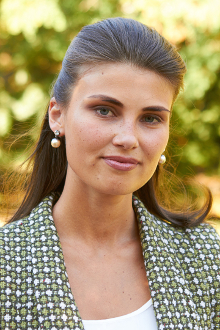
Monika Esch is a Researcher in the Department of Climate Physics at the Max Planck Institute for Meteorology in Hamburg, Germany, where she has been employed since 1991. She works in the Wave Driven Circulations research group, focusing on climate modeling and atmospheric physics. Her career began with a Diploma in Physics from the University of Hamburg in March 1988, followed by positions as a Scientist at the MPIfM (1988-1990) and GKSS Forschungszentrum (1990-1991) before transitioning to her current role as Scientific Programmer. Esch's research interests span climate modeling, atmospheric physics, numerical weather prediction, climate dynamics, tropical cyclone simulation, Earth system modeling, climate variability, and cloud physics. Her work primarily involves developing and implementing climate models, particularly focusing on the ICON (Icosahedral Nonhydrostatic) modeling framework. She has made significant contributions to understanding how microphysical processes affect tropical condensate, the simulation of Earth System components at high resolution, and the representation of quasi-biennial oscillation in climate models. Her publication record demonstrates consistent research activity from the late 1980s through 2025, with recent work focusing on high-resolution climate modeling, Earth system interactions, and the atmospheric response to increasing CO2. Her research shows a clear evolution from early work on ice sheet modeling and tropical cyclones toward more complex Earth system modeling at increasingly higher resolutions. While no specific scientific awards are mentioned in the available information, her extensive publication record in high-impact journals and consistent involvement in major climate modeling projects suggests recognition within the climate science community. Her collaborative work extends across multiple international research teams focused on advancing climate modeling capabilities. Esch has been instrumental in the development of the ICON modeling system and its various components, contributing to both the theoretical foundations and practical implementation of these models. Her technical expertise in scientific programming has enabled significant advances in climate simulation capabilities at the Max Planck Institute for Meteorology.