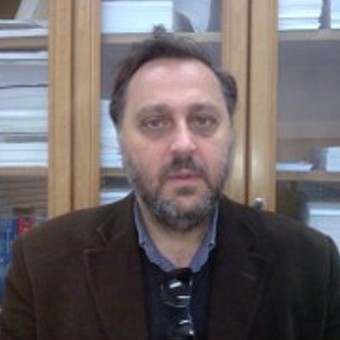
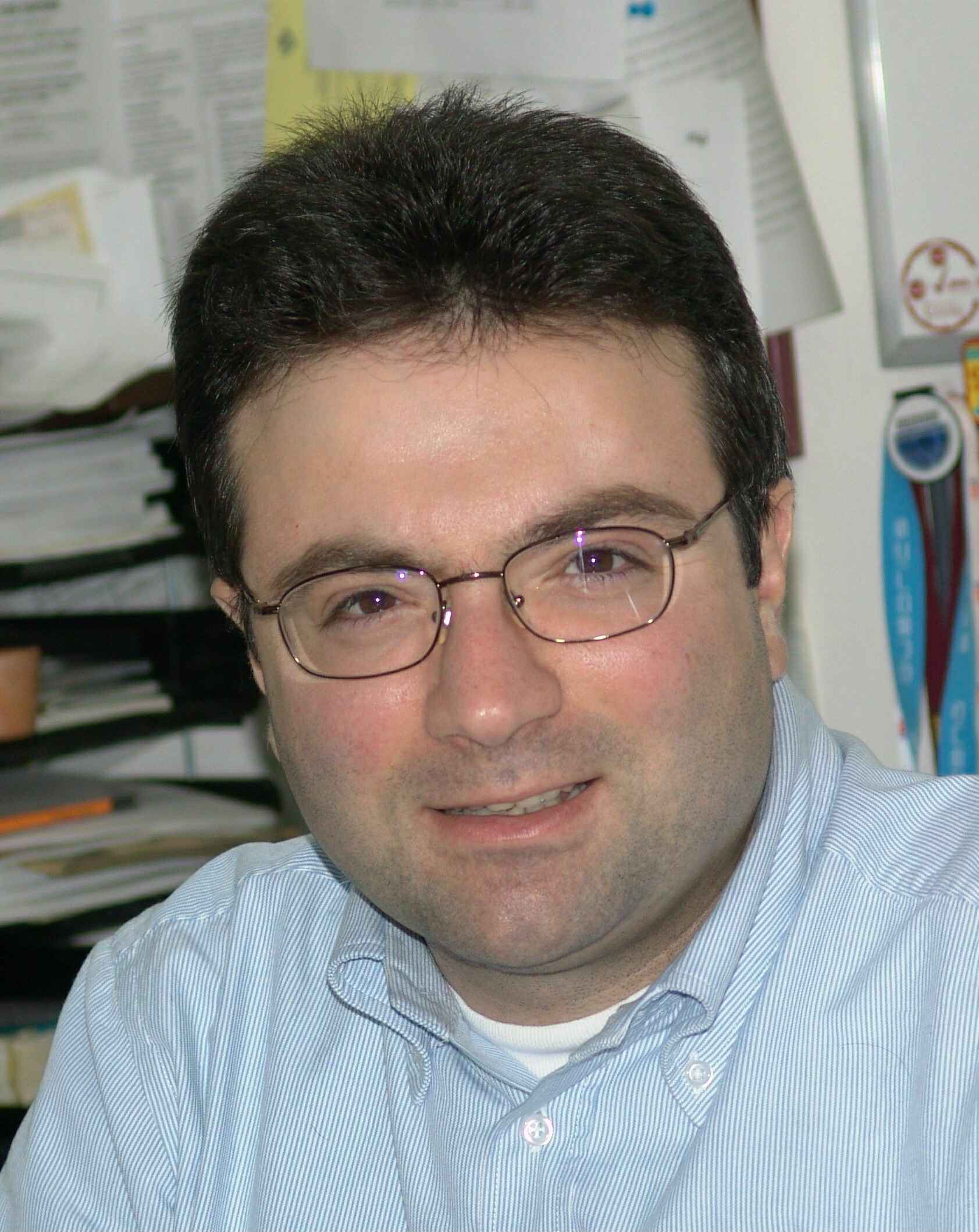
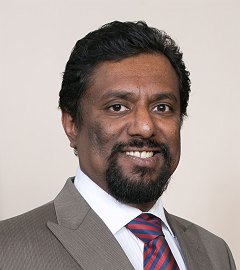
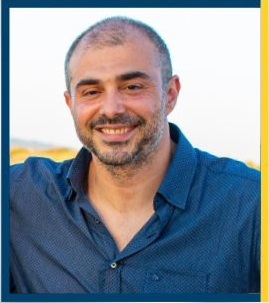
George Petrakos is a Professor at the Department of Urban Planning and Regional Development Engineering, University of Thessaly, and served as Rector of the same institution. He holds a PhD and M.Sc. in Economics from Arizona State University and a BA from Athens University of Economics and Business. Director of the Laboratory of Regional Economic Analysis and Policies Director of the South and East European Development Center Visiting Professor at LSE and Victoria University His research focuses on regional inequalities, urban development, economic integration in Europe, cross-border cooperation, and EU policy . He has authored over 20 books and numerous articles on these topics. Recent publications analyze spatial inequality patterns in Greece, convergence dynamics in EU regions, trade relations with neighboring countries, and the impact of EU integration on peripheral areas. He has led major EU-funded projects like ESSPIN and DISREG. He has served as an expert for the OECD, European Commission, and Horizon programs , and contributed to strategic development plans for Greek cities and regions.
Simeon Papadopoulos is an Associate Professor at the Department of Accounting and Finance, University of Macedonia. His expertise lies in Banking, Corporate Finance, and Financial Markets, with a focus on Stock Markets and Risk Management. B.A. Economics, University of Macedonia (1987) M.A. Economics, Concordia University (1989) Ph.D. Banking and Finance, Bangor University (1996) His research explores capital structure theories (Trade-off vs. Pecking Order), banking efficiency, precious metals volatility, and financial stability in emerging markets. Publications span peer-reviewed journals and conferences, emphasizing cross-border comparative studies in banking systems. Teaching includes courses on Bank Management, Corporate Finance, and Financial Markets for both undergraduate and postgraduate programs. He has supervised doctoral theses and mentored students in financial research.
Nectarios Koziris is a Professor at the Department of Computer Science , National Technical University of Athens (NTUA) , and former Dean of the School of Electrical and Computer Engineering . His research focuses on Parallel and Distributed Systems , Computer Architecture , and Cloud Computing . Key Research Themes: Compiler-OS-Architecture Interaction, Datacenter Hyperconvergence, Sparse Matrix Optimization, Quantum Computing, FPGA Virtualization Leadership: Founder of ~okeanos (Europe's largest public Cloud IaaS), Co-founder of GFOSS , Member of IEEE Computer Society Greece, Advisor to Arrikto Inc. His work has led to over 180 publications with 5800+ citations (h-index 33) , including two Best Paper Awards (IPDPS 2001, CCGRID 2013) and Intel Recognition (2015). He has supervised 12 PhD students and participated in 15+ EU projects as coordinator or consortium partner. Scientific Leadership: Program Co-Chair for Europar 2012 , Organizer for IPDPS , ICPP , SC conferences, and active member in Cloud Computing Expert Groups for the European Commission.
Alvin Cheung is an Associate Professor in the Computer Science Division at UC Berkeley's EECS department. He is affiliated with the Data Systems and Foundations group, Programming Systems group, Sky Lab, and SLICE Lab, and serves as a faculty affiliate at the Berkeley Institute for Data Science. He advises the Data Science Discovery Program and provides technical guidance to industry partners. His research spans data management, programming languages, and scalable software systems, with emphasis on helping users process large datasets efficiently. Key innovations include verified lifting (applying formal methods and ML to infer program properties) and systems for optimizing database-backed applications and geospatial analytics. Recent work explores LLM-driven code optimization and transpilation techniques. His publications (2023-2025) show strong trends in ML-enhanced systems, verified compilation, and data management tools. Articles frequently integrate formal methods, program synthesis, and hardware-aware optimizations across domains like databases, distributed computing, and HCI. Scientific Awards: ACSIC Rock Star Award (2025) Dahl-Nygaard Junior Prize (2024) VLDB Early Career Research Contribution Award (2023) IEEE TCDE Rising Star Award (2020) Sloan Fellowship (2019) NSF CAREER Award (2017) 20+ additional honors Advising & Grants: He mentors PhD/MS students (e.g., Lily Liu at OpenAI, Chenglong Wang at Microsoft Research). Research is funded by: NSF DOE ONR ARO Intel Notable grants include ONR Young Investigator Award and ARO Early Career Program Award. Labs & Teams: Leads projects in Berkeley's Data Systems/Programming Systems groups and collaborates with Sky Lab/SLICE Lab. Manages labs focused on verified compilation (e.g., Tenspiler) and data infrastructure (e.g., Spatialyze).
Professor Saman Amarasinghe is a faculty member in the Department of Electrical Engineering and Computer Science at the Massachusetts Institute of Technology (MIT), where he leads the Commit compiler research group at MIT's Computer Science and Artificial Intelligence Laboratory (CSAIL). His research focuses on programming languages and compilers that maximize application performance on modern computing platforms, with a particular emphasis on high-performance domain-specific languages. Professor Amarasinghe received his bachelor's degree in electrical engineering and computer science from Cornell University in 1988, followed by master's and PhD degrees in electrical engineering from Stanford University in 1990 and 1997, respectively. He joined the MIT faculty as an assistant professor in 1997 and has since become a world leader in his field. Professor Amarasinghe's research interests span programming languages, compiler design, and high-performance computing, with a particular focus on domain-specific languages. His group has developed numerous influential languages and compilers including Halide, TACO, Simit, StreamIt, StreamJIT, PetaBricks, MILK, Cimple, and GraphIt, which deliver unprecedented performance for application domains such as image processing, stream computations, and graph analytics. He has also pioneered the application of machine learning for compiler optimizations, from Meta optimization in 2003 to the OpenTuner autotuner framework. Professor Amarasinghe's publication history reveals a consistent research trajectory toward creating specialized language and compiler solutions that address performance challenges in specific domains while hiding complexity from application developers. His recent work focuses heavily on sparse computing, tensor algebra, graph processing, and the integration of machine learning techniques into compiler technology, demonstrating his ability to identify and address emerging computational challenges. ACM Fellow (2019) As an educator, Professor Amarasinghe has developed the popular Performance Engineering of Software Systems (6.172) class with Professor Charles Leiserson and created innovative project-based courses including the Open Source Software Project Lab, the Open Source Entrepreneurship Lab, and the Bring Your Own Software Project Lab. He also serves as the faculty director of MIT Global Startup Labs, which has helped create more than 20 startups across 17 countries. His research has translated into practical applications through startups like Determina, Inc. (acquired by VMware), demonstrating the real-world impact of his academic work. Professor Amarasinghe co-led the Raw architecture project with Professor Anant Agarwal, which did pioneering work on scalable multicores. His entrepreneurial activities include founding Determina, Inc. based on computer security research from his MIT lab and co-founding Lanka Internet Services, Ltd., the first Internet Service Provider in Sri Lanka, showcasing his ability to bridge academic research with commercial applications.
David I. August is a Professor at Princeton University specializing in programming languages and compiler systems. His research bridges theoretical compiler techniques with practical systems implementation, focusing on memory safety, speculative execution, and compiler optimization. His primary research interests include Compiler Design , Rust Programming Language safety mechanisms , and LLVM infrastructure extensions . His work emphasizes practical implementations that enhance both performance and security in modern programming systems. Recent publications demonstrate consistent contributions to memory profiling frameworks (PROMPT), Rust safety enhancements, and speculative dependence analysis. His research shows strong focus on making low-level systems programming safer without sacrificing performance. August serves regularly on program committees for major conferences including PLDI and CGO, indicating his standing in the programming languages research community. He has mentored students in compiler construction and programming language design, with research projects often involving practical implementations integrated into production-quality compiler frameworks.
Changhee Jung is the Samuel D. Conte Associate Professor in the Department of Computer Science at Purdue University. His research focuses on compilers and computer architecture with an emphasis on performance, reliability, and security. His educational background includes a Ph.D. from Georgia Tech (2013) under the supervision of Prof. Santosh Pande. Professor Jung's research spans compilers and computer architecture with a focus on performance, reliability, and security. He has developed program analysis and microarchitecture optimization techniques for soft error resilience, concurrency bug detection, and system security such as memory safety and Linux kernel permission check. Currently, he is working on energy-efficient intermittent computation and nonvolatile memory crash consistency. He often leverages compiler-architecture codesign and repurposes existing hardware features to develop cost-effective solutions for complex computing challenges. His recent publications demonstrate a clear trajectory toward intermittent computing systems, nonvolatile memory architectures, and security mechanisms for energy-constrained environments. His work shows innovative approaches to power failure recovery, capacitor vulnerability exploitation, and EMI attack defense in intermittent systems, with significant contributions to whole-system persistence, cache design, and prefetching techniques for low-power computing. His notable scientific achievements include: NSF CAREER Award (2018) Inducted into MICRO Hall of Fame (2021) Best Paper Honorable Mention in ISCA 2025 Memorable Paper Award Finalist in NVMW 2024 Dissertation Advisor of 2023 ACM SIGBED Paul Caspi Memorial Dissertation Award winner Jongouk Choi 2017 AMD Faculty Research Award Professor Jung has successfully advised numerous graduate students, many of whom have secured prominent positions at leading technology companies including Google, Intel, and Samsung Electronics. His lab, the CompArch (Compiler and Architecture) research group, was formed in 2013 at Virginia Tech and continues at Purdue, focusing on compiler-architecture cooperation to address cross-cutting concerns involving performance, reliability, and security. The lab has received significant research funding, including an NSF CAREER Award in 2018 and an AMD Faculty Research Award in 2017.
Dr. Christos Koritos serves as the Associate Dean of Academic Programs and Academic Director of the MSc in Marketing at The American College of Greece (Alba Graduate School of Business). He holds a Ph.D. from Athens University of Economics & Business, an M.Sc. from the University of Stirling, and a B.Sc. from Athens University of Economics & Business. His academic role includes teaching and leading strategic initiatives across multiple master’s programs in Marketing, International Business, and Tourism Management. Dr. Koritos’ research focuses on Consumer Psychology, Marketing of Services, Advertising, and Corporate Social Responsibility. His work explores topics such as customer behavior in hospitality settings, servicescape design, and the impact of rhetoric in advertising. He has published extensively in journals like Tourism Management , Journal of Business Research , and European Journal of Marketing . His consultancy work spans over 20 Greek and multinational companies, addressing strategic marketing challenges. He actively contributes to EU-funded projects and serves as a reviewer for academic journals and conferences. His teaching spans institutions including Alba, Athens University of Economics & Business, and the Greek Open University. Dr. Koritos’ recent research highlights include analyzing customer threats in hospitality, greenwashing in tourism, and the effects of music in service environments. His work bridges theoretical insights with practical applications, emphasizing empirical rigor and cross-disciplinary relevance.
Michail G. Lagoudakis is a Professor at the Department of Electronic and Computer Engineering, Technical University of Crete. His academic journey includes a Ph.D. in Computer Science from Duke University (2003), an M.Sc. from the University of Louisiana, Lafayette (1998), and a B.Sc. from the University of Patras (1995). He has held prestigious positions such as Postdoctoral Fellow at Georgia Institute of Technology's School of Industrial and Systems Engineering. Research Interests : Spanning machine learning (especially reinforcement learning), decision-making under uncertainty, robotics, algorithm selection, computational biology, and human-computer interaction. Publications : Over 15 recent works, including key contributions to robotics (auction-based multi-robot routing), medical diagnosis (urgent endoscopy prediction), and foundational machine learning (Least-Squares Policy Iteration, RCPI algorithm). Scientific Recognition : Recipient of Duke University's Outstanding Dissertation Award (2002-2003) and two Outstanding Teaching Assistant Awards. Professional Affiliations : Member of AAAI, IEEE, and ACM. Collaborations include industrial applications in disassembly planning, dynamic packet routing, and medical imaging. He advocates for computational biology and interdisciplinary research, aiming to integrate tools from mathematics and control theory into machine learning.
Nikos Giatrakos is an Assistant Professor at the School of Electronic & Computer Engineering, Technical University of Crete, and a core member of the Software Technology and Network Applications Lab (SoftNet) . His work bridges Big Data systems, IoT, and advanced analytics, with a focus on real-time processing and scalable architectures. Previously, he served as a postdoctoral researcher at the same laboratory. Education PhD in Computer Science, University of Piraeus (2012) Postgraduate Diploma in Information Systems, Athens University of Economics and Business (2008) BSc in Computer Science, University of Piraeus (2006) Research Focus : Nikos specializes in software architectures for Big Data streaming, including Distributed Big Data Processing , Federated Machine Learning , Cloud-to-Edge Data Management , and Approximate Query Processing . His work has also advanced Complex Event Processing and Outlier Detection in decentralized environments. Scientific Contributions : His research has led to the DAG* workflow optimizer for IoT, the SuBiTO framework for real-time neural learning, and the INFORE approach for cross-platform analytics. He received the Best System Demonstration Award at ACM CIKM 2020 for INforE. Academic Leadership : Nikos teaches Object-Oriented Programming, Data Science, and Distributed Systems. He has supervised numerous European and national grants as Principal Investigator and served on program committees for top-tier conferences like SIGMOD, VLDB, and DEBS.
Sotiris Christodoulou is an Associate Professor at the Department of Electrical and Computer Engineering within the College of Engineering at the University of Peloponnese. He also serves as a research associate at the 'Diofantos' Institute of Computer Technology and Publishing. His academic career spans multiple institutions where he has taught graduate and undergraduate courses across seven different universities since 2004. Dr. Christodoulou earned his B.A. in Computer Engineering and Informatics from the University of Patras in 1994 and completed his PhD in Web Engineering from the same institution in 2004. His educational background established the foundation for his extensive research career focused on web technologies and applications. His primary research interests include Web Engineering, Web Application Performance Optimization, Web Code Quality, Semantic Web technologies, Hypermedia Systems, and emerging Web 2.0 and Web 3.0 technologies. His work extends to Virtual Interactive Environments, 3D and Augmented Reality applications, and Spatial Hypertext systems. Christodoulou's research bridges theoretical web engineering principles with practical applications in cultural heritage, education, and urban infrastructure systems. His research output comprises over 45 publications in international journals, book chapters, and conferences, accumulating more than 450 citations. He has participated in over 23 European and National Research and Development Projects focused on web software technology, hypermedia applications, and 3D educational and cultural applications. Professional member of ACM Professional member of IEEE Member of organizing committees for over 15 international scientific conferences Reviewer for recognized international journals (ACM, IEEE, etc.) Christodoulou has extensive teaching experience across seven universities, specializing in programming languages, web software engineering, software quality, and data management. His research projects typically combine applied research with cutting-edge technology implementation for real-world problems in large organizational information systems. He maintains regular office hours at Building K, Office K2.02 at the University of Peloponnese, with appointments available on Mondays and Thursdays.
Periklis Andritsos is an Associate Professor at the University of West Attica's Department of Informatics and Computer Engineering. Previously, he served as an Assistant Professor at the University of Toronto's Faculty of Information (iSchool). He holds a PhD in Computer Science from the University of Toronto (2004), with postdoctoral research under Professors Renée J. Miller and Kenneth C. Sevcik. His research focuses on data clustering, process mining, customer journey analytics, and database design. He co-founded Thoora Inc. (winner of TechCrunch 50 2009) and Odaia.ai, applying his work to real-world applications in banking and urban transport systems. Education: PhD in Computer Science, University of Toronto (2004); MEng from National Technical University of Athens (Diploma in Electrical & Computer Engineering). Awards: Multiple Best Paper Awards (ICPM 2021, ADBIS 2019), TechCrunch 50 Award, and recognition in industry collaborations with institutions like the National Bank of Denmark and Lausanne Municipality. Research Interests: Process mining for customer journey mapping, categorical data clustering (notably the LIMBO algorithm), and applications in sales process optimization, data warehousing, and entity lifecycle management. Service: Program committee roles at EDBT, SIGMOD, KDD, and other conferences; editorial contributions to journals and special issues. His work on LIMBO remains a benchmark in categorical clustering, while recent efforts in process mining have pioneered customer journey analytics. He actively engages with industry, notably through Odaia.ai's application of his research in customer journey mapping tools.
Dimitrios D. Vergados is a Professor in the Department of Informatics at the University of Piraeus, holding the UNESCO Chair in 'Creative Cities in Motion: Urban Sustainable Mobility and Utilization of Cultural Resources.' As an IEEE Senior Member, he specializes in wireless networks, computer networks, and advanced digital technologies, with a focus on 5G, IoT, and smart systems. His research spans telecommunications systems , cloud computing , machine learning for industrial applications , and digital cultural heritage preservation . Recent work explores vehicular networks, drone communication in 5G architectures, and privacy challenges in smart cities. He has contributed to energy optimization, security frameworks, and digital twin implementations for sustainability. Key trends in his publications include the intersection of 5G security , IoT , and machine learning in industrial and healthcare contexts, alongside digital heritage modeling for cultural preservation. His work bridges theoretical and applied domains in telecommunications and smart technologies. Scientific Awards IEEE Senior Member Vergados has served as a committee member, technical program committee member, and reviewer for international conferences and journals. He previously chaired the UNESCO Chair and participated in national and international evaluations, including roles at the Hellenic Telecommunications and Post Commission. His research emphasizes interdisciplinary applications of digital systems in mobility, healthcare, and cultural management.
Elia Petridou is a Social Anthropologist and Permanent Assistant Professor at the Department of Social Anthropology, University of the Aegean. She specializes in material culture, focusing on clothing, body practices, and migration. Her academic journey includes a Business Administration degree from Athens University of Economics and Business, an MSc in Social Anthropology from the University of Edinburgh, and a PhD from University College London (2001). Educational Background: PhD in Social Anthropology, UCL (2001) MSc in Social Anthropology, University of Edinburgh Bachelor’s in Business Administration, Athens University of Economics Research Interests: Her work explores clothing-materiality relationships, migration, refugee crises, circular economy, and museum representation. Recent studies include refugee clothing circulation and upcycling initiatives. She co-ordinates the Department’s Erasmus program since 2009 and organizes the Lesvos Summer School on 'Cultures, Migrations, Borders' since 2012. Professional Affiliations: Treasurer, Hellenic Society of Costume Design Member, ICOM (International Council of Museums) Fluency in English/Spanish/German, with knowledge of French and Arabic Courses Taught: Courses include material culture, consumption studies, food anthropology, and gender studies at undergraduate and postgraduate levels. Labs & Teams: Active in the Department’s Ethnography, History, and Family/Kinship Studies laboratories. Collaborates on EU-funded projects like 'Fabric of my Life' for refugee integration through craft.
Dr. Sotirios Varelas is an Assistant Professor at the Department of Tourism Studies of the University of Piraeus specializing in Hospitality Business and Tourism Organization Strategy. He holds a PhD from the Department of Organization and Business Administration of the School of Economics, Business and International Studies of the University of Piraeus, an MBA-TQM in Business Administration, and graduated from the Department of Statistics and Insurance Science. With over 12 years of professional experience as a scientific consultant in tourism organizations, Dr. Varelas has served at the Ministry of Tourism, the Hellenic Tourism Organization, and the Peloponnese Region. He has collaborated with numerous research centers including the Institute of Regional Development, ELKE of the University of Peloponnese, and the Research Center of the University of Piraeus. His research focuses on strategic management in tourism, digital tourism innovations, sustainable tourism practices, and big data applications in the tourism sector. He has published extensively in international journals on topics including blockchain technology in tourism, virtual immersive platforms, artificial intelligence applications, and strategic management during economic crises. Dr. Varelas teaches various courses including Introduction to Tourism, International Economics and Tourism Market, Tourism Development Strategies, Strategic Management of Tourism Businesses, and Contemporary Tourism Issues at the University of Piraeus. He also serves as the student internship coordinator and academic advisor coordinator for the Department of Tourism Studies. As an active leader in the tourism academic community, he is President of the Board of Directors of the Greek Branch of the World Organization for Technology in Tourism and Travel (IFITT) and has created and coordinated postgraduate programs in tourism business administration.