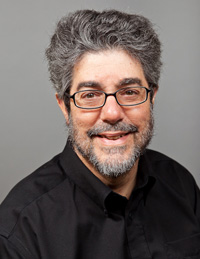
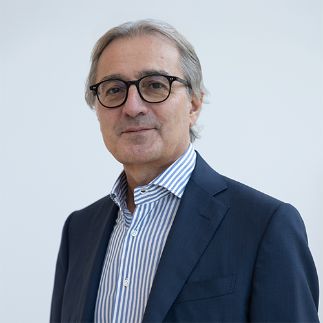
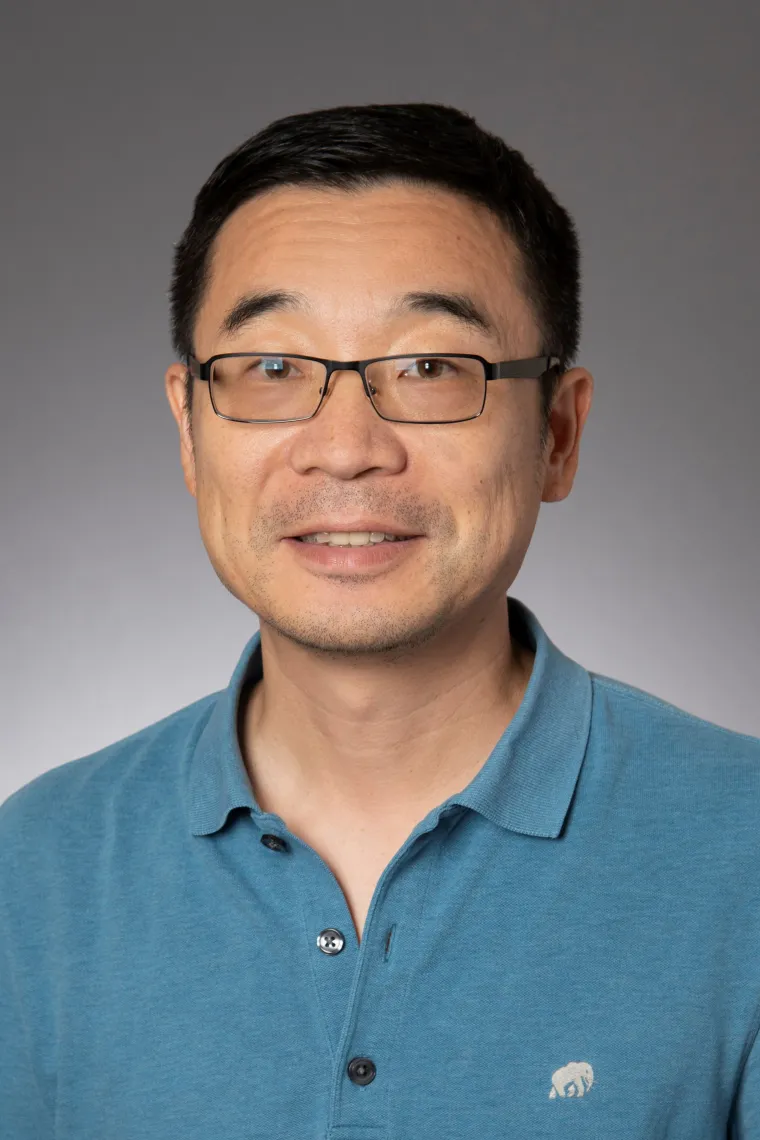
Associate Professor Vic Ciesielski is affiliated with RMIT University's School of Computing Technologies. His research focuses on Artificial Intelligence, Evolutionary Computing, Computer Vision, and Genetic Programming, with applications in areas like robot soccer and aesthetic analysis of images. He has supervised projects including efficient neural architecture search and off-line handwritten text recognition. His work bridges computational techniques with creative fields such as art history and digital media. Key research interests include machine learning, data management, and graphics/augmented reality. He actively contributes to conferences like GECCO and IJCNN, publishing on topics ranging from neural architecture optimization to sensor-based activity recognition. His research often integrates evolutionary algorithms with deep learning methodologies. He can be contacted via vic.ciesielski@rmit.edu.au and has an ORCID identifier: 0000-0001-7273-9566 .
Robert J.K. Jacob is a Professor of Computer Science at Tufts University, affiliated with the School of Engineering's Department of Computer Science. His research focuses on Human-Computer Interaction (HCI), particularly implicit brain-computer interfaces (BCI) using fNIRS and EEG technologies. He has held visiting positions at University College London, Université Paris-Sud, and MIT Media Lab. Education: Ph.D. in Computer Science from Johns Hopkins University. Research Interests : Jacob's work explores novel interaction techniques, adaptive interfaces, and BCI applications. Current projects emphasize real-time fNIRS-based systems for effortless user input, cognitive workload assessment, and neuroadaptive technologies. His lab investigates how brain signals can enhance user interfaces in domains like music learning, gaming, and urban design. Recent Trends in Articles : Recent publications highlight advancements in BCI design, neuroadaptive systems, and interdisciplinary applications of fNIRS. Work spans theoretical frameworks (e.g., NeuroCHI ethics) to practical tools like the Tufts fNIRS dataset. Key themes include improving BCI calibration, exploring AI's role in urban environments, and integrating affective computing into artistic interfaces. Awards : ACM Fellow (2016) ACM CHI Academy Membership (2007) Best Paper Award at CHI 2016 Advising & Grants : Supervised 15+ Ph.D. alumni in HCI and BCI. Served as Vice-President of ACM SIGCHI and co-chair of UIST/CHI conferences. Active in editorial roles for Human-Computer Interaction and ACM Transactions on Computer-Human Interaction . Labs & Teams : Directs the Tufts HCI Lab in the Joyce Cummings Center. Collaborates with interdisciplinary teams on projects like the Marble Track Audio Manipulator and Reality-Based Interaction Framework.
Magdalena Szymczyk is a Lecturer in the Department of Biocybernetics and Biomedical Engineering at AGH University of Science and Technology, Faculty of Electrical Engineering, Automatics, Computer Science and Biomedical Engineering. Her work bridges embedded systems, biomedical signal processing, and geophysical data analysis. Research focuses on energy-efficient sensor networks, neural networks for GPR data classification, and mathematical transforms in signal analysis Expertise in parallel computing, real-time systems, and biomedical engineering applications Her publications (2015–2025) demonstrate a trajectory from parallel neural networks and S-transform/GPR methodologies to recent work on MicroPython in embedded systems. Key themes include energy optimization in distributed architectures and AI-driven signal processing across biomedical and geophysical domains. She has authored works on deterministic chaos in simulations, GPU image processing, and cybersecurity in microcontroller systems. Her current research emphasizes embedded systems security, medical signal diagnostics, and computational methods for geological analysis. She utilizes tools like OpenCL for GPU acceleration and MATLAB for parallel computing implementations.
Professor Sander Nieuwenhuis (Leiden University) specializes in Cognitive Neuroscience of Decision Making through behavioral, EEG, and pharmacological approaches. His work bridges prefrontal cortex function and noradrenergic system mechanisms in human cognition. Studied cognitive psychology (Groningen) and earned PhD (Amsterdam, 2001) International experience: Cambridge University (visiting research), Princeton University (postdoc) Research focuses on noradrenaline's role in attention, decision-making, and cognitive control via: Locus coeruleus-norepinephrine system dynamics Phasic vs. tonic alertness effects Cognitive task performance under neuromodulator deficiency Neuroprotective pathways in Alzheimer's models Recent publications analyze DBH deficiency (Jepma et al., 2011) and attentional blink mechanisms (Nieuwenhuis et al., 2005). His Temporal Attention Lab integrates fMRI, genetics, and computational modeling . Teaching leadership includes: Chair of Research Master Program Committee Coordinator of Scientific Writing courses
Liadh Kelly is an Assistant Professor in the Department of Computer Science at Maynooth University's Faculty of Science & Engineering. She supervises PhD students in applied artificial intelligence, focusing on intelligent search, ubiquitous computing, and multimodal information access. She is affiliated with the ADAPT SFI Research Centre, SFI Centre for Research Training in Foundations of Data Science, and Human Health Institute. BSc in Computer Science MSc (Research) in Computer Science PhD in Computer Science Her research explores context-sensitive retrieval and evaluation methodology in AI-driven systems. Key areas include ubiquitous computing for personal data analysis, deep learning classification for mental wellness indicators, and multimodal lifelogging integration. Recent publications focus on urban mental wellbeing classification , contextual cue analysis , and AI-driven health search systems . Articles address smart city applications , consumer health search , and cross-lingual medical retrieval . Professional roles include Doctoral Consortium Chair at ECIR 2023 and Programme Committee member for SIGIR and ICWSM conferences. She leads grants for 4-year PhD studentships with stipend and fee coverage.
Daniel J. Bain is an Associate Professor in the Department of Geology & Environmental Science at the University of Pittsburgh, where he also serves as Deputy Director of the Pittsburgh Water Collaboratory. He holds a B.A. in Chemistry and Geography from Macalester College, an M.S. and Ph.D. in Geography & Environmental Engineering from Johns Hopkins University, and completed a National Research Council Postdoctoral Fellowship at the U.S. Geological Survey's Water Resources Division. His research integrates hydrology, geomorphology, biogeochemistry, ecology, and spatial analysis to assess human impacts on environmental systems over centuries. Focus areas include: Fluvial (stream) system dynamics and sediment chemistry Urban critical zone processes and land-use impacts Water quality monitoring in anthropogenic landscapes Green infrastructure performance and stormwater management Environmental justice implications of urbanization Recent publications (2024-2025) demonstrate strong emphasis on urban hydrology, metal contamination pathways, climate-health interactions in vulnerable communities, and novel assessment methods for environmental systems. Research spans Pittsburgh's urban watersheds to international sites like China and El Salvador, employing field measurements, laboratory analysis, and geospatial approaches. Dr. Bain leads the Bain Lab at Pitt's Space Research Coordination Center, focusing on environmental chemistry and sustainable water systems. He collaborates extensively with community partners, including the Pittsburgh Center for Healthy Environments and Equity Research, and co-organizes symposia on urban environmental challenges.
Montorfano Matteo is an Associate Professor of Cardiovascular Diseases at the Vita-Salute San Raffaele University in Milan since March 2023. He serves as Director of the Second-Level Master's Degree in Interventional Cardiology and has been Head of the Interventional Cardiology Unit and Hemodynamics at San Raffaele Hospital since 2018. His academic career spans roles as Director of the Percutaneous Cardiac Treatment Unit and Head of the Interventional Cardiology Laboratory. He holds an H-index of 59 with over 450 publications and 15,000 citations, focusing on structural heart disease and percutaneous valve interventions . Education: Specialization in Cardiology, La Sapienza University of Rome (2000) Degree in Medicine and Surgery, University of Milan (1991) Research Interests: Pioneering transcatheter structural heart interventions including TAVI , MitraClip , and left atrial appendage closure . Developed the LIRA sizing method for bicuspid aortic valve interventions and founded start-ups like Cephea Valve Technologies and Viv-Heart . Major contributions to valvular heart device innovation , with numerous international patents. Publications: Over 450 works in Circulation , JAMA , and JACC Cardiovascular Intervention , emphasizing transcatheter valve therapies , complex coronary interventions , and device development . Industry Collaborations: Faculty member at major conferences: TCT , PCR , GISE Consultant/Advisory Board member for Edwards Lifesciences , Medtronic , and Boston Scientific
Phil Pavilionis is an Associate Professor of Kinesiology in the School of Public Health at the University of Nevada, Reno. With over 20 years of clinical experience as a Certified Athletic Trainer (ATC) and Certified Strength and Conditioning Specialist (CSCS), he bridges academic research with practical applications in sports medicine. His roles include teaching undergraduate/graduate courses, conducting research in the Neuromechanics Laboratory, and serving as an adjunct clinical athletic trainer for Nevada Sports Medicine. Education: Ph.D. in Neuroscience, University of Nevada, Reno (2024) M.S. in Exercise Science, California University of Pennsylvania (2007) B.S. in Health Science, University of Nevada, Reno (1995) Dr. Pavilionis specializes in head injury prevention and virtual reality applications for concussion evaluation. His research leverages clinical experience to develop standardized assessment protocols, focusing on vestibular-ocular motor screening (VOMS) using virtual reality to reduce administrator variability. Key investigations include oculomotor deficits following concussion, head impact biomechanics in football using instrumented mouthguards, and minimal detectable change metrics for neurocognitive tests like ImPACT. His work integrates neuroscience, kinesiology, and engineering to improve concussion diagnosis and management. Analysis of his 45 publications (2022-2025) reveals three dominant trends: (1) Virtual reality standardization of concussion assessments, particularly VOMS protocols; (2) Head impact monitoring using instrumented mouthguards to evaluate protective equipment like Guardian Caps; and (3) Machine learning applications for objective concussion detection through eye-tracking and biomechanical data. These studies consistently address the critical need for objective, standardized tools to overcome subjective symptom reporting in sports concussion management. Dr. Pavilionis actively collaborates with the Neuromechanics Laboratory and Nevada Sports Medicine, translating research into clinical practice. While no specific grants are documented in the provided materials, his extensive publication record (including 15 articles in 2023 alone) demonstrates sustained research productivity and interdisciplinary collaboration across neuroscience, engineering, and sports medicine disciplines.
Dr. Mohammad Iftekhar Husain is a Professor and Graduate Coordinator in the Department of Computer Science at California State Polytechnic University, Pomona (Cal Poly Pomona). He serves as the Inaugural Director of the PolySec Cyber Lab, a federally funded center for cyber security and forensics education, research, and outreach (~$2.5M in grants), and directs the university's Virtual Reality Lab. His career spans over a decade of leadership in cyber security program development, extramural funding, and academic governance. Education: B.S., Computer Science, Yamagata University (Japan) M.S. & Ph.D., Computer Science and Engineering, SUNY-Buffalo Dr. Husain's research focuses on data privacy in social networks, neurophysiological cyber security solutions, and blockchain applications. He has secured $18.4M in principal investigator grants, including NSF SFS, EAGER, and REU Site projects, and trained students placed in top institutions like UC campuses, MIT Lincoln Lab, and government agencies such as NSA and DHS. His work on brainwave authentication earned a US patent (USPTO 10,198,566) and media coverage in Time Magazine and PC Magazine . Scientific Awards: 2016 College of Science Distinguished Teaching Award Early Promotion and Tenure (2016) 2020 Faculty Learning Community for Leadership Pipeline Development Cohort As academic leader, he founded the Cal-Bridge CS Ph.D. pathway program for underrepresented students, chairs the CPP Academic Senate Academic Programs committee, and led university IT initiatives including Cyber Security Cluster Hiring and High-Performance Computing Lab development.
Professor Matthias Kliegel is affiliated with the LIVES Centre at the University of Geneva, where he conducts research on aging and cognitive processes. His work spans multiple interdisciplinary collaborations across Switzerland and internationally, focusing on memory, cognitive aging, and health outcomes in older populations. As a prominent researcher in gerontology, he contributes significantly to understanding age-related cognitive changes and their implications for healthy aging. Professor Kliegel's research interests center on cognitive aging, with particular emphasis on prospective memory, cognitive complaints, and the interplay between physical activity, health literacy, and cognitive function in older adults. His work examines how individual differences affect cognitive trajectories across the lifespan and investigates factors that contribute to successful cognitive aging. Recent research has expanded into technology applications, including AI and consumer-grade devices for cognitive health monitoring and early detection of cognitive decline. Analysis of Professor Kliegel's recent publications reveals a strong focus on longitudinal approaches to studying cognitive aging, with an increasing integration of technology in aging research. His work spans traditional psychological methodologies while incorporating contemporary approaches like AI analysis of aging research priorities and digital screening tools for preclinical Alzheimer's disease. The research consistently addresses practical applications for improving cognitive health outcomes in aging populations, with several studies focusing on modifiable factors like physical activity that could inform public health interventions. Professor Kliegel maintains active collaborations with numerous researchers across Swiss institutions including the LIVES Centre network, with co-authors spanning psychology, public health, and geriatric medicine. His work appears in high-impact journals across gerontology, psychology, and public health disciplines, demonstrating the interdisciplinary nature of his research program. The consistent funding evident from his publication record suggests successful grant acquisition supporting his longitudinal research initiatives. As a faculty member at the University of Geneva's LIVES Centre, Professor Kliegel contributes to a major interdisciplinary research platform focused on vulnerability throughout the life course. His work aligns with the Centre's mission to investigate social, economic, and health-related vulnerabilities across different life stages, with particular emphasis on aging populations in Switzerland and beyond.
Beichuan Zhang serves as Associate Department Head and Professor in the Department of Computer Science at the University of Arizona, maintaining office GS 723 with contact details 520-621-4817 and bzhang@cs.arizona.edu. His academic leadership spans network architecture research and departmental administration within the university's computing ecosystem. Zhang holds a Ph.D. from the University of California at Los Angeles (2003), establishing his foundation in advanced networking systems. His doctoral work catalyzed a career focused on internet infrastructure evolution. Research centers on computer networks with specific expertise in Internet routing architecture, protocols, topology, and multicast systems. Zhang is a principal investigator in Named Data Networking (NDN), driving innovations in stateful forwarding planes, in-network caching (e.g., Nb-cache, BLEnD), and congestion control mechanisms. His work bridges theoretical networking models with practical implementations for wireless, satellite, and live-streaming environments. Analysis of 2021-2025 publications reveals strategic expansion into Low Earth Orbit satellite networks, where Zhang pioneers NDN adaptations for handover resilience and outage detection. Concurrently, his group optimizes video streaming protocols and wireless performance through interest bundling techniques. This dual trajectory demonstrates systematic progression from terrestrial networking to space-ground integrated architectures.
Elfi Baillien is a Professor at the Faculty of Economics and Business, KU Leuven, and a member of the Research Unit Work and Organisation Studies. She is also affiliated with DigiSoc – KU Leuven Institute for Digital Society and serves on the Faculty Council and Doctoral Committee of Economics and Business Administration. Her research centers on the psychosocial well-being of employees, with a strong focus on workplace bullying, digital disconnection, and the impact of ICT use on stress and performance. She leads and co-promotes multiple national and international research projects exploring aggression, telework, and digital well-being. Research Interests: Psychosocial well-being at work Workplace bullying and harassment Digital disconnection and technostress Self-determination theory in organizational contexts ICT use and employee health She has published extensively in top-tier journals such as Work & Stress , European Journal of Work and Organizational Psychology , and Behavioral Sciences , with a focus on hybrid work, burnout, and co-worker responses to mistreatment. While no specific awards are listed, her leadership in multiple high-impact projects and editorial contributions reflect significant academic recognition. She teaches courses including Group Dynamics, Multi-actor Collaboration, and Mental and Digital Well-Being, and supervises doctoral students in organizational psychology and workplace behavior.
William Harbert is a Professor in the Department of Geology and Environmental Science at the University of Pittsburgh, where he leads research in geophysics and subsurface characterization. His work bridges fundamental geophysical principles with practical applications in energy and environmental systems. Education: MS in Exploration Geophysics from Stanford University PhD in Geophysics from Stanford University Research focuses on seismic analysis across multiple scales, from micro-CT to surface seismic. His group specializes in advanced processing of microseismic, reflection seismic, and VSP data to image subsurface structures and understand pore-scale dynamics. Current work integrates deep learning for geophysical object detection and classification, with emphasis on organic shale systems and CO 2 storage monitoring. Key areas include rock physics, microseismicity analysis, and environmental geophysics for water quality assessment. Publication trends show strong emphasis on energy-related geophysics, particularly hydraulic fracturing monitoring, CO 2 sequestration verification, and unconventional reservoir characterization. Recent work increasingly incorporates machine learning techniques and addresses environmental monitoring challenges in subsurface operations. Scientific recognition: DOE ORISE Research Associate Resident Institute Fellow of the NETL-Institute for Advanced Energy Solution Professional engagements include membership on the Altarock Review Board for DOE-funded geothermal projects and prior service on the Scientific Advisory Board for the In Salah CO 2 Injection Project. His research involves extensive collaboration with national laboratories and industry partners on subsurface monitoring technologies. His laboratory group develops advanced geophysical processing techniques for subsurface imaging across multiple scales, with current projects focusing on microseismic monitoring of shale reservoirs and CO 2 storage sites.
Dr. Maryam Ghahramani is a Senior Lecturer in AI & Robotics at the Faculty of Science & Technology, University of Canberra, Australia. She holds a BSc in Electrical Engineering from Shiraz University, Iran, and a PhD in Biometric Gait Analysis from the University of Wollongong, Australia. Biomedical Engineering Researcher Machine Learning Specialist Human Motion Analysis Expert Her research focuses on applying machine learning to human motion analysis for rehabilitation purposes, particularly in three key areas: Parkinson's Disease: Using fNIRS and machine learning for disease detection and motor function assessment Fall Prevention: Analyzing postural sway and risk of falls in older adults Spatial Disorientation: Studying balance in hypoxic aviation environments Recent publications demonstrate her work at the intersection of biomedical engineering, machine learning, and clinical rehabilitation. Current projects include: Young Onset Dementia Detection with 12-week Home-Based Exercise Programs Mild Hypoxia Analysis for Aviation Safety Balancing Mat Performance Evaluation
Dr. Miguel Rico-Ramirez serves as Associate Professor of Radar Hydrology and Hydroinformatics at the University of Bristol's School of Civil, Aerospace and Design Engineering. His research integrates advanced radar technology with hydrological modeling to address critical water resource challenges including flood forecasting, drought management, and precipitation measurement across diverse global contexts from South Korea to Mexico City. Education: Bachelor of Engineering (Eng.) Master of Engineering (M.Eng.) Ph.D. in Engineering, University of Bristol His research program focuses on radar-based precipitation estimation, hydroinformatics, and flood prediction systems. He pioneers deep learning applications for rainfall nowcasting and develops innovative methods for uncertainty quantification in hydrological modeling. Current work emphasizes cosmic-ray neutron sensor validation, satellite-based flood mapping, and seasonal forecast applications for reservoir operations, with strong emphasis on translating research into operational water management solutions. Recent publications (2023-2025) reveal three dominant research thrusts: (1) deep learning frameworks for spatiotemporal rainfall prediction, (2) global validation of precipitation and soil moisture datasets using novel sensor networks, and (3) operational implementation of seasonal forecasts for drought mitigation in South Korea. His work consistently bridges radar meteorology with practical hydrological applications across urban and data-scarce environments. Scientific Awards: No specific awards documented in source materials Dr. Rico-Ramirez supervises postgraduate researchers in radar hydrology and hydroinformatics, with projects spanning flood early warning systems, precipitation nowcasting, and climate adaptation strategies. His research receives funding for international collaborations focused on water security challenges, particularly in drought-prone regions and data-scarce basins like the Nile Delta. Current grants support development of integrated forecasting systems combining global datasets with machine learning for extreme event management. He leads the Radar Hydrology research group within Bristol's Water and Environmental Engineering division, collaborating closely with Professor Dawei Han on hydroinformatics and Dr. Rafael Rosolem on water-climate interactions. The team maintains active partnerships with meteorological agencies and water authorities globally, particularly in flood forecasting system implementation across South Korea and Mexico.