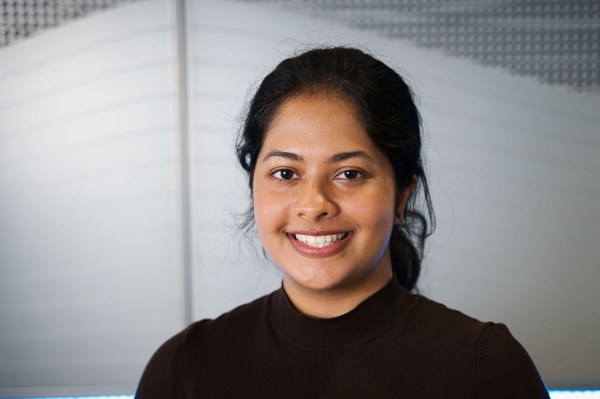
Chelsea Maria John is a Researcher at the Accelerating Devices Lab within the NOVAS division of the Jülich Supercomputing Centre (JSC) at Forschungszentrum Jülich. Her work focuses on high-performance computing and artificial intelligence, specializing in efficient machine learning model training, hardware accelerator benchmarking, and optimization strategies for communication and computation. Her research spans: Natural Language Processing and Large Language Models (LLMs) Scientific Machine Learning with Neural Operators High-Performance Computing system optimization Benchmarking frameworks for emerging AI hardware European open-source AI initiatives like OpenGPT-X Analysis of her 15 publications (2021-2025) reveals pioneering work in training LLMs on HPC systems, development of benchmarking suites (JUPITER, CARAML), and European LLM projects (Teuken series). Her research bridges AI and computational science, notably applying Fourier Neural Operators to fluid dynamics simulations. As part of the Accelerating Devices Lab, she contributes to advancing AI acceleration through hardware-software co-design, focusing on communication efficiency and computational optimization for next-generation scientific computing workloads.
Dr. Jan Meinke is a Researcher at the Jülich Supercomputing Centre (JSC) within Forschungszentrum Jülich, Germany. His work focuses on high-performance computing, GPU programming, and performance portability across different hardware platforms. He contributes to the development of exascale computing applications and benchmarks, particularly through the JUPITER benchmark suite. Based in Building 14.14, Room 4012 at the Jülich research campus, he maintains active research collaborations across computational science domains. Dr. Meinke's research spans two major domains: high-performance computing and computational epidemiology. In HPC, he investigates GPU programming models, performance portability across vendors, and scalable computational fluid dynamics. His work on the JUPITER benchmark suite aims to address challenges in application-driven exascale computing. In computational epidemiology, he has developed forecasting models for COVID-19 spread across European nations, focusing on ensemble approaches and short-term prediction. His earlier work includes protein folding simulations and Monte Carlo methods, demonstrating a long-standing interest in computational methods across scientific domains. Analysis of Dr. Meinke's publication history reveals a strategic evolution from computational biophysics to high-performance computing infrastructure. His recent work (2023-2025) shows a strong emphasis on performance portability across GPU architectures, particularly for scientific computing applications like the N-body problem and computational fluid dynamics. The JUPITER benchmark suite represents a significant contribution to exascale computing evaluation, bridging theoretical computer science with practical applications. His dual focus on HPC infrastructure and epidemiological modeling demonstrates versatility in applying computational methods to diverse scientific challenges. Dr. Meinke has been actively involved in both teaching and research aspects of high-performance computing, authoring educational materials on GPU programming with CUDA and advanced GPU techniques. His work demonstrates a commitment to advancing both the theoretical foundations and practical applications of high-performance computing, with implications for scientific discovery across multiple domains including physics, engineering, and public health.
Joachim Falk is a researcher at the Department of Hardware-Software Co-Design (Computer Science 12) at Friedrich Alexander University Erlangen-Nuremberg. With over 20 years of experience since joining the department in 2004, he specializes in electronic system level design, dataflow programming, and hardware-software co-design, contributing significantly to the field through publications, teaching, and research leadership. His educational background includes: Doctorate degree (Dr.-Ing.) in Computer Science from FAU (2014) Diploma degree in electrical engineering (data processing) from Georg-Simon-Ohm University of Applied Science Nuremberg (2002) Falk's research focuses on Electronic System Level Design, Hardware/Software Code Generation for Data-Flow Graphs, Compiler Optimizations, and Parallel Architectures. His work bridges theoretical computer science with practical embedded systems implementation, particularly through the SystemC framework and his contributions to the SysteMoC language. He actively explores energy-efficient computing approaches for dataflow networks and embedded systems, with recent work emphasizing self-powering networks, clock and power gating techniques, and multi-reader buffer implementations for heterogeneous architectures. His recent publication trends reveal a consistent focus on optimizing dataflow networks for energy efficiency and performance. Key themes include self-powering dataflow networks, innovative clock and power management techniques, buffer management strategies for heterogeneous many-core systems, and invasive computing approaches. His research demonstrates a strong connection between theoretical models and practical implementation challenges in embedded systems design. Dr. Falk teaches courses including 'Entwicklung interaktiver eingebetteter Systeme' (Development of Interactive Embedded Systems) for Winter Semester 2024/2025 and 'SystemC' for Summer Semester 2024, supervising multiple theses on security modeling at the electronic system level and sleep/wake-up strategies for hardware implementations of dataflow networks. His research is conducted within the framework of projects like SysteMoC (representation of computational models in SystemC) and SystemCoDesigner (design space exploration for embedded systems).
Prof. Dr. Jürgen Peissig is a Full Tenure Professor at the Institute for Communications Technology within the Faculty of Electrical Engineering and Computer Science at Leibniz University Hannover since 2014. He supervises a research group with 1 post-doctoral researcher and 12 PhD students across subgroups: Data Communications Systems, Audiocommunications and Acoustics, and Statistical Signal Processing. PhD in Physics (1992) from University of Göttingen Researcher at AT&T Bell Labs (1990-1991) Research Associate at Universities of Göttingen and Oldenburg (1992-1996) Industry leadership at Sennheiser (1996-2014) His research spans audio signal processing for hearing aids, cochlear implants, and immersive audio systems; machine-to-machine communication with robust waveforms (FBMC); and hybrid VLC-RF systems . Key sub-fields include noise cancellation, psychoacoustic modeling, MIMO interference alignment, and 3D audio reproduction. Recent publications focus on deep learning for sound source localization, spatial audio measurement frameworks, and wind turbine noise analysis. Trends show integration of neural networks , higher-order ambisonics , and mobile measurement systems . Recipient of Werner v. Siemens Excellence Award 2006 for thesis supervision Awarded Best Technical Paper at AES 156th Convention (2024) Best Student Paper Award at FRUCT 2020 and AES Poster Award 2019 He has taught courses on Signals and Systems , Digital Data Transmission , and Acoustical Transducers , supervising over 30 diploma/master's theses and 15 PhD students. His lab, the Immersive Media Laboratory , develops advanced audio systems for live events and virtual environments.
Mario Nadj is a full Professor holding the Chair for Information Systems and Artificial Intelligence (AI) in Marketing at the University of Duisburg-Essen's Faculty of Computer Science. Previously, he served as an assistant professor and chairholder for Business & Information Systems Engineering at TU Dortmund University and held two deputy professorships at the Karlsruhe Institute of Technology (KIT), where he was also head of the Intelligent Enterprise Systems department. Bachelor's degree in Information Systems from the University of Bamberg Master's degree in Finance and Information Management from Goethe University Frankfurt Doctorate from KIT with highest praise (summa cum laude) Professor Nadj's research spans the intersection of artificial intelligence, information systems, and cognitive science. His work primarily focuses on three interconnected areas: understanding information systems through AI and neuroscience tools, investigating explainability of AI decisions to open the 'black box,' and exploring effective human-AI interaction paradigms. His research integrates methods from neurophysiology and cognitive psychology to study workplace phenomena like flow states and cognitive load in knowledge workers. His publication portfolio shows a clear trend toward human-centered AI systems, with recent work emphasizing interactive explainable AI, physiological computing for flow detection, and human-in-the-loop machine learning systems. The research spans disciplines including information systems, human-computer interaction, cognitive psychology, and data science, with a strong emphasis on empirical validation through laboratory experiments and eye-tracking studies. Vinton G. Cerf Best Student Paper Award at the International Conference on Design Science Research in Information Systems and Technology (2025) Judges' Award for the Accessibility Challenge of the International Web for All Conference (2023) Best Demo Paper Award of the International Conference on Advanced Information Systems Engineering (2021) Business Intelligence Systems among the eleven best rated lectures at KIT Department of Economics and Management (WS 2020/2021) Teaching Award of the Hector School of Engineering & Management - 2nd Place (Intake 2019) Professor Nadj's research is supported by major German companies from the automotive and software industries. His work on interactive labeling systems, physiological computing for workplace flow, and explainable AI has attracted significant industry interest. He collaborates extensively with researchers across Europe, particularly with Alexander Maedche and colleagues at the University of Mannheim. His projects often bridge theoretical information systems research with practical applications in business intelligence, data science, and human-AI collaboration. His research group at Duisburg-Essen focuses on neuro information systems, combining traditional information systems research with neuroscience methodologies. The team has developed tools like brownieR, an R-package for neuro information systems research, and has conducted pioneering work on using EEG to detect flow states in knowledge workers. Current projects emphasize making AI systems more transparent and interactive while optimizing human-AI collaboration in business contexts.
Prof. Dr. Barbara Mikus has served as Professor of Business Administration, especially Industrial Management, at the Faculty of Business Administration and Industrial Engineering (FWW) of Leipzig University of Applied Sciences (HTWK Leipzig) since 2004. She held leadership roles including Dean of Studies (2007–2020) , Dean of the Faculty of Economics (2012–2015) , and Vice Rector for Education (2019–2024) . Currently, she chairs the WW and WING Audit Committees and serves on the University Council of the Cooperative State University Saxony (2025–2030) . Studied Business Administration at Georg-August University of Göttingen (1989–1994) Doctorate in Economics (1997), Habilitation (2003) at University of Göttingen Co-editor of Journal for Planning & Corporate Management (ZP) (1995–2004) Her research focuses on production management , supply chain risk , strategic logistics , and sustainable manufacturing . Recent work examines human-robot collaboration (2020) and resource-based location planning (2002). Publications address decision models in risk management (1998), KPI systems (2010), and make-or-buy strategies (2010). Key article trends include sustainability in manufacturing (2020), supply chain risk frameworks (2015), human-machine interaction (2015), and economic evaluation of logistics centers (2011). Her 1998 Principal-Agent Theory analysis remains influential in organizational economics. She contributes to academic governance as Scientific Advisory Board member for Der Betriebswirt journal (since 2007) and Faculty Council member (current). Her career spans editorial roles at Springer-Verlag (1995–2004), research at the Institute for Business Production and Investment Research (1994–2004), and leadership in multiple national commissions.
Winfried Lamersdorf is a full professor in the Department of Computer Science at the University of Hamburg , leading the Distributed Systems (VSIS) research unit. His career spans from IBM's European Networking Centre to leading numerous DFG, EU, and industry-funded projects. Major research interests include: Service-oriented computing (SOA, Web Services) Mobile and ubiquitous systems Agent-oriented software construction Self-organizing systems Context-aware middleware Cloud/edge computing Applications in E-Health, Smart Cities, and Industrial Informatics Recent projects like SANE (Smart Networks for Citizen Participation), CloudAware (context-adaptive mobile cloud systems), and FYPA²C (future production automation) highlight his focus on urban data spaces, energy-efficient mobile systems, and evolutionary software management. His scientific contributions span 200+ publications, with 15 recent articles covering topics such as: Complex event processing Decentralized blockchain coordination Context-aware computation offloading Model-driven production system evolution BDI agent architectures Service composition patterns Advising over 20 PhD students including Heiko Bornholdt (Smart Cities), Philipp Kisters (Distributed Platforms), and Gabriel Orsini (Mobile Clouds, 2016), Lamersdorf has shaped research in distributed applications through long-term collaborations with institutions like TU Munich, HSU Hamburg, and international IFIP committees.
Prof. Dr. Jana Giceva is a Professor for Database Systems at the TUM School of Computation, Information and Technology since 2020. Her research bridges database systems with modern computer architecture, focusing on hardware-aware data processing, operating system integration, and efficient execution of big data workloads. She previously held roles at Imperial College London, Microsoft Research, and Oracle Labs. Education: PhD in Computer Science from ETH Zurich (2017) Awards: ERC Starting Grant (2024), ETH Medal (2018), VMware Early Career Faculty Award (2019), Google PhD Fellowship (2014) Her work explores database/operating system co-design , chiplet-aware scheduling , and disaggregated systems programming , with publications covering query optimization, graph data structures, and hardware acceleration. Collaborations with institutions like Imperial College London and ETH Zurich highlight her cross-disciplinary impact. Key Research Themes: Hardware-Software Integration High-Performance Query Execution Asynchronous I/O Optimization Adaptive Runtime Systems
Prof. Dr. Philipp E. Zaeh serves as Professor of Corporate Accounting and Taxation and Head of the Department of Finance & Accounting at the Hamburg School of Business Administration (HSBA). He concurrently directs the Hamburg Institute of Management & Finance (HIMF), providing consulting services in accounting and finance to diverse companies since 2007. He earned his business administration degree from the University of Erlangen-Nuremberg in 1993, followed by doctoral studies at the University of Hamburg where he served as research assistant for four years, completing his PhD in 1997. His research centers on International Accounting Standards (IFRS/US-GAAP), Corporate Valuation (particularly intangible assets), Auditing Standards, Internal Audit methodologies, Risk Management (focusing on interest/currency risks), and Cost Management techniques like Target Costing. His work bridges theoretical frameworks with practical corporate applications, emphasizing risk-oriented approaches in financial reporting and auditing. Publication trends reveal an evolution from technical auditing models (early 2000s) toward contemporary finance topics including blockchain applications, European FinTech developments, venture capital strategies, and alternative funding mechanisms like crowdfunding. This progression demonstrates sustained engagement with emerging challenges in financial markets and regulatory environments. No scientific awards are documented in the available materials. With over 25 years of industry experience including KPMG, private equity leadership, and CFO roles in shipping, he integrates practical insights into academia. He actively mentors entrepreneurs as HTGF coach since 2010 and serves on the Innovationsstarter Fonds Hamburg investment committee since 2011. He leads HSBA's Department of Finance & Accounting while directing HIMF's consulting operations, and organizes the annual HSBA Finance Conference that connects academic research with industry practice through expert discussions on current financial topics.
Irina Nikishina is a postdoctoral researcher at the University of Hamburg's Department of Informatics, working in the Language Technology Group under Prof. Chris Biemann. As a researcher in computational linguistics and natural language processing, she contributes to projects like ACQuA-2.0, focusing on semantics, argument mining, taxonomies, and knowledge graphs. PhD in Computational and Data Science and Engineering (2022), Skolkovo Institute of Science and Technology Bachelor's and Master's degrees from National Research University Higher School of Economics (NRU HSE) Her research spans taxonomy enrichment, comparative question answering systems, and biomedical concept representation. She organizes shared tasks like RUSSE’2020 and RuArg-2022, and co-founded the RusNLP semantic search engine for Russian NLP conferences. She chairs the Network Analysis track at the International Conference on Analysis of Images, Social Networks and Texts (AIST) and has served as secretary for AIST 2020 and 2021. Recent publications focus on large language models' performance in lexical semantics, multilingual comparative argumentation systems, and knowledge graph integration for QA tasks. Her work includes developing tools like TaxFree for candidate-free taxonomy enrichment and exploring cross-modal approaches for taxonomic graph expansion.
Dr. Martin Semmann serves as the Managing Director of the Hub of Computing and Data Science (HCDS) at the University of Hamburg since 2023. Previously, he worked as a Postdoctoral Researcher & Managing Director at ahoi.digital (2018-2023) and as a Scientific Staff Member in the IT Management and Consulting (ITMC) department at the University of Hamburg (2011-2018). His academic background includes an M.Sc. and B.Sc. in Business Informatics from Georg-August-Universität Göttingen. Dr. Semmann's research spans multiple interdisciplinary domains with a strong focus on Artificial Intelligence applications for social good , including democratic discourse monitoring, hate speech detection, and equitable access to medical knowledge. His work bridges Natural Language Processing with political science, ethics, and low-resource language processing, particularly focusing on Amharic language applications. He has made significant contributions to Digital Transformation research, especially in sustainable mobility and public transportation systems. His publication portfolio demonstrates expertise across multiple domains including Retrieval-Augmented Generation systems, multilingual polarization analysis, interdisciplinary collaboration frameworks, and decolonial AI approaches. These works show a consistent pattern of addressing societal challenges through technological innovation while emphasizing ethical considerations and cultural relevance. Dr. Semmann actively supervises numerous final theses across diverse topics including Digital Transformation, Benefit Management, and Service Systems. His current research projects include WizARd (knowledge networking through augmented reality) and Rescue-Mate (dynamic situation creation for emergency responders). Previously, he contributed to projects such as IGT (Information Governance Technologies), ExTEND, PROMIDIS, and ProduSE. As an active member of the academic community, Dr. Semmann serves on editorial boards and as a reviewer for prominent journals including Business & Information Systems Engineering, Communications of the AIS, and the European Conference on Information Systems. He is also a founding member of the Artificial Intelligence Center e.V. since 2019.
Professor Frederik Ahlemann holds the Chair for Information Systems and Strategic IT Management at the University of Duisburg-Essen, Germany, within the Faculty of Business and Economics. He obtained his Information Systems Diploma from the University of Münster and worked as a project management consultant before earning his doctorate from the University of Osnabrück in 2006. After serving as an Assistant Professor at the European Business School, he was appointed full professor at the University of Duisburg-Essen in 2012. Professor Ahlemann's research focuses on project portfolio management, enterprise architecture management, and IS strategy, with recent expansion into smart city applications, data governance, and blockchain technologies. His work is funded by major German enterprises from the automotive, software, and professional services industries, reflecting the practical relevance of his research. His extensive publication record demonstrates consistent scholarly contribution since the early 2000s. Analysis of his recent publications (2021-2025) reveals a strong focus on digital transformation challenges, particularly in smart city contexts, data ecosystem development, and blockchain applications across various domains. His research increasingly integrates interdisciplinary perspectives, connecting information systems theory with urban planning, environmental sustainability, and organizational behavior. Professor Ahlemann has supervised numerous theses and has developed a substantial body of work that bridges theoretical rigor with practical applicability. His research demonstrates evolution from traditional project management topics toward contemporary digital transformation challenges, reflecting the changing landscape of information systems research.
Lukas Bruder, Dr.-Ing., is a researcher affiliated with the Mechanics & High Performance Computing Group at the Technical University of Munich (TUM). His work focuses on biomechanical modeling, uncertainty quantification, and machine learning applications in computational medicine. He has presented research at international conferences including WCCM-ECCOMAS, UNCECOMP, and ECCOMAS Congress, with a particular emphasis on abdominal aortic aneurysm (AAA) rupture risk assessment and inverse problem solutions. Research Interests : Biomechanical Modeling, Uncertainty Quantification, Inverse Problems, Surrogate Modeling, Bayesian Methods, Machine Learning Teaching : Engineering Mechanics I/II Exercises, Research Internships Publications : 10+ peer-reviewed articles on AAA biomechanics, multi-fidelity methods, and AI in vascular medicine Bruder holds a PhD in Mechanical Engineering from TUM (2022) and has served as a research associate since 2017. Prior to this, he completed a Master's degree in Mechanical Engineering at TUM and worked as a visiting researcher at Sandia National Labs. His methodological expertise includes probabilistic frameworks, data-consistent inverse problem solutions, and predictive modeling using clinical data.
Dr. Marc Hesse serves as Team Leader of the Cognitronics & Sensor Technology Group at Bielefeld University's Faculty of Engineering and is also a Board member of the Center for Cognitive Interaction Technology (CITEC). His work bridges engineering, robotics, and sensor technology with practical applications across multiple domains. Dr. Hesse's research spans wireless sensor networks, robotics, machine learning applications, and Industry 4.0 technologies. His work focuses on developing practical solutions for real-world problems, including physiological monitoring systems, UWB localization in challenging environments, and edge computing applications for smart grids and manufacturing. He has made significant contributions to educational robotics through the AMiRo platform, which integrates research and teaching in robotics education. His publication record shows consistent output across multiple domains, with recent work emphasizing machine learning applications in sensor networks, edge computing implementations, and digital twin technologies. The research demonstrates a trajectory from fundamental sensor and system design to applied implementations in agriculture, healthcare, and industrial settings. Dr. Hesse collaborates extensively across disciplines and institutions, with publications spanning biomedical engineering, robotics, electrical engineering, and sports science. His work often addresses the practical challenges of implementing theoretical concepts in real-world environments with resource constraints.
Prof. Jörg F. Wollert serves as Professor at Aachen University of Applied Sciences (FH Aachen), Germany, where he leads research within the MASKOR institute focusing on next-generation manufacturing systems. His academic career spans over two decades with continuous contributions to industrial automation, evolving from early wireless communication research to current Industry 4.0 leadership. Research focuses on semantic interoperability frameworks for field-level device integration, human-centered gamification in manufacturing workflows, and resilient multi-agent control systems for smart factories. His work bridges theoretical ontologies with practical implementations, emphasizing worker experience through VR training systems and digital assistance. Recent publications demonstrate growing emphasis on context-aware capability inference and adaptive production environments . Analysis of his 2022-2025 publications reveals three dominant trajectories: (1) Semantic architectures for field device interoperability (40% of recent work), (2) Gamification mechanisms enhancing human performance (35%), and (3) Multi-agent systems for production resilience (25%). His research consistently addresses the human-technology interface, with 70% of recent articles incorporating human factors considerations. As founder of the Wireless-Technologies-Kongress series (2006-2008), Prof. Wollert established early frameworks for industrial wireless communication now foundational to Industry 4.0. His MASKOR institute team develops practical implementations including the Digital Twin Academy initiative and IO-Link integration frameworks currently deployed in German manufacturing SMEs.