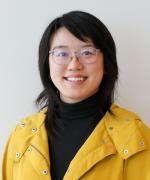
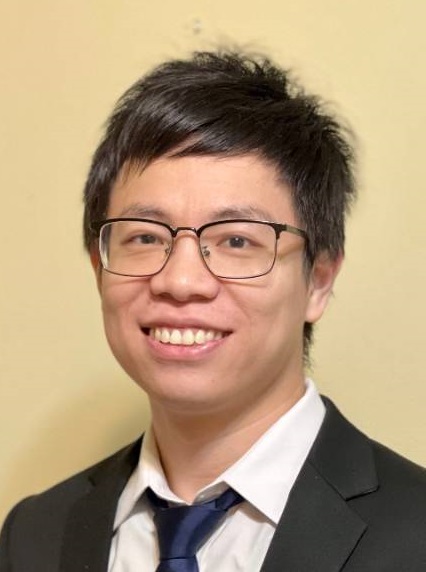
Helen Xu is an Assistant Professor at Georgia Tech's School of Computational Science and Engineering (College of Computing). She holds a Ph.D. from MIT (2022) under Charles E. Leiserson and was a Grace Hopper Postdoctoral Fellow at Lawrence Berkeley National Lab (2022). Her research focuses on parallel algorithms, cache-efficient data structures, and high-performance computing. Xu has interned at Microsoft Research, NVIDIA Research, and Sandia National Laboratories, and her work has been supported by prestigious fellowships including the National Physical Sciences Consortium and Chateaubriand awards. **Education**: Ph.D., Computer Science, MIT, 2022 Postdoctoral Research, Lawrence Berkeley National Lab (2022) **Research Interests**: Parallel and cache-friendly algorithms Dynamic graph and data structure optimization Algorithm performance engineering Sparse matrix/tensor operations **Awards**: Grace Hopper Postdoctoral Scholar (2022), Best Artifact Award (PPoPP 2024), National Physical Sciences Consortium Fellowship, Chateaubriand Fellowship. **Advising & Teaching**: Advises PhD/M.S. students in parallel computing and high-performance systems. Teaches courses like CSE 6220 (Introduction to HPC) and CSE 6230 (HPC Tools). Supervised MIT M.Eng. projects on BP-Trees and parallel prefix sums. **Labs/Teams**: Active in Georgia Tech's High-Performance Computing community, collaborating with researchers like Aydın Buluç and Prashant Pandey on graph containers and dynamic data structures.
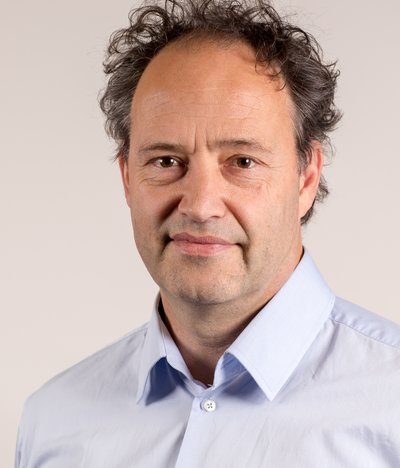
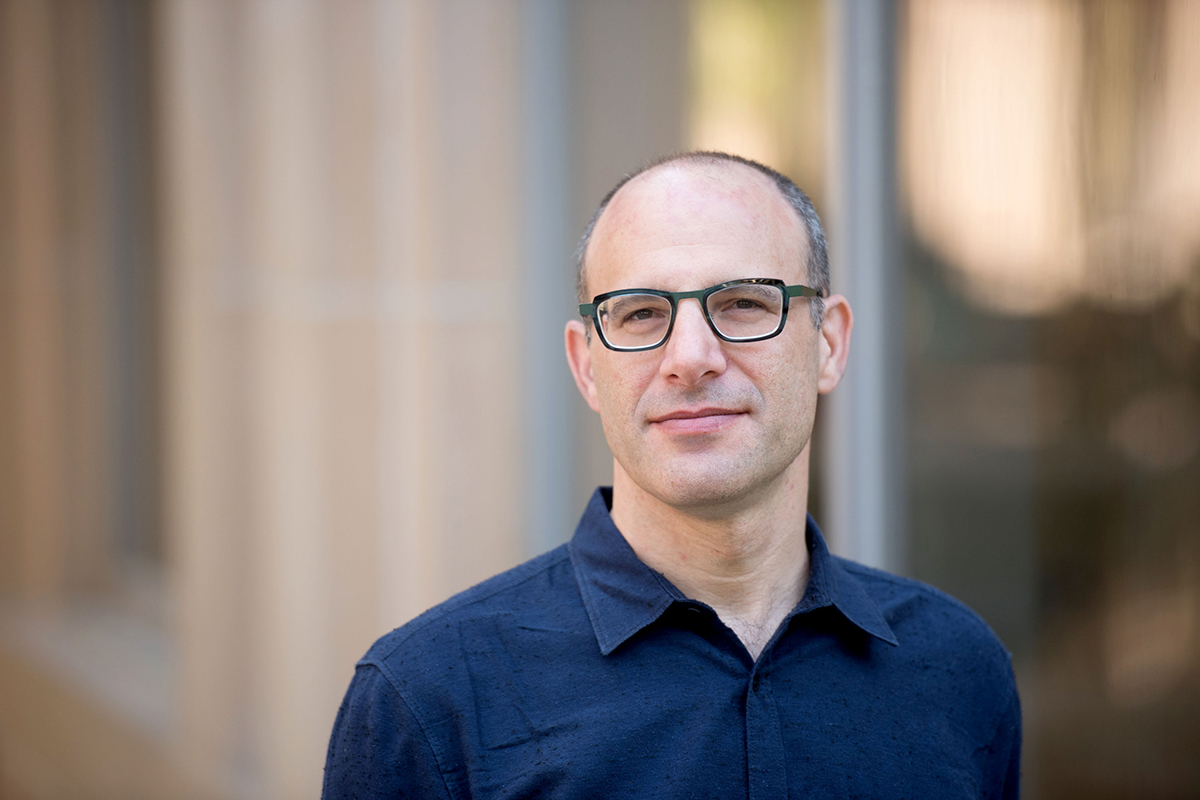
Prof. Ivo J.B.F. Adan is a Full Professor at Eindhoven University of Technology (TU/e), holding chairs in both Industrial Engineering & Innovation Sciences and Mechanical Engineering. His research focuses on stochastic operations research, queueing models, and manufacturing systems design. He has held visiting positions at the University of North Carolina and was part-time professor at the University of Amsterdam (2008–2011). Education: MSc and PhD in Mathematics from TU/e Affiliations: Eurandom Senior Fellow, Beta Research Director, editorial roles at Queueing Systems and Probability in Engineering and Informational Sciences His work addresses warehouse optimization, transportation logistics, and semiconductor manufacturing. Notable achievements include: Developed analytical models for zone picking systems and conveyor networks Advanced understanding of FCFS infinite bipartite matching systems Recipient of multiple best paper awards including the IE&IS Valorization Prize (2023) Current projects include the DigiTwop digital twin-based warehouse optimization initiative and modular construction research. He teaches courses on stochastic modeling, manufacturing systems, and smart industry applications.
Dr. JoAnna K Leyenaar is a Professor of Pediatrics and Professor of The Dartmouth Institute at the Geisel School of Medicine, Dartmouth College. She serves as Vice Chair of Research for the Department of Pediatrics at Dartmouth-Hitchcock Medical Center. Her work focuses on improving healthcare quality for vulnerable children, with expertise in urban-rural disparities, pediatric mental health, and hospital-to-home transitions. Dr. Leyenaar holds an MD from McMaster University, an MPH from Harvard University, and a PhD from Tufts University. Her research is funded by PCORI and NIH-NIMHD to study direct admission pathways and urban-rural disparities in care for children with chronic conditions. Key areas include care coordination, mental health integration, and outcomes for opioid-exposed infants. She leads the Leyenaar Lab ( https://sites.dartmouth.edu/leyenaarlab/ ), advancing innovations in pediatric healthcare delivery. Recent publications emphasize qualitative research methods, pediatric mental health challenges, and disparities in access to specialized care. Her work bridges clinical practice and policy, addressing systemic inequities in healthcare provision for medically complex children.
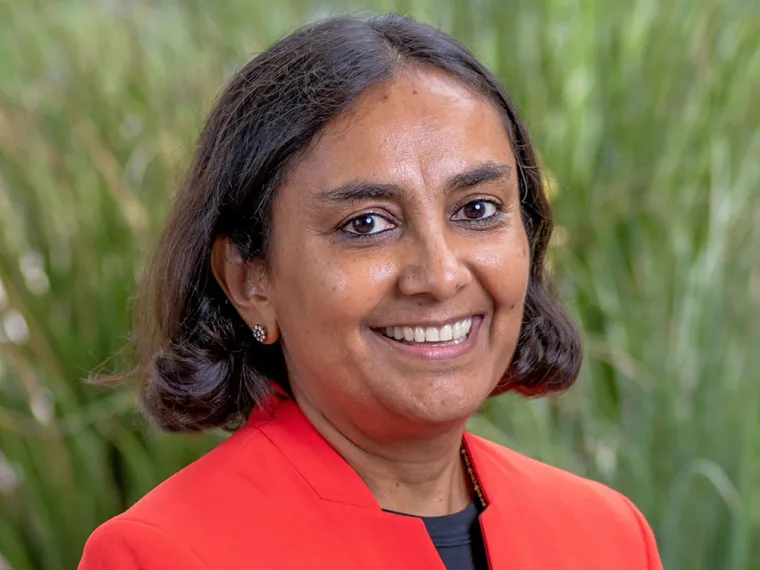
Sudha Ram is the Anheuser-Busch Endowed Professor of MIS, Entrepreneurship & Innovation at the Eller College of Management, University of Arizona. She holds joint faculty appointments as Professor of Computer Science and is a member of the BIO5 Institute and the Institute for the Environment. She is also the Director of INSITE: Center for Business Intelligence and Analytics, a leading research center in data-driven decision-making. Her research focuses on Big Data Analytics , Business Intelligence , Large Scale Network Science , and Machine Learning , with applications in healthcare, smart cities, environmental policy, and social media. She has pioneered methods in explainable AI, conceptual modeling, and multimodal data fusion, integrating statistical, ontological, and machine learning approaches. Recent publications demonstrate a strong trend in healthcare analytics (e.g., asthma, diabetes, fracture prediction), explainable AI (ROLEX, argumentation-based models), and urban/smart systems (mobility, wearables, environmental impact). Her work consistently appears in top-tier journals and conferences, reflecting sustained scholarly impact. AIS Fellow (2018) INFORMS ISS Distinguished Fellow IBM Faculty Award Peter Chen Award Best Paper Award, IEEE Smart Cities (2016) Best Paper Award, ACM Digital Health (2016) Woman of Impact Award, University of Arizona (2023) Dr. Ram has secured over $70 million in research funding from agencies like NSF, NASA, CIA, and corporations including IBM, Intel, and SAP. She has mentored numerous students and leads a multidisciplinary research team at INSITE. She has held editorial leadership roles in Information Systems Research , Journal of AIS , and is founding co-editor of the Journal of Business Analytics . She directs the INSITE Center, which fosters collaboration across business, computer science, and health domains, enabling large-scale data synthesis and knowledge discovery. The center supports projects in healthcare innovation, smart cities, and environmental policy analytics.
Bart Somers is an Associate Professor at Eindhoven University of Technology , affiliated with the Department of Mechanical Engineering . His primary affiliations include the Power & Flow Group and his own research group, Group Somers , alongside cross-cutting roles in EAISI (Eindhoven Artificial Intelligence Systems Institute) and EIRES (Eindhoven Research on Innovation and Sustainability in Energy Systems). He focuses on advancing combustion science , sustainable fuels , and engine efficiency , leveraging computational fluid dynamics (CFD) and experimental methods. His research interests span alternative fuels (hydrogen, bio-oils, biofuels), high-pressure spray combustion , and low-emission engine design . He investigates combustion optimization through CFD tools like large-eddy simulation (LES) and flamelet-generated manifolds (FGM), emphasizing fuel stratification , ignition dynamics , and emission control . His work bridges experimental diagnostics (e.g., spray visualization, OH* chemiluminescence) and numerical modeling. Academically, he teaches courses such as Thermodynamics , Clean Engines and Future Fuels , and Sustainable Vehicles , integrating practical projects into curricula. His educational activities emphasize interdisciplinary sustainability and innovation, including honors programs focused on professional development. Recent publications highlight his contributions to hydrogen injection strategies, biofuel applications in genset engines, and optimization of diesel-biofuel blends. His work aligns with global sustainability goals, addressing energy transition challenges through advanced combustion technologies.
Michael O. Wood is an Associate Professor in the School of Environment, Enterprise and Development (SEED) at the University of Waterloo and currently serves as the Associate Dean of Work-Integrated Learning in the Faculty of Environment. He holds a Ph.D. in Strategy and Sustainability from the Ivey Business School at Western University, an M.A. in Environmental Studies in Sustainability Management from Western University, and a B.A. in Science from the University of Guelph. Ph.D. in Strategy and Sustainability, Ivey Business School, Western University M.A. in Environmental Studies in Sustainability Management, Western University B.A. in Science, University of Guelph Dr. Wood's research focuses on organizational responses to sustainability challenges through the lenses of space, time, scale, and social license to operate. His work spans industries like insurance, mining, carbon management, waste management, and global security, with a particular emphasis on the Blue Economy and climate change. He has contributed to frameworks for water risk assessment, sustainable packaging practices, and the role of governance in sustainability-financial performance linkages. His recent publications address transdisciplinary tools for water risk management, workforce practices' impact on sustainability, ETS policy effects, and disaster response patterns in multinational corporations. While no scientific awards are explicitly mentioned, his work has been published in journals such as the International Journal of Disaster Risk Reduction and Economic Systems Research . Dr. Wood teaches courses like Introduction to Environment and Business and Environment and Business Project , and he collaborates with researchers like Sandhu, Weber, and Bansal on sustainability-related projects. His studies often incorporate mixed-methods analysis and policy reviews for sustainable resource management in Ontario and Canada.
Professor Hisham Farag is a distinguished academic at the University of Birmingham , where he serves as Professor of Finance and Director of Research at the Birmingham Business School . He is also the Founding Director of the Sustainable Financial Innovation Research Centre (SFIC) , underscoring his leadership in advancing research in sustainable finance and financial innovation. His work is deeply embedded in the Department of Finance , where he contributes to both research and academic leadership. His primary research interests span a wide and impactful range of topics in modern finance, including FinTech , corporate governance , board structure and diversity , corporate social responsibility (CSR) , behavioural finance , sustainable finance , ESG , and green finance . His research investigates how governance mechanisms, board composition, and financial innovations influence firm performance, risk, and ethical outcomes, particularly in both developed and emerging markets. His recent publications reveal a strong focus on global corporate governance, alternative finance, and the social dimensions of finance. Key themes include the role of board diversity in bank stability, the impact of FinTech on entrepreneurship, and the integration of CSR in Islamic and Chinese financial institutions. His work frequently appears in top-tier journals such as the Journal of Corporate Finance , British Journal of Management , and European Journal of Finance . Professor Farag has received significant research funding from notable institutions including the Bank of England , Innovate UK (Energy Systems Catapult) , and the Institute of Chartered Accountants of Scotland (ICAS) . His research projects have addressed critical issues such as board effectiveness, risk in financial institutions, and investment decisions in hedge funds. He is actively involved in the academic community, serving as Associate Editor for several prestigious journals: European Journal of Finance , Research in International Business and Finance , Business Ethics European Review , and African Accounting and Finance Association . He has also co-authored a research monograph titled Balancing the Board: Directors’ Skills and Diversity , funded by ICAS. Among his accolades, he received the Best Paper Award at the Global Finance Conference in California, USA. His scholarly output includes numerous peer-reviewed articles, book chapters, and professional reports, reflecting a sustained and influential contribution to the field of finance.
Shungeng Zhang serves as an Assistant Professor in the Department of Computer & Cyber Sciences at Augusta University's School of Computer and Cyber Sciences. He holds a Ph.D. in Computer Science from Louisiana State University (2021) and a B.E. in Computer Engineering from Huazhong University of Science and Technology (2014). His educational background includes: Ph.D. in Computer Science, Louisiana State University, 2021 B.E. in Computer Engineering, Huazhong University of Science and Technology, 2014 Dr. Zhang's research spans distributed systems, cloud computing, and cybersecurity with a focus on enhancing performance and scalability of web applications and IoT stream processing in cloud environments. He employs sophisticated timeline analysis and fine-grained monitoring to identify transient bottlenecks causing long-tail latency problems, addressing propagation effects in complex dependency chains among application components. His publication record (2017-2022) reveals consistent contributions to cloud systems performance, particularly in n-tier architectures, concurrency control, and latency optimization. Key themes include stream processing synchronization, fanout query performance, adaptive concurrency for SLO compliance, and mitigation of transient resource contention attacks across distributed systems. No scientific awards were mentioned in the provided information. Dr. Zhang actively seeks graduate students with strong computer systems backgrounds for research collaboration. His departmental service includes Faculty Assembly participation (2021-2022) and faculty interviewing duties. Professionally, he serves as a reviewer for ACM SoCC'23, ACM TOIT, SmartCom 2023, The Journal of Supercomputing, and ACM SoCC'22. Teaching responsibilities include AIST 4720 (Enterprise System Architectures), CSCI 1200 (Introduction to Computers and Programming), and graduate courses such as CSCI 8940 (Dissertation Research) and AIST 3310 (Advanced Networking). No dedicated research labs or teams were specified in the available documentation.
Emmett Witchel is a Professor of Computer Science at the University of Texas at Austin , with research spanning computer architecture, systems, networking, security, and privacy . His work focuses on low-level systems optimization and secure concurrent execution. Research Interests: Concurrent systems, secure execution environments, GPU integration, distributed systems. Teaching: CS 380L (Advanced Operating Systems), CS 371M (Mobile Computing). Scientific Awards: Runner-up Best Paper, ASPLOS 2013 Runner-up Award for Outstanding Research, USENIX Symposium 2012 IEEE Micro Top Pick Award 2007 ACM Honorable Mention 2004 George M. Sprowls Award, MIT EECS 2004 Recent Publications demonstrate leadership in CXL pod databases ( Tigon ), stateful serverless computing ( Boki ), SmartNIC-accelerated file systems ( LineFS ), and GPU security ( Telekine ). His work bridges hardware-software co-design and practical systems implementation.
Professor Holly Thorpe is a Professor of Sociology in Te Huataki Waiora / School of Health at the University of Waikato, specializing in Sport and Human Movement. She serves as Associate Dean Research in the Division of Health PVC Office and is an internationally recognized sociologist of sport, physical culture and gender whose work has earned prestigious fellowships and awards including Fulbright, Leverhulme, and Royal Society honors. Her educational background includes a PhD from the University of Waikato and Papa Reo Level 1 certification from Te Wananga o Aotearoa, reflecting both academic excellence and cultural engagement with Māori language and knowledge systems. Professor Thorpe's research centers on equity and inclusion in sporting cultures, with particular attention to women's health and wellbeing, sport and gender, and the impact of social media on athletic experiences. She employs critical and feminist theoretical frameworks with expertise in qualitative methods to examine how sport, physical activity, and health intersect in rapidly changing social landscapes. Her work spans gender studies, feminist methodologies, sports science, sociology of health, and digital media studies within sporting contexts, with a strong commitment to community-engaged research. Her extensive publication record reveals consistent thematic focus on contemporary issues including menstruation in sport, digital technologies and athlete experiences, pandemic impacts on wellbeing, and the gendered dimensions of mega-sport events. Her work frequently employs intersectional analysis and collaborates across disciplines to address complex questions about embodiment, identity, and social change in sporting cultures, particularly as they relate to women and marginalized communities. Professor Thorpe's significant scholarly recognition includes: Royal Society Early Career Research Excellence Award for Social Sciences (2018) Fellow of the North American Society for the Sociology of Sport (2018) Royal Society James Cook Fellowship for a two-year project focused on women's wellbeing through and beyond pandemic (2021) She actively supervises students and has secured substantial research funding including the Te Punaha Matatini CORE Research Institute project 'Youth Wellbeing in Uncertain Times: The Voices of Rangatahi from Flood-Effected Tairāwhiti Gisborne' (2023-2025). Professor Thorpe collaborates extensively with international and national sports organizations including the International Olympic Committee, High Performance New Zealand, Sport New Zealand, Skateistan, and Voice in Sport to ensure her research has real-world impact on policy and practice. She serves as Series co-editor for 'New Femininities in Digital, Physical and Sporting Cultures' and maintains active media engagement through The Conversation and other outlets. Professor Thorpe leads several significant research initiatives including 'Reimagining Fields of Play' (2023) and co-organized the 'Gender, Health and Wellbeing Symposium' (2022), demonstrating her commitment to creating spaces for critical dialogue about sport, gender, and health while advancing culturally responsive methodologies that center Indigenous and diverse perspectives.
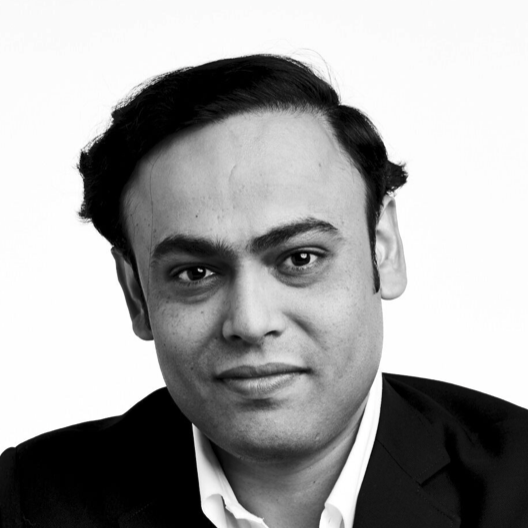
Saurabh Amin is a Professor in the Department of Civil and Environmental Engineering at the Massachusetts Institute of Technology (MIT), where he also serves as the Edmund K. Turner Professor and Undergraduate Officer. He is a Principal Investigator at the Laboratory of Information and Decision Systems and holds affiliations with the Operations Research Center and the Center for Computational Science and Engineering. His educational background includes: B.Tech. 2002, Indian Institute of Technology (IIT) Roorkee M.S. 2004, University of Texas (UT) Austin Ph.D. 2011, University of California (UC) Berkeley Saurabh Amin's research focuses on the design and control of infrastructure systems using game theory and optimization in networks. His work spans three main areas: resilient network control, information systems and incentive design, and optimal resource allocation in large-scale infrastructure systems. By concentrating on critical infrastructure domains including highway transportation, electric power distribution, and urban water networks, his research develops innovative theory and tools to enhance system performance against both stochastic and adversarial disruptions. His approach involves modeling cyber-physical interactions in infrastructures to assess vulnerabilities, developing detection and response tools for failures at various scales, and designing economic incentive schemes that improve aggregate public good while accounting for dependencies and private information among strategic entities. Amin's work bridges mathematical systems theory with practical civil engineering applications, creating a rigorous theoretical foundation for infrastructure resilience that addresses diverse failure mechanisms from natural disasters to deliberate malicious actions. His recent publications demonstrate a strong focus on decarbonization of energy systems, resilient infrastructure planning under climate uncertainty, optimization methods for complex networked systems, and game-theoretic approaches to sustainable infrastructure management. His work increasingly integrates artificial intelligence and machine learning techniques with traditional control theory to address contemporary challenges in infrastructure resilience and sustainability. The research shows a clear trajectory toward addressing climate change impacts on infrastructure systems while maintaining economic efficiency and operational reliability. Professor Amin has received numerous prestigious awards and honors: Common Ground Excellence in Teaching Award, 2025 HSCC Test-of-Time Award, 2024 MIT CEE, Distinguished Service and Leadership Award, 2023 Samuel M. Seegal Prize (SoE) – inspiring students in pursuing and achieving excellence, 2022 Earll M. Murman for Excellence in Undergraduate Advising, 2022 C3.ai Digital Transformation Institute Research Award, 2020 MIT, Ole Madsen Mentoring Award, 2020 MIT, Energy Initiative Research Award, 2020 National Academy of Engineering, China-America Frontiers of Engineering Symposium speaker, 2019 MIT, Robert N. Noyce Career Development Professor, 2015-2018 Google Faculty Research Award, 2015 National Science Foundation CAREER Award, 2015 Siebel Energy Institute Research Award, 2015 MIT, Solomon Buchsbaum AT&T Research Fund Award, 2012 Professor Amin has been actively involved in significant research projects including the C3.ai DTI project on Causal Reasoning for Real-Time Attack Identification in Cyber-Physical Systems and another on Learning in Routing Games for Sustainable Electromobility. He serves as the chief scientist on multi-institutional NSF grants, including the $9 million Foundations of Resilient Cyber-Physical Systems (CPS) project. His teaching portfolio includes courses such as 1.008 Engineering for a Sustainable World, 1.104 Sensing and Intelligent Systems, 1.020 Engineering Sustainability: Analysis and Design, and 1.208 Resilient Networks. As Undergraduate Officer, he plays a key role in shaping the educational experience for civil and environmental engineering students at MIT. Professor Amin leads the Resilient Infrastructure Networks Lab at MIT, where his team develops theoretical foundations and practical tools for infrastructure resilience. The lab focuses on the intersection of control theory, game theory, and optimization applied to cyber-physical infrastructure systems. Current research directions include pandemic-resilient urban mobility and hurricane-resilient smart grid operations, reflecting the lab's commitment to addressing pressing societal challenges through rigorous systems engineering approaches.
Gautam Kamath is an Assistant Professor at the University of Waterloo's Cheriton School of Computer Science, a Faculty Member at the Vector Institute, and a Canada CIFAR AI Chair. He leads The Salon, a research group focused on statistics, algorithms, machine learning, and optimization. His work bridges theoretical foundations with practical applications in data privacy and robustness, contributing to both academic research and real-world deployments that impact millions of users. Dr. Kamath earned his PhD and SM degrees in Electrical Engineering and Computer Science at MIT, where he was advised by Costis Daskalakis. Prior to MIT, he graduated from Cornell University in May 2012 with a degree in Computer Science and Electrical and Computer Engineering, where he worked with Bobby Kleinberg. His academic journey reflects a strong foundation in both theoretical computer science and practical applications. His research focuses on developing solutions for trustworthy and reliable machine learning and statistics, with particular emphasis on data privacy and robustness. He addresses fundamental problems in these areas, revitalizing statistical toolkits for the modern data era where privacy preservation is paramount. His work spans theoretical foundations of differential privacy to practical applications that have been deployed at scale, including contributions to systems that protect the sensitive information of hundreds of millions of individuals. Analysis of his recent publications reveals a strong trend toward addressing the interplay between privacy, robustness, and machine learning performance. His work increasingly examines practical deployment challenges while maintaining theoretical rigor, with growing emphasis on diffusion models, generative AI, and the legal implications of AI systems. There's a clear trajectory from foundational privacy theory toward addressing real-world implementation challenges across diverse application domains. Canada CIFAR AI Chair Ontario Early Researcher Award 2024 Caspar Bowden Award for Outstanding Research in Privacy Enhancing Technologies STOC Best Student Presentation Award ICML 2024 Best Paper Award Microsoft Research Fellow at the Simons Institute for the Theory of Computing Dr. Kamath actively mentors students, with notable successes including Valentio Iverson winning the Germain-Erdős Undergraduate Award and Chris Trevisan receiving the CRA Outstanding Undergraduate Researcher Award. His service to the research community is extensive, serving as Editor-in-Chief of TMLR, on the Executive Committee of the Learning Theory Alliance, and on steering committees for major conferences including ICML, COLT, and ALT. He has organized numerous workshops focused on privacy-preserving machine learning and differential privacy. Through The Salon research group, Dr. Kamath fosters a collaborative environment where postdoctoral fellows, graduate students, and undergraduates work together on cutting-edge problems at the intersection of statistics, algorithms, machine learning, and optimization. The group maintains strong connections with industry partners and participates in major research initiatives, including the Vector Institute's privacy and security research efforts. Looking forward, Dr. Kamath will be moving to the Computer Science department at NYU's Courant Institute of Mathematical Sciences in September 2026, where he plans to expand his research program.
Alan Zaoxing Liu is an Assistant Professor of Computer Science at the University of Maryland, College Park , with appointments at the University of Maryland Institute for Advanced Computer Studies (UMIACS) and Maryland Cybersecurity Center (MC2) . His research bridges systems, networking, and cybersecurity to design scalable, trustworthy approximate computing systems. Ph.D. in Computer Science from Johns Hopkins University (2018) Postdoctoral research at Carnegie Mellon CyLab (2018–2020) Research Interests : Networked and data-intensive systems Telemetry/analytics for heterogeneous networks Machine learning for network optimization Security in programmable networks Recent Publications include work on future-proof telemetry (PromSketch, VLDB’25), scalable caching (OctoCache, ASPLOS’25), and secure network analytics (TrustSketch, NDSS’24). His NSF-funded projects focus on optics-enabled DDoS defense and data-driven network management. Scientific Awards : USENIX FAST Best Paper (2019) USENIX ATC 'Best of Rest' (2021) Red Hat Collaboratory Research Awards (2022, 2023) Teaching : Leads Cloud Computing at Boston University , emphasizing agile development, open-source collaboration, and cloud infrastructure.
Christine Clark, MD, MSc is an attending laryngologist at Weill Cornell Medicine’s Sean Parker Institute for the Voice and Assistant Professor in the Department of Otolaryngology-Head and Neck Surgery at Weill Cornell Medical College. She earned her B.A. from the University of Pittsburgh (2011) and her M.D. from Pennsylvania State University College of Medicine (2017), followed by residency at Georgetown University Medical Center and a fellowship in Laryngology at Weill Cornell, where she also obtained a master’s degree in Clinical and Translational Science. B.A. - University of Pittsburgh (2011) M.D. - Pennsylvania State University College of Medicine (2017) Residency - Georgetown University Medical Center Fellowship - Sean Parker Institute for the Voice (Laryngology) Master’s - Clinical and Translational Science at Weill Cornell Dr. Clark specializes in evaluating and treating swallowing, voice, and airway disorders. Her research focuses on chronic cough, laryngeal hypersensitivity, and benign phonotraumatic vocal fold lesions. She has developed clinical tools like the 3D-printed injection laryngoplasty simulator and quality improvement initiatives for surgical airway management. Her clinical work and research span topics such as vocal fold hemorrhage management, pharyngeal residue quantification in dysphagia, and granuloma as markers of malignancy. Recent publications emphasize global otolaryngology capacity building and performer-specific voice injury care. Scientific awards include: Teaching awards for excellence in medical student education during residency Dr. Clark is affiliated with the Sean Parker Institute for the Voice at Weill Cornell Medicine and serves as an Assistant Professor of Otolaryngology.
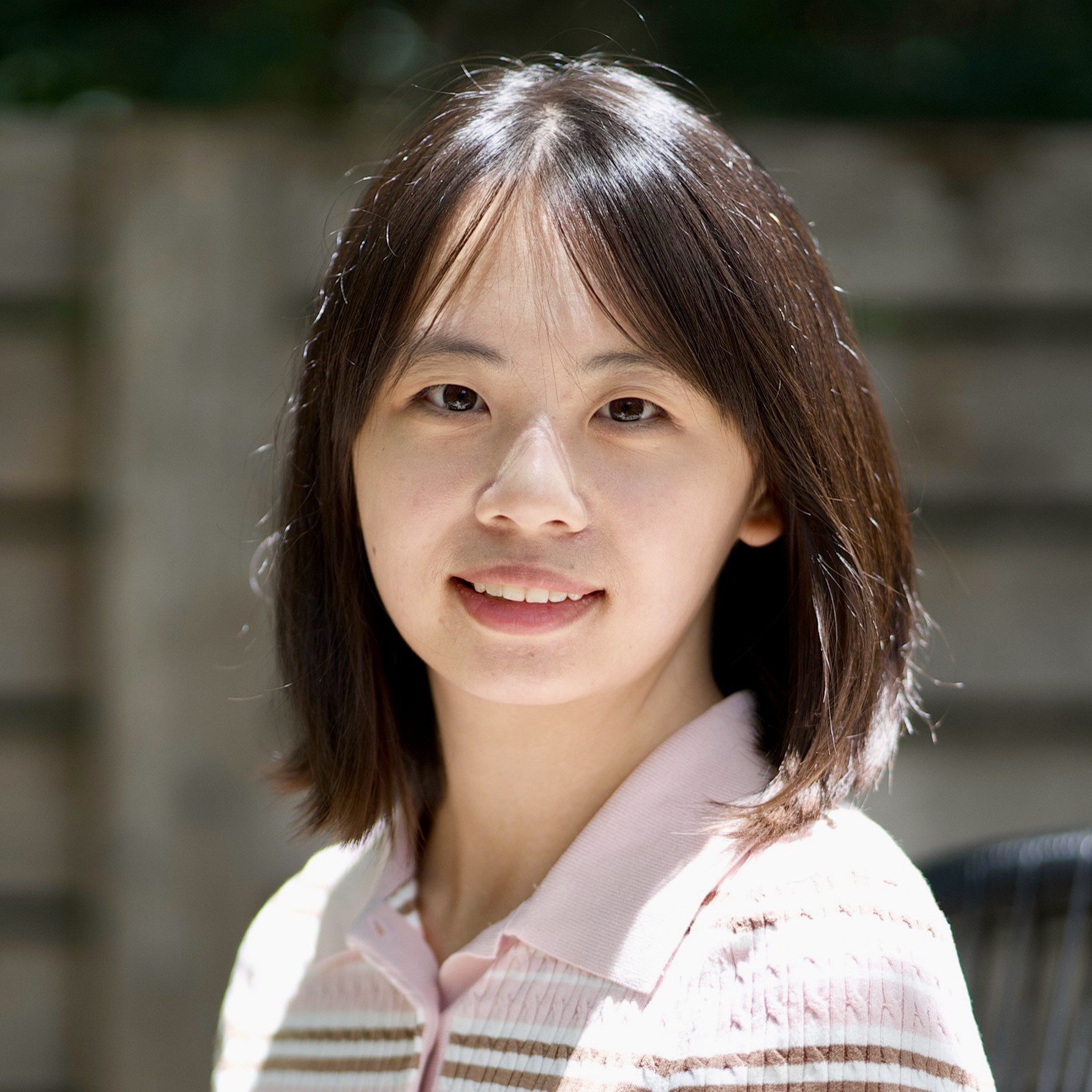
Jiaxin Lin is an Assistant Professor in the Department of Electrical and Computer Engineering at Cornell University , affiliated with the Computer Systems Laboratory . She earned her Ph.D. in Computer Science from UT Austin (2025) , preceded by an M.S. from University of Wisconsin-Madison and a B.S. from ShenYuan Honors College at Beihang University. Her research focuses on co-designing software and hardware systems to enable high-performance data center communication, particularly through: Programmable network interface controllers (SmartNICs) Terabit network system stacks Cache/memory interconnects Compilers for in-network computing Chip-to-chip interconnects Her work addresses challenges in portability across heterogeneous SmartNICs, demonstrated through the development of the Alkali compiler framework (NSDI '25). Key themes include hardware abstraction, data center scalability, and network-compute co-design. Scientific Awards: Google Junior Faculty Award (2025) MIT EECS Rising Star (2024) Google Ph.D. Fellowship (2021) Meta Ph.D. Fellowship (2021)