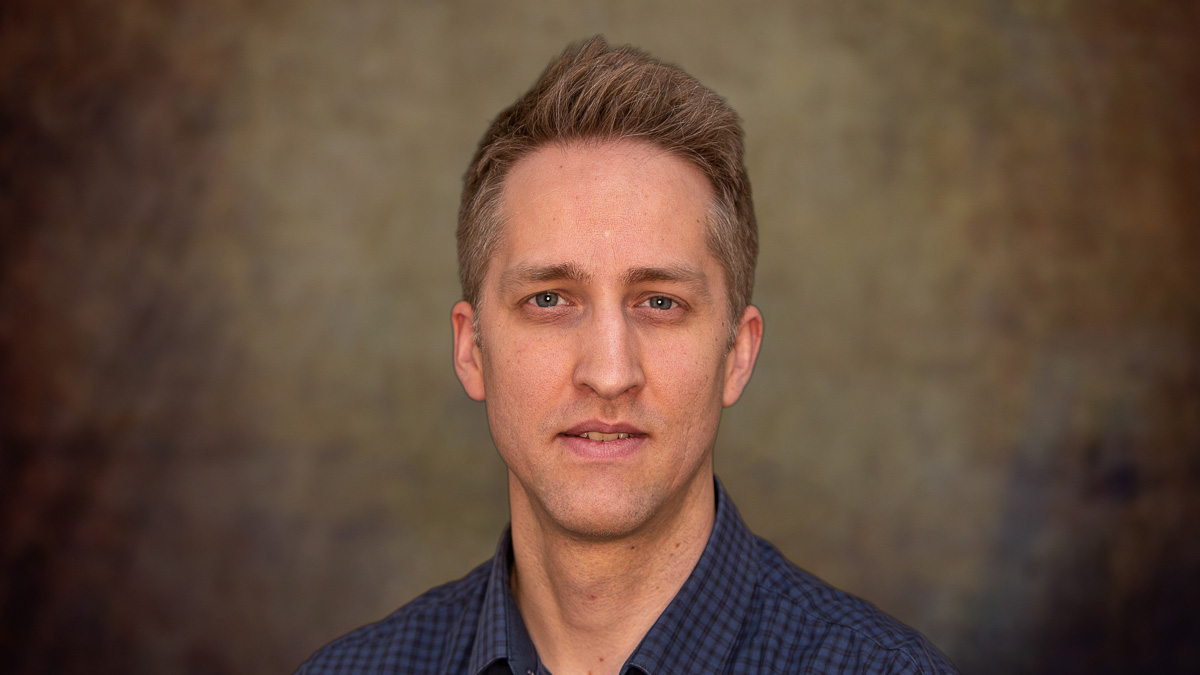
Jee Eun (Jamie) Kang is an Associate Professor in the Department of Industrial and Systems Engineering at the University at Buffalo's School of Engineering and Applied Sciences. Research focuses on transportation modeling and applied operations research, with applications in urban mobility, shared autonomous vehicles, and sustainable transportation systems. Education includes a PhD from UC Irvine. Research emphasizes data-driven approaches to travel behavior, electric vehicle adoption, and humanitarian logistics. Publications consistently address mobility innovation, including pricing strategies for emerging services, predictive analytics for transit, and optimization of shared transportation systems.
Dr. Hien Quoc Ngo is a Reader at Queen's University Belfast and a UKRI Future Leaders Fellow. He specializes in wireless communications, particularly in massive MIMO, cell-free massive MIMO, and cooperative systems. His research focuses on improving spectral efficiency, security, and energy efficiency in next-generation networks. Education: B.S., Electrical Engineering, Ho Chi Minh City University of Technology (2007) M.S., Electronics and Radio Engineering, Kyung Hee University (2010) Ph.D., Communication Systems, Linköping University (2015) Research Interests: Dr. Ngo's work spans massive MIMO systems, cell-free architectures, physical layer security, and millimeter-wave technologies. He has pioneered studies on channel estimation, power allocation, and interference management in distributed networks. Awards & Recognition: IEEE ComSoc Stephen O. Rice Prize (2015) IEEE ComSoc Leonard G. Abraham Prize (2017) Best PhD Award from EURASIP (2018) UKRI Future Leaders Fellowship (2019) Multiple AMiner Most Influential Scholar Awards (2022-2024) Grants & Projects: Lead on the Future Communications Hub in All-Spectrum Connectivity (UKRI-funded) Principal Investigator for Cell-Free Massive MIMO for ISAC Labs & Teams: He leads the Wireless Communications Research Group at Queen's University, focusing on 5G/6G technologies and intelligent systems.
Dr. Graziano Fiorillo is an Assistant Professor in the Department of Civil Engineering at the University of Manitoba's Price Faculty of Engineering. He holds a Ph.D. from the City University of New York and M.Sc./B.Sc. from the University of Naples, Italy. His research focuses on structural reliability, bridge systems analysis, and risk assessment, incorporating machine learning and high-performance computing. He has contributed to probabilistic frameworks for infrastructure resilience, filovirus outbreak modeling, and bridge redundancy evaluation. Education: Ph.D. Civil Engineering, City University of New York, 2016 M.Sc. Building Engineering, University of Naples Federico II, 2003 B.Sc. Building Engineering, University of Naples Federico II Research Interests: Dr. Fiorillo specializes in structural analysis of bridges, risk-based design, and machine learning applications in infrastructure. He develops probabilistic models for bridge network reliability and flood risk assessment, with a focus on Manitoba's infrastructure resilience. His work integrates computational fluid dynamics (CFD) and energy efficiency solutions for buildings. Publications: His recent work emphasizes interdisciplinary approaches to infrastructure challenges, including CFD for sediment transport, EnergyPlus-based building efficiency studies, and MPI parallel computing for reliability analysis. His 2024 studies on flood-overload interactions and additive manufacturing in construction highlight emerging trends in civil engineering. Awards: He received the 2012 New York State Intelligent Transportation Society Award for best student paper. His research has been applied to truck weight regulation strategies and bridge importance factor calibration. Advising & Grants: Offers M.Sc. opportunities in CFD, building energy efficiency, and bridge structures. Positions require expertise in OpenFOAM, EnergyPlus, or structural analysis software. No specific grants mentioned in the text.
Tania Cerquitelli is a Full Professor in the Department of Control and Computer Science (DAUIN) at Politecnico di Torino, where she leads research in data science, concept-drift management, and inclusive AI technologies. She is a member of SmartData@PoliTO, the GEDI Observatory for Gender Equality, and serves in leadership roles related to social affairs and community policies at the university level. She also acts as a scientific advisor for the partnership with Accenture. Her research interests span Data Science , Concept-Drift Management , Database Systems , Conversational Data Science , and Industry 4.0 . She applies AI and machine learning to industrial, societal, and ethical challenges, particularly in promoting inclusive communication and gender equality in research. The most recent publications highlight her work in explainable AI, concept drift detection, multimodal diagnostics, and AI for social good. Her research integrates machine learning, natural language processing, and computer vision to address real-world problems in manufacturing, healthcare, agriculture, and education. She is an Associate Editor for several prestigious journals including Expert Systems with Applications , Computer Networks , Future Generation Computer Systems , and Knowledge and Information Systems . She has served on the program committees of major conferences such as ECML PKDD, EDBT/ICDT, and ACM KDD, and has been a reviewer and selection committee member for ETH Zurich and EMPA. She actively supervises PhD students and teaches a wide range of courses including Data Science and Database Technologies, Business Intelligence for Big Data, and Gender and Diversity in Research. She is involved in multiple national and international research projects such as E-MIMIC, WEBFARE, and EnABLES, focusing on inclusive AI, smart data, and industrial applications. Her lab affiliations include the DBDM - Database and Data Mining Group (DAUIN) and the Interdepartmental Center SmartData@PoliTO - Big Data and Data Science Laboratory , where she contributes to advancing data science methodologies and their societal impact.
Camilla Fiorini is an Associate Professor at the National Conservatory of Arts and Crafts (CNAM) in Paris, where she conducts research at the Mathematical and Numerical Modeling Laboratory (M2N). She serves as Principal Investigator for the ANR-funded SPARCL project (2025-2029) focusing on structure-preserving reduced order models for conservation laws. Her academic background includes a PhD in Applied Mathematics from the University of Versailles and both MSc/BSc degrees in Mathematical Engineering from Politecnico di Milano. Her research centers on computational fluid dynamics, numerical analysis of PDEs, and sensitivity methods, with specific applications in uncertainty quantification and reduced order modeling. Current projects develop novel approaches for conservation laws that maintain structural properties while improving computational efficiency and reliability. Fiorini's publication record demonstrates consistent focus on sensitivity analysis techniques for complex fluid systems, shock-capturing methods, and uncertainty propagation in hyperbolic PDEs. She received the SMAI-GAMNI PhD Award 2019 (French ECCOMAS Award) for her doctoral dissertation on sensitivity analysis for nonlinear hyperbolic systems. As Principal Investigator of the SPARCL project, she leads a team developing new reduced basis construction techniques for conservation laws. Fiorini actively advises graduate researchers including PhD students Nathalie Nouaime (2021-2024) and Nicolas Lepage (2022-present), plus multiple Master's candidates. Her research group collaborates with institutions including Inria, Sorbonne University, ONERA, and CEA. Current projects include ANR JCJC-funded SPARCL and ANR AHEAD initiatives. She leads the SPARCL research group at M2N laboratory, collaborating with researchers including Alessia Del Grosso, Iraj Mortazavi, and Taraneh Sayadi on reduced order modeling techniques. The team focuses on developing computationally efficient ROMs that preserve physical structures in conservation laws.
Awi Federgruen is the Charles E. Exley Professor of Management and Chair of the Decision, Risk, and Operations (DRO) Division at Columbia University’s Graduate School of Business. He joined Columbia’s faculty in 1979 after earning his DSc in Operations Research from the University of Amsterdam and holding roles as a Research Fellow at the Mathematical Centre in Amsterdam and faculty member at the University of Rochester. He also holds a courtesy appointment in Columbia’s School of Engineering and Applied Sciences. Education: BA, University of Amsterdam, 1972 MS, University of Amsterdam, 1975 DSc (Operations Research), University of Amsterdam, 1978 Research Interests: Federgruen’s work focuses on optimizing supply chain and service systems through advanced operations research methodologies. Key areas include supply chain coordination, inventory management under uncertainty, service system design, and dynamic pricing. His theoretical contributions span applied probability, queuing models, and dynamic programming. Recent applications include pharmaceutical supply chains, healthcare operations, and vaccine distribution strategies. Awards & Recognition: 2004 Distinguished Fellowship Award (MSOM Society) INFORMS Presidential Fellow (highest honor) National Science Foundation & ARPA grants Consulting & Industry Impact: Federgruen advises companies in pharmaceuticals, consumer electronics, and logistics. Notably, he developed marketing mix models for the pharmaceutical industry and advised the Israeli Air Force on logistics policies. His work bridges academic theory with real-world applications in industries like retail, healthcare, and transportation. Editorial Roles: Editor-in-Chief of Naval Research Logistics ; former Departmental Editor for Manufacturing & Service Operations Management and Associate Editor of Operations Research .
Tobias Ofner-Graff is a researcher at the Institute of Forest Growth within the Department of Ecosystem Management, Climate and Biodiversity at the University of Natural Resources and Life Sciences, Vienna (BOKU). Based at Peter-Jordan-Straße 82, 1190 Wien, his work focuses on advanced forest monitoring technologies. His research interests include: LiDAR and remote sensing applications in forestry Automated forest inventory systems Forest regeneration quantification Airborne Laser Scanning (ALS) data analysis Sustainable forest harvesting planning Recent project contributions include: Leading lidar-based forest monitoring systems development Developing spatial forest growth models Implementing digital inventory workflows His publications demonstrate expertise in: Quantifying forest resources through 3D point clouds Advanced timber stack measurement techniques ALS data integration for forest modeling Mobile laser scanning applications Forest climate adaptation strategies
Dr. Clark N. Taylor is an Associate Professor of Computer Engineering and Director of the ANT Center at the Air Force Institute of Technology (AFIT), located at Wright-Patterson Air Force Base, Ohio. He is actively engaged in research and education within the Graduate School of Engineering and Management, focusing on advanced navigation and sensor fusion technologies for autonomous systems. Ph.D., Electrical and Computer Engineering (Computer Engineering), University of California, San Diego, 2004 M.S., Electrical and Computer Engineering, Brigham Young University, 1999 B.S., Electrical and Computer Engineering, Brigham Young University, 1995 Dr. Taylor's research spans computer engineering, navigation systems, and autonomous robotics, with a strong emphasis on sensor fusion, state estimation, and robust uncertainty modeling. His work integrates vision, inertial, magnetic, and pressure sensors for navigation in GPS-denied environments, particularly for unmanned aerial vehicles (UAVs). He is a leading expert in factor graph-based estimation, visual-inertial odometry, cooperative localization, and magnetic navigation. His publications demonstrate a consistent trend toward robust, uncertainty-aware estimation frameworks. Over the past decade, his research has evolved from early work on visual stabilization and pose estimation to advanced topics such as conservative covariance estimation, invariant filtering, and machine learning for spacecraft pose estimation. His recent articles focus on factor graphs, multi-agent fusion, and deep learning, indicating a trajectory toward intelligent, resilient navigation systems for defense and aerospace applications. Scientific awards include a Best Presentation in Session award at the ION GNSS+ conference in 2021. His research is supported by the U.S. Air Force and related defense agencies, with applications in surveillance, autonomous refueling, and on-orbit inspection. Dr. Taylor has advised numerous MS and PhD students, particularly in the areas of UAV navigation, sensor fusion, and cooperative localization. His lab, the ANT Center, focuses on advanced navigation and tracking, bringing together students and researchers to develop cutting-edge solutions for real-world operational challenges. The team conducts both simulation and experimental work, often integrating novel sensor modalities and estimation algorithms for improved system performance.
Prof. Dr.-Ing. Frank Thielecke is a full Professor and the head of the Institute of Aircraft Systems Engineering (Flugzeug-Systemtechnik) at Technische Universität Hamburg (TUHH), Germany. His research is centered on advanced aircraft systems, avionics, flight control, and the integration of emerging technologies such as hydrogen and hybrid-electric propulsion. Institution: Technische Universität Hamburg Department: Institute of Aircraft Systems Engineering (Flugzeug-Systemtechnik) Email: frank.thielecke@tuhh.de Office: Neßpriel 5, Room 1.012, 21129 Hamburg His research interests include integrated modular avionics (IMA), model-based systems engineering (MBSE), aircraft load estimation, health monitoring, fault diagnosis, and sustainable aviation technologies. He leads a research group actively contributing to next-generation aircraft design, with a strong focus on digitalization, virtual testing, and system safety. The recent publications highlight a consistent trend in developing model-based tools and architectures for avionics and aircraft systems. Key themes include the design of IMA platforms, virtual integration, system validation, hydrogen aircraft systems, and control algorithms for UAVs and flexible aircraft. His work frequently appears in AIAA, DASC, DLRK, and CEAS conferences and journals. Prof. Thielecke has been involved in numerous collaborative research projects focusing on more-electric aircraft, fuel cell systems, and advanced actuation. He has contributed to the development of frameworks such as ASHLEY and SArA for avionics platform design and systems architecting. His team also works on noise reduction in hydraulic systems and condition monitoring for aircraft subsystems. He supervises a group of researchers and PhD students, many of whom co-author his publications. While specific student names are not listed, long-term collaborators like Oliver Luderer, Thimo Bielsky, Nils Külper, and Philipp Chrysalidis are likely doctoral candidates or postdoctoral researchers in his group. He has secured funding for projects related to hydrogen aircraft, hybrid propulsion, and digital avionics engineering. His lab, the Institute of Aircraft Systems Engineering, operates test benches for avionics, hydraulic systems, and flight control validation. The team uses advanced simulation, co-simulation (e.g., FMI), and hardware-in-the-loop techniques for virtual integration and testing. Ongoing work includes the development of tools for early validation of flight control platforms and automated requirement-based testing.
Pierre Bellec is an Associate Professor in the Department of Statistics at Rutgers University, where he has been a faculty member since 2016 and was promoted to Associate Professor with tenure in 2021. His office is located in Hill Center 406 at 110 Frelinghuysen Road, Piscataway, NJ 08854. Dr. Bellec received his PhD from ENSAE ParisTech, France in 2016 under the supervision of Alexandre Tsybakov. Prior to that, he completed a Part III (MASt) at the University of Cambridge, UK in 2012 and earned his Diplôme d'Ingénieur from Ecole Polytechnique, France in 2011. Dr. Bellec's research focuses on high-dimensional statistics, aggregation of estimators, shape constrained problems in statistics, and probability theory. His work has significant implications for machine learning and statistical inference in high-dimensional settings. He has made important contributions to regularization methods, M-estimators, and uncertainty quantification in complex statistical models. His recent publications show a strong focus on asymptotic theory, robust statistics, and high-dimensional inference, with novel methods for error estimation, adaptive tuning, and bias correction in regularized estimators. Dr. Bellec has received several prestigious awards and honors, including: IMS Fellow (2023) NSF CAREER award DMS 1945428: "Post-Differentiation Inference" (2020-2024, $400,000) NSF award DMS 2413679: "Uncertainty quantification for iterative algorithms" (2024-2027, $225,000) NSF award DMS 1811976: "Uncertainty Quantification in High-Dimensional Structured Regression Problems" (2018-2022, $180,000) Blaise Pascal PhD Award (2017) Dr. Bellec has advised several graduate students, including Takuya Koriyama (now at Chicago Booth), Yiwei Shen (now at Meta/Facebook), and Kai Tan (current PhD student). He has also mentored numerous undergraduate students through REU programs. He serves as an Associate Editor for the Annals of Statistics and has been involved in program committees for major conferences including the Conference on Learning Theory (COLT) and the Conference on Neural Information Processing Systems (NeurIPS).
Surajit Chaudhuri is a Researcher at Microsoft , with a career spanning decades in database systems and data management . He has received the prestigious SIGMOD Edgar F. Codd Innovations Award (2011) for his contributions to query optimization , index tuning , and data lakes . Research Interests : His work focuses on database tuning , approximate query processing , fuzzy similarity joins , automated data transformations , and machine learning integration for scalable data systems. Recent Publications : In 2025, his research includes Auto-Test for unsupervised error detection in tables, Esc for budget-aware index tuning, and MMTU for multi-task table understanding benchmarks. Earlier works in 2024–2023 address spreadsheet formula recommendation , low-overhead index filtering , and time-series pattern recognition . Scientific Impact : He has co-authored influential papers in SIGMOD , VLDB , and IEEE Transactions , shaping practices in cloud databases , query optimization , and self-service BI . His collaborations span institutions like Microsoft, MIT, and ETH Zurich.
Mikel Sanz is a Ramón y Cajal Researcher and Ikerbasque Fellow at the University of the Basque Country (UPV/EHU) in Bilbao, Spain. His research focuses on quantum computing, quantum algorithms, quantum technologies, and quantum metrology. His research interests include: Quantum Computing and Quantum Algorithms Quantum Metrology and Quantum Sensing Digital-Analog Quantum Computing Quantum Machine Learning Quantum Simulation Quantum Error Correction and Mitigation Dr. Sanz's recent publications demonstrate a strong focus on practical applications of quantum computing across various domains. His work spans quantum hardware design, quantum algorithm development, quantum machine learning applications, and quantum metrology techniques. He has made significant contributions to digital-analog quantum computing approaches, quantum kernel methods, and quantum-enhanced sensing technologies. His scientific awards include being selected as a Ramón y Cajal Researcher, a prestigious research position in Spain for experienced researchers, and an Ikerbasque Fellow, which is awarded by the Basque Foundation for Science to attract top researchers to the Basque Country. Dr. Sanz has collaborated extensively with researchers across multiple institutions, contributing to a wide range of quantum information science projects. His work often bridges theoretical quantum information concepts with practical implementations, particularly in superconducting quantum computing platforms. He is actively involved in advancing quantum technologies through his research group at UPV/EHU, focusing on developing novel quantum algorithms and exploring applications of quantum computing in various scientific and industrial domains.
Professor Stefan Thor Smith is a distinguished academic at the University of Reading , serving as a Professor in the Department of Energy and Environmental Engineering . His work bridges energy systems with urban sustainability , focusing on the integration of social and technical aspects of energy demand , urban energy system modeling , and climate change resilience . Academic Qualifications Postgraduate Certificate in Academic Practice (University of Reading, 2016) PhD in Built Environment (University of Nottingham, 2009) MSc in Computer Science (University of Glasgow, 2002) BSc in Physics (University of Nottingham, 2001) His research interests span the dynamics of energy demand in socio-technical systems, urban heat fluxes, pollution exposure modeling, and climate adaptation strategies. He has developed novel models for energy demand-side management , building environmental control , and urban climate interactions . Recent publications highlight his expertise in areas such as EV charging infrastructure , urban tree radiative performance , phase change material storage , and anthropogenic heat emissions . His work often involves interdisciplinary collaborations with institutions like the Centre for Research into Energy Demand Solutions and the Institute of Physics . Smith supervises a diverse group of postgraduate students and contributes extensively to teaching modules including Numerical Modelling and Programming and Urban Sustainability . His professional affiliations include the Institute of Physics , International Association of Urban Climatology , and the Higher Education Association .
Martin Aumüller is a Lecturer in Theoretical Computer Science Algorithms at the IT University of Copenhagen . He serves as Head of Education and Master of Software Design , focusing on algorithm engineering, differential privacy, and similarity search. Research interests include: Algorithm engineering for high-dimensional data Locality-sensitive hashing and nearest neighbor search Privacy-preserving machine learning Fairness in approximate search algorithms Benchmarking and evaluation of similarity search tools Publications trends highlight his work on approximate nearest neighbor search , privacy-preserving techniques , clustering algorithms , and scalable outlier detection in high-dimensional spaces. His recent projects (2024-2025) focus on fairness, differential privacy, and efficient indexing. Grants and projects : DIREC (2020-2025): Digital Research Centre Denmark (Innovation Fund Denmark) DIREC: Bias and Benefit of Approximate Nearest Neighbor Search (2022-2025): Principal Investigator (Innovation Fund Denmark) BARC (2017-2024): Basic Algorithms Research Copenhagen (Villum Fonden) SSS (2014-2019): Scalable Similarity Search (European Commission)
Dr. Mohammed Elamassie is an Assistant Professor at Özyeğin University's Graduate School of Science and Engineering, Department of Electrical and Electronics Engineering. He co-directs the Centre of Excellence in Optical Wireless Communication Technologies (OKATEM) and holds senior memberships in IEEE and Optica. PhD in Electrical and Electronics Engineering (Özyeğin University, 2020) MSc in Electrical and Electronics Engineering (Islamic University of Gaza, 2011) BSc in Electrical and Electronics Engineering (Islamic University of Gaza, 2006) Dr. Elamassie's research focuses on optical wireless communication systems, with specific expertise in underwater visible light communication (UVLC), vehicular visible light communication (V2V), airborne free space optical (FSO) networks, and turbulence mitigation techniques. His work addresses atmospheric channel modeling, diversity techniques, and MIMO communication challenges across multiple mediums. Analysis of his 15 most recent publications reveals critical trends in UVLC turbulence modeling, FSO UAV optimization, RIS-aided systems, and vehicular communication reliability. These works demonstrate his leadership in developing practical solutions for channel degradation and mobility-induced challenges. Best Paper Award, IEEE Black Sea Conference (2019) IEEE Turkey PhD Thesis Award (2020) Senior Member, IEEE Senior Member, Optica Optica Traveling Lecturer/Speaker Dr. Elamassie serves as Review Editor for Frontiers in Communications and Networks, covering 'Non-Conventional Communications' and 'Wireless Communications' sections. He contributes to OKATEM's research on optical wireless technologies, focusing on practical implementations across underwater, vehicular, and airborne domains.