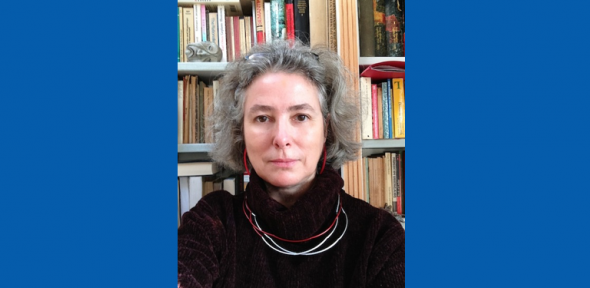
Dr Marion Kant is a Lecturer in the Department of German at the University of Cambridge's Faculty of Modern and Medieval Languages and Linguistics. Her work bridges musicology and dance history, focusing on body politics, the history and aesthetics of performance (theatre, opera, dance, ballet), German-Jewish relations, Nazi ideology, and anti-fascist exile. Her research explores the intersection of physical culture, nationalism, and avant-garde arts. She is currently editing a six-volume Cultural History of Dance for Bloomsbury, examining German nationalism and movement concepts from the 19th and 20th centuries. Her publications span German physical cultures, nationalist ideologies, and the role of dance in exile communities. Key Research Themes: Body aesthetics, German-Jewish assimilation, Nazi cultural policies, avant-garde movements, and transnational exile networks. Notable Projects: Analysis of Nazi-era dance policies, documentation of anti-fascist artists in Los Angeles, and historical studies of German physical cultures.
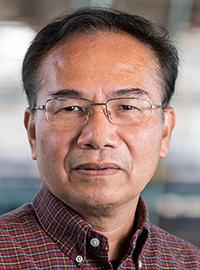
Wenrui Huang is a Professor in the Department of Civil & Environmental Engineering at Florida A&M University-Florida State University (FAMU-FSU). He holds a Ph.D. (1993), M.S. (1986), and B.S. (1982) in Civil Engineering from the University of Rhode Island and Hohai University. His research focuses on Coastal & Estuarine Hydrodynamics, Surface Water Quality Modeling, and Neural Network Applications in Hydrology. Professional Affiliations: Licensed Professional Engineer (PE), Chair of the Professional Development Committee at FAMU-FSU. Key Contributions: Published in coastal hazards, hurricane modeling, and storm surge assessment. Edited the book Coastal Hazards (2010). Research emphasizes numerical modeling of extreme events, including tsunami propagation and hurricane-induced wave dynamics. His work integrates computational methods with environmental systems analysis.
Dr. Shanshan Lan is a researcher affiliated with the University of Amsterdam’s Faculty of Social and Behavioural Sciences, where she contributes to the Moving Matters programme group. Her work focuses on urban anthropology, migration patterns, and racial formations across Asia and Euro-America. She examines transnational student mobility, global cities, African diasporas in China, and Chinese diasporas in the U.S., with a particular emphasis on class dynamics and social change. Her research employs ethnographic methods, including walking ethnography in urban environments, to explore how race and migration intersect with globalization. Notable projects include studies on African communities in Guangzhou, the role of the Catholic Church in African diasporas, and the experiences of Western entrepreneurs during the pandemic. Key Interests: Transnational migration, racial knowledge circulation, pandemic sociology, and global urban studies. Recent Focus: Whiteness studies in China, precarious migrant identities, and the impact of globalization on education and labor markets. Lan has received recognition for her work, including the Honorary Mention of the 2006 SUNTA Graduate Student Prize. Her publications span academic journals and edited volumes, addressing topics from racial inclusion policies to transnational business networks.
Rev Dr Michael Fuller is a Lecturer in Science and Religion at the University of Edinburgh's School of Divinity. He holds degrees in Chemistry (MA and DPhil from Oxford) and Theology (BA from Cambridge), with additional ordination in the Scottish Episcopal Church. His work bridges science-religion dialogue, theological analysis of literature and music, and ethical considerations of emerging technologies like big data. Qualifications include: MA Chemistry (Oxford, 1989) DPhil Chemistry (Oxford, 1989) BA Theology (Cambridge, 1991) Fellow of the Higher Education Academy (2010) Fellow of the International Society for Science and Religion (2016) Research interests emphasize interdisciplinary dialogue between scientific disciplines and religious thought, particularly exploring human uniqueness, ethics of technology, and theological interpretation in music and literature. Recent work examines big data's ethical implications and Wagnerian redemption narratives. Key affiliations include: Vice-President for Publications, European Society for the Study of Science and Theology International Advisory Board member for Zagreb University's CePOZiR Centre Former Chair of the Science and Religion Forum Publications include over ten edited volumes and numerous articles on science-religion interface topics. His work often addresses public intellectualism, advocating for constructive dialogue between scientific and religious communities.
Ahmed E. Hassan is a Professor and Canada Research Chair in Software Analytics at the School of Computing, Queen's University. He serves as NSERC RIM Industrial Research Chair and leads the Software Analysis and Intelligence Lab (SAIL). Dr. Hassan pioneered the Mining Software Repositories (MSR) conference and co-edited special issues in the IEEE Transactions on Software Engineering and the Journal of Empirical Software Engineering on MSR topics. Education Ph.D. in Computer Science, University of Waterloo (2005) MMath in Computer Science, University of Waterloo BMath in Computer Science, University of Waterloo His research focuses on software analytics, mining software repositories, and systems engineering. Projects at SAIL include analyzing version control systems, predicting software defects, and improving software quality through empirical methods. The lab's work spans software evolution, architecture analysis, and debugging of distributed systems. Dr. Hassan has taught courses like CISC 322: Software Architecture and CISC 880: Mining Software Engineering Data at Queen's University, University of Victoria, and University of Waterloo. His teaching philosophy emphasizes hands-on learning with tools like WEKA and R, and includes project-based assignments using MSR Challenge datasets. Scientific Awards NSERC RIM Industrial Research Chair in Software Engineering Canada Research Chair in Software Analytics He has industrial experience from RIM (Blackberry platform), IBM Research (Almaden Lab), and Nortel Networks. Dr. Hassan is a named inventor on patents in the US, Europe, Canada, Japan, and India. SAIL lab is funded by NSERC, ORF, CFI, and industry partners.
Tom McDonough is a Professor of Art History at Binghamton University, specializing in modern and contemporary art with a focus on avant-garde movements, particularly the Situationist International. His research explores intersections between art, politics, and social movements in postwar Europe. He holds degrees from Rutgers University (BA), New York University’s Institute of Fine Arts (MA, PhD), and has taught at Harvard University and UC Berkeley. Education: Bachelor’s Degree: Rutgers University MA and PhD: Institute of Fine Arts, New York University His research interests include postwar European avant-gardes, postwar French architectural history, and contemporary Black American art. Key publications include "The Beautiful Language of My Century" and edited volumes on the Situationist International and urban theory. McDonough received the SUNY Chancellor’s Award for Excellence in Scholarship (2024) and has held fellowships at institutions such as the Institute for Advanced Studies in the Humanities and the Académie de France à Rome/Villa Medici. Teaching focuses include 19th-century Parisian art, Black Monument sculptors, and film theory. His work bridges art criticism with broader socio-political analysis, emphasizing radical artistic movements’ societal impacts.
Jisoo M. Kim is the Korea Foundation Associate Professor of History, International Affairs, and East Asian Languages and Literatures at George Washington University. She holds leadership roles as Founding Director of the GW Institute for Korean Studies (2017–present) and Founding Co-Director of the East Asia National Resource Center (2018–present). She also serves as Editor-in-Chief of the Journal of Korean Studies . Her work focuses on gender, sexuality, law, emotions, and affect in Korean history, with expertise in legal culture, forensic medicine, and rights-claiming in East Asia. Dr. Kim earned her M.A., M.Phil., and Ph.D. in East Asian Languages and Cultures from Columbia University. She teaches courses such as Gender, Power, and Sexuality in East Asia and History of Korea , emphasizing intersectional approaches to Asian studies. Her research explores legal performance, emotional dimensions of justice, and the role of women’s voices in historical legal contexts. Notable works include The Emotions of Justice: Gender, Status, and Legal Performance in Chosŏn Korea (2016), awarded the 2017 James B. Palais Prize, and co-edited volumes like The Great East Asian War and the Birth of the Korean Nation (2016). Her publications span legal history, comparative frameworks between Korea and Europe, and the evolution of legal systems under colonialism. Current projects include Criminalizing Intimacy: Marriage, Concubinage, and Adultery Law in Korea, 1469–2015 . Kim’s academic contributions bridge historical analysis with contemporary debates on law, gender, and identity, supported by leadership in interdisciplinary research centers and scholarly journals.
Kayvon Fatahalian is an Associate Professor in the Department of Computer Science at Stanford University. His research focuses on real-time graphics, high-efficiency simulation engines for entertainment and AI, and large-scale image/video analysis platforms. He explores intersections of computer graphics, machine learning, and high-performance computing to advance systems for interactive applications and AI-driven tasks. His work includes innovations in rendering pipelines, embodied AI simulations, and generative models for 3D content creation. Recent projects address challenges in multi-agent systems, motion synthesis, and scalable rendering architectures. Fatahalian’s contributions span technical systems, algorithmic frameworks, and foundational research in graphics and AI. Notable areas of exploration include: Real-time rendering optimizations for complex scenes AI-driven motion and style generation from sparse inputs Efficient simulation frameworks for deep reinforcement learning Weak supervision techniques for rare category detection His publications emphasize practical systems with theoretical grounding, often bridging hardware/software co-design principles with modern AI methodologies. Current work includes developing agile hardware accelerators and scalable architectures for next-generation interactive systems.
Wojciech Czakon is a Full Professor and chair of the Strategic Management Department at Jagiellonian University in Poland. He has held leadership roles as Head of the Management Theory Department (University of Economics in Katowice) and Professor at the Higher Schools of Banking in Poznan. His academic career spans multiple institutions, including visiting positions at Universita delli Studi di Roma 2 Tor Vergata. Education: PhD in Management (2002) Habilitation in Management (2007) Professor title in Economics (2013) His research focuses on organizational behavior, strategic management, coopetition, family business dynamics, and qualitative research methodologies. Recent work explores digital transformation, strategic myopia, and the behavioral antecedents of coopetition. Publication Trends: His 2014-2022 papers on coopetition strategies—covering trust, behavioral factors, and performance metrics—have received significant citations. Recent projects analyze innovation ecosystems and entrepreneurial failure. Scientific Awards: 2022 Best book award (Organization and Management Committee of the Polish Academy of Sciences) 2021 Outstanding research achievement award (Prime Minister of Poland) Honoris causa doctor (Wroclaw University of Business and Economics) Top 5 global scholar in coopetition research Community Service: He has served as Vice-president of the European Academy of Management, co-chair of EURAM doctoral colloquium, and organizer for conferences like EURAM, EIASM, and IFERA. He also co-edits anthologies and special issues in journals such as Long Range Planning and Industrial Marketing Management.
Ravi Dhar is the George Rogers Clark Professor at the Yale School of Management and holds an affiliated appointment as a Professor of Psychology at Yale University. He serves as Director of the Center for Customer Insights , focusing on consumer behavior, branding, and marketing strategy through psychological and economic frameworks. Ph.D. in Marketing, University of California at Berkeley (1992) MS, University of California at Berkeley (1990) MBA, Indian Institute of Management (1987) BTech, Indian Institute of Technology (1986) His research examines preference formation, self-regulation, and the interplay of conflicting goals in consumer decisions. Recent work explores sustainability, mobile commerce, and how guilt paradoxically enhances consumer pleasure. He has published over 50 articles and advised Fortune 100 companies across industries. Key trends in his publications include behavioral economics , eco-conscious consumption , and technology-mediated decisions . His studies address choice overload, goal systems, and the psychological drivers of indulgence versus self-control. Distinguished Scientific Contribution Award (Society for Consumer Psychology, 2012) Yale SOM Alumni Teaching Award (2012) William O'Dell Award Finalist (2004, 2008, 2012) AMA Doctoral Consortium Fellow (1991) Dhar consults firms on customer insights and has held visiting roles at HEC Paris , Erasmus University , and Stanford/NYU . He edits top journals like Journal of Consumer Research and Marketing Science , shaping academic and industry discourse.
Mustafa Kirca serves as Associate Professor of English and Comparative Literature at Çankaya University in Ankara, Turkey, where he is affiliated with the Department of Translation and Interpreting Studies. His academic profile demonstrates extensive engagement with contemporary literary theory, postcolonial studies, and comparative literature, with particular focus on the Turkish context. Kirca's research interests span postmodernist fiction, postcolonial theory, literary translation, gender studies, and cultural identity. His scholarly work consistently examines the intersections between literature, philosophy, and cultural politics, with special attention to how global literary phenomena are received and transformed in Turkish intellectual contexts. He has made significant contributions to understanding the relationship between translation studies and comparative literature, advocating for border-crossing approaches that challenge traditional disciplinary boundaries. Analysis of Kirca's publications reveals consistent engagement with postcolonial narrative strategies, particularly textual decolonization approaches that challenge Eurocentric discourses. His work frequently examines how contemporary authors like Murakami, Rushdie, and Carter negotiate cultural hybridity and identity formation. A notable thread throughout his scholarship is the examination of how literary texts engage with philosophical concepts, from Kierkegaardian existentialism to postmodern historiography, often through the lens of translation and cross-cultural reception. Kirca has co-edited several significant scholarly collections including Iris Murdoch and Her Work: Critical Essays (2010), B/Orders Unbound: Marginality, Ethnicity and Identity in Literatures (2017), and Multicultural Narratives: Traces and Perspectives (2018), demonstrating his collaborative scholarly approach and broad intellectual interests. His editorial work has created important platforms for interdisciplinary dialogue in literary and cultural studies. As an active academic, Kirca has contributed to numerous conferences on Language, Literature and Culture, with particular emphasis on how contemporary literature engages with themes of fear, identity, and cultural transformation in the post-millennial era. His work demonstrates consistent scholarly productivity with publications spanning from 2009 to the present, including the forthcoming 2025 work on Murakami's Killing Commendatore .
Tiffany Lewis is an Associate Professor at the Marxe School of Public and International Affairs, Baruch College, CUNY. Her work bridges rhetoric, social movements, and public affairs to explore gendered political advocacy. Education: Ph.D., Communication, University of Maryland, College Park M.A., Communication, University of Montana, Missoula B.A., Speech Communication, University of Washington, Seattle Research Interests: Historical analysis of women's activism in the progressive-era U.S. Embodied and performative advocacy tactics (mountain ascents, hikes, road trips) Visual rhetoric and cartography in social movements Decolonizing assessment methods in communication pedagogy Publications Trends: Her work primarily examines the intersection of gender, regional identity, and rhetorical strategy in early 20th-century advocacy, with a focus on Western U.S. suffrage movements. She employs archival research, discourse analysis, and geospatial methods. Committee Service: Executive Committee, Marxe School Assessment Committee, Marxe School Strategic Planning Committee, Marxe School Editorial Board, Recovering Democracy Archive: Speech Recovery Project Teaching: She instructs courses on public communication, equity-focused advocacy, social movement activism, and women in U.S. politics.
Prof. Dr. Harald Wehnes serves as a Professor at the University of Würzburg within the Faculty of Mathematics and Computer Science, specifically affiliated with the Institute of Computer Science's Chair of Computer Science III (Communication Networks). His office is located in room A206 at the Hubland campus, with contact email wehnes@informatik.uni-wuerzburg.de. His research centers on project management methodologies, with particular emphasis on the Project Excellence Model and its practical applications. Prof. Wehnes has developed significant expertise in applying project management frameworks to complex IT infrastructure initiatives and healthcare systems. His work demonstrates how theoretical project management concepts translate into real-world implementation, especially in cross-organizational contexts. Analysis of his publication history reveals a consistent focus on practical project management applications, particularly the NIMBUS project case study which documented the consolidation of 12 data centers into a single state data center. His publications demonstrate evolving expertise from foundational programming work (evidenced by his 1981 book "Strukturierte Programmierung mit FORTRAN 77" which went through seven editions) to sophisticated project management frameworks. Prof. Wehnes has maintained active engagement with the German Project Management Association (GPM), presenting at numerous forums and events. His international reach is evident through presentations at institutions including the University of the United Arab Emirates and the University of Canterbury in New Zealand. From 2013-2020, he taught specialized courses on professional project management (Spezialvorlesung aus der Praxis: Professionelles Projektmanagement) at the University of Würzburg, sharing his extensive practical experience with students. His work environment within the Chair of Computer Science III connects his project management expertise with research areas including 5G & 6G network technologies, network and service management, and green communication networks.
Dr. Oliver Raaz is a Research Associate at the Institute for Media and Communication Studies , part of the Department of Political and Social Sciences at Freie Universität Berlin. His work focuses on organizational communication, public relations, and the intersection of media theory with strategic discourse. University: Freie Universität Berlin School: Department of Political and Social Sciences Department: Institute for Media and Communication Studies Email: oliver.raaz@fu-berlin.de His research interests span organizational communication , public relations , transparency theory , critical post-structuralism , non-standardized research methods , and digital media in chronic disease management . He actively contributes to academic discourse through publications in peer-reviewed journals and edited volumes. Recent publications highlight trends in PR historiography , organizational transparency , digital media ethics , polyphony theory , and complexity frameworks . His work often integrates critical theory with empirical analysis.
Dr. Michele Shaul serves as Professor of Spanish and Chair of the World Languages Department at Queens University of Charlotte, where she also directs the Center for Latino Studies. A dedicated scholar and educator, she co-founded the e-journal Label Me Latina/o and leads community-focused initiatives bridging academia and social outreach. Her academic credentials include: Ph.D. in Spanish-American Literature from the University of North Carolina, Chapel Hill M.A. in Spanish from the University of Florida, Gainesville B.A. with honors in Spanish from the University of Florida, Gainesville Dr. Shaul's research interrogates Latinx identity through literary criticism, translation, and creative writing, emphasizing intersectional experiences of race, gender, and disability within U.S. institutions. Her work actively challenges monolithic narratives while centering marginalized voices in both scholarly and artistic contexts. Analysis of her recent publications (2016-2023) reveals a cohesive trajectory exploring bilingual expression, cultural memory, and systemic inequity. Edited volumes on Latinx literature in Spanish and theater demonstrate scholarly rigor, while creative works like poetry and short stories employ personal narrative to examine reincarnation, hybrid identity, and border-crossing experiences. Her contributions have earned significant recognition: Queens’ 2016 Hunter-Hamilton Love of Teaching Award for pedagogical excellence 2023 Con A de Arte Award from the Latin American Coalition for cultural leadership Through the student/faculty Latino Studies Project, Dr. Shaul mentors researchers documenting Charlotte's Latino community history while collaborating with artists on tolerance-focused initiatives. Her editorial work with international scholars demonstrates sustained commitment to amplifying underrepresented voices across academic and creative domains. Dr. Shaul co-leads the e-journal Label Me Latina/o and directs the Latino Studies Project, fostering collaborative research between students, faculty, and Charlotte's Latino community. Her social outreach partnerships integrate art installations and performance to address diversity through experiential learning and public engagement.