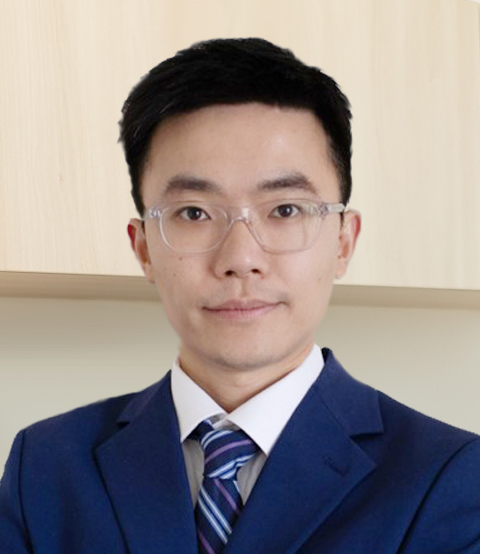
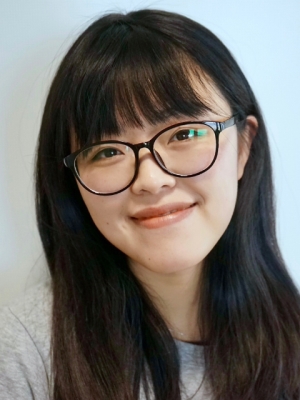
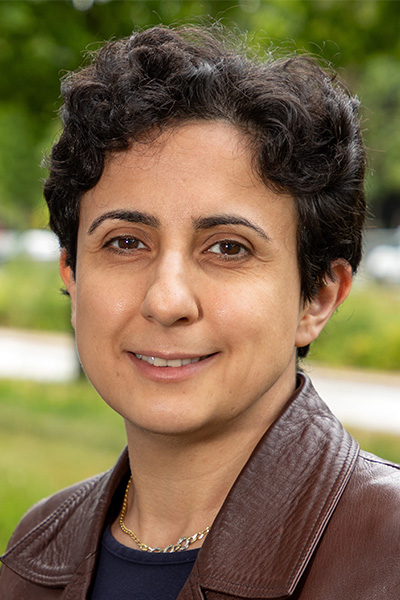
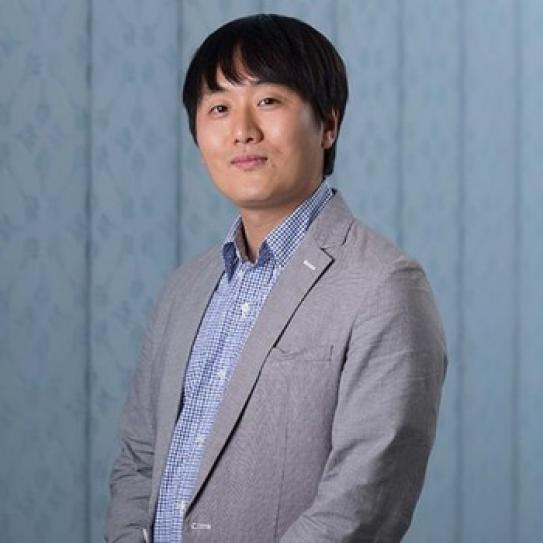
Bradford S. Bell is the William J. Conaty Professor in Strategic Human Resources and Director of the Center for Advanced Human Resource Studies at Cornell University's ILR School. His academic career spans roles as editor of Personnel Psychology and fellowships with the Society for Industrial and Organizational Psychology and American Psychological Association. He holds a Ph.D. in Industrial and Organizational Psychology from Michigan State University. Education: B.A. Psychology, University of Maryland (College Park) M.A. and Ph.D. Industrial and Organizational Psychology, Michigan State University Research Focus: Dr. Bell's work centers on training/development, team dynamics, virtual work, and technology's impact on organizations. He has published widely in journals like Journal of Applied Psychology and Academy of Management Learning & Education , with over 150+ publications. His research emphasizes practical applications in workplace learning systems and team effectiveness. Awards: Early Career Achievement Award (Academy of Management HR Division, 2008) Professional Contributions: Advises organizations globally on HR strategy through the Center for Advanced Human Resource Studies. His consulting spans banking, manufacturing, and public sectors. Active in professional development, he teaches courses on HR management, training, and work teams.
Barbara A. Knuth is a Professor Emerita at Cornell University's College of Agriculture and Life Sciences, Department of Natural Resources and the Environment. She previously served as Dean of Cornell's Graduate School (over 10 years), Vice Provost/Senior Vice Provost (8 years), and Senior Associate Dean in CALS (3 years). Her academic career began with a PhD in Fisheries and Wildlife Sciences from Virginia Tech (1987), making her the first woman in tenure-track faculty at Cornell's Department of Natural Resources. Education: Ph.D., Fisheries and Wildlife Sciences (Virginia Tech) M.En., Environmental Science (Miami University) B. Phil. & A.B., Zoology/Environmental Studies (Miami University, Phi Beta Kappa) Research Interests: Focuses on ecosystem-based management in Great Lakes/marine systems, risk communication around chemical contaminants in fish, and environmental stewardship. Also studies equity/inclusion in graduate education. Key themes include: Social science integration in natural resource policy Health benefits/risk trade-offs in fish consumption Community-based conservation strategies Outreach: Advises state/tribal agencies on fishery management and public health. Led initiatives improving graduate education through professional development, mental health support, and faculty mentoring programs. Awards: Debra W. Stewart Award (2019) Fellow, American Fisheries Society (2015-) Council of Graduate Schools Recognition Multiple teaching/research awards (1999-2006) Grants & Funding: Supported by NSF, Sea Grant, EPA, Sloan Foundation, and others for projects on Great Lakes management, educational equity, and contaminant risk communication. Labs/Teams: Affiliated with Cornell's Center for Conservation Social Sciences. Collaborated with Ecologists Without Borders, Great Lakes Fishery Commission, and National Academies Ocean Studies Board.
Asst. Prof. OU Pengfei is an Assistant Professor and NUS Presidential Young Professor in the Department of Chemistry at the National University of Singapore, Faculty of Science. He leads the AI for Chemistry (AI4Chem) research group, focusing on computational catalysis, machine learning, and materials science. Previously, he was a Research Associate at Northwestern University and a Postdoctoral Fellow at the University of Toronto under Prof. Edward H. Sargent, and earned his Ph.D. from McGill University. Education: Ph.D., McGill University, 2020 M.Eng., Central South University, 2015 B.Eng., Central South University, 2012 Research interests include catalyst design for electrochemical reactions using ab initio DFT, molecular dynamics simulations, and AI-driven methods. He develops dynamic simulations of chemical processes under reaction conditions and machine learning tools for accelerated catalyst discovery. His work addresses challenges in energy and environmental applications such as CO2 reduction and hydrogen evolution. Notable awards include the NUS Presidential Young Professorship (2024), Climate Positive Energy Postdoctoral Fellowship (2021), and Chinese Government Award for Outstanding Self-Financed Students Abroad (2020). Labs/Teams: The AI4Chem group integrates theory-guided and data-driven approaches to advance computational catalysis, with three core research directions: (1) reaction mechanism exploration and catalyst optimization, (2) dynamic structure-performance relationships under reaction conditions, and (3) machine learning algorithms for high-throughput screening.
Siyu Tang is an Assistant Professor in the Department of Computer Science at ETH Zürich, where she leads the Computer Vision and Learning Group (VLG) at the Institute of Visual Computing. Her research focuses on computational models for human perception and digitalization through computer vision and machine learning. Her educational background includes: PhD in Computer Science, Max Planck Institute for Informatics (2017), supervised by Prof. Bernt Schiele Master of Science in Media Informatics, RWTH Aachen University Bachelor of Science in Computer Science, Zhejiang University, China Dr. Tang specializes in human-centric computer vision, developing statistical models for motion analysis, pose estimation, and digital human creation. Her work integrates machine learning with optimization techniques to enable machines to interpret human activities from visual data, with applications spanning virtual reality, healthcare, and human-computer interaction. Key research thrusts include generative models for content creation, egocentric vision, and human motion synthesis. Her recent publications (2024-2025) demonstrate intense focus on 3D human modeling and neural rendering, with Gaussian splatting emerging as a dominant technique for efficient avatar creation and scene reconstruction. Significant themes include text-driven motion synthesis using diffusion models, relightable avatars, surgical training applications, and egocentric multimodal pretraining. This work bridges computer vision, graphics, and machine learning to advance human digitalization. No scientific awards were mentioned in the provided text. Dr. Tang leads the VLG research group at ETH Zürich, mentoring PhD and Master's students in human-centric AI. She previously secured an early career research grant from the Max Planck Institute for Intelligent Systems to establish her independent research program. Her group actively pursues funding for projects in human motion analysis, 3D reconstruction, and generative modeling, with strong industry and clinical collaborations. The Computer Vision and Learning Group (VLG) operates within ETH's Institute of Visual Computing, maintaining dedicated facilities for motion capture, 3D scanning, and high-performance computing. The team collaborates internationally with institutions like the Max Planck Society and focuses on scalable solutions for real-world human digitalization challenges, including surgical training systems and immersive virtual environments.
Filipa Melo Lopes is a Lecturer in Social and Political Philosophy at the University of Edinburgh, affiliated with the School of Philosophy, Psychology and Language Sciences. She currently directs the Scottish Feminist Philosophy Network. Her research focuses on feminist philosophy, social theory, sexual ethics, and the work of Simone de Beauvoir, with recent attention to incel extremism, fashion ethics, and gender-based violence. Education: B.A. from Simon Fraser University (Canada), Ph.D. from University of Michigan (USA). Teaching includes undergraduate courses like 'Advanced Topics in Feminist Philosophy: Gender and Beauty' and PhD supervision in feminist ethics and political theory. She has supervised several doctoral students, including Lilith W. Lee (now Assistant Professor at Vrije Universiteit Amsterdam). Publications analyze themes such as misogynistic dehumanization, feminist fashion ethics, and Beauvoirian critiques of incel ideology. Her work bridges academic philosophy with public discourse on topics like sugar dating and incel violence. Active in feminist knowledge networks, she also writes for broader audiences on fashion, misogyny, and cultural criticism.
Shiva Nejati is a Professor at the University of Ottawa 's School of Electrical Engineering and Computer Science . He holds a PhD in Computer Science from the University of Toronto and previously worked as a Senior Scientist (2012-2019) and Scientist (2009-2012) at the SnT Centre (University of Luxembourg) and Simula Research Laboratory. Research focus: Software engineering for cyber-physical systems (autonomous vehicles, IoT), blending formal verification, machine learning, and search-based testing Key tools developed: ARIsTEO, SOCRaTEs, SimCoTest, EPIcuRus Editorial roles: Associate Editor for EMSE Journal (2025–), ASE Journal (2025–), IEEE Transactions on Software Engineering (2020–2024) His work combines formal methods , empirical software engineering , and AI/ML to address verification challenges in complex systems, particularly through evolutionary algorithms and surrogate modeling . Notable collaborations include industry partners in telecommunications, automotive, and aerospace sectors. Recent publications emphasize large language models for requirements analysis, adversarial testing of vision systems, and multi-objective optimization for test generation. His Sedna Research Lab actively trains graduate students in these cutting-edge methodologies.
Sohmyung Ha is an Associate Professor of Electrical Engineering and Bioengineering at NYU Abu Dhabi and holds a Global Network position at NYU Tandon School of Engineering. He leads the Integrated BioElectronics Laboratory, focusing on advancing silicon integrated technologies for biomedical applications such as implantable devices and wearable sensors. His expertise spans biomedical circuits, neural interfaces, and wireless power systems. Education: MS (2004, KAIST), PhD (2016, UC San Diego) with a Best Thesis Award. Prior industry experience includes analog circuit design at Samsung Electronics (2006-2010). Academic affiliations include NYU Abu Dhabi, NYU Tandon, and global collaborations. Research interests include high-performance biomedical sensors, neural prosthetics, and energy-efficient bioelectronic systems. Notable achievements include a Best Paper Award (ISCAS 2024) and innovations in impedance spectroscopy and neural interface ICs. Current projects emphasize closed-loop neural interfaces, subcutaneous glucose monitoring, and retinal prostheses. His lab develops miniaturized, power-autonomous systems for healthcare applications.
Michela Becchi is an Associate Professor in the Department of Electrical and Computer Engineering at North Carolina State University. She specializes in computer architecture, systems software, and applications, with a focus on heterogeneous systems, parallel algorithms, and acceleration techniques for bioinformatics, pattern recognition, and quantum computing. Her work spans multi-core CPUs, GPUs, FPGAs, and distributed clusters, emphasizing the boundary between hardware and software design. Dr. Becchi holds a Ph.D. and Master’s degree in Computer Engineering from Washington University in St. Louis (2009) and a Bachelor’s degree in Computer Engineering from Politecnico di Milano, Italy (2000). Her research has been recognized with prestigious awards, including the NSF CAREER Award (2015) and the University of Missouri System President Award for Early Career Excellence (2016). Her research interests include compiler and runtime techniques for heterogeneous systems, acceleration of bioinformatics algorithms, and high-speed networking applications. She has pioneered frameworks for efficient data transformation, GPU-accelerated compression, and memory-efficient graph algorithms for quantum computing. Her work also explores thread coarsening, mixed-precision auto-tuning, and secure multi-core processor design. Key contributions include the PILOT runtime system for GPU memory management, the GPU-FPtuner auto-tuner for floating-point applications, and innovative approaches to automata processors for genomic analysis. Her publications emphasize reproducible accuracy in scientific simulations and the optimization of irregular applications on many-core platforms.
Dino Pedreschi is a Full Professor of Computer Science at the University of Pisa, affiliated with the Department of Computer Science (DI-UNIPI). He co-leads the Pisa KDD Lab, a joint research initiative between the University of Pisa and the Italian National Research Council’s Institute of Information Science and Technology, one of the earliest labs focused on data mining and knowledge discovery. His research spans Big Data Analytics , Social Network Analysis , Human Mobility Analysis , Privacy-by-Design , Explainable AI (XAI) , and ethical data mining . He is a pioneer in privacy-preserving data mining and has contributed significantly to understanding societal impacts of AI and big data. Recent publications highlight trends in explainable AI , fairness-aware data mining , urban mobility modeling , and socio-economic nowcasting , reflecting a strong interdisciplinary focus combining computer science, social science, and policy. Notable scientific awards include: Google Research Award on Privacy (2009) University of Pisa Ordine del Cherubino (2017) Pedreschi has played leadership roles in major conferences such as ECML/PKDD (Co-Chair 2004), ICDM (Vice-Chair 2005), and ICDE (Vice-Chair 2014). He founded the Business Informatics MSc program at the University of Pisa to train interdisciplinary data scientists. He has been a visiting scientist at the University of Texas at Austin, CWI Amsterdam, UCLA, and the Barabási Lab at Northeastern University. He actively contributes to European research initiatives including SoBigData++, FAIR, and TAILOR, and has advised on AI policy, including testimony before the Italian Parliament on AI and labor markets. He is a key member of the Pisa KDD Lab, a leading research group in data science and AI ethics, fostering collaboration between academia and public institutions.
David Doty is a Professor in the Department of Computer Science at the University of California, Davis . His research focuses on the intersection of molecular systems and computation , exploring how natural processes like chemical reactions , DNA nanotechnology , and self-assembly can perform computation. He also investigates connections to theoretical computer science, including distributed computing and algorithmic information theory . Doty's work bridges physics , chemistry , and biology through rigorous computational models like the Tile Assembly Model and Population Protocols . His research program includes software development ( scadnano , ppsim ), theoretical analysis, and collaborations with experimentalists. He teaches courses on theory of computation and molecular computing , and has advised numerous students in his research group. His publications cover topics such as algorithmic self-assembly , chemical reaction networks , and thermodynamic binding networks , with a focus on understanding fundamental computational and physical limits. Key software tools developed by his group include scadnano for DNA design and ppsim for population protocol simulations. Doty's recent research trends explore rate-independent chemical computing , error correction , and stochastic modeling in molecular systems. Current academic activity includes teaching ECS 120 (Undergraduate Theory of Computation), ECS 220 (Graduate Theory of Computation), and ECS 232 (Theory of Molecular Computation). He maintains a research lab in 2306 Academic Surge and continues to publish in leading conferences like DNA Computing and CMSB .
Rachid Cherkaoui is a Senior Scientist at École polytechnique fédérale de Lausanne (EPFL), affiliated with the School of Engineering, specifically within the Department of Electrical Engineering. He is actively associated with research units SEL-ENS, EDEY-ENS, and DESL, contributing to the Distributed Electrical Systems Laboratory (DESL). His work focuses on advanced power system optimization, smart grids, and energy market modeling. Ph.D. in Electrical Engineering, EPFL, 1992 M.S. in Electrical Engineering, EPFL, 1983 Dr. Cherkaoui's research interests include electrical power and distribution systems, distributed generation, energy storage, electricity market deregulation, and power system vulnerability mitigation. His work bridges theoretical modeling and real-world applications, particularly in flexibility provision, grid resilience, and market integration of renewable energy. His recent publications (2020–2025) reflect a strong focus on smart grid technologies, energy storage integration, and market mechanisms. Key themes include optimal dispatch of hybrid systems, TSO-DSO coordination, frequency control, and stochastic optimization under uncertainty. His work is frequently published in top-tier journals such as IEEE Transactions on Power Systems and IEEE Transactions on Smart Grid. ABB Swiss Award '83 Senior Member, IEEE Member, CIGRE Task Forces C5-2 IEEE Swiss Chapter Officer since 2005 Dr. Cherkaoui actively supervises doctoral students and collaborates extensively with researchers like Mario Paolone. He has contributed to numerous projects funded by industry, CTI/Innosuisse, and Horizon 2020. His research includes experimental validation and real-time control systems, particularly in hydropower and battery storage applications. He is also involved in national and international energy strategy discussions, including Switzerland's path to carbon neutrality.
Karen Livescu is a Professor at the Toyota Technological Institute at Chicago (TTIC), a philanthropically endowed graduate institute for computer science located on the University of Chicago campus. She also serves as a courtesy faculty member in the Department of Computer Science at the University of Chicago and is an Affiliated Scholar at the Data Science Institute there. Her research focuses on advancing speech and language processing through innovative machine learning approaches. Education: PhD in Electrical Engineering and Computer Science from MIT (2005) S.M. from MIT Department of Electrical Engineering and Computer Science (1999) A.B. in Physics from Princeton University (1996) Karen's research spans multiple dimensions of speech and language processing with particular emphasis on speech recognition, spoken language understanding, and multimodal processing. She has made significant contributions to articulatory feature-based speech recognition, self-supervised learning for speech representation, and sign language processing. Her work consistently bridges machine learning techniques with linguistic and speech science knowledge, focusing on creating more robust, interpretable, and inclusive speech processing systems that can handle diverse languages and modalities. Her recent publication trajectory reveals a strong focus on self-supervised learning for speech representation, multilingual speech processing, and sign language understanding. She has been instrumental in developing benchmark frameworks like SUPERB and ML-SUPERB that have become standard evaluation tools in the speech community. Her work increasingly addresses critical challenges in low-resource language scenarios, language disparities in speech technology, and ethical considerations in real-world deployment. Scientific Awards: Best Paper award at EMNLP 2024 for 'Towards robust speech representation learning for thousands of languages' Best Student Paper Award at ASRU 2023 Best Short Paper Award at CRAC 2021 Top system at WMT-SLT 2023 Karen has successfully advised numerous PhD students and postdoctoral researchers who have gone on to faculty positions at institutions like University of Waterloo, University of Edinburgh, and Stellenbosch University, as well as industry roles at major technology companies including Google, Meta, and NVIDIA. Her research group has secured significant funding for projects including the development of the SLUE benchmark for spoken language understanding and the SUPERB framework for evaluating self-supervised speech models. She has been actively involved in organizing workshops and symposia that bring together researchers in speech and language processing. Karen leads the Speech and Language at TTIC (SL@TTIC) research group, which maintains a strong collaborative relationship with researchers at the University of Chicago and other institutions. The group has been particularly active in advancing sign language processing through projects like ChicagoFSWild and OpenASL, while also making significant contributions to spoken language understanding and multilingual speech recognition. Her team regularly participates in community challenges and benchmarks, helping to push the field forward through open science and collaborative evaluation frameworks.
Ethan Mollick is the Ralph J. Roberts Distinguished Faculty Scholar, Rowan Fellow, and Associate Professor of Management at the Wharton School of the University of Pennsylvania. He serves as Co-Director of the Generative AI Labs at Wharton, where he researches AI's impact on work, entrepreneurship, and education. His academic background includes a PhD and MBA from MIT's Sloan School of Management and a bachelor's degree from Harvard University. Mollick's research spans artificial intelligence applications in business and education, entrepreneurship dynamics, and innovation management. He explores how generative AI transforms classroom education through simulations like PitchQuest, and investigates startup funding disparities with a focus on gender representation. His work on the 'jagged technological frontier' demonstrates how humans integrate AI capabilities through Centaur and Cyborg approaches. His publications reveal consistent focus on practical AI implementation, with recent work examining prompt engineering for diverse idea generation, AI-assisted teaching strategies, and gender representation tipping points in venture capital. The research shows increasing emphasis on educational applications since 2022, coinciding with the ChatGPT breakthrough. MBA Professor of the Year Award, Poets & Quants (2024) Named to TIME Magazine's Most Influential People in Artificial Intelligence ASQ Award for Scholarly Contribution (2024) Greif Research Impact Award (2020) McGraw-Hill/Academy of Management Innovation in Entrepreneurship Pedagogy Award (2016) As Co-Director of Wharton's Generative AI Labs, Mollick leads prototype development and research on human-AI collaboration. His teaching includes Technology Strategy, Entrepreneurship, and Innovation courses where he implements AI simulations. He has advised numerous organizations and co-founded a startup prior to academia, bringing practical experience to his research on solo versus team ventures. Mollick directs Wharton Interactive's game development initiatives, creating educational simulations including PitchQuest (AI-powered VC simulator), The Saturn Parable (crisis management), and The Entrepreneurship Game. His lab work focuses on creating scalable AI educational tools that provide personalized learning experiences through simulated practice environments.
Wan Shou is an Assistant Professor in the Department of Mechanical Engineering at the University of Arkansas. His research focuses on multiscale manufacturing, advanced materials, and functional devices, with applications in wearables, robotics, and sustainable technologies. Ph.D., Mechanical Engineering, Missouri University of Science and Technology M.S., Mechanical Engineering, University of Louisiana at Lafayette B.E., Textile Engineering, Tianjin Polytechnic University, China Dr. Shou’s research spans laser-based manufacturing , nanomanufacturing , machine learning-assisted processes , and bioresorbable electronics . He explores 3D printing of polymer and metal composites, energy materials , and functional textiles for wearable sensors and environmental applications. Recent publications highlight his work in additive manufacturing , computational design of composites, and self-powered sensing systems . His team integrates machine learning with materials discovery to optimize performance. Editor’s pick of Science Magazine US Patent 11,752,700: Data-driven material formulation US Patent 11,993,850: Laser-assisted nanoparticle printing Dr. Shou’s patents and publications reflect a commitment to innovative manufacturing and environmentally conscious design . His work bridges materials science , robotics , and smart systems , advancing energy and water technologies.
Zita Vale is a Full Professor at the Institute of Engineering (ISEP) of the Polytechnic of Porto (IPP), where she holds the first Full Professor position since 2017. She is a co-founder of GECAD (1999) and coordinates GECAD's Power and Energy (PES) activities. GECAD is recognized by FCT since 2004 and classified as Excellent. She has served as GECAD director (2010-2017), vice-director (1999-2009, 2017-present), and is a member of the administration board. She is also co-founder and member of the coordination board of the National Associated Laboratory on Intelligent Systems. Her educational background includes a PhD (1993) and Agregação/Habilitation (2003) in Electrical and Computer Engineering from the University of Porto. She began her academic career at the University of Porto as a Teaching Monitor (1985), Assistant (1985-1993), and Professor (1993-1998) before moving to ISEP in 1998. Zita Vale's research focuses on the design and development of artificial intelligence-based models for Power and Energy Systems. Her work spans knowledge-based systems, multiagent systems, machine learning, metaheuristics, and semantics, with applications in smart grids, energy management, electricity markets, and renewable energy integration. She has an extensive international network and has participated in 80 R&D projects, raising over 22 million Euros for GECAD. Her recent publications demonstrate a strong emphasis on optimization techniques, explainable AI, energy storage systems, and the integration of distributed energy resources in power systems. She serves as Editor-in-Chief of Applied Energy (Elsevier), a leading journal in the field with an Impact Factor of 11.2. Her citation metrics are impressive, with over 17,000 citations on Google Scholar and an H-index of 64. Editor-in-Chief of Applied Energy (Elsevier) Over 17,000 citations on Google Scholar H-index of 64 Zita Vale has supervised 29 PhD students (25 completed) and 72 MSc students (66 completed), demonstrating her strong commitment to academic mentorship. She has also been involved in numerous international and national evaluation processes, including project proposals, faculty positions, and PhD juries across 15+ countries. She has contributed to over 225 evaluation processes from 2018-2023, including 150+ project proposals/execution, 50+ Faculty/Researchers positions, 2 Habilitation juries, and 25+ PhD juries. She leads GECAD's involvement in several major research initiatives, including the National Associated Laboratory on Intelligent Systems and various European projects such as IoTalentum, TRADERES, DOMINOES, and EcoRural-IoT from Horizon 2020, as well as PRODUTECH EU DIH from Horizon Europe. Her leadership extends to international organizations where she serves as President of Intelligent Systems Applications in Power (ISAP) and Technical Committee Program Chair of IEEE PES Analytic Methods for Power Systems Committee.