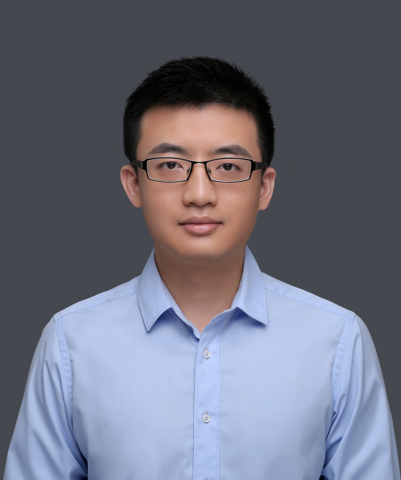
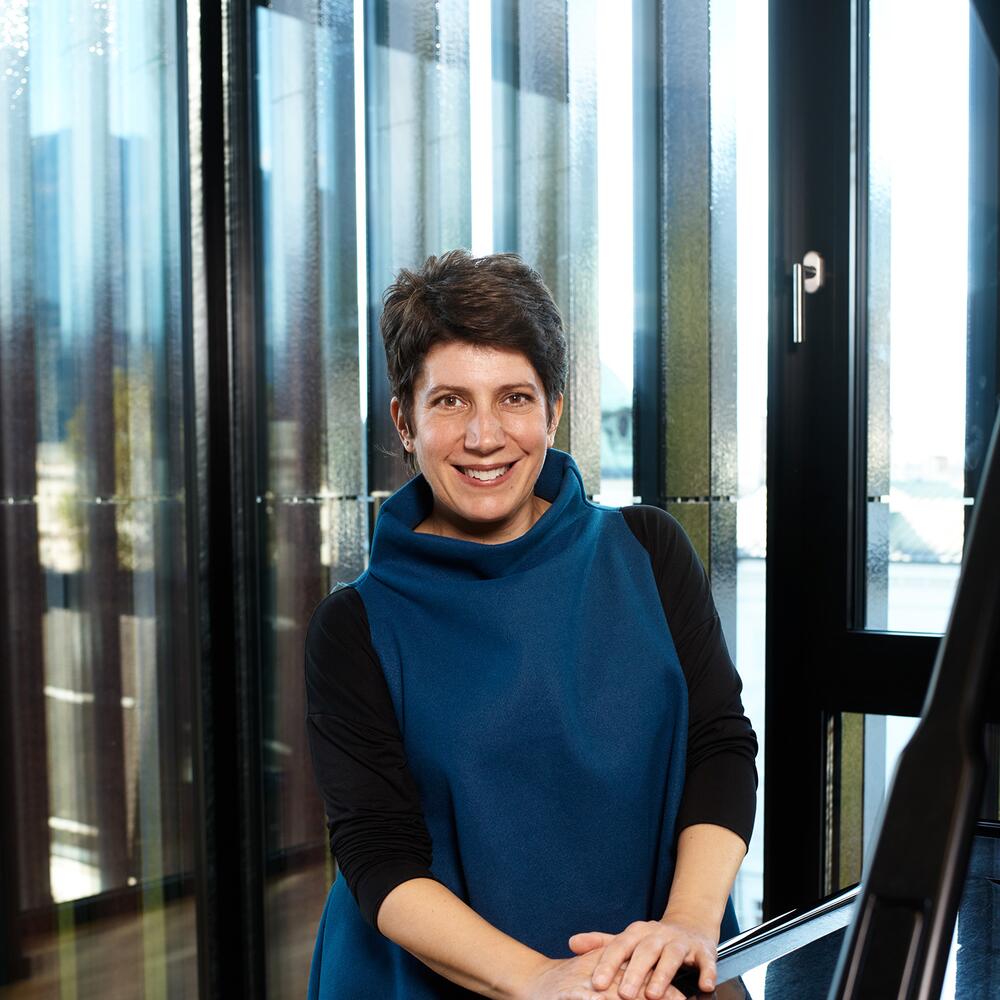
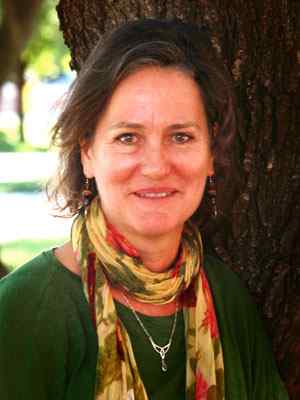
Prof. Dr. Henrik Zöller is a Professor of Business Psychology at Osnabrück University of Applied Sciences, affiliated with the Faculty of Economics and Social Sciences. His work bridges academic research and industry applications, focusing on market/consumer psychology and traffic-related perceptual studies. He holds a PhD in Psychology (1997) from the University of Münster and has extensive industry experience in market research (2000–2012). Education: 1987–1993: Diploma in Psychology, WWU Münster 1993–1999: Researcher at WWU Münster's Institute for General & Applied Psychology 1997: PhD in Philosophy (Psychology) Research focuses on: Market/consumer behavior analysis Perceptual thresholds in traffic scenarios Ergonomics of human-computer interfaces Application of psychological principles in medical device testing His publications span traffic psychology, perceptual studies, and applied market research. Current research continues exploring decision-making processes in commercial and safety contexts.
Ingrid E.J. Heynderickx is a Professor in Applied Visual Perception at the Human-Technology Interaction group within the Faculty of Industrial Engineering and Innovation Sciences at Eindhoven University of Technology (TU/e), where she also serves as Dean of the Department. She holds a part-time Visiting Research Professor role at Southeast University (China) since 2005. Her research focuses on optimizing display and lighting systems through understanding human visual perception, emphasizing both fidelity and preference in design, with attention to age and cultural variability. Academically, she earned her PhD in Physics from the University of Antwerp (1986) and spent 18 years at Philips Research, leading visual perception research. She became a Philips Research Fellow in 2005 before joining TU/e as Full Professor in 2013. She holds Fellow status with the Society for Information Displays (SID) and received the Otto Shade Prize (2015). Her recent work explores lighting solutions for office environments, roadway safety systems, and LED artifact mitigation. Notable projects include the Brainbridge initiative (2015–2016) on spectral lighting effects. Over 236 publications and 4 datasets reflect her contributions to lighting science and human-centric design. She advises on sustainable lighting technologies and collaborates globally, with recent media engagements discussing departmental leadership and smart lighting trends. Key research themes include visual attention modeling, illuminance preferences, and dynamic viewing behavior—issues critical for next-generation human-technology interfaces.
Kede Ma is an Associate Professor in the Department of Computer Science at City University of Hong Kong (CityUHK). He received his B.E. from the University of Science and Technology of China (USTC) in 2012, and MASc and Ph.D. degrees from the University of Waterloo in 2014 and 2017, respectively. From 2018 to 2019, he was a Research Associate with the Howard Hughes Medical Institute and New York University. Prof. Ma has been named to the Highly Cited Researchers list by Clarivate Analytics in 2024 and currently serves on the editorial boards of IEEE Transactions on Image Processing, IEEE Transactions on Information Forensics and Security, and IEEE Signal Processing Letters. Prof. Ma leads the Multimedia Analytics (MA) Laboratory, an interdisciplinary research group focused on computational vision, computational modeling of human visual perception, perceptual multimedia signal processing, quality assessment, and multimedia forensics. His research spans computational photography, high dynamic range imaging and rendering, omnidirectional video analysis, camera processing pipeline design, and artificial intelligence safety in multimedia systems. His work integrates machine learning techniques including reinforcement learning, generative modeling, self-supervised learning, and continual learning for multimedia signal processing applications. His recent publications demonstrate a strong focus on image quality assessment, deep learning for multimedia processing, and multimedia forensics. His work bridges theoretical computer vision principles with practical applications in multimedia systems. The research trends show increasing integration of foundation models with specialized multimedia processing tasks, particularly in quality assessment and security applications. Highly Cited Researchers list by Clarivate Analytics (2024) Best Paper Award at IEEE International Conference on Virtual Reality and Visualization (2021) Best Paper Runner-Up at International Joint Conference on Artificial Intelligence Workshop (2021) Top 10% Award at IEEE International Conference on Image Processing (2015) Finalist for the Governor General's Gold Medal, University of Waterloo (2017) Spotlight presentation at NeurIPS (2022) Highlight paper at ICCV (2025) Oral presentation at ICLR (2025) Prof. Ma advises numerous PhD students and postdoctoral fellows in the MA Laboratory. His research is supported by various grants enabling work in multimedia analytics, image processing, and computer vision. The laboratory maintains active collaborations with researchers at institutions including SUSTech, ZJU, and HIT. Current projects focus on advancing image quality assessment methodologies, developing more robust deep learning techniques for multimedia forensics, and exploring new approaches to HDR imaging and omnidirectional video processing. The Multimedia Analytics Laboratory maintains a strong focus on both theoretical foundations and practical applications of multimedia processing. Current research directions include integrating large language models with image quality assessment, developing more robust deepfake detection methods, and advancing techniques for continual learning in multimedia applications. The lab emphasizes rigorous evaluation methodologies and maintains multiple datasets for multimedia quality assessment research.
Christian Stilp, PhD, is an Associate Professor in the Department of Psychological and Brain Sciences at the University of Louisville. His research focuses on auditory perception, speech perception, and music perception, with an emphasis on how acoustic context and natural signal statistics influence perceptual processes. He leads the Auditory Perception and Processing (APP) Lab, which investigates perceptual learning, efficient coding, and the role of variability in speech and music perception. Dr. Stilp earned his B.S. in Psychology from the University of Wisconsin in 2003 and his Ph.D. in Perceptual Psychology in 2011, also from the University of Wisconsin. He completed a postdoctoral fellowship at Case Western Reserve University before joining the University of Louisville faculty in 2012. His research interests include spectral contrast effects, talker adaptation, expertise in speech and music perception, and the application of these principles to hearing-impaired listeners. He teaches courses such as Sensation and Perception, Music Perception and Cognition, and Advanced Statistics. Dr. Stilp has advised numerous graduate and undergraduate students, many of whom have contributed to his lab’s publications. His lab collaborates with researchers at institutions including the University of Connecticut, University of Minnesota, and University of Zurich.
Isabel Gabbe , University Professor of Piano & Piano Didactics at Mozarteum University Salzburg's Innsbruck Department since 2016, is a German-French pianist and music educator with extensive international experience. She heads the Music Education Department and contributes to artistic higher education through her work with the European Piano Teachers Association (EPTA) and the Austrian Society for Music and Medicine (ÖGFMM). Studied with Hans Leygraf and Rainer Becker Certified music physiologist Founder of "Moments Musicaux" festival in France Active in teacher training across Europe and South America Her research focuses on music education , physiological piano teaching methods , and musicians' health . Isabel integrates creative approaches to piano instruction for children, emphasizing cross-cultural communication through music. Her recent work explores alternative keyboard techniques and inclusive pedagogy. Professor Gabbe's publications analyze piano didactics, including " Alles ist erlaubt, nur nicht Alles spielen! " on practical repertoire use and " Musizieren lernen? Ein Kinderspiel! " on playful learning approaches. She contributes to Schott Verlag's "Üben&Musizieren" series and Waxmann Verlag's music education publications. Scientific recognitions include: German Music Council Artist List (2000) EPTA Austria Vice Chair (2018–present) Deutsche Tonkünstlerverband Deputy Chair (2015–2023) Richard Wagner Association Stipend (2002) Aspen Music Festival Stipend (1995,1996) Isabel Gabbe actively mentors educators through workshops and masterclasses across Europe and South America, focusing on sustainable teaching practices and physiological approaches to piano instruction. She has participated in numerous festivals and serves on academic committees for music education curricula.
Steven Franconeri is a Professor in the Department of Psychology at Northwestern University, leading the Visual Thinking Laboratory . His research focuses on visual thinking and communication, investigating how leveraging the human visual system can improve data understanding, memory, and decision-making in fields like science, education, and industry. Recent publications highlight his work on perceptual biases in data visualization (e.g., average estimation in line graphs , aspect ratio effects ), design principles for mitigating cognitive errors (e.g., V-FRAMER framework ), and the interplay between attention, memory, and visual communication. Key themes include visual working memory limits , grouping cues in bar charts , and dynamic visualization challenges .
David Huber is a Professor in Psychology and Neuroscience at the University of Colorado. He holds a PhD from Indiana University (2000). His research focuses on human perception, memory, and decision-making from a computational perspective, integrating behavioral studies with neuroimaging techniques (fMRI, ERP) and computational models (Bayesian, neural networks). Key areas include visual cognition, spatial navigation models, memory retrieval dynamics, and priming effects. Education: PhD in Psychology from Indiana University (2000). Research emphasizes mechanisms underlying memory processes, perceptual adaptation, and the neural basis of cognitive functions. Recent work challenges traditional roles of hippocampal place/grid cells, proposing memory-centric models. He explores how perceptual fluency influences decision-making and juror cognition, with studies on serial dependence and gestalt principles in binocular rivalry. His neurocomputational methods include fMRI-based tuning function analysis and virtual electrophysiology modeling. Publications span over two decades, focusing on memory models (SAM-RI), neural habituation, and Bayesian modeling of brain activity. His work advocates for rigorous model-driven approaches in cognitive neuroscience.
Kathrin Glüer-Pagin is a Professor of Theoretical Philosophy at Stockholm University's Department of Philosophy. Her academic work spans philosophy of mind, language, epistemology, and action theory, with a particular focus on meaning, content, normativity, and perception. She is recognized as a leading scholar of Donald Davidson's philosophical contributions. Glüer-Pagin's research interests center on the theory of meaning and content, including foundational and formal semantics, the normativity of meaning, content, belief, and reasons, as well as philosophy of perception and knowledge resistance. Her distinctive approach to perceptual experience, known as 'phenomenal intentionalism,' contends that experiences are a kind of belief with 'phenomenal' or 'looks-content' that ascribes properties to objects in a way that can account for both veridical and non-veridical experiences. She has made significant contributions to debates about meaning normativity, belief formation, and the relationship between language and thought. Her publication record reveals a consistent trajectory of influential work at the intersection of philosophy of language and philosophy of mind. The most recent fifteen publications demonstrate her sustained engagement with questions about perceptual experience, meaning determination, and normativity. Notably, she has developed a distinctive account of 'looks' as relational properties that has implications for understanding visual experience and perceptual justification. Her collaborative work with Peter Pagin on 'switcher semantics' for proper names has provided an alternative framework that accommodates Kripkean intuitions without requiring names to be rigid designators. Glüer-Pagin currently leads the cross-disciplinary research program 'Knowledge Resistance: Causes, Consequences and Cures,' which investigates the nature and causes of knowledge resistance—the tendency not to accept available knowledge. This ambitious program represents a concerted effort to provide a unified framework for investigating knowledge resistance beyond the current state of the art.
Nuria Sebastian Galles is a Full Professor at the Universitat Pompeu Fabra (UPF), affiliated with the Department of Engineering and the UPF Center of Studies in Natural and Artificial Intelligence. Her career includes roles as Associate Professor (University of Barcelona, 1988-2002) and Full Professor (since 2002). She leads the Speech Acquisition and Perception (SAP) Research Group and coordinates major projects such as the BRAINGLOT consortium on bilingualism and cognitive neuroscience. Dr. Galles has received notable awards including the James S. McDonnell Foundation Award and ICREA Academia Prize, and served on the European Research Council Scientific Council. Her research focuses on cognitive neuroscience, bilingualism, and infant language development, leveraging EEG, brain imaging, and behavioral studies. Education: PhD in Experimental Psychology (University of Barcelona, 1986), postdoctoral training at Max Planck Institute and LSCP-CNRS (Paris). Visiting scholarships include University of Pennsylvania, University College London, and University of Chicago. Research Interests: Bilingualism's impact on cognition, neurobiological foundations of language acquisition, infant speech perception, and social cognition. Current projects include ERC-funded studies on attention-language links and cognitive effects of walnut consumption in adolescents. Publications: Over 100 peer-reviewed articles in journals like Science , PNAS , and Developmental Science , with a focus on bilingualism, phonetic categorization, and social hierarchy processing in infants. Editor of Developmental Science and Language Learning and Development . Grants & Teams: ERC Advanced Grant (Under Control), Consolider-Ingenio 2010 (BRAINGLOT). Lab collaborations include multi-country studies on traffic pollution’s cognitive impact and walnut-based dietary interventions.
Lung-Pan Cheng is an Associate Professor in the Department of Computer Science and Information Engineering at National Taiwan University, where he leads the Human-Computer Interaction Laboratory. His research focuses on bridging the gap between physical and virtual realities through innovative interface technologies. Cheng's research expertise spans human-computer interaction, augmented/virtual reality, and tactile feedback systems. His work explores how people exist across three types of reality: physical reality governed by physics, imagined realities where things act by wishes, and programmable virtual realities. By examining the mismatches between these realities, Cheng develops novel interfaces, techniques, and devices that extend and interface these realities toward an ultimate unified experience. His recent publications reveal strong trends in haptic feedback systems, procedural generation in VR, and tangible interaction techniques. Cheng's work often involves creating physical props and mechanisms that enhance virtual experiences, with a particular focus on how humans can interact with and manipulate virtual objects through physical interfaces. His research has significant implications for VR training, gaming, and therapeutic applications. Best Paper Award at CHI 2022 for AirRacket: Perceptual Design of Ungrounded, Directional Force Feedback to Improve Virtual Racket Sports Experiences SIC People's Choice Award at UIST 2022 for Garnish into Thin Air Cheng has secured numerous research grants supporting his work in VR and haptic interfaces, with collaborations spanning multiple institutions. His laboratory develops working prototypes that demonstrate practical applications of his theoretical concepts, often resulting in award-winning publications at top HCI conferences. Current projects appear to focus on advanced fabrication techniques for interactive objects, perceptual illusions in VR, and novel haptic feedback mechanisms that don't require traditional grounded hardware. The Human-Computer Interaction Laboratory under Cheng's direction consists of graduate students and researchers working on various aspects of tangible and virtual interfaces. The team frequently publishes in premier venues like CHI, UIST, and IEEE VR, demonstrating consistent productivity and impact in the field. Current research directions include density-varying soft fabrication, polarized light mosaics, and systems for creating infinite virtual spaces within limited physical environments.
Michael Wright is a Senior Lecturer in the Department of Computer Science at the University of Bath. His research focuses on haptic feedback systems, educational technology, and user interaction design. He is affiliated with the Institute of Coding and has collaborated on projects involving mid-air haptics, wearable technology, and inquiry-based learning environments. His work spans interdisciplinary areas such as thermal technology for social interaction (e.g., WarmConnect), perceptual studies in haptics, and educational platforms like nQuire. Recent projects emphasize the integration of visual and tactile feedback systems to enhance user experiences. Wright's publications highlight trends in mid-air haptics research, exploring thresholds of tactile perception and multimodal feedback systems. His educational research addresses challenges in professional development through degree apprenticeships and online learning. He has supervised a doctoral thesis on gesture recognition and contributed to projects like 'Day of the Figurines,' a narrative-driven mobile game. His work bridges computational methods with human-centered design principles.
Luis Merino Cabañas is a Professor at the Universidad Pablo de Olavide , affiliated with the Deporte e Informática department and leading the SRL Service Robotics Laboratory . His research focuses on robotics, systems engineering, and automation, with a specialization in human-robot interaction and path planning. Education : PhD in Systems Engineering from the Universidad de Sevilla (2007), where his thesis explored cooperative perception techniques for multiple unmanned aerial vehicles in forest fire detection. Research Trends : Recent work (2023–2025) emphasizes 3D path planning, sensor fusion (LiDAR, radar, inertial systems), neural distance fields for safe navigation, and socially aware robotics. His studies integrate AI, genetic programming, and multi-modal perception for applications in construction, healthcare, and GNSS-denied environments. Labs & Teams : He leads the SRL Service Robotics Laboratory , contributing to projects like the Skyeye team and BIM2ROS integration for construction robotics.
Carryl Baldwin is the Carl and Rozina Cassat Distinguished Professor of Aging & Regional Institute on Aging and Director of the Wichita Auditory Research Group (WARG) at Wichita State University's Fairmount College of Liberal Arts and Sciences. Her work spans neuroergonomics, aging research, auditory cognition, and human-vehicle interface design, with funding from NHTSA, NIH, NASA, and private industry partners. Education : PhD in Human Factors Psychology (1997), MA in Human Factors Psychology (1994), BA in Psychology/Asian Studies (1987) Dr. Baldwin's research focuses on human interaction with automation , particularly in transportation contexts. She investigates driver attention, mind wandering, cognitive workload, and multimodal alarm systems using physiological metrics like EEG. Her lab explores aging-related cognitive changes and develops technologies to enhance safety and performance in semi-autonomous systems. The 15 most recent publications reveal trends in neuroergonomics , aging populations , and automated vehicle safety . Key themes include attention management in automation, auditory alarm optimization, and sustainability applications of human factors, with methodologies spanning EEG analysis, eye-tracking, and multimodal interface evaluation. Dr. Baldwin's lab has secured external funding from the National Highway Traffic Safety Administration, NIH-NIA, NASA centers, and defense contractors like Northrop Grumman. Current research includes driver vigilance in Level 2/3 vehicles, pandemic-related social isolation in older adults, and FAA-funded training technology evaluation.
Luigina Ciolfi is a Professor of Human Computer Interaction in the School of Applied Psychology at University College Cork (UCC), Ireland. She is a Co-Principal Investigator at Lero, the Science Foundation Ireland Research Centre for Software. Her academic journey includes roles at Sheffield Hallam University, University of Limerick, and visiting positions at Maynooth University and University of Rome Tor Vergata. She holds a Laurea (summa cum laude) from the University of Siena and a PhD from the University of Limerick, both in Human-Computer Interaction. Her research focuses on human experiences with digital technologies in collaborative contexts, particularly in cultural heritage and work practices. She contributes to fields like CSCW, participatory design, and qualitative methodologies. Ciolfi has led over €8M in research grants, authored/co-authored numerous books and journal articles, and served on editorial boards and international committees. She is a Senior Member of the ACM and an ACM Distinguished Speaker (2021-2024). Her current roles include Vice-Head of the School of Applied Psychology and Chair of UCC's Academic Council Research and Innovation Committee. She leads the Digital Cultures, New Media, and Cultural Analytics research cluster under the Future Humanities Institute. Ciolfi’s work emphasizes ethical and inclusive technology design, with projects addressing cultural heritage, nomadic work practices, and digital wellbeing.
Thomas Wachtler-Kulla is a Professor in the Department of Biology II at Ludwig-Maximilians-University Munich, where he leads the Computational Neuroscience research group. He is a GSN full member and serves as the GSN Ombudsperson, offering neutral and confidential counseling for students. He is also the Group Leader and Scientific Director at the German Neuroinformatics Node (G-Node), contributing significantly to neuroscience data infrastructure. His research focuses on how the brain processes sensory signals, particularly in the visual system, aiming to understand neural coding, perceptual stability, and color vision under natural conditions. He employs neurophysiology, psychophysics, and computational modeling to investigate sensory processing, eye movement compensation, and efficient coding mechanisms. At G-Node, he develops software and hardware tools for organizing, storing, analyzing, and sharing neurophysiological data, promoting reproducible research. His recent work spans Bayesian models of hue perception, data management frameworks like DataLad and odML, and studies on honeybee neuroethology. He actively supervises graduate students and contributes to major initiatives such as NFDI-Neuro and the International Neuroinformatics Coordinating Facility, advancing standards for open and FAIR neuroscience. Scientific Contributions and Leadership: Scientific Director, German Neuroinformatics Node (G-Node) GSN Ombudsperson for student conflict resolution Key contributor to NFDI-Neuro and INCF Developer of tools for metadata management and data sharing He advises several current and former graduate students and is deeply involved in shaping data policies and infrastructure for the neuroscience community, ensuring scientific rigor and accessibility.