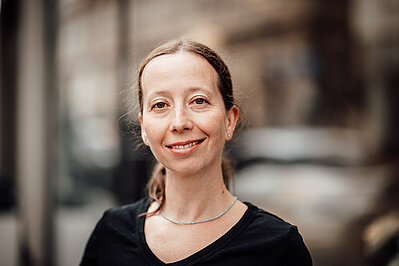
Prof. Helen Blank is a Professor leading the Multisensory Perception Group and the Prediction in Communication Lab at the Institute for Systems Neuroscience, University Medical Center Hamburg-Eppendorf. Her work focuses on understanding how sensory information is integrated and predicted in contexts like speech perception and face recognition. She holds a Marie Curie Fellowship for her research on prior information's role in human communication. Fluent in German, English, and French, she contributes to experimental medicine and systems neuroscience. Her research spans predictive coding, neuroimaging, and clinical applications in Parkinson’s and developmental disorders. Education: Not explicitly stated in text, inferred as advanced degrees in neuroscience or related fields. Her research interests emphasize multisensory integration, predictive processing in speech and vision, and the neural bases of perception. Recent articles explore topics such as pupil responses to auditory surprise, face expectation hierarchies, and audio-visual speech processing. Awards include the Marie Curie Fellowship supporting her predictive communication work. She leads interdisciplinary teams within the Center for Experimental Medicine, advancing knowledge on perceptual mechanisms and their clinical implications.
Yang Liu is an Assistant Professor in the Department of Electrical and Computer Engineering at the Baskin School of Engineering, University of California, Santa Cruz. Previously, they were affiliated with Harvard University and earned their PhD in 2015 from the Department of EECS at the University of Michigan, Ann Arbor. Their research lies at the intersection of machine learning, fairness, and trustworthy AI, with a strong focus on large language models, federated learning, and causal reasoning. Their research interests include: Machine Learning and Fairness Federated and Privacy-Preserving Learning Large Language Model Safety and Unlearning Causal Inference and Counterfactual Reasoning Anomaly Detection and Robust Forecasting Human-AI Interaction and Ethical AI Recent publications (2024–2025) demonstrate a strong trend in developing methods for machine unlearning, fairness in LLMs, and robustness under label noise and distribution shifts. Their work frequently appears in top-tier venues such as NeurIPS, ICLR, ICML, AAAI, and KDD, often in collaboration with researchers like Zhaowei Zhu, Mingyan Liu, Jiaheng Wei, and Kun Zhang. Themes include algorithmic fairness, model accountability, and human-aligned AI systems. Scientific contributions include: Frameworks for LLM unlearning and model editing Methods for fair classification and recourse Robust time series forecasting under anomalies Test-time adaptation in multimodal models Causal approaches to debiasing and policy learning While no formal advising list is provided, the depth and volume of collaborative work suggest active mentorship of graduate students and postdocs. Their research program is highly active, with numerous ongoing projects in trustworthy and socially responsible AI.
Dr. Merve Fritsch is a Specialist in Psychiatry and Psychotherapy and a Senior Physician in ward 152A at Charité - Universitätsmedizin Berlin. Her affiliation is with the Department of Psychiatry and Neurosciences, part of the Neurology, Neurosurgery and Psychiatry division at Campus Charité Mitte. Dr. Fritsch's research focuses on neurological and psychiatric conditions, particularly thalamic aphasia, fronto-thalamic networks, and the role of the inferior frontal cortex in conscious perception. Her work integrates clinical neurology with cognitive neuroscience, addressing topics such as stroke recovery, perceptual decision-making, and NMDA receptor dysfunction. Her studies investigate ischemic lesions' effects on visual and language functions, stroke outcomes, and the mechanisms underlying consciousness. She employs advanced techniques like TMS-EEG to explore neural connectivity in conditions like autism spectrum disorder. Dr. Fritsch’s research also addresses clinical applications, such as cerebral embolism during cardiac interventions and the localization of aphasia in stroke patients. While no formal awards are listed, her contributions span peer-reviewed publications in high-impact journals, reflecting her expertise in neurology, psychiatry, and translational neuroscience. She actively engages in clinical practice and academic research, bridging theoretical insights with patient care.
Stefano Noventa is a Research Fellow at the Methods Center, Department of Social Sciences, Faculty of Economics and Social Sciences, University of Tübingen. He has held multiple postdoctoral positions at the University of Tübingen and previously at the University of Verona and the University of Padova. Education: Ph.D. in Cognitive Psychology, University of Padova (2011) M.Sc. in Physics, University of Padova (2006) Studies in Physics, University of Padova (1999–2006) International Visiting Graduate Student, University of Toronto (2009, 2010) Dr. Noventa's research lies at the intersection of mathematical psychology, psychometrics, and psychophysics, with a focus on developing and unifying quantitative models of human cognition and assessment. His work integrates Item Response Theory (IRT) and Knowledge Space Theory (KST) to create more robust frameworks for educational and psychological measurement. He investigates latent variable models, probabilistic knowledge structures, and the identifiability of complex psychometric models, often applying these to domains such as education, organizational psychology, and entrepreneurship. His recent publications (2020–2024) demonstrate a strong trend toward theoretical integration, particularly in bridging cognitive diagnosis models with traditional psychometric frameworks. The articles emphasize mathematical rigor, model generalization, and empirical validation, with applications in both cognitive science and applied psychology. Topics include the unification of assessment models, parameter estimation under local dependence, and the modeling of intuitive physical reasoning. Scientific Awards: No awards or honors listed in the provided text. Dr. Noventa has not been explicitly mentioned as an advisor to students, but he has served as a corresponding author and collaborator on multiple research projects, indicating a leadership role in research teams. He has been involved in a DFG-funded project (GLI NON-NORM) since 2019, suggesting active grant participation. His work is highly collaborative, involving researchers from Germany, Italy, Austria, and Canada. Labs and Research Groups: Methods Center, University of Tübingen Hector Institute of Education Science and Psychology, University of Tübingen Center of Assessment, University of Verona Department of General Psychology, University of Padova
Hauke Heekeren is a full Professor in the Division of Biological Psychology and Cognitive Neuroscience within the Department of Education and Psychology at Freie Universität Berlin. He leads a research group focused on the neural mechanisms underlying human decision-making, emotion regulation, and social cognition, utilizing neuroimaging and computational approaches. His research interests center on understanding how the human brain processes value, makes perceptual and economic decisions, regulates emotions, and engages with social environments, including digital platforms like social media. His work integrates methods from cognitive neuroscience, psychology, and computational modeling to explore fundamental aspects of brain function. The recent publications highlight a strong trend in investigating decision-making under uncertainty, the neural valuation system, emotion regulation strategies, and the social brain. His studies frequently employ fMRI and behavioral paradigms to dissect the prefrontal-striatal and fronto-parietal circuits involved in cognition. Over time, his research has expanded from basic perceptual decisions to complex social and economic behaviors. While no specific awards are listed in the provided content, his publication record in top-tier journals such as Nature Human Behaviour , Nature Neuroscience , and PNAS reflects significant scientific impact and recognition in the field of cognitive neuroscience. As a principal investigator, he likely supervises graduate students and postdoctoral researchers, though no named students are listed. His work is supported by research grants, implied by his extensive publication output and institutional position, though specific funding sources are not detailed in the provided text. He is affiliated with the Division of Biological Psychology and Cognitive Neuroscience at Freie Universität Berlin, where he conducts research using advanced neuroimaging techniques to explore the neural basis of human behavior.
Daniel Hanus is a Researcher at the Max Planck Institute for Evolutionary Anthropology in the Department of Comparative Cultural Psychology . He coordinates the Wolfgang Köhler Primate Research Center and Global Primate Study Network, with over 15 years of experience in African chimpanzee sanctuaries. His work spans Physical cognition Causal understanding Visual illusions Numerical competence Meta-cognition research in human and non-human primates. As an International Primatological Society member and ad hoc reviewer for journals like Animal Behaviour and Science , he contributes to methodological advancements. He teaches at the University of Leipzig and has held visiting positions at Free University Berlin and University of Tübingen. Hanus's research combines fieldwork at chimpanzee sanctuaries with controlled experiments to explore cognitive evolution. His 2025 publications in Nature Communications and Animal Behaviour examine neural precursors of language and social attention mechanisms, while 2023 work in Nature Ecology & Evolution reveals cognitive stability across primate development. 2009 Poster Competition Winner, Workshop on Cognition and Evolution, Rovereto 2003 Poster Competition Winner, German Primatological Society, Leipzig He coordinates research collaborations with Chimfunshi (Zambia) Tacugama (Sierra Leone) LCRP (Liberia) sanctuaries and maintains active research stays at Ngamba Island (Uganda) and Tchimpounga (Congo). Fluency in German, English, and French supports cross-cultural research initiatives.
Ayush Tewari is an Assistant Professor at the University of Cambridge. Previously, he was a postdoctoral researcher at MIT CSAIL under Bill Freeman, Josh Tenenbaum, and Vincent Sitzmann, and completed his Ph.D. at the Max Planck Institute for Informatics under Christian Theobalt. His research focuses on visual perception, developing methods to infer 3D structured representations from images and videos, aiming to bridge the gap between human perceptual capabilities and machine learning systems. Key research interests include neural rendering, inverse rendering, 3D reconstruction, and generative models. Notable contributions include advancements in Neural Radiance Fields (NeRF), diffusion models for inverse problems, and human-centric perception studies. His work has been published in top venues such as SIGGRAPH, CVPR, ICCV, and NeurIPS. Recent research trends emphasize ambiguity-aware inverse rendering, stochastic inverse problem solving using diffusion models, and integrating forward models for 3D scene inference. His work on Diffusion with Forward Models (NeurIPS 2023) proposes a novel framework for solving inverse problems without direct supervision. Awards: Best Paper Honorable Mention at BMVC 2022 (VoRF: Volumetric Relightable Faces). Labs/Projects: Core contributor to the DFM (Diffusion with Forward Models) project, advancing 3D scene understanding via probabilistic methods.
Frank Papenmeier is a Professor in the Department of Psychology at the University of Tübingen, within the Faculty of Science. His research focuses on event cognition, human-robot interaction, visual working memory, and visual attention. He coordinates the 'Coordination Cognitive Psychology and Research Methods' research group. His work explores how people perceive and interact with dynamic environments, including studies on event segmentation, cognitive offloading, and aesthetic judgments. He has contributed to over 100 peer-reviewed articles, with recent work addressing topics like the impact of framing on art perception and the role of AI in education. Papenmeier's research integrates experimental methods with interdisciplinary approaches, including collaborations on teleoperation systems and AI-based tutoring. He has presented at major conferences such as the European Society for Cognitive Psychology and the Psychonomic Society. His lab emphasizes methodological rigor, evidenced by contributions to replication databases and open science initiatives. Education: Not explicitly stated in the text, but his titles include Dr. rer. nat. (Doctor of Natural Sciences) and Diplom-Psychologe (Psychology Diploma). Research Interests: His primary areas include event cognition, human-robot interaction (e.g., helping behavior toward robots), visual working memory (e.g., spatial configuration processing), and cognitive offloading (e.g., impact on memory and performance). He also investigates aesthetic judgments and narrative comprehension through eye-tracking and experimental paradigms. Articles Trends: Recent work addresses applied topics like cookie consent interfaces, AI in education (e.g., R programming tutors), and perceptual effects in 3D cinema. His studies often bridge cognitive theory with real-world applications, such as usability design and social robotics. Labs/Teams: Leads the research group 'Coordination Cognitive Psychology and Research Methods' at the University of Tübingen. Collaborates with interdisciplinary teams on projects involving robotics, AI, and human-computer interaction.
Prof. Dr. Karl R. Gegenfurtner is a full Professor for General Psychology at the Department of Psychology, Faculty of Psychology and Sports Science, Justus-Liebig-University Giessen. He has held this position since 2001 and leads a prominent research group on visual perception. His work bridges low-level sensory processing with higher cognitive functions and motor control. Education: Psychology Student at the University of Regensburg, Diploma in Psychology, 1986 Ph.D. in Experimental Psychology, New York University, 1990 Postdoc at Howard Hughes Medical Institute and Center for Neural Science, NYU, 1990–1993 Research Scientist at Max Planck Institute for Biological Cybernetics, Tübingen, 1993–2000 Habilitation in Medical Psychology and Behavioral Neurobiology, 1998 Professor for Biological Psychology, Otto-von-Guericke University Magdeburg, 2000–2001 His research focuses on the neural and cognitive mechanisms of visual perception, particularly color vision, object recognition, eye movements, and sensorimotor integration. He investigates how humans perceive complex scenes and objects in natural environments, how these are represented in the brain, and how visual information guides motor actions. His recent work explores topics such as color categorization in neural networks, lightness perception, dynamic size recalibration, and the role of eye movements in perceptual decisions. The 15 most recent articles reflect a strong trend toward understanding perception in real-world contexts, integrating computational modeling, psychophysics, and neuroscientific methods. Key themes include color and shape perception, attention, eye movement control, and the interplay between perception and action. Scientific Awards: Member, German National Academy of Sciences Leopoldina (2015) Wilhelm Wundt Medal, German Society for Psychology (2016) Palmer Lecture, Colour Group (UK) (2019) Turrell Lecture Berlin (2019) Russell Devalois Memorial Lecture, UC Berkeley (2024) ICVS Verriest Medal (2024) Pineapple Science Award (2024) Prof. Gegenfurtner has supervised numerous research projects and training networks, including the DFG Collaborative Research Center TRR 135 on 'Cardinal mechanisms of perception' and the International Research Training Group BrainAct. He has received major funding, including an ERC Advanced Grant (2020) for 'Color 3.0'. He has served on editorial boards of top journals such as Journal of Vision , Vision Research , and Psychological Review , and was President of the Vision Science Society (2012–2013). He is actively involved in academic service, including the Alexander von Humboldt Foundation’s fellowship selection committee. He leads the Visual Perception research group at Giessen, which investigates cortical mechanisms of vision, perception of natural scenes, and the integration of sensory and motor information. The lab employs psychophysical experiments, eye tracking, computational modeling, and neuroimaging to study perception in ecologically valid settings.
Prof. Dr. Anne Böckler-Raettig is a Professor for Research Methods & Social Cognition at the University of Würzburg's Faculty of Human Sciences. She leads an Emmy Noether Research Group and is involved in DFG projects like ContextualEYEze . Her roles include Deputy Chair of the local Ethics Committee, Co-Chair of the Diversity-AG, and Vertrauensdozentin of the Studienstiftung des deutschen Volkes. Primary Affiliation: Institute of Psychology, University of Würzburg Research Leadership: Emmy Noether Research Group (2018–2025) DFG Project: ContextualEYEze (2024–2025) Academic Roles: Professor (2021–present), Juniorprofessorin (2015–2020) Her research spans social cognition, empathy, theory of mind, prosocial behavior, gaze processing, and the psychological effects of meditation. Recent articles highlight gaze direction's role in attention capture, emotion perception, and prosociality, alongside neural correlates of mental training. She explores clinical and developmental contexts, including trauma responses and cross-cultural stigma studies. Scientific awards include the prestigious Emmy Noether Fellowship (DFG). Her work appears in journals like Neuroscience & Biobehavioral Reviews , Human Brain Mapping , and Emotion , reflecting interdisciplinary impact. Collaborations span institutions including Max-Planck Institutes and Princeton University.
Prof. Dr. Katja Fiehler holds the W3 Professorship for Experimental Psychology ("Perception & Action") at Giessen University since March 2020. She previously served as W2 Professor (2016-2020) and Heisenberg-Professor (2011-2016) at the same institution. Her research focuses on sensorimotor integration, tactile perception, and spatial cognition in naturalistic environments, particularly through virtual reality applications. Current roles: Speaker of Cluster Project "The Adaptive Mind" Leadership: Speaker of DFG IRTG-1901 "The Brain in Action" Member of directorate: DFG SFB/TRR-135 "Cardinal mechanisms of perception" Directorate member: Bender Institute for Neuroimaging (BION) Katja's research spans tactile suppression during action, spatial memory coding, and multimodal perception. Her team investigates how sensorimotor predictions modulate sensory processing, how aging affects motor-sensory integration, and the neural basis of allocentric/egocentric spatial representations. Recent publications show strong focus on virtual reality experiments, sensorimotor recalibration, and inter-effector coordination. Key themes include tactile perception modulation by movement demands, spatial cognition in naturalistic environments, and cross-modal metacognition. She leads the "Team Perception and Action" at Giessen University, which includes researchers like Dr. Belkis Ezgi Arikan, Dr. Tom Nissens, and Dr. Meaghan McManus. Her lab develops tools like vexptoolbox for VR-based human behavior studies.
Wiktor Młynarski is a Professor and Research Group Leader at the Faculty of Biology, Ludwig-Maximilians-University Munich, where he directs computational neuroscience research focused on adaptive neural computations in sensory systems. His work bridges theoretical frameworks with experimental validation to uncover fundamental principles of biological information processing. His research centers on computational and theoretical neuroscience, leveraging information theory, statistics, and probabilistic machine learning to model how neural systems efficiently represent dynamic natural environments. Key interests include sensory coding adaptation across timescales, statistical structure of natural stimuli, and the development of normative frameworks applicable from synaptic to behavioral levels. This inherently collaborative approach integrates theoretical predictions with experimental neuroscience to identify universal processing rules. Analysis of Młynarski's publication trajectory (2014-2025) reveals consistent exploration of efficient coding principles across auditory and visual domains, with recent work emphasizing anticipatory processing during locomotion, time-constrained decision-making, and panoramic visual statistics. His research demonstrates how environmental dynamics shape neural representations, moving beyond static models to capture the brain's adaptive capabilities in real-world contexts. Professor Młynarski leads the Computational Neurobiology Research Group (https://compneurobio.org), fostering interdisciplinary collaborations to confront theoretical models with experimental data. The group's work aims to establish general rules for biological information processing by examining how sensory systems dynamically optimize computations in response to environmental regularities and changes.
Prof. Dr. Alexander Schütz is a faculty member at the Faculty of Psychology, Philipps-Universität Marburg , leading the Sensorimotor Learning research group. His work explores the interplay between eye movements and visual perception , focusing on trans-saccadic integration, dynamic signal integration, and perceptual stability. Academic Affiliation: Department of General and Biological Psychology Key Collaborators: Karl Gegenfurtner, David Souto, Miriam Spering Research Interests Integration of bottom-up salience and top-down value signals in eye movement control Trans-saccadic information calibration and perceptual adaptation Individual differences in multistable perception and motor learning His 2024-2025 publications reveal trends in: Visual processing in rod vision and occlusion Optical flow models for eye movement prediction Neural mechanisms of cost-benefit trade-offs in visual search Perceptual biases in autism-psychosis spectra Visuotactile integration during spatial judgments Grants ERC Starting Grant PERFORM (2015-2020): Calibration of peripheral and foveal vision ERC Consolidator Grant SENCES (2021-2025): Processing of inferred vs. sensory visual information Laboratory Equipment : EyeLink 1000+ eye trackers, ViewPixx stereoscope, ProPixx projector, and Vizard VR platform for behavioral studies.
Benedikt Ehinger is a Tenure-Track Professor for Computational Cognitive Science at the Stuttgart Center for Simulation Science (SC SimTech) and the Institute for Visualization and Interactive Systems (VIS) at the University of Stuttgart. His research bridges cognitive neuroscience, computational modeling, and visualization techniques to understand visual perception and decision-making processes. Education 2018: PhD in Cognitive Science from University of Osnabrück with thesis "Predictions, Decisions and Learning in the visual sense" 2013: Master of Science in Cognitive Science from University of Osnabrück with thesis "Filling in Blind-Spots: A psychophysical and an EEG study" 2011: Bachelor of Science in Cognitive Science from University of Osnabrück with thesis "Electrophysiological Correlates of Category Learning" Research Interests Ehinger's research focuses on the intersection of visual cognitive science, computational modeling, and neuroimaging techniques. His work primarily investigates predictive coding mechanisms in visual perception, statistical learning in visual scenes, eye movement control, method development for combined EEG and eye-tracking analyses, visual completion phenomena like the blind spot, and category learning and neural plasticity. His approach combines behavioral experiments, EEG recordings, eye-tracking, and advanced statistical modeling to uncover the computational principles underlying human visual cognition. Publication Trends Ehinger's publication record shows a clear evolution from foundational work on visual perception and category learning toward methodological innovations in neuroimaging analysis. His early work focused on visual completion phenomena, category learning, and melanopsin modeling. More recently, he has pioneered techniques for analyzing combined EEG and eye-tracking data, developing toolboxes like "unfold" that address critical challenges in temporal overlap correction and regression-based analysis. His research demonstrates a consistent thread of applying computational approaches to understand visual cognition while simultaneously advancing the methodological toolkit of cognitive neuroscience. Scientific Contributions Development of the "unfold" toolbox for overlap correction and regression-based EEG analysis Creation of the EEGVIS toolbox for EEG visualization Establishment of comprehensive eye-tracking test batteries for validating mobile eye-tracking devices Innovative approaches to modeling fixation durations and eye movement patterns Research Environment Ehinger leads the Computational Cognitive Science group within the Institute for Visualization and Interactive Systems at the University of Stuttgart. His work is situated at the intersection of cognitive science, neuroscience, and computer science, collaborating with researchers across these disciplines. His lab utilizes behavioral experiments, EEG, eye-tracking, and computational modeling to investigate visual cognition, with emphasis on open science practices and methodological transparency.
Miro Grundei is a Visiting Professor and Researcher at the Neurocomputation and Neuroimaging Unit within the Department of Education and Psychology at Freie Universität Berlin. He conducts research on the computational and neural mechanisms underlying perception, perceptual learning, and mismatch responses in hierarchically structured cortex, with a focus on predictive processing and Bayesian computation. Primary email: miro.grundei@fu-berlin.de Address: Habel Schwertter Allee 45, Room JK25/215, 14195 Berlin Phone: +49 30 838 51361 His research explores how mismatch responses in cortical hierarchies relate to predictive processing and Bayesian computation, using electrophysiological measures (EEG) to investigate signatures of surprise in somatosensory and multisensory cortex. He also investigates multisensory integration, probabilistic inference, and neural mechanisms of transcranial direct current stimulation effects on cognition. His recent publications (2021–2025) focus on topics such as neural surprise, active inference, sensory expectation violation, and computational models of cortical processing. These works employ methodologies like EEG, fMRI, and computational modeling across auditory, somatosensory, and visual modalities. He is affiliated with the Neurocomputation and Neuroimaging Unit, a research group led by Till Nierhaus and colleagues, which includes postdocs, PhD students, and former members investigating related topics in neuroscience and psychology.