
معرفی
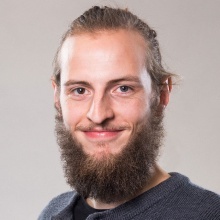
Benedikt Ehinger is a Tenure-Track Professor for Computational Cognitive Science at the Stuttgart Center for Simulation Science (SC SimTech) and the Institute for Visualization and Interactive Systems (VIS) at the University of Stuttgart. His research bridges cognitive neuroscience, computational modeling, and visualization techniques to understand visual perception and decision-making processes.
Education
- 2018: PhD in Cognitive Science from University of Osnabrück with thesis "Predictions, Decisions and Learning in the visual sense"
- 2013: Master of Science in Cognitive Science from University of Osnabrück with thesis "Filling in Blind-Spots: A psychophysical and an EEG study"
- 2011: Bachelor of Science in Cognitive Science from University of Osnabrück with thesis "Electrophysiological Correlates of Category Learning"
Research Interests
Ehinger's research focuses on the intersection of visual cognitive science, computational modeling, and neuroimaging techniques. His work primarily investigates predictive coding mechanisms in visual perception, statistical learning in visual scenes, eye movement control, method development for combined EEG and eye-tracking analyses, visual completion phenomena like the blind spot, and category learning and neural plasticity. His approach combines behavioral experiments, EEG recordings, eye-tracking, and advanced statistical modeling to uncover the computational principles underlying human visual cognition.
Publication Trends
Ehinger's publication record shows a clear evolution from foundational work on visual perception and category learning toward methodological innovations in neuroimaging analysis. His early work focused on visual completion phenomena, category learning, and melanopsin modeling. More recently, he has pioneered techniques for analyzing combined EEG and eye-tracking data, developing toolboxes like "unfold" that address critical challenges in temporal overlap correction and regression-based analysis. His research demonstrates a consistent thread of applying computational approaches to understand visual cognition while simultaneously advancing the methodological toolkit of cognitive neuroscience.
Scientific Contributions
- Development of the "unfold" toolbox for overlap correction and regression-based EEG analysis
- Creation of the EEGVIS toolbox for EEG visualization
- Establishment of comprehensive eye-tracking test batteries for validating mobile eye-tracking devices
- Innovative approaches to modeling fixation durations and eye movement patterns
Research Environment
Ehinger leads the Computational Cognitive Science group within the Institute for Visualization and Interactive Systems at the University of Stuttgart. His work is situated at the intersection of cognitive science, neuroscience, and computer science, collaborating with researchers across these disciplines. His lab utilizes behavioral experiments, EEG, eye-tracking, and computational modeling to investigate visual cognition, with emphasis on open science practices and methodological transparency.
Benedikt Ehinger در سایتهای دیگر
جستوجوهای مرتبط
شاید اینها هم برایتان مناسب باشند
- BBenedikt EhingerMax Planck Institute for Informatics · پژوهشگر
 Olaf DimigenHumboldt University · استادیار
 Olaf DimigenUniversity of Groningen · استادیار
 Krista A. EhingerYork University · دانشیار
- BBenedikt Emanuel WirthMax Planck Institute for Informatics · پژوهشگر
 Jochen TrieschMax Planck Institute for Empirical Aesthetics · استاد