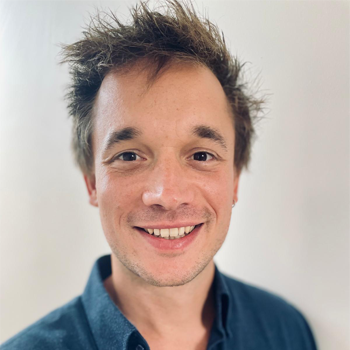
Brian Scholl is a Professor of Psychology at Yale University, specializing in visual cognition, perception, and cognitive science. His research explores how visual perception interacts with higher-level cognition, including object persistence, event perception, causality, and intuitive physics. He leads the Yale Perception & Cognition Lab, focusing on dynamic events, attention, and computational models. He earned his Ph.D. from Rutgers University in 1999. His work spans experimental psychology, neuroscience, and computational modeling, with a focus on phenomena like inattentional blindness, scaffolded attention, and event segmentation. He has authored numerous papers and presented at international conferences, contributing to debates on perception vs. cognition interactions. Key research areas include the perception of dynamic event types, the role of intuitive physics in visual processing, and the influence of event boundaries on memory and decision-making. His lab employs computer-based experiments and collaborations with computational models to study perception across species and clinical populations.
Dr. Manuel Anglada-Tort is a Lecturer in Psychology at Goldsmiths, University of London, and a visiting researcher at the Max Planck Institute for Empirical Aesthetics. His research focuses on the psychology of cultural systems, including music, creativity, and empirical aesthetics. He combines computational methods with psychological experiments to explore cultural evolution, music perception, and the interplay of cognition and social interaction. Research Interests: Cultural Evolution Music Perception & Cognition Empirical Aesthetics Creativity Big Data Analyses Key Projects: Large-scale iterated singing experiments on music evolution Investigating weather's influence on music success Developing the REPP platform for online sensorimotor synchronization studies Teaching: MSc in Music, Mind, and Brain MSc Psychology of the Arts, Neuroaesthetics, and Creativity Affiliations: Music, Mind and Brain Group at Goldsmiths Computational Auditory Perception Group at Max Planck Institute
Deanne L. Westerman is a Professor and Cognitive Area Coordinator in the Department of Psychology at Binghamton University. Her research focuses on human memory processes, particularly recognition memory, familiarity, and attributional factors influencing memory decisions. She holds a PhD and MA from Case Western Reserve University and a BS from John Carroll University. Her work explores how perceptual and conceptual fluency impact memory judgments, with recent studies examining effects of photos/screenshots on memory impairment and emotional image processing. She has received the Chancellor's Award for Excellence in Teaching (2002-2023). Currently accepting graduate students for Fall 2024. Key research areas: Recognition memory, metamemory, cognitive bias, and memory illusions. Methodological expertise includes experimental design, memory paradigms, and cognitive neuroscience techniques.
Piotr Winkielman is a Professor of Psychology at the University of California, San Diego (since 2007), with affiliations at Warwick Business School (UK) and the Warsaw School of Social Sciences and Humanities (Poland). His research focuses on the interplay of emotion, cognition, embodiment, and consciousness in social cognition, employing methods from social/cognitive psychology and neuroscience. Key interests include unconscious emotion processing, facial mimicry, decision-making under emotional influence, and the neural basis of social perception. Education: PhD in Social Psychology (1997), University of Michigan MSc in Psychology (1991), University of Bielefeld, Germany BSc in Psychology (1988), University of Warsaw, Poland Research Interests: Winkielman explores how fleeting affective reactions influence behavior without conscious awareness, studying facial feedback mechanisms, emotional contagion, and the role of physiological signals in decision-making. His work bridges theories like Affect-As-Information and Facial Feedback, while challenging assumptions about the necessity of conscious processes in emotion. Grants & Funding: Supported by NSF Grant BCS-0350687 for studies on unconscious emotion and physiological feedback. Collaborations include projects on mimicry, stress effects, and cross-modal perception. Labs & Teams: Leads research at UCSD on embodied cognition and social neuroscience, with studies involving EEG, EMG, and behavioral experiments. International collaborations span UK, Poland, and Germany.
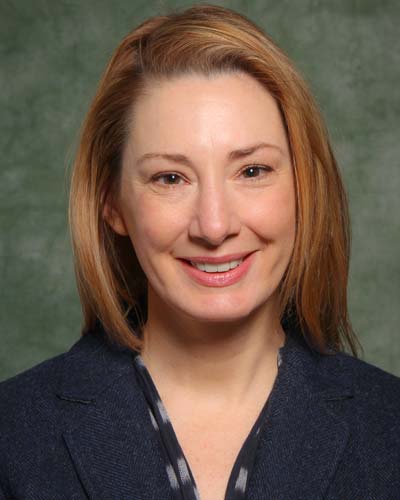
Elizabeth Miller serves as Department Chair and Professor of Marketing at the Isenberg School of Management, University of Massachusetts Amherst. Her academic leadership includes roles as PhD Coordinator since 2013 and prior appointments as Assistant and Associate Professor at UMass and Boston College. Her research centers on affect-driven consumer behavior , with specialization in health decisions, consumer well-being, and social impact. Key themes include emotional influences on information processing, CSR authenticity, and crisis-driven behavioral shifts during events like the COVID-19 pandemic. Her work bridges marketing theory with practical applications in food security, medical decision-making, and sustainable consumption. Miller's recent publications reveal strong trends in emotional drivers of pro-social behavior (e.g., awe in environmental actions, community philanthropy during crises) and methodological innovation in health communication (e.g., data visualization for medical choices). Her scholarship increasingly focuses on collective well-being frameworks and youth-led social entrepreneurship ecosystems. Best Research Paper, Direct/Interactive Marketing Research Summit (2013) Research Excellence Award, Isenberg School (2013) Mellon Mutual Team Mentorship Grant (2012) As PhD Coordinator, she mentors doctoral candidates in consumer behavior and experimental design. Her teaching spans doctoral seminars on experimental methodology to undergraduate courses in advertising and services marketing. Miller directs research partnerships with social impact organizations, focusing on food access equity and community resilience building. Her lab initiatives emphasize translational research through collaborations with public health agencies and social enterprises, particularly in post-pandemic food systems and medical decision support tools. Current projects explore linguistic humanization of service robots and youth entrepreneurship ecosystems.
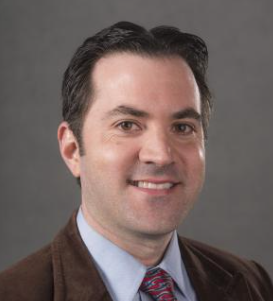
David A. Gallo is a Professor at the University of Chicago, affiliated with the Department of Psychology. He joined the faculty in 2005 after completing a B.A. at Wesleyan University (1997), a Ph.D. at Washington University in St. Louis (2002), and an NIH-sponsored postdoctoral fellowship at Harvard University. His research focuses on neurocognitive processes of human memory, particularly memory accuracy, distortion, aging effects, and Alzheimer’s disease. He explores how memory is actively reconstructed and influenced by contextual and pharmacological factors. Key research interests include metacognitive and nonconscious processes, cognitive neuroscience, and evolutionary psychology. He investigates how stereotypes, psychoactive drugs, and contextual cues affect memory accuracy and monitoring. His lab, the Memory Research Lab, employs neuroimaging, behavioral experiments, and pharmacological interventions to study these phenomena. His recent articles highlight studies on transcranial direct current stimulation (tDCS), contextual reinstatement effects, and drug-induced memory modulation. He emphasizes the role of distinctiveness in reducing memory errors and examines the neural mechanisms underlying retrieval monitoring. His work spans developmental, clinical, and applied domains, with implications for aging populations and cognitive health. Gallo teaches courses such as Cognitive Neuroscience of Aging and Evolutionary Psychology, integrating empirical research with theoretical frameworks. His contributions bridge basic science and clinical applications, addressing challenges in memory disorders and cognitive enhancement strategies.
David Huber is a Professor in Psychology and Neuroscience at the University of Colorado. He holds a PhD from Indiana University (2000). His research focuses on human perception, memory, and decision-making from a computational perspective, integrating behavioral studies with neuroimaging techniques (fMRI, ERP) and computational models (Bayesian, neural networks). Key areas include visual cognition, spatial navigation models, memory retrieval dynamics, and priming effects. Education: PhD in Psychology from Indiana University (2000). Research emphasizes mechanisms underlying memory processes, perceptual adaptation, and the neural basis of cognitive functions. Recent work challenges traditional roles of hippocampal place/grid cells, proposing memory-centric models. He explores how perceptual fluency influences decision-making and juror cognition, with studies on serial dependence and gestalt principles in binocular rivalry. His neurocomputational methods include fMRI-based tuning function analysis and virtual electrophysiology modeling. Publications span over two decades, focusing on memory models (SAM-RI), neural habituation, and Bayesian modeling of brain activity. His work advocates for rigorous model-driven approaches in cognitive neuroscience.
Valerie Thompson is a Professor of Cognitive Psychology at the University of Saskatchewan, specializing in intuitive and analytic decision-making, metacognition, and reasoning processes. She holds roles as Past President of the Canadian Society of Brain, Behaviour, and Cognitive Science and Editor-in-Chief of *Thinking & Reasoning*. Her research has been continuously funded by the Natural Sciences and Engineering Research Council of Canada (NSERC) since 1991. Education: BSc, University of Calgary, 1985 MA, University of Western Ontario, 1987 PhD, University of Western Ontario, 1991 Research Focus: Investigates when people rely on intuitive judgments versus analytical reasoning, metacognitive monitoring of decisions, and individual differences in reasoning strategies. Utilizes the Experimental Decision Lab (EDL) with eye-tracking and advanced experimental setups. Her work bridges cognitive science and applied decision-making, emphasizing dual-process theories. Grants & Facilities: Co-developed the Social Sciences Research Lab with a CFI grant, featuring 23 linked computers for cognitive experiments. This facility supports studies on reasoning, decision-making, and metacognition.
Dr. Anne-France Pinget is an Assistant Professor in Linguistics at Utrecht University's Department of Languages, Literature and Communication, where she has been working since 2015. She is embedded within the Institute for Language Sciences (ILS) and holds an active position in the research domain of Language structure: variation and change. Her academic journey began with a PhD completed in 2015 on 'The Actuation of Sound Change,' supervised by Prof. Hans Van de Velde and Prof. René Kager, funded by an NWO doctoral scholarship. Her research spans three interconnected domains: sociolinguistics (sound change, imitation, language attitudes), sociophonetics, and language acquisition (acquisition of variation, language policy, fluency, accent, and attitudes). She has taught various courses primarily focused on Sociolinguistics at Utrecht University and has been involved in multiple educational programs including Linguistics (BA & RMA), Multilingualism and Language Acquisition (MA), and Language and Cultural Studies (BA). Her recent publications demonstrate a consistent focus on language variation and change, with particular attention to Dutch language phenomena, accent recognition, and multilingual contexts. Her work combines experimental and sociolinguistic approaches, often examining the intersection of social factors and phonetic variation. Scientific Contributions: NWO XS Project (2023-2024): 'Growing up in multilectal and multilingual Netherlands: The acquisition of sound variation by primary school children' Editor of Journal Nederlandse Taalkunde/Dutch Linguistics (2022-present) Member of editorial team for Journal Glossa Psycholinguistics (2023-present) Treasurer of NVFW (Netherlands Association for Phonetic Sciences) (2018-present) Dr. Pinget has been actively involved in academic service, serving on Utrecht University's Examination Board (2017-present), previously as a member of the Ethics Committee (2017-2020) and Study Programme Committee (2016-2018). She also contributed to the development of laboratory and experimental sociolinguistic research as a postdoctoral researcher at the Fryske Akademy (2021-2025).
Diane M Beck is Professor and Head of Psychology at the University of Illinois, with additional affiliations in the Neuroscience Program and Beckman Institute for Advanced Science and Technology. She earned her Ph.D. from the University of California, Berkeley. Her research investigates cognitive processes and neural mechanisms underlying visual perception and attention. Key interests include: Factors determining visual awareness and object representation Neural constraints on simultaneous item processing Attention modulation in visual cortex Efficient processing of natural scenes Roles of statistical regularities in perception Methodologies include fMRI, behavioral experiments, and transcranial magnetic stimulation (TMS). Research publications demonstrate strong emphasis on visual cognition (58%), attention mechanisms (25%), and neural encoding of statistical regularities (17%), with neuroimaging being the primary methodology (72% of recent works). Directs the Attention and Perception Lab, advising 4 current graduate students and 18+ alumni. Major collaborators include Fei-Fei Li (Stanford), Kara Federmeier (Illinois), and Gabriele Gratton (Illinois).
Dr. Daniel Berio is a researcher at Goldsmiths, University of London, specializing in computational models for human-like movement in digital art and robotics. His work bridges computer graphics, cognitive psychology, and robotic manipulation, focusing on stylized stroke generation, graffiti analysis, and kinematic modeling. He collaborates with Frederic Fol Leymarie and Rejean Plamondon, utilizing the Sigma Lognormal model to simulate human handwriting dynamics. Education : Doctoral thesis on AutoGraff (2021), exploring computational understanding of graffiti and calligraphy. Research Themes : Human-like motion in digital art, kinematic reconstruction from static traces, robotic graffiti generation, and perceptual fluency in aesthetic evaluation. Publications : 15+ works since 2015, spanning ACM Transactions on Graphics, British Journal of Psychology, and conferences like MOCO and IROS. Applications : Font stylization tools, synthetic graffiti generation, compliant robot control, and semantic typography systems.
Chris Fiacconi is an Assistant Professor in the Department of Psychology at the University of Guelph. His research focuses on human memory and metacognition, particularly how inferential processes guide the monitoring, assessment, and regulation of learning. He teaches courses such as PSYC 2650 (Cognitive Psychology), PSYC 3290 (Conducting Statistical Analyses in Psychology), and PSYC 6940 (Discrete Variable Research Design & Statistics). Education: B.Sc. Psychology (University of Western Ontario, 2007) Ph.D. Psychology (McMaster University, 2012) His work integrates behavioral testing and psychophysiological measures (e.g., heart rate variability, facial electromyography) to explore the interplay between cognition and autonomic nervous system activity. Recent publications highlight his interests in fluency effects, sequential memory dependencies, and self-regulated learning strategies. Dr. Fiacconi's lab, the Guelph Memory and Cognition Lab, actively trains graduate students and collaborates on projects related to memory encoding, metamemory, and educational interventions. Funding from NSERC supports his research into the coupling of volitional control processes with autonomic activity.
Eric Mandelbaum is a Professor of Philosophy at Baruch College, City University of New York (CUNY), where he holds the Ruth Printz O'Hara '52 Professorship. He also maintains an appointment at the CUNY Graduate Center Department of Philosophy. His scholarly work bridges philosophy and cognitive science, with a particular focus on the nature of belief, mental representation, and cognitive architecture. Professor Mandelbaum's primary research interests include Philosophy of Cognitive Science and Philosophy of Mind, with significant contributions to understanding belief systems. His work has developed the influential Spinozan model of belief fixation, which posits that merely contemplating a proposition entails believing it, with rejection requiring a separate, effortful process. He has also advanced a fragmented model of belief storage, challenging the traditional unified web of belief in favor of multiple, context-sensitive belief stores. His research extends to language of thought hypothesis, implicit bias, and the psychological immune system that governs belief change. Analysis of Mandelbaum's publication record reveals a consistent trajectory of integrating philosophical analysis with empirical findings from psychology and cognitive science. His recent work demonstrates an increasingly interdisciplinary approach, connecting belief science to mental health applications, language processing, and social cognition. A distinctive feature of his scholarship is the development of mechanistic explanations for seemingly incompatible aspects of belief, showing how belief can simultaneously be discerning, credulous, rational, and irrational. Ruth Printz O'Hara '52 Professorship While specific details about Professor Mandelbaum's advising activities are not explicitly documented in the available information, his extensive publication record featuring numerous collaborations suggests active mentorship and research leadership. His work appears to be supported by institutional resources at CUNY, and likely external research grants given the scope and interdisciplinary nature of his investigations into belief systems and cognitive architecture. His frequent co-authorship with researchers across multiple institutions indicates participation in collaborative research networks. Professor Mandelbaum's research is conducted through collaborative networks spanning philosophy, psychology, and cognitive science disciplines. His frequent co-authorship with scholars like Nicolas Porot, Jake Quilty-Dunn, and others suggests leadership in research teams focused on belief systems, language of thought, and implicit cognition. These collaborations demonstrate his commitment to interdisciplinary approaches that bridge philosophical analysis with empirical cognitive science.
Daniel Hanus is a Researcher at the Max Planck Institute for Evolutionary Anthropology in the Department of Comparative Cultural Psychology . He coordinates the Wolfgang Köhler Primate Research Center and Global Primate Study Network, with over 15 years of experience in African chimpanzee sanctuaries. His work spans Physical cognition Causal understanding Visual illusions Numerical competence Meta-cognition research in human and non-human primates. As an International Primatological Society member and ad hoc reviewer for journals like Animal Behaviour and Science , he contributes to methodological advancements. He teaches at the University of Leipzig and has held visiting positions at Free University Berlin and University of Tübingen. Hanus's research combines fieldwork at chimpanzee sanctuaries with controlled experiments to explore cognitive evolution. His 2025 publications in Nature Communications and Animal Behaviour examine neural precursors of language and social attention mechanisms, while 2023 work in Nature Ecology & Evolution reveals cognitive stability across primate development. 2009 Poster Competition Winner, Workshop on Cognition and Evolution, Rovereto 2003 Poster Competition Winner, German Primatological Society, Leipzig He coordinates research collaborations with Chimfunshi (Zambia) Tacugama (Sierra Leone) LCRP (Liberia) sanctuaries and maintains active research stays at Ngamba Island (Uganda) and Tchimpounga (Congo). Fluency in German, English, and French supports cross-cultural research initiatives.
Prof. Huib de Ridder is a Full Professor of Information Ergonomics at TU Delft's Faculty of Industrial Design Engineering. He leads research in human perception and information processing, with a focus on perceptual intelligence applications in healthcare and mobility. Co-founder of the Delft Perceptual Intelligence Lab (π-Lab), he has held leadership roles including Head of the Human Information Communication Design section (1998–2015) and Department Head (2002–2006). Educated at Eindhoven University of Technology (PhD 1987) and University of Amsterdam (MSc 1980), his work bridges experimental psychology with engineering design. Notable contributions include KNAW-supported research on image quality metrics and pioneering studies on persuasive experiences in healthcare systems. Current research explores future interaction design through multi-sensory fluency principles. His projects include the 3D Handscanner initiative and collaborations in healthcare innovation. Awards include a prestigious KNAW fellowship. He advises PhD students and supervises graduation projects at TU Delft.