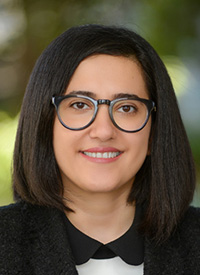
Hanieh Sardashti is an Assistant Professor at Adelphi University's Robert B. Willumstad School of Business, specializing in the Decision Sciences and Marketing Department. Her research bridges marketing strategy with financial outcomes, focusing on areas like marketing analytics and digital marketing. Ph.D. in Marketing, Michigan State University (2018) MBA in Finance and International Business, University of Toledo, Ohio (2013) Research Interests: Marketing Strategy Marketing Analytics Digital Marketing Quantitative Marketing Her publications analyze the intersection of marketing and financial risk, including studies on CSR during recessions, equity-based compensation effects on branding, and corporate risk mitigation through marketing capabilities. Articles often employ quantitative methodologies and emphasize strategic decision-making. Contact: Email: hsardashti@adelphi.edu LinkedIn: Profile
Filipa Matos Wunderlich is an Associate Professor in Urban Design at University College London's Bartlett School of Planning, where she serves as Director of the cross-faculty MRes Interdisciplinary Urban Design (MRes IdUD) program and Urban Design Strategic Coordinator. She previously co-designed and directed the MSc Urban Design and City Planning program and has held academic positions at UCL since 2008, initially as a Research Associate before becoming a Lecturer in 2010. Her educational background includes a PhD from University College London (2010), a Diploma of Architecture from Universidade do Porto (2000), and a Bachelor of Music from ArtEZ Institute of the Arts (2001). This interdisciplinary foundation informs her unique approach that bridges architecture, urban design, and musical performance. Wunderlich's research centers on temporality in urban places, urban rhythms, and place-rhythmanalysis, with significant contributions to temporal urban design theory and practice. Her work explores sensory and performative urbanisms, affect in the city, and the interface between urban and musical aesthetics. She also investigates gender-neutral urban design and alternative hybrid typologies in contemporary cities, emphasizing the synergy between theoretical innovation and practical application in urban design. Her publication record reveals a clear evolution from foundational theoretical work on urban rhythms and place-temporality toward increasingly sophisticated applications of temporal design principles. The most recent publications demonstrate a maturation of her temporal urban design framework, moving from conceptual explorations to practical implementations across diverse urban contexts, with growing emphasis on wellbeing, health, and sustainability implications. As a respected academic, Wunderlich regularly serves as keynote speaker at international conferences, including recent invitations to Oxford University, AESOP conferences, and the Conscious Cities Festival. She is a guest editor for Planning Theory and Practice and Architecture Open-Access journals, and frequently reviews for leading urban studies publications. In her teaching and advising roles, Wunderlich directs the MRes IdUD program and coordinates the Major Research Projects module across multiple postgraduate programs. Her grant activities include Innovate UK's Smart Walkability Platform project, UCL ChangeMakers initiatives, and the European COST Action Go2CHANGE research project on cultural heritage conservation under climate change. Wunderlich leads several research initiatives including the Post Growth Planning Research Cluster, Temporal Urban Design Research Podcast and Journal, and Collective Zebra - an online journal focused on walking. These platforms foster interdisciplinary dialogue on temporal approaches to urban design and facilitate knowledge exchange between academic research and professional practice.
Irene V. Small is a Professor in the Department of Art & Archaeology at Princeton University, specializing in contemporary art and criticism within global and transnational contexts. Her work critically engages with experimental practices from the 1960s–1970s, legacies of abstraction, and the social implications of form, with concentrated focus on Latin American art—particularly Brazil. She actively contributes to interdisciplinary initiatives including the Program in Media and Modernity, the Brazil Lab, and the Program in Latin American Studies. Her research traverses radical pedagogy, expanded cinema, decolonial interventions, and the politics of medium specificity. Central to her scholarship is the interrogation of modernism’s topological field through concepts like Lygia Clark’s 'organic line,' which she deploys to analyze works ranging from Malevich’s Black Square to contemporary practices. She investigates how truncated media forms facilitate itinerancy and connectivity across Brazilian art history, from 19th-century proto-photography to digital remediation. Small’s publications reveal consistent engagement with Brazilian avant-garde movements, examining artists like Hélio Oiticica, Lygia Clark, and Tarsila do Amaral through frameworks of participation, embodiment, and geopolitical critique. Her recent work expands to address free speech, afterlives of slavery, and the decolonization of art institutions, demonstrating evolving focus on art’s capacity to reconfigure social and political realities. Scientific Awards and Grants: Francine and Sterling Clark Art Institute Fellowship Graham Foundation Fellowship Getty Research Foundation Fellowship Dedalus Foundation Fellowship Creative Capital and Andy Warhol Foundation Arts Writers Grant Lemann Institute of Brazilian Studies Fellowship Research Board of the University of Illinois at Urbana-Champaign Grant Small serves on advisory boards for October , Ars , and Texte zur Kunst , and has curated exhibitions including Blind Field (2013) and Multitude (2002). Her teaching spans global contemporary art surveys, modern/contemporary Latin American art, and specialized seminars on decoloniality, gender, and experimentalism. She is affiliated with Princeton’s Department of Spanish & Portuguese, Brazil Lab, Gauss Seminars in Criticism, and Edward Said Memorial Lecture series.
Tania Lombrozo serves as the Arthur W. Marks ’19 Professor at Princeton University, leading the Concepts and Cognition Lab where she investigates the psychological and philosophical dimensions of human reasoning. Her work uniquely integrates empirical methods from cognitive science with conceptual frameworks from analytic philosophy. Her academic background includes a Ph.D. from Harvard University, establishing her foundation in interdisciplinary research approaches. Lombrozo's research centers on the human drive to explain, examining why we seek explanations for certain phenomena but not others, how explanation-seeking affects learning, and whether explanatory processes serve epistemic goals or introduce reasoning errors. She explores connections between causal reasoning, moral responsibility, and intuitive theories of knowledge, drawing from cognitive, social, and developmental psychology alongside philosophy of science and moral philosophy. Her methodology emphasizes experimental rigor while addressing normative questions about ideal reasoning. Analysis of her 2024-2025 publications reveals dominant themes in explanation evaluation across scientific and moral contexts, with significant attention to jargon in science communication, simplicity principles (Ockham’s razor), and moral responsibility in collective action. Her work increasingly addresses AI-human interaction, particularly how explanations influence trust in large language models and the cognitive effects of chain-of-thought reasoning. Notable honors include: Arthur W. Marks ’19 Professorship Excellence in Mentoring Graduate Students Award Lombrozo actively mentors graduate students including Sarah Joo, Casey Lewry, and Sebastian Montesinos, with research supported by interdisciplinary grants spanning cognitive science, ethics education, and technology policy. Her Concepts and Cognition Lab functions as a collaborative hub where philosophical questions are tested through behavioral experiments, contributing to both theoretical advances and practical applications in science communication and AI design.
Elizabeth Canning is an Associate Professor in the Psychology Department at Washington State University (WSU), where she leads the BOLD Lab (Build. Opportunity. Learn. Develop.). Her research focuses on creating equitable and inclusive educational environments through social-psychological interventions, with specific emphasis on achievement motivation, social inequality, and organizational behavior. Ph.D. in Social Psychology from the University of Wisconsin-Madison (2016) Postdoctoral research at Indiana University’s Mind and Identity in Context Lab (2016-2019) Dr. Canning’s work investigates how institutional messages about belonging, value, and ability shape student motivation and achievement. She employs controlled experiments, randomized interventions, and longitudinal studies to mitigate disparities in STEM education, particularly for first-generation, minoritized, and stigmatized groups. Her recent publications highlight the impact of instructor mindset communication on student outcomes, strategies for reducing imposter syndrome, and the role of growth mindset cultures in organizational success. Notably, her 2024 research in CBE-Life Sciences Education demonstrated how growth mindset messaging improves first-generation student performance. Editor’s Choice, Science (2014) Dr. Canning mentors undergraduate RAs (9+ hours/week commitment) and Ph.D. students in the Experimental Psychology program. She will be on sabbatical at the Wissenschaftskolleg in Berlin during 2025-2026.
Professor Joseph Wood is a Professor of Visual Analytics at City St George's, University of London, where he serves as a founding member of the giCentre. His academic career spans over three decades, with continuous contributions to Geographic Information Science and visualization since 1990. He previously served as Head of Department for Computer Science at City University between 2014 and 2017. Professor Wood's educational background includes a PhD in Geographical Information Science from the University of Leicester (1996), an MSc in the same field from the University of Leicester (1990), and a BSc in Physical Geography & Geology from the University of Sheffield (1989). His academic progression shows steady advancement from Research Scholar at the University of Leicester (1990-1992) through various lecturer and senior positions to his current professorship. His research interests center on visual analytics and data visualization, with particular expertise in geographic information science and terrain analysis. Professor Wood has developed innovative methods bridging GI Science, Data Visualization, and education domains. His specific interests include narrative of visual analytic design, computational thinking in pedagogy, and novel visualization design for geographic data. His work demonstrates a consistent focus on making complex spatial data understandable through innovative visualization techniques. Analysis of Professor Wood's recent publications reveals a strong emphasis on practical applications of visualization techniques across diverse domains including transportation, epidemiology, sports analytics, and historical migration patterns. His work shows an evolution from foundational geographic information science toward broader applications in visual analytics, with increasing focus on narrative structures, responsive design, and accessibility considerations in visualization. The interdisciplinary nature of his research is evident in collaborations spanning computer science, geography, urban planning, and public health domains. Professor Wood has been actively involved in the academic community, serving on organizing and program committees for major international conferences including IEEE Infovis and VAST, Eurovis, GIScience, Spatial Accuracy, and Geomorphometry. His contributions to the field have been recognized through invitations to deliver keynote talks at prestigious venues ranging from GeoComputation to TEDx, where he presented on topics such as visualizing movement behavior of cyclists. As an advisor, Professor Wood has supervised numerous PhD and Master's students, with current supervision of Julia Crossley (Student conceptualisation of abstraction in computer science) and Jude Nzemeke (Understanding student misconception in recursive algorithmic thinking). His extensive supervision history includes completed PhDs on topics ranging from cycling behavior to spatio-social relations in photographic archives. His academic leadership extends to software development, with contributions to tools like litvis, elm-vega/el-vegalite, giCentre Utils, handy, and LandSerf GIS. Professor Wood is an active member of professional organizations including IEEE (2007-present), Association of Computing Machinery (ACM) (2007-present), and Association of Geographic Information (AGI) (1997-present), demonstrating his commitment to interdisciplinary collaboration across computer science and geographic information domains.
Marc Sommer is a Professor of Biomedical Engineering and Psychology & Neuroscience at Duke University. He directs the Duke Institute for Brain Sciences and contributes to the Duke Initiative for Science & Society. His research focuses on neural circuits for cognition , particularly how the brain maintains visual perception and behavior through interactions between frontal cortex and subcortical regions. Key Techniques : Single neuron electrophysiology, optogenetics, psychophysics, computational modeling Translational Goals : Improving transcranial magnetic stimulation (TMS) and viral vector therapies for psychiatric and motor disorders Scientific Awards : Capers and Marion McDonald Award for Excellence in Teaching and Research (2021) Capers and Marion McDonald Award for Excellence in Mentoring and Advising (2017) Bass Fellow, Duke University (2017) Research Fellowship in Neuroscience, Alfred P. Sloan Foundation (2005) Marc Sommer's recent publications span visual stability across saccades , optogenetics in primates , TMS mechanisms , and viral vector applications . His work bridges cognitive neuroscience and biomedical innovation , with significant contributions to corollary discharge theory and neural circuit mapping . Lab Collaborations : Interdisciplinary partnerships across Duke University and external institutions, integrating engineering , neurobiology , and computer science to decode primate brain circuitry.
Julien Chanal is a researcher at the Faculty of Psychology and Educational Sciences, University of Geneva, specializing in Methodology and Data Analysis (MAD group). His work bridges educational psychology, motivation theory, and neuropsychology through empirical studies on self-determination, physical activity, and cognitive function. Primary affiliation: University of Geneva Research focus: Motivation and executive function assessment Key areas: Physical education, materialism effects, neuropsychological testing His research spans two decades, producing 38 publications with over 19,000 views. Recent projects examine motivation multidimensionality (2025), aerobic fitness-cognition links (2024), and neural correlates of materialism (2018). Despite extensive publication history, specific student names remain unspecified. Methodological innovations include epoch-length analysis in physical education (2015), self-concept modeling (2009), and neuropsychological norm establishment in Cameroon (2009). His work remains actively cited across disciplines, though no scientific awards are explicitly documented in available sources.
Professor Ross Cameron is a faculty member at the School of Architecture and Landscape, University of Sheffield, specializing in Environmental Horticulture . His research focuses on the intersection of urban green infrastructure, climate change adaptation, and human well-being through plant selection. PhD in Horticulture BSc in Biological Sciences Research interests include: Green infrastructure for climate mitigation (city cooling, flood tolerance) Plant-ecosystem interactions (thermal insulation, biodiversity enhancement) Sustainable resource use (water, soil amendments, energy) Human-plant relationships (well-being, therapeutic landscapes) Recent publications highlight trends in: Phylogenetic approaches to urban tree survival Thermal regulation via green walls and roofs Floral color psychology and mental health Mediterranean species adaptation to urban stress Microbial implications in green infrastructure Scientific awards include: National Horticultural Fellowship (2011) DEFRA LINK project with top rating (9/10) Teaching excellence awards He leads research on plant-people dynamics, advises UK policymakers, and supervises PhD projects in urban ecosystem services. His work bridges applied horticulture with interdisciplinary collaborations across ecology, architecture, and public health.
Prof. Dr. Jochen Menges is a Professor at the University of Zurich , holding the Chair of Human Resource Management and Leadership within the Department of Business Administration under the Faculty of Business, Economics and Informatics . He serves as Director of the Center for Leadership in the Future of Work and contributes to the DSI Community Work. Research Interests: His work bridges leadership studies , emotional intelligence , mindfulness practices , and digital transformation in work environments. Key areas include charismatic leadership attribution , AI-human collaboration , emotion regulation , and future of work dynamics . Recent Publications: Menges explores how anthropomorphic AI affects workplace emotions, develops VR-based organizational simulations , and investigates the role of awe in leadership perception . His 2024 guest editorial on human-centered future of work emphasizes balancing technological and human needs. Emerging Insights: Studies on emotional responses to AI , mindfulness interventions , and gender dynamics in emotional intelligence demonstrate his focus on emotional and psychological dimensions of modern work. His populist support research connects negative affect with global political trends.
Sophie Leroy is a Professor of Management and Dean of the School of Business at the University of Washington Bothell . She is an internationally recognized scholar whose work focuses on attention, interruptions, and leadership. She has held editorial roles at top journals and has received multiple awards for both research and teaching excellence. Education: Ph.D. in Organizational Behavior – Stern School of Business, New York University (2007) Master in Management (MBA equivalent) – HEC School of Management, Paris (1998) MBA Exchange Scholar – Columbia Business School (1997) B.A. – HEC School of Management, Paris (1996) Research Interests: Dr. Leroy’s research centers on self-regulation , particularly how individuals manage attention, time, and ethical decision-making in the face of interruptions. She coined the term "Attention Residue" , which describes the cognitive interference that occurs when attention lingers on a prior task after switching to a new one. Her work explores how this affects performance and how interventions like "ready-to-resume" plans can mitigate its effects. She also studies mindfulness , leadership , and synchrony preferences in team settings. Teaching: Dr. Leroy teaches courses in Leadership , Managing High Performance Teams , Global Management , and Ethical Decision Making across MBA and undergraduate programs. Since 2014, she has received eight teaching awards , including six MBA Faculty of the Year Awards and the Executive Education Distinguished Professor of the Year Award. Scientific Awards & Honors: 2024 University-wide Distinguished Research, Scholarship, and Creative Activities Award 2024 MBA Faculty of the Year Teaching Award 2022 Distinguished Professor of the Year Award, Executive Education 2021 Finalist for Best Paper of the Year – Academy of Management Annals 2009 Best Paper Award, Academy of Management MOC Division Advising & Grants: She has served as Dissertation Chair for John-Gabriel Licht and as a committee member for multiple Ph.D. students. She has also received competitive research grants including the SRCP Seed Grant and Dean’s Small Research Grant (five times). Media & Outreach: Dr. Leroy’s work has been featured in Harvard Business Review , The Economist , TIME Magazine , NBC News , and more. She has also appeared in podcasts and interviews on platforms like The David Pakman Show , Quartz , and King 5 Seattle .
Lars Berglund is Professor of Musicology at Uppsala University's Department of Musicology, where he serves as Director of Studies for the doctoral program. He earned his PhD from Uppsala in 2002 with a thesis on German musician Christian Geist and has held progressive academic positions since 2003, becoming Professor in 2015. Berglund chaired the department from 2012-2018 and currently leads the Swedish Research Council's Humanities and Social Sciences Subject Council (2025-2027). He is a board member of HERA (Humanities in the European Research Area) and holds memberships in the Royal Swedish Academy of Letters and Royal Swedish Academy of Music. His research specializes in 17th-century music history, combining philology, music analysis, and reception studies with focus on: Italian-Scandinavian cultural exchange Court and church music patronage systems Performance theory and vocal traditions Scandinavian modernist music Recent publications (2019-2025) demonstrate strong emphasis on transnational music transfer, archival reconstruction of Baroque repertoires (particularly the Düben Collection), and ceremonial music analysis. Key themes include royal patronage networks, contrafactum techniques, and music's role in early modern diplomacy. Awards & Honors: Member, Royal Swedish Academy of Letters Member, Royal Swedish Academy of Music Major Funded Projects: "Translatio musicae: French and Italian Music in Northern Europe" (Riksbankens Jubileumsfond 2019-2023) Swedish Church Music History monograph (2020-2024) Digitization of court/university music (Riksbankens Jubileumsfond 2020-2025) STINT network on Early Modern musical exchange (2012-2016) He supervises doctoral candidates and teaches advanced courses in historical musicology and analysis.
T. Jake Smith is an Assistant Professor in the Department of Agricultural Economics at the University of Nebraska-Lincoln's College of Agricultural Sciences and Natural Resources. His primary appointment focuses on agricultural policy and environmental economics, with research examining how policies, technologies, and market structures impact economic and environmental outcomes in sectors like biofuels and livestock. Education: Ph.D. in Economics, Iowa State University (2023) His research interests span agricultural economics, environmental policy, technology adoption, and market competition, with specific work on the Renewable Fuel Standard, genetically engineered crops, and beef industry dynamics. Notably, his Google Scholar publications reveal a parallel research stream in human resource management, covering high-performance work systems, employee well-being, and strategic HRM—a divergence not explained in his institutional profile. This dual focus suggests interdisciplinary work at the intersection of labor markets and agricultural economics, though the connection remains unclear from available data. Analysis of his 15 most recent publications (2019-2025) shows a dominant emphasis on HRM, particularly psychological determinants of HR practices, longitudinal HRM-outcome relationships, and crisis-era workplace adaptations. Agricultural topics are absent from these articles, indicating either a recent research pivot or data inconsistency. No scientific awards are documented in the provided sources. Details on student advising, research grants, laboratories, or collaborative teams are not mentioned in the scraped materials. His contact information indicates active engagement via tsmith125@unl.edu, with an on-campus office at FYH 304B.
Kata Gyuris is an Assistant Professor at Eötvös Loránd University Budapest, Department of English Studies, specializing in African literature, gender studies, and trauma theory. She holds a PhD in comparative African literature with a focus on violence in contemporary Anglophone and Francophone fiction, currently adapting her dissertation into a book. Visiting scholar at University of Kwazulu-Natal’s School of Oriental and African Studies Co-organized 2019 conference on Performativity in Contemporary Culture Co-authored Turning the Page: Gendered Identities in Contemporary Literary and Visual Cultures (2018) Her research intersects African literature with gender studies , trauma analysis , and postcolonial discourse , examining how violence and identity are represented in works by authors like Coetzee, Adichie, and Le Clézio. Her recent articles explore feminist narrative structures in African coming-of-age stories and ethics of reconciliation in apartheid literature. While no explicit scientific awards are documented, her scholarly output spans critical essays on postcolonial allegory, queer theory, and intertextuality across Hungarian, English, and French contexts.
Walid Ben Amar is a Full Professor and holder of the Ian Telfer Research Fellowship at the Telfer School of Management, University of Ottawa. He holds a Ph.D. in Business Administration from HEC Montréal and is a Chartered Professional Accountant (CPA, CGA) in Ontario. Education: Maîtrise (Institut des Hautes Etudes Commerciales), Maîtrise (UQAM), Ph.D. (HEC Montréal) Key Research Areas: Corporate Governance, Corporate Social Responsibility (CSR), Climate Risk Reporting, Gender Diversity in Boards, ESG Performance, Textual Analysis in Financial Reporting His funded research (2017-2024) focuses on climate risk disclosures, gender diversity impacts, and ESG performance, supported by SSHRC grants and partnerships with institutions like CPA Ontario and Europlace Institute of Finance. He has published extensively in journals such as Journal of Business Ethics , Accounting Horizons , and European Accounting Review , examining topics like CSR resilience during crises, gender-diverse board disclosures, and ESG-driven financial outcomes. Scientific awards include the University of Ottawa Excellence in Education Prize (2019). Teaching: Financial Accounting (Undergraduate & Graduate Programs) Funded Research: 2022-2024 SSHRC Insight Development Grant ($49,504), 2021-2023 French Accounting Standards Authority Grant ($71,578), and others