Dr. Elizabeth F. Pienaar is an Associate Professor in the Warnell School of Forestry and Natural Resources at the University of Georgia. Her expertise lies in the human dimensions of wildlife conservation, focusing on private lands management, invasive species risks, and policy design. She holds a Ph.D. in Agricultural and Resource Economics from the University of California, Davis (2009), and prior degrees from the University of Queensland, Australia. Research Interests : Dr. Pienaar’s work addresses conservation challenges on private lands, risks of the live animal trade, and economic valuation of ecosystem services. Her research integrates behavioral economics and conservation policy to design effective management strategies. Current projects include studies on Native American communities’ tick-borne disease awareness, exotic pet trade regulations, and urban wildlife tolerance. Awards and Recognition : Fellow, Mammal Research Institute (University of Pretoria) Research Fellow, African Wildlife Economy Institute (Stellenbosch University) 2022 Student Career Success Influencer Award (UGA) 2024 Top Scholar in Wildlife by ScholarGPS Lab and Team : The Pienaar Lab collaborates with researchers from the University of Florida and University of Pretoria, focusing on wildlife conservation in the U.S. and southern Africa. The lab has guided numerous students, including recent graduates Dr. Julia Silva Seixis and Dr. Libby Pratt.
Luisa Arango is an Associate Professor at the Institute of Ethnology, Faculty of Social Sciences, University of Strasbourg, where she also serves as Director of Studies for the Bachelor's program in Anthropology and Ethnology in Distance Learning (EàD). She is based at the MISHA building and is affiliated with the SAGE Laboratory (UMR 7363). Her academic work spans research, teaching, and interdisciplinary collaboration, with a strong focus on urban anthropology and environmental issues. Her research centers on urban environments, water and land resource management, identity dynamics in cities, and the anthropology of techniques, with fieldwork conducted in the Nile Valley (Sudan) and the Colombian Caribbean. She explores themes such as urbanization processes, spatiality and power, local perceptions of climate change, and alternative ethnographic methods. Her work often engages with political ecology, interdisciplinary environmental research, and the social dimensions of nature and resources. Luisa Arango’s recent publications (2013–2024) reflect a consistent focus on hydrosocial systems, urban water governance, land appropriation, and knowledge production in Africa and Latin America. Her articles appear in journals such as Canadian Journal of African Studies , Espaces et Sociétés , Autrepart , and Sources . She has also contributed to interdisciplinary dialogues on climate change, artistic ethnography, and field drawing as research tools. Knowledge about nature in Africa Urban water management in Khartoum and Cartagena Land rights and ethnic identity in Colombia Interdisciplinary approaches to climate and urban planning Ethnographic and artistic methodologies Luisa Arango is actively involved in research networks such as WATERLAT-GOBACIT and GAIA (University of Antioquia, Colombia). She has supervised academic projects and contributed to methodological innovations in ethnographic research. She teaches courses on ethnographic methods, urban anthropology, and research forums for distance-learning students. Her work emphasizes the political dimensions of resource access, the transformative power of collective action, and the importance of integrating social and material realities in understanding urban and environmental change. She has no listed scientific awards in the provided text, but her sustained publication record and leadership roles indicate significant scholarly impact. She is also engaged in public-facing research, including graphic works and documentaries on anthropological practice.
Edmund Penning-Rowsell serves as Pro Vice-Chancellor (Research) and Deputy Vice-Chancellor Academic at Middlesex University, leading institutional research strategy while maintaining an active research profile in flood risk management. His work bridges hydrological science, social policy, and economic appraisal to address complex flood and coastal challenges in the UK and globally. His research focuses on: Human dimensions of flood risk and social vulnerability Policy innovation in flood governance and insurance mechanisms Economic appraisal methods for coastal and flood risk management Climate adaptation strategies including Sponge Cities and floating architecture Transboundary cooperation and judicial conflict resolution in water management Distributional justice in flood risk reduction policies Recent publications (2020-2025) reveal an interdisciplinary trajectory emphasizing socio-technical integration, with significant work on policy experimentation in Austria, partnership models for coastal management, and data-driven approaches to flood risk assessment. His scholarship consistently connects academic research to real-world policy implementation through collaborations with government agencies and international bodies. No specific scientific awards were documented in the provided information. As senior research leadership, he oversees Middlesex University's research portfolio including Flood Hazard Research Centre initiatives, though specific student supervision details are absent from the text. His work demonstrates extensive collaboration with agencies like the Environment Agency and European Commission-funded projects. He is central to the Flood Hazard Research Centre at Middlesex University, which conducts applied research on flood risk governance through international partnerships. Current projects address data transparency for coastal resilience, innovative flood insurance models, and climate adaptation strategies across urban and rural landscapes.
Brian Pickles is an active academic researcher affiliated with the University of Reading, School of Biological Sciences, where he contributes to research in ecology, mycorrhizal symbioses, and environmental conservation. His work spans forest ecology, urban biodiversity, paleontology, and forensic science, reflecting a highly interdisciplinary approach to ecological challenges. University: University of Reading School: School of Biological Sciences Department: Department of Ecology and Evolutionary Biology Academic Rank: Senior Lecturer His research focuses on mycorrhizal fungi and their role in plant-soil interactions, forest resilience under climate change, and biodiversity conservation. He investigates how ectomycorrhizal networks influence tree communities, how urban trees affect microclimates, and how decomposition processes alter soil ecosystems. His work integrates field experiments, molecular ecology, and remote sensing techniques. Recent publications show a strong trend in applying ecological theory to practical conservation, including reptile habitat management, invasive species policy, and urban green space planning. His studies often employ robust experimental designs such as before-after control-impact (BACI) and leverage large collaborative networks. Brian Pickles has co-authored numerous high-impact papers in journals like New Phytologist , Proceedings of the Royal Society B , and Frontiers in Forests and Global Change . His work on ectomycorrhizal networks, forest carbon dynamics, and urban tree radiative performance demonstrates both theoretical depth and applied relevance. He has also contributed book chapters on mycorrhizal mediation of soil processes and spatial ecology of fungal communities. Brian Pickles collaborates extensively with researchers across the UK, Canada, and globally. Notable collaborators include Suzanne Simard, Melanie D. Hart, Ian C. Anderson, and Miranda M. Hart. These collaborations span topics from fungal community assembly to inter-plant communication via mycorrhizal networks. No formal scientific awards or prizes are mentioned in the provided text. However, his consistent publication record in top-tier journals suggests recognition within the ecological research community. Brian Pickles contributes to research grants and collaborative projects focused on forest resilience, urban ecology, and soil biodiversity, though specific grant titles or funding bodies are not listed. His leadership in experimental design and data interpretation indicates an active role in securing and managing research funding. He is involved in several research teams and labs, particularly those focused on mycorrhizal ecology and forest dynamics. His work with the Simard Lab (University of British Columbia) and collaborations with UK-based environmental monitoring groups highlight his integration into major ecological research networks. He also contributes to urban ecology initiatives using remote sensing and ground-based validation.
Marta Kryven is an Assistant Professor in the Faculty of Computer Science at Dalhousie University. Her research integrates artificial intelligence, cognitive science, and experimental psychology to develop computational models of human cognition, focusing on planning, perception, and behavior. She is actively engaged in interdisciplinary research and is accepting graduate students. Research Interests: Computational models of cognition and behavior Large Language Models and their alignment with human thought Spatial navigation and environmental interaction Program synthesis and induction Representation learning and cognitive modeling Human-AI alignment and interpretability Her recent publications demonstrate a strong trend in combining symbolic AI with neural models to simulate human-like reasoning, particularly in spatial and social contexts. She frequently collaborates with leading researchers at MIT, especially Joshua Tenenbaum. Her work appears in top-tier venues such as NeurIPS, Cognitive Science, and Nature Computational Science. Scientific Awards: No awards explicitly mentioned in the provided text. Advising and Grants: Marta Kryven is currently accepting applications from graduate students and has several projects available for both undergraduate and graduate researchers. While specific grants are not listed, her active publication record in high-impact journals suggests ongoing funded research. She also offers consulting in AI system design, behavioral modeling, and data science for businesses. Labs and Teams: She is part of the Big Data Analytics, AI & Machine Learning research cluster at Dalhousie University. Her work is closely affiliated with cognitive science and AI research groups, likely involving collaboration with MIT’s Center for Brains, Minds and Machines. She leads a research group focused on human-like AI and computational cognitive modeling.
Colin Campbell is an Associate Professor of Marketing at the Knauss School of Business, University of San Diego , and serves as Editor-in-Chief of the Journal of Advertising Research . He holds a PhD in Marketing from Simon Fraser University, an MA in Economics from the University of British Columbia, and a BBA in Marketing/Economics from Simon Fraser University. Campbell has published over 70 research articles and is recognized as a leading authority in digital and AI-driven marketing. PhD, Simon Fraser University, Marketing MA, University of British Columbia, Economics BBA, Simon Fraser University, Marketing/Economics His research focuses on online and social media marketing , with expertise in influencer marketing, AI applications, generative AI, video advertising, deepfakes, and ASMR in retail . He explores how digital innovation transforms consumer behavior and marketing ethics. Key trends in his 2024–2025 work include AI ethics, virtual influencers, and sensory advertising . Colin has received multiple accolades, including: High Impact Research Award, Knauss School of Business (2021–2022) Best Article Award, Business Horizons (2020) Best Reviewer, Marketing Education Review (2020) Best Reviewer, Journal of Advertising Research (2017) He actively collaborates with regulatory bodies like the FTC and industry stakeholders, bridging academic and applied marketing research. His work has been featured in major media outlets such as Time Magazine and Forbes .
Wenzheng Li is a Visiting Lecturer in the Department of City and Regional Planning at Cornell University’s College of Architecture, Art, and Planning. He earned his Ph.D. in City and Regional Planning from Cornell in August 2024, following a Master’s in Regional Planning from the same institution and a Bachelor’s in Remote Sensing from China University of Geosciences. His research centers on regional-scale land use planning, sustainable urban forms, polycentric development, and environmental sustainability, with applications in Germany, China, and Sub-Saharan Africa. He employs GIS, remote sensing, spatial econometrics, and urban data analytics to investigate urban dynamics and planning policy impacts. His recent publications and conference presentations focus on topics such as the urban heat island effect, polycentric development, and regional equity. These works reveal consistent trends in analyzing spatial configurations for sustainability and equity, particularly through quantitative modeling and cross-national comparisons. C.V. Starr Fellowship, the Einaudi Center of Cornell University, 2023 Li teaches courses in GIS, urban data science, and quantitative methods, emphasizing the integration of machine learning and GeoAI with planning theory. His professional experience includes work on equitable transportation solutions in Tompkins County. He has not advised any students yet, and no grant details beyond the fellowship are mentioned. He is actively involved in research projects on sustainable urban forms in Sub-Saharan Africa, regional governance in China and the U.S., and environmental amenity valuation, reflecting a strong interdisciplinary and global approach to urban and regional planning challenges.
Prof. Dr. Kai Essig is a Professor of Human Factors and Interactive Systems at the Faculty of Communication and Environment, Rhine-Waal University of Applied Sciences, Kamp-Lintfort, Germany. He has a strong interdisciplinary background combining computer science, cognitive science, and human-computer interaction, with a focus on eye tracking, visual perception, and assistive technologies. Master of Science in Computer Science and Chemistry, Bielefeld University (1998) Ph.D. in Computer Science, Bielefeld University (2007) His research centers on eye tracking, human-computer interaction, usability engineering, visual attention, and cognitive interaction technology . He investigates how movement expertise influences visual perception and how multimodal software can support real-time human actions. His work integrates computer vision, machine learning, and neuroscience to develop intelligent systems that adapt to user behavior. The 15 most recent publications reflect a consistent trend in eye movement analysis, mental representations, brain-machine interfaces, and assistive technologies . These works span domains such as sports psychology, robotics, augmented reality, and cognitive neuroscience, demonstrating a strong interdisciplinary approach. Key themes include gaze-based interaction, automated annotation of visual behavior, and the implementation of smart systems for daily living assistance. Scientific recognition includes: Landmark in the Land of Ideas (2018) – for the ADAMAAS project, awarded by 'Land of Ideas', a joint initiative of the German government and the Federation of German Industries Prof. Essig has been actively involved in research projects such as ADAMAAS (Adaptive and Mobile Action Assistance in Daily Living Activities), which received national recognition. He has collaborated extensively with the Neurocognition and Action-Biomechanics Research Group at Bielefeld University and the Excellence Cluster CITEC. While no formal advising of students is listed, his publications suggest mentorship and collaboration with junior researchers. His lab work is centered on eye-tracking systems, multimodal interaction, and cognitive modeling , particularly within applied environments like smart glasses and assistive technologies.
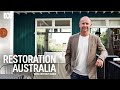
Professor Anthony Burke is a Professor of Architecture in the Faculty of Design Architecture and Building at the University of Technology Sydney (UTS), where he currently serves as Course Director for the Master of Architecture program. Previously, he held significant leadership roles including Associate Dean of International and Engagement (2017-2019) and Head of the School of Architecture (2010-2016). Internationally recognized for his work in architectural design, curation and commentary, Burke specializes in contemporary design theory at the intersection of technology, urbanism and practice, with a particular focus on ethical considerations in smart city development. Burke holds an M.Sc. in Advanced Architectural Design from Columbia University (2000) and a B.Architecture (First Class Honors) from UNSW Australia (1995). Prior to his current position at UTS, he was an Assistant Professor in Architecture at the University of California, Berkeley between 2002 and 2007. He has also served as a Visiting Professor at the Beijing Institute of Technology (2018-2020) and Institut Teknologi Bandung (2018-2019). Professor Burke's research explores the complex relationship between architecture, technology, and urban environments, with particular emphasis on how design can address societal challenges while maintaining human-centered values. His work spans architectural theory, urban technologies, and innovative practice models, often bridging academic scholarship with practical applications through numerous funded research projects and industry collaborations. He has published extensively on topics including the ethics of smart cities, architectural restoration, and the evolving role of architects in contemporary society. His recent publications reveal a consistent exploration of architecture's role in contemporary society, with recurring themes including the intersection of technology and design, ethical considerations in urban development, and innovative approaches to architectural practice. This body of work demonstrates both theoretical depth and practical relevance, connecting academic discourse with real-world applications. 2024 ACTAA Award for Lifestyle Category - Grand Designs Australia Season 11 2024 Honorary Fellow Beyond traditional academic work, Burke actively supervises PhD students and has secured significant research funding from organizations including Cumberland Council, IKEA, and the NSW Office of the Government Architect. His projects frequently involve interdisciplinary collaboration, bringing together architects, urban planners, technologists, and policymakers to address complex urban challenges. He has also founded initiatives like Open Agenda, an annual speculative design research competition for emerging Australian architects. Professor Burke extends his impact through media engagements, serving as host and presenter for popular television programs including Grand Designs Australia (Seasons 4-11), Restoration Australia (Seasons 4-7), and Culture X Design. These platforms allow him to communicate architectural concepts to broad audiences, with Grand Designs Australia reaching approximately 1 million viewers per episode in Australia and more internationally. His public outreach includes regular contributions to The Conversation, ABC News, and other media outlets, making architecture and design accessible to the general public while showcasing innovative Australian architecture.
Henning Piezunka is an Associate Professor of Management at The Wharton School, University of Pennsylvania. He holds a PhD from Stanford University, a Master of Science from the London School of Economics, and a Diploma Kaufmann from the University of Mannheim. Before academia, he co-founded and led a web design company for 18 years, growing it to 30+ employees serving 80+ countries before its sale in 2016. His research examines: Competition and collaboration dynamics in entrepreneurial firms, family businesses, and sports contexts Crowdsourcing innovation and platform strategies Organizational decision-making structures and learning processes CEO succession planning and its organizational impacts His recent publications (2019-2025) demonstrate methodological diversity, combining archival analysis of Formula One/soccer data, crowdsourcing platform experiments, and organizational case studies. Key thematic focuses include: how competition manifests in collaborative settings, AI's role in strategic learning, and how organizational structures shape individual behavior. Awards & Honors: Wharton Teaching Excellence Award (2023) Emerging Scholar Award, TIM Division, Academy of Management (2022) Poets & Quants Best 40 Under 40 Professor (2019) Multiple teaching commendations for MBA/EMBA courses (2014-2023) He teaches core entrepreneurship courses including MGMT2300 (Entrepreneurship) and MGMT2310 (Entrepreneurship Launchpad), focusing on venture creation, resource acquisition, and scaling strategies. He also leads doctoral seminars on research design and maintains an active advisory practice through the 'Between the Lines' webinar series featuring business school authors.
Gabriele Bernardini is a Researcher at the Department of Civil, Building and Architectural Engineering within the Faculty of Engineering at Università Politecnica delle Marche (UNIVPM) in Ancona, Italy. His office is located at via brecce bianche 12, Ancona in the DICEA, Construction Section (quota 150), where he holds office hours on Wednesdays from 9-11 AM. His work focuses on the intersection of built environment safety, risk assessment, and innovative technological applications for urban resilience. Dr. Bernardini's research interests center on multi-risk assessment and mitigation in urban built environments, particularly addressing flood risks, terrorist threats, and heatwave vulnerabilities in historical contexts. His work employs innovative methodologies including virtual reality simulations, behavioral design approaches, and data-driven predictive models. He has developed frameworks for measuring user exposure and vulnerability, optimizing evacuation paths, and creating integrated wayfinding systems for emergency situations. His research bridges the gap between theoretical risk assessment and practical implementation in real-world urban settings, with a special focus on preserving historical character while enhancing safety. Analysis of his recent publications (2021-2025) reveals a consistent focus on multi-risk scenarios in urban environments, particularly examining how different hazards interact in historical settings. His work demonstrates increasing sophistication in methodology, moving from basic risk assessment to integrated multi-risk frameworks that consider user behavior, environmental factors, and technological solutions. A significant portion of his research applies virtual reality and extended reality technologies to safety training and evacuation planning, showing the evolution from theoretical models to practical applications with real-world testing. His research has practical applications across multiple domains including urban planning, emergency management, and building maintenance. Through his work on automatic detection systems using maintenance requests and predictive management approaches, he's contributing to more responsive building management practices. His case studies on specific locations like Matera demonstrate the translation of theoretical frameworks into context-specific solutions for historic urban environments.
Michael Haliassos is Professor and Chair for Macroeconomics and Finance at Goethe University Frankfurt since 2004. He serves as Research Fellow at CEPR, Founding Director of the CEPR Network on Household Finance, and International Research Fellow at NETSPAR. His expertise in household finance, consumer behavior, and financial literacy has made him a key advisor to the European Central Bank since 2006. Education: B.A. from Cambridge University; Ph.D. from Yale University (1987) under Nobel Laureates James Tobin and William Nordhaus Academic Leadership: Former Director of Center for Financial Studies (2010-2015), Founding Director of SAFE (2013-2015), and Director of Master Program in Money, Macro, and Finance Haliassos is among the early contributors to household finance, with a research focus on portfolio choice under labor income risk, stockholding behavior, consumer debt dynamics, wealth distribution, financial advice efficacy, and social interaction effects on financial decisions. His work spans over two decades of publications in top journals like Review of Financial Studies and Economic Journal. His recent research trends emphasize social externalities in financial literacy, cultural influences on financial behavior, and wealth inequality propagation mechanisms. Key scientific contributions include: 2021 Hillcrest Prize for Behavioral Finance Founding Director of CEPR Network on Household Finance Editorial roles in MIT Press and Cambridge University Press book projects Policy advisory roles including Greek National Council on Research and Technology (2010-2013) Advisory network includes Dr. Johannes Zahner (Post-doctoral Fellow), Eleftherios Bethmage (PhD student), and Jean de Oliveira (PhD student). He has significantly contributed to curriculum development, including the Master's Program in Money and Finance at Goethe University.
Modhurima Dey Amin is an Assistant Professor at Texas Tech University's Department of Agricultural and Applied Economics within the College of Agricultural Sciences & Natural Resources. Her work bridges econometric methodologies with contemporary issues in food and agricultural markets, emphasizing precision agriculture, energy economics, and industrial organization. PhD in Economics (Econometrics & Quantitative Economics) – Washington State University MSc in Statistics – Washington State University MSc in Applied Financial Economics – Illinois State University BSc in Economics – University of Dhaka, Bangladesh Dr. Amin's research explores: Food safety in retail environments and equitable access to nutritious food Market structures of specialty crops, particularly apple varieties Structural change detection in high-dimensional datasets using statistical methods Machine learning applications in agricultural and environmental economics Key trends in her publications include: Machine learning for causal inference and predictive modeling in agricultural economics Food retail dynamics, including store closures and consumer behavior Environmental economics and sustainable agricultural practices Precision agriculture and technology-driven farm management Her teaching focuses on: Econometrics Agribusiness Finance Corporate Finance Economic theory and policy analysis Contact: modhurima.amin@ttu.edu | Personal Website
Dr. Donyale Padgett serves as Associate Professor in the Department of Communication at Wayne State University, where she has been a faculty member since 2002 and on the tenure-track since 2006. With over 15 years of professional communications experience in client service and strategic planning, she integrates practical industry insights into her teaching through service learning projects with local non-profits. She actively contributes to university-wide initiatives on diversity, inclusion, and student retention efforts. Professor Padgett earned her academic credentials from Wayne State University and Howard University: Bachelor of Arts in Journalism with Public Relations concentration, Wayne State University Master of Arts in Organizational Communication and Public Relations, Wayne State University Ph.D. in Rhetoric and Intercultural Communication, Howard University Her research centers on critical rhetoric examining how marginalized groups negotiate power and identity within social structures. Primary interests include crisis rhetoric and organizational legitimacy, crisis-cultural dynamics, and diversity in workplace communication. Secondary focuses encompass service learning pedagogy, student retention strategies in higher education, and hip-hop's influence on identity formation. This critical scholarship investigates rhetoric's generative power in public discourse, particularly regarding race, culture, and institutional oppression. Her publication record demonstrates consistent interdisciplinary scholarship bridging crisis communication with cultural studies, race theory, and social justice. Key contributions include the development of "restorative rhetoric" for non-traditional crises and analyses of race-based crisis response variations. Recent work spans political scandals, cross-cultural crisis management, hip-hop femininity, and critical journalism approaches, reflecting her commitment to examining communication through lenses of power and marginalization. Professor Padgett advises undergraduate and graduate students including thesis and dissertation supervision. She engages students through service learning projects connecting classroom theory with community needs. Her current research involves an interdisciplinary team studying retention challenges among marginalized student populations, aiming to develop actionable strategies for improving graduation rates through narrative analysis of student experiences.
Suelen Carls is a Senior Lecturer in Intellectual Property Law at Bournemouth University, a Law Professor at the University of Marília (Unimar) in Brazil, and an IP Expert at the World Intellectual Property Organization Academy (WIPO Academy). She previously spent four years (2018-2022) as a Senior Research Fellow at the Max Planck Institute for Innovation and Competition in Germany. Her academic credentials include a PhD in Law (2016) from the Federal University of Santa Catarina (UFSC-Brazil) and a Master's in Development Studies from the Regional University of Blumenau (FURB-Brazil). Doctorate in Law, Federal University of Santa Catarina (2016) Master's in Development Studies, Regional University of Blumenau (2013) MBA in Tax Management, Regional University of Blumenau (2010) Bachelor of Laws, Regional University of Blumenau (2009) Her research focuses on Intellectual Property & Green Life Sciences , particularly how patents influence sustainable agriculture and food security. She also explores IP strategy , company internationalization, and the intersection of law and economics in emerging economies like Latin America. Her work emphasizes strategic IP frameworks for regional development, cultural preservation, and environmental sustainability, building on her prior research on geographical indications and climate resilience. Recent publications analyze topics such as compulsory licensing for sustainable development, net-zero emissions in food systems, and the role of IP in pandemic response. Her work frequently addresses the UN Sustainable Development Goals (SDGs), notably Zero Hunger , Industry Innovation , and Climate Action . Scientific Award : ECTA Award 2020 First Prize Professional Category She supervises PhD students and has secured grants from institutions like the British Academy and FAPESC. Her roles include staff representation on the Humanities & Law Department's FMC Staff Wellbeing Committee and participation in conferences such as the European Policy for Intellectual Property (EPIP) and the 40th Congress on IPR in Times of Crisis. Suelen is affiliated with organizations including the Academy of International Business, European Policy for Intellectual Property (EPIP), and the International Association for the Advancement of Teaching and Research in Intellectual Property (ATRIP). Her work appears in journals like Revista Brasileira de Politicas Publicas , Journal of Intellectual Property Law and Practice , and IIC International Review of Intellectual Property and Competition Law .