- Criminal Law
- Domestic Abuse
- Coercive Control
- +۴ مورد دیگر
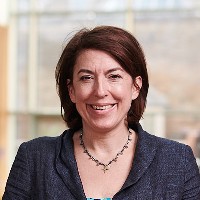
Dr. Cassandra Wiener is a Reader in Law at City, University of London, where she serves as Director of The City Law School. Her academic work centers on criminal law reform, particularly in domestic abuse, coercive control, and violence against women. She holds an MA (Distinction) and PhD from the University of Sussex, a GDL/LPC (Distinction) from the University of Law, and a BA Hons from the University of Manchester. Her research investigates criminal justice responses to domestic abuse, emphasizing the articulation of coercive control in legislation. She developed strategic guidelines for policing domestic rape adopted in England and Wales' National Operating Model (2023), and co-led the Home Office-funded Operation Bluestone/Soteria. Her interdisciplinary work bridges legal theory, policy implementation, and survivor advocacy, influencing global law reform efforts. Wiener's publications demonstrate consistent focus on coercive control dynamics, legal frameworks, and policing innovations. Her 2023 monograph, Coercive Control and the Criminal Law , synthesizes key research, while recent articles address intimate partner violence investigation challenges, legislative gaps in sexual offenses, and international policy comparisons. Her work consistently highlights victim-centered approaches and systemic barriers in criminal justice. Awards recognizing her impact include: Police Commendation from Avon & Somerset Police (2024) Research Project of the Year Award with Prof. Katrin Hohl (2024) Adam Weiler Impact Award (2021) Impact Award from the Sentencing Council (2017) She advises governments globally, including the UK Home Office, Domestic Abuse Commissioner, and international bodies in Australia, Canada, and France. Current projects include developing CPS guidelines for domestic sexual offense prosecutions and campaigning for sentencing reform. She co-founded and co-directs the Criminal Justice and Human Rights Centre, fostering collaboration between policymakers, practitioners, and academics.