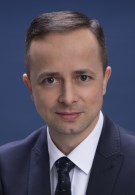
Monika Gabryś-Sławińska is a Professor at the Department of Polish Literary History , part of the Faculty of Languages, Literatures and Cultures at the University of Maria Curie-Skłodowska (UMCS). Her research spans 19th- and 20th-century Polish literature , focusing on Stefan Żeromski , historical journalism , text editing , voice emission , and museology . MA in Polish Philology (1998, UMCS) PhD in Literary Studies (2007, UMCS) Habilitation in Literary Studies (2016, UMCS) Her research interests include political commentary in historical press , media's role in cultural identity , and sociolinguistic trends . She has edited over 29 academic volumes and authored 5 monographs. Scientific awards: Bronze Cross of Merit KEN Medals (Bronze, Silver) 8 Rector's Awards (UMCS) Lublin Mayor's Medal (2019) She has participated in 5 research grants , organized 35 academic conferences , and contributed extensively to Annales UMCS as a scientific editor.
Feliks Nowowiejski Academy of Music in BydgoszczPoland
Jacek Greszta is a Professor and current Dean of the Faculty of Vocal Performance and Acting at the Academy of Music in Bydgoszcz, serving the 2020-2024 term. He has taught at the institution since 2006 and was awarded the title of Professor of Art in April 2021 after obtaining his postdoctoral degree in musical arts (vocal studies) in 2016. His academic background includes: Studies at the Academy of Music in Warsaw (Faculty of Vocal Studies and Acting, 1986) under A. Dankowska Transfer to the Academy of Music in Poznań (1989) under M. Moździerz, graduating in 1993 Professor Greszta's research centers on operatic vocal performance and Polish musical heritage. As an internationally recognized bass, he has performed 30+ roles across Mozart, Verdi, Puccini, and Moniuszko repertoire in 15+ countries, with scholarly focus on vocal technique preservation and national opera traditions. His academic work bridges performance practice with pedagogy, emphasizing Moniuszko's contributions to Slavic opera. Key recognitions include: Golden Orpheus award for the DVD recording of Paderewski's Manru (2013) Two honors from the Marshal of Kuyavian-Pomeranian Voivodeship for artistic excellence Administratively, he served as Head of the Vocal Studies Department before his deanship, overseeing curriculum development and faculty coordination. His collaborations span major Polish philharmonics and opera houses, including long-term engagements with Silesian Opera (Bytom) and Opera Nova (Bydgoszcz), where he premiered anniversary productions.
Dr. Mirosława Podhajecka is an Associate Professor of Linguistics at the University of Opole's Institute of Linguistics. Her research focuses on lexicography (especially its historical dimensions), contact linguistics, corpus linguistics, translation studies, and biographical linguistic research. Current projects include a book on English language teaching in Lviv and a comparative study of post-war Polish-English/English-Polish lexicography. She has published extensively on historical dictionaries, bilingual lexicons, and lexical borrowing phenomena, with over 117 documented publications. Her work spans interdisciplinary approaches, utilizing digital corpora (e.g., Google Books) and archival materials to trace linguistic developments. Notable research areas include analysis of Russian loanwords in English, methodology of historical lexicography, and comparative studies of 19th-20th century bilingual dictionaries. She actively engages in lexicographic theory and practice, bridging historical and contemporary linguistic studies.
Joanna Grela is a Professor at the Department of Comparative Civilization Studies within the Faculty of Philosophy at Jagiellonian University (UJ) in Kraków, Poland. She holds habilitation in cultural studies (2016, SWPS University, Warsaw), a doctorate in religious studies (2004, Jagiellonian University), and is a certified Tibetologist (2000, INALCO, Paris). Her academic credentials also include an MA in philosophy (1996, Jagiellonian University) and postgraduate studies in gender (2009, Jagiellonian University). Her educational background includes: 2004: PhD in Humanities in religious studies, Jagiellonian University 2000: Diplôme Unilingue de Langue et Civilization Orientales de Tibétain, Institut National des Langues et Civilizations Orientales (INALCO), Paris 1996: Master of Philosophy, Jagiellonian University 2009: Postgraduate studies in gender, Jagiellonian University Professor Grela's research focuses on Tibetan, Himalayan, and Mongolian cultures, with particular emphasis on pre-Buddhist cults and their contemporary representations in popular culture, societal transformations, Tibetan ethnic and cultural identity, cultural stereotypes, and the comparative anthropology of Buddhism. Her work bridges religious studies, cultural anthropology, and Tibetan studies, examining both historical traditions and their modern adaptations. She has made significant contributions to understanding how traditional Buddhist practices interact with contemporary social contexts, digital technologies, and global cultural flows. Her scholarly output reveals consistent engagement with Tibetan religious culture, Buddhist textual traditions, and the adaptation of Buddhist practices in modern contexts. She has extensively explored the relationship between pre-Buddhist traditions and contemporary religious practices, the role of deities in Tibetan Buddhism, and the transformation of Buddhist thought in different cultural settings including Thailand and Poland. Her more recent work addresses how Buddhism is adapting to digital environments and contemporary social challenges. Her notable achievements include: 2017: Pro Arte Docendi Award from the Rector of Jagiellonian University Multiple teaching awards (2011/12, 2012/13, 2014/15) Membership in the International Association of Buddhist Universities (IABU) Collaboration with the Centre d'Etudes Himalayennes CNRS Professor Grela has led significant research projects including 'The impact of secularization and schooling on socio-religious relations between ritual specialists and the lay community in the Rebkong region' (2018-2020) and 'The Common Buddhist Text Project' (2009-2016). Her work demonstrates a strong commitment to both scholarly research and teaching excellence, with numerous publications spanning academic journals, edited volumes, and encyclopedia entries. She maintains active international collaboration and has presented her research at conferences across Europe and Asia.
Katarzyna Wrońska is a Professor at the Institute of Pedagogy, Jagiellonian University in Kraków , where she also serves as an Erasmus+ Programme Coordinator . Her academic work spans pedagogical theory, educational philosophy, and historical analyses of learning systems. She teaches courses including History of Pedagogical Thought and Practice , Philosophy of Education , and Contemporary Pedagogical Trends , primarily for graduate students. Her research focuses on intersections between liberalism and education, historical pedagogical models (notably John Locke's theories), Christian humanism in curriculum development, and ethical dimensions of self-instruction. She examines autonomy in universities, competition dynamics in learning environments, and civility as an absent pedagogical discourse. The 15 most recent publications reveal trends in three domains: (1) Liberal Educational Philosophy (2012-2024), analyzing autonomy, competition, and state roles; (2) Historical Pedagogy (2011-2021), particularly Polish Enlightenment-era reforms; and (3) Educational Ethics (2005-2023), covering Christian values, civil society, and moral instruction during authoritarian regimes. She supervises doctoral and master's students in pedagogy, though specific advisees aren't named. Consultations for students occur weekly at Batorego Street 12, room 15, during academic year 2024/25, with appointments required via email.
Grazyna and Kiejstut Bacewicz Academy of Music in ŁódźPoland
Piotr Scholz is an award-winning jazz guitarist, composer, and conductor currently serving as an Assistant Professor at the Academy of Music in Łódź within the Institute of Jazz Instrumental Studies . He holds three specializations in jazz and pop music from Polish institutions, including a doctorate from the Karol Szymanowski Academy of Music in Katowice (2021). His academic roles include teaching jazz arrangement, composition, and conducting. Ph.D. in Composition (Karol Szymanowski Academy of Music in Katowice, 2021) Jazz Guitar (Academy of Music in Poznań, 2015) Composition with Arrangement (Academy of Music in Poznań, 2016) Conducting Jazz Bands and Popular Music (Academy of Music in Bydgoszcz, 2017) Scholz’s research focuses on jazz orchestration and symmetrical scale applications , with publications exploring these domains. His artistic work demonstrates innovative approaches to jazz harmony and ensemble leadership. Recent publications analyze: Symmetrical scales in improvisation Contemporary jazz arrangement techniques Conducting methodologies for jazz orchestras Awarded numerous honors including multiple festival Grand Prix awards and international composition accolades, Scholz has received artistic scholarships from both municipal and national Polish cultural institutions. As artistic director of the Academy of Music in Łódź Jazz Orchestra, he leads original projects like Weezdob Collective and PJPOrchestra , while collaborating with prominent artists including Jean-Luc Ponty, Stanley Jordan, and Włodek Pawlik.
Dr. Grzegorz Kotłowski serves as an Assistant Professor at the University of Gdańsk's Faculty of Languages within the Institute of Classical and Slavonic Studies, Division of Classical Philology. He concurrently holds the significant administrative position of Deputy Dean for Students Affairs at the Faculty of Languages, demonstrating dual expertise in academic scholarship and institutional leadership. His research centers on Classical Philology with intense specialization in Latin epigraphy, particularly the documentation and analysis of Neo-Latin inscriptions in historical churches of Gdańsk (notably St. Mary's Church) and Warmia (Frombork Cathedral). Dr. Kotłowski's work bridges philological rigor with historical contextualization, examining epitaphs, sepulchral plates, and commemorative texts from the early modern period to reconstruct social hierarchies, religious practices, and cultural identities within Gdańsk's multicultural urban landscape. His methodological contributions extend to digital approaches in Neo-Latin studies, addressing data acquisition and dataset creation challenges. Recent publications (2020-2022) reveal a highly focused epigraphic output, with over twenty articles detailing specific monuments while collectively forming a comprehensive corpus of Gdańsk's Latin funerary heritage. His collaborative multi-volume series with Elżbieta Starek— Łacińskie inskrypcje w kościołach Gdańska (covering Mariacka Basilica, Śródmieście, and Oliwa) and Łacińskie inskrypcje w kościołach Warmii (Frombork)—establishes foundational references for regional epigraphic studies. No scientific awards are documented in available sources. Administrative responsibilities as Deputy Dean for Students Affairs indicate active engagement in academic governance, though specific advising roles or grant funding remain unreported in current materials. The absence of laboratory or team descriptions suggests individual or small-collaboration research models centered on archival and field-based epigraphy.
Dr. Sabina Owsianowska is a Lecturer at the Faculty of Tourism and Recreation , University School of Physical Education in Cracow , Poland. She has been actively involved in teaching Polish and international students since 2006, particularly through the LLP-Erasmus program. MA in Tourism Studies (University School of Physical Education in Cracow, 2001) PhD in Humanities (University School of Physical Education in Cracow, 2005) Her research focuses on tourism anthropology , examining tourism as a cultural and social phenomenon , with special interest in: Socio-cultural dimensions of leisure Gender issues in tourism Media influence on tourism Semiotics of tourist experiences Cultural and heritage tourism Her academic contributions include: Co-editor of Anthropology of Tourism in Central and Eastern Europe (Rowman & Littlefield, 2018) Editorial board member of Folia Turistica journal since 2014 Co-editor of multiple thematic issues in tourism anthropology Dr. Owsianowska has: Published 9 book chapters Contributed to refereed journals and conference proceedings Authored critical reviews of contemporary tourism research Key collaborative projects include work with: Dr. Marek Banaszkiewicz Prof. Nelson Graburn Prof. Maria Della Lucia Dr. Elena Giudici
Dr. hab. Eugenia Rozlach is a Professor at the Department of Vocal Studies, Faculty of Vocal and Acting, Fryderyk Chopin University of Music. A renowned opera singer, she specializes in Rossini’s music and 19th–20th-century Polish vocal lyrics, with a career spanning performances at the Warsaw Chamber Opera and international theaters (Paris, Madrid, Montpellier). Her recent roles include the Nanny in Tchaikovsky’s Eugene Onegin , Stara Buryjowska in Janacek’s Jenufa , and Mrs. Quickly in Verdi’s Falstaff . Graduate: Fryderyk Chopin Academy of Music, Warsaw Rozlach actively contributes to academic research on Polish vocal music, conducting workshops like On the Wings of Songs and organizing conferences such as the International Scientific Conference Polish Song . She has premiered contemporary works, including Marta Ptaszyńska’s Sonnets to Orpheus and Aleksandra Garbal’s opera Polonica rustica . Her chamber music collaborations include performances with pianists Tatiana Szebanowa, Maciej Paderewski, and Jerzy Godziszewski. Scientific Awards: Silver Cross of Merit (2005) Second-degree Rector’s award (2009) Rozlach has led masterclasses at the Chopin-Górecki Festival and the Keimyung-Fryderyk Chopin University of Music program (South Korea). She contributed to the UMFC research committee’s commemorative edition of Ignacy Jan Paderewski’s manuscripts and serves on the editorial team of Musica Intellectualis .
Stanislaw Moniuszko Academy of Music in GdańskPoland
Dr hab. Andrzej Wojciechowski is an Associate Professor at the Stanisław Moniuszko Academy of Music in Gdańsk , affiliated with the Department II – Instrumental . As a certified violinist and postdoctoral scholar, he specializes in Polish violin music, chamber ensembles, and 20th-century compositions. Graduated with distinction from the Academy of Music in Gdańsk (1998), studying under Prof. Krystyna Jurecka Collaborates with orchestras like the Polish Baltic Philharmonic and Sopot Chamber Philharmonic Co-created concert projects with artists such as Jan Stanienda and Krzysztof Penderecki His research interests span Polish musicology, violin pedagogy, and interdisciplinary artistic education. He has edited publications with "Eufonium" and promoted Polish music through recordings like Violin Works by Roman Maciejewski (2011) and The Work of Gdańsk Composers (2015). His scientific awards include: Medal of the National Education Commission (2009) Individual Award for contributions to artistic education (2012) Honorary Medal 'For Merit to Polish Culture' (2014, 2015) Rector's Award, 3rd degree (2014, 2016) Wojciechowski has taught over 50 graduates, many of whom have won music competitions, and leads the Academic Chamber Orchestra as concertmaster and conductor. His work bridges performance, education, and preservation of Polish musical heritage.
Grazyna and Kiejstut Bacewicz Academy of Music in ŁódźPoland
Prof. Dr. hab. Bogusław PIKAŁA is a Titular Professor at Lodz University of Music, Poland. His academic work focuses on music education, performance, and theoretical studies within the College of Music.
Dr. Paulina Banaszkiewicz is a Senior Lecturer at the Department of Emotional and Personality Psychology, Institute of Psychology, Maria Curie-Skłodowska University. She holds a PhD in Psychology and focuses on emotion, jealousy, and consensual non-monogamy. Current Role: Senior Lecturer at Maria Curie-Skłodowska University Research Areas: Romantic jealousy, consensual non-monogamy, orthorexia, generational differences, attachment, and gender studies. Her research explores how biological and psychological gender differences influence romantic jealousy, with recent studies on polyamory and ambiguity tolerance. She has published extensively on emotional fluency and relational dynamics. Notable awards include the Rector's Individual Award (2023) . She collaborates on YouTube through the educational channel Niemono Podcast and has participated in numerous conferences. Scientific Awards: Rector's Individual Award 2023
Jan Cudzik is an Assistant professor at the Gdańsk University of Technology's Department of Urban Architecture and Waterscapes, Faculty of Architecture. He leads the Digital Technology Laboratory and focuses on integrating computational methods with architectural design and conservation. His research spans parametric design, generative systems, artificial intelligence, and sustainable construction practices. Education details are not explicitly provided in the texts, but his academic roles indicate advanced training in architecture and engineering. Research interests include: AI-driven design processes Generative design using swarm intelligence 3D printing in construction Energy-efficient building lifecycle assessment Traditional-conservation/digital-fabrication hybrids Key publication trends emphasize: Public space sustainability (lighting, greenery) Machine learning applications in architecture Historical structure preservation He contributes to projects like ENACT 15mC, focusing on urban community development. His work bridges digital innovation with ecological and cultural heritage concerns. Labs/Teams: Director of the Digital Technology Laboratory, active in architectural education reform using AI tools.
Prof. Dr. hab. Marzena Górecka is a Full Professor at the Department of German-Language Literature and Culture , Faculty of Humanities , John Paul II Catholic University of Lublin . Her academic career includes habilitation (2006), Erasmus teaching assignments at the University of Freiburg (Switzerland), and leadership of the INTERREG III C project Language Bridges (2004-2006). Education: University of Lublin (Humanities), University of Zurich (Germanic Philology), University of Perugia (Italian Studies) Degree: Licentiata Philosophiae (1995), Doctorate in German Medieval Literature (1999) Research Focus: German medieval mysticism (Mechthild von Magdeburg, Hildegard von Bingen), Swiss German-language literature of the 20th century (Meinrad Inglin, Albin Zollinger), and literary translation theory with emphasis on Joseph Ratzinger/Benedict XVI's Opera Omnia . She explores mystical anthropology, cultural boundaries, and the interplay between theology and literature. Recent Trends: Analysis of postmodern literary spirituality, translation challenges of theological texts, and cultural memory in European border regions. Her 2023 publications examine educational crises through religious pedagogy and contemporary social critique in Swiss literature. Key Awards: Feniks National Literary Award (2014, 2013), Ministerial Individual Scholarship (MEiN), Landes&Gyr Foundation Research Stipend (Switzerland) Academic Service: Active in international research (SNSF Berlin evaluation), editorial leadership for Opera Omnia Ratzinger , and conference organization on European values and migration. She serves on the Polish Ministerial Expert Panel for academic promotions.
Dr hab. Krzysztof Węcel serves as Professor and current Head of the Department of Economic Informatics at Poznan University of Economics and Business (UEP), appointed on October 4, 2024. His primary affiliation spans over 25 years with UEP's Department of Economic Informatics, which maintains one of Poland's longest-running academic websites since 1998. He holds dual recognition through habilitation from University of Potsdam (2020) and professorship conferred by UEP (June 24, 2020). His academic milestones: Habilitation degree in Economic Informatics, University of Potsdam (2020) Professor title, Poznan University of Economics and Business (2020) Węcel's research centers on Semantic Technologies and data quality assessment across multilingual Wikipedia, with emphasis on company information verification, citation analysis, and open data applications. His work bridges Big Data analytics with practical business solutions, particularly in maritime logistics where he pioneered evolutionary algorithm-based AIS data processing. Current investigations focus on generative AI's dual role in creating and combating disinformation, including ChatGPT's impact on academic writing and fake news propagation. Recent publications (2022-2025) reveal three dominant trends: First, systematic analysis of Wikipedia's reliability across languages during crises like the pandemic and Ukraine war. Second, development of AI-driven fact-checking frameworks (e.g., OpenFact project's CLEF 2023 victory). Third, exploration of generative AI's societal impact ranging from student creativity to disinformation campaigns. Scientific awards received: Best Paper Award at ICIST 2017 Conference Award for most innovative article at NATCON 2018 conference Microsoft Azure for Research Award (2016) As academic advisor, he leads the 'Semantic Technologies' diploma seminar attracting high-achieving students, with participants winning the 29th UEP Foundation Competition (2025) and Eurostat's Web Intelligence Challenge (2024). His grant portfolio includes the 'Maritime Big Brother' project (2017) for ship voyage prediction using AIS data and Microsoft Azure funding for Wikipedia quality enhancement. Ongoing initiatives include OpenFact (fake news detection) and GOBLIN projects. He actively collaborates with SKN Data Science student circle (evidenced by 2024/2025 inaugural meeting) and international consortia like CLEF and QOD workshops. Departmental leadership involves managing the OpenFact research team that achieved top results in CheckThat! Lab competitions, alongside maritime data analytics groups applying evolutionary algorithms to shipping networks.