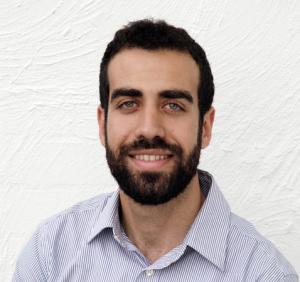
Lillie Padilla is an Assistant Professor of Spanish Linguistics at Sam Houston State University's Department of World Languages and Cultures. Holding a Ph.D. and M.A. in Spanish Linguistics from Arizona State University alongside a Bachelor of Arts from the University of Ghana, her research explores interdisciplinary connections between: Afro-Latinx representation in educational materials Discourse analysis and language ideologies Sociolinguistic studies in Equatorial Guinea Critical race theory applications in language teaching Her work focuses on Spanish subject pronoun expression patterns in multilingual contexts and curriculum development for inclusive pedagogy. Recent publications examine: Representation gaps in Spanish language textbooks Methodological challenges in Equatorial Guinea research Critical discourse analysis of Netflix's Elite series Intersectional representation of Afro-Latinx women Scientific achievements include: Finalist for American Association of Linguistics 2025 award for co-edited volume Representation, Inclusion and Social Justice in World Language Teaching Padilla's research continues to shape conversations about linguistic diversity and marginalized voices in language education through both empirical studies and theoretical frameworks.
Claire Bowern is Professor of Linguistics at Yale University specializing in historical linguistics, language documentation, and Australian Indigenous languages. Her research employs computational phylogenetics to study language evolution and supports language revitalization through digital archives and fieldwork methodologies. Recent publications address: Phylogenetic signal in lexical evolution across language families Digital infrastructure for endangered language documentation (FLEx software analysis) Decolonizing linguistics pedagogy and research practices Her work consistently integrates linguistic, anthropological, and computational approaches to analyze language diversity and change. She contributes to global databases including Grambank and D-PLACE, examining links between linguistic, cultural, and environmental patterns.
David Williamson Shaffer is the Sears Bascom Professor of Learning Analytics and Vilas Distinguished Achievement Professor of Learning Sciences at the University of Wisconsin-Madison's Department of Educational Psychology. He is also a Data Philosopher at the Wisconsin Center for Education Research. His work focuses on merging statistical and qualitative methods to model complex human collaboration. Shaffer holds an AB in History and East Asian Studies from Harvard University (1987), and MS/PhD in Media Arts and Sciences from MIT (1996/1998). Before academia, he was a teacher, curriculum developer, and game designer. His research emphasizes Quantitative Ethnography —a methodology combining big data analysis with cultural interpretation. Key contributions include Epistemic Network Analysis (ENA) and over 250 publications, including influential books like How Computer Games Help Children Learn (2006) and Quantitative Ethnography (2017). Awardees of the EU Marie Curie Fellowship (2008) and Spencer Foundation Fellowship (2003), Shaffer's work has been presented globally at conferences like Learning Analytics & Knowledge and Computer Supported Collaborative Learning. His interdisciplinary approach bridges education, data science, and humanities, addressing challenges in authentic STEM experiences, collaborative learning analytics, and culturally responsive pedagogy.
Clare Hemmings is a Professor of Feminist Theory at the Department of Gender Studies, London School of Economics and Political Science (LSE), where she has been since 1999. Her work bridges feminist theory, queer studies, and sexuality studies, with a focus on how these fields are institutionalized and narrated. She holds a PhD and has authored seminal works like Why Stories Matter (2011) and Considering Emma Goldman (2018), which explore feminist historiography and political ambivalence. Her research emphasizes interdisciplinary methods, including archival interventions and creative writing to challenge dominant narratives. Hemmings’ research interests include feminist epistemology, queer of color critique, and anarchist thought. She has been active in countering 'anti-gender' movements and is currently developing a project on 'Feminist Knowledge Struggles.' Her work is marked by attention to form, affect, and the intersection of nationalism, feminism, and sexuality. She supervises PhD students Senel Wanniarachchi and Rawda Elaskary and has received the FWSA Book Prize 2012 for Why Stories Matter . Hemmings’ articles span feminist theory, political mobilizations, and affect studies. Her recent work engages with family memory archives and decolonial methodologies. She is a prolific scholar, contributing to journals like Memory Studies , Feminist Studies , and Radical Philosophy . Her interdisciplinary approach integrates literary criticism, sociology, and activism, offering transformative frameworks for feminist praxis.
Daniel Krutz is an Associate Professor in the Department of Software Engineering at Rochester Institute of Technology (RIT) , with a secondary appointment as Courtesy Associate Professor at the University of Florida's Department of Computer & Information Science & Engineering. He directs the AWARE Lab , focusing on Autonomous Systems, Warfare Applications, and Software Engineering , supported by $6M+ in federal grants from NSF, NSA, DOD, and AFRL. His research spans AI/ML, Self-Adaptive Systems, Decision Support Systems, and Accessibility in Computing Education . He holds a PhD from Nova Southeastern University and has taught courses including Software Engineering Freshman Seminar and Capstone Research Project . He is an NSF CAREER Award recipient (2022) and former AFRL Fellow (2018). Educations: BS, St. John Fisher College MS, Rochester Institute of Technology PhD, Nova Southeastern University Labs: AWARE Lab (Autonomy, Warfare, and Engineering) Awards: NSF CAREER Award (2022) AFRL Research Faculty Fellowship (2018) Teaching: Undergraduate/Graduate courses in software engineering, accessibility, and AI/ML Research Interests: Focus on experiential learning in computing education, neuroevolutionary algorithms, and AI ethics. Recent projects address empathy-building interventions for inclusive software development and context-aware decision support systems . Grants & Funding: Over $6M secured since 2018 from NSF, DOD, and NSA for projects in AI/ML, cybersecurity, and adaptive systems. Current work explores AI-driven stock trading frameworks and accessibility education modules.
Paulami Mitra is an Assistant Professor and Academic Director of the Strategy and Sustainability track at IÉSEG School of Management in Lille, France, with prior academic experience as a Visiting Professor at the University of Southern California (2017-2018) and Teaching and Research Assistant at IÉSEG (2012-2019). Her doctoral training in Economics and Management Sciences from Université Catholique de Louvain-Mons underpins her interdisciplinary approach to business education and research. Her educational qualifications include: 2019: Ph.D. in Economics and Management Sciences, Université Catholique de Louvain-Mons, Belgium 2009: Masters in Management, Lancaster University, United Kingdom 2008: B.Tech in Information Technology (Engineering), Institute of Technology and Marine Engineering, India Dr. Mitra's research centers on entrepreneurship-sustainability intersections, with particular expertise in eco-entrepreneurship, crowdfunding dynamics for social ventures, and hybrid organizational models. Her work examines how prosocial motivations drive crowdfunding participation, the strategic advantages of hybrid structures in social enterprises, and pedagogical innovations for sustainability-focused business education. She investigates critical gaps in climate-responsive entrepreneurial frameworks and sustainable financing mechanisms. Analysis of her publication trajectory reveals a concentrated focus on social entrepreneurship evolution since 2017, with increasing emphasis on sustainability-crowdfunding synergies and educational applications. Her 2022-2024 output demonstrates methodological diversity across case studies, survey research, and conceptual frameworks, consistently targeting high-impact journals in entrepreneurship and sustainability fields. No scientific awards are documented in the provided materials. Professional activities indicate active curriculum development and executive education leadership, though specific student advisement or grant-funded research projects are not referenced in the source text. The available information does not specify laboratory affiliations, research teams, or collaborative infrastructure supporting her scholarly work.
Tijana Gajić is a researcher at Singidunum University in Belgrade, Serbia. She holds a Ph.D. in Philology (2020), an MA in English Language and Literature (2009), and a BA in the same field (2007) from the University of Belgrade. Her work focuses on the intersection of language education, digital tools, and critical pedagogy. Doctoral Studies: Philology , University of Belgrade (2017-2020) Master Studies: English Language and Literature , University of Belgrade (2008-2009) Bachelor Studies: English Language and Literature , University of Belgrade (2003-2007) Dr. Gajić’s research explores the impact of digital technologies on language acquisition, critical thinking development, and the sociopolitical dimensions of English language learning. She has published extensively on mobile applications like Duolingo, HelloTalk, and WordUp, analyzing their efficacy in modern pedagogy. Her recent publications (2024-2025) examine digital tools’ influence on language education, critical pedagogy in Serbian classrooms, and AI-driven language learning innovations. Earlier works (2020-2016) established her expertise in tandem learning, vocabulary enhancement via apps, and affective factors in language acquisition. Notable collaborations include partnerships with researchers like N. Maenza , A. Gagić , and J. Nikolić . While no specific grants or awards are mentioned, her involvement in conferences such as Sinteza and ELTA Serbia underscores her active role in advancing language education. Her 2022 book, Nastava stranih jezika i razvoj kritičkog mišljenja u eri neoliberalizma , synthesizes her critical pedagogy framework. Current projects likely continue her focus on digital transformation in language teaching.
Rebecca Herissone is Professor of Musicology at the University of Manchester and a leading scholar in early modern English music. She co-edits the peer-reviewed journal Music & Letters and serves on editorial boards for the Purcell Society, Musica Britannica, and the Complete Works of John Eccles. Her research focuses on seventeenth-century creativity, material culture, and the ontological dimensions of music notation. Key research areas: Early Modern Music, Creativity, Source Study, Notation, Reception Major awards: Diana McVeagh Prize (2015), Westrup Prize (2007) Her recent work includes digital humanities projects on music preservation and critical editions of Purcell's operas. She has pioneered interdisciplinary approaches connecting musicology with drama, art, and literature, and currently leads research on Purcell's posthumous reception in the eighteenth and nineteenth centuries. Her teaching spans music historiography, performance practices, and advanced source analysis.
Josh Seim is an Assistant Professor of Sociology at Boston College, affiliated with the Morrissey College of Arts and Sciences. His work focuses on the sociologies of work, medicine, welfare, punishment, pedagogy, and ethnographic methods. He holds a Ph.D. from the University of California, Berkeley, and has published widely in top journals including *American Sociological Review* and *Social Problems*. Education: B.A., Gonzaga University M.S., Portland State University Ph.D., University of California, Berkeley Research Interests: His research explores how institutions like healthcare systems, welfare offices, and penal institutions interact with urban poverty. Recent projects include studies on ambulance crews’ labor processes, welfare bureaucracy, and post-prison labor. His writing also emphasizes pedagogical innovation in sociology teaching and ethnographic methodological rigor. Key themes include the governance of suffering, medical labor, and carceral systems. Publications & Books: Bandage, Sort, and Hustle: Ambulance Crews on the Front Lines of Urban Suffering (UC Press, 2020) The Welfare Assembly Line: Public Servants in the Suffering City (forthcoming UC Press, 2026) Teaching: Sociology 7715: Classical Sociological Theory (graduate) Sociology 7716: Contemporary Sociological Theory (graduate)
Assoc. Prof. Tatyana Yordanova is affiliated with the National Academy of Sports in Bulgaria, where she serves in the Faculty of Sports and Department of Technical and Ice Sports . She holds the academic rank of Associate Professor and has been leading the department since 2024. Education: Master's from State Central Institute of Physical Culture (1987); Doctorate in Sports Science (2019) Languages: English, Italian, Russian Her research focuses on technical elements in figure skating , speed-power abilities , balance stability , and judging systems . She has extensively studied jump mechanics and anthropometric factors in skaters. Her publications from 2018-2024 include studies on judging systems, jump techniques, and sports management. Key themes in her work involve training methodology, competition analytics, and biomechanics of skating. Since 2002, she has worked as an international figure skating judge, including at the Sochi 2014 Olympics . She chaired the Bulgarian Skating Federation (2011-2023) and participated in projects like Erasmus+ mobility (2022, 2024). Her pedagogical career includes roles as scientific assistant (1988), senior assistant (2006), and associate professor (2023).
K. Michael Hays is the Eliot Noyes Professor of Architectural Theory at Harvard University's Graduate School of Design (GSD) and Co-Director of the Master in Design Studies program. He has been a faculty member since 1988, specializing in architectural history and theory. His research focuses on European modernism, critical theory, and contemporary architectural practice, with notable contributions to the field through writings on figures like Mies van der Rohe and Peter Eisenman. Education: He holds a Bachelor of Architecture (1976) from Georgia Institute of Technology, a Master of Architecture in Advanced Studies (1979) from MIT, and a PhD in History, Theory, and Criticism of Architecture and Art (1990) from MIT. Research Interests: Hays is renowned for founding the journal Assemblage , a pivotal forum for architectural theory. His work bridges historical analysis and contemporary practice, emphasizing theoretical frameworks for understanding modernism and its evolution. He has curated exhibitions at institutions like the Whitney Museum of American Art (as its first Adjunct Curator from 2000–2009). Publications: His authored and edited works include Architecture's Desire , Inscriptions: Architecture Before Speech , and critical studies on architects such as Buckminster Fuller and Diller + Scofidio. These publications explore themes of representation, modernist aesthetics, and interdisciplinary design. Awards and Roles: While no specific awards are listed, his academic leadership roles include Chair of the GSD PhD Committee (1995–2005) and Director of Advanced Independent Study Programs. He has also served on editorial boards for journals like Assemblage and Thresholds . Labs and Collaborations: Hays collaborates with academic and institutional partners, notably through curatorial projects and his role in shaping the GSD's theoretical curriculum. His influence extends to both pedagogical innovation and scholarly discourse in architectural education.
Dr James Helal is the Assistant Dean for Sustainability and a Lecturer in Construction Management at the Melbourne School of Design (MSD), University of Melbourne. His research focuses on integrating life cycle assessment and computational tools into the structural design of tall buildings, emphasizing embodied carbon reduction. He is recognized for developing software frameworks that automate environmental impact analysis in early-stage structural design. Dr Helal teaches materials, structures, and life cycle assessment in construction management. His pedagogical excellence has earned prestigious awards, including the Edward Brown Award for Teaching Excellence. He coordinates the construction major in the Bachelor of Design program. His research addresses structural optimization, tall building sustainability, and environmental flows. Key contributions include frameworks for reducing carbon emissions in tall building design and critiques of decorative architectural elements' environmental impact. Awards: Structures Best Research into Practice Prize (Institution of Structural Engineers) Open Award for Excellence in Teaching (Faculty of Architecture, Building and Planning) Edward Brown Award for Teaching Excellence (University of Melbourne) Advising & Grants: Coordinates construction curriculum but no explicit student advisee list is provided in texts. His work aligns with sustainability-focused research grants. Labs/Teams: Engaged with MSD’s Future Cities Practice and Construction Innovation initiatives.
Snježana Babić serves as Associate Professor and Head of the Graduate Study Program Informatics - Teaching Major at the Faculty of Informatics in Pula , University of Pula. With a PhD obtained in 2016 and university affiliation since 2017, she teaches across undergraduate and graduate programs focusing on ICT fundamentals, web design, digital competencies, and informatics education methodology. Her educational background includes graduation in 1993 followed by doctoral studies culminating in 2016. Though specific institutions aren't detailed in the text, her career trajectory shows progression from foundational ICT teaching to specialized informatics education leadership. Babić's research centers on educational technology adoption with particular emphasis on programming pedagogy for young learners through the MEMA method. Her work investigates digital competencies across multiple educational contexts, from primary schools to higher education. Recent publications demonstrate rapid adaptation to emerging technologies, with 2025 studies examining ChatGPT integration in Croatian educational settings and cross-cultural applications of programming methods. Analysis of her 15 most recent publications reveals consistent focus on technology acceptance models applied to Croatian educators and students. The research trajectory shows evolution from foundational e-learning systems (2016-2020) to cutting-edge AI and robotics applications (2022-2025), maintaining strong methodological focus on teacher motivation , implementation barriers , and culturally-specific adoption factors . Her teaching portfolio demonstrates deep integration with research interests: Undergraduate: ICT Fundamentals, Web Design and Application Graduate: Digital Competencies in Education, Informatics Education Methodology, Practicum for IT Educators Cross-disciplinary: ICT in Nursing, Healthcare Informatics Babić actively contributes to institutional leadership as program head while maintaining robust research productivity. Her work bridges theoretical technology adoption frameworks with practical implementation challenges in Croatian educational contexts, particularly examining how emerging technologies like humanoid robots and AI assistants can be effectively integrated into teaching practices.
Prof. Dr. Frank Ulbrich is a Lecturer and Programme Director for the BSc Business Administration at the Lucerne School of Business (HSLU). He holds a PhD in Business Administration from the Stockholm School of Economics. His academic career spans roles at universities in Sweden, the UK, Canada, and Switzerland, alongside IT & Management consulting experience. Research focuses on management education, project management, information management, and organizational change. He has published extensively in areas like shared services, digital transformation, and curriculum development. Notable awards include multiple Emerald Literati Awards and a Fellowship from the Higher Education Academy. Education: PhD in Business Administration (Stockholm School of Economics) Affiliations: Institute of Business and Regional Economics at HSLU Teaching Subjects: Academic Methods, Higher Education Management, Project Management, Digital Transformation Recent presentations include discussions on bridging academia-industry gaps, curriculum integration of SDGs, and data-driven learning strategies. His work emphasizes aligning education with labor market needs and advancing evidence-based teaching practices.
Georges Kostakiotis is a Senior Lecturer at the National Institute for Oriental Languages and Civilisations (INALCO) in Paris, France, specializing in Modern Greek language and literature. His academic appointment falls under CNU Section 15, covering Arabic, Chinese, Japanese, Hebrew and other languages and literature. He serves as Head of the TEMPO course for Modern Greek and teaches across multiple levels from L1 through L3, including text study, written and oral practice of Greek, Modern Greek thematic courses, specialized Greek text corpora, and technical translation at M1 and M2 levels. Dr. Kostakiotis's research focuses on the intersection of language pedagogy and literary studies. He investigates teaching oral communication from both practical and theoretical perspectives, examining how literary texts function as effective pedagogical tools in foreign language classrooms. His work develops specialized strategies for teaching Greek to Latin-speaking audiences, leveraging linguistic connections while addressing acquisition challenges. Additionally, he explores literary representations of politics and urban worlds, situating Greek literature within broader European and Balkan contexts through the CREE (Centre de Recherches Euro-Méditerranéennes et Euro-asiatiques) research center. Analysis of Dr. Kostakiotis's publication record from 2009-2024 reveals consistent scholarly engagement with Greek literature's relationship to Balkan cultures and historical contexts. His work demonstrates particular interest in how Greek literature addresses themes of foreignness, crisis, and identity through comparative analysis with other Balkan literary traditions. His research spans pedagogical approaches to language teaching, literary analysis of Greek texts, historical examinations of Greek literature, and cultural studies of Greek communities in the Balkans. Dr. Kostakiotis has been instrumental in organizing numerous academic events that bridge language pedagogy and literary scholarship. He has coordinated multiple conferences and study days focused on language teaching methodology, including sessions on oral communication techniques, vocabulary acquisition strategies, and assessment approaches. In the realm of literature and cultural studies, he has organized scholarly gatherings examining Greek-Romanian relations, Phanariote history, women's perspectives in Greek literature, and urban studies with particular attention to cities like Thessaloniki and Alexandria. His collaborative work, including co-edited volumes on Greek-Romanian relations, demonstrates his commitment to fostering academic dialogue across national and disciplinary boundaries.