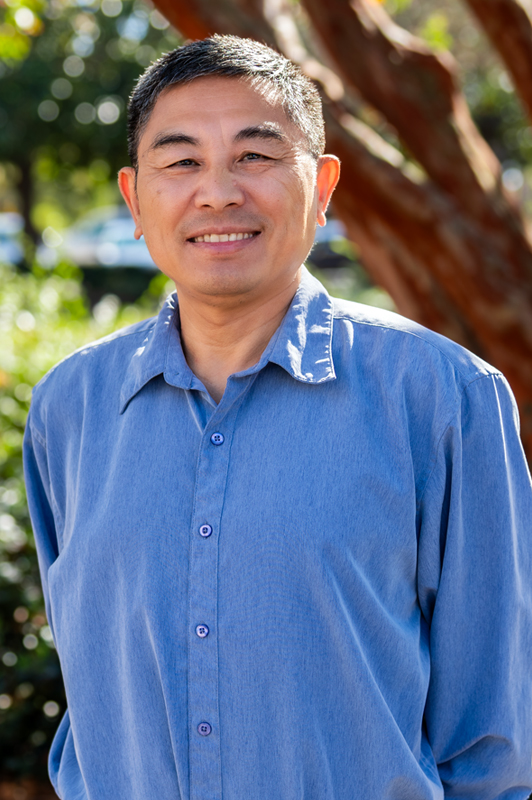
MARIO MARTINEZ MARTINEZ is Associate Professor at University of Valladolid's Department of Agricultural and Forestry Engineering, with secondary appointments at Aarhus University and Purdue University. His research develops plant-based macromolecular assemblies for food, pharmaceutical, and packaging applications. Research focuses on: Structure-function relationships of plant biopolymers Green modification techniques for polysaccharides Food waste valorization strategies Edible packaging development Nutrient bioaccessibility enhancement Recent publications showcase innovative approaches to starch modification using deep eutectic solvents, waste upcycling (bread, apple pomace, garlic peels), and functional ingredient development from underutilized sources (macroalgae, hawthorn). Major recognitions include: Nils Foss Talent Prize 2021 DFF-Sapere Aude excellence grant (€1M) Ontario Early Researcher Award Young Scientist Award from Cereals & Grains Association Leads research on sustainable food systems through international collaborations and industry partnerships.
Anubhav Pratap-Singh is an Associate Professor in the Food, Nutrition and Health department within the Faculty of Land and Food Systems at the University of British Columbia, where he holds the Food and Beverage Innovation Professorship. He leads the UBC Food Process Engineering Laboratory and his research spans environmental and natural resources economics, food chemistry (including fermentation), and natural resource management. His primary research interests focus on agri-food transformation, cold plasma food engineering, food processing, functional foods, heat transfer, high pressure mass transfer, novel non-thermal processing, nutraceuticals, pasteurization, and pulsed light sterilization. Dr. Pratap-Singh's work addresses fundamental questions about the impact of food processing on food quality, how technology can maximize desirable effects while minimizing deleterious ones to feed the growing global population, and how to ensure food safety and nutrition for all socioeconomic groups. His research program is organized around three main pillars: developing novel processing technologies for food preservation, developing technologies for food fortification, and modeling the human GI tract to understand the interaction between food processing and human health. He has made significant contributions to sonic mixing technology for thermal processing and pulsed UV light processing for food surface decontamination, with particular expertise in processing of liquid particulate matter. Dr. Pratap-Singh has received numerous prestigious awards throughout his career, including the Banting Fellowship (2016) and Green College Leading Scholar award (2017). His work has been recognized with the Young Entrepreneur Award (2009), IFTPS Graduate Scholar designation (2014), and Gold Medal from the Institute for Thermal Processing Specialists (2014), among other fellowships and honors. He is affiliated with the BioProducts Institute and Materials and Manufacturing Research Institute at UBC, and supervises graduate students in Food Science (MSc and PhD programs). His laboratory focuses on interdisciplinary research that addresses critical challenges in food science, with implications for feeding the projected 10 billion people by 2050 while countering negative public perceptions around processed foods.
Liqiu Hu is a Doctoral Researcher at the Laboratory of Natural Materials Technology , affiliated with the Faculty of Science and Engineering at Åbo Akademi University. Their research focuses on bio-based materials , polymerization techniques , and nanocellulose applications , contributing to Sustainable Development Goals like responsible consumption and climate action. Key research areas: Lignin, Nanocellulose, Polymerization, Bio-based films, Green chemistry, Biocomposites Recent work trends: In-situ polymerization, Pickering emulsions, Drug delivery systems, Agricultural waste upcycling, Aqueous dispersion processing Collaborations include researchers from Åbo Akademi University and TAPPI Press. Publications span from 2017 to 2025, highlighting innovations in biopolymer interfaces and sustainable packaging . The laboratory's fingerprint indicates strong alignment with lignin (100%), nanocellulose (75%), and polymerization (66%) research.
Kyria Boundy-Mills is a Professional Research Microbiologist at the University of California, Davis in the Department of Food Science and Technology , where she has curated the Phaff Yeast Culture Collection since 2001. She maintains this global resource of 9,000 yeast strains for academic, industrial, and governmental researchers. Current research focuses on yeast/insect ecology Screening yeasts for protein, lipid, and carotenoid production Microbial interactions in food fermentations Applications in biofuels and biotechnology Her publications highlight collaborations across entomology, biotechnology, and food microbiology, with applications in wine fermentation, fruit pests, and biofuel production. Awards include the UC Davis Academic Federation Award for Excellence in Research (2015) and the American Society for Microbiology USFCC/J. Roger Porter Award (2016). She advises undergraduate researchers in her lab and contributes to culture collection management standards through the United States Culture Collection Network. Her work intersects microbial diversity, ecological interactions, and industrial innovation.
Wilfried Andlauer is a Professor at the Institute of Life Sciences within HES-SO Valais-Wallis School of Engineering. His research focuses on bioactive compounds , non-thermal food processing , and bioavailability studies , particularly in agricultural by-products like grape cane, walnut press cake, and Spirulina algae. He has developed advanced methods for solid-state fermentation , cold plasma decontamination , and bioactives fingerprinting . Key projects include optimizing microwave-assisted extraction for stilbenoids, analyzing iron absorption from insect flour , and developing microfluidic antioxidant assays . His work integrates nutraceutical research with practical applications in food safety and sustainable processing . Collaborations span Switzerland and Asia , with expertise in analytical chemistry and bioprocessing .
Zhihua Jiang is the Auburn Pulp and Paper Foundation Associate Professor in the Department of Chemical Engineering at Auburn University and Director of the Alabama Center for Paper and Bioresource Engineering. His research focuses on bioresource engineering, lignin valorization, and sustainable pulp and paper technologies. He holds a Ph.D. in Organic Chemistry from McGill University and M.S./B.S. degrees in Wood and Pulping Chemistry from Nanjing Forestry University. Dr. Jiang leads multidisciplinary projects funded by organizations like the U.S. Department of Energy (DOE), including a $2.5M grant to convert industrial waste into aquafeed and a $1.88M study to reduce CO₂ emissions from pulp mills. His work spans CO₂ capture, lignin-based materials, and nanocellulose applications. He collaborates with industry partners such as Georgia-Pacific and Andritz, and his center trains students in advanced engineering disciplines like biosystems, environmental, and mechanical engineering. His research also addresses challenges in pulping processes, waste valorization, and biorefinery integration. Notable contributions include developing novel methods for lignin functionalization, biogas production from sludge, and transparent UV-protective films from cellulose-lignin composites.
Professor Johanita Kruger is a faculty member at the University of Applied Sciences Fulda, Germany, where she holds the position of Professor of Food Technology and Nutrition. Previously, she has held roles including Researcher at the University of Hohenheim and Lecturer at the University of Pretoria. Her research focuses on nutrient bioavailability, particularly inhibitors and enhancers of bioactive compounds, with an emphasis on polysorbate micelle absorption mechanisms, food-to-food fortification strategies, and mineral bioavailability in African green leafy vegetables. She collaborates internationally on projects funded by the German Research Foundation (DFG) and USAID, addressing issues such as micronutrient deficiencies and food processing innovations. Her educational background includes a PhD in Nutrition from the University of Pretoria, alongside extensive post-doctoral and research experience across multiple institutions. University of Applied Sciences Fulda, Germany (2023–present) University of Hohenheim, Stuttgart (2020–2023; 2016–2018) University of Pretoria, South Africa (2015–2015; 2011–2013) Her research interests span food biofunctionality, including the development of novel micellar formulations and the evaluation of food processing techniques to enhance nutrient bioavailability. Key projects include defining food-to-food fortification strategies and investigating iron/zinc bioavailability in traditional African diets. She has contributed to interdisciplinary collaborations, such as the USAID Feed the Future Innovation Lab for Food Processing. Publications highlight advancements in polysorbate micelle stability, polyphenol encapsulation, and the efficacy of tropical plant-based fortification. Her work bridges laboratory research and real-world applications, aiming to improve global food security and nutritional outcomes. Laboratory activities include the USAID-funded Food Processing Lab and collaborative projects with institutions in France and Slovenia. No scientific awards are explicitly noted in the provided text. Her advising and grants include DFG funding for micelle absorption studies and contributions to the Kenyan Flour Blending Initiative. Students and lab teams focus on topics like cereal biofortification and nutrient-micelle interactions.
Prof. Keikhosro Karimi is a Professor in the Department of Bio-engineering Sciences at Vrije Universiteit Brussel. His research focuses on sustainable biorefinery systems, waste valorization, and biofuel production. Key areas include biomass pretreatment, bioenergy optimization, and circular economy strategies for industrial and agricultural residues. Research Projects STEP-Chem (2025–2029): Technological strategies for a sustainable chemical industry. IPSU 2024: Smart biorefinery concepts for municipal biowaste valorization in Europe. Research Interests Prof. Karimi’s work integrates advanced pretreatment technologies, machine learning optimization, and life cycle assessment to address sustainability challenges in bioenergy systems. He explores innovative approaches for converting lignocellulosic biomass, marine macroalgae, and food industry byproducts into biofuels, biochemicals, and high-value materials. Recent Contributions Recent studies highlight breakthroughs in ultrasound-assisted biomass processing , fish waste biorefining , and blockchain-enabled food waste management . His work emphasizes scalability, economic viability, and environmental impact mitigation in bioprocess design. Grants & Collaborations Active collaborations include EU-funded initiatives and industry partnerships focused on bio-based economies. Ongoing projects aim to harmonize technological, socio-economic, and environmental dimensions of sustainable chemical production.
Birgitte Zeuner is an Associate Professor at the Department of Biotechnology and Biomedicine , Technical University of Denmark, specializing in Protein Chemistry and Enzyme Technology . Her research focuses on Enzymatic Synthesis Technology with particular emphasis on carbohydrate-active enzymes. Active supervisor in Engineering alkenal reductase reversibility (2025-2028) Main supervisor in Regioselectivity in enzymatic carbohydrate synthesis (2024-2027) Supervisor in Enzymatic xyloglucan modification (2018-2022) Recent 54 publications highlight her work on glycosylation, human milk oligosaccharides, and transglycosylation. She has received significant attention in Mendeley readership and peer review platforms. Current projects explore: Enzyme engineering for biomass upgrading Sustainable biocatalytic processes using ionic liquids Gut microbiome interactions with plant-derived carbohydrates Her research aligns with UN Sustainable Development Goals for biocatalytic applications in health and sustainability.
Solange I. Mussatto is a Professor and Group Leader in the Department of Biotechnology and Biomedicine at the Technical University of Denmark (DTU), specializing in Biorefineries, Biomass Conversion, and Bioprocess Technology. She leads the Biomass Conversion and Bioprocess Technology (BCBT) research group and is affiliated with the DTU Microbes Initiative. Her work focuses on sustainable bioprocesses, biomass valorization, and the development of bio-based products from agro-industrial residues and lignocellulosic materials. Mussatto's research emphasizes detoxification of biomass hydrolysates, microbial adaptation to inhibitory environments, and the optimization of fermentation processes for high-value products like xylitol and biofuels. Her contributions include pioneering studies on Brewer’s spent grain utilization, lignocellulosic biomass conversion, and the design of innovative bioreactors (e.g., vertical ball mill systems). She has explored the application of solid-state fermentation for bioactive compound production and has authored over 277 publications in peer-reviewed journals. Mussatto’s work bridges fundamental research and industrial applications, addressing challenges in biorefinery economics, process intensification, and circular bioeconomy strategies. Her research portfolio spans microbial adaptation studies (e.g., Bacillus subtilis , Rhodosporidium toruloides ), enzymatic hydrolysis optimization, and the valorization of agricultural wastes (orange residues, spent coffee grounds, rice straw). She has contributed to understanding the technical and economic feasibility of biorefinery systems, emphasizing product diversification and sustainable waste management solutions. Mussatto’s lab (BCBT Group) collaborates internationally, advancing technologies for bio-based chemicals and renewable energy.
Dr. Shahrooz Rahmati is a Senior Research Assistant in the School of Biology & Environmental Science at Queensland University of Technology (QUT) . His research focuses on nanomaterials synthesis, biosensor development, biomass conversion, and environmental sustainability. He holds a PhD in Chemistry from QUT and has contributed to over 20 publications, earning an H-index of 13. Education: BSc in Agricultural Engineering - Food Science and Technology MSc in Food Science PhD in Chemistry (QUT) Research Interests: Development of nanomaterial-based biosensors for disease diagnosis and environmental monitoring Conversion of agricultural waste into valuable products like xylooligosaccharides and biofuels Advanced analytical techniques including XRD, SEM, TEM, and spectroscopic methods Articles Trends: His work emphasizes sustainable solutions, with recent studies on catalytic biomass conversion, CO₂ capture materials, and SARS-CoV-2 detection biosensors. Key contributions include cover articles in Green Chemistry and impactful reviews in Biomass and Bioenergy . Lab/Teams: Affiliated with QUT's Centre for Materials Science and Centre for Agriculture and the Bioeconomy .
Prof. Dr. Tuba Esatbeyoglu is a full Professor of Molecular Food Chemistry and Development and serves as the Executive Director of the Institute of Food Science and Human Nutrition at Leibniz University Hannover, within the Faculty of Natural Sciences. She leads research in food chemistry, quality, and safety, with a focus on bioactive compounds and sustainable food innovation. Research Interests: Her work centers on secondary plant metabolites, food by-product utilization, HPLC method development, proanthocyanidin chemistry, food stability, authenticity markers, and in vitro biological activity and toxicity. She investigates the bioaccessibility and sensory properties of functional foods, contributing significantly to food quality and safety science. Publication Trends: Her recent publications reflect a strong focus on polyphenols, encapsulation technologies, food waste valorization, and analytical method development. She frequently explores the health impacts of plant extracts, liver protection, and sustainable food systems, often employing in vitro and animal models. Scientific Awards: Georg Forster Research Award (Alexander von Humboldt Foundation, 2022) Poster Prize, Brunel University (2014) Danone Nutrition for Health Institute Scholarships (2013, 2014) Rochow Family Trust Scholarship (2012) DGQ Young Scientist Award (2011) Award for Outstanding Academic Achievements in Food Chemistry (2006) Advising and Grants: While specific students are not listed, she supervises research in food science and has served on examination boards. She has led projects including a genetic engineering S1 facility and holds permissions under the Infection Protection Act. She has been involved in reviewing for major funding bodies including DFG, DAAD, and the Alexander von Humboldt Foundation. Labs and Teams: She heads the Molecular Food Chemistry and Development research group at the Institute of Food Science and Human Nutrition. She is active in national and international scientific networks, including DECHEMA, GDCh, DGE, IFT, and FEI’s Scientific Advisory Board, and contributes to standardization efforts via DIN.
Dr. Matthijs Dekker is an Associate Professor in the Food Quality and Design group at Wageningen University, Netherlands. He holds a PhD and has prior industry experience at Unilever Research Laboratory. His research focuses on process/product design impacts on food health aspects, phytochemicals in fruits/vegetables, mathematical modeling in food science, and innovative food packaging. With over 130 peer-reviewed publications (h-index 40), he leads projects on antimicrobial packaging, food matrix effects, and consumer-focused food design. Research Interests: Dekker’s work integrates food engineering, nutrition, and packaging science. Key themes include optimizing phytochemical stability during processing, developing smart packaging systems, and modeling digestion dynamics. He explores how food structure influences bioactive compound bioavailability and sensory attributes. Publications Overview: Recent work spans antimicrobial packaging innovations, carotenoid bioaccessibility, and glucosinolate stability. His articles highlight interdisciplinary approaches linking food chemistry, microbiology, and consumer behavior to enhance food safety and health benefits. Professional Activities: He serves on scientific committees (e.g., Healthier Food Logo, Novel Foods Safety Assessment) and lectures at the Dutch Packaging Center. Teaching responsibilities include courses on predictive modeling, food packaging design, and data science applications in food systems. Labs/Teams: Leads a multidisciplinary team in the Food Quality and Design group, collaborating on EU-funded projects like antimicrobial nanostructures in packaging and sustainable logistics solutions for perishables.
Charles Anderson is a Professor of Biology and Associate Department Head of Research and Faculty Success at Pennsylvania State University's Department of Biology. He holds affiliations with the Institutes of Energy and the Environment and the Huck Institutes of the Life Sciences. His research focuses on plant cell walls, particularly their roles in carbon capture via stomata, biomechanical dynamics, and applications in sustainable agriculture. Anderson earned his B.S. in Biology from the University of North Carolina at Chapel Hill and his Ph.D. in Cell & Molecular Biology from Stanford University, followed by postdoctoral training at UC Berkeley. His lab investigates how plant cell walls influence development, environmental adaptation, and bioenergy applications. Recent work includes studying stomatal guard cell mechanics, seed coatings for reforestation, and plant-based hydrogels. Anderson chairs Penn State's Plant Biology graduate program as of July 2025, succeeding Teh-hui Kao. He has advised students like Alec Paradiso (Moderna-bound) and Quentin Hays (PhD 2025). Grants include NSF-funded projects on grass stomata dynamics and collaborations with institutions like the University of Rouen. Key research themes include cell wall polysaccharide function (e.g., rhamnogalacturonan-II), enzymatic degradation mechanisms, and plant resilience in climate crises. He advocates science policy, participating in Stand Up For Science 2025 and co-authoring policy pieces on research funding. The Anderson Lab also explores emergency food systems using lignocellulosic biomass and develops biohybrid robotics for ecological restoration.
Dr Jo Hobbs is a Lecturer in Molecular Microbiology at the School of Biology, University of St Andrews. Her research focuses on antibiotic tolerance mechanisms in bacteria, particularly clinical isolates. She investigates how tolerance contributes to persistent infections and explores strategies to reverse tolerance. Education: Dr Hobbs holds a PhD in Molecular Microbiology (2009, University of Leeds) and a BSc in Microbiology (2005, University of Leeds). She also holds an Adjunct Assistant Professor position at the University of Victoria. Research Interests: Her work combines bacterial genetics, clinical microbiology, and enzymology to address key questions about antibiotic tolerance, including prevalence in clinical isolates, mechanisms of tolerance, and translational strategies to combat treatment failures. Her lab’s goal is to develop chemical inhibitors to resensitize bacteria to existing antibiotics. Grants & Projects: She leads a Royal Society-funded project (2023–2024) examining the role of clinical stringent response mutations in horizontal gene transfer and antibiotic resistance dissemination. Labs/Teams: The Hobbs Lab (www.hobbs-lab.co.uk) collaborates internationally, focusing on translational microbiology and antimicrobial strategies.