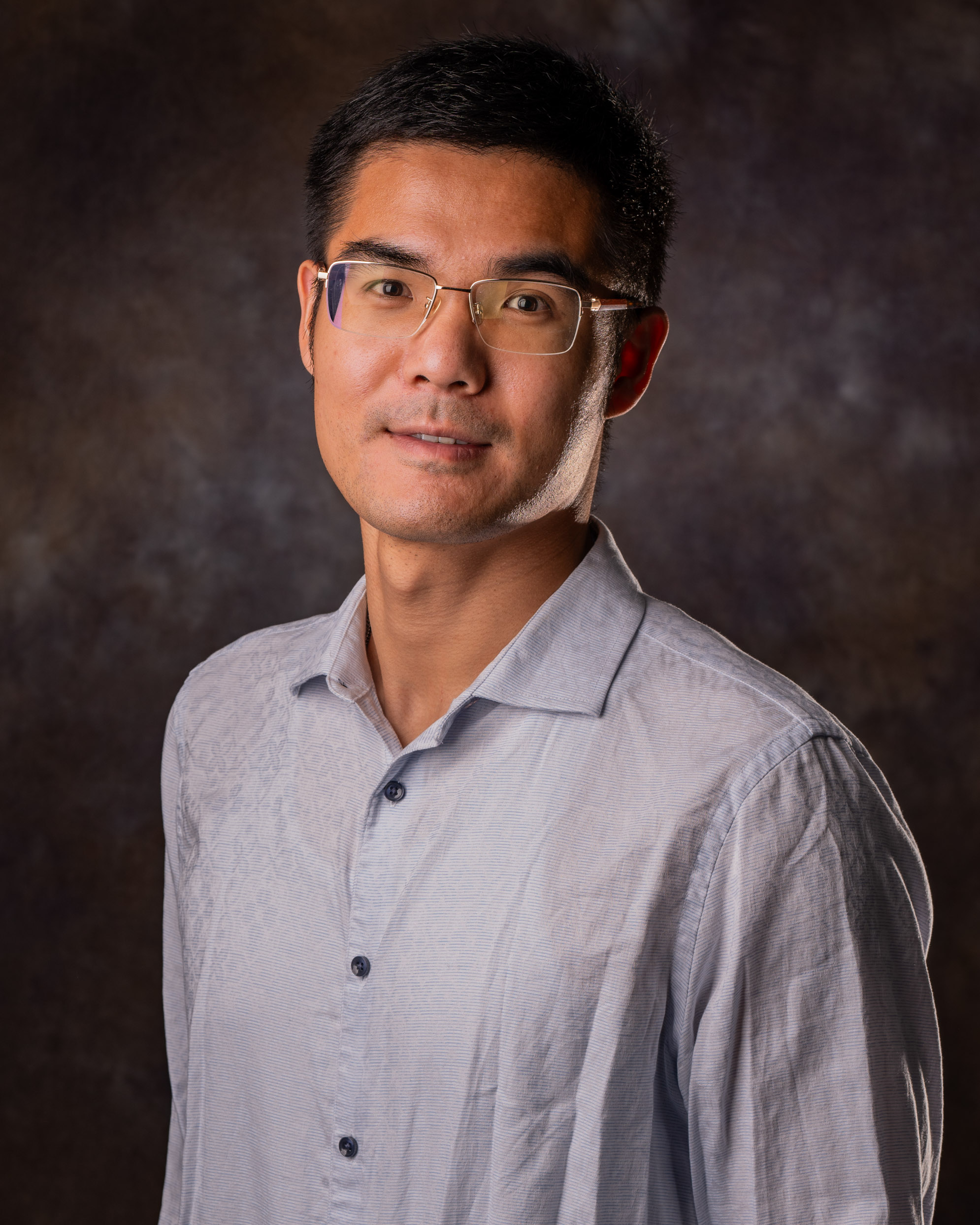
Gabriel J. Assaf is a Professor in the Department of Construction Engineering at École de technologie supérieure (ÉTS). He holds a B.Sc.A. and M.Sc.A. from Polytechnique Montréal and a Ph.D. from the University of Waterloo. His research integrates four key areas: Sustainable Development, Circular Economy, and Environmental Issues Infrastructure and Built Environment Intelligent and Autonomous Systems Software Systems, Multimedia, and Cybersecurity He specializes in pavement design, rehabilitation, statistical modeling, and infrastructure management. Recent publications emphasize sustainable materials (e.g., desert sand in asphalt), smart pavement systems using AI/AR, and lifecycle analysis of infrastructure. Professor Assaf has supervised 100+ graduate students, with projects spanning pavement deterioration modeling, environmental impact integration, and infrastructure optimization in challenging climates. He maintains active collaborations with global partners in Sub-Saharan Africa and the Middle East.
Tahar El-Korchi serves as a Professor in the Department of Civil, Environmental, and Architectural Engineering at Worcester Polytechnic Institute (WPI), with affiliations in Environmental Engineering and Architectural Engineering. His primary role involves teaching, research, and student mentorship across multiple project-based learning initiatives. His academic credentials include: BS from University of New Hampshire (1980) MS from University of New Hampshire (1982) PhD from University of New Hampshire (1987) Professor El-Korchi's research focuses on advanced materials for civil infrastructure , specializing in High-Performance Concrete, Fiber Cement Composites, and Pavement Engineering. His work uniquely bridges laboratory innovation with cultural applications , notably through sustainable product development for Moroccan mosaic artisans. He emphasizes hands-on student involvement in all research phases, from concrete canoe design to Panama Canal Authority problem-solving. Publication analysis reveals consistent expertise in material behavior under operational stresses, with recent work (2009-2012) addressing asphalt mixtures, seismic control systems, and pavement engineering fundamentals. His research demonstrates strong integration of theoretical modeling and practical experimentation. He maintains an active student mentorship portfolio through ASCE competitions, MQP design projects, and IQP international initiatives. His leadership of WPI's Morocco Project Center provides unique cross-cultural engineering experiences, with external funding supporting collaborations like the Panama Canal Authority consultancy. Professor El-Korchi's laboratory work centers on materials characterization and structural testing facilities at WPI, though no specific lab name is documented. His approach combines rigorous technical analysis with cultural immersion, particularly through Moroccan project sites where he shares personal heritage with students.
Zhe Wan serves as Assistant Professor in the Department of Civil Engineering at New Mexico State University since January 2025, following his role as Professor of Practice (2023-2024). His academic journey includes postdoctoral work at Rutgers University and graduate studies at the University of Pittsburgh and University of Southern California. His educational background includes: Ph.D. in Civil Engineering, University of Pittsburgh (2017-2022) M.Sc. in Structural Engineering, University of Southern California (2015-2017) B.Sc. in Civil Engineering, Hefei University of Technology (2009-2013) Dr. Wan's research centers on transportation infrastructure resilience , with expertise spanning pavement engineering, sustainable materials, and structural analysis. His work integrates computational modeling with experimental validation to address critical challenges in infrastructure performance, particularly focusing on airfield pavements , UAV-based inspection systems , and energy-harvesting technologies for civil infrastructure. Recent publications demonstrate strong interdisciplinary collaboration across engineering disciplines. His publication output shows consistent productivity with 11 articles from 2022-2024, featuring in transportation engineering journals like Transportation Research Record and materials science venues including Applied Materials Today . The research portfolio reveals evolving focus from pavement mechanics toward smart infrastructure systems and nanotechnology applications. Dr. Wan maintains active collaborations with researchers across multiple institutions, as evidenced by co-authorship networks spanning Rutgers University, University of Pittsburgh, and biomedical engineering groups. His professional trajectory shows steady progression from graduate researcher to independent faculty, with current work emphasizing practical solutions for sustainable infrastructure systems.
Dr. İhsan Güzel serves as a Lecturer in the Faculty of Engineering and Architecture at Bingol University, Turkey. His academic work builds upon 28 years of professional experience with the Turkish General Directorate of Highways (KGM), where he held progressively responsible engineering roles from 1988 to 2016. His educational foundation includes: Undergraduate Degree from Firat University Master's Degree from Firat University PhD from Firat University Dr. Güzel's research centers on practical transportation engineering challenges, particularly road construction, maintenance optimization, and traffic safety. His work investigates asphalt mixture innovations (including steel fiber reinforcement and recycled materials), road geometry design, seismic resilience of infrastructure, and cost-effective maintenance solutions. Recent studies focus on utilizing earthquake debris in road construction, traffic sign impacts on vehicle operating costs, and parametric modeling of road maintenance expenses. His publication record shows consistent output with 15 significant works from 2007-2024, accelerating notably after 2018. The research demonstrates strong regional focus on Eastern Anatolia (particularly Bingöl Province) while addressing national transportation challenges. His methodology blends field data collection, laboratory testing, and statistical analysis to solve practical highway engineering problems. Dr. Güzel maintains active collaborations with researchers from Bitlis Eren University, Dicle University, and other Turkish institutions. His industry background provides unique practical insights that bridge academic research and real-world infrastructure implementation. While no formal awards are documented, his sustained publication output and applied research approach demonstrate significant contribution to transportation engineering practice in Turkey. His advising capacity and grant activity aren't explicitly documented, but his collaborative publications suggest engagement with graduate students and research projects.
Dawid Ryś is an Associate Professor at the Department of Transport Engineering, Gdańsk University of Technology, specializing in pavement engineering and asphalt materials research with a habilitated doctorate (dr hab. inż.) in engineering. His research focuses on: Mechanical properties of bituminous materials and interlayers Temperature effects on asphalt performance Fatigue analysis and healing mechanisms of asphalt mastics Weigh-in-Motion systems for pavement monitoring Rheological characterization using Dynamic Shear Rheometer Dr. Ryś's recent publications (2024-2025) demonstrate strong expertise in laboratory testing methodologies and practical applications for road infrastructure. His work bridges fundamental material science with engineering applications, particularly examining how cyclic loading, temperature variations, and rest periods affect pavement performance. He frequently collaborates with international researchers on projects related to RILEM standards and pavement testing protocols. His research has significant implications for improving road durability through better understanding of material behavior under real-world traffic and environmental conditions, with particular attention to sensor integration and data accuracy in modern pavement management systems.
Assistant Professor Cezary Szydłowski is affiliated with the Department of Transportation Engineering at Gdańsk University of Technology, working at the Eco-innovation Centre (room 118) with contact number 583472655. His research focuses on: Asphalt Technology Pavement Engineering Road Materials Bituminous Mixtures Fracture Mechanics Fatigue Analysis Dr. Szydłowski investigates asphalt material behavior under thermal stress, fatigue loading, and aging conditions using advanced experimental techniques like Thermal Stress Restrained Specimen Testing and Dynamic Shear Rheometry, complemented by computational methods including Monte Carlo simulations for fracture analysis. His work directly addresses sustainability challenges in road infrastructure through reclaimed asphalt pavement (RAP) utilization and healing phenomena in bituminous materials. He manages the MINIATURA project "Identification of material parameters of asphalt mortar in a two-phase asphalt concrete model" (agreement DEC-2024/08/X/ST8/00085), advancing numerical modeling of asphalt concrete behavior. His recent publications (2024-2025) demonstrate consistent contributions to civil engineering and materials science, particularly in developing methodologies for evaluating low-temperature cracking resistance, temperature-dependent performance of modified asphalt mastics, and computational fracture mechanics for pavement layers.
Professor Enedir Ghisi serves as a full Professor in the Department of Civil Engineering within the College of Engineering at the Federal University of Santa Catarina (UFSC) in Florianópolis, Brazil. His career includes significant international collaboration, notably as a Visiting Researcher at Stanford University during 2020-2023 where his work earned global recognition. His research expertise spans eight core areas with primary focus on Energy Efficiency in Buildings and Water Consumption/Rainwater Harvesting . The fingerprint analysis of his work shows 46% concentration in building-related research, 18% in water consumption studies, and significant contributions to sustainability (11%), rainwater utilization (7%), and climate change adaptation (5%). Professor Ghisi's recent publication output demonstrates continued leadership in building science, with 2025 publications addressing rainwater harvesting in residential/fitness facilities, fire safety compliance, thermal comfort in subtropical offices, and urban heat island impacts in São Paulo. His work consistently bridges experimental field studies with simulation modeling. Recognized as top 100,000 scientist globally by Stanford University (career impact 2020-2023) Recognized as top 100,000 scientist annually (2019-2023) 10 edited books and 14 book chapters demonstrating thought leadership Multiple best-paper awards at international building science conferences He actively supervises 16 graduate students (12 PhD, 4 Masters) while maintaining laboratory operations through the Laboratory of Energy Efficiency in Buildings. His supervision record of 54 completed graduate students (14 PhD, 40 Masters) reflects substantial mentorship capacity. Current research integrates climate change projections with practical building solutions, particularly for water-energy nexus optimization in Brazilian contexts. The Laboratory of Energy Efficiency in Buildings serves as his primary research hub, conducting experimental work on building performance, water harvesting systems, and thermal comfort solutions tailored for subtropical climates. His team maintains strong industry partnerships for real-world implementation of research findings.
Lucio Salles deSalles serves as an Assistant Professor in the Department of Civil Engineering Technology, Environmental Management and Safety at Rochester Institute of Technology's College of Engineering Technology. His research spans critical areas of transportation infrastructure: Advanced pavement engineering and concrete technology Data-driven infrastructure management systems Highway construction safety analysis using AI Nondestructive testing methodologies for concrete Professor Salles' work demonstrates significant innovation in applying computational methods to traditional civil engineering challenges, particularly through his recent exploration of large language models for safety analysis. His research directly addresses practical industry needs in pavement performance prediction and construction safety. With 9 publications in 2023-2024, his output shows strong momentum in high-impact transportation journals and international conferences. The consistent collaboration with Dr. Lev Khazanovich across multiple projects indicates well-established research partnerships within RIT's transportation engineering community. His publications reveal a clear trajectory toward integrating artificial intelligence with infrastructure engineering, positioning his work at the intersection of traditional civil engineering and computational innovation. This approach provides valuable frameworks for improving pavement management systems and construction safety protocols through data-driven methodologies.
Amarjit Singh serves as Professor in the Department of Civil, Environmental and Construction Engineering at the University of Hawaiʻi at Mānoa, where he has held continuous faculty appointments since 1993, progressing from Assistant to full Professor. His academic leadership includes serving as Graduate Chair (2022-2023) and holding visiting positions at IIT Delhi, University of New South Wales, and Cornell University. His educational foundation includes: Ph.D. in Civil Engineering from Purdue University (1990) M.Eng. in Civil Engineering from Texas A&M University (1987) B.Tech. in Civil Engineering from I.I.T. Delhi (1976) Professor Singh's research pioneers the integration of legal frameworks with engineering practice , particularly in construction dispute resolution and risk analysis . His work spans concrete technology, construction safety, and infrastructure asset management, characterized by practical applications in international contexts. As Founding Editor of the Journal of Legal Affairs and Dispute Resolution in Engineering and Construction, he has shaped scholarly discourse at the law-engineering interface. His recent publications (2021-2025) demonstrate consistent focus on infrastructure failure analysis (dam failures, high-rise collapses, fuel storage incidents) and context-specific construction challenges (India's concrete practices, Afghanistan's conflict-zone projects). The work exhibits strong interdisciplinary connections between engineering, legal liability, and public policy. His distinguished recognition includes the Richard R. Torrens Award (2024) and multiple best paper awards across ASCE journals: Richard R. Torrens Award (2024) Construction Management Award (2019) Board of Regents’ Excellence in Teaching Award (2009) Seven Best Paper Awards (2007-2021) Professor Singh has secured over $5M in research funding from FHWA, USGS, NSF, and industry partners for infrastructure projects including Kahului Airport pavement monitoring, Honolulu water pipe networks, and harbor protection systems. His grants consistently address practical infrastructure challenges through engineering-economic analysis. His research collaborations with the Honolulu Board of Water Supply and Hawaii Department of Transportation focus on real-world asset management solutions, particularly in pipeline performance analysis and coastal protection engineering.