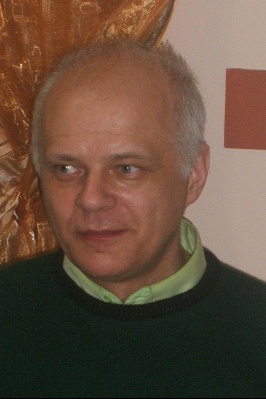
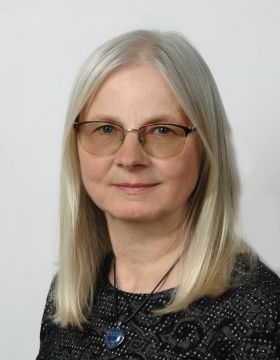
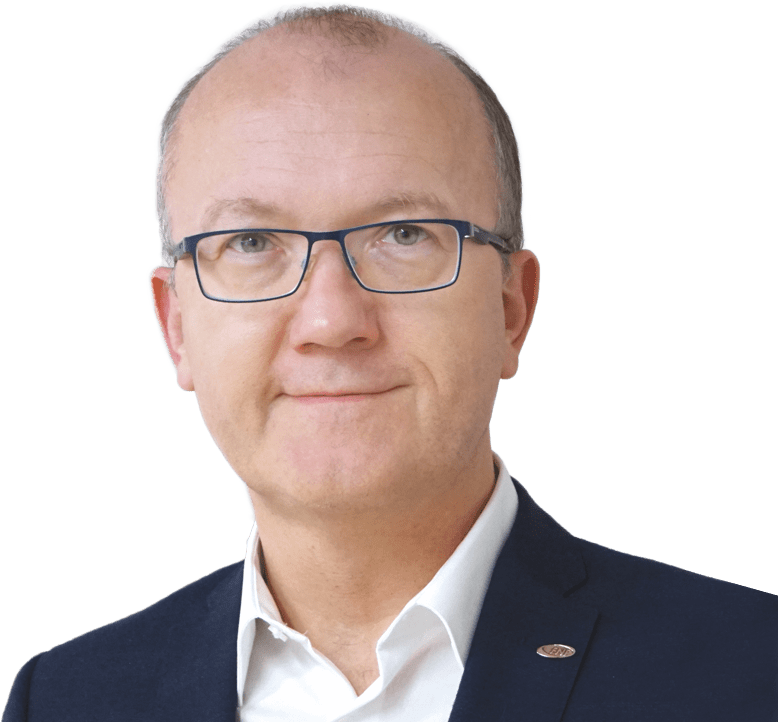
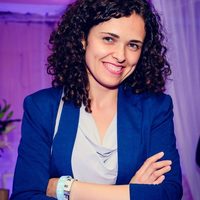
Andrzej Majkowski is an Associate Professor at the Institute of the Theory of Electrical Engineering, Measurement and Information Systems, Faculty of Electrical Engineering, Warsaw University of Technology. His career spans over two decades of research in biomedical engineering, focusing on brain-computer interfaces, signal processing, and emotion recognition. Active in both teaching and research, he contributes to advancing methodologies in electrophysiological signal analysis. Warsaw University of Technology Institute of the Theory of Electrical Engineering, Measurement and Information Systems Faculty of Electrical Engineering Specializing in biomedical engineering , Majkowski's research bridges control systems and information technologies with neuroscience applications. His work explores brain-computer interfaces , EEG/EMG signal processing , and emotion recognition using multimodal physiological data. Recent studies focus on deep learning architectures for artifact removal and classification tasks. Recent publications highlight trends in CNN-LSTM hybrid models for signal denoising, convolutional networks for seizure detection, and machine learning applications in visual evoked potential analysis. His work spans both clinical applications (epilepsy monitoring) and human-computer interaction (emotion recognition, sign language detection). With over 98 documented publications and significant bibliometric indicators (h-index 13 in Scopus), Majkowski has supervised 95 promoted theses. His research includes one funded project and collaborations in biomedical instrumentation, though specific award details remain unspecified in available records.
Maciej Zięba is an academic researcher affiliated with the Faculty of Information and Communication Technology at Wrocław University of Science and Technology, specifically within the Department of Artificial Intelligence . His work spans machine learning, deep learning, and computer vision, with a focus on hyperspectral imaging, autonomous systems, and 3D modeling. Recent research includes uncertainty-aware sensor deployment for autonomous vehicles, low-light image enhancement algorithms, and probabilistic regression frameworks for tabular data. He has co-authored publications on flow-based models, hypernetworks, and neural radiance fields (NeRF) applied to 3D face rendering. Contact: maciej.zieba@pwr.edu.pl
Magdalena Szymczyk is a Lecturer in the Department of Biocybernetics and Biomedical Engineering at AGH University of Science and Technology, Faculty of Electrical Engineering, Automatics, Computer Science and Biomedical Engineering. Her work bridges embedded systems, biomedical signal processing, and geophysical data analysis. Research focuses on energy-efficient sensor networks, neural networks for GPR data classification, and mathematical transforms in signal analysis Expertise in parallel computing, real-time systems, and biomedical engineering applications Her publications (2015–2025) demonstrate a trajectory from parallel neural networks and S-transform/GPR methodologies to recent work on MicroPython in embedded systems. Key themes include energy optimization in distributed architectures and AI-driven signal processing across biomedical and geophysical domains. She has authored works on deterministic chaos in simulations, GPU image processing, and cybersecurity in microcontroller systems. Her current research emphasizes embedded systems security, medical signal diagnostics, and computational methods for geological analysis. She utilizes tools like OpenCL for GPU acceleration and MATLAB for parallel computing implementations.
Ngoc Thanh Nguyen is a Full Professor at Wroclaw University of Science and Technology where he serves as Head of the Department of Applied Informatics. He holds the prestigious title of Professor granted by the President of Poland and has been recognized as a Distinguished Scientist of ACM since 2009. He serves as Editor-in-Chief of both the Journal of Information and Telecommunication (JIT) and the Vietnam Journal of Computer Science (VJCS), and chairs the IEEE SMC Technical Committee on Computational Collective Intelligence. His research spans computational collective intelligence, knowledge integration, data mining, social media analysis, and sentiment analysis. Professor Nguyen has pioneered significant methodologies in spatial data clustering within network space, inter-sequence pattern mining, and graph neural network applications. His work bridges theoretical computer science with practical applications in intelligent information systems, demonstrating particular expertise in handling complex spatial and sequential data structures. His research has evolved from foundational pattern mining techniques to sophisticated neural network approaches for geospatial and social data analysis. The analysis of his recent publications reveals a strong focus on spatial data analysis in network environments, with significant contributions to clustering algorithms, graph neural networks, and pattern mining. His work consistently addresses efficiency challenges in data processing while expanding into emerging areas like Vietnamese language processing and topological data analysis. The research demonstrates a clear trajectory from traditional data mining techniques toward more sophisticated AI-driven approaches that incorporate spatial relationships and network topologies. Distinguished Scientist of ACM (2009) ACM Distinguished Speaker (2009-2013) IEEE Distinguished Visitor (2009-2013) Title of Professor granted by the President of Poland Professor Nguyen has supervised over 20 PhD students to completion and currently mentors several ongoing doctoral candidates. His academic leadership extends to founding two major conference series: the Asian Conference on Intelligent Information and Database Systems (ACIIDS) and the International Conference on Computational Collective Intelligence (ICCCI), which have become significant venues in their respective fields. His collaborative network spans multiple institutions, particularly with Yeungnam University as evidenced by several co-supervised PhD projects. As founder and chair of the IEEE SMC Technical Committee on Computational Collective Intelligence, he leads an international community of researchers advancing this specialized field. His departmental leadership at Wroclaw University of Science and Technology positions him at the center of applied informatics research and education in Poland, with particular emphasis on computational intelligence applications.
Prof. Marian Surdacki serves as Head of the Department of the History of Education and Social Welfare at the Catholic University of Lublin 's Faculty of Social Sciences. A historian specializing in early modern social history, his work bridges Polish and Italian archival studies, with 200+ publications including 7 monographs. PhD: History (KUL, 1987) Habilitation: Modern Social History (1998) Full Professor: 2008 His research spans child welfare systems , charitable institutions , and urban development , exemplified by works on Rome's Hospital of the Holy Spirit and Urzędów's 400-year history. He has directed 18 Ministry of Science publishing grants and mentored 8 PhD graduates. Key article themes include: Foundling homes in Enlightenment Europe Polish-Lithuanian hospital networks Religious charity in Catholic/Protestant contexts Regional governance in pre-partition Poland Scientific Recognition : Recipient of Silver Cross of Merit (2006) Multiple Rectoral Awards for monographs International publications in Italian/French journals Active in regional revitalization, he co-founded cross-border collaborations with Hungarian/Ukrainian towns and led Urzędów's 600th anniversary celebrations that restored its city status (2015).
Dr hab. Wojciech Janicki is a full Professor at the Institute of Social and Economic Geography and Spatial Management within the Faculty of Earth Sciences and Spatial Management at Maria Curie-Skłodowska University (UMCS) in Lublin, Poland. He serves as Director of the Institute and Head of the Department of Social and Economic Geography. Current affiliations: Governmental Council on Population (since 2024), Polish Academy of Sciences Committee on Demographic Sciences (since 2019), Polish Geopolitical Society Scientific Council (since 2024) Editorial role: Global Population Perspectives (since 2025) Research interests focus on political geography, demography, and regional development , with particular emphasis on migration studies, national/ethnic minorities, international border conflicts, and global population challenges. His work addresses demographic policy formation, migration management, and the socioeconomic impacts of population shifts in Eastern and Central-Eastern Europe. Recent publications demonstrate interdisciplinary engagement with migration policy implementation (2025), adaptive geofencing technology for transport security (2024), and demographic anxiety analysis through edited volumes (2024). Article trends show consistent focus on EU integration challenges, borderland development, and population policy contradictions. Scientific recognition includes: Governmental Council on Population membership Polish Academy of Sciences demography committee Editorial board of international journal Strategic advisory roles Advising involves directing research on migration legality frameworks, coal region transitions, and spatial management projects. Grants likely relate to EU cohesion policy and cross-border development initiatives given his publication patterns.
Professor Tomasz Kapitaniak is a distinguished academic in the field of nonlinear dynamics and theoretical mechanics. He serves as a Professor of Theoretical and Applied Mechanics and Head of the Division of Dynamics at the Faculty of Mechanical Engineering, Technical University of Lodz, Poland. His career spans over three decades at the university, where he has made significant contributions to the understanding of nonlinear systems, chaos theory, and mechanical oscillations. Professor Kapitaniak holds advanced degrees in both mechanics and applied mathematics from the Technical University of Lodz and the University of Lodz. His educational background includes: M.Sc. in mechanics, Faculty of Mechanical Engineering, Technical University of Lodz (1982) M.Sc. in applied mathematics, Faculty of Mathematics, Physics and Chemistry, University of Lodz (1985) Ph.D. in mechanics, Faculty of Mechanical Engineering, Technical University of Lodz (1985) D.Sc. in mechanics, Faculty of Mechanical Engineering, Technical University of Lodz (1988) Professor of technical science, title given by the President of Poland (1995) His research focuses on nonlinear dynamics, with particular emphasis on mechanical oscillations, stability, bifurcations and chaos, stochastic dynamics, and applications of nonlinear dynamics in mechanical engineering. Professor Kapitaniak is renowned for his work on the development of methods for controlling chaos without feedback, identification of new types of bifurcations, synchronization mechanisms in coupled mechanical oscillators, and explaining the origin of randomness in mechanical systems. His research has evolved from fundamental theoretical work to increasingly applied studies involving complex networks, biological systems, and engineering applications. Professor Kapitaniak has published over 300 scientific papers in renowned journals, cited over 8,000 times. His work exhibits a consistent focus on understanding complex nonlinear phenomena across various physical systems. The trend in his recent publications shows continued exploration of synchronization phenomena, extreme events in dynamical systems, and applications of nonlinear dynamics to biological, mechanical, and physical systems. His most recent work demonstrates a growing interest in multistability, chimera states, and the prediction of tipping phenomena in complex systems. Among his notable scientific achievements and distinctions are: Election as a member of the Polish Academy of Sciences (corresponding member in 2013, ordinary member in 2019) Election to Academia Europaea in 2021 Honorary doctorates from Saratov State University (Russia, 2001) and Lublin University of Technology (Poland, 2014) Multiple prestigious fellowships including the British Council Fellowship (1989), King Abdul Aziz Award Fellowship (1990), and Fulbright Fellowship (1997) Editorial roles including Associate editor of Chaos, Solitons and Fractals since 1990 and member of editorial boards of several other prestigious journals Throughout his career, Professor Kapitaniak has been actively involved in mentoring the next generation of researchers, having supervised numerous PhD students including Jerzy Wojewoda, Anton van Wyk, Barbara Błażejczyk-Okolewska, Andrzej Stefański, Andrzej Kozłowski, and Przemysław Szumiński. He has secured significant research funding from various national and international sources including the Ministry of Science and Higher Education (Poland), Deutscher Akademischer Austauschdienst, The Royal Society of London, and others. His research team has maintained strong international collaborations with institutions worldwide, including universities in the United States, United Kingdom, Germany, Brazil, Russia, and Ukraine. He leads the Division of Dynamics at the Technical University of Lodz, which serves as a hub for research in nonlinear dynamics, mechanical oscillations, and related fields. The division maintains strong international collaborations with institutions worldwide and continues to produce cutting-edge research in the field of nonlinear dynamics and its applications.
Dr. Grzegorz Kiarszys serves as Assistant Professor in the Department of Archaeology within the Institute of History at the University of Szczecin, a position he has held since October 2011. His academic journey began with archaeology studies at Adam Mickiewicz University in Poznań (1999-2004), where he earned his Master's degree under Prof. Danuta Minta-Tworzowska, followed by doctoral research completed in 2010 under Prof. Włodzimierz Rączkowski. His educational background includes: Master of Archaeology, Adam Mickiewicz University (2004) PhD in History, Adam Mickiewicz University (2010) Kiarszys specializes in archaeological methodology with emphasis on conflict archaeology, landscape archaeology, and advanced geospatial technologies. His research integrates social theories with non-invasive methods including GIS, airborne laser scanning (LiDAR), aerial photography, and photogrammetry to analyze spatial organization and landscape transformation. His work particularly focuses on medieval and post-conflict landscapes in Poland, examining how cultural and political forces shape spatial perception and material heritage. This interdisciplinary approach bridges traditional archaeology with digital humanities and heritage conservation. Analysis of his 15 most recent publications reveals consistent focus on landscape palimpsests, aerial perspective limitations, and conflict-related heritage. Key trends include methodological innovation in point cloud analysis, critical examination of cartographic representations, and theoretical exploration of time-space relationships in archaeological contexts. His work increasingly addresses Cold War heritage and post-WWII landscape transformations. Scientific recognition includes: Individual award from the Minister of Science and Higher Education (2016) for monograph on Górowski County defensive settlements His grant leadership demonstrates significant research impact: the 2014-2015 Ministry of Culture-funded project on defensive settlements in Górowski County established new methodological frameworks, while the 2018-2019 project on Soviet nuclear warhead storage sites pioneers archaeological perspectives on Cold War heritage. These projects involve international collaborations with researchers from Serbia, UK, and Ireland, often incorporating student fieldwork components. Kiarszys actively participates in rescue excavations across Poland and has contributed to major infrastructure projects including Copenhagen Metro archaeological surveys. Though not explicitly mentioning dedicated labs, his work integrates with student research groups including the Student Archaeological Club and Media and Civilization Research Club at the University of Szczecin, where he supervises field methodology and spatial analysis components.
Barbara Pazur is a Professor at the Department of Choral Studies and Vocal Education, Faculty of Arts, Maria Curie-Skłodowska University. She specializes in Edwin E. Gordon's Music Learning Theory, focusing on audiation, choral improvisation, and early childhood music education. She leads the "Teoria uczenia się muzyki E.E. Gordona" scientific circle and serves as treasurer of the Lublin Division of Polish Choral Conductors' Association. Completed music education at Wrocław Music Academy (1985) Postgraduate studies in Vocal Emission and Choral Conducting Habilitated in Music Arts (Choral Conducting) at Fryderyk Chopin University (2014) Her research focuses on musical creativity development through Gordon's methodology, autism-friendly music approaches, and Polish folk/popular song adaptation for choral education. She pioneered the "Lubelski Festiwal Chórów Parafialnych" and co-developed national choral programs. Key awards include the Srebrny Krzyż Zasługi (2018), multiple Rector's Awards, and the Pro Maris Medal (2016). She has published numerous books and articles on Gordon-based pedagogy and choral arrangements.
Professor Daniel Gryko leads a prominent research group at the Institute of Organic Chemistry, Polish Academy of Sciences, specializing in advanced functional dyes and photochemistry. His work bridges fundamental organic synthesis with practical applications in bioimaging, molecular electronics, and nanomaterials. With over 150 publications and numerous high-impact grants, including an ERC Advanced Grant and multiple Horizon Europe projects, Gryko has established himself as a leader in the field of novel chromophore design. Gryko's research focuses on developing innovative fluorescent dyes with exceptional photophysical properties, particularly exploring fluorescence of nitroaromatics, two-photon absorption phenomena, and excited-state intramolecular proton transfer (ESIPT). His group specializes in several key structural platforms including corroles, diketopyrrolopyrroles, pyrrolo[3,2-b]pyrroles, dipyrrolonaphthyridinediones, porphyrins, and coumarins. Recent work has centered on creating strongly emitting helicenes, quadrupolar dyes with unique symmetry-breaking properties, and developing specialized fluorophores for super-resolution microscopy applications. Analysis of Gryko's recent publications reveals a strong emphasis on molecular design strategies for controlling photophysical behavior. His group frequently employs π-expansion techniques, heteroatom doping, and strategic substitution patterns to tune emission properties. A significant portion of their work focuses on overcoming traditional limitations in fluorophore design, such as the non-fluorescence of nitroaromatics, through innovative molecular architectures. Gryko has received prestigious recognition including an ERC Advanced Grant for the ARCHIMEDES project targeting NIR-II emission efficiency, multiple Horizon Europe grants, and the TEAM grant from the Foundation for Polish Science supporting development of fluorescent probes for super-resolution microscopy. His group's work has resulted in numerous publications in top-tier journals including Journal of the American Chemical Society , Chemical Science , and Angewandte Chemie . Professor Gryko actively mentors a diverse research team including PhD students, postdoctoral researchers, and collaborators worldwide. His group has secured substantial funding including Horizon Europe grants for PhotoBrane and APACE projects, ERC funding, and multiple Polish National Science Centre grants. Current projects focus on developing novel fluorescent probes for super-resolution microscopy, creating bio-mimetic sunlight-pumped lasers, and designing photo-switchable membranes for molecular separation. The Gryko group operates a well-equipped laboratory focused on organic synthesis and photophysical characterization. Their work spans from fundamental molecular design to practical applications in bioimaging and materials science. Recent expansions of their research program include development of probes for detecting SARS-CoV-2 proteases, demonstrating the group's ability to pivot toward addressing pressing societal challenges.
Dr. Anna Jankowiak is a Professor at the Department of International Economic Relations at Wrocław University of Economics (UEW) and serves as Director of the Center for International Cooperation. She is also the Manager of the International Economic Relations program and co-founder of the Asia-Pacific Research Center and Asian conferences at UEW. Her research focuses on global value chains, cluster policy, Asian economies, and international trade. She has held visiting professorships in China, Iceland, Hungary, the Czech Republic, Estonia, Japan, and Canada, reflecting her strong international academic engagement. Her expertise includes cluster-based development, regional economic integration, and the role of transnational corporations in the Asia-Pacific region. She is a member of prominent academic associations such as the European International Business Academy and the European Association for Southeast Asian Studies. Her work emphasizes policy analysis, particularly in comparing cluster initiatives across countries like Germany, Poland, and China. Recent research highlights include studies on global production networks, the impact of natural disasters on economies, and the achievement of Sustainable Development Goals. She has authored numerous articles and books, with a focus on bridging theoretical frameworks with practical policy applications. Her academic contributions span international business education, including courses on managerial etiquette and clusters in the global economy. Key achievements: Development of cluster policy models, analysis of China’s trade dynamics, and leadership in Asia-Pacific academic networks. Professional roles: Director of UEW’s Center for International Cooperation, co-founder of research initiatives, and academic supervisor. International recognition: Visiting professorships across Asia and Europe, scholar at Seikei University’s Center for Asian and Pacific Studies.
Dr. Urszula Kizelbach is an Assistant Professor in the Department of Studies in Culture at Adam Mickiewicz University in Poznań, Faculty of English. She specializes in literary pragmatics with a focus on Early Modern drama and contemporary fiction. Her academic career is deeply rooted at Adam Mickiewicz University where she earned all her degrees and has established herself as a leading scholar in Shakespeare studies and pragma-stylistics. Her educational background includes: BA in English, Adam Mickiewicz University (2004) MA in English, Adam Mickiewicz University (2006) MA in Russian, Adam Mickiewicz University (2008) Ph.D. in English, Adam Mickiewicz University (2011) Postgraduate studies at School of Translation, Interpreting and Languages, Adam Mickiewicz University (2015) Dr. Kizelbach's research focuses on the intersection of linguistic pragmatics and literary analysis, particularly examining Shakespearean drama through the lens of politeness and impoliteness theory. Her work explores how pragmatic theories can illuminate character motivations, political discourse, and narrative structures in both Early Modern and contemporary literature. She has made significant contributions to understanding the role of face-work in Shakespeare's history plays, blunders in Early Modern communication, and extradiegetic impoliteness in modern fiction. Her research methodology combines close textual analysis with theoretical frameworks from pragmatics, stylistics, and discourse analysis. Her recent publications demonstrate a clear trajectory from Shakespearean studies toward broader applications of pragmatic theory in contemporary fiction, particularly in the works of Ian McEwan. While maintaining her expertise in Early Modern drama, she has expanded her research to examine how pragmatic concepts operate across different literary periods and genres. Her work consistently bridges literary scholarship and linguistic theory, creating innovative approaches to textual analysis that have gained international recognition. Dr. Kizelbach is actively involved in academic service as a review editor for Studia Anglica Posnaniensia and serves as the Polish Ambassador of the Poetics and Linguistics Association (PALA). She has received teaching grants through the Swiss-European Mobility Program for staff mobility at The University of Zurich (2017) and Erasmus staff mobility at The University of Maribor, Slovenia (2014). Her extensive conference participation across Europe demonstrates her active engagement with international scholarly communities.
Włodzimierz Kasprzak is a Professor at the Institute of Control and Computation Engineering, Faculty of Electronics and Information Technology, Warsaw University of Technology. His research focuses on computer vision, robotics, human-computer interaction, and machine learning. He has contributed to advancements in human action classification, skeleton-based feature analysis, and multimodal interface design. Research Highlights: Development of lightweight classification models for human actions in video using skeleton-based features. Advances in multi-stream fusion techniques for image and video analysis. Design of embodied agent systems for cybersecurity event visualization and control. Awards and Recognition: 2024: Individual First Class Rector's Award for Scientific Achievements (2022-2023) 2021: Medal of the Commission of National Education 2011: Golden Cross of Merit His work integrates theoretical contributions with practical applications in robotics, surveillance systems, and human-centered technologies.
Marek Miśkowicz serves as a Professor at the Department of Metrology and Electronics within the Faculty of Electrical Engineering, Automatics, Computer Science and Biomedical Engineering at AGH University of Science and Technology in Kraków, Poland. His primary institutional contact is miskow@agh.edu.pl, with physical location in building B-1, room 212. His research spans signal processing, biomedical engineering, and electronics, specializing in event-based sampling methodologies, time-to-digital conversion techniques, and reconstruction of bandlimited signals from nonuniform samples. Key contributions include QRS detection algorithms for ECG monitoring, POCS-based reconstruction frameworks, and event-driven control systems for industrial IoT applications. His work emphasizes resource efficiency in embedded systems and mobile health monitoring through approximate computing and adaptive sampling strategies. Recent publications (2022-2025) demonstrate consistent focus on signal reconstruction from irregular samples, with growing emphasis on spiking neural networks for event classification and industrial IoT optimization. Biomedical applications (particularly ECG analysis) and industrial control systems represent dominant application domains, while methodological innovations center on iterative reconstruction algorithms and temporal accuracy evaluation in noisy environments. No scientific awards were referenced in the source materials. No information regarding student advising or research grants was available in the provided documentation. The source texts contained no details about laboratory facilities, research teams, or collaborative groups associated with Professor Miśkowicz.
Robert Sitnik is a Professor and Dean of the Faculty of Mechatronics at Warsaw University of Technology, where he is affiliated with The Institute of Micromechanics and Photonics. He earned his Doctorate in 2002 and has established himself as a leading researcher in 3D optical measurement techniques and applications. His research focuses on 3D light measurement, optical shape analysis, structured light techniques, and 3D data processing with applications spanning cultural heritage documentation and medical imaging. As the leader of the 3D/4D Optical Surface Measurement Team, he has pioneered innovative approaches to surface measurement and documentation. His work demonstrates strong interdisciplinary connections between mechanical engineering, computer vision, and practical applications in both cultural preservation and healthcare. His research has led to significant advancements in 3D scanning technologies, particularly for human body analysis and cultural heritage conservation. His publications reveal a consistent research trajectory focused on improving accuracy, efficiency, and applicability of 3D measurement systems. His scientific impact is evidenced by 159 publications, an h-index of 18 in Scopus and 17 in Web of Science, and 103 promoted theses. His research has been supported by 22 projects, resulting in 1 patent and substantial contributions to both academic knowledge and practical applications. As an academic leader, he has supervised numerous students and researchers, contributing significantly to the development of expertise in optical measurement technologies. His work bridges theoretical research with real-world applications in medical diagnostics, cultural heritage preservation, and industrial measurement systems.