
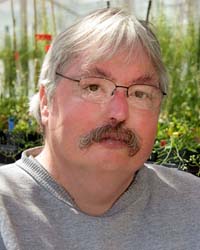
Jeff Dangl is the John N. Couch Professor and an HHMI Investigator at the University of North Carolina at Chapel Hill, where he leads research in the Department of Biology. He has been studying plant-microbe interactions since 1989, focusing on two main areas: the plant immune system and the root microbiome. His laboratory is located in the Genome Sciences Building on UNC's historic campus, which is part of the Research Triangle Park area, a leading hub for biotechnology research. Dr. Dangl's research interests span several interconnected areas of plant-microbe interactions. His work examines how plants recognize pathogens through their two-tiered immune system consisting of extracellular pattern recognition receptors and intracellular NLR receptors. He also investigates how the plant immune system shapes the composition and function of the root microbiome. His lab uses Arabidopsis thaliana as a model system to study these interactions at multiple biological scales, from molecular and structural levels to small mesocosms. The research trends in Dr. Dangl's recent publications indicate a strong focus on understanding the molecular mechanisms of plant immune receptors, particularly NLR proteins and their activation pathways. His work increasingly integrates microbiome research with plant immunology, exploring how commensal microbes interact with and potentially modulate the plant immune system. There's also significant emphasis on the structural and functional aspects of immune receptor complexes, as well as the evolutionary dynamics of plant-pathogen interactions. HHMI Investigator John N. Couch Professor Dr. Dangl leads a diverse research group with members from several countries, emphasizing small team approaches to tackle complex problems in plant-microbe interactions. His students and postdocs benefit from access to multiple inputs about their work through this collaborative environment. His laboratory has developed expertise in genomics, ecological modeling, metabolic modeling, and both forward and reverse genetics to address questions about microbiome assembly and function. The Dangl lab maintains strong connections with the broader scientific community through collaborations and participation in major research initiatives. They work within the rich research environment of the Research Triangle Park, which includes UNC, Duke University, North Carolina State University, the North Carolina Biotechnology Center, and numerous life-science companies.
جستوجوی استاد و پژوهشگر
استاد راهنما، استاد دانشگاه یا پژوهشگر مناسب برای مسیر پژوهشیتان را پیدا کنید و با او ارتباط بگیرید.
نمایش ۶۷۶-۶۹۰ از ۱۴٬۶۲۴ استاد راهنما
اطلاعات این پروفایلها از صفحات عمومی دانشگاهها جمعآوری شده و ممکن است بهروز نباشد.

Professor Cathryn Birch is a leading academic in Meteorology and Climate at the University of Leeds' School of Earth and Environment. She holds a Professorship specializing in high-impact weather systems and climate modeling, with extensive collaborations across international meteorological services including the Indonesian Met Service (BMKG) and the UK Met Office. Her research focuses on tropical meteorology , particularly thunderstorm formation and extreme rainfall mechanisms in Southeast Asia. She employs convection-permitting models , satellite observations, and machine learning techniques to develop nowcasting systems that predict severe weather 2-3 hours in advance. Key research areas include: Weather and climate extremes in tropical regions Flood forecasting and early warning system development Climate impacts on health (particularly humid heat extremes) Machine learning applications for weather prediction Her recent publications demonstrate strong trends in applied meteorology with emphasis on real-world implementation - 60% of her 2023-2025 work involves operational forecasting systems, while 40% focuses on climate-health linkages. Notable methodological innovations include satellite-based humid heat early warning systems and deep learning frameworks for convection initiation. Major scientific recognition includes: 2024 Emerging Environmental Impact Award for flood early warning systems 2021 Queen's Anniversary Prize for tropical community resilience 2014 European Meteorological Society Young Scientist Award Professor Birch actively supervises 6 PhD students and 3 postdocs while leading multi-million pound projects including the £6M National Hub on Net Zero, Health and Extreme Heat (HEARTH). Her team develops practical forecasting tools currently being tested with African meteorological services and the Indonesian Met Service. She also serves on the European Meteorological Society Awards Committee and the Met Office K-scale project steering group.
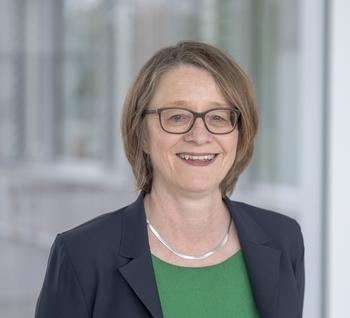
Prof. Dr. Susanne Gödde is a Professor of Religious Studies at the Free University of Berlin’s Institute for Religious Studies (WE 8) within the Department of History and Cultural Studies. She holds a W3-Professur since 2016 and serves as Principal Investigator in the Graduate College „Normativität, Kritik, Wandel“. Her academic journey includes habilitation at FU Berlin (2006) and professorships at LMU Munich (2008–2016). 1985–1993: Studied Greek Philology, German Studies, and Classical Archaeology at Westfälische Wilhelms-Universität Münster 1999: PhD in Greek Philology from Münster 2006: Habilitation at FU Berlin Her research focuses on Ancient Greek Religion and Literature , Mythology , and its modern reception, with emphasis on tragedy, novels, and ritual practices. Current projects include DFG research groups on aetiological narratives and sacrificial theory. She explores foundation myths , sacrifice as cultural metaphor , and gender in religious contexts . Recent publications analyze themes such as mythological origins (2025), virginity and violence in Greek novels (2025), rituals in tragedy (2023), and narrative contingency (2022). Her work bridges classical philology, religious studies, and cultural theory. Heidelberger Förderpreis für klassisch-philologische Theoriebildung Lise Meitner-Habilitationsstipendium des Landes Nordrhein-Westfalen Promotionsstipendium der Westfälischen Wilhelms-Universität Münster As advisor, she has mentored PhD students Dr. Emrys Schlatter , Dr. Sebastian Zerhoch , and Dr. Stephanie Roberta Graf . Her outreach includes podcasts on ancient asylum, mythological themes, and public lectures on Homeric reception.
- Digital Media
- Religion
- Religious Studies
- +۴ مورد دیگر
Kerstin Radde-Antweiler is a full Professor of Religious Studies at the University of Bremen , where she has held a chair in Media and Religion since 2018. She serves as Deputy Spokeswoman of ZeMKI (Center for Media, Communication and Information Research) and Chairwoman of the Tenure Boards at the university. Her research focuses on deep mediatization of religious practices, digital gaming cultures , and media appropriation in religious contexts . Radde-Antweiler leads international projects such as ReCov19 (funded by the Trans-Atlantic Platform ) and Video Game Development in Asia (funded by Beethoven 2 ). She founded the International Academy of the Study of Gaming and Religion and chairs the Network of German-speaking Researchers on Religion and Culture in Times of Deep Mediatization (GeNet-ISMRC). She also contributes to the University of Zürich's Digital Religion(s) research group . Her recent publications analyze digital gaming as a transformative religious space , media settlers in mediatized religion, and value formations in gamevironments . She emphasizes interdisciplinary approaches combining religious studies, media theory, and computational analysis. Her work appears in journals like Religion , Media and Communication , and Gamevironments .
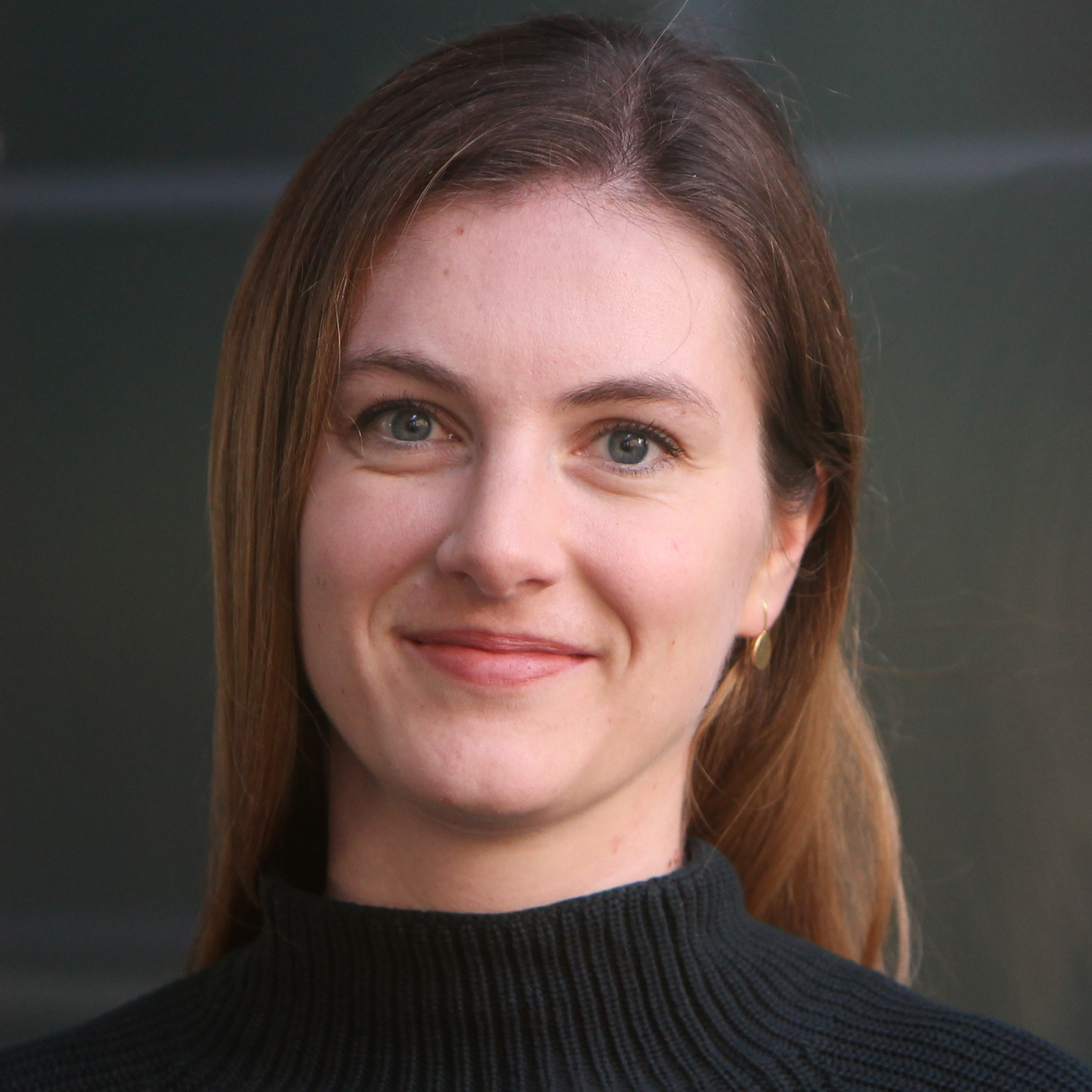
Dr. Delia Zollinger is a postdoctoral researcher at the University of Zurich in the Department of Political Science . Her work bridges political sociology , political economy , and comparative politics , focusing on how economic and social transformations in post-industrial knowledge societies drive long-term shifts in political conflicts and party systems. Education : PhD (2023) and BA (2015) from the University of Zurich, MSc (2018) from the London School of Economics and Political Science Research Stays : Harvard University (2022), European University Institute (2021) Fellowship : Doc.CH from the Swiss National Science Foundation Her research investigates how voters interpret their societal positions through group belonging , life opportunity perceptions, and changing status hierarchies. Key trends include: analyzing cleavage theory via Bourdieu’s lens, mapping place-based identities in the knowledge society, and quantifying collective identities using open-ended survey responses. Collaborative work explores voter cognition in contexts of electoral realignment and inequality perception . Scientific Award : Doc.CH fellowship (Swiss National Science Foundation) Delia collaborates with scholars like Simon Bornschier, Silja Häusermann, and Marco Steenbergen on projects related to structural change , identity formation , and cleavage consolidation in 21st-century politics. Her work appears in journals like American Journal of Political Science and Comparative Political Studies , emphasizing methodological innovation in political identity analysis.

Martin Röttingمشاهده پروفایل
دانشیار
Dr. Martin Rötting is an Associate Professor at the College of Interreligious Studies , Paris Lodron University of Salzburg. His work focuses on interreligious dialogue, systematic theology, and spiritual practices across traditions. Primary Affiliation : College of Interreligious Studies, University of Salzburg Key Roles : Project staff member for Jewish-Christian dialogue initiatives Research Interests Dr. Rötting specializes in: Interreligious dialogue frameworks Spatial analysis of religious practices Comparative spirituality across faith traditions Modern Templar movements Religious education methodologies Third-space theology 2024-2025 Research Themes His recent publications explore: Theological implications of migratory religious landscapes Fractal patterns in interfaith interactions Esoteric Christianity in modern contexts Cross-cultural spiritual identity formation Interactive educational tools for religious studies Leadership & Projects Co-founder and manager of College of Interreligious Studies Staff member, RPJCD project (2020-2027) Co-organizer, PNJCP conferences (2021-2023)
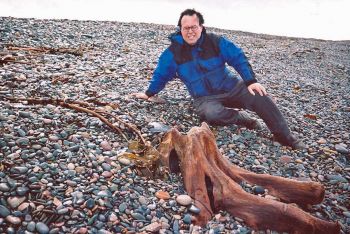
Prof Richard Grove is a Professor at the University of Sussex affiliated with the Centre for World Environmental History, specializing in the environmental, political, and economic history of the British Empire and Commonwealth across India, Pakistan, Sri Lanka, Indian Ocean islands, Africa, the Caribbean, and Oceania. Grove pioneered environmental history through interdisciplinary research connecting colonial expansion, tropical ecosystems, and climate systems. His work examines how colonial scientists deciphered global climate teleconnections (1770-1930), the socioeconomic impacts of El Niño events across centuries, and the metaphorical role of islands in environmental thought. Key themes include settler environmentalism in South Africa, indigenous knowledge systems in South Asia, and the economic consequences of historical climate variability in tropical regions. His publication record (1996-2007) reveals consistent focus on reconstructing extreme climatic events within imperial frameworks, with seminal contributions like the 1998 Nature paper on the 1789-1793 El Niño drought footprint. Articles demonstrate evolving methodology from regional case studies to global environmental crisis modeling, emphasizing interdisciplinary synthesis of history, climatology, and political economy to understand colonialism's ecological legacies.

Derek Duncan serves as Professor of Italian at the University of St Andrews' School of Modern Languages, specializing in Italian Cultural Studies. Previously holding a professorship at the University of Bristol, he directs the Italian Centre for Contemporary Art and contributes significantly to transnational humanities research. His educational background includes French and Italian studies at Aberdeen University followed by doctoral work at Edinburgh. Duncan's research centers on intersections of sexuality/gender and race/ethnicity in modern Italian culture through queer and critical race theory frameworks, with notable courses including 'Black Italians,' 'Fascist Italy,' and 'Cultures of Migration.' Analysis of his recent publications reveals consistent focus on Mediterranean migration narratives, transnational identity formation, and creative humanities methodologies. His work frequently connects historical events like the Arandora Star sinking with contemporary migration crises, emphasizing transcolonial continuities. Leverhulme Major Research Fellowship (2019-2022) Multiple AHRC-funded projects including Transnationalizing Modern Languages Founding editor of Liverpool University Press series: Transnational Italian Cultures and Transnational Modern Languages Duncan actively supervises research and collaborates with artists like Davide D'Elia on projects such as Tiepido Cool. His work with the Centre for Poetic Innovation demonstrates commitment to bridging academic research and artistic practice, while his global challenges project in Namibia reflects international engagement. Current research examines Mediterranean migration through the lens of the Arandora Star disaster and its contemporary resonances.
Professor Joseph Wood is a Professor of Visual Analytics at City St George's, University of London, where he serves as a founding member of the giCentre. His academic career spans over three decades, with continuous contributions to Geographic Information Science and visualization since 1990. He previously served as Head of Department for Computer Science at City University between 2014 and 2017. Professor Wood's educational background includes a PhD in Geographical Information Science from the University of Leicester (1996), an MSc in the same field from the University of Leicester (1990), and a BSc in Physical Geography & Geology from the University of Sheffield (1989). His academic progression shows steady advancement from Research Scholar at the University of Leicester (1990-1992) through various lecturer and senior positions to his current professorship. His research interests center on visual analytics and data visualization, with particular expertise in geographic information science and terrain analysis. Professor Wood has developed innovative methods bridging GI Science, Data Visualization, and education domains. His specific interests include narrative of visual analytic design, computational thinking in pedagogy, and novel visualization design for geographic data. His work demonstrates a consistent focus on making complex spatial data understandable through innovative visualization techniques. Analysis of Professor Wood's recent publications reveals a strong emphasis on practical applications of visualization techniques across diverse domains including transportation, epidemiology, sports analytics, and historical migration patterns. His work shows an evolution from foundational geographic information science toward broader applications in visual analytics, with increasing focus on narrative structures, responsive design, and accessibility considerations in visualization. The interdisciplinary nature of his research is evident in collaborations spanning computer science, geography, urban planning, and public health domains. Professor Wood has been actively involved in the academic community, serving on organizing and program committees for major international conferences including IEEE Infovis and VAST, Eurovis, GIScience, Spatial Accuracy, and Geomorphometry. His contributions to the field have been recognized through invitations to deliver keynote talks at prestigious venues ranging from GeoComputation to TEDx, where he presented on topics such as visualizing movement behavior of cyclists. As an advisor, Professor Wood has supervised numerous PhD and Master's students, with current supervision of Julia Crossley (Student conceptualisation of abstraction in computer science) and Jude Nzemeke (Understanding student misconception in recursive algorithmic thinking). His extensive supervision history includes completed PhDs on topics ranging from cycling behavior to spatio-social relations in photographic archives. His academic leadership extends to software development, with contributions to tools like litvis, elm-vega/el-vegalite, giCentre Utils, handy, and LandSerf GIS. Professor Wood is an active member of professional organizations including IEEE (2007-present), Association of Computing Machinery (ACM) (2007-present), and Association of Geographic Information (AGI) (1997-present), demonstrating his commitment to interdisciplinary collaboration across computer science and geographic information domains.

- Biomaterials
- Tissue Engineering
- Cell Plasticity
- +۷ مورد دیگر
Professor Kristopher Kilian is Director of the Laboratory for Advanced Biomaterials & Matrix Engineering (LAB&ME) with a joint position across the School of Chemistry and the School of Materials Science & Engineering in the Faculty of Science at UNSW Sydney. He serves as co-Director of the Australian Centre for NanoMedicine (ACN) and is a member of the Adult Cancer Program in the Prince of Wales Clinical School. His interdisciplinary research focuses on unraveling 'matrix structure-cell function' relationships through innovative biomaterial design. After completing his PhD at the University of New South Wales, Kilian pursued NIH postdoctoral training at the University of Chicago before faculty positions at the University of Illinois at Urbana-Champaign (2011-2018). He returned to UNSW in 2018 as a Scientia Fellow, establishing his current leadership roles. Research Focus: Design of model extracellular matrices and dynamic hydrogels for cell and tissue engineering Fundamental studies in cell plasticity and matrix-directed cell fate Development of synthetic tumor microenvironments for drug testing iPSC-derived organoid bioengineering 4D biofabrication techniques Tissue engineering approaches for lab-grown meat applications His extensive publication record demonstrates consistent focus on hydrogel mechanics, dynamic biomaterials, and the role of physical cues in directing cell behavior. Recent work emphasizes mechanochemistry, spatial control of cell differentiation, and the development of sophisticated tumor models that replicate the complexity of cancer microenvironments. Scientific Recognition: Cornforth Medal (2008) NIH Ruth L. Kirchstein Award (2008) Kavli Fellow (2014) NSF CAREER Award (2015) Australian Research Council Future Fellowship (2018) Eureka Prize finalist (2023) Kilian's research program bridges fundamental cell biology with translational applications, particularly in cancer modeling and regenerative medicine. His laboratory develops innovative biomaterial platforms that enable precise control over cellular microenvironments, facilitating discoveries in cell plasticity and tissue engineering. The group's work on dynamic hydrogels and mechanochemical systems represents a significant contribution to the field of biomaterials science. As Director of LAB&ME, Kilian leads a multidisciplinary team that integrates nano- and micro-fabrication techniques with synthetic chemistry to create biomimetic materials. The laboratory's approach centers on the concept that cell state and fate are governed by inherent cell plasticity within specific multivariate signaling contexts.

Marc Diamond, M.D. , is a Professor of Neurology and Neuroscience at UT Southwestern Medical Center. He previously served as the David Clayson Professor of Neurology at Washington University in St. Louis (2009-2014) and held faculty positions at UCSF (2002-2009). As founding director of the Center for Alzheimer's and Neurodegenerative Diseases (CAND), he leads a multidisciplinary team investigating protein aggregation mechanisms in neurodegenerative diseases. Education: M.D. from UCSF (1993), history degree from Princeton Key Contributions: Discovered cell-to-cell propagation of tau protein aggregates, linking Alzheimer's to prion biology His research focuses on tauopathies , prion-like protein propagation , and translational therapeutics . He has developed methods for detecting proteopathic seeding activity now used globally, holds multiple patents, and invented a monoclonal antibody in clinical trials for Alzheimer's therapy. His work has profoundly impacted understanding of neurodegenerative disease progression and therapeutic strategies. Laboratory: The Diamond Lab trains postdocs, graduate students, and staff in multidisciplinary approaches to neurodegeneration, emphasizing cellular models and molecular mechanisms of protein aggregation.
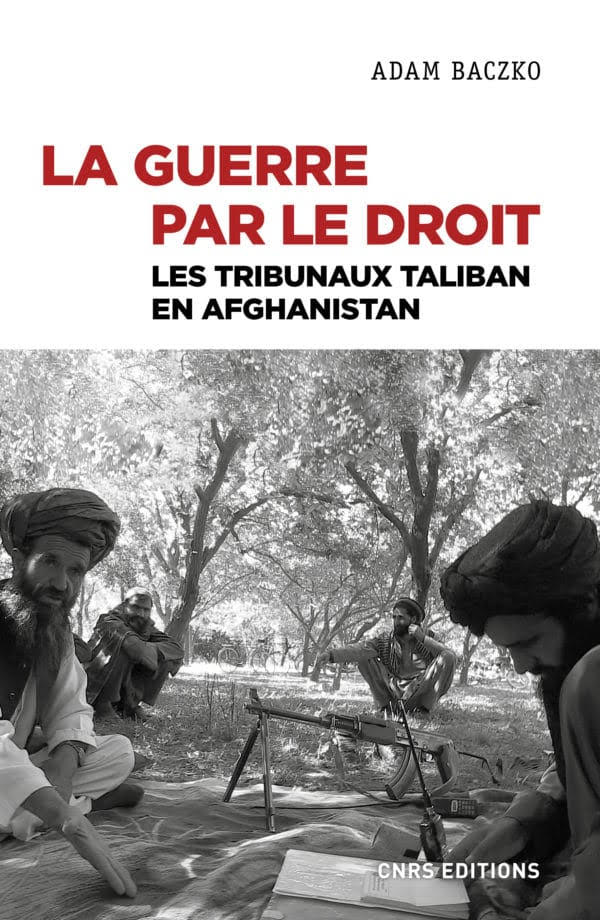
Adam Baczkoمشاهده پروفایل
پژوهشگر ارشد
Adam Baczko is a Research Fellow at CNRS (Centre National de la Recherche Scientifique) affiliated with Sciences Po's Center for International Studies (CERI) in Paris. His work focuses on the formation of legal institutions by armed movements in contexts of armed conflict, with particular expertise on Afghanistan and Syria. Baczko has conducted extensive fieldwork in conflict zones across Afghanistan, Syria, Iraq, and the Democratic Republic of Congo, examining how non-state actors establish judicial systems during civil wars. His research interests include the sociology of civil wars, Taliban tribunals in Afghanistan, armed conflict in Syria, and Western military interventions. Baczko approaches these topics through a comparative lens, analyzing how legal institutions function in multiple conflict settings to identify patterns and variations in how armed movements establish governance structures. His fieldwork methodology emphasizes direct observation and interviews in dangerous environments, which he argues provides epistemological privilege over desk-based research on conflict zones. Baczko's publications reveal a consistent focus on how legal systems operate in civil wars, particularly examining the Taliban's judicial apparatus in Afghanistan as a case study of how armed movements use law as a strategic tool. His work demonstrates how the Taliban's courts contributed to their eventual victory by providing accessible, reliable justice that contrasted with the failures of the Western-backed government system. His comparative approach extends to Syria, where he has documented similar dynamics of competing legal orders. Order, Conflict and Violence Fellow at Yale University Visiting Fellow at the Institut für die Wissenschaften vom Menchen (IWM) Trajectories of Change Fellow at the Zeit-Stiftung Ebelin und Gerd Bucerius Baczko has been actively involved in the ERC program 'Social Dynamics of Civil Wars' since 2016, working under Gilles Dorronsoro at the University of Paris 1 Panthéon-Sorbonne. His multilingual capabilities (French, English, Spanish, Polish) facilitate his comparative research across multiple conflict zones. He has been a vocal advocate for the importance of fieldwork in conflict zones despite security challenges, arguing that direct observation provides irreplaceable insights into how civil wars function.

Erika Lee is the Bae Family Professor of History and Radcliffe Alumnae Professor at Harvard University, serving as Director of the Schlesinger Library on the History of Women in America. A past president of the Organization of American Historians, she is a leading scholar of U.S. immigration, Asian American history, and xenophobia across the 19th-21st centuries. Her research centers on immigration history, Asian American history, and the intersections of race, xenophobia, law, gender, and society. Lee examines how systemic racism and exclusionary policies have shaped American identity, with particular focus on Asian American experiences and the historical roots of contemporary anti-immigrant sentiment. Lee's recent publications (2020-2024) analyze xenophobia during crises like the COVID-19 pandemic, anti-Asian discrimination, and immigration policy weaponization. Her work reveals historical patterns connecting past exclusion laws to modern nativist movements while highlighting immigrant resilience and the power of public history. Lee's honors include: American Book Award Asian/Pacific American Award for Literature Andrew Carnegie Fellowship Election to the American Academy of Arts & Sciences Immigrant Heritage Award Pioneer Award from OCA Champion for Justice Award She received the Andrew Carnegie Fellowship for research funding and testified before Congress on anti-Asian discrimination. As a public intellectual, Lee frequently contributes to media discussions on immigration and race through major outlets including the New York Times and CNN. Lee co-founded three digital humanities initiatives: Immigrant Stories (documenting immigrant experiences through digital storytelling), #ImmigrationSyllabus (educational resource on immigration history), and Immigrants in COVID America (tracking pandemic impacts on immigrant communities).
Professor Tomasz Kapitaniak is a distinguished academic in the field of nonlinear dynamics and theoretical mechanics. He serves as a Professor of Theoretical and Applied Mechanics and Head of the Division of Dynamics at the Faculty of Mechanical Engineering, Technical University of Lodz, Poland. His career spans over three decades at the university, where he has made significant contributions to the understanding of nonlinear systems, chaos theory, and mechanical oscillations. Professor Kapitaniak holds advanced degrees in both mechanics and applied mathematics from the Technical University of Lodz and the University of Lodz. His educational background includes: M.Sc. in mechanics, Faculty of Mechanical Engineering, Technical University of Lodz (1982) M.Sc. in applied mathematics, Faculty of Mathematics, Physics and Chemistry, University of Lodz (1985) Ph.D. in mechanics, Faculty of Mechanical Engineering, Technical University of Lodz (1985) D.Sc. in mechanics, Faculty of Mechanical Engineering, Technical University of Lodz (1988) Professor of technical science, title given by the President of Poland (1995) His research focuses on nonlinear dynamics, with particular emphasis on mechanical oscillations, stability, bifurcations and chaos, stochastic dynamics, and applications of nonlinear dynamics in mechanical engineering. Professor Kapitaniak is renowned for his work on the development of methods for controlling chaos without feedback, identification of new types of bifurcations, synchronization mechanisms in coupled mechanical oscillators, and explaining the origin of randomness in mechanical systems. His research has evolved from fundamental theoretical work to increasingly applied studies involving complex networks, biological systems, and engineering applications. Professor Kapitaniak has published over 300 scientific papers in renowned journals, cited over 8,000 times. His work exhibits a consistent focus on understanding complex nonlinear phenomena across various physical systems. The trend in his recent publications shows continued exploration of synchronization phenomena, extreme events in dynamical systems, and applications of nonlinear dynamics to biological, mechanical, and physical systems. His most recent work demonstrates a growing interest in multistability, chimera states, and the prediction of tipping phenomena in complex systems. Among his notable scientific achievements and distinctions are: Election as a member of the Polish Academy of Sciences (corresponding member in 2013, ordinary member in 2019) Election to Academia Europaea in 2021 Honorary doctorates from Saratov State University (Russia, 2001) and Lublin University of Technology (Poland, 2014) Multiple prestigious fellowships including the British Council Fellowship (1989), King Abdul Aziz Award Fellowship (1990), and Fulbright Fellowship (1997) Editorial roles including Associate editor of Chaos, Solitons and Fractals since 1990 and member of editorial boards of several other prestigious journals Throughout his career, Professor Kapitaniak has been actively involved in mentoring the next generation of researchers, having supervised numerous PhD students including Jerzy Wojewoda, Anton van Wyk, Barbara Błażejczyk-Okolewska, Andrzej Stefański, Andrzej Kozłowski, and Przemysław Szumiński. He has secured significant research funding from various national and international sources including the Ministry of Science and Higher Education (Poland), Deutscher Akademischer Austauschdienst, The Royal Society of London, and others. His research team has maintained strong international collaborations with institutions worldwide, including universities in the United States, United Kingdom, Germany, Brazil, Russia, and Ukraine. He leads the Division of Dynamics at the Technical University of Lodz, which serves as a hub for research in nonlinear dynamics, mechanical oscillations, and related fields. The division maintains strong international collaborations with institutions worldwide and continues to produce cutting-edge research in the field of nonlinear dynamics and its applications.

Karen Abbott is a Professor and Associate Chair in the Department of Biology at Case Western Reserve University, specializing in theoretical population and community ecology. Her research employs mathematical modeling to investigate species distributions, abundance fluctuations, and ecological pattern formation. Her primary research interests include: Theoretical Population and Community Ecology Spatial Synchrony in Forest Insect Outbreaks Plant-Herbivore Dynamics and Inducible Defenses Evolutionary Responses to Climate Change Invasive Species Spread Mechanisms Ecological Time Series Analysis Recent publications (2023-2025) reveal strong emphasis on spatial ecology, transient dynamics, and network theory applications. Key trends involve modeling synchrony in ecological oscillators, life history effects on consumer-resource systems, and environmental stochasticity impacts on population cycles. Her work frequently addresses how new biologically-motivated models improve understanding of unexplained ecological phenomena. Scientific awards: None mentioned in provided text. Research funding includes the eMB Collaborative Research project (2023) on mathematical approaches for spatial synchrony in ecology. While specific student advisees aren't listed, her faculty role suggests graduate and undergraduate mentoring. Her lab maintains active research in theoretical ecology as evidenced by continuous publication output. She leads the Abbott Lab (https://abbottlab480702554.wordpress.com/), which focuses on mathematical modeling of ecological systems, investigating spatial synchrony, plant-herbivore interactions, climate change effects, and transient dynamics in population cycles.
فقط ۷۵۰ نتیجه اول نمایش داده میشود. برای رسیدن به نتایج دقیقتر، جستوجو را با فیلترها محدودتر کنید.