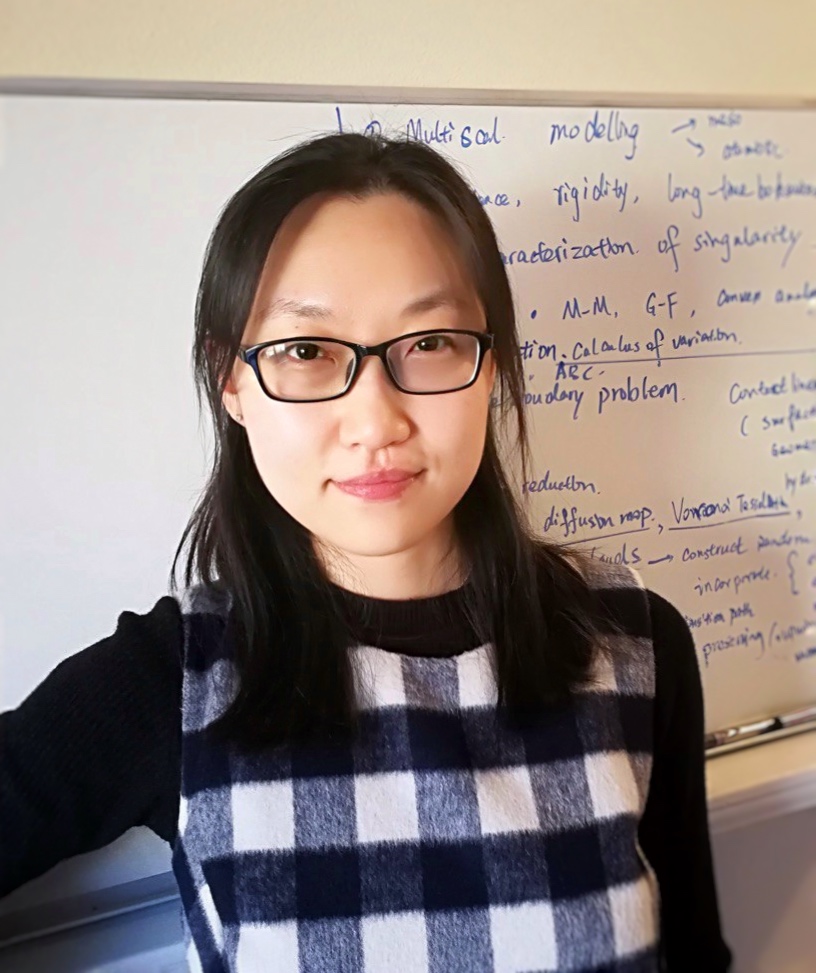
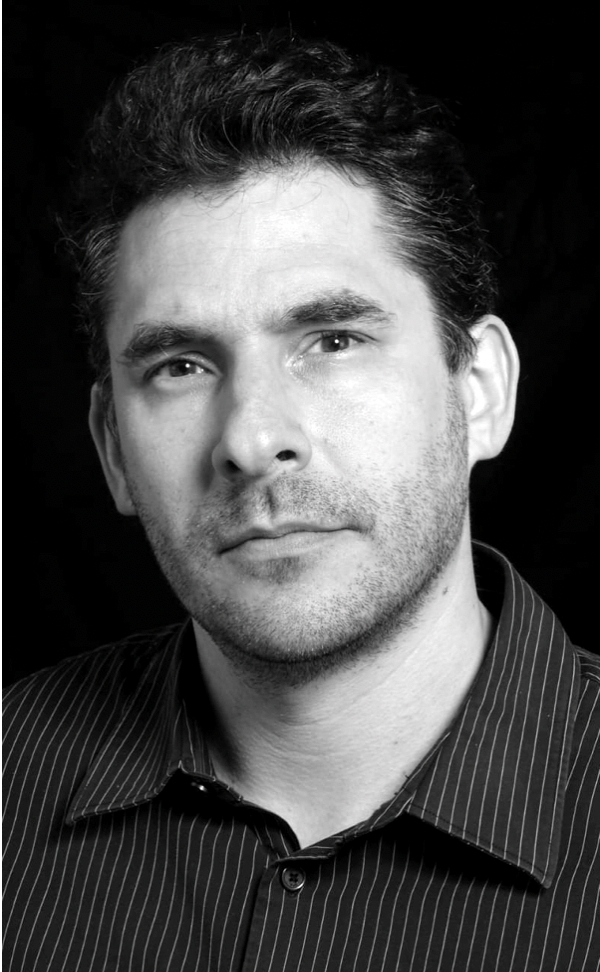
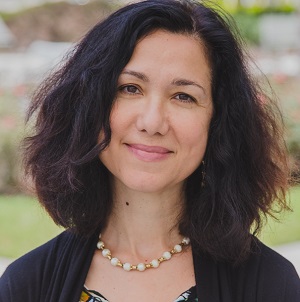
Yuan Gao is an Assistant Professor of Mathematics at Purdue University's Department of Mathematics (College of Science). His research focuses on analysis and computations of PDEs in materials science, biology, and microfluidics, with recent emphasis on optimal control, Hamilton-Jacobi equations, and non-equilibrium chemical reactions. His work is supported by NSF awards DMS-2204288 and DMS-2440651. Previously, he held the William W. Elliott Assistant Research Professor position at Duke University (2019-2021). Research interests include PDE analysis in materials science (crystal growth, dislocation dynamics), numerical methods for interface dynamics, applied stochastic analysis (Langevin dynamics, transition path theory), and mean-field games for fluid systems. He organizes the PSU-Purdue-UMD Joint Seminar on Mathematical Data Science. Key publications span topics like dislocation evolution, Wasserstein gradient flows, and stochastic algorithms for rare events. Awards include NSF CAREER funding recognizing his contributions to mathematical analysis of non-equilibrium systems.
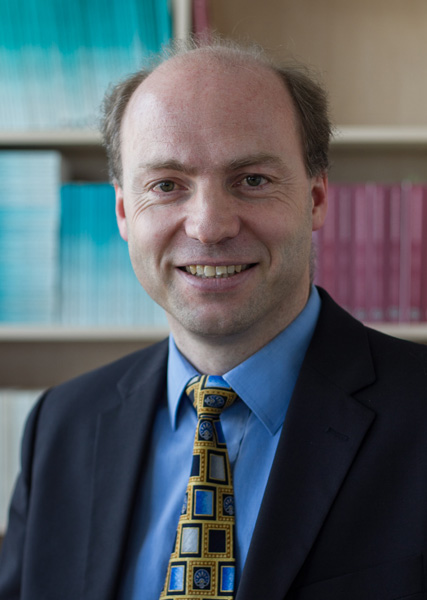
Matthias Sutter serves as Director at the Max Planck Institute for Research on Collective Goods in Bonn while holding part-time professorships at the University of Cologne (10%) and University of Innsbruck (5%). His academic career spans multiple prestigious institutions including the European University Institute in Florence (2013-2014), University of Gothenburg (2007-2013, part-time), University of Cologne (2015-2017, Excellence Chair), and University of Innsbruck (2006-2017). His educational background includes a PhD in economics (1999) and habilitation (2002), both from the University of Innsbruck. Additional academic recognition includes membership in the German National Science Association (Leopoldina) and Academia Europaea. Sutter's research program centers on experimental economics, with particular focus on team decision making processes and the development of economic decision capabilities across different age groups. His work investigates how patience, risk preferences, and social behaviors evolve throughout life, and how these economic preferences impact health and economic success. He has made significant contributions to understanding credence goods markets, where information asymmetry between providers and consumers creates unique market challenges. His experimental approaches combine laboratory studies with field experiments to generate robust insights applicable to real-world economic situations. His publication record demonstrates consistent output in top-tier journals, with recent work spanning diverse topics including energy consumption during crises, workplace climate interventions, vaccination attitudes in polarized environments, and the formation of economic preferences in childhood. The interdisciplinary nature of his research connects economics with psychology, public policy, and organizational behavior, reflecting his broad scholarly impact. Major Awards and Honors: 2017 Hans Kelsen Preis of the Universität zu Köln 2016 Pater Johannes Schasching SJ Preis for dialogue between economy, ethics and religion 2015 Exeter Prize for Research in Experimental Economics 2009 Science Prize of the State of Tyrol 2008 Honorary Prizes from Stiftung Südtiroler Sparkasse and State of Vorarlberg 2004 Oberbank-Science-Prize Linz Sutter serves as Principal Investigator in the Excellence Cluster 'ECONtribute: Markets & Public Policy,' funded by the German Science Foundation (DFG). He holds editorial positions as Associate Editor of 'Management Science,' 'European Economic Review,' and 'Economics Letters,' and serves on the Editorial Boards of 'Experimental Economics' and 'Journal of the Economic Science Association.' His work extends beyond academia through popular science communication, including the best-selling book 'Die Entdeckung der Geduld' (The Discovery of Patience) exploring the importance of patience for health and economic success.
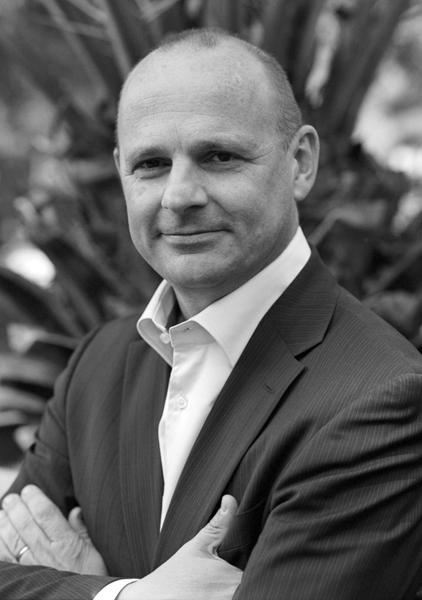
Jos J.L. Gommans serves as Professor of Colonial and Global History at Leiden University, a position he has held since 2011. Previously, he was Associate Professor of South Asian History at the same institution since 1993. His academic career includes a visiting professorship at The College of William and Mary in Virginia (2008) and doctoral research funded by the Netherlands Organisation for Scientific Research (NWO) from 1989-1993. Professor Gommans' research spans multiple historical domains with particular expertise in South Asian history, Central Asian history, military history, and colonial history. His scholarly approach emphasizes global connections and comparative frameworks, especially through his examination of Eurasian empires and their interactions. His work has significantly contributed to understanding Mughal military organization, frontier dynamics in South Asia, and the broader patterns of Eurasian cosmopolitanism during the early modern period. Gommans' extensive publication record reveals consistent thematic development across decades, with early work focusing on Indo-Afghan relations and Mughal military systems evolving toward broader comparative studies of Eurasian empires. His research demonstrates remarkable continuity in examining cross-cultural interactions, military organization, and imperial structures across different geographical contexts. The scholarly impact of his work is evident in its reproduction in Indian academic publications and citations by prominent historians like Sanjay Subrahmanyam and Jeremy Black. Notable honors: Horizon Project (NWO) on Eurasian Empires: Integration Processes and Identity Formations (€2 million grant) Gommans has maintained significant editorial leadership, serving as editor/editor-in-chief of the Journal of the Economic and Social History of the Orient from 2000-2010 and currently sitting on the editorial boards of Itinerario and the Rijksmuseum Bulletin. His current research direction, as co-director of both the NWO-Horizon project on Eurasian Empires and the Cosmopolis-programme, reflects his continued commitment to global and connective historical approaches that bridge regional specializations.
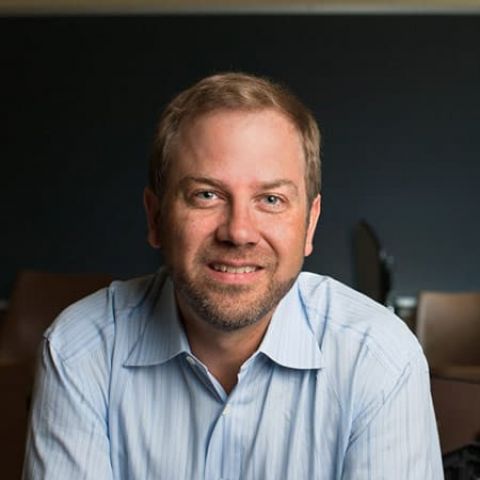
Adam T. Smith is Distinguished Professor of Arts and Sciences in Anthropology at Cornell University, specializing in Archaeology, Political Theory, Landscape Studies , and Material Culture . He co-founded Project ArAGATS in Armenia and co-directs the Aragats Foundation , focusing on collaborative archaeological research in the South Caucasus. His work spans from the Bronze Age to contemporary heritage preservation issues. PhD (1996), MA (1993) - University of Arizona, Anthropology MPhil (1991) - University of Cambridge, Social & Political Science BA (1990) - Brown University, Anthropology & Political Science Research interests center on political anthropology through material culture , analyzing how objects shape political systems from ancient to modern contexts. His projects include Caucasus Heritage Watch for satellite monitoring of endangered sites and extensive studies of Late Bronze Age/Early Iron Age fortresses in Armenia. Key contributions involve redefining South Caucasus chronologies using radiocarbon dating and Bayesian modeling. Recent publications focus on 2023: Cultural heritage documentation during Nagorno-Karabakh conflicts 2022: Critiques of Armenian Genocide erasure in archaeological discourse 2018: Revised Bronze/Iron Age timelines for the Caucasus 2015: Sovereignty mechanisms in Urartian landscapes Scientific honors include 2023 Finalist - Falling Walls Science Breakthrough (Social Sciences) 2010-2011 Guggenheim & Cornell Humanities Fellowships 1997-1999 Michigan Society of Fellows He leads the Landscapes and Objects Laboratory and teaches courses like Archaeological Research Design while engaging in public archaeology through initiatives like St. James AME Zion Church excavations in Ithaca, NY.
Chie Ikeya is a Professor of History and Director of the Institute for Research on Women at Rutgers University . A Cornell University Ph.D. (2006), she joined Rutgers in 2012 and specializes in modern Asian history with particular focus on women, gender, sexuality, and comparative colonialisms across Burma/Myanmar, Southeast Asia, Japan, and global asias. Her office is located at 220 Van Dyck Hall, contactable at chie.ikeya@rutgers.edu . Ph.D., Cornell University, 2006 At Rutgers since 2012 Director, Institute for Research on Women Dr. Ikeya's research examines colonial politics, gender relations, and cultural modernity in Asia. Employing interdisciplinary, multilingual methodologies, her work connects Southeast Asian history to global decolonial discourses through projects on Colonial-era gender reforms Interracial marriage dynamics Transnational migration patterns Postcolonial identity formation Japanese diasporic cemeteries in Southeast Asia Her publications reveal obscured inter-Asian relationships that shaped modern understandings of race, religion, and nationhood. Research trends across her publications demonstrate sustained engagement with Colonial governance and resistance Gendered media analysis Transnational family structures Legal pluralism in empires Cultural hybridity Decolonial historiography Awarded multiple prestigious fellowships including National Endowment for the Humanities Fellowship Mellon Dissertation Fellowship Japan Foundation Fellowship American Association of University Women International Fellowship Lauriston Sharp Dissertation Prize Dr. Ikeya's work bridges feminist, postcolonial, and decolonial scholarship while maintaining rigorous engagement with local historical practices. Her current project "Restless Remains: Reburying and Redressing Empire, Migration, and War in Overseas Japanese Cemeteries" investigates the geopolitical implications of diasporic cemetery preservation across Southeast Asia. She teaches courses including Sex and Power , Comparative Colonialisms in Asia , and Colloquium in Women's and Gender History .
Tony Cookson is a Professor of Finance and the Michael A. Klump Endowed Professor at the Leeds School of Business , University of Colorado Boulder, where he has served since 2013. His research spans empirical finance , household and corporate financial decision-making , and the impact of social media and legal institutions on financial behavior. He has published in top journals like the Journal of Finance , Journal of Financial Economics , and Management Science , focusing on topics from investor disagreement to fracking-induced debt repayment . Education : Ph.D. in Economics (University of Chicago), M.S. in Statistics and Applied Economics (Montana State University), B.S. in Economics (Montana State University) His research interests include: How social media shapes investor sentiment and trading patterns The economic consequences of fracking and casino policy Legal institutions and their role in credit market development Behavioral finance through LLM-driven investor personas His scientific awards include the Best Paper in Investments and Asset Pricing (MFA 2023) , NASDAQ Best Paper in Asset Pricing (WFA 2021) , and Finalist for TIAA Paul A. Samuelson Award (2021) . He serves as Editor at the Review of Corporate Finance Studies and Associate Editor at multiple top journals.
Prof. Dr. Nadine Buczek serves as Professor of Renewable Energies, Nanotechnology and Photonics at the Department of Applied Natural Sciences, Lübeck University of Applied Sciences (TH Lübeck), a position she has held since 2017. She leads the Energy Materials Laboratory and maintains active affiliations with the Climate and Environmental Protection Group, Materials for Storage and Renewable Energy Systems, and Photovoltaics Group. Her research centers on physical principles of renewable energy systems and photonics, with core expertise in solar technology, thermoelectrics, and nanoscale material engineering. She investigates spin wave phenomena in disordered magnetic materials and develops advanced fabrication techniques for silicon nanowires and superlattices using metal-assisted chemical etching, with applications in sustainable energy conversion and storage. Analysis of her 15 most recent publications (2012-2022) reveals consistent focus on condensed matter physics and nanomaterial engineering. Key trends include theoretical modeling of spin dynamics in alloys, structural characterization of etched semiconductor nanostructures, and optimization of nanofabrication processes for renewable energy applications. Her work bridges experimental nanotechnology with computational physics, primarily targeting semiconductor-based energy solutions. The Energy Materials Laboratory under her direction drives interdisciplinary research in photovoltaics and thermoelectric materials, collaborating closely with the Materials for Storage and Renewable Energy Systems group. Current projects emphasize scalable nanofabrication methods and fundamental studies of charge transport in nanostructured materials to advance next-generation renewable energy technologies.
Peng Mao is an Associate Professor in the Department of Pathology at the Renaissance School of Medicine, Stony Brook University . His research focuses on DNA damage repair mechanisms in chromatin, transcriptional regulation of repair pathways, and cancer cell adaptation to chemotherapeutic agents. Education: BS: Huazhong University of Science and Technology, China PhD: Peking University, China Postdoc: Washington State University, Pullman, WA The Mao Research Lab employs next-generation sequencing (NGS) and bioinformatics to investigate: (1) DNA repair protein dynamics in chromatin; (2) Transcription machinery's impact on DNA repair pathways; (3) Cancer-driven modulation of repair mechanisms to evade chemotherapy. His work bridges genomic instability and cancer therapy resistance . His recent publications highlight studies on UV-induced mutagenesis , cisplatin resistance , transcription-coupled repair , and chromatin remodeling complexes . These articles span genomic mapping , histone modifications , and transcription factor interactions in DNA repair contexts. Labs & Teams: Mao Research Lab, Stony Brook University
Dr. Stuart Gibson is a Senior Lecturer in Physics and Astronomy at the School of Physics and Astronomy, University of Kent. He is the co-inventor of the EFIT-V facial composite system, widely adopted by UK police constabularies and international agencies. His academic contributions span interdisciplinary research bridging forensic science, computational methods, and machine learning. Research Interests: Forensic applications of digital image processing Machine learning in natural sciences Facial composites for criminal investigations Medical image analysis Computer vision with security applications Teaching: Stuart teaches numerical and computational methods, mathematical techniques for physical sciences, and digital forensics. His pedagogical focus integrates theoretical frameworks with practical forensic and computational tools. Publications & Collaborations: Over his career, Dr. Gibson has published extensively in journals such as Pattern Recognition Letters , ACS Nano , and Utilities Policy . His work includes innovations in evolutionary algorithms, facial composite systems, and applications of machine learning to muon spectroscopy and Raman spectroscopy.
Prof. Dr. Kei Ito is a leading neuroscientist at the University of Cologne , specializing in Drosophila melanogaster brain architecture. His research focuses on mapping " terra incognita " regions of the brain, analyzing glial cell functions across development, and establishing standardized insect brain nomenclature through international collaboration. As AXA Chairholder and former HHMI Senior Fellow , he combines molecular genetics with 3D virtual reality visualization to unravel neuronal network organization . Academic Affiliation : University of Cologne (2016–present) Prior Positions : The University of Tokyo (2002–2017), National Institute for Basic Biology (1998–2002) Research Interests span multiple domains: "Terra Incognita" Analysis : Systematic mapping of previously uncharacterized brain regions (70% of brain volume) Glial Cell Biology : Classification and functional analysis from embryo to adult Connectome Research : Integration of electron microscopy data with genetic tools Neuronal Lineage Studies : 3D reconstruction of neuroblast progeny patterns Scientific Contributions include: Creation of 4,500 NP Gal4 driver lines (Japan consortium, 1998) Pioneering Split-Gal4 systems for precise neuron labeling Establishment of 6 distinct neuron naming schemes for EM data Leadership in Insect Brain Name Working Group (2007–2014) Advising Legacy features direct mentorship of 6 doctoral students and collaborative analysis of 3,777 neuron types in EM datasets. His lab maintains 1,000+ specific Split-Gal4 lines for terra incognita research.
Jorge Viñals is a Professor at the School of Physics and Astronomy , University of Minnesota, and Director of Graduate Studies. His research focuses on theoretical and computational studies of nonequilibrium phenomena in extended systems, with applications to Soft Matter Physics, Materials Science, and Biomechanics. Affiliation: Director of Graduate Studies, School of Physics and Astronomy Institution: University of Minnesota Collaborations: Minnesota Supercomputing Institute, University of Oslo, Cornell, Carnegie Mellon His work examines mesoscale theories of systems outside thermodynamic equilibrium, particularly unstable interfaces and moving topological defects. Current projects include studies of chiral symmetry breaking in nematic liquid crystals, field dislocation mechanics in defected solids, and biomechanics of epithelial tissue with orientational order. Recent publications highlight computational approaches to nematic defect structure , topological charge quantification , and plasticity modeling . Key journals include Soft Matter , Proceedings of the Royal Society A , and Physical Review B . Key collaborators: Lucas Myers, C.D. Schimming, Luiza Angheluta, Manas Upadhyay Grants: NSF-funded projects on active matter and liquid crystal dynamics, Department of Defense research on intraosseous catheters
Adilson Motter is the Charles E. and Emma H. Morrison Professor of Physics and Astronomy and (by courtesy) Engineering Sciences and Applied Mathematics at Northwestern University. He serves as Director of the Center for Network Dynamics (CND) and has been a faculty member since March 2006. His academic appointments include affiliations with the Chemistry of Life Processes Institute (CLP), Molecular Biophysics Program, NSF-Simons National Institute for Theory and Mathematics in Biology (NITMB), Paula M. Trienens Institute for Sustainability and Energy, Graduate Program in Applied Physics, Center for Interdisciplinary Exploration and Research in Astrophysics (CIERA), Institute for Quantum Information Research and Engineering (INQUIRE), and Northwestern Institute on Complex Systems (NICO). Professor Motter received his Ph.D. in 2002 from UNICAMP (University of Campinas), Brazil, where he worked with Professor Patricio S. Letelier. Prior to joining Northwestern, he held positions as Guest Scientist at the Max Planck Institute for the Physics of Complex Systems in Germany and as Director's Funded Postdoctoral Fellow at the Center for Nonlinear Studies at Los Alamos National Laboratory. Professor Motter's research focuses on the dynamical behavior and control of complex systems and networks. His work spans theoretical and computational approaches to understanding phenomena in physical, biological, and engineered systems. Key research areas include: Cascading dynamics and network resilience Spontaneous synchronization and symmetry phenomena Network control theory and applications Quantum networks and information transfer Machine learning applications to network science Data-driven discovery in complex systems Applications to quantitative biology, biomedical research, renewable energy, smart power grids, microfluidics, and metamaterials Analysis of Professor Motter's recent publications reveals a strong interdisciplinary focus spanning physics, engineering, biology, and computer science. His work demonstrates consistent innovation in network science, with recent contributions advancing quantum networking architectures, understanding power grid limitations for electric vehicle integration, developing machine learning approaches for genetic analysis, and exploring fundamental synchronization phenomena. A notable trend is the increasing application of his theoretical frameworks to real-world challenges in energy systems, biomedical research, and quantum information technology. Professor Motter has received numerous prestigious awards and honors: Alfred P. Sloan Research Fellowship (2009) Weinberg Award for Excellence in Mentoring Undergraduate Research (2009) Northwestern-Argonne Early Career Investigator Award for Energy Research (2010) NSF Faculty Early Career Development (CAREER) Award (2011) Erdös-Rényi Prize in Network Science (2013) Fellow of the American Physical Society (2013) Simons Foundation Fellowship in Theoretical Physics (2015) Fellow of the American Association for the Advancement of Science (2015) Scialog Fellow (2015) Outstanding Referee, American Physical Society (2016) Fellow of the Network Science Society (2020) Senior Scientific Award, Complex Systems Society (2022) Professor Motter has demonstrated exceptional commitment to mentoring, as evidenced by the Weinberg Award for Excellence in Mentoring Undergraduate Research. His research group has received significant funding through multiple NSF grants, including his CAREER award, and collaborations with Argonne National Laboratory. Current research directions include mechanical metamaterial networks, quantum network science, and other areas of complex systems. The group has been actively recruiting postdoctoral researchers and has seen students recognized with awards and research grants. As Director of the Center for Network Dynamics (established September 2023), Professor Motter leads a multidisciplinary team exploring network phenomena across various domains. The Center has hosted significant events including the 'Brain Architecture and Computing 2024' workshop and is organizing the 2025 CDC Workshop on Neurocomputation and Dynamics in Rio de Janeiro. The Motter Group maintains active collaborations with experimentalists and researchers from diverse disciplines, facilitating the translation of theoretical insights into practical applications.
Prof. Florian Zaussinger is a faculty member at the Faculty of Applied Computer and Life Sciences at Mittweida University of Applied Sciences. His research focuses on thermal convection, fluid dynamics, and numerical simulations in both geophysical and astrophysical contexts. He has contributed extensively to studies on microgravity experiments, including the GeoFlow and AtmoFlow projects conducted on the International Space Station (ISS). University: Mittweida University of Applied Sciences Faculty: Applied Computer and Life Sciences Department: Mathematics Contact: +49 3727 58-1381 | florian.zaussinger@hs-mittweida.de | Building 6, Room 6-131 His research involves advanced numerical modeling of complex fluid systems, including spherical convection, dielectric heating, and double-diffusive processes. He has developed and applied computational tools like the ANTARES code to simulate convection in DA white dwarfs, planetary atmospheres, and Earth's mantle. His work bridges theoretical fluid mechanics with experimental validation in space-based microgravity environments. Recent publications highlight his expertise in thermo-electrohydrodynamic convection, planetary fluid flow analysis, and microgravity-induced instabilities. While the scraped data does not list scientific awards or students directly, his academic profile emphasizes interdisciplinary collaboration with engineering and life sciences, particularly in applied mathematics for fluid dynamics and experimental data processing.
Aydogan Alti serves as an Associate Professor of Finance within the Department of Finance at the McCombs School of Business, University of Texas at Austin. His academic career centers on empirical and theoretical research in corporate finance and asset pricing, with particular expertise in market timing phenomena, institutional investor behavior, and characteristic-based return predictability. Alti's research program explores the intersection of behavioral finance and market microstructure, investigating how investor beliefs influence asset prices and corporate financing decisions. His work frequently employs structural modeling approaches to analyze IPO market timing, equity issuance triggers, and the persistence of market timing effects on capital structure. Key contributions include demonstrating how firms strategically time security offerings based on stock return patterns and identifying mechanisms behind institutional investors' return-chasing behavior. Analysis of his publication record reveals a consistent focus on empirical finance with strong methodological rigor. His papers predominantly examine cross-sectional return predictability, market anomalies, and the real effects of financial market conditions on corporate policies. Alti frequently collaborates with leading scholars such as Sheridan Titman and Paul Tetlock, producing influential work in premier finance journals. His scientific recognition includes the prestigious 2022 Q-Group Jack Treynor Prize and the Brattle Prize for Distinguished Paper in the Journal of Finance (awarded twice for separate publications). These awards highlight his contributions to understanding characteristic-based return predictability and corporate financing decisions. While details about student advisement and research grants are not provided in the source material, Alti's active publication record suggests ongoing supervision of graduate researchers. His current working papers indicate continued investigation into informed intermediation in IPO markets and characteristic-sorted portfolio performance.
Golfo Alexopoulos is a Professor and Director of the USF Institute for Russian, European and Eurasian Studies at the University of South Florida's School of Interdisciplinary Global Studies. She holds a Ph.D. from the University of Chicago and an M.A. from Yale University. Her research focuses on Soviet and Russian authoritarianism, Stalinist systems, political violence, and human rights, with a particular emphasis on disinformation and medical exploitation in the Stalinist Gulag. A key work is Illness and Inhumanity in Stalin’s Gulag (2017), examining prisoner dehumanization through archival health records. Teaching spans contemporary Russian politics, comparative authoritarianism, and the Soviet Union. She integrates multimedia and personal experiences, including slides from her time in the USSR during Gorbachev, Yeltsin, and Putin eras. Her advising has supported students entering academia, diplomacy, and international law. Her research also explores Stalin’s disenfranchisement policies and Soviet citizenship through petitions discovered in Siberian archives. Current work links 20th-century Soviet authoritarianism to modern Russian disinformation strategies. She directs the USF Institute for Russian, European and Eurasian Studies, fostering interdisciplinary scholarship on global political systems.