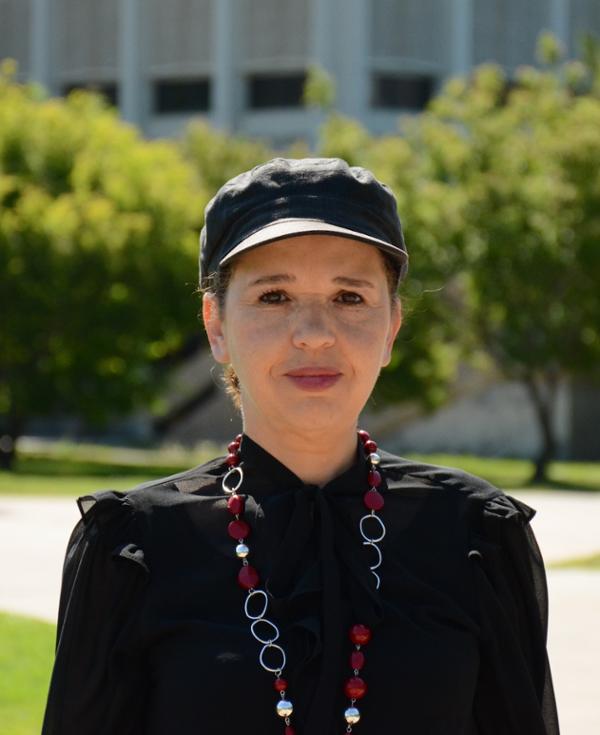
Dr. Samira Sadaoui is a Full Professor at the University of Regina's Department of Computer Science. She holds a PhD and MSc in Computer Science from the University of Nancy I, France. Her research is supported by NSERC and MITACS grants, focusing on artificial intelligence applications in real-world environments. Dr. Sadaoui's research spans: Adaptive machine learning systems for evolving data streams Fraud detection algorithms in financial and auction systems Evolutionary optimization methods for feature selection Dimensionality reduction techniques for high-dimensional data Reinforcement learning approaches for combinatorial problems Her recent publications demonstrate strong emphasis on: Concept drift detection in noisy environments (2022-2024) Evolutionary computation for feature engineering (2021-2023) Real-world applications in fraud detection and service monitoring (2017-2022) Teaching responsibilities include: CS115: Object-Oriented Design CS230: Fundamentals of Computer Science III CS372: Software Engineering Methodology CS476: Software Development Project CS872: Advanced Software Engineering
Stephan Sonnenburg is a Professor at Karlshochschule International University since 2008, serving as Head of the Master Management program and Member of the Senate. His research focuses on creativity and innovation management, branding, and organizational transformation with a performative interdisciplinary approach. He holds a Dr. phil. from Berlin University of the Arts (thesis: Cooperative Creativity) and advanced degrees in art studies and European Business Administration. Teaching includes over 20 modules across undergraduate and graduate programs, emphasizing brand strategy, creativity in management, and cultural change. He supervised 70+ bachelor theses, 40+ master/diploma theses, and 3 dissertations. Practical experience spans senior strategic planning roles at agencies like SelectNY.Berlin and ECONOMIA/BBDO. Key contributions include organizing conferences like ReThinking Management (2014) and Touring Consumption (2013), and co-editing book series on Management, Culture, and Interpretation. Awards include a 2011 Norwegian research scholarship and recognition for innovative approaches to creativity training (Lego Serious Play certified). His work bridges artistic, managerial, and cultural dimensions of creativity through publications on design thinking, brand mythologies, and future-oriented pedagogies. Research trends reflect his interdisciplinary focus: combining cultural theory with business practices to explore emergent creativity patterns, branded spaces, and liminal experiences. His 2020 book Creativity Route Planner offers actionable strategies for daily innovation. He actively contributes to academic discourse through conference organizing and peer-reviewed journals in creativity studies, marketing, and organizational symbolism.
Frithiof Svenson is an Associate Professor holding dual roles: at UiT The Arctic University of Norway (Marine Business Development) and Osnabrück University of Applied Sciences (managing the professorship in Business Administration focusing on digitalized workplaces). His research bridges organizational decision-making, sustainability in consumption, and digital transformation. He has authored over 15 peer-reviewed articles and contributed to projects funded by the EU and Volkswagen Foundation. Education: PhD in Economics (2014, Universität Bremen), M.A. in International Relations (2007, Jacobs University), B.Sc. in European Studies (2004, TU Chemnitz). Research Interests: Intuition in managerial decisions, sustainable ICT consumption, macro-marketing strategies, and digital workplace dynamics. His recent work analyzes how intuition influences sector-specific decision-making and explores sustainable practices in virtual brand communities. He teaches courses on entrepreneurship, risk management, and marketing at multiple universities.
Prof. Dr. Nicole Bolleyer is a Professor and Head of the Chair of Comparative Political Science at the Geschwister Scholl Institute of Political Science, Ludwig Maximilian University of Munich (LMU), within the Faculty of Social Sciences. Her research focuses on comparative political institutions, political parties, civil society dynamics, and democratic governance. She examines organizational behavior, legal frameworks governing political actors, and institutional responses to crises. Her work emphasizes the interplay between political parties and civil society organizations, exploring how legal environments and resource dependencies shape their activities. Key themes include party institutionalization, crisis management in parliamentary systems, and the balance between political engagement and member service in civil society groups. Research outputs span topics such as party mortality, intra-party conflict regulation, and the impact of state funding on organizations. She has contributed to debates on democratic reform, executive dominance in crises, and the evolving roles of CSOs in contemporary democracies. Prof. Bolleyer’s expertise is reflected in her leadership of the Chair of Comparative Political Science and her active participation in collaborative research projects, including those documented at cps-lmu.org . No academic awards are explicitly mentioned in the provided materials. Her work highlights the structural and institutional foundations of political systems, with a focus on organizational adaptability in dynamic political environments.
Olanrewaju Olaogun is an Assistant Professor in the Department of Mechanical and Electrical Engineering at Merrimack College. His research focuses on improving engineering education through understanding cognitive, affective, and motivational factors influencing student learning. He specializes in quantitative methods, systematic literature reviews, and advanced statistical analyses to study learning models and educational interventions. Education Ph.D., Engineering, University of Georgia (Athens, GA) M.S., Electrical Engineering, Florida Institute of Technology (Melbourne, FL) B.Engr., Electrical & Electronic Engineering, University of Benin (Benin-City, Nigeria) Research Interests Dr. Olaogun explores conceptual change mechanisms in engineering education, student motivation and belonging, cognitive engagement in virtual reality (VR) environments, and the development of educational assessment tools like the Electric Circuit Concepts Diagnostic (ECCD). His work bridges educational theory with practical applications, emphasizing technology's role in enhancing learning outcomes. Recent Trends in Publications His recent work emphasizes systemic reviews of conceptual change factors, predictive modeling of academic belonging, and VR-based learning environments. He consistently addresses motivational psychology constructs like self-efficacy and achievement goals, often using structural equation modeling and psychometric analyses. Grants & Advising No specific grants or advising roles are detailed in the provided text, though his research suggests collaborative projects with institutions like IEEE and ASEE.
Dr. Shimi Naurin Ahmad is an Associate Professor of Business Administration at Morgan State University's Earl G. Graves School of Business and Management. Her research focuses on Online Consumer Behavior and Text Mining of Online Word-of-Mouth, with a particular emphasis on leveraging large unstructured datasets to uncover behavioral patterns. Dr. Ahmad holds a Ph.D. in Business Administration from Concordia University's joint doctoral program with McGill, HEC, and UQAM, alongside an M.Sc. in Electrical Engineering from Concordia and a B.Sc. from Rajshahi University of Engineering and Technology. Research Interests: Online Consumer Behavior Text Mining Techniques Online Pricing Strategies Cross-Cultural Marketing Social Commerce Dynamics Her work has been published in top-tier journals such as the Journal of Marketing Analytics and International Journal of Information Management . Notably, her 2023 Journal of Marketing Analytics paper earned the Most Popular Article Award. She has secured grants including the Provost Innovation Grant and Transform Morgan Grant, supporting her research initiatives. Awards & Recognition: 2023 Most Popular Article Award (Journal of Marketing Analytics) Competitive Research Grants from Morgan State University Dr. Ahmad's research bridges technical disciplines like data mining with business applications, contributing to both academic and practical insights in consumer behavior and digital marketing strategies.
Erkin Şeker, Ph.D. , is a Professor in the Department of Electrical and Computer Engineering at the University of California, Davis, where he also serves as Co-Director of the Center for Neuroengineering and Medicine and Chair of the Designated Emphasis in Neuroengineering . His research integrates micro- and nanofabrication, electrochemical biosensors, multifunctional neural interfaces, and microfluidic tissue chips to address challenges in healthcare and life-science miniaturization. Education: Ph.D. in Electrical Engineering, University of Virginia (2007) Research Interests Prof. Şeker’s group operates at the intersection of nanoporous metals , microfluidics , and device engineering . Current thrusts include: Nanostructured electrochemical biosensors for nucleic-acid detection in food safety, water quality, and medical diagnostics. Multifunctional biomedical device coatings that combine neural recording with on-demand drug delivery to combat epilepsy and other neurological disorders. Nanoporous metal morphology libraries for high-throughput investigation of structure–property relationships. Microphysiological models of neuroinflammation and gut–brain-axis interactions using tri-culture tissue chips. Publication Trends Over the past decade the group has produced >80 peer-reviewed articles spanning Analytical Chemistry , ACS Applied Materials & Interfaces , Advanced Functional Materials , Lab on a Chip , and Journal of Neuroinflammation . The work reveals a clear trajectory from fundamental studies of nanoporous gold mechanics and surface chemistry to translational applications in closed-loop neural control, nucleic-acid diagnostics, and tissue-level disease models. Scientific Awards & Honors NSF CAREER Award NIH NIBIB Trailblazer Award UC Davis Academic Senate Distinguished Graduate and Professional Teaching Award UC Davis Graduate Studies Distinguished Graduate and Postdoctoral Mentorship Award BMES Cellular & Molecular Bioengineering Young Innovator Next Level Research Award (College of Engineering) Fund for Medical Discovery Award (Massachusetts General Hospital) Elevation to IEEE Senior Member Advising & Funding Prof. Şeker has mentored >25 Ph.D. and M.S. students and numerous undergraduates. Active funding includes NSF, NIH (NIBIB, NINDS, NIA, NCCIH), USDA-NIFA, UC Lab Fees, and industry partnerships totaling several million dollars. He is PI or Co-PI on grants such as: "NeuralStorm: Taking Neuroengineering by Storm" (NSF NRT) "Closed-Loop Electro-Fermentation…" (USDA-NIFA) "Next-Generation Neural Interfaces Based on Axonal Confinement…" (NIH NIBIB Trailblazer) "A Scalable Primary Cortical Tri-Culture Model…" (NIH R03) Labs & Teams He directs the Şeker Research Group , a multidisciplinary team of graduate students, post-docs, and undergraduates housed in the UC Davis College of Engineering. Shared resources include College clean-room facilities, the Center for Neuroengineering and Medicine, and collaborative ties with the UC Davis Alzheimer’s Disease Research Center, Comprehensive Cancer Center, and Environmental Health Sciences Center.
Rai Siddhant Sinha is an Assistant Professor of Strategy & Entrepreneurship at NEOMA Business School, France. His research focuses on entrepreneurial psychology, neuroscience-driven insights into entrepreneurship, and international/social enterprise dynamics. He holds a Ph.D. in Strategic Management and previously worked as a consultant at Wipro Technologies in telecommunications. Key research interests include understanding entrepreneurs' mental frameworks, biological underpinnings of entrepreneurial behavior, and the neuroscience of decision-making. His work bridges psychology, biology, and business strategy through empirical studies. Recent publications explore topics like dopamine's role in entrepreneurial addiction, age diversity in social ventures, and the paradoxical effects of growth mindset under stress. His work has been recognized at the Academy of Management (2024), India Strategy Conference (2023), and he was honored as 'Most Promising Junior Entrepreneurship Scholar' in 2023. Reviewer for top journals: Journal of Business Venturing , Entrepreneurship Theory and Practice Best Reviewer Awards at AOM (2022), BAM (2024), and INDAM (2023) His academic contributions emphasize interdisciplinary approaches, blending behavioral science with entrepreneurship theory to address contemporary challenges in venture creation and sustainability.
Dr. Meiqing Li is an Assistant Professor at the School of Public Administration within the College of Community Innovation and Education at the University of Central Florida. Her research focuses on sustainable mobility, built environment analysis, and transportation planning, integrating AI and mixed-method approaches to address global urban challenges. She holds a Ph.D. in City and Regional Planning from the University of California, Berkeley, an M.C.P. from the University of Pennsylvania, and a B.A. in Urban Studies and Economics from the University of Hong Kong. Her research interests emphasize the intersection of technology, urban design, and public health, particularly in understanding travel behavior, transit ridership, and pandemic impacts on mobility. Notable areas include AI-driven urban spatial analytics, the effects of built environments on transportation choices, and policy responses to crises like the COVID-19 pandemic. Dr. Li’s recent work explores rail transit sustainability, pandemic behavior adaptation, and cross-cultural comparisons of active transportation strategies. Her publications highlight innovations in computer vision for urban infrastructure analysis and data fusion techniques to track population responses to global challenges. She has contributed to discussions on post-pandemic urban resilience and sustainable transportation policy, leveraging interdisciplinary methods to inform equitable urban development.
Yehoshua Perl is a Professor of Computer Science and Director of the Structural Analysis of Biomedical Ontologies Center at New Jersey Institute of Technology (NJIT). His research focuses on biomedical ontologies, semantic networks, and quality assurance methodologies for medical terminologies. He leads projects funded by the National Institutes of Health and U.S. National Library of Medicine, including frameworks for auditing biomedical ontologies and developing interface terminologies to improve EHR usability. His work integrates computational methods like large language models and convolutional neural networks with ontology engineering to address challenges in medical informatics. Key research interests include ontology evolution visualization, SNOMED CT refinement, and the application of abstraction networks for knowledge summarization. He has pioneered methodologies for auditing complex concepts in ontologies such as ChEBI, NCIt, and Gene Ontology. Recent projects emphasize improving patient comprehension of EHRs through AI-driven simplification and clinical entity recognition systems. Federal Grants: Family-Based Framework Of Quality Assurance For Biomedical Ontologies (NIH, 2015–2019) Taxonomies Supporting Orientation, Navigation and Auditing of Terminologies (NLM, 2007–2011) His publications span ontology design patterns, semantic type assignments, and visualization tools like BLUSNO for SNOMED CT. He collaborates internationally on standards for ontology reuse and has contributed to the CIDO coronavirus ontology. Current work includes leveraging generative AI for hierarchical relationship prediction and EHR annotation frameworks tailored to cardiology and other specialties.
Dr. Sooyeon Lee is an Assistant Professor in the Department of Informatics at the New Jersey Institute of Technology (NJIT). Her research focuses on accessible technologies for people with disabilities, particularly those with visual impairments and deaf or hard-of-hearing (DHH) needs. She designs innovative solutions in areas such as AI-driven navigation systems, multimodal interaction frameworks, and inclusive virtual reality experiences. Her work bridges human-centered design principles with cutting-edge AI and sensor technologies. Dr. Lee holds a Ph.D. and B.S. in Information Sciences and Technology from Pennsylvania State University, with a specialization in Human-Computer Interaction. Her academic contributions span over 30 peer-reviewed publications, including seminal work on NaviGPT, an AI-driven navigation system for visually impaired users, and BubbleCam, a privacy-focused remote assistance tool. Central to her research are collaborations with user communities, including participatory design studies with blind users, DHH viewers, and ASL learners. She explores topics such as non-speech audio captioning trends, spatial audio descriptions for VR performances, and text simplification for DHH adults. Her datasets, such as the ASL-Homework-RGBD dataset, have become benchmark resources for sign language technology research. Dr. Lee’s work addresses emerging challenges in human-AI collaboration for accessibility, ethical AI practices in assistive tech, and the intersection of privacy and remote assistance systems. She actively contributes to advancing accessibility standards in multimedia content, educational tools, and smart environments.
Ken Pease is a Professor of Policing Research affiliated with the College of Business, Law and Social Sciences. His work focuses on policing strategies, crime prevention, and victimology. Key research themes include repeat victimization, crime concentration patterns, and the application of environmental design principles to predict criminal behavior. He has authored over 50 publications, including influential works on policing ethics, terrorism studies, and offender behavior analysis. Pease’s research spans multiple disciplines, integrating criminology with urban planning, psychology, and public policy. His 2022 book chapter Wise Policing: Soft Skills and Strong Principles emphasizes the importance of ethical and human-centric policing approaches. Earlier work such as the 2018 Crime concentrations paper pioneered spatial criminology methodologies. Major contributions include analyzing the mental health implications of police misconduct investigations (2020) and exploring immigrant communities’ perceptions of crime severity (2017). His collaborative projects with Dainis Ignatans and Graham Farrell have advanced understanding of victimization dynamics and crime prevention tactics. Pease’s publications consistently bridge theoretical research with practical applications, informing policy decisions and operational strategies in law enforcement agencies globally. His work on terrorism’s psychological impact (2016) and evolutionary psychology links has expanded interdisciplinary dialogue on security studies.
Roger Pagà Peris serves as a Lecturer at Pompeu Fabra University's Barcelona School of Management, where he holds the position of Academic Coordinator for the Master of Science in Marketing program. He maintains dual teaching appointments across UPF-BSM and ESCI-UPF School of International Studies, delivering courses spanning consumer behavior, market research, and data analysis within the Business & Management Strategy department. His academic credentials include: Doctorate in Social and Legal Sciences (Economics, Finance and Management) Master Universitario in Social and Legal Sciences (Research in Economics, Finance and Management) Graduate Degree in Social and Legal Sciences (Business Administration and Management) Research focuses intensely on the intersection of consumer psychology and sustainability, particularly examining behavioral barriers in circular economy adoption within agri-food systems. His methodology integrates social psychology frameworks with marketing analytics to decode sustainable decision-making processes, emphasizing real-world applications in Spanish retail contexts. This work reveals consistent patterns where cognitive biases and social norms significantly impact eco-friendly purchasing behaviors despite stated environmental intentions. Publication trends from 2017-2024 demonstrate escalating specialization in sustainable consumption, evolving from foundational replication studies in psychological science toward applied circular economy research. Recent outputs increasingly feature collaborative industry partnerships (notably with Mercadona supermarket chain) and policy-oriented outputs targeting Spanish agri-food distribution channels, reflecting a strategic shift from theoretical exploration to actionable business solutions. No scientific awards were documented in available sources. Advisory activities remain unspecified in public records, though his role as Academic Coordinator for the MSc in Marketing implies program-level mentorship responsibilities. No grant funding details were disclosed, though his Mercadona-linked research reports suggest industry-sponsored project work. Professional engagement extends beyond academia through media appearances (Onda Cero radio) and government agency collaborations (Agència Catalana de Consum), positioning him as a bridge between academic research and public sustainability initiatives in Catalonia.
Stefania Monica is an Associate Professor at the Department of Engineering Sciences and Methods, University of Modena and Reggio Emilia. She specializes in Artificial Intelligence, Multi-Agent Systems, Robotics, and Programming Languages. Her research focuses on topics such as agent interaction protocols, indoor positioning algorithms, and agent-oriented programming (Jadescript). She teaches courses on Artificial Intelligence, Data Science, Web Technologies, and IoT. Recent work includes studies on stigmergic interactions in multi-agent systems and 3D indoor positioning using optimization algorithms. Her contributions span theoretical frameworks (e.g., kinetic models) and practical implementations (e.g., Jadescript language enhancements for robustness and interoperability). Research interests emphasize synergy between AI and robotics, with applications in localization, swarm intelligence, and neural-symbolic learning. Teaching responsibilities include managing engineering courses on data science, information systems, and IoT development. She actively contributes to academic conferences and journals, curating special issues on computational logic and agent-based systems.
Mahdi Fahmideh is an Associate Professor in Cyber Security at the School of Business, University of Southern Queensland (UniSQ), Australia. He holds a PhD in Information Systems from the University of New South Wales (UNSW) and MSc/BSc in Software Engineering from Azad University, Iran. His research focuses on Cyber Security, AI Ethics, Blockchain, and IoT, with a track record of securing ARC grants and international visiting fellowships. He has published in top-tier journals like European Journal of Information Systems (EJIS), IEEE Transactions on Software Engineering (TSE), and ACM Computing Surveys (CSUR). His career includes roles as Senior Lecturer at UniSQ, Lecturer at the University of Wollongong, and Postdoctoral Researcher at UTS. Awards include a Best Paper Award (2018) and multiple research excellence recognitions. He teaches courses in Cyber Security, Data Mining, and Information Assurance. His grants include ARC Linkage projects on Adversarial Machine Learning (AUS $445K) and Blockchain in Visual Arts (AUS $570K). Fahmideh’s recent work explores AI-Human collaboration (e.g., ChatGPT in software development) and trustworthy AI frameworks. He leads course development in Cyber Security and mentors students in HDR programs. His industry experience includes 8 years as an analyst programmer in software systems for publishing, insurance, and government sectors.