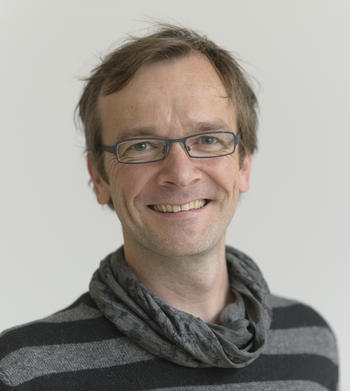
Karsten Mesecke is a Researcher at the Leibniz Institute for Materials-Oriented Technologies (IWT) in the Department of Civil Engineering , focusing on materials science and structural analysis. Research profiles include Recycling, Building Materials, Mineralogy, X-ray Diffraction, and Raman Spectroscopy. His recent work involves computational modeling of scattering patterns in low-dimensional materials, published in the Journal of Applied Crystallography (2025). He earned his PhD (Dr. rer. nat.) in 2023 and has been affiliated with IWT since May 2024.
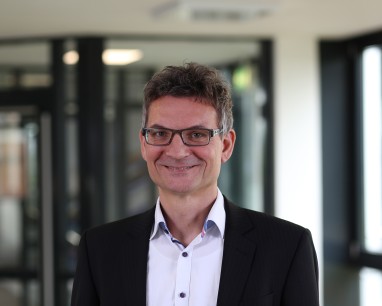
Prof. Dr. Henning Rust is a Professor of Statistical Meteorology at the Department of Geosciences, Freie Universität Berlin, and head of the Statistical Meteorology Group. He co-speaks the Hans-Ertel-Centre for Weather Research, funded by the German Weather Service (DWD), and contributes to national and international climate projects like MiKlip and BINGO. His work bridges statistical modeling, extreme event analysis, and climate risk communication. PhD in Theoretical Physics (2007, University of Potsdam) Diplom in Physics (2001, Albert-Ludwigs-Universität Freiburg) BSc with Honours in Physics (1998, Brock University, Canada) Research Interests focus on stochastic precipitation models , extreme convective events , statistical downscaling , and forecast verification . He specializes in time series analysis and long-range dependence in climatological data. His recent publications analyze decadal climate predictability, compound extremes (e.g., ozone-weather interactions), and citizen science applications in weather education. Notable works include skill score decomposition for Atlantic climate phases and flexible IDF curve modeling for urban hydrology. Awards include a summa cum laude PhD and the Distinguished Graduation Student Award for Physics. He supervises PhD and Master’s students on topics like windstorm risk modeling and precipitation extremes . Additional roles: German Meteorological Society (executive board) , MiKlip steering committee , and climate communication via self-built weather station projects.
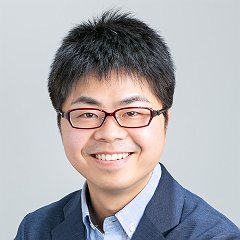
Yasutaka Kamei is a Full Professor at Kyushu University's Graduate School and Faculty of Information Science and Electrical Engineering, where he leads the POSL Lab (Process-Oriented Software Laboratory). He was promoted from Associate Professor to Full Professor in January 2024 after serving as Associate Professor from March 2015 to December 2023. He is also an InaRIS Fellow (2023-2033), receiving 10 million yen annually for his research on 'New paradigm for software development styles based on machine-human interaction.' Dr. Kamei's research focuses on Empirical Software Engineering (ESE) and Open Source Software Engineering (OSSE), with particular expertise in software reliability, testing, defect prediction, code review analysis, and mining software repositories. His work bridges empirical methods with practical software engineering challenges, emphasizing how data-driven approaches can improve software quality assurance processes. His recent publications demonstrate a strong trend toward understanding human factors in software development processes, analyzing modern code review practices, investigating technical debt, and exploring the application of large language models in software engineering tasks. His research spans both traditional software engineering challenges and emerging AI-driven approaches to software development. IPSJ/ACM Award for Early Career Contribution to Global Research (2019) Best industry paper award at ESEM 2018 Distinguished Paper Award at MSR 2014 InaRIS Fellow (2023-2033) Dr. Kamei actively serves the software engineering community as Tutorials Chair for ASE 2025 and has been a program committee member for numerous top-tier conferences including ICSE, FSE, ASE, ESEC/FSE, SANER, and MSR. He has secured multiple competitive grants from MEXT (Ministry of Education, Culture, Sports, Science and Technology) to support his research on test case generation, automated software testing for deep learning systems, technical debt engineering, and mining software repositories. His POSL Lab at Kyushu University serves as a hub for empirical software engineering research, focusing on data-driven approaches to improve software development processes and outcomes through rigorous analysis of software repositories and developer activities.
Prof. Dr.-Ing. Steffen Helke serves as a full Professor in the Department of Electrical Engineering & Information Technology at University of Applied Sciences Südwestfalen. His academic roles include Senate membership, evaluation officer for the department, program coordinator for Media Informatics, and spokesperson for the GI Specialist Group Automotive Software Engineering. Current affiliations span committee work in electrical engineering bachelor programs and leadership in safety-critical software research. His research focuses on functional software security , safety-critical system verification , and model-based quality assurance . Key areas include information flow control languages, automotive software security, hierarchical statechart validation, and requirements delta analysis for efficient development estimation. Methodologies emphasize formal verification, static analysis, and tool-supported refactoring to ensure robustness in embedded systems. Teaching encompasses advanced courses in Software Engineering, IT Security, Ethical Hacking, and Competitive Programming. Thesis supervision occurs in research areas like NLP-based requirements analysis, refactorings for security languages (Jif), and model checking for Statecharts. Industrial collaborations facilitate project/bachelor theses with real-world security applications. Research trends from publications show consistent focus on bridging formal methods with industrial software development. Dominant disciplines include Software Engineering (72% of works) and Formal Verification (58%), with emerging subfields like NLP-assisted requirements engineering (2019) and automotive security frameworks. Keyword analysis reveals sustained emphasis on verification (100% of works), security (80%), and automotive applications (40%). Administrative contributions include leadership in the combined Electrical Engineering bachelor program and active participation in university governance through department councils. Tools developed in his research (e.g., Delta Analyzer, R2BC) are integrated into curricula using ReqView, Matlab/Simulink, and Enterprise Architect for systematic requirement engineering and UML modeling.
Chris Mundy is a Lab Fellow and Physicist at Pacific Northwest National Laboratory (PNNL), specializing in theoretical and computational approaches to complex interfacial systems. His research integrates statistical mechanics and molecular simulations to address fundamental challenges in electrolyte behavior, solvation phenomena, and energy-related materials science under the Department of Energy's Basic Energy Sciences portfolio. His educational background includes a PhD in Chemistry from the University of California, Berkeley (1992) and a BS in Chemistry from Montana State University (1988). Mundy has held significant leadership roles including Chair of the Gordon Research Conference on 'Chemistry and Physics of Liquids' (2025), Chair of the Theoretical Chemistry Subdivision of the American Chemical Society (2022), and Vice Chair (2020-2021). Mundy's research focuses on bridging molecular-scale phenomena to macroscopic outcomes in electrolytes and interfacial systems. His work spans computational modeling of ion hydration, solvation dynamics, and nanoscale assembly processes relevant to energy storage and environmental systems. Recent publications demonstrate strong emphasis on advanced simulation techniques applied to battery electrolytes, biomimetic materials, and aqueous interfaces. His 15 most recent publications reveal consistent focus on computational chemistry methods applied to interfacial phenomena, with growing integration of machine learning and advanced spectroscopy techniques. Key themes include ion-specific effects at interfaces, solvation structure characterization, and predictive modeling of electrolyte behavior across concentration regimes. American Physical Society Fellow (2014) Mundy actively contributes to professional service through leadership in Gordon Research Conferences and ACS subdivisions. His work at PNNL connects fundamental theoretical chemistry to Department of Energy mission areas including energy storage, environmental remediation, and materials science. Current research leverages high-performance computing resources to develop predictive frameworks for complex fluid systems. As a senior researcher at PNNL, Mundy collaborates extensively across national laboratory teams and academic institutions, focusing on theoretical development that informs experimental design in interfacial science and electrochemistry. His group utilizes advanced molecular simulation techniques to probe systems ranging from battery electrolytes to biological interfaces.
Yves Ledru is a Professor at UFR IM2AG of Université Grenoble Alpes (formerly Université Joseph Fourier), where he also serves as Deputy Director. He is a member of the Laboratoire d'Informatique de Grenoble (LIG) and heads the VASCO research team. Additionally, he serves on the bureau of the GDR GPL national research group of the CNRS. Professor Ledru's research focuses on Software Engineering and Formal Methods. His primary interests include Specification and Modeling, Software Architecture, Testing, and the application of formal specification languages such as JML, VDM, and Z Notation. His team has developed several tools including RoZ (for integrating UML and Z specifications), B4MSecure, Tobias (for combinatorial testing), and ParTraP. His recent research projects include ANR Philae (2018-2022), ANR MODMED (2015-2019), and NExTRegio project of IRT Railenium (2015-2019). Professor Ledru has been actively involved in the academic community, serving on program committees for numerous conferences including Crisis 2024, MEDI 2023, and RSSRail 2023. He was a member of the steering committee of the ASE conference from 1997 to 2013, serving as chair from 2001 to 2007. His publication record shows a consistent focus on bridging formal methods with practical software engineering applications, particularly in specification languages and testing methodologies. He has supervised twelve PhD students to completion and currently supervises Alexandre Monnier. His former administrative responsibilities include leading the ISLE research cluster of the Rhône-Alpes Region (2007-2011) and serving as scientific responsible for the ARC6: Technologies de l'Information et de la Communication (2011-2017).
Yiling Lou is an incoming Assistant Professor at the Siebel School of Computing and Data Science, University of Illinois Urbana-Champaign (starting Spring 2026), currently serving as a Pre-tenure Associate Professor at Fudan University. Previously a Postdoctoral Fellow at Purdue University under Prof. Lin Tan, Dr. Lou holds a Ph.D. and B.S. in Computer Science from Peking University supervised by Prof. Lu Zhang and Prof. Dan Hao. Research interests span Software Engineering synergized with Artificial Intelligence and Programming Languages , specifically focusing on LLM4Code, Agent&SE, Vulnerability Detection, and Software Testing/Debugging. Current projects include AgentIssue-Bench for agent system maintenance and INFERROI for enhancing static analysis with LLMs. Research trends show increasing integration of LLMs with traditional SE techniques, particularly in code generation (ClassEval, CodeGen4Libs), debugging (interactive runtime comparison), and vulnerability detection. Recent work emphasizes practical applications in agent systems and resource leak detection. ACM SIGSOFT Distinguished Paper Award (ESEC/FSE 2023) IEEE TCSE Distinguished Paper Award (ICSME 2021) Advises a large research group including 7 Ph.D. and 8 MS students at Fudan University, actively recruiting for UIUC starting Fall 2026. Leads the LLM4Code workshop series and serves on numerous program committees including ICSE, ASE, and FSE. Currently organizing research on Code Agents, Code LLMs, and AI&Security with strong industry relevance. Coordinates the Siebel School research group at UIUC focusing on the intersection of AI and Software Engineering, with particular emphasis on developing robust agent systems for code maintenance and security applications.
Helene Ignatzi serves as Professor of Action Theory and Methods of Social Work and Vice President for International Affairs, Diversity and Family Orientation at Protestant University of Applied Sciences Nuremberg since 2015 and 2018 respectively. Her career bridges frontline social work practice (German Red Cross, 1990-2012) with academic leadership, specializing in aging-related social challenges. Her research expertise spans: Social Gerontology and aging policy Elderly care systems with Eastern European migrant workers Dementia support services Intersections of migration, diversity and aging Professional development in social work Analysis of her 2010-2023 publications reveals consistent focus on caregiver migration dynamics (particularly Polish workers), evolving toward contemporary examinations of age imagery and diversity-informed care models. Her work demonstrates strong policy relevance, addressing legal-ethical dilemmas in home care while developing practical frameworks for inclusive elderly services. As founder and leader of the Research Network on Eastern European Caregivers, she cultivates interdisciplinary collaboration across academic and practice settings. Her administrative role as Vice President positions her to implement diversity-oriented policies within higher education while advancing her research agenda through institutional support structures. Students engaging with her work gain exposure to cutting-edge issues in aging societies through her teaching in Social Gerontology and Social Work Methods, with potential research pathways in caregiver migration, dementia care innovation, and diversity-responsive social work practice.
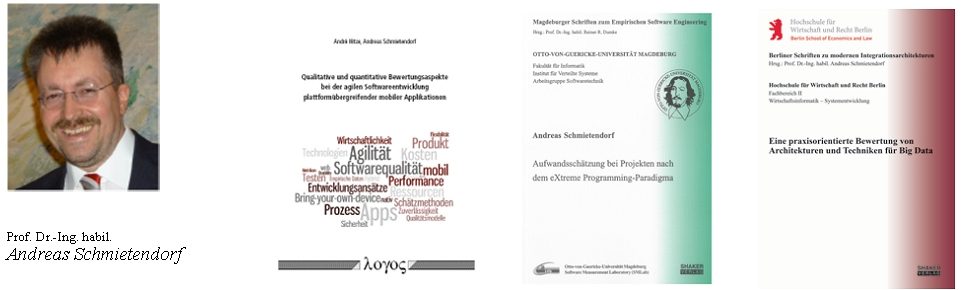
Prof. Dr. Andreas Schmietendorf is a Professor of Business Informatics – System Development at the Berlin School of Economics and Law (HWR Berlin) and holds a private lectureship in Software Engineering at the Otto von Guericke University Magdeburg. He leads the Business Informatics – System Development research group and is actively involved in the HWR doctoral college and Competence Center Digitization. His research focuses on the intersection of software engineering, business informatics, and artificial intelligence, with particular emphasis on: AI-driven changes in software engineering practices Trustworthy AI implementations in domain-specific contexts Web API security and management Digital transformation through low-code development approaches Requirements engineering for trustworthy digital services Prof. Schmietendorf's recent work has centered on the TAHAI (TrustAdHocAI) research project, which investigates trustworthy ad-hoc AI solutions across multiple domains including railway infrastructure, mediation research, and forestry. His research group regularly publishes on software engineering, AI applications, and digital transformation, with a strong focus on practical industry collaborations. The group has produced numerous workshops (ESAPI, KI4SE), conference proceedings, and practical implementations that bridge academic research and industry needs. He has successfully supervised multiple PhD students to completion and maintains an active doctoral supervision portfolio. His research group collaborates extensively with industry partners, particularly Deutsche Bahn, and regularly organizes events that foster academic-industry dialogue. Prof. Schmietendorf is also active in teaching, offering courses on Service Engineering at the University of Magdeburg and various business informatics topics at HWR Berlin. His teaching emphasizes practical applications of software engineering principles and the integration of emerging AI technologies through hands-on exercises and industry-relevant case studies.
Prof. Dr. Karin Küffmann is a Professor of Business Informatics at the Faculty of Economics, Westphalian University of Applied Sciences in Gelsenkirchen, Germany. She serves as Head of the Digital Business and IT Management degree program and leads significant research projects including URBAN.KI (Artificial Intelligence for Municipalities) and ARIZON (XR in inner cities). Her work focuses on practical applications of digital technologies in urban development and business contexts across the Ruhr region. Her primary research interests include: IT Management and IT Controlling with process-oriented approaches Digital Business Models and Data Value Creation Sustainable Smart Cities development in the Ruhr region Artificial Intelligence applications for municipalities Extended Reality (VR/AR) in customer-oriented applications Digital and data-driven business models Prof. Küffmann's recent publications demonstrate a strong trajectory toward applied urban digitalization research, with particular emphasis on Smart City development in the Ruhr region, XR technologies for revitalizing vacant properties, and digital business models for traditional retailers. Her work consistently bridges theoretical concepts with practical implementation, focusing on sustainability and economic viability in municipal contexts. She is actively engaged in regional digitalization initiatives as an Ambassador of the Smart Region Emscher-Lippe, participating in various working groups and functions related to digitalization and evaluation at state and district levels. Within her university, she serves on multiple committees including appointment committees, equal opportunities committees, quality assurance committees, program development, and international affairs. Her professional activities extend beyond academia through consulting and coaching in digitalization, delivering lectures, and managing regional projects focused on IT strategies, data value creation, and the implementation of AI and VR technologies. She supervises theses on digital transformation topics, particularly AI applications in SMEs, and maintains active industry partnerships through her research projects.
Professor Dr. Philipp Brune serves as a prominent academic leader at Neu-Ulm University of Applied Sciences (HNU), holding multiple key positions including Academic Head of TTZ Günzburg, Head of the Master of Artificial Intelligence and Data Analytics program, Head of the Centre for Secure IT Applications and Infrastructures, and Head of the Institute of Agile Product and System Development within the Faculty of Information Management. His career demonstrates a notable transition from physics research (evident in his early 2000-2004 publications) to his current focus on cutting-edge information systems and artificial intelligence. Dr. Brune's research program spans several interconnected domains with particular emphasis on facial emotion recognition systems, legacy system modernization, and secure IT infrastructure development. His work investigates fundamental challenges in AI interpretability, data quality for emotion recognition, and practical approaches to modernizing legacy applications. He has made substantial contributions to understanding the limitations of current facial expression recognition technologies and developing more robust, trustworthy alternatives. Analysis of his recent publications reveals a clear research trajectory toward explainable and trustworthy AI systems, with increasing sophistication in addressing data quality issues and model interpretability challenges. His work bridges theoretical computer science with practical applications across healthcare, marketing, and smart city technologies, demonstrating strong translational research capabilities. As an educator, Dr. Brune has developed innovative pedagogical approaches specifically tailored for non-computer science majors, with research examining student motivation in programming courses and effective methods for teaching cybersecurity concepts. His leadership in the Master of Artificial Intelligence and Data Analytics program shapes curriculum development for next-generation AI professionals. Dr. Brune directs multiple research initiatives including the Centre for Secure IT Applications and Infrastructures, which addresses critical cybersecurity challenges in modern IT environments, and the Institute of Agile Product and System Development, which explores innovative software development methodologies. His collaborative research approach is evident through extensive co-authorship networks spanning multiple institutions and disciplines.
Dr. Simon Primus serves as an Akademischer Rat (Academic Council member) at the Chair of Comparative Politics within the Institute of Political Science at Friedrich-Alexander-Universität Erlangen-Nürnberg (FAU). He holds a Dr. rer. soc. from Ludwig-Maximilians-Universität München (2021), an M.Phil from the University of Ghana (2015), and BA and MA degrees in Political Science from LMU Munich (2011, 2014). His research focuses on comparative politics, particularly democratization processes and the interactions between individual political orientations and regime stability or change. Dr. Primus specializes in African politics, with a geographical focus on Sub-Saharan Africa, examining how democratic institutions introduced since 1990 function in practice. His methodological approach primarily relies on quantitative statistical methods, with particular interest in combining survey and macro data in multilevel models and time series analyses, while also valuing qualitative and critical perspectives. Dr. Primus's scholarly work shows a consistent focus on electoral accountability, voting behavior, and democratization processes in African contexts, particularly Ghana. His publications demonstrate expertise in both theoretical frameworks of democracy and empirical analysis of voting patterns, with a special emphasis on how identity, poverty, and government performance influence electoral decisions in African democracies. Among his notable achievements is receiving a doctoral scholarship from the Stiftung der Deutschen Wirtschaft (2015-2018). Prior to his current position at FAU Erlangen-Nürnberg (since October 2022), Dr. Primus worked as a Post-Doc at LMU Munich (2021-2022). He maintains regular consultation hours every Thursday from 11:00 AM to 12:00 PM, offering both in-person and online sessions by appointment. His field research experience includes significant work at the Ghana Center for Democratic Development during Ghana's 2016 presidential election.
Tales de Vargas Lisboa serves as a Researcher in the Tailored Lightweight Composites Department within the Polymer Materials Engineering Division at Leibniz Institute of Polymer Research Dresden. His work focuses on advanced computational methods for composite material design and analysis. His research spans Numerical and analytical modeling of composite structures Design optimization of Tailored Fiber Placement (TFP) components Nonlinear bending analysis of anisotropic plates Filament winding pattern generation with particular expertise in decomposition methods for solving complex structural mechanics problems. His publication record shows consistent contributions to mechanical engineering journals between 2017-2020, primarily addressing computational challenges in composite material behavior under various loading conditions. Key projects include International ZIM 'AniDo' and DAAD 'PROBRAL' collaborations. Led by Prof. Dr.-Ing. Axel Spickenheuer, the Tailored Lightweight Composites Department develops material-specific adaptations for continuous fiber-reinforced composites in extreme lightweight applications, with Lisboa contributing specialized computational expertise to the Advanced Composite Modeling research group. His technical capabilities bridge theoretical modeling and practical engineering applications, particularly in optimizing fiber paths and structural responses for high-performance composite components.
Xinlei Chen serves as Professor of Marketing at Cheung Kong Graduate School of Business (CKGSB), with prior faculty appointments at Shanghai Advanced Institute of Finance (SAIF) and University of British Columbia. His academic foundation includes a B.E. from Tsinghua University and Ph.D. in Marketing from University of Minnesota. His educational background features: B.E. in Engineering, Tsinghua University Ph.D. in Marketing, University of Minnesota (Carlson School) Chen's research centers on empirical industrial organization and consumer decision modeling, with specific expertise in pricing strategy, advertising effectiveness, channel management, and entertainment economics. His work bridges theoretical structural modeling with real-world applications in digital platforms, video gaming, and social networks, emphasizing how consumers process information and firms optimize competitive strategies in dynamic markets. Recent investigations examine gender dynamics in online competition and advertising spillovers in short-form video ecosystems. Analysis of his publication trajectory reveals consistent focus on marketing science fundamentals while evolving toward digital economy applications. Early work established foundations in movie economics and private label competition, transitioning to contemporary investigations of platform markets, mobile advertising fraud, and social network effects. His methodology combines rigorous econometric techniques with field experiments, particularly evident in 2025 ByteDance research and mobile ad fraud studies. His scientific recognition includes: MSI Young Scholar (2009) Two-time Long Term Impact Award Finalist (Society for Marketing Science, 2018 & 2020) Carlson School Dissertation Award (2003-2004) Multiple doctoral consortium fellowships (INFORMS, AMA-Sheth) Chen demonstrates extensive teaching impact across executive education, MBA, and doctoral programs at CKGSB, SAIF, and UBC, complemented by industry experience as project manager at ABB and China-Machine Building International. His business-oriented scholarship extends to authored books on Chinese internet markets and regular commentary in major business media. Current research activities include field experiments on cross-media advertising and pandemic exercise behavior through digital platforms.
Gerhard Wanner serves as Professor of Computer Science at Stuttgart University of Applied Sciences (HFT Stuttgart) within the Faculty of Surveying, Computer Science, and Mathematics since 2002. He leads the Distributed Information Systems Laboratory (LVIS) and previously directed the university's Information Center (2012-2023) and Computer Center (2004-2012), while maintaining freelance management consultancy work. His research focuses on sustainable software engineering, examining how architectural decisions impact CO2 emissions through green IT practices, enterprise architecture management, and software modeling. Wanner investigates resource-efficient development methodologies and digital transformation in educational contexts, emphasizing software architects' critical role in climate crisis mitigation through architectural design choices and quality models. Recent publications demonstrate a clear trajectory toward sustainability, with 2023-2024 works establishing frameworks for measuring CO2 efficiency in software systems, developing sustainability-focused architecture curricula, and creating resource-optimized development pathways. His scholarship bridges theoretical architecture principles with practical environmental impact reduction strategies. Wanner actively contributes to professional communities as a member of the German Informatics Society (GI), Association for Computing Machinery (ACM), Java User Group Stuttgart (JUGS), and International Software Architecture Qualification Board (iSAQB), where he serves as deputy head of the Audit working group. The Distributed Information Systems Laboratory (LVIS) under his direction explores green IT solutions, distributed systems architectures, and cross-platform service integration, notably demonstrated through the HFT-App project providing unified university service access.