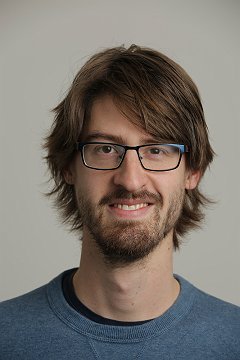
Michalis Vazirgiannis is a Professor at LIX, École Polytechnique (France) leading the Data Science and Mining (DaSciM) group. With academic backgrounds in Physics (Athens University), AI (Heriot-Watt University), and Informatics (Athens University), he has conducted research at Fraunhofer, Max Planck MPI, and INRIA/FUTURS while teaching at institutions across Greece, France, China, and Spain. His research spans Machine/Deep Learning for Graphs (GNNs, graph kernels, embeddings) Text Mining & NLP (Graph-of-Words, biomedical text analysis) Combinatorial Optimization for pandemic forecasting and energy systems Event/Anomaly Detection in time series and sensory data Industrial collaborations with Airbus, Google, Tencent, and BNP . He has supervised 29 completed PhD theses, published over 250 papers, and received prestigious awards including Marie Curie and Tencent Rhino-Bird Fellowships. His team leads the ANR-HELAS Chair (2020-2025) focusing on heterogeneous data deep learning.
Cecilio Angulo Bahón is a full Professor at the Polytechnic University of Catalonia (UPC), affiliated with the Barcelona School of Industrial Engineering (ETSEIB) and the Department of Systems, Automatics and Industrial Informatics Engineering . He leads research in Artificial Intelligence and Robotics , with significant contributions to healthcare data analytics, digital twins, and human-robot collaboration. His research spans machine learning for medical data harmonization, generative adversarial networks in health informatics, and evolutionary algorithms for control systems. Recent publications focus on synthetic healthcare data generation, climate-resilient agriculture , and UMAP-based data analysis . His work bridges AI theory with practical applications in industrial and healthcare domains. Scientific awards include the Sant Jordi 2023 Digital Polytechnic Initiative Award . He has supervised doctoral candidates like Carlos Flores-Vázquez and N. Raya, with key collaborations at the IDEAI-UPC Intelligent Data Science and AI Research Group and the Institute of Robotics and Industrial Informatics (CSIC-UPC).
Matilde P. Machado is an Associate Professor in the Department of Economics at Universidad Carlos III de Madrid and Director of the Master in Health Assessment and Market Access. She holds a PhD in Economics from Boston University. Her research focuses on Health Economics, Applied Microeconometrics, and the intersection of Education, Labor, and Gender from an Economic History perspective. She led a CAF-funded project on 'Intergenerational Mobility in Latin America' with Ricardo Mora and Karen Olivo. Teaching includes undergraduate courses in Health Economics (taught in both Spanish and English) and postgraduate courses in Industrial Economics (in English). Recent work explores historical parish records to analyze female labor force participation and maternal influences. Her research spans topics such as hospital quality measurement, moral hazard in health services, and healthcare efficiency.
Pablo Calleja is a Research Fellow at the Faculty of Computer Science, Polytechnic University of Madrid (UPM), where he has been a member of the Ontology Engineering Group (OEG) since March 2014. His research focuses on Natural Language Processing (NLP), medical terminology mapping, and legal domain applications. He holds a degree in Computer Engineering from San Pablo CEU University (2013) and has prior industry experience as a software developer at IECISA (2008–2011) and a collaboration grant at the Open Access Classroom, San Pablo CEU University (2011–2013). Key contributions include projects like Drugs4covid for pandemic drug discovery, TermitUp for terminological enrichment, and esT5s , a Spanish text summarization model. His work spans legal knowledge graphs, multilingual compliance systems, and NER techniques for academic content analysis. He has also explored accessibility multimedia services and semantic graph applications in tourism ( DBtravel ). Professional roles include collaboration grants at UPM and active participation in interdisciplinary projects such as SNOMED-CT annotation for medical technical sheets. Research trends emphasize cross-domain adaptation (e.g., K-Flares), data augmentation (Widaug), and multilingual NLP solutions. Advising and grants: His current position is supported by a collaboration grant at OEG. Earlier grants include work at San Pablo CEU University. No formal advisees are listed, but he contributes to collaborative research teams. Labs and teams: Core member of the Ontology Engineering Group (OEG), focusing on knowledge representation, NLP, and applied informatics in healthcare and law domains.
Ahmed AbuRa'ed is a Researcher at the Department of Information and Communication Technologies (DTIC) at Universitat Pompeu Fabra (UPF), Barcelona. He is affiliated with the TALN research group and the Large-Scale Text Understanding Systems Lab. His work focuses on advancing knowledge in scientific text summarization, information extraction, and machine learning. Education: PhD in Computer Science (2020), UPF, Barcelona, Spain M.Sc. in Computer Science (2015), University of Trento, Italy B.Sc. in Computer Information Systems (2007), An-Najah University, Nablus, Palestine Research Interests: Natural Language Processing (NLP), Machine Learning/Deep Learning, Semantic Web, Information Extraction, Data Mining, and Scientific Document Summarization. His projects include developing systems for automatic generation of state-of-the-art reports, scientific text summarization, and cross-document relation discovery. Publications Focus: His 15 most recent articles (2016–2021) emphasize advancements in scientific literature analysis, including citation detection, text simplification, and cross-document summarization. Notable works involve systems like LaSTUS/TALN for scientific text processing and OlloBot for Arabic health dialogue agents. Labs & Teams: Active member of the TALN research group and the Large-Scale Text Understanding Systems Lab at UPF's DTIC department. Open to collaborations in NLP, Machine Learning, and related fields via email or Skype.
Carlos Antonio Andújar Gran is a faculty member at the Faculty of Informatics of Barcelona (FIB), Universitat Politècnica de Catalunya (UPC), where he is affiliated with the Department of Computer Science. He actively contributes to the academic community through teaching and supervising numerous student projects, particularly in advanced computing domains. His research interests center on the application of computer graphics, virtual reality, and artificial intelligence to real-world problems. Key areas include the 3D visualization and virtual reconstruction of cultural heritage, physically accurate rendering, intelligent segmentation of images, and the use of machine learning and reinforcement learning in sports analytics, particularly for padel. His work bridges technical innovation with practical applications in cultural preservation and sports technology. The recent publications under his supervision reflect a strong trend in digital cultural heritage, with multiple projects focused on tools for virtual visits, reconstruction, lighting simulation, and web-based 3D visualization of heritage models. Another significant trend is the application of AI to padel, including ball and player tracking, virtual coaching, and training virtual agents using reinforcement learning. These projects demonstrate a consistent focus on computer vision, interactive systems, and data-driven modeling. Carlos Antonio Andújar Gran has supervised a substantial number of students, guiding both undergraduate and master's theses. While specific grant information is not available in the text, his sustained supervision across many years suggests active involvement in research projects. He plays a key role in mentoring the next generation of computer scientists at UPC. His work is closely tied to the Department of Computer Science at FIB, where he collaborates with other faculty members such as Imanol Muñoz Pandiella, Núria Pelechano Gómez, and Mohammadreza Javadiha on various student projects, indicating a collaborative research environment focused on graphics, AI, and VR applications.
Daniel Miravet is an Adjunct Professor at the Department of Economics , Universitat Rovira i Virgili , and a Mobility Technician at the Camp de Tarragona Territorial Authority for Mobility. His research focuses on Tourism Economics , Education Economics , and Sustainable Mobility . Research Interests: Tourist mobility patterns Public transport data analysis Pandemic impact on urban mobility Human capital in labor economics Publications highlight trends in: Smart card data applications (2021-2023) COVID-19 transport behavior (2020-2022) High-speed rail tourism dynamics (2019) Seasonal tourism mobility (2016) Key Collaborations: Aaron Gutiérrez, Xavier Delclòs-Alió, Josep Tomàs-Porres, Gemma Vich, Sergi Domènech.
Raquel Escobar Molina serves as Full Professor in the Department of Physical Education and Sports at the Faculty of Sports Sciences, University of Granada, Spain. Her academic base is located at Carretera de Alfacar, S/N 18071 Granada, with regular Tuesday tutoring sessions from 8:00-14:00 throughout both academic semesters. Contact is maintained via university phone line 958240628. Professor Escobar Molina's research centers on judo and combat sports biomechanics, with emphasis on technical-tactical analysis, physiological responses, and performance metrics. Her work investigates grip specificity, bilateral strength deficits, injury risk factors (particularly among athletes with intellectual disabilities), and specialized fitness testing protocols. She contributes significantly to understanding competitive dynamics in European judo championships and developmental trajectories in youth athletes. Her scholarship bridges laboratory biomechanics with practical competition applications. Analysis of her 2018-2025 publications reveals dominant themes in judo performance analytics, including technical effectiveness in elite competitions, physiological monitoring during combat, and adaptations for athletes with disabilities. Her research consistently employs multicenter methodologies and focuses on evidence-based training protocols. Key contributions include validation of the Special Judo Fitness Test across age categories and biomechanical assessments of grip force production. While specific advising records aren't documented in available sources, her professorial role implies graduate student supervision in sports science. Her research program demonstrates sustained funding through multicenter collaborations and conference engagements with the European College of Sport Science. Professor Escobar Molina maintains active contributions to Spanish sports science discourse, particularly regarding national research evolution and combat sports specialization. Her scholarly activities extend to laboratory-based biomechanics research and field studies at major judo competitions. Current work focuses on 2025 European Championship technical analysis and injury prevention protocols for adapted judo. She participates in developing standardized assessment tools for international judo federations while maintaining her teaching responsibilities at the University of Granada.
Dr. Andrés Modesto Alonso is an Associate Professor in the Department of Statistics at Universidad Carlos III de Madrid, affiliated with the Energy Analytics research group and Flores de Lemus Institute. His work spans computer science, economics, and statistics through advanced time series analysis and energy forecasting methodologies. Primary affiliation: Department of Statistics, UC3M Research groups: Energy Analytics, Flores de Lemus Institute His research focuses on time series analysis , energy forecasting , and statistical clustering with applications in electricity markets, smart grids, and environmental data. Recent publications emphasize deep learning models for energy prediction, dynamic factor models, and market-based distance metrics. Scientific output trends show 15 recent articles (2018-2024) covering topics like: Electricity market price forecasting Smart grid optimization through clustering Adaptive control charts for industrial processes Precision matrix estimation in high-dimensional statistics Extreme value analysis for environmental monitoring Dr. Alonso has supervised multiple theses on time series modeling and classification techniques, while collaborating on grants related to stochastic optimization and responsible AI applications in economic forecasting.
Bernardino Javier Sanchez-Alcaraz Martinez is a Professor at the University of Murcia, affiliated with the Faculty of Sports Sciences and the Department of Physical Activity and Sport. He holds a PhD in Education from the University of Murcia (2014), focusing on the role of physical activity and sports in personal and social development among school-aged youth. His research interests include biomechanics in sports performance, didactics of body expression, and public health interventions related to diet and physical activity. He is a member of the research groups 'Performance Analysis and Biomechanics in Sport' and 'SAFE: Health, Physical Activity and Education'. His work spans multidisciplinary areas such as sports technique analysis (e.g., padel, tennis), nutritional epidemiology, and the impact of educational models on student engagement and well-being. Recent studies explore topics ranging from dietary patterns in children to the physiological effects of exercise interventions. Notable contributions include analyses of padel strategies, biomechanical assessments of sports movements, and longitudinal studies on Mediterranean diet sustainability. He has collaborated on projects addressing nonalcoholic fatty liver disease, cardiometabolic health, and the role of technology in physical education. His research integrates pedagogical strategies, public health, and sports science to promote holistic well-being.
David Suarez Iglesias serves as a Permanent Labor Professor in the Department of Physical Education and Sports at the Faculty of Physical Activity and Sports, University of Leon. His primary research focuses on Adapted Physical Activity and Sports Performance, with specialized expertise in disability sports and exercise physiology for clinical populations. He completed his Doctorate at the University of Leon in 2017 with the thesis "Practice of physical-sports activities in institutionalized adults with severe disabilities: influence on the rehabilitation of physical condition parameters in relation to health," supervised by Dr. José G. Villa Vicente. Dr. Suarez Iglesias' research interests prominently feature Adapted Physical Activity, Sports Performance, Exercise Physiology, and Physical Rehabilitation. As a core member of the Valfis research group, he investigates physical condition assessment related to health, training, sports performance, and nutrition. His work extensively addresses Parkinson's disease, spinal cord injuries, intellectual disabilities, and the physiological demands on basketball referees, emphasizing evidence-based rehabilitation protocols and adaptive sports methodologies. Analysis of his 15 most recent publications reveals dominant research themes including systematic reviews on para-sports (cycling, judo, waterskiing), exercise interventions for neurological conditions, and referee physiology. His work consistently bridges sports science with clinical rehabilitation, demonstrating methodological rigor through scoping reviews, case studies, and validity testing of assessment instruments. No scientific awards were documented in the available materials. While specific student supervision details are absent from provided materials, his active publication record and research group leadership suggest ongoing mentorship activities. Grant information remains unspecified, though his systematic review volume implies substantial research funding support. He actively contributes to the Valfis research group, which specializes in comprehensive physical condition assessment across health, training, and sports performance domains, with particular emphasis on nutritional factors and adaptive strategies for vulnerable populations.
Alberto Sanfeliu Cortés is a Full Professor of Computational Sciences and Artificial Intelligence at the Universitat Politècnica de Catalunya (UPC), where he has been a faculty member since 1981. He is affiliated with the Institut de Robòtica i Informàtica Industrial (IRI), a joint center of UPC and CSIC, and serves as the Scientific Director of the Unit of Excellence Maria Maeztu at IRI. He leads the Mobile Robotics research line and coordinates the Artificial Vision and Intelligent Systems Group (VIS). He previously served as director of IRI and the UPC Department of Automatic Control. Research interests: His work spans Artificial Intelligence, Robotics, Computer Vision, Pattern Recognition, SLAM, Human-Robot Interaction, Autonomous Systems, and Networked Robotics . He focuses on both theoretical and applied aspects, including urban robotics, autonomous navigation, and the integration of large language models in robotic systems. His research is deeply interdisciplinary, bridging engineering, AI, and societal applications. The recent publications highlight a strong trend toward human-centered robotics , particularly in urban environments, last-mile delivery, and cybernetic avatars. There is growing emphasis on large language models for explainability and personalization, collaborative robotics , and context-aware navigation using vision transformers. His work increasingly addresses societal integration of robots in smart cities and sustainable systems. Scientific Awards: Technology Prize from Generalitat de Catalunya Fellow of the International Association for Pattern Recognition (IAPR) Advising and Grants: He has supervised multiple PhD students, with current advisees working on topics like human intention learning and LLM-enhanced interaction. He has led 45 R&D projects, including 16 EU-funded ones, and was coordinator of the URUS project. Current projects include TORNADO (foundation models for robots handling deformable objects) and SOCIAL PIA (cybernetic avatars). He has also collaborated with Volkswagen Research on autonomous driving initiatives. Labs and Teams: He leads the Artificial Vision and Intelligent Systems (VIS) group and the Mobile Robotics research line at IRI, a premier robotics institute in Spain. His team is actively involved in EU and national projects, focusing on real-world deployment of intelligent robotic systems.
Albrecht Glitz is an Associate Professor in the Department of Economics and Business at Pompeu Fabra University, Barcelona, Spain, where he conducts research at the intersection of labor economics, immigration, and espionage. His work examines critical economic phenomena through rigorous empirical analysis and policy-relevant frameworks. His research focuses on three core areas: Labour Economics (analyzing wage determination, skill premiums, and labor market dynamics), Economics of Immigration (investigating assimilation patterns, fiscal impacts, and refugee integration), and Economics of Espionage (studying industrial espionage's effects on productivity and firm outcomes). He employs advanced econometric methods to explore how labor supply shocks, credential recognition, and social networks shape economic outcomes. Glitz's publication record reveals a clear trajectory toward increasingly complex policy-relevant research, with recent work emphasizing refugee shocks, tax-immigration linkages, and espionage mechanisms. His articles consistently appear in top economics journals including the American Economic Review, Journal of Labor Economics, and Review of Economic Studies, demonstrating methodological sophistication and real-world applicability across labor market institutions and migration policy.
Jesper Cockx is an Assistant Professor in the Programming Languages group at Delft University of Technology . His research focuses on the theory and implementation of dependently typed languages , particularly Agda , and he is a core contributor to Agda's development. His work bridges Type Theory , Pattern Matching , and practical Compiler Design through tools like agda2hs . Research Interests : Type Theory and Dependently Typed Programming Pattern Matching and Unification Agda and Compiler Implementation Erasure Annotations for Verified Compilation Generic Programming and Language Design Formal Verification of Functional Code Scientific Awards : NWO Veni Grant (2020) for a Trustworthy and Extensible Core Language for Agda Conference Contributions : He serves on program committees for CPP , WITS , POPL , and ICFP . Recent publications analyze erasure annotations , correct-by-construction compilers , and dependent (co)pattern matching in Agda. His work often intersects with Haskell and functional programming education in the Netherlands.
Jaime Fernández Fernández is a Senior Lecturer at the University of Leon's Faculty of Physical Activity and Sports Sciences. His research focuses on sports performance optimization, injury prevention, and biomechanical analysis in racket sports. Doctorate from Universidad de Oviedo (2007) Specializes in tennis, badminton, and handball performance Current research emphasizes neuromuscular adaptations and training load monitoring Jaime's research spans multiple disciplines including Sports Science , Exercise Physiology , and Racket Sports Biomechanics . His work explores neuromuscular performance , surface-specific training adaptations , and injury prevention strategies for youth athletes. Recent publications demonstrate expertise in serve mechanics analysis using Xsens technology, training load comparisons between racket and non-racket drills, and sex-based performance differences in various racket sports. Current affiliations include: University of Leon (Since 2019 - Full Professor) Miguel Hernández University of Elche (2013-2017 - Assistant Professor)