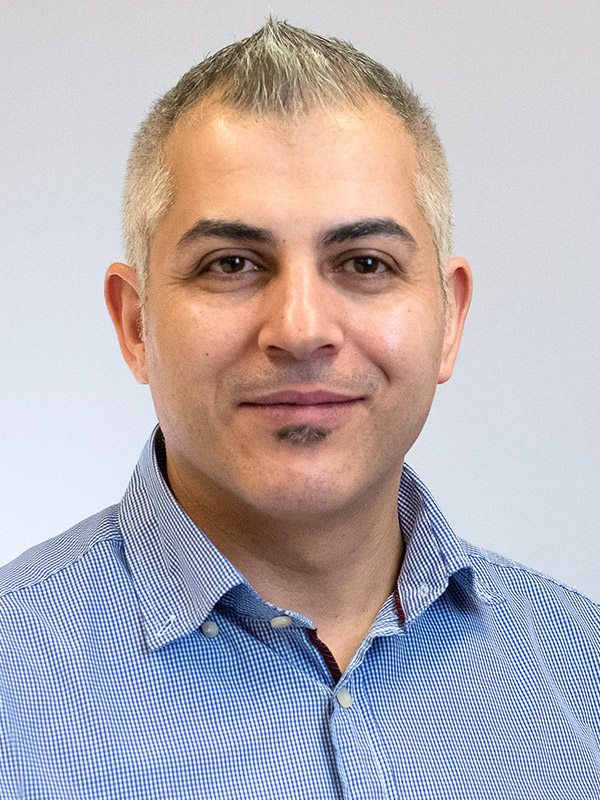
Dr. Sameh Al Natour is an Associate Professor and Director of the Information Technology Management program at the Ted Rogers School of Management, Toronto Metropolitan University. His academic credentials include a PhD and MSc from the University of British Columbia, and an MBA and BS from Simon Fraser University. His research explores: Design of human-computer interfaces and decision support systems Adoption patterns in information systems and e-commerce platforms Trust dynamics in computer-mediated communication Virtual advisor effectiveness and user disclosure behaviors Recent publications (2020-2021) focus on privacy in mobile apps, sentiment analysis applications, and methodologies to enhance decision-aid relevance. His work consistently appears in FT50-listed and A*-rated journals. Major Awards: Dean’s Scholarly Award (2021-2022) TRSM Teaching Innovation Award (2021) Best Reviewer Award, ICIS (2016) Multiple TRSM Research Recognition grants (2020-2021) He oversees undergraduate and graduate courses in information systems foundations, strategy, and global technological trends.
Rachel N. Bara serves as an Adjunct Assistant Professor in St. Lawrence University's First-Year Program, where she teaches and advises undergraduate students. Her academic career includes prior service as a post-graduate teaching fellow at The Pennsylvania State University, instructing technical writing and business communication courses. Her educational background comprises: M.F.A. in English and Creative Writing, The Pennsylvania State University (2011) B.A. in English Language and Literature, Smith College Bara's professional identity bridges journalism and creative writing, with a distinctive focus on environmental narratives. She examines how scientific concepts manifest in human experiences—from children's remote learning adaptations to carbon sink discoveries in geological formations. Her work consistently explores 'the margin of what is known,' highlighting stories where scientific frontiers intersect with personal and community identity. This approach manifests in both her Earth Island Journal contributions and current book projects, including a creative biography of physicist Laura Fermi. Scientific awards and honors are not documented in available sources. As an advisor, Bara guides first-year students through St. Lawrence's orientation program, leveraging her expertise in communication to develop foundational academic skills. While her adjunct position doesn't involve research grants or graduate supervision, her classroom integrates real-world science communication challenges, connecting students with contemporary environmental discourse through her journalistic work. No research laboratory or dedicated team structure is associated with her academic role; her creative and journalistic output represents individual scholarly work.
Sandra McEwan is a Sessional Lecturer in the Department of Curriculum, Teaching & Learning at the Ontario Institute for Studies in Education (OISE), University of Toronto, where she teaches Elementary Science and Environmental Education in the Master of Teaching Program. With over four decades of experience spanning K-12 teaching, teacher education, and educational leadership, she brings extensive practical knowledge to preparing future educators in science and environmental pedagogy. Her educational background includes: MEd in Science Education, University of Toronto/OISE (2000) BEd in Science and Environmental Science Education, University of Toronto/FEUT (1984) BSc in Biology, University of Toronto (1983) McEwan's research centers on nature-based learning, outdoor and environmental education, and differentiated instruction. She develops practical strategies for integrating environmental awareness into science curricula through hands-on, experiential learning in natural settings. Her work emphasizes making complex ecological concepts accessible to diverse learners while addressing real-world environmental challenges through classroom applications. Her publication record spans 30+ years with over 30 scholarly works, showing consistent focus on practical educational resources. Recent publications address contemporary issues like food systems education and acid rain impacts, while maintaining strong emphasis on outdoor learning methodologies and curriculum development for K-12 settings. The body of work demonstrates evolution from foundational environmental science resources toward integrated, systems-thinking approaches. As a Sessional Lecturer and former Faculty Advisor in the MT Program (2016-2023), she has mentored numerous pre-service teachers. Her extensive experience as both K-12 educator and teacher trainer provides unique perspective for guiding new educators in implementing effective science and environmental education practices.
Lars A. Buchhave serves as an Affiliate Professor at the Niels Bohr Institute, University of Copenhagen, specializing in Astrophysics and Planetary Science. His research focuses on exoplanet discovery and characterization using data from missions like Kepler and K2, with significant contributions to understanding planetary system architectures and detection methodologies. Dr. Buchhave's research spans exoplanet demographics, spectroscopic analysis, and machine learning applications in astronomy. His work has revealed critical patterns in planetary systems, including the 'peas in a pod' phenomenon where planets in multi-planet systems show similar sizes and regular spacing. He has made substantial contributions to understanding how stellar metallicity influences planet formation across different planetary types. His publication record shows a clear evolution from early exoplanet detection work to sophisticated statistical analyses of planetary systems and innovative computational approaches. Recent work demonstrates increasing integration of machine learning techniques for telluric correction and spectral analysis, reflecting broader trends in astronomical data processing. With 166 research outputs documented, including high-impact papers in the Astronomical Journal and Astronomy & Astrophysics, Dr. Buchhave has established himself as a significant contributor to exoplanet research. His work on the ANDES spectrograph project represents current cutting-edge instrumentation development for future exoplanet characterization. Dr. Buchhave maintains active research collaborations across international teams, as evidenced by his participation in large consortium papers with hundreds of co-authors. His work has received significant attention, with several papers accumulating over 100 citations and substantial media coverage, including features in major news outlets and references in Wikipedia pages.
T. Santl-Temkiv is an Associate Professor in the Department of Biology at Aarhus University, Denmark, with extensive expertise in atmospheric microbiology and microbial ecology. Previously, they held a PostDoc position in the Department of Physics and Astronomy at Aarhus University from July 2012 to October 2016. Research focuses on the role of microorganisms in atmospheric processes, particularly ice-nucleating bacteria and their impact on cloud formation. Current work examines biogenic ice-nucleating particles in Arctic marine environments, microbial communities in the sea-surface microlayer, and airborne fungal diversity in tropical forests. The research spans diverse ecosystems from the Arctic to the Amazon rainforest and Antarctic regions. Recent publications reveal significant trends in atmospheric microbiology research, with emphasis on how climate change affects microbial dispersal patterns, the role of terrestrial runoff in transporting ice-nucleating particles to Arctic marine systems, and the biogeochemical implications of microbial activity in polar environments during sea ice melt. Affiliation and Research Highlights: Current faculty position in Department of Biology, Aarhus University Specializes in atmospheric microbiology and ice nucleation processes Conducts field research in Arctic, Antarctic, and tropical ecosystems Develops novel instrumentation for ice nucleation detection Studies microbial responses to climate change in sensitive environments Research is supported through numerous collaborations with international institutions and contributes significantly to understanding how microorganisms influence atmospheric processes and climate systems. The work bridges microbiology, atmospheric science, and climate research, providing insights into biological feedback mechanisms in Earth's climate system.
Dr. Zelalem Bedaso is a Full-Time Associate Professor in the Department of Earth and Environmental Geosciences at the University of Dayton's College of Arts and Sciences. His research bridges paleoenvironmental reconstruction and modern hydrological systems, primarily using stable isotope geochemistry. Key affiliations remain centered at the University of Dayton, with extensive fieldwork in Ethiopia's Afar Rift Valley and hydrological studies in Ohio. Research interests span: Paleoclimate & Human Evolution : Isotopic analysis of fossil tooth enamel and paleosols to reconstruct vegetation, animal diets, and aridity patterns in East Africa during the past 5 million years. Modern Hydrology : Precipitation/groundwater isotope studies in Ethiopia and the US Midwest to model climate impacts on water resources and moisture sources. Recent articles (2020-2022) demonstrate a focus on isotope hydrology in Ethiopia and Ohio, while earlier works (2010-2016) emphasize paleodietary reconstruction in human evolution contexts. Trends include high-impact publications in Journal of Hydrology and Science of The Total Environment . Active grants include NSF awards totaling $466K (2021-2025) for climate-water research in Africa. Dr. Bedaso teaches courses across geology and environmental science, including field methods and geochemistry.
Alo Laas is an Associate Professor and Interim Chair at the Chair of Hydrobiology and Fisheries within the Institute of Agricultural and Environmental Sciences at Estonian University of Life Sciences. He holds a concurrent Visiting Professor position at University of Tartu's Estonian Marine Institute (2023-2026). His international engagement includes previous roles at Spain's Catalan Institute for Water Research and leadership positions in GLEON, SIL, and multiple EU projects. His research specializes in aquatic ecology with focus areas including: Carbon cycling dynamics in freshwater systems Lake metabolic processes and climate interactions High-frequency monitoring using automated buoy networks Impacts of climate change on lake ecosystems Lake restoration techniques Analyses of his 82 publications reveal strong research trends in climate-lake interactions, carbon flux quantification, and sensor-based monitoring innovations. Recent articles demonstrate expanding work on extreme weather impacts, global lake comparisons, and integration of satellite data with in-situ measurements. He teaches courses on aquatic research methodologies and oversees Estonia's automated lake monitoring infrastructure. While no awards are documented, his leadership includes coordinating the Estonian buoy network and serving on scientific advisory boards for international projects like AQUACOSM-plus.
Thierry Dufour is an Associate Professor at Sorbonne University and heads research activities at the Laboratory of Plasma Physics (LPP, UMR 7648), a joint research unit of Sorbonne University, CNRS, and École Polytechnique. He is affiliated with the Low Temperature Plasma team at the LPP, located at Sorbonne University's Pierre and Marie Curie Campus in Paris. Dr. Dufour earned his PhD in Plasma Physics from the University of Orleans in 2009, followed by postdoctoral research at the University of Brussels in 2010. He was appointed as Associate Professor at Sorbonne Université in 2015 and received his HDR (Habilitation à Diriger des Recherches) accreditation in 2016. His research spans multiple interdisciplinary fields where plasma technology intersects with life sciences and fundamental physics. Plasma Medicine constitutes a major focus, particularly in developing cold plasma treatments for solid tumors including cholangiocarcinomas and non-small cell lung carcinomas. His work extends to clinical engineering applications, notably cold plasma endoscopy for biliary duct treatments. In Plasma Agriculture , Dr. Dufour investigates seed decontamination, dormancy release, and stimulation of seedling growth across various crops including maize, barley, and lentils. His research in Evolutionary Biology examines extremophiles like tardigrades and halobacteria. Additionally, he conducts Fundamental Plasma Physics research on guided streamers and self-organization phenomena, along with expertise in plasma-material interactions and plasma gas processing for CO2 valorization. Dr. Dufour's scientific contributions include 47 peer-reviewed articles, 12 conference proceedings, and 6 patents as of 2024, with an h-index of 23 (Google Scholar). His recent publications demonstrate a strong trend toward translational research, bridging fundamental plasma phenomena with practical applications in medicine and agriculture. His work shows particular strength in developing plasma-based solutions for cancer treatment and agricultural improvement, with increasing focus on understanding the underlying biological mechanisms. Dr. Dufour actively contributes to the academic community through his membership on the LPP Council and the Plas@Par Steering Committee. He co-heads the "Initiative Physique des Infinis" research program at Sorbonne University and participates in several collaborative networks including the GDR Happybio under CNRS, and the PLASTHER and PLAGRI COST Actions. His research has been supported through various grants enabling interdisciplinary collaborations across physics, biology, and medical fields. As a dedicated educator, Dr. Dufour teaches courses in fundamental physics as well as specialized plasma applications. He has also co-founded and served as CEO of Auxoway SAS, demonstrating his commitment to translating academic research into practical applications.
Dork Sahagian is a Professor of Earth & Environmental Sciences at Lehigh University, where he has served since 2004 after directing the Global Analysis, Integration, and Modelling Task Force of the International Geosphere Biosphere Programme (1994-2004). His interdisciplinary research integrates geology, environmental science, and policy to address Earth system processes. Education: Rensselaer Polytechnic Institute (B.S. in Physics) Rutgers University (M.S. in Geosciences) University of Chicago (Ph.D. in Geophysics) His research spans paleoclimatology, volcanology, tectonics, and global hydrology, with a focus on human-environment interactions. Key contributions include models of volcanic eruption mechanisms, sea-level change drivers, and climate impact assessments. His work established Lehigh's Environmental Initiative as a leading interdisciplinary program. Recent publications (2012-2022) reveal evolving expertise in volcanic ash dynamics, precipitation predictability, and environmental education technologies. His work consistently bridges fundamental geoscience with policy applications, particularly in climate change communication and ecosystem services assessment. Scientific Awards: 2007 Nobel Peace Prize (as IPCC contributor) Professor Sahagian has directed major initiatives including Lehigh's Environmental Initiative (2004-2010) and the IGBP/GAIM task force. His leadership established the American Geophysical Union's Biogeosciences section and shaped UNEP's Global Environmental Outlook (GEO-5) as Principal Scientific Reviewer. He actively mentors through courses like Scientific Foundations for Environmental Policy Design. He leads collaborative teams focused on Earth system integration, notably through the Environmental Initiative and AGU's Biogeosciences section, fostering cross-disciplinary approaches to environmental challenges.
Dr. Daniel Burow serves as Assistant Professor in the Applied Aviation Sciences Department within Embry-Riddle Aeronautical University's College of Aviation. His expertise spans applied climatology, meteorology, hazards research, and geospatial analysis with significant contributions to coastal environmental studies. His educational foundation includes: Ph.D. in Geography from University of Tennessee M.S. in Geography from University of North Dakota B.S. in Meteorology: Mathematics and Geography from Valparaiso University Dr. Burow's research program integrates satellite remote sensing and field methodologies to address critical environmental challenges. His work focuses on hurricane impact assessment on coastal dunes, urban stormwater systems, marine pollution detection, and climate perception dynamics. By analyzing pre- and post-event satellite imagery, he quantifies environmental changes from natural disasters while examining societal responses to weather hazards through survey-based studies. This dual approach bridges physical environmental processes with human dimensions of climate adaptation. Analysis of his 15 publications (2019-2025) reveals a clear trajectory toward advanced satellite applications, with 60% of recent work utilizing remote sensing for coastal change detection. His research shows strong regional focus on Florida's vulnerable coastline and Tennessee's severe weather patterns, producing actionable insights for disaster management and climate resilience planning. The interdisciplinary nature of his work spans meteorology, geography, and environmental science with increasing emphasis on anthropogenic impacts. While no specific awards are listed, his consistent publication record in respected journals including Remote Sensing (multiple 2024 papers) and Geographical Review demonstrates scholarly impact. His research appears grant-supported through evident fieldwork and data acquisition capabilities. As an educator, Dr. Burow teaches advanced and introductory GIS courses alongside climate change curriculum, preparing students for geospatial careers in environmental monitoring. His publications indicate active student collaboration opportunities, particularly in data collection and analysis for coastal research projects. The integration of his research specialties with Embry-Riddle's aviation mission creates unique opportunities for studying weather impacts on aerospace operations.
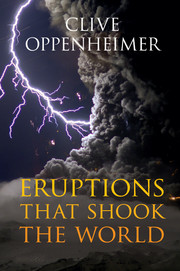
Clive Oppenheimer is a distinguished British volcanologist and Professor of Volcanology in the Department of Geography at the University of Cambridge. With a career spanning several decades, Professor Oppenheimer has established himself as a leading expert in volcanic processes, remote sensing of volcanic activity, and the historical impacts of major eruptions on climate and human societies. His academic journey began with a Bachelor of Arts in Natural Sciences Tripos from the University of Cambridge in 1986, followed by a PhD from the Open University where his thesis investigated the use of remote sensing in volcanology under the supervision of Peter Francis and David Rothery. Professor Oppenheimer's research encompasses a wide range of volcanic phenomena: Volcanic gas emissions and degassing processes, particularly SO 2 , H 2 S, and CO 2 Remote sensing techniques for monitoring volcanic activity Climate impacts of historical and prehistorical volcanic eruptions Analysis of major volcanic events such as Tambora (1815), Samalas (1257), and Toba (~74,000 years ago) Volcanic hazard assessment and risk management Interdisciplinary connections between geology, archaeology, and history His scholarly output is extensive, with numerous high-impact publications that demonstrate consistent research activity through 2023. Professor Oppenheimer's work shows particular strength in interdisciplinary research, connecting geological science with historical, archaeological, and climate science perspectives. Among his most significant contributions is the book "Eruptions that Shook the World" (2011), which explores how major volcanic events throughout Earth's history have influenced climate patterns, ecosystems, and human civilizations. This work has been widely praised for its integration of scientific rigor with historical narrative. Professor Oppenheimer maintains active research collaborations across multiple institutions including the University of East Anglia, Open University, Karnatak University, University of Oxford, and University of Orléans, reflecting the international recognition of his expertise in volcanology.
Dr. Andelija Milic is an accomplished researcher at Queensland University of Technology's Faculty of Science, specializing in aerobiology and atmospheric science. Her work focuses on pollen monitoring, airborne particulate matter, and the relationship between environmental factors and public health. She has been instrumental in the AusPollen Aerobiology Collaboration Network, contributing to national pollen monitoring standards and research. Her research interests span aerobiology, pollen monitoring systems, atmospheric chemistry, and the health impacts of airborne particles. Milic's work has significant implications for understanding how climate variations affect pollen distribution and allergen exposure, particularly in Australian contexts. She has pioneered methods for pollen identification, quality control in monitoring networks, and the application of environmental DNA analysis to study pollen diversity. Analysis of her publication record shows a strong focus on advancing pollen monitoring methodologies, understanding regional and seasonal variations in pollen distribution, and exploring the intersection between environmental factors and public health outcomes. Her research spans from fundamental atmospheric science to applied public health applications, with increasing emphasis on climate change impacts on pollen patterns. Among her notable contributions are the development of quality control protocols for pollen monitoring networks, investigations into long-term pollen trends in subtropical regions, and innovative citizen science approaches for pollen monitoring during the pandemic. Her work on the relationship between airborne pollen and SARS-CoV-2 infection rates represents important interdisciplinary research connecting environmental science and epidemiology. Dr. Milic has made significant contributions through her leadership in major collaborative projects including the AusPollen Partnership Project, which has established comprehensive pollen monitoring across eastern Australia. Her technical expertise spans advanced analytical methods including metabarcoding, environmental DNA analysis, and sophisticated statistical approaches to environmental data.
Alia Khan serves as an Associate Professor in the Aerospace Department at the University of Colorado Boulder, where she conducts groundbreaking research in optical remote sensing of Earth's surface using uncrewed aerial systems and satellite-based sensors. Her work bridges aerospace engineering with environmental science, focusing on critical climate-related phenomena in polar and mountainous regions. Dr. Khan earned her PhD in Civil and Environmental Engineering from the University of Colorado Boulder in 2016, following an MS in Environmental Studies from the same institution in 2012, and a BSPH with Honors in Environmental Science and Engineering from the University of North Carolina Chapel Hill in 2009. Her research interests center on autonomous system development for environmental monitoring, with particular expertise in aquatic biogeochemistry, aerosols, and cryosphere studies including glacial and snow hydrology. She has pioneered methods using UAV technology to study snow algae, glacier ablation, and black carbon impacts on ice sheets. Her work spans from Antarctic ecosystems to Andean snowpacks and Arctic oceans, addressing critical climate change indicators through innovative remote sensing approaches. Analysis of Dr. Khan's recent publications reveals a strong focus on polar and cryospheric research, with particular attention to black carbon impacts on ice sheets, snow algae monitoring, and the application of UAV technology for environmental observation. Her interdisciplinary work connects atmospheric science, glaciology, and remote sensing to address pressing climate change questions, with increasing emphasis on human impacts in polar regions and the development of cost-effective monitoring technologies. National Science Foundation - CAREER Grant Awardee (2022) US Fulbright Scholar to the Chilean Antarctic Program (2019) Antarctic Service Medal, National Science Foundation (2012) National Science Foundation Graduate Research Fellowship (2010) Dr. Khan has successfully mentored students including Colby F. Rand and S. Healy, who appear as first authors on multiple publications. Her research has been supported by significant grants including the NSF CAREER award and Fulbright Scholarship, enabling extensive field work in Antarctica, the Arctic, and mountainous regions worldwide. She teaches GEEN 1400 First Year Engineering Projects and Drone Remote Sensing, integrating her research expertise into undergraduate education. Her work involves extensive collaboration with international research teams across polar regions, including participation in Antarctic research programs and Arctic monitoring initiatives. Dr. Khan's laboratory focuses on developing and deploying UAV-based remote sensing systems for environmental monitoring, with particular emphasis on cryospheric applications and the development of cost-effective monitoring solutions for challenging environments.
Gholamhossein Bagheri is a Scientist and Group Leader at the Max Planck Institute for Dynamics and Self-Organization in Göttingen, Germany, where he heads the Turbulence and Particles in Fluids research group within the Laboratory for Fluid Physics, Pattern Formation and Biocomplexity (LFPB). His research focuses on the complex physics of particle-laden turbulent flows across environmental, atmospheric, and biological systems. Dr. Bagheri's research spans multiple interconnected domains of fluid physics with significant real-world applications. His primary areas of investigation include: Cloud physics and aerosol-cloud interactions, particularly their role as major sources of uncertainty in weather models and climate projections Atmospheric transport of non-spherical particles such as volcanic ash, microplastics, pollen, and snowflakes Indoor air quality dynamics and the spatio-temporal evolution of respiratory aerosols relevant to infectious disease transmission Development of advanced measurement techniques for studying particle-laden flows in both laboratory and field conditions Analysis of Dr. Bagheri's publication record reveals a trajectory from fundamental fluid dynamics toward increasingly applied research addressing critical environmental and public health challenges. His work on respiratory particle transmission during the COVID-19 pandemic provided key evidence for mask efficacy that influenced policymakers and the public. His research consistently tackles significant uncertainties in atmospheric science while developing innovative instrumentation to bridge laboratory and field measurements. Dr. Bagheri leads an active research team that has developed several groundbreaking measurement platforms including the Max Planck CloudKite (MPCK), the HoloTrack instrument for cloud droplet measurements, and the WinDarts system for atmospheric turbulence measurements. His group has conducted major field campaigns such as the Pallas Cloud Experiment (PaCE) in September 2022 and IMPACT (In-situ Measurement of Particles, Atmosphere, Cloud, and Turbulence) from May to June 2024, where up to six second-generation WinDarts units were successfully deployed over Pallas, Finland.
Dr. Patric Seifert is a Scientist at the Leibniz Institute for Tropospheric Research (TROPOS) in Leipzig, Germany, where he has been working since 2010. He is affiliated with the Remote Sensing of Atmospheric Processes department and leads the Ground-Based Remote Sensing group. His work focuses on atmospheric remote sensing, particularly using the LACROS instrument suite for aerosol and cloud observations. He also maintains a strong connection with the University of Leipzig, where he earned his PhD and currently teaches courses on cloud radar and remote sensing to master's students. PhD in Meteorology from University of Leipzig (2010) Diploma in Meteorology from University of Leipzig (2006) Student of Meteorology at University of Leipzig (2000-2006) Dr. Seifert's research centers on understanding aerosol-cloud interactions, particularly how aerosols influence ice formation processes in the atmosphere. His work involves extensive use of ground-based remote sensing instruments, including the LACROS suite, to observe cloud and aerosol properties. He investigates how aerosol particles affect numerical weather forecast models and develops methods to derive continuous datasets of aerosol and cloud microphysical properties through the Cloudnet data processing scheme. His current research spans multiple international projects across diverse geographical locations including the Arctic, Southern Ocean, Cyprus, and Antarctica. Analysis of Dr. Seifert's recent publications reveals a strong focus on cloud microphysics, particularly mixed-phase and ice clouds. His work frequently employs advanced remote sensing techniques including polarimetric radar and lidar to study ice nucleation processes, particle shape distribution, and aerosol-cloud interactions. A significant portion of his recent research relates to the MOSAiC expedition in the Arctic, examining cloud life cycles and the impact of wildfire smoke on cirrus formation. His publications also highlight innovative approaches to cloud seeding experiments using UAVs and the development of new methods for analyzing cloud radar data. Member of Deutsche Meteorologische Gesellschaft (DMG) since 2006 Ordinary Member of the DFG Transregio programme Arctic Amplification: Climate Relevant Atmospheric and Surface Processes and Feedback Mechanisms (AC3) since 2021 Dr. Seifert actively collaborates on numerous international research projects including ACTRIS/Cloudnet, DACAPO-PESO (focusing on the Southern Ocean), PICNICC (examining hemispheric cloud contrasts), SPOMC (polarimetric observations of clouds), COALA (Antarctic observations), ATMO-ACCESS, ACTRIS-D, and EXCELSIOR. His work often involves mentoring students and conducting outreach activities to demonstrate TROPOS's contributions to understanding aerosol-cloud interactions and career opportunities in atmospheric sciences. He has been instrumental in operating and extending the LACROS instrument suite for various field campaigns around the world. Dr. Seifert leads the Ground-Based Remote Sensing group at TROPOS, which operates the LACROS (Leipzig Aerosol and Cloud Remote Observations System) infrastructure. This mobile observation platform has been deployed in diverse environments including Punta Arenas, Chile for the DACAPO-PESO campaign, Cyprus for multiple projects, and Antarctica for the COALA campaign. His team collaborates with international partners across Europe, New Zealand, and the Americas to study atmospheric processes in different climatic regions, with particular emphasis on aerosol-cloud interactions in pristine environments.